Saugeye vs Walleye: How to Tell Them Apart
Many Illinois anglers have found themselves staring at a fish, scratching their head, wondering if they've caught a walleye or something else entirely. It’s a common frustration, especially with species that share so many similarities. This guide aims to clear up that confusion, offering clear, actionable tips to help you definitively tell the difference between a walleye and a saugeye, ensuring you stay within regulations and truly know your catch.
The Common Confusion: Why Walleye and Saugeye Look So Similar
It's absolutely understandable why so many folks get walleye and saugeye mixed up. They both belong to the perch family, they often inhabit similar waters, and at first glance, their general body shape, coloration, and even size can seem almost identical. You might have even heard experienced anglers argue over a catch, especially if it's a smaller fish or caught in murky water. This isn't just a casual debate; sometimes, it really matters for regulations, as certain waters might have different size or creel limits for one species over the other.
The saugeye itself is a hybrid fish, a cross between a female walleye and a male sauger. It was specifically developed and stocked in many states, including Illinois, to combine the best traits of both parent species: the growth potential of a walleye and the hardiness and adaptability of a sauger. This genetic blend means it inherits characteristics from both, making identification a fun, albeit sometimes challenging, puzzle. Believe me, I've stood there with a fish on the bank, phone in hand, pulling up diagrams just to be sure. It's part of the learning curve, and something every dedicated angler eventually masters.
The Hybrid Factor: A Blend of Traits
The very nature of the saugeye being a hybrid is the root of the identification challenge. Imagine trying to tell apart two siblings who look a lot alike, but one has traits from both parents while the other only from one. That's essentially what we're dealing with here. A saugeye can exhibit a range of characteristics, sometimes leaning more towards its walleye parent, and other times showing more sauger influence. This variability means you can't always rely on just one single trait to make a definitive identification.
It’s not uncommon to catch what you think is a walleye, only to find later it has some of those tell-tale sauger markings. This is especially true in waters where both walleye and saugeye are stocked, or where natural populations of sauger and walleye coexist and hybridize. The Illinois Department of Natural Resources (IDNR) often stocks saugeye in certain lakes precisely because of their hybrid vigor and adaptability to a wider range of water conditions, which can lead to even more chances for anglers to encounter both. The presence of saugeye adds another layer of excitement, and sometimes a bit of bewilderment, to Illinois walleye fishing.
Why Correct Identification Matters
Beyond satisfying your curiosity, correctly identifying your catch is crucial for a few practical reasons. First and foremost, it’s about adhering to fishing regulations. Illinois has specific rules for different fish species, which can include minimum length limits, daily creel limits, and even seasonal restrictions that might vary between walleye and saugeye on certain bodies of water. Misidentifying a fish could lead to unintentional violations, which no angler wants.
Secondly, it's about accurate record-keeping and contributing to the overall understanding of fish populations. If you’re tracking your catches, whether for personal bests or for local fishing clubs, knowing exactly what you caught helps you better understand fish behavior, preferred baits, and productive spots for each species. Plus, it's just plain good angling practice. Being able to confidently say, "Yep, that's a saugeye!" when someone asks, shows a deeper knowledge and respect for the fish you pursue. Illinois Walleye Size and Catch Limits and similar guides are excellent resources to keep handy.
Spotting the Differences: Key Identification Features to Look For
Alright, let's get down to brass tacks. While they might look similar, there are several key features that, once you know what to look for, make telling a walleye and a saugeye apart much easier. It's like learning the nuances of different bird calls; once you hear them, you can't unhear them. You just need to train your eye.
Dorsal Fin Differences
The dorsal fin is often your first and best clue. Both walleye and saugeye have two dorsal fins: a spiny anterior (front) dorsal fin and a soft-rayed posterior (rear) dorsal fin. It's on the spiny dorsal fin where you'll find the most reliable distinction.
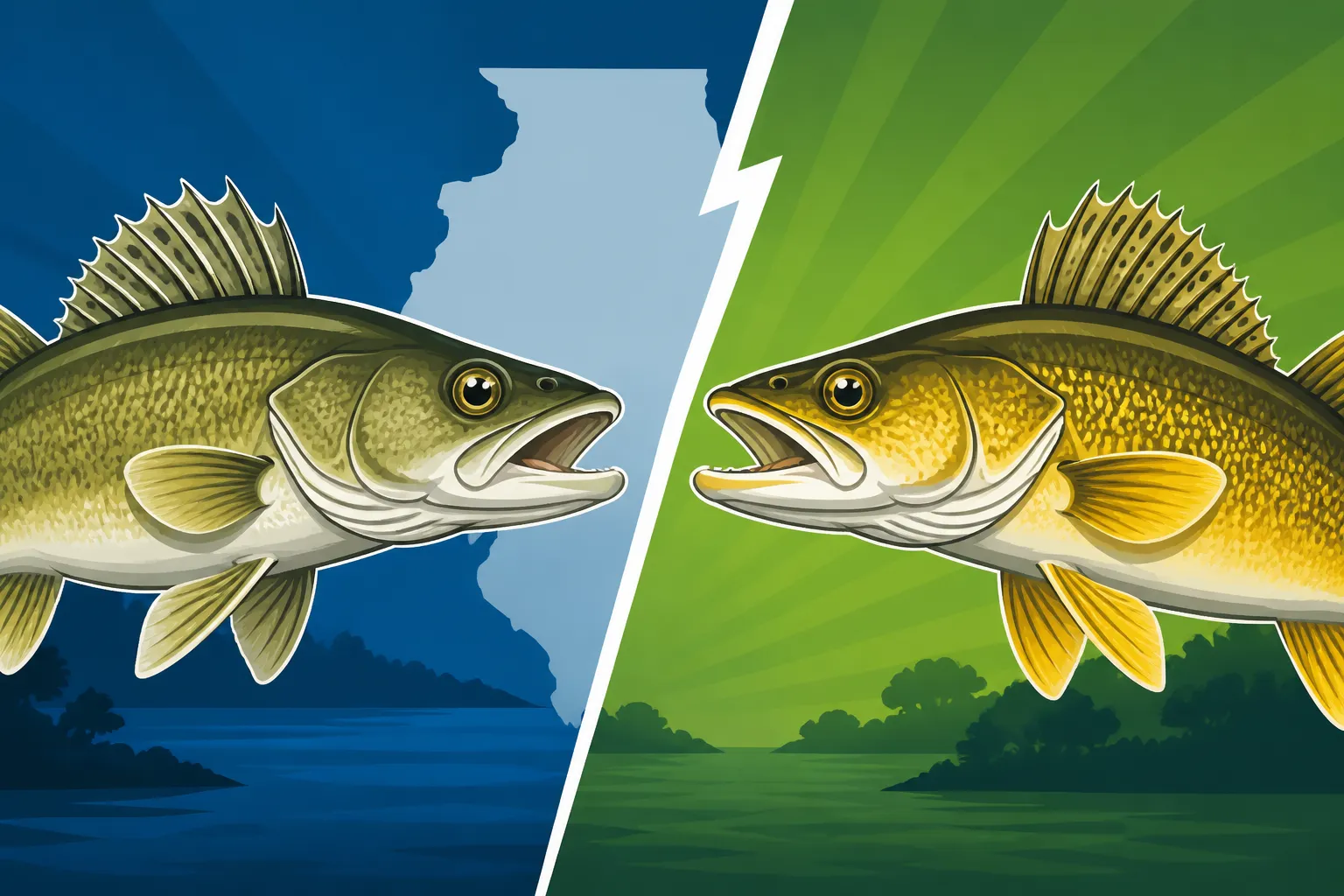
With a walleye, the spiny dorsal fin will typically have a distinct, opaque black blotch at its very rear, near where it meets the soft dorsal fin. This blotch is usually quite noticeable, almost like a thumbprint. The rest of the spiny dorsal fin is generally clear or lightly speckled. Think of it as a definitive "period" at the end of a sentence.
Now, for the saugeye, this black blotch is usually absent or much less pronounced. Instead, the spiny dorsal fin of a saugeye will often have rows of distinct black spots or bands. These spots create a more mottled, striped, or barred appearance across the entire fin. It's like a tiger's stripes, but on a fin! This feature is inherited from its sauger parent and is arguably the most reliable identifier. If you see clear spotting or barring all over that spiny dorsal, you've likely got a saugeye.
Body Markings and Coloration
While both fish have a generally mottled appearance, look closely at their sides for subtle but important differences.
Walleye tend to have more uniform, golden-yellow to olive-brown bodies with darker, sometimes saddle-like, blotches across their back and sides. These blotches might be somewhat indistinct or blend smoothly into the overall coloration. The overall impression is often a sleek, somewhat less patterned fish.
Saugeye, on the other hand, inherit more pronounced dark blotches or vertical bar markings from their sauger ancestry. These markings are often more distinct, giving them a "tiger-striped" or "barred" look down their sides, almost like a chain-link fence pattern. Their base coloration can also be a bit more brownish or olive than the walleye's golden hues. This banding can be particularly striking on larger saugeye.
| Feature | Walleye | Saugeye |
|---|---|---|
| Spiny Dorsal Fin | Distinct black blotch at the rear base | Rows of distinct black spots/bars across fin |
| Body Markings | More subtle, saddle-like blotches, golden hues | More pronounced, "tiger-striped" or barred, brownish/olive |
| Pyloric Caeca | Long, branching; 3-5 major branches | Shorter, less branching; 6-9 major branches |
| Lower Caudal Fin | White tip on lower lobe | No distinct white tip or very faint |
| Cheek Scales | Partially scaled or scaleless | More fully scaled |
Lower Caudal Fin (Tail Fin)
Another excellent indicator, though sometimes less obvious on smaller fish or those that have been handled a lot, is the lower lobe of the tail fin.
Walleye almost always have a distinct white tip on the very bottom lobe of their caudal (tail) fin. It's a clean, bright white patch that stands out against the darker fin. This is a very consistent trait and often a quick giveaway.
For a saugeye, this white tip is typically absent or, if present, is much fainter, smaller, or less defined. You might see a slight lightening, but it won't be that striking, opaque white found on a pure walleye. If you don't see that crisp white edge, it's a strong clue you're looking at a saugeye.
Pyloric Caeca (Internal Organs)
Okay, this one is for the truly dedicated angler, or perhaps for biologists! You won't be checking this dockside unless you're processing your catch, but it's a definitive scientific way to tell them apart. Pyloric caeca are finger-like projections near the stomach.
A walleye will have three to five long, spaghetti-like pyloric caeca that are often branched.
A saugeye (and its sauger parent) will have six to nine shorter, less-branched pyloric caeca.
Again, not for your everyday identification, but a fun fact for the truly curious. You might find identification charts, perhaps available on Amazon, that even depict these internal differences for the ultimate fish enthusiast.
Cheek Scales and Eye Size
Take a peek at the cheek area, just behind the eye.
Walleye generally have fewer scales on their cheeks, often appearing mostly scaleless or only partially scaled.
Saugeye (and sauger) tend to have more scales on their cheeks, often appearing fully scaled. This can be tricky to see without getting up close and personal, and good lighting helps!
As for eye size, it's more subtle. Both are known for their large, reflective eyes (hence "walleye" for their cloudy, "wall-like" appearance). However, saugeye might sometimes have slightly smaller eyes relative to their head size compared to a pure walleye, though this isn't a hard-and-fast rule and is best used in conjunction with other identifiers.
Habitat, Behavior, and Why Identification Matters in Illinois
Knowing where each fish typically hangs out can also be a big help in identification. While there's overlap, their preferred environments often give clues to what you might have on your line. Understanding these preferences also helps you target them more effectively. Illinois Walleye Fishing: The Complete Guide will often detail common walleye haunts.
Preferred Habitats: Where You'll Find Them
Walleye generally prefer larger, cooler, and clearer lakes and rivers. They are often found in deeper waters during the day, especially over rocky structures, main lake points, or submerged humps where they can ambush prey. They are light-sensitive, which is why they tend to be more active during low-light conditions like dawn, dusk, or at night, moving into shallower areas to feed. You'll find them thriving in big reservoirs like Lake Shelbyville or in large river systems.
Saugeye, being a hybrid, often exhibits a broader range of habitat tolerance. They are more tolerant of murky or turbid waters than pure walleye, a trait inherited from the sauger. This makes them excellent candidates for stocking in reservoirs and rivers that might not be ideal for walleye. They can be found in a variety of cover, from main lake points to stump fields and even shallow, murky flats. This adaptability means you might encounter them in a wider array of Illinois waters, sometimes even alongside walleye. Illinois Sauger Fishing: What Anglers Need to Know often highlights their preference for murkier, moving water.
Behavioral Tendencies
Behaviorally, both are predatory fish, but their hybrid nature gives saugeye a bit of an edge in certain situations. Walleye can be finicky eaters, sometimes requiring precise presentations and specific baits, especially during the day. They often stick close to the bottom or structure.
Saugeye can sometimes be a bit more aggressive and willing to chase down a lure, especially in stained water where their superior low-light vision (like walleye) gives them an advantage. They might be found suspended in the water column more often than walleye, particularly if they are chasing baitfish. This can mean a different fishing approach might be more successful, which is why knowing what you're targeting is helpful for your tackle box. Perhaps you're looking for specific crankbaits or jigs, readily available on Amazon, to appeal to their aggressive nature.
Regulatory Nuances in Illinois
The Illinois Department of Natural Resources (IDNR) manages fish populations carefully, and this includes distinct regulations for walleye, sauger, and saugeye. While many regulations are statewide, some specific lakes or river stretches might have special rules. For example, a lake might have a minimum size limit of 14 inches for walleye, but a different limit, or no limit at all, for saugeye to encourage harvest. Illinois Fishing Regulations Overview provides a comprehensive look at the rules.
It’s always your responsibility as an angler to check the current IDNR Fishing Information Guide for the specific body of water you're fishing. This guide is usually updated annually and can be found on the IDNR website or picked up at most bait shops and sporting goods stores. Not only will it help you comply with the law, but it will also help you understand which species are thriving and how you can contribute to sustainable fishing practices. Need a good quality ruler for quick measurements? Amazon has plenty of options, and they're invaluable for checking those size limits accurately.
Beyond Identification: Enjoying Your Illinois Fishing Experience
Ultimately, whether you catch a pure walleye or a hard-fighting saugeye, the joy of fishing in Illinois is what it's all about. These identification tips are tools to enhance your experience, deepen your knowledge, and ensure you're a responsible angler. Don't let the subtle differences overwhelm you; instead, see it as an exciting challenge that adds another layer to your passion for the outdoors.
Gear and Tactics: Tailoring Your Approach
Knowing the difference between these two species can actually help you refine your gear and tactics. While many walleye baits and lures will also work for saugeye, understanding their preferences can give you an edge. For instance, if you're fishing a turbid river known for saugeye, you might opt for baits with more vibration or brighter colors that stand out in murky water. Jigs, crankbaits, and even live bait like minnows or nightcrawlers are excellent choices for both, but the presentation might differ.
For those looking to brush up on their general Illinois fishing knowledge, checking out a good fishing guide, perhaps available on Amazon, can be a great resource. You'll find sections dedicated to Walleye Trolling Techniques or Walleye Jigging Techniques, which are often effective for saugeye as well. Experimentation is key, and every cast is a learning opportunity.
Conservation and Catch-and-Release
Even if you're keeping a legal limit of walleye or saugeye for the dinner table (and both are absolutely delicious!), practicing responsible catch-and-release for fish you aren't keeping is paramount. Handling fish gently, especially when trying to identify them, is crucial for their survival. Have a pair of needle-nose pliers handy for hook removal and consider using a rubberized net to minimize slime coat damage.
Respecting the fish, their habitat, and the regulations ensures that these fantastic angling opportunities will be available for generations to come. Illinois Fishing Season and Catch Limit Rules are designed to protect these fisheries, so understanding and following them is a big part of being a good steward of our natural resources.
The Thrill of the Catch
Whether you’re meticulously identifying every single fish or just enjoying a relaxing day on the water, the thrill of a walleye or saugeye strike is undeniable. They are powerful, beautiful fish that provide incredible sport and fantastic table fare. The more you learn about them, the more rewarding your time on the water will become. So next time you land a member of the perch family, take a moment, look closely at those fins and markings, and know exactly what magnificent creature you've brought to the boat. Tight lines, fellow anglers!
Disclaimer
This article is for general informational purposes only and does not constitute professional advice. Laws, prices and regulations vary by location and change over time. Consult a qualified professional for guidance on your specific situation.