Illinois Brook Trout: Where a Few Streams Still Hold Them
Many anglers in Illinois dream of catching a brook trout, but the reality is, finding these beautiful native fish in our state is like searching for a needle in a haystack. While Illinois is a fantastic state for various fishing opportunities, its coldwater streams capable of sustaining brook trout are incredibly rare. This guide will walk you through the slim chances, tell you exactly where these elusive fish might still be found, and explain what you need to know to pursue them responsibly.
The Elusive Brook Trout in Illinois: A Rare Gem
For many, the idea of catching a brook trout conjures images of pristine mountain streams or wilderness lakes in states far to our north or east. It's true; Illinois isn't exactly known for its trout fishery, and especially not for its native brook trout. Our state's landscape and climate generally favor warm-water species like bass, crappie, and catfish. However, there are indeed whispers, and even some verified sightings, of brook trout holding on in a few isolated corners. The challenge lies not just in finding them, but in understanding why they are so rare here and what makes their habitat so unique.
Why Brook Trout Are So Hard to Find Here
Brook trout, or "brookies" as they're affectionately called, are truly a coldwater species. They thrive in water temperatures that rarely exceed 68°F (20°C) and absolutely demand high levels of dissolved oxygen. They also prefer streams with clean, gravelly bottoms for spawning and plenty of overhead cover, like fallen logs or undercut banks, to hide from predators and harsh sunlight.
Unfortunately, Illinois's geography and climate don't provide much of this ideal habitat. Most of our streams are slow-moving, prone to warming significantly in the summer, and often have silty bottoms, which isn't great for brook trout eggs. Historically, Illinois likely had more brook trout habitat, particularly in the northern reaches, but agricultural practices, urban development, and stream alteration have significantly reduced these coldwater oases over time. The few places where they persist are usually fed by cold, stable groundwater springs, offering a microclimate that defies the surrounding warm-water dominance. These isolated pockets are precious and incredibly fragile.
Distinguishing Brook Trout from Other Trout Species
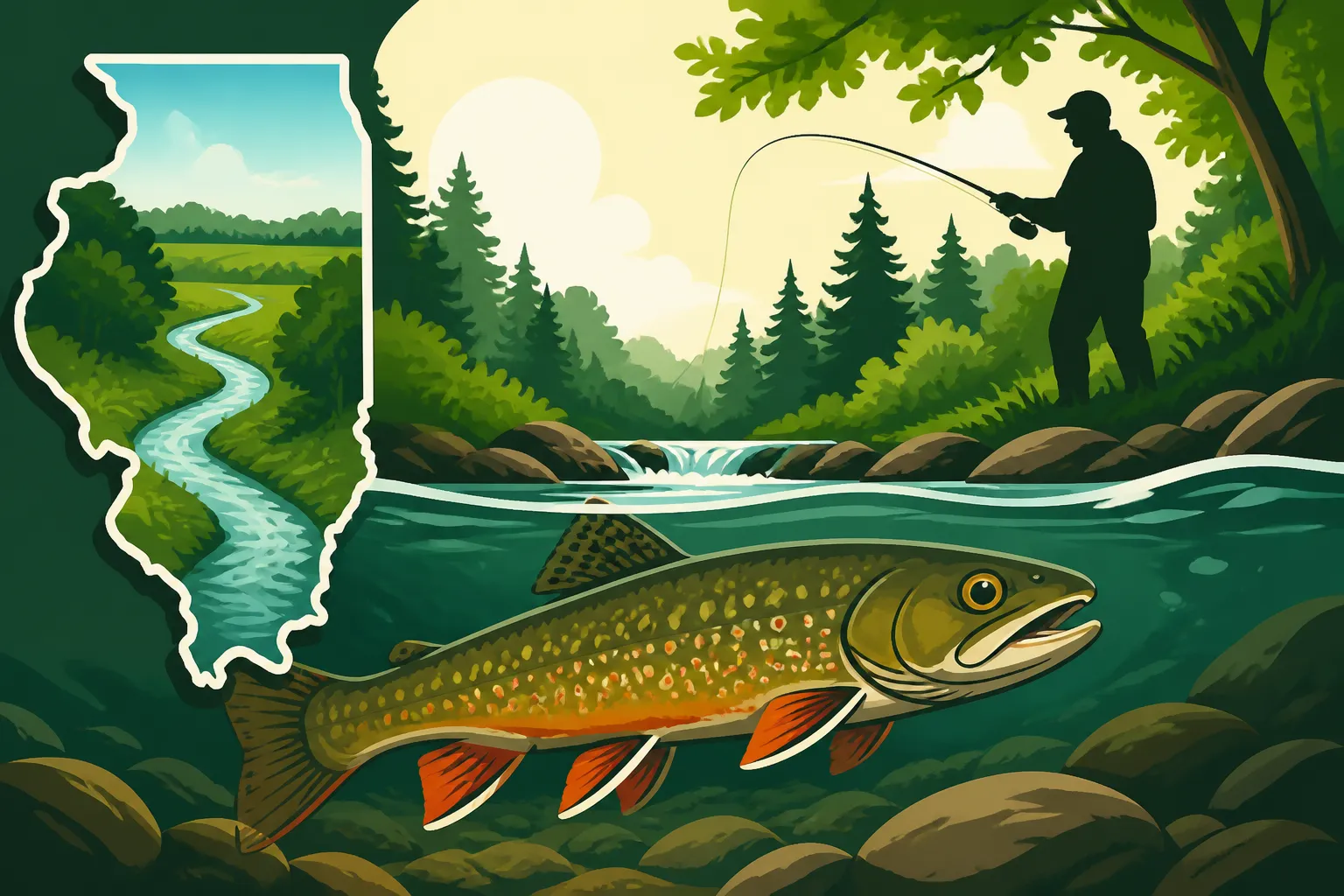
Before you head out, it’s vital to know what you're looking for, especially since rainbow trout and brown trout are much more commonly stocked in Illinois. Brook trout are undeniably stunning, often described as having a mosaic of colors. Their most distinctive features include wavy, worm-like markings on their back and dorsal fin, known as "vermiculations," and vibrant red spots, often encircled by blue halos, scattered along their sides. Their lower fins (pectoral, pelvic, and anal) typically have a bright white leading edge, followed by a black stripe, and then a reddish-orange hue.
Rainbow trout, by contrast, are named for the iridescent pinkish-red stripe along their sides, and they have small, dark spots all over their bodies and fins, but no vermiculations or blue halos around their spots. Brown trout usually have larger, dark spots, some with light halos, and often reddish-orange spots, but again, no vermiculations on their back. Knowing these differences is crucial for identification, especially when practicing catch and release to protect any wild brook trout you might encounter. It's easy to get excited, but proper identification ensures you're helping with conservation efforts. If you're unsure, it's always best to err on the side of caution and release the fish gently. For a deeper dive into identifying these beautiful fish, check out our guide on Rainbow Trout vs Brown Trout vs Brook Trout: Identification Guide.
Known Pockets of Brook Trout Habitat in Illinois
Given their specific environmental needs, true wild brook trout populations in Illinois are largely confined to a handful of spring-fed streams. These aren't the kind of places you'll find advertised on billboards; they require diligent research and often, a bit of bushwhacking to access. These areas are ecological treasures, and any fishing activity there must prioritize conservation.
Northeastern Illinois's Coldwater Streams
When it comes to potential brook trout habitat in Illinois, your best bet is typically going to be in the far northern and northwestern parts of the state. This region includes some small streams that are part of the "Driftless Area," a unique geological zone that escaped glaciation and consequently has different topography and hydrology. Here, spring-fed creeks maintain consistently cold water temperatures even during the summer months. Specific counties like Jo Daviess and sometimes parts of Stephenson or Carroll might have these rare gems.
These are not wide, easily accessible rivers. We're talking about small, often brushy creeks, sometimes barely more than trickles, that flow through wooded ravines or private land. The trout populations in these streams are often low, fragile, and self-sustaining, meaning they reproduce naturally rather than relying on stocking. Finding them often means consulting detailed topographical maps, looking for areas with significant elevation changes, and identifying cold spring seeps. You might not find these spots listed in official fishing guides, and asking at local bait shops in these specific areas might yield some clues, though locals often keep these sensitive spots quiet for good reason. Always respect private property and be mindful of your impact on these delicate ecosystems.
How Stocking Programs Play a Role (or Don't)
Unlike states with abundant coldwater resources, the Illinois Department of Natural Resources (IDNR) primarily focuses its trout stocking efforts on rainbow and brown trout, particularly in designated "put-and-take" trout ponds and streams across the state. These programs are fantastic for providing recreational opportunities for many anglers, but they very rarely involve brook trout. The reason is simple: brook trout are so habitat-specific that most Illinois waters simply aren't suitable for them to thrive, let alone reproduce. Stocking brook trout in unsuitable waters would be a waste of resources and detrimental to the fish.
Therefore, if you're targeting brook trout in Illinois, you generally won't be looking for recently stocked fish. You'll be searching for the rare, naturally reproducing populations that have somehow managed to persist in isolated, pristine spring-fed environments. This makes every brook trout caught in Illinois a truly special event and underscores the importance of strict catch-and-release practices. For more information on where and when other trout species are stocked, you can refer to our article on Illinois Rainbow Trout Stocked Lakes and Streams or explore options like Illinois Lake Michigan Brown Trout Fishing Tips. Understanding the broader Illinois trout landscape helps put the rarity of brook trout into perspective.
Essential Gear and Conservation for Illinois Brook Trout
Successfully targeting the elusive brook trout in Illinois isn't just about finding the right water; it's also about having the right approach and equipment, all while keeping conservation front and center. These fish exist in incredibly delicate ecosystems, and our actions as anglers can have a significant impact on their survival.
Light Tackle and Stealthy Approaches
When you're chasing brook trout in those small, intimate Illinois streams, heavy gear will actually work against you. These fish are often small, incredibly wary, and live in tight quarters. Your best bet is ultralight spinning gear or a very light fly rod (think 2-4 weight). For spinning setups, a sensitive rod in the 5' to 6' range with a small reel spooled with 2-4 pound test line is ideal. Small inline spinners, tiny spoons, or micro-jigs are excellent choices. Fly anglers will find success with small dry flies, nymphs, or wet flies.
Stealth is paramount. These fish can be spooked by heavy footsteps, shadows, or even bright clothing. Approach the stream quietly, stay low, and make accurate casts to likely hiding spots like undercut banks, fallen logs, or behind rocks. Often, you'll only get one or two casts at a particular spot before the fish become aware of your presence. Patience and observation are key. You can find a fantastic selection of ultralight rods, reels, and tiny lures suitable for this kind of delicate fishing on Amazon, ensuring you're well-equipped without breaking the bank. For tips on gearing up for smaller fish, you might find our article on Ultralight Tackle for Panfish Fishing helpful, as many of those principles apply.
Practicing Catch and Release
Let's be absolutely clear: if you are lucky enough to encounter a brook trout in Illinois, you should practice immediate, careful catch and release. These populations are simply too precious and fragile to be harvested. Every fish is vital to the continuation of the species in our state.
When you do hook a brook trout, fight it quickly and bring it to hand without letting it flop around on the bank. Wet your hands thoroughly before touching the fish to protect its delicate slime coat. Remove the hook gently, preferably with a pair of forceps or pliers. If the fish is deeply hooked, it's sometimes better to cut the line as close to the hook as possible rather than tearing its throat. Hold the fish gently in the water, facing upstream, until it swims away under its own power. Avoid excessive handling or taking too much time for photos, as oxygen deprivation and stress can be fatal. Adhering to these practices not only helps the individual fish but ensures that future generations of anglers might also have the chance to witness these rare Illinois natives. While general statewide regulations exist, often the specific rules for these sensitive areas lean heavily towards conservation, so always double-check the Illinois Fishing Regulations Overview and site-specific rules before you go.
Waders, Maps, and Local Knowledge
Accessing these obscure brook trout streams often means wading. Full chest waders are usually a must, not just to stay dry in cold water, but to navigate through thick brush and often steep, uneven terrain along the banks. These streams are rarely manicured or easily walkable. Good wading boots with felt or rubber soles will provide crucial grip on slippery rocks.
Detailed topographical maps, either paper or digital, are your best friend for scouting potential access points and understanding the lay of the land. Look for areas with consistent contour lines indicating a spring-fed ravine or valley. While local anglers might be tight-lipped, sometimes a friendly conversation at a small, independent bait shop in the immediate vicinity of these areas can provide invaluable, up-to-date insights on public access or recent conditions. Always ask politely and be prepared for them to guard their secrets closely. Remember, finding these spots is part of the adventure, and protecting them is part of the responsibility. For exploring and navigating unknown waters, equipment like waterproof maps or a quality GPS device, and indeed, a good pair of durable waders, can all be conveniently found on Amazon. It's always a good idea to know How to Find the Rules for a Specific Illinois Fishing Spot so you're prepared for any specific local regulations.
Here's a quick reference for distinguishing brook trout:
| Feature | Brook Trout | Rainbow Trout | Brown Trout |
|---|---|---|---|
| Back/Dorsal Fin | Wavy, worm-like "vermiculations" | Many small dark spots | Few or no spots; often plain or subtly spotted |
| Sides | Red spots with blue halos | Pink/red stripe; many small dark spots | Larger dark spots, some with light halos; red/orange spots |
| Tail Fin | Slightly forked, often dark with light edges | Broad, slightly forked; many small dark spots | Square or slightly forked; few or no spots |
| Lower Fins | Distinctive white leading edge, then black, then red/orange | No prominent white edges; generally plain | No prominent white edges; generally plain |
| Body Shape | Sleek, torpedo-like | More robust, often deeper-bodied | More robust, can be deeper-bodied |
In conclusion, pursuing brook trout in Illinois is less about filling a creel and more about experiencing a rare connection to our state's wild past. It's a testament to nature's resilience and a call for every angler to become a dedicated conservationist. The reward isn't just a fish, but the profound satisfaction of finding something truly special in an unexpected place.
Disclaimer
This article is for general informational purposes only and does not constitute professional advice. Laws, prices and regulations vary by location and change over time. Consult a qualified professional for guidance on your specific situation.