How to Identify a Brook Trout
There's nothing quite like the thrill of reeling in a beautiful trout, but for many anglers, especially newer ones, telling the different species apart can feel like trying to solve a cryptic puzzle. You've heard whispers of elusive brook trout in Illinois, but how do you actually know if that flash of color you just landed is indeed one of these native gems? This guide is here to unravel that mystery, giving you clear, detailed ways to confidently identify a brook trout in Illinois waters, ensuring you can appreciate your catch for exactly what it is.
The Distinctive Marks of a Brook Trout
Brook trout (technically a char, Salvelinus fontinalis) are absolutely gorgeous fish, and once you know what to look for, they really stand out from their rainbow and brown trout cousins. It’s all in the details, from their unique patterns to their fin coloration.
Body Markings and Coloration That Stand Out
When you get a brook trout in your net, the first thing that will likely grab your eye is their incredibly vibrant and intricate patterns. Unlike the fairly uniform spots you might see on a rainbow trout, brook trout display a tapestry of markings.
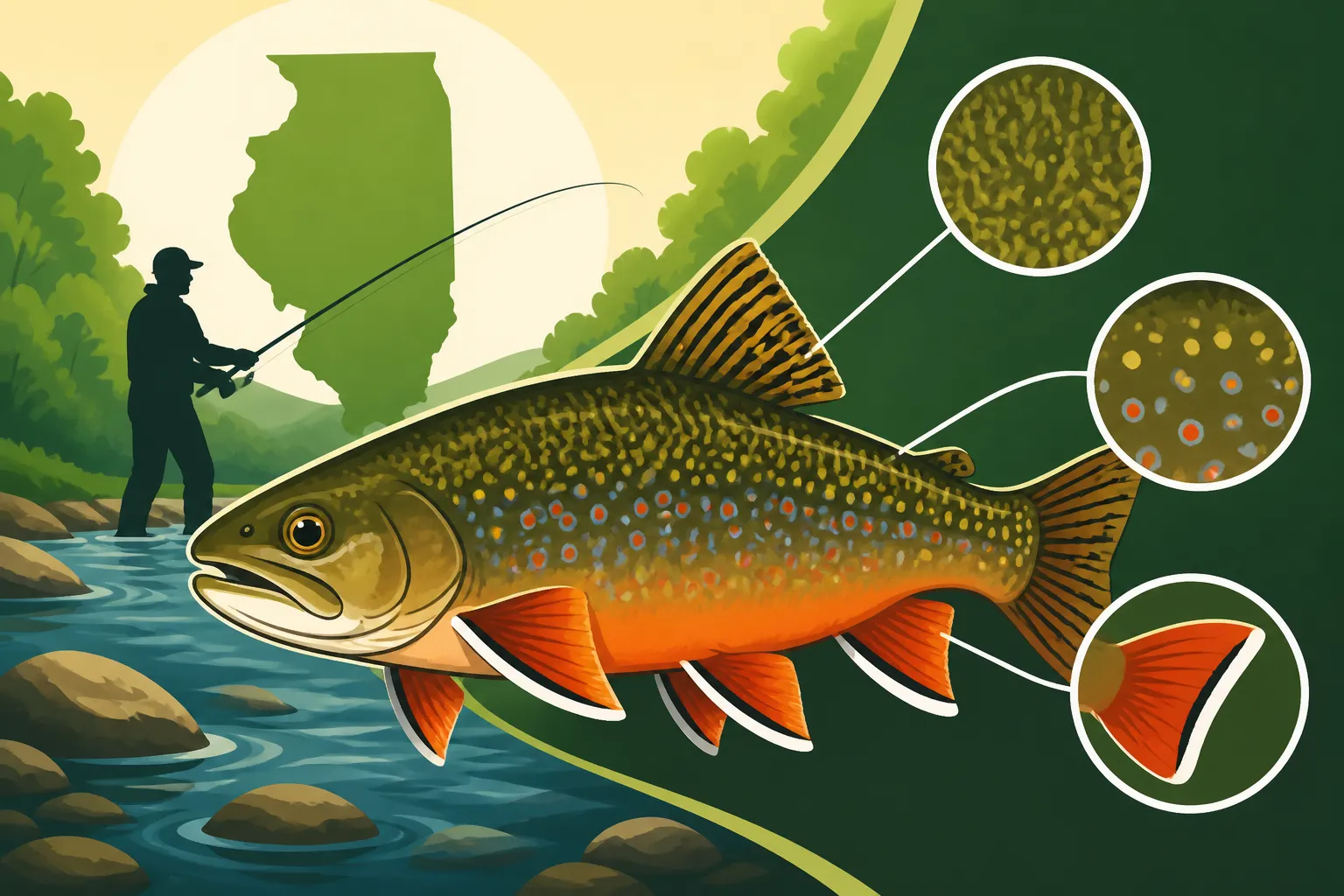
Their backs and upper sides are typically a dark, almost mottled green or brown, often with a maze-like pattern of lighter, worm-like markings. Anglers often call these "vermiculations." Think of them as wavy, squiggly lines that crisscross the fish's back. These patterns are incredibly effective camouflage, helping them blend into the rocky, vegetated streambeds they call home. As you move down their sides, you'll notice small, often brightly colored red spots, and here's the key: many of these red spots are surrounded by stunning blue halos. This blue halo effect is a tell-tale sign of a brook trout and something you won't typically see on other trout species. Their belly can range from a creamy white to a striking orange or red, especially during spawning season, which truly makes them a spectacle. It's a color palette that really pops, and once you've seen it, it's hard to forget.
The Tell-Tale Fins of a Brook Trout
While the body patterns are often the first thing people notice, the fins of a brook trout offer some of the most definitive identification markers. These aren't just subtle differences; they're bold, clear signals.
Look closely at the leading edges of their lower fins—specifically the pectoral, pelvic, and anal fins. You'll see a bright white stripe, almost like it's been painted on, followed immediately by a distinct black stripe. This "white leading edge with a black stripe" combination is a signature feature of brook trout. No other trout species commonly found in Illinois has this exact fin signature. It's a striking contrast against the darker body and a characteristic that makes identification much easier, even at a quick glance. Many anglers get excited when they see this because it confirms they’ve caught one of these special fish. Taking a moment to examine these fins will save you from misidentifying your catch. If you're ever unsure while out on the water, this fin pattern is often the best indicator to confirm you've got a brook trout.
Where to Find Brook Trout in Illinois and Why It Matters
Knowing where a fish lives can actually be a huge clue in identifying it. In Illinois, brook trout aren't everywhere, and their preferred habitats are quite specific, which helps narrow down the possibilities when you land a fish.
Cold, Clear Water Preferences
Brook trout are creatures of pristine, cold water. They thrive in small, spring-fed streams and creeks where water temperatures rarely climb too high, even in the peak of summer. These are often the cleanest, most oxygen-rich waters you can find. Think of shaded, shallow riffles, undercut banks, and pools fed by constant, cold groundwater. They need stable water conditions, making them excellent indicators of high-quality aquatic environments. You won't typically find brook trout making a home in large, warm reservoirs or turbid rivers. If you're fishing in a small, crystal-clear creek that feels remarkably cold even on a hot day, your chances of encountering a brook trout are higher than if you're casting into a larger, slower-moving body of water. This habitat preference alone can tell you a lot about whether the fish you're seeing could be a brook trout or one of its less finicky relatives.
Their Rarity and Specific Habitats in Illinois
Let's be real: catching a wild brook trout in Illinois is a rare and special event. Unlike rainbow trout, which are extensively stocked across many lakes and rivers for put-and-take fisheries, brook trout populations are very limited. In Illinois, you're primarily looking for them in a handful of spring-fed, unstocked streams, mostly in the northern part of the state. These aren't the places you'd typically go for a casual family fishing trip. They're often small, sometimes overgrown, and require a bit of adventurous spirit to reach.
The Illinois Department of Natural Resources (IDNR) focuses on preserving these few remaining wild populations rather than widespread stocking, which further emphasizes their rarity. If you're fishing in one of the well-known stocked trout parks, it's almost certainly a rainbow trout you're catching. However, if you've ventured into a secluded, cold-water creek that you know has a natural spring source, then the possibility of a brook trout becomes much more real. Always check the specific regulations for any stream you're fishing, as some rare brook trout streams might have catch-and-release only rules or other special protections. Knowing that these fish are scarce and live in very particular niches can help manage your expectations and guide your identification process. Illinois Brook Trout: Where a Few Streams Still Hold Them delves deeper into these specific locations.
Telling Brook Trout Apart from Other Trout Species
This is where many anglers get stumped! Illinois has other trout species, primarily rainbow and brown trout, that are far more common due to stocking programs. Knowing the key differences is crucial for accurate identification.
Brook Trout vs. Rainbow Trout
Rainbow trout are the most commonly stocked trout in Illinois, so it's vital to know how to distinguish them from brook trout. While both are beautiful, their markings are quite different.
Rainbow trout, as their name suggests, are known for their iridescent, often pink or red lateral stripe that runs along their sides, especially prominent when they are actively feeding or during spawning. Their bodies are typically covered in numerous small, dark spots (black spots, really), which extend onto their dorsal fin and tail fin. These spots are usually round and uniform, not worm-like, and they lack the blue halos seen on brook trout. Additionally, rainbow trout do not have the distinctive white leading edges with a black stripe on their lower fins that brook trout possess. Their fins tend to be more uniformly colored or subtly spotted. If you see a fish with a prominent pink stripe and small black spots all over, you've almost certainly got a rainbow. You can learn more about identifying other trout species by checking out Rainbow Trout vs Brown Trout vs Brook Trout: Identification Guide.
Brook Trout vs. Brown Trout
Brown trout are another stocked species in some Illinois waters, though less common than rainbows. They share a similar body shape to brook trout but have their own distinct features.
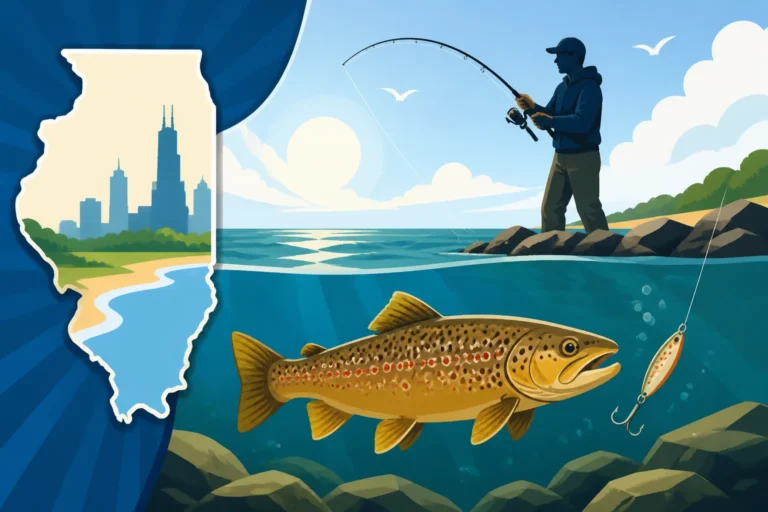
Brown trout typically have a more olive-brown or golden-brown body coloration. Their spots are usually larger and less numerous than rainbow trout's, and they are a mix of dark brown, black, and sometimes red or orange spots. Crucially, these red/orange spots do not have the blue halos that are characteristic of brook trout. Brown trout might have some light halos around their spots, but never the vibrant blue. Their tail fin is often only lightly spotted or unspotted, and their lower fins lack the dramatic white and black leading edges of a brook trout. They also don't display the worm-like vermiculations on their back. If you're seeing larger, more scattered dark spots and some red-orange spots without blue rings, you're likely looking at a brown trout. Illinois Lake Michigan Brown Trout Fishing Tips might give you more context on where to find them.
Here's a quick comparison table to help visualize the key differences:
| Feature | Brook Trout | Rainbow Trout | Brown Trout |
|---|---|---|---|
| Body Color | Dark green/brown back, cream/orange belly | Silver/green back, white belly | Olive-brown/golden-brown, sometimes yellowish belly |
| Back Pattern | Distinctive worm-like (vermiculations) | Uniform dark spots | Often clear, sometimes with subtle spots |
| Side Spots | Red spots with blue halos | Numerous small dark spots (black) | Larger dark spots, some red/orange spots (no blue halos) |
| Lateral Stripe | Absent | Prominent pink/red stripe | Absent or very faint |
| Lower Fins | White leading edge with a black stripe | Uniform or slightly spotted, no white/black edges | Uniform, sometimes yellowish, no white/black edges |
| Tail Fin | Unspotted or lightly spotted | Heavily spotted | Lightly spotted or unspotted |
| Preferred Water | Cold, clear, spring-fed streams | Diverse, often stocked lakes & rivers | Cooler streams, lakes, often more tolerant of warmer water |
Handling Your Catch for Proper Identification and Release
Proper identification often requires a close look, but the well-being of the fish, especially a rare brook trout, should always be your top priority. Gentle handling is crucial, whether you plan to release it or keep it (within legal limits).
Gentle Handling Techniques
When you land any fish, but especially a trout, the goal is to minimize stress and physical damage. This is particularly important for brook trout, given their limited populations in Illinois. First and foremost, wet your hands before touching the fish. Dry hands can remove the fish's protective slime layer, making it more susceptible to disease. Avoid squeezing the fish, especially around its belly or gills. If you can, keep the fish in the water while you unhook it. Use a pair of forceps or needle-nose pliers to remove the hook quickly.
If you absolutely must take the fish out of the water for a quick picture or closer inspection, do so only for a few seconds. Hold it horizontally, supporting its weight, and avoid letting it flop around on hard surfaces. A rubberized landing net is excellent for this, as it's gentler on the fish's scales and fins than traditional nylon nets. If you have a hook that's deeply set and you can't remove it without causing significant harm, it's often better to cut the line as close to the hook as possible. The hook will usually rust out over time. Your actions in those crucial moments after landing a fish make all the difference in its survival. For general regulations on trout fishing, including the need for stamps, remember to check Illinois Trout and Salmon Stamp Requirements.
Photography for Later Confirmation
Sometimes, in the heat of the moment, or when you're trying to quickly release a fish, you might not be 100% sure of its identification. That's perfectly fine! A quick, clear photo can be your best friend for later confirmation. Try to get a few shots from different angles: one showing its side markings, one of its back (to capture those vermiculations), and a close-up of its lower fins if possible.
Make sure the lighting is good, and the fish is as clean and clear as possible in the frame. You don't need a fancy camera; most smartphone cameras are more than capable of capturing the necessary details. After you've taken your pictures, you can compare them to identification guides, such as the one in the Illinois Fishing Information Guide Covers April 2026 Through March 2027, or even share them with experienced anglers in online fishing communities. There are also many excellent waterproof fish identification cards available on platforms like Amazon that you can keep in your tackle box for quick reference. Having these visual records allows you to release the fish quickly and safely, then take your time to accurately identify your catch, turning every outing into a learning experience.
Disclaimer
This article is for general informational purposes only and does not constitute professional advice. Laws, prices and regulations vary by location and change over time. Consult a qualified professional for guidance on your specific situation.