Best Trolling Techniques for Illinois Lake Michigan Salmon and Trout
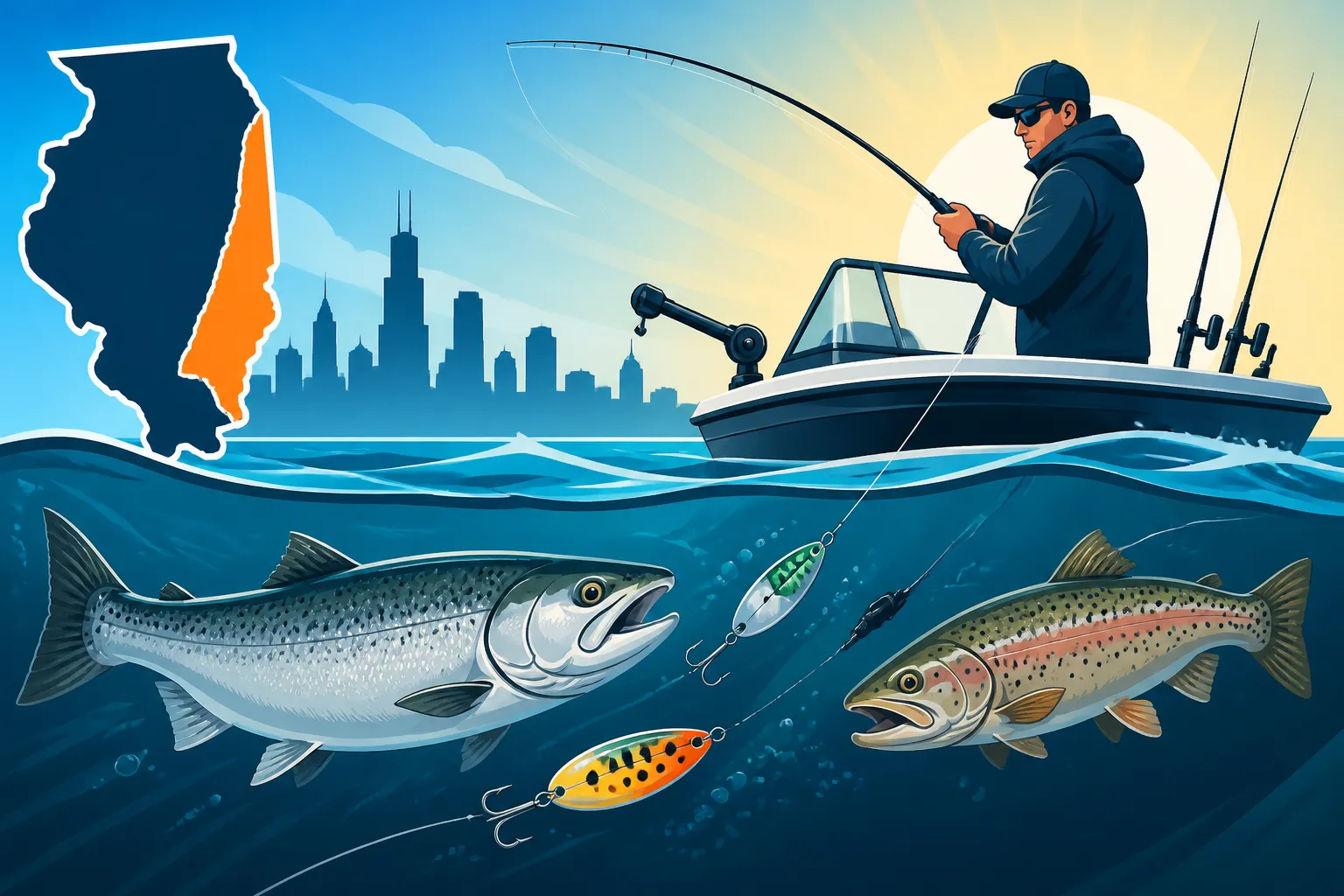
The vast expanse of Lake Michigan can feel incredibly intimidating when you're trying to crack the code on consistently catching salmon and trout. Many anglers, even seasoned ones, find themselves scratching their heads wondering how to present their baits effectively in such a massive body of water. This guide is here to demystify the art and science of trolling, breaking down the best techniques to help you put more of those prized fish in your cooler.
Understanding Lake Michigan's Trolling Dynamics for Salmon and Trout
Fishing Lake Michigan isn't like casting a line into your local pond. This is a massive freshwater sea, and understanding its unique dynamics is the first step toward successful trolling for salmon and trout. You're not just looking for fish; you're looking for where the fish want to be, which often shifts with seasons, water temperatures, and bait movements.
The Deep Blue Challenge: Why Lake Michigan is Different
Lake Michigan's sheer size is a game-changer. It's incredibly deep, often exceeding 900 feet in places, and its open water can be surprisingly featureless to the untrained eye. Unlike a river with obvious current breaks or a small lake with visible weed lines and structure, Lake Michigan's fish are often suspended in the water column, following baitfish like alewives. The challenge lies in finding these schools of bait and then presenting your lures at the correct depth and speed within that vast, watery environment. The currents, thermoclines (layers of water with different temperatures), and even wind can dramatically affect where salmon and trout will hold. It truly demands a different approach than most inland fishing. For a deeper dive into the specific species you might encounter, check out Trout and Salmon Fishing in Illinois: The Complete Guide.
Seasonal Movements: When and Where to Find Fish
The calendar plays a huge role in where you'll find salmon and trout on Lake Michigan. In the early spring, after the ice recedes, fish often move closer to shore, particularly around river mouths and warmer discharges, chasing baitfish that are themselves seeking warmer water. As the water warms in summer, a distinct thermocline develops, and salmon and trout will typically congregate in or just above this cooler water layer, often moving much further offshore into deeper waters. Fall sees another shift as fish prepare for spawning runs, with many salmon pushing into tributary rivers, while trout and some salmon remain in the lake, often closer to shore again as the lake begins to cool down. Knowing these general patterns is crucial for targeting your efforts. You can learn more about specific timing in articles like Illinois Lake Michigan Salmon Season Timing in Illinois and Lake Michigan Trout Season Timing in Illinois.
Essential Gear for Successful Lake Michigan Trolling
Successful trolling on Lake Michigan isn't just about dropping a line in the water; it requires specialized gear designed to cover vast areas and present lures at precise depths. Investing in the right equipment can make all the difference, transforming frustrating days into memorable catches.
Rods, Reels, and Line: Building Your Foundation
Your rod and reel setup is the cornerstone of your trolling arsenal. For Lake Michigan, you'll want sturdy, forgiving rods that can handle the heavy pull of downriggers or dipsy divers, yet still have enough sensitivity to detect a strike. Look for specialized trolling rods, often fiberglass, that are around 7 to 10 feet long with a moderate action. Paired with these, line counter reels are absolutely non-negotiable. These reels allow you to precisely measure how much line you've let out, which is vital for replicating successful depths and maintaining an organized spread of lines. When you find a hot depth, you want to be able to get another lure right back to it. Many anglers find great deals on quality gear, from specialized trolling rods to line counter reels, on Amazon.
For line, heavy monofilament (17-25 lb test) is a common choice for its shock-absorbing qualities, especially when running lures behind dipsy divers. However, many prefer braided line for downriggers due to its no-stretch properties, which provide excellent bite detection, often with a monofilament or fluorocarbon leader to absorb shock and provide invisibility.
Downriggers, Planer Boards, and Dipsy Divers: Controlling Depth and Spread
These three tools are your primary means of controlling lure depth and spreading your lines to cover a wider area.
- Downriggers: These are perhaps the most essential pieces of trolling equipment for Lake Michigan. A downrigger uses a heavy ball (often 8-12 lbs) on a steel cable to pull your fishing line, attached by a release clip, down to a specific, electronically controlled depth. When a fish strikes, the line releases from the clip, allowing you to fight the fish directly without the weight of the downrigger ball. They are incredibly precise for depth control. Learn more about setting them up with Downrigger Setup for Lake Michigan Salmon Trolling.
- Planer Boards: These boards tow your lines away from the boat, creating a wide spread that prevents tangles and allows you to cover more water. They come in various sizes, from small inline boards to large mast systems that can handle multiple lines. Planer boards are excellent for presenting lures in the top 50 feet of the water column and are crucial for fishing shallower areas or when fish are scattered across a wide band.
- Dipsy Divers (or Disk Divers): These are torpedo-shaped or disk-shaped diving devices that use water resistance to take your lure down to a specific depth. Unlike downriggers, they attach directly to your fishing line and use an adjustable trip mechanism to release tension when a fish strikes. Dipsy divers are fantastic for targeting fish in the mid-range depths (15-80 feet) and add another dimension to your trolling spread without needing a heavy downrigger ball.
Here's a quick comparison of these essential depth control devices:
| Device | Primary Function | Depth Range (Approx.) | Pros | Cons |
|---|---|---|---|---|
| Downrigger | Precise depth control | 10 – 200+ feet | Highly accurate, easy depth adjustment | Requires dedicated rod, can be bulky |
| Planer Board | Spreads lines wide | 0 – 50 feet | Covers large area, minimal drag on fish | Less precise depth, affected by waves |
| Dipsy Diver | Mid-depth diving, spread | 15 – 80 feet | Versatile, self-tripping, creates spread | Less precise depth than downrigger |
For a broader look at rigging up, see Downriggers and Planer Boards for Lake Michigan.
Lures and Baits: What Salmon and Trout Crave
Lake Michigan salmon and trout are opportunistic feeders, but they do have preferences. Your tackle box should be stocked with a variety of options.
- Spoons: Metal spoons are a staple for Lake Michigan. They come in countless colors, sizes, and actions, imitating baitfish like alewives. Popular brands offer spoons that flutter, dart, or wobble, making them incredibly versatile. Experiment with colors based on water clarity and sunlight – bright colors on cloudy days or in murky water, natural baitfish patterns in clear water.
- Plugs/Stickbaits: These include both diving plugs (like "Thundersticks" or "Rapalas") and stickbaits. They mimic larger baitfish and can be effective, especially for larger trout and salmon. They provide a distinct swimming action that can entice strikes when spoons are ignored.
- Flasher/Dodger & Fly/Meat Rig Combos: Flashers and dodgers are attractor devices that create erratic movements and flash, mimicking a struggling baitfish, which draws attention. Behind these, anglers run a short leader to a "fly" (squid-like skirted lure) or a "meat rig" (which holds a piece of natural bait like an alewife or smelt). This combination is deadly for both salmon and trout.
You can find an incredible array of spoons, plugs, and flies on platforms like Amazon, allowing you to build a diverse collection without having to visit multiple tackle shops. Having a good selection ensures you can adapt to what the fish are keying in on each day.
Mastering Trolling Techniques for Salmon and Trout
Once you have your gear, it's time to learn how to deploy it effectively. Trolling is often described as an art, and while there's certainly a feel to it, mastering the techniques comes down to understanding how to present your lures in the most enticing way possible.
The Basics of Setting Your Spread
A typical Lake Michigan trolling spread involves multiple lines, often anywhere from 4 to 10 or even more, depending on boat size and crew. The goal is to cover various depths and lateral positions to find where the fish are holding.
Start with your deepest lines first, typically off the downriggers. These are set to specific depths, perhaps one at 50 feet and another at 70 feet. Then, deploy your dipsy divers, often one to each side, set to different depths than your downriggers – maybe 30 and 45 feet. Finally, set your planer boards, running them far out to the sides of the boat, often with lures running relatively shallow (0-20 feet) or with some weight to get them a bit deeper. You want to create a "Christmas tree" effect, with lures at different depths and spread out horizontally to avoid tangles and maximize your coverage. Remember, each line needs ample space to prevent crossovers, especially during turns or when fighting a fish. For a comprehensive look at how to set everything up, check out Illinois Lake Michigan Trolling Setup.
Speed, Direction, and Presentation: Finesse is Key
Trolling speed is paramount and often depends on the species you're targeting and the action of your lures. Salmon generally prefer faster speeds (2.0-3.5 mph GPS speed over ground), which makes spoons and plugs dance enticingly. Trout can sometimes prefer a slightly slower pace. Always pay attention to your GPS speed, as boat speed through water can be affected by currents and will give a less accurate picture of your lure's true speed.
Varying your boat's direction is another effective technique. Instead of trolling in a straight line, make gentle S-turns. When you turn, the lures on the inside of the turn will slow down and drop, while the lures on the outside will speed up and rise. This change in speed and depth can often trigger a strike from following fish that might have been hesitant. Observing your fish finder for bait balls and marking fish is crucial; once you find them, you can adjust your speed and direction to target them more precisely.
Reading Your Electronics: Finding the Fish
Your fish finder (sonar) and GPS are your eyes and map on the water. Learning to interpret what your sonar is telling you is arguably the most critical skill for Lake Michigan trolling. Look for arches that indicate fish, but more importantly, look for baitfish schools. Salmon and trout are predators, and they will be where the food is. If you see a dense school of baitfish at 60 feet, that's where you want your lures.
Your GPS allows you to mark waypoints where you've had success, track productive contours (like underwater points or drop-offs), and replicate successful trolling passes. Don't just blindly troll; use your electronics to hunt for fish and bait, and then present your offerings accordingly. This active approach is far more effective than just hoping to stumble upon them.
Troubleshooting Common Trolling Problems and Advanced Tips
Even with the best gear and techniques, Lake Michigan can throw you curveballs. Being able to adapt and troubleshoot common issues will separate the good days from the frustrating ones.
Dealing with Finicky Biters and Changing Conditions
There will be days when the fish just don't seem interested, no matter what you throw at them. This is where patience and systematic changes come into play.
- Change Lure Colors: If your go-to colors aren't working, switch them up. Sometimes a subtle change from a bright spoon to a more natural baitfish pattern, or vice-versa, is all it takes. Consider the water clarity and light conditions.
- Adjust Depths: Even a change of 5-10 feet can make a huge difference. If you're marking fish at 70 feet, but they're not biting, try running one lure at 65 and another at 75. The thermocline itself can be a dynamic environment, and fish may be just above, in, or below it.
- Vary Speed and Direction: As mentioned, S-turns can trigger strikes. You might also try speeding up or slowing down by just 0.2-0.5 mph. Sometimes, a subtle increase in speed makes a spoon flutter more erratically, mimicking a fleeing baitfish, while a slower speed allows a plug to dig deeper and present a different profile.
- Go Deeper or Shallower: Don't get stuck in a rut. If you're not finding fish at your target depths, consider if the fish have moved significantly shallower or deeper due to changes in baitfish location or thermocline shifts.
- Try Different Lures/Baits: If spoons aren't working, try a flasher/fly combo, or a plug. Having a diverse tackle box, easily replenished through suppliers like Amazon, allows for this experimentation.
Keep a mental log (or a physical one!) of what worked, when, and where. Over time, you'll develop a better understanding of patterns specific to different conditions and times of year.
Safety First: Navigating Lake Michigan
Lake Michigan is beautiful but can be dangerous. Weather can change rapidly, turning a calm morning into a rough afternoon in a matter of hours. Always check the marine forecast before heading out, and keep an eye on the sky and water conditions throughout your trip.
- VHF Radio: A marine VHF radio is crucial for communication with other boats and for receiving weather updates. Cell phone service can be unreliable far offshore.
- Life Jackets: Ensure everyone on board has a properly fitting life jacket, and children under 13 are required to wear them while underway in Illinois. Ensuring you have sufficient life jackets, like those readily available on Amazon, is not just a rule, it's a lifeline.
- Emergency Gear: Flares, a first-aid kit, a whistle or horn, and a throwable PFD are all essential safety items. Always make sure your boat is in good working order before leaving the dock.
- Tell Someone: Let a friend or family member know your float plan – where you're going, when you expect to return, and who is with you. This simple step can be life-saving if something goes wrong.
You can never be too prepared for the conditions on Lake Michigan. Prioritizing safety ensures that your fishing adventures are not only productive but also enjoyable and risk-free. Always be ready to adapt to what the lake throws at you. For a comprehensive list of what safety gear you need, consult Illinois Boating Safety Equipment Checklist.
Disclaimer
This article is for general informational purposes only and does not constitute professional advice. Laws, prices and regulations vary by location and change over time. Consult a qualified professional for guidance on your specific situation.