Illinois Muskie Regulations: Size and Possession Limits Explained
There's nothing quite like the thrill of chasing a muskie in Illinois waters, but if you've ever felt a little overwhelmed trying to figure out all the different rules and regulations, you're definitely not alone. It can feel like you need a law degree just to understand what you can and can't do when it comes to these elusive predators. This guide is here to untangle the complexities of Illinois muskie regulations, specifically focusing on the crucial size and possession limits, so you can fish with confidence and stay on the right side of the law.
Understanding Why Muskie Regulations Exist in Illinois
Muskellunge, or muskie as we often call them, are truly special fish. They're often referred to as "the fish of 10,000 casts" for a reason – they're notoriously difficult to catch, they grow to impressive sizes, and they represent the pinnacle of freshwater angling for many. But because they're such a prized and challenging species, they also need a lot of protection. The regulations aren't there to make your life harder; they're in place to safeguard these incredible fish and ensure that future generations of anglers get to experience the same thrill you do.
Protecting a Prized Predator
Think about it: muskie are apex predators in many of our lakes and rivers. They sit at the top of the food chain, playing a vital role in maintaining the health and balance of the ecosystem. They don't reproduce as quickly as some other fish species, and they take a long time to reach those trophy sizes we all dream about. A muskie might take many years, sometimes over a decade, to reach the legal catchable length in Illinois. If every angler kept every muskie they caught, regardless of size, these populations would quickly dwindle, and the muskie fishing experience would vanish. These regulations are fundamentally about conservation, ensuring that enough muskie survive to reproduce and grow, sustaining the fishery for everyone.
Ensuring Sustainable Fishing Opportunities
The Illinois Department of Natural Resources (IDNR) works hard to manage these fisheries. They stock muskie in various lakes, monitor populations, and study growth rates to determine the best rules to keep the sport alive and well. When you follow the regulations, you're actively contributing to these conservation efforts. It means that while you might release an undersized muskie today, that fish has a chance to grow into a true lunker for you or another angler down the road. It’s a collective effort to keep Illinois a fantastic destination for muskie fishing.
Statewide Muskie Size Limits in Illinois
When it comes to muskie, size really does matter. Unlike some other species where a minimum length might be quite generous, muskie regulations are designed to protect larger, mature fish that are crucial for spawning. This means if you're lucky enough to hook into one, getting out your measuring board is the very first step before you even think about keeping it.
The Standard 48-Inch Minimum
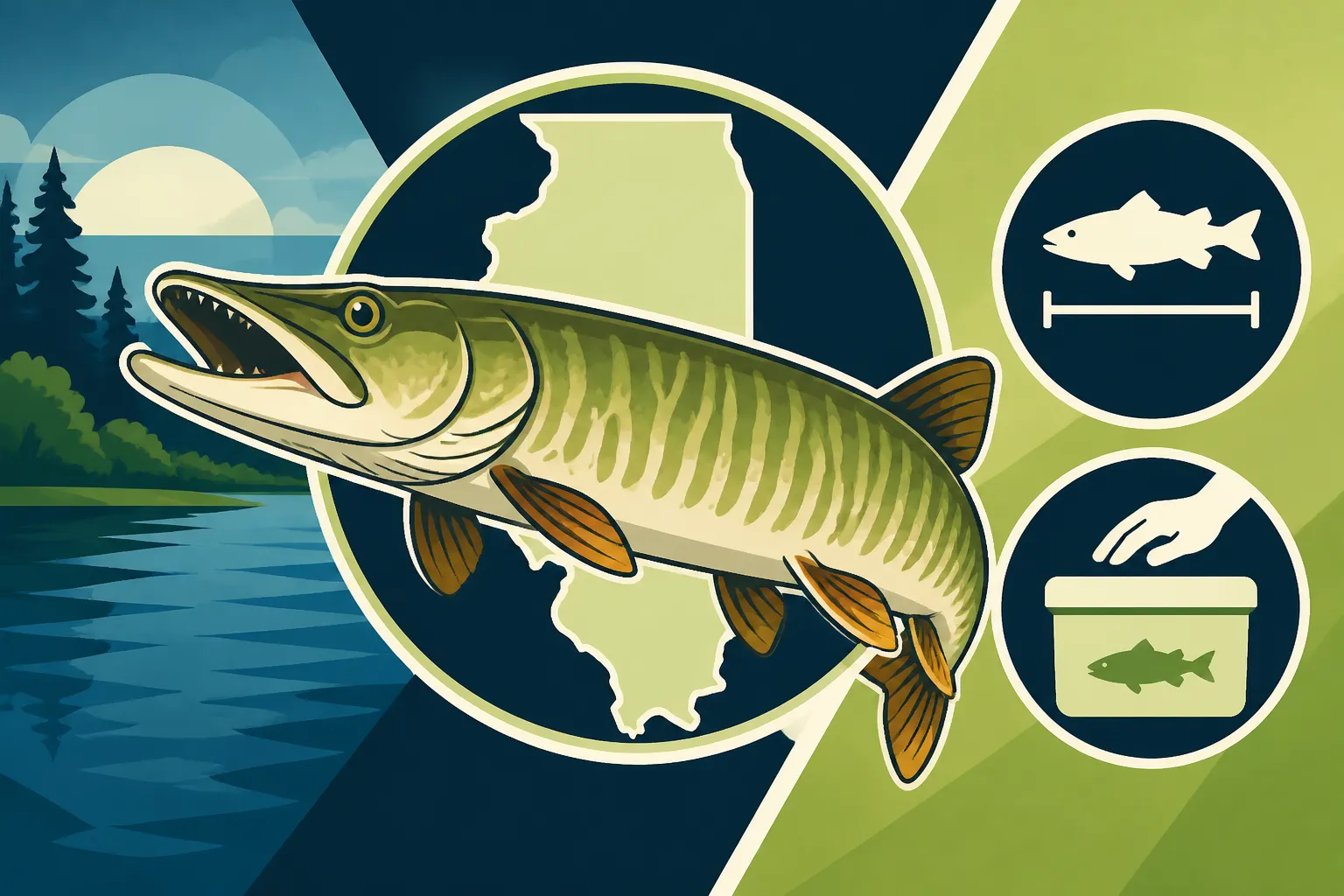
For most waters across Illinois, there's a pretty strict rule: any muskie you catch must be at least 48 inches long to be legally kept. That's four feet of fish! This isn't a small fish by any stretch of the imagination, and it's a size that indicates a mature, healthy muskie that has likely had several spawning cycles. The reason for such a high minimum is precisely to allow these fish to reproduce multiple times, contributing significantly to the muskie population. This rule prioritizes the long-term health of the fishery over individual harvests. Imagine the excitement of a fish that large on the end of your line! It’s an experience worth cherishing, whether you keep it or release it.
Immediate Release for Undersized Fish
Let's be realistic: most muskie you catch will not be 48 inches. It's just the nature of fishing for these giants. This means you'll be practicing catch-and-release quite a bit, which is perfectly fine and a critical part of muskie conservation. If you catch a muskie that doesn't meet the 48-inch minimum, it must be immediately released back into the water where it was caught. This isn't just a suggestion; it's a firm rule. You can't put it in a livewell, take pictures for an extended period, or transport it to another location. The key here is to handle the fish as gently and quickly as possible to maximize its chances of survival. Using a proper net and long-nosed pliers (which you can often find readily available on Amazon) to remove hooks, along with a heavy-duty measuring board, are essential tools for responsible muskie anglers.
Illinois Muskie Possession Limits Explained
Beyond just the size, there's also a limit on how many muskie you can keep, regardless of whether they meet the minimum length. This is another layer of protection that ensures no single angler takes too many of these valuable fish out of the system.
One Fish Per Day Limit
Across Illinois, the daily creel limit for muskie is generally one fish per angler per day. This means that even if you're having the fishing day of a lifetime and manage to catch two muskie over 48 inches, you can only legally keep one of them. The other must be released. This limit is designed to spread the harvest pressure among many anglers and further protect the muskie population. It reinforces the idea that muskie fishing is more about the pursuit and the experience than it is about filling a cooler. Many dedicated muskie anglers choose to release all the fish they catch, even the legal ones, to help ensure the fishery remains robust. Remember, that one legal fish is a trophy that represents years of growth and perseverance.
Possession Limit Versus Daily Creel
It’s easy to get "daily creel limit" and "possession limit" mixed up, but they mean slightly different things. The daily creel limit refers to the number of fish you can take in a single 24-hour period. For muskie in Illinois, that's one. The possession limit refers to the maximum number of fish you can have in your possession at any given time, whether they're in your boat, your cooler, your vehicle, or even back home in your freezer. For muskie, the possession limit is usually the same as the daily creel limit, which is one. This means if you went fishing on Monday and kept a legal muskie, you cannot go out on Tuesday and keep another until that first fish is consumed or no longer in your possession. This prevents anglers from accumulating a large number of fish over several days, putting undue pressure on the population. Always double-check the latest Illinois Fishing Information Guide Covers April 2026 Through March 2027 for clarification, as rules can sometimes shift.
Site-Specific Muskie Regulations and Special Rules
While the statewide 48-inch minimum and one-fish daily limit are common, it's absolutely crucial to understand that muskie regulations can and often do vary significantly from one lake or river to another within Illinois. Ignoring these site-specific rules can lead to serious trouble, even if you thought you were following the general guidelines. These specific rules are often tailored to the unique characteristics of that particular body of water and its muskie population.
Checking Specific Waterway Rules
Before you even launch your boat or cast a line into any Illinois lake or river for muskie, you must check the specific regulations for that exact location. The best place to find this information is in the official Illinois Fishing Information Guide published by the IDNR. This guide is usually available online, at IDNR offices, bait shops, and some sporting goods stores. It will have a section detailing site-specific regulations for many popular lakes and rivers. Think of it as your essential pre-trip checklist, right up there with checking your tackle and getting your Illinois Fishing License Guide for 2026. Don't just assume the general rules apply; a quick check can save you from a fine or, worse, harm the muskie population you love to fish for.
Examples of Varying Limits
Why do these rules change? Well, some lakes might be managed as "trophy muskie" lakes, and to protect those exceptionally large fish and allow them to grow even bigger, the IDNR might impose an even higher minimum length limit—say, 50 inches or even 52 inches. Other lakes might have special catch-and-release only periods or even a complete catch-and-release requirement for muskie, meaning you can't keep any at all. These variations are often based on scientific surveys, stocking success, and the specific goals for that fishery. For instance, some of the lakes featured in Illinois Muskie Fishing: Best Lakes to Try might have these specialized regulations in place to foster a world-class muskie experience. You might also find differences in Illinois Fishing Season and Catch Limit Rules depending on the time of year, especially as it relates to spawning periods.
Here's a simplified table illustrating how regulations might vary:
| Regulation Type | Statewide General Rule | Example Site A (Trophy Lake) | Example Site B (Conservation Lake) |
|---|---|---|---|
| Minimum Length Limit | 48 inches | 50 inches | Catch-and-Release Only |
| Daily Creel Limit | 1 fish | 1 fish | 0 fish (release all) |
| Possession Limit | 1 fish | 1 fish | 0 fish (release all) |
| Special Conditions | None | Barbless hooks recommended | Artificial lures only |
Note: The "Example Site A" and "Example Site B" above are hypothetical for illustrative purposes. Always consult the official Illinois Fishing Information Guide for current, accurate, and site-specific regulations for your chosen body of water.
The Consequences of Not Following Muskie Regulations
Nobody wants to get into trouble, especially when you're just trying to enjoy a peaceful day on the water. However, understanding the potential consequences of not adhering to muskie regulations is a serious part of being a responsible angler. These rules are enforced, and wardens are out there to ensure compliance, protecting the fish for everyone.
The Importance of Compliance
Beyond the legal ramifications, there’s an ethical responsibility that comes with fishing for such a magnificent species. Muskie are a finite resource, and their populations are sensitive. When you follow the regulations, you're not just avoiding a ticket; you're actively participating in the stewardship of this natural resource. You're showing respect for the fish, for your fellow anglers, and for the tireless work of conservation agencies like the IDNR. It’s about ensuring that the muskie fishery thrives, not just for today, but for decades to come. Think about the impact each released, undersized fish has on maintaining Illinois' 220 Fish Species: What Anglers Can Actually Expect to Catch and the overall health of the aquatic environment.
Potential Fines and Enforcement
Illinois Conservation Police Officers (CPOs) are highly trained and regularly patrol fishing areas, both on the water and at boat ramps. They are authorized to check licenses, inspect catches, and ensure all regulations are being followed. If you're found to be in violation of muskie regulations—whether it's keeping an undersized fish, exceeding the daily creel limit, or not having the proper Illinois Fishing License Guide for 2026—you could face significant penalties.
These penalties typically involve fines, which can be substantial, depending on the severity of the offense. In some cases, particularly for repeat offenses or egregious violations, you could even face suspension of your fishing privileges. Additionally, any illegal catch can be confiscated. While we can't state specific fine amounts, understand that these are not minor slaps on the wrist. They are designed to be a deterrent and to emphasize the importance of these conservation rules. It's simply not worth the risk to disregard the muskie regulations. Staying informed and compliant ensures your muskie fishing adventures remain positive and responsible. Always carry your license and be ready to present it, as Can Game Wardens Check Your Fishing License on the Water? is a common reality.
Chasing muskie in Illinois is an incredibly rewarding pursuit, and part of that reward comes from knowing you're participating in a sustainable and ethical sport. By understanding and respecting the size and possession limits, along with any site-specific rules, you're doing your part to ensure that the "fish of 10,000 casts" continues to challenge and inspire anglers for generations to come. Always keep that measuring board handy, grab a reliable pair of long-nosed pliers from Amazon, and consider taking a quick refresher course on Illinois Boater Education Card Requirements for overall safety. Tight lines!
Disclaimer
This article is for general informational purposes only and does not constitute professional advice. Laws, prices and regulations vary by location and change over time. Consult a qualified professional for guidance on your specific situation.