Illinois Largemouth Bass Length Limit and Daily Catch Rules
It's incredibly frustrating when you're just trying to enjoy a peaceful day on the water, but the fishing regulations feel like a tangled mess of contradictions. One lake says one thing, another says something else, and you're left wondering if you're even allowed to keep that beautiful largemouth bass you just reeled in. This guide will cut through the confusion surrounding Illinois' largemouth bass length limits and daily catch rules, helping you understand both the statewide guidelines and those tricky site-specific exceptions, so you can fish with confidence and stay on the right side of the law.
Understanding Statewide Largemouth Bass Regulations in Illinois
When it comes to largemouth bass in Illinois, there's a set of general rules that apply to most public waters across the state. Think of these as your baseline, the default settings before any special conditions kick in. Knowing these core regulations is the first step toward a worry-free fishing experience, especially for such a popular sport fish.
The Statewide Daily Catch Limit for Largemouth Bass
For the vast majority of Illinois lakes, ponds, and rivers, the statewide daily catch limit for largemouth bass is six fish. This means that in any 24-hour period, you are legally allowed to harvest and keep up to six largemouth bass. It's important to differentiate this from a "possession limit," which sometimes refers to the total number of fish you can have on your person or in your vehicle at any given time, often after multiple days of fishing. For largemouth bass, generally, your possession limit aligns with your daily limit unless otherwise specified for certain waters, meaning you can't accumulate more than six from a single fishing trip that spans a day.
Imagine you're out on a beautiful Saturday morning on a general-regulation lake, and the bass are biting. You catch a few nice keepers, maybe a 17-inch beauty, a couple of 15-inchers, and a few smaller but legal ones. Once you've put six fish in your livewell or cooler, your legal harvest for the day is complete. Any additional largemouth bass you catch must be immediately released unharmed. This rule is designed to ensure that the fish population remains healthy and productive, providing ample opportunities for all anglers without over-harvesting. It's a balance, really, between giving anglers a chance to take home some dinner and protecting the fishery for the long haul.
Minimum Length Limit for Largemouth Bass
Here's where it can get a little counter-intuitive for some anglers, especially those used to strict minimum size requirements in other states or for other species. For many, many waters in Illinois, there is no minimum length limit for largemouth bass. Yes, you read that right. If a specific lake or river doesn't have a special regulation posted, then any largemouth bass you catch, regardless of size, can count towards your six-fish daily limit. This often surprises folks, who assume there's always a minimum size, like the 14-inch walleye rule or certain catfish regulations.
While it might sound like a free-for-all, this "no minimum size" rule is part of a deliberate management strategy for certain fisheries. Sometimes, in ponds or lakes with very high bass populations, allowing anglers to harvest smaller fish can actually help reduce competition for food, leading to healthier growth rates for the remaining fish. It's all about balancing the ecosystem. However, responsible angling still dictates that you consider the future of the fishery. Just because you can keep a very small bass doesn't always mean it's the best choice for the overall health of the lake or for developing larger fish in the future. Always think about conservation, even when the rules are lenient. You can learn more about general regulations in the Illinois Fishing Regulations Overview. For a deeper dive, check out No Minimum Size for Largemouth Bass in Illinois Waters.
Site-Specific Regulations: When Things Get Tricky
Just when you think you've got the statewide rules down, Illinois throws a curveball. Many of our lakes, especially the larger, more popular reservoirs and state park lakes, have what are called "site-specific regulations." These are special rules tailored to that particular body of water, often differing significantly from the statewide standard. Ignoring these can lead to an unexpected conversation with a conservation police officer, and nobody wants that on their fishing trip!
Why Certain Lakes Have Different Rules
The reason for these varied rules boils down to localized fisheries management. Not all lakes are created equal; they differ in size, depth, water quality, fish populations, and even the amount of fishing pressure they receive. The Illinois Department of Natural Resources (IDNR) biologists carefully study these factors for individual bodies of water. For example, a lake known for producing trophy bass might have a slot limit to protect medium-sized fish and encourage them to grow larger. Conversely, a pond struggling with an overpopulation of stunted bass might have no length limit at all, or even a reverse slot, to encourage harvest of smaller fish.
Consider a scenario: you plan a trip to a well-known lake like Lake Shelbyville or Rend Lake, both famed for their bass fishing. These aren't just any old ponds; they are massive reservoirs with complex ecosystems and heavy angling pressure. To maintain a sustainable and high-quality fishery, the IDNR implements specific rules that are designed to protect their unique bass populations. These rules could be about protecting spawning fish, encouraging growth, or managing overall biomass. It’s a science, really, tailored to each aquatic environment. This is Why Fishing Rules Vary by Lake and River is such an important read.
Common Site-Specific Length Limits
While the statewide rule often allows you to keep bass of any size up to the daily limit, many popular Illinois lakes will have very specific length restrictions. These commonly include:
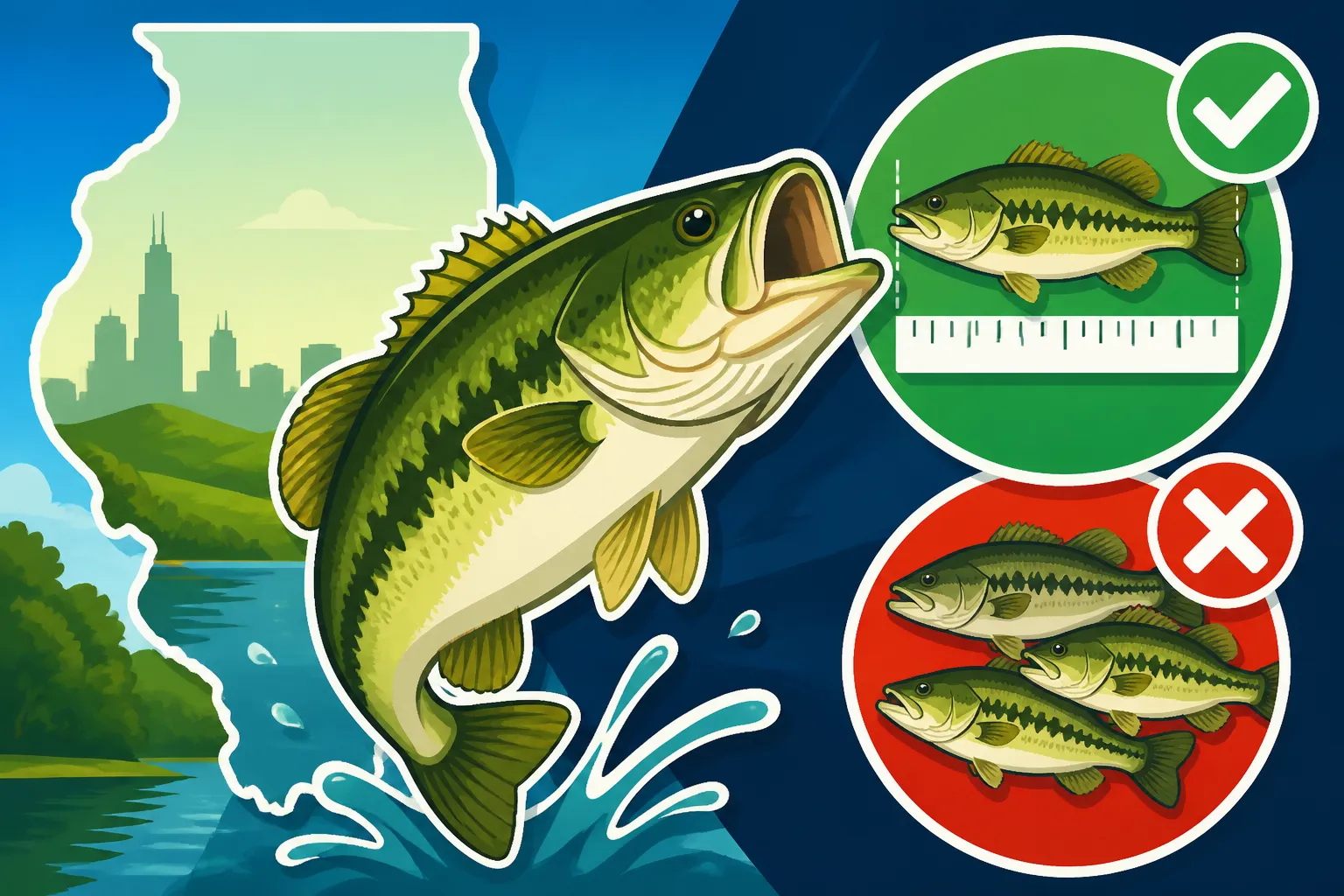
- 14-Inch Minimum Length Limit: This is a very common regulation you'll see. It means any largemouth bass shorter than 14 inches must be immediately released unharmed. Only bass 14 inches or longer can be kept as part of your daily limit.
- 15-Inch Minimum Length Limit: Similar to the 14-inch rule, but with a slightly higher bar. This is often applied to lakes where management aims for a slightly larger average size of harvested fish.
- Protected Slot Limits: These are perhaps the trickiest but also the most effective for managing trophy fisheries. A slot limit might dictate something like "no bass between 14 and 18 inches may be kept." This means you can keep bass under 14 inches and bass over 18 inches, but any fish falling within that 14-18 inch slot must be released. The idea is to protect those adolescent fish, giving them a chance to grow into larger, trophy-sized bass.
Knowing these variations is crucial. Imagine you catch a beautiful 16-inch bass on a lake with a 14-18 inch slot limit. While it's a great fish, if you don't know the rule, you might mistakenly keep it, which would be a violation. Always, always check the specific rules for the water you intend to fish. It will save you a lot of headache!
How to Find Site-Specific Rules
You might be thinking, "How in the world am I supposed to keep track of all these different rules?" It's a valid question, and it's a frustration many anglers share. The absolute best resource for current Illinois fishing regulations is the Illinois Fishing Information Guide. This comprehensive guide is updated annually and details all statewide regulations as well as every site-specific rule for public waters. You can usually pick up a physical copy wherever fishing licenses are sold, or find a digital version on the Illinois Department of Natural Resources (IDNR) website.
Beyond the official guide, look for signage at boat ramps, park offices, and public access points. Many state parks and conservation areas will have large boards detailing the specific fishing regulations for their waters. It's also a good practice to talk to local bait shop owners or park rangers; they're often a wealth of information and can clarify any confusing points. Before you even pack your tackle box, make it a habit to look up the specific body of water you're heading to. Even if you've fished a lake countless times, regulations can change, so a quick check is always worth it. For more details on how to get this information, read How to Find the Rules for a Specific Illinois Fishing Spot.
Here's a quick overview of how largemouth bass regulations typically break down:
| Regulation Type | Daily Catch Limit | Minimum Length Limit | Protected Slot Limit (Example) | Common Application |
|---|---|---|---|---|
| Statewide General | 6 fish | None | None | Many smaller public lakes, ponds, private waters |
| Site-Specific | 6 fish | 14 inches | None | Many larger reservoirs, state park lakes |
| Site-Specific | 6 fish | 15 inches | None | Selected lakes aiming for larger average fish size |
| Site-Specific | 3 fish | None | 14-18 inches | Trophy bass lakes, often with reduced daily limits |
| Site-Specific | Varies (e.g., 2) | None | Catch-and-Release Only | Designated research waters or highly managed areas |
Practical Implications for Illinois Largemouth Bass Anglers
Understanding the rules is one thing; putting them into practice on the water is another. There are a few practical considerations that every Illinois bass angler should keep in mind to ensure a smooth, legal, and enjoyable fishing trip. From how you measure your fish to what you do when the rules say "release only," being prepared makes all the difference.
Measuring and Handling Your Catch
When a length limit is in play, accurate measurement is paramount. The official way to measure a fish in Illinois is from the tip of its snout (mouth closed) to the end of its longest tail fin ray, with the tail compressed. This isn't just a suggestion; it's how conservation police officers will measure your fish. Having a reliable measuring board on your boat or in your tackle bag is an absolute must. You can find a wide variety of durable and accurate measuring boards on Amazon, from foldable ones to rigid models with clear markings. Make sure you use one that’s easy to read and large enough for the fish you expect to catch.
For fish that are undersized or fall within a protected slot limit, quick and safe release is crucial. Minimize their time out of water, handle them gently with wet hands, and use proper tools like long-nosed pliers or a dehooker to remove hooks efficiently. If you must take a photo, do it quickly and get the fish back in the water. The goal is to give that fish the best chance of survival so it can continue to grow and contribute to the fishery. For specific questions about minimum sizes, you might find answers in Is There a Minimum Size for Bass This Season?.
The "Catch-and-Release Only" Scenario
Some Illinois waters, particularly smaller ponds, certain sections of rivers, or designated management areas, may have "catch-and-release only" regulations for largemouth bass. This means that every single bass you catch must be immediately returned to the water unharmed, regardless of its size. These rules are usually in place for very specific conservation reasons, such as restoring a population, creating a unique trophy fishery, or managing a put-and-take pond.
Fishing these waters requires a different mindset. Your focus shifts entirely from harvesting to the thrill of the catch itself and the satisfaction of contributing to conservation. It's a great opportunity to hone your angling skills, experiment with new techniques, and appreciate the fish for their fighting spirit. When fishing catch-and-release waters, consider using single, barbless hooks to make unhooking easier and reduce stress on the fish. This approach is gaining popularity and is covered in more detail in Catch-and-Release Bass Seasons on Some Illinois Lakes.
Avoiding Penalties and Staying Compliant
Nobody wants a fine or a revoked license, but violating fishing regulations can lead to serious consequences. Penalties can range from monetary fines to confiscation of gear, and even suspension of your fishing privileges. Conservation police officers are out on the water to ensure everyone is following the rules, and they have the authority to check your license, your livewell, and your stringer. They're not just looking for scofflaws; they're protecting the natural resources we all enjoy.
The best way to avoid penalties is simple: know before you go. Always check the current Illinois Fishing Information Guide for the specific waters you're targeting. If you're unsure about a rule, err on the side of caution or ask a local authority. It's far better to release a fish you could have legally kept than to keep one you shouldn't have. Being prepared and informed demonstrates respect for the resource and your fellow anglers. Ignorance of the law is generally not considered an excuse, so take the time to be informed. You can explore the repercussions of not following rules in What Happens If You Fish Without a License in Illinois? and Penalties for Exceeding Your Daily Catch Limit.
The Bigger Picture: Conservation and Management
Behind every regulation, every length limit, and every daily catch rule, there's a reason. These aren't arbitrary guidelines designed to make your life harder; they are carefully crafted tools for conservation and sustainable fisheries management. Understanding this bigger picture can help you appreciate why these rules exist and encourage you to be a more responsible angler.
Why Regulations Matter for Largemouth Bass
Largemouth bass are one of Illinois' most iconic and sought-after freshwater game fish. Their popularity means they experience significant fishing pressure across the state. Without proper management, populations could easily decline, leading to fewer fish, smaller fish, and ultimately, a less enjoyable fishing experience for everyone. Regulations like daily limits and length restrictions are crucial for preventing over-harvest and ensuring that enough bass survive to reproduce and grow.
Think about it: if everyone kept every bass they caught, regardless of size or quantity, within a few seasons, many lakes would see a dramatic drop in their bass populations. By implementing these rules, the IDNR aims to maintain a healthy balance, allowing some harvest while safeguarding the future of the fishery. These regulations help maintain genetic diversity, ensure adequate spawning stock, and allow fish to reach a good size, providing a better quality fishing experience for anglers year after year. For general limits that apply across the state, refer to Illinois Statewide Bass Fishing Limits.
Illinois DNR's Role in Bass Management
The Illinois Department of Natural Resources (IDNR) plays a vital role in managing the state's largemouth bass fisheries. Their team of dedicated fisheries biologists conducts extensive research, including electrofishing surveys, creel surveys (talking to anglers about their catches), and habitat assessments. This data helps them understand the health of bass populations in various lakes and rivers, identify challenges, and develop effective management strategies.
Beyond setting regulations, the IDNR is actively involved in habitat improvement projects, such as placing fish attractors or restoring aquatic vegetation, which are crucial for bass spawning and feeding. They also operate extensive fish stocking programs, introducing largemouth bass into suitable waters to bolster populations or establish new fisheries where needed. These efforts, combined with responsible angling practices, work hand-in-hand to ensure that Illinois remains a fantastic destination for largemouth bass fishing for generations to come. Many of these efforts indirectly impact How Big Do Largemouth Bass Get in Illinois Lakes? by allowing fish to reach their full potential. The Illinois Bass Spawn Timing Guide is also a crucial element considered by the IDNR when setting seasons and limits.
Disclaimer
This article is for general informational purposes only and does not constitute professional advice. Laws, prices and regulations vary by location and change over time. Consult a qualified professional for guidance on your specific situation.