Illinois Muskie Gear and Tackle
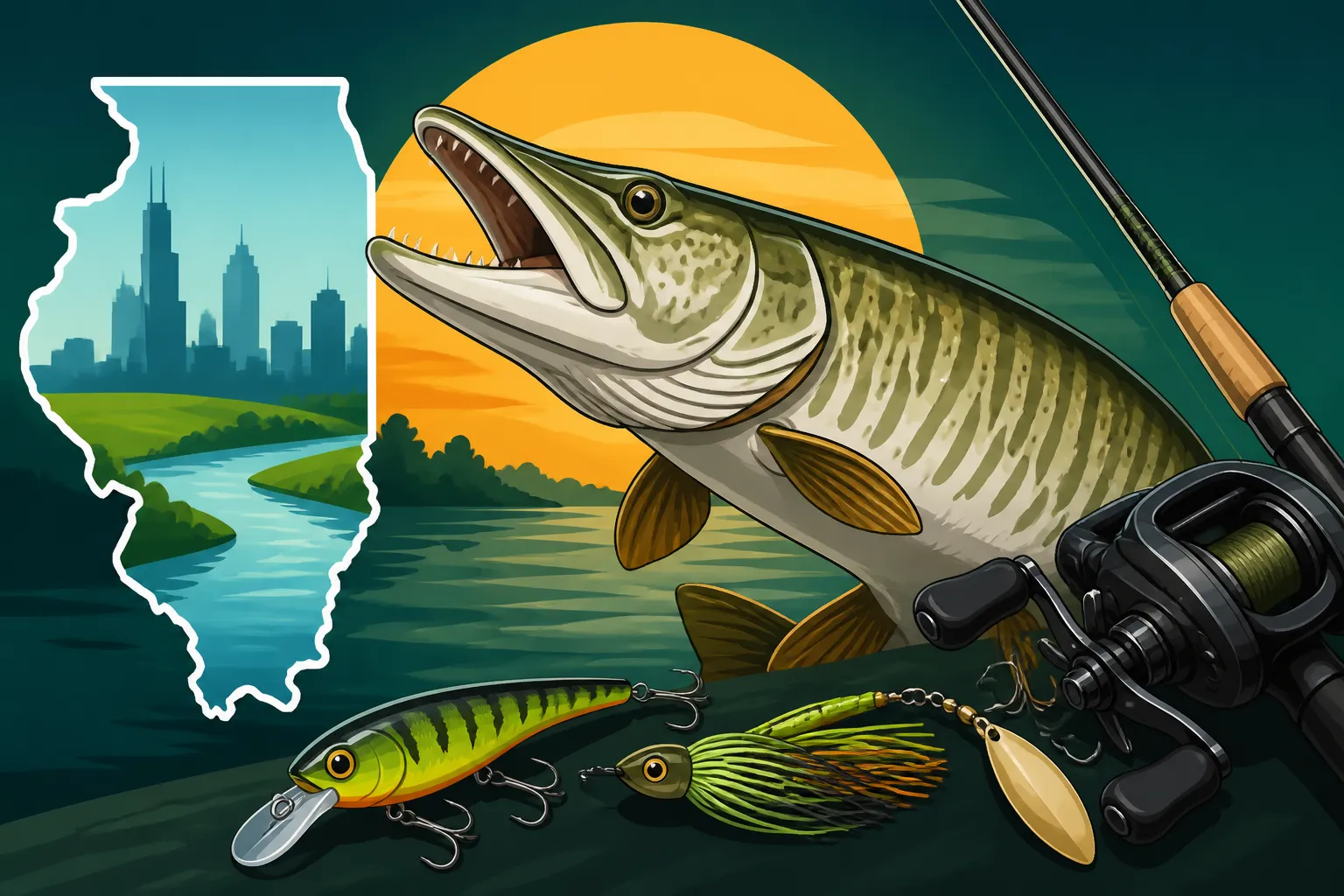
Muskie fishing in Illinois isn't for the faint of heart, and the gear needed can feel overwhelming and expensive, leaving many anglers wondering where to even begin their pursuit of these elusive "fish of 10,000 casts." This guide will meticulously break down the essential rods, reels, lines, lures, and accessories you'll need to successfully chase muskie across Illinois waters, ensuring you're prepared for the challenge and have the right tools to bring in a true trophy.
Understanding Muskie Gear Fundamentals
Chasing muskie isn't like casting for bluegill in a farm pond or even going after bass. These are apex predators, often reaching impressive sizes and possessing incredible power. Because of this, standard fishing gear simply won't cut it. Many anglers get frustrated when they try to use bass tackle for muskie, only to have their rods snap, reels seize, or lines part. It’s a common pitfall, and it’s why specialized gear is not just a preference, but a necessity.
Why Muskie Gear Differs From Other Fishing Tackle
The sheer size, strength, and aggressive nature of a muskie demand gear that can withstand immense pressure. Imagine a fish that can be 40 to 50 inches long, with a mouth full of razor-sharp teeth, hitting your lure like a freight train and then fighting with a tenacity that seems endless. Your rod needs to be able to cast heavy lures all day without failing, your reel needs to handle massive drag and retrieve heavy baits, and your line needs to resist abrasion and absorb powerful runs.
This isn't about overkill; it's about preparedness. Using undersized gear can lead to broken rods, lost fish, and a lot of disappointment. More importantly, it can harm the fish. When you’re undergunned, the fight lasts longer, stressing the muskie more, which can severely impact its chances of survival, especially if you plan on releasing it. Investing in proper gear is an act of respect for both the fish and the sport.
The Importance of Durability and Power
Durability and power are the twin pillars of muskie tackle. Every component, from the reel’s internal gears to the rod’s blank construction and the strength of your leader, must be designed for heavy-duty performance. Muskie lures themselves are often large and heavy, weighing several ounces, sometimes even over a pound for larger baits. Casting these repeatedly throughout a long day puts incredible stress on your equipment.
Think about the repetitive motion: casting, retrieving, figure-eighting at the boat, and then the explosive strike. Your gear has to stand up to constant abuse. This means rods with heavy power ratings and fast actions, reels with robust all-metal construction and strong drag systems, and lines with high breaking strengths. Skimping on these features will lead to premature equipment failure and the inevitable heartbreak of a lost trophy.
Balancing Sensitivity with Strength
While brute strength is paramount, modern muskie gear also incorporates a surprising level of sensitivity. You might think a heavy muskie rod would feel like a broomstick, but the best rods are designed to transmit subtle vibrations from your lure, helping you detect light bites or feel when your bait is fouled. This balance is crucial because muskie can sometimes be incredibly finicky, and feeling those subtle "thunks" or changes in lure action can be the difference between a successful retrieve and a missed opportunity.
The challenge for manufacturers is creating a rod that can cast a 10-ounce lure all day, handle a 50-inch fish, and still be sensitive enough to feel a muskie "tick" a crankbait. Carbon fiber technologies and specialized blank designs achieve this, allowing anglers to feel connected to their lure and the underwater world, despite the heavy-duty nature of the setup. It's a testament to how far fishing tackle has evolved.
Rods and Reels: The Backbone of Your Setup
Your rod and reel are the primary interface between you and the muskie. They need to work in perfect harmony to deliver powerful casts, manage heavy baits, and absorb the shock of a muskie's thrashing fight. Many anglers underestimate the critical role these components play until they hook into their first big muskie and their gear cries uncle.
Selecting the Right Muskie Rod
When it comes to muskie rods, forget what you know about bass or walleye rods. We're talking about heavy-duty, powerful instruments. Most muskie rods range from 8 to 9.5 feet in length, sometimes even longer for specialized applications like boat trolling. This extra length serves several purposes: it provides greater casting distance for those heavy lures, offers more leverage when fighting a powerful fish, and makes performing the crucial "figure-eight" maneuver at the boat much easier.
Rod power, which describes how much force it takes to bend the rod, will typically be Heavy (H) or Extra-Heavy (XH). Anything less is risking your equipment and the fish. The action of the rod refers to where the rod bends. A fast or extra-fast action is preferred as it means the rod bends mostly in the tip section, providing the sensitivity needed for bite detection and the backbone for solid hooksets, especially with large, single-hook baits. Materials are usually graphite or a graphite composite, offering a good blend of strength and sensitivity. You might find a great selection online at Bass Pro Shops, where they often categorize rods specifically for muskie. For more specific advice on combining components, check out Best Rod and Reel Combo for Illinois Muskie.
Choosing a High-Performance Muskie Reel
Your muskie reel needs to be a beast. Baitcasting reels are the standard, designed to handle heavy lines and powerful casts. Look for reels with a robust, all-metal frame and side plates, as plastic components will flex and fail under the stress of muskie fishing. Gear ratios typically range from 5.1:1 to 6.4:1. A lower ratio (like 5.1:1) provides more cranking power, which is great for retrieving large, high-resistance lures like deep-diving crankbaits or big bucktails. A higher ratio (like 6.4:1) offers faster retrieve speed, ideal for quickly working jerkbaits or burning bucktails. Many experienced anglers will carry reels with different ratios to match various lure types and fishing conditions.
The drag system is critical. It needs to be incredibly smooth and capable of generating significant pressure to control a surging muskie. Look for reels with a carbon or similar multi-stack drag system that won't overheat or stutter under heavy load. A good reel will also have a high line capacity to hold the heavy braided line required. Companies like Abu Garcia, Shimano, and Daiwa produce excellent muskie-specific reels that stand up to the challenge. Don't forget that many retailers, including Amazon, offer detailed specifications and customer reviews that can help you compare models.
Understanding Rod and Reel Actions for Muskie
Delving a bit deeper into rod action and power for muskie fishing reveals how nuanced the choices can be, even within a heavy-duty category. A truly heavy power rod with an extra-fast action means the rod maintains its stiffness through most of its length, only bending significantly in the top quarter or so. This design is perfect for throwing large jerkbaits, heavy rubber baits, or big spoons, where you need a strong, stiff tip to work the lure effectively and a powerful backbone for deep hook penetration into a muskie's bony mouth. It also excels at keeping a hooked fish from gaining leverage during the fight.
On the other hand, some anglers prefer a slightly more moderate-fast action for certain applications, such as large crankbaits or swimbaits. A moderate-fast action bends a bit further down the blank, offering a parabolic bend that can absorb the shock of violent strikes and provide a bit more forgiveness during the fight, especially when using trebled lures where a ripping hookset could tear out hooks. Matching your rod's action to your primary lure choices will make a huge difference in your efficiency and enjoyment on the water.
Line, Leaders, and Connections: Strength and Safety
The line and leader system is your final, critical connection to the muskie. Without a robust and correctly constructed setup here, all the expensive rods, reels, and lures are meaningless. Many a muskie has been lost right at the boat due to insufficient line or a poorly tied knot.
Braided Line: The Only Choice for Muskie
When it comes to muskie fishing, braided line is non-negotiable. Forget monofilament or fluorocarbon as your main line; they simply don't have the strength, low stretch, or abrasion resistance needed. Braided line, typically ranging from 65 to 100-pound test, offers several distinct advantages. Its near-zero stretch provides incredible sensitivity, allowing you to feel every bump and turn of your lure, and more importantly, every subtle bite. This low stretch also translates to incredibly powerful hooksets, which are essential for piercing the tough mouth of a muskie.
Furthermore, braided line is incredibly strong for its diameter and highly resistant to abrasion, a critical feature when fishing around submerged timber, rock piles, or through dense weed beds. While muskie teeth can still fray braid, it stands up far better than other line types. Always spool your reel completely with braid. A common mistake is not having enough line, especially on a long cast followed by a powerful run. For an in-depth look at other muskie rules, see Illinois Muskie Regulations: Size and Possession Limits Explained.
Essential Muskie Leader Materials and Lengths
Directly tying your braid to a muskie lure is a recipe for disaster. Those sharp teeth will sever braided line in an instant. This is where a heavy-duty leader comes in. The most common materials are fluorocarbon or wire. Fluorocarbon leaders, typically 100-200 pound test, offer excellent abrasion resistance and are nearly invisible underwater, which can be an advantage in clear water. They are also popular because they allow for a more natural lure action compared to stiff wire.
Wire leaders, usually made of titanium or stainless steel, are the ultimate in tooth-proof protection. While they might slightly affect lure action, they provide peace of mind against bite-offs. Leader length is also important, typically ranging from 12 to 36 inches, depending on the lure and fishing conditions. You need enough length to prevent the muskie from getting its teeth on your main line during a fight. Leaders are usually connected to the main line with a heavy-duty snap swivel for quick lure changes, and a strong knot to the braid.
Knot Tying for Heavy Muskie Tackle
Knot strength is often the weakest link in any fishing setup, and with muskie, a weak knot is a guaranteed loss. For connecting your braided main line to your leader (if you're using a knotable fluorocarbon leader), strong, reliable knots are paramount. The FG knot, the Double Uni knot, or a modified Albright knot are popular choices known for their strength and slim profile, which helps them pass smoothly through rod guides. Practice these knots at home until you can tie them quickly and perfectly every time.
When connecting your leader to a snap or split ring, the Palomar knot or the San Diego Jam knot are excellent choices for braided line. Ensure that every knot is tied correctly, pulled tight, and inspected for any imperfections before making your first cast. Frayed lines, slipped knots, or nicks in your leader material are all potential points of failure that a muskie will exploit without hesitation. Don't let a moment of haste cost you the fish of a lifetime.
Muskie Lures: The Arsenal of the Hunter
Muskie lures are a world unto themselves. They're often large, vibrant, and sometimes seem almost intimidating in their design. Building an effective muskie lure arsenal involves understanding different lure types and when to deploy them, as muskie can be highly selective and their preferences can change hourly. To understand more about what lures to pick for specific scenarios, check out Best Lures for Muskie Fishing Based on What They Eat.
Topwater and Jerkbaits for Aggressive Bites
Few things in fishing are as exhilarating as a muskie exploding on a topwater lure. These baits, designed to churn, walk, or splash across the surface, are incredibly effective for drawing violent strikes, especially in low-light conditions or when muskie are actively feeding near the surface. Walk-the-dog style baits, propeller baits, and creeping baits all have their place. The key is to present them with confidence and be ready for an ambush.
Jerkbaits are another staple in the muskie angler's box. These lipless or shallow-lipped baits are designed to be worked with a series of jerks and pauses, mimicking a wounded baitfish. They often feature an erratic, darting action that can trigger reaction strikes from even sluggish muskie. Both hard and soft jerkbaits are popular, with soft plastics offering a more subtle, natural presentation. The retrieve is key here, often involving a sharp "rip" of the rod followed by a pause, letting the bait suspend or slowly sink.
Bucktails and Spinnerbaits: Workhorse Lures
If there's one lure type that could be considered the backbone of muskie fishing, it's the bucktail. These lures, featuring spinning blades and a skirt of deer hair (bucktail) or synthetic fibers, are designed for one thing: flash, vibration, and a meal-sized profile. They are incredibly versatile and effective, especially when retrieved at a fast pace, covering a lot of water. Different blade configurations (Colorado, Indiana, Willowleaf) and sizes create varying amounts of flash and vibration. Tandem-bladed bucktails are particularly popular for their increased presence in the water.
Spinnerbaits, while often associated with bass, have heavy-duty muskie versions that are equally effective. Larger wire frames, bigger blades, and robust skirts give these baits the durability and profile needed for muskie. They excel when fished through weed lines, timber, or other cover, as their single upturned hook design makes them relatively weedless. Both bucktails and spinnerbaits are excellent search baits, helping you locate active fish quickly.
Glide Baits, Crankbaits, and Soft Plastics
Beyond the primary categories, a diverse array of other lures fills the muskie angler's tackle box. Glide baits are designed to "glide" from side to side with a rhythmic retrieve, creating an irresistible, natural swimming motion. They can be incredibly effective on pressured fish or when a more subtle presentation is needed.
Crankbaits, especially deep-diving models, are crucial for reaching muskie holding in deeper water or along contours. These baits rely on their lip to dive to a specific depth and create a wobbling, erratic action. Large, jointed models or those with unique profiles can be especially enticing. Soft plastic swimbaits, often rigged with heavy jig heads, are gaining popularity for their incredibly lifelike action and ability to be fished at various depths. These can mimic large baitfish, and their soft texture can sometimes encourage a muskie to hold on longer, giving you a better chance for a hookset.
Essential Accessories for Muskie Anglers
Muskie fishing isn't just about the rod, reel, and lures; it's also about having the right accessories to safely and efficiently handle these powerful fish. Without proper tools, landing a muskie can be dangerous for both the angler and the fish. Illinois Boating Safety Equipment Checklist and Illinois Life Jacket and PFD Rules also offer important advice on general boat safety.
Landing Nets and Release Tools
A large, heavy-duty landing net is perhaps the most critical accessory. Muskie nets are massive, with a wide hoop and a deep, rubberized mesh bag. The rubberized mesh is crucial because it protects the fish's slime coat (its primary defense against disease) and prevents hooks from tangling, which can be a nightmare with standard nylon mesh. A net with a strong, extendable handle is ideal for reaching fish boat-side.
Once netted, the release tools come into play. A pair of long-nosed pliers (at least 11-12 inches) and a sturdy bolt cutter are absolutely essential. The pliers are for carefully removing hooks, and the bolt cutters are for quickly snipping hooks if they are deeply embedded or too difficult to remove, especially from a thrashing fish. Attempting to remove hooks without these tools risks serious injury to yourself and severe damage to the muskie. Remember, many muskie anglers practice catch-and-release, so fish care is paramount.
Pliers, Cutters, and Safety Gear
Beyond the immediate release tools, a few other items are non-negotiable for safety and efficiency. Strong, needle-nose pliers are useful for general rigging and hook removal. Line cutters or sharp scissors designed for braided line are a must. Keep a hook file or sharpener handy, as hooks can dull quickly after hitting rocks or fish teeth.
Safety gear includes a good pair of polarized sunglasses to spot fish and submerged hazards, and a wide-brimmed hat for sun protection. A pair of sturdy, fish-handling gloves can offer some protection against teeth and gill plates, though extreme caution is always advised. Always let a netted muskie calm down before attempting hook removal. If you're on a boat, having a non-slip deck is a huge advantage, as a wet deck combined with a thrashing muskie can lead to dangerous falls.
Measurement Boards and Scales
If you plan on recording the size of your muskie, a sturdy, accurate measurement board is necessary. These are often long, folding boards that allow you to quickly and safely measure the length of the fish while it's in the net or briefly out of the water. Avoid trying to use a tape measure on a live muskie; it’s too difficult and stressful for the fish. For those interested in the potential size of these magnificent fish, seeing Illinois State Record Muskie: What It Takes to Beat It can be quite inspiring.
While most muskie anglers focus on length, some may want to weigh their catch. A large, digital scale with a sturdy hook can be used for this, but again, speed and fish care are paramount. Only weigh a muskie if you have the proper cradle or sling to support its full body weight, preventing internal damage. Quickly snap a photo, get your measurements, and get that fish back in the water as fast as possible. Every second out of the water counts toward the fish's survival.
Budgeting for Muskie Gear: Smart Choices for Serious Anglers
Let's be honest: muskie fishing isn't a cheap hobby. The specialized gear comes with a higher price tag than tackle for most other freshwater species. This reality often stops aspiring muskie anglers in their tracks. But don't despair! You don't need to buy everything at once, and there are smart ways to build your arsenal without breaking the bank.
Prioritizing Your Initial Investment
When you're first getting into muskie fishing, it's easy to get overwhelmed by the sheer volume of gear available and the associated costs. The key is to prioritize. Start with one solid rod and reel combo that is specifically designed for muskie. This is your foundation. Think of it as investing in the core tools that will enable you to actually fish effectively and safely. A good quality muskie rod might run you a bit, and a reliable reel will too, but these are the items you absolutely cannot skimp on.
Next, get a couple of proven, versatile lures, like a couple of different sized bucktails and perhaps a sturdy jerkbait. You don't need dozens of lures to start; a few reliable options will get you fishing. Finally, invest in the essential safety and handling gear: a quality muskie net, long-nosed pliers, and bolt cutters. These items are non-negotiable for the well-being of both you and the fish. Buying a complete Tackle Box Setup for Illinois Species that includes muskie-specific items will be a wise choice.
Finding Deals and Building Your Arsenal Over Time
Building a comprehensive muskie tackle collection is a marathon, not a sprint. Don't feel pressured to buy everything at once. Many seasoned muskie anglers have accumulated their gear over years. Keep an eye out for sales at local tackle shops or online retailers like Bass Pro Shops or Amazon, especially during off-season periods. Used gear forums or local fishing swap meets can also be a goldmine for finding quality, pre-owned equipment at a fraction of the cost.
Consider starting with a slightly more affordable but still muskie-appropriate rod and reel, and then upgrade individual components as your budget allows and your passion grows. Maybe next season, you invest in a higher-end reel, or expand your lure selection with a few specialized baits. Slowly but surely, you'll build out a formidable arsenal that meets all your needs.
Maintaining Your Muskie Gear for Longevity
Proper maintenance is crucial for extending the life of your expensive muskie gear. After every outing, especially if you've been fishing in harsh conditions, take the time to clean and inspect your equipment. Rinse your rods and reels with fresh water to remove any lake water, dirt, or debris, and let them air dry completely. Pay special attention to your reel, ensuring no sand or grit has gotten into the gears. A quick wipe-down with a reel oil on moving parts can prevent corrosion.
Inspect your line and leaders regularly for any fraying or nicks. Change out snap swivels if they show any signs of weakness. Check your lure hooks for sharpness and rust, sharpening or replacing them as needed. Store your rods in protective sleeves and your lures in dedicated tackle boxes to prevent damage. A well-maintained muskie setup will perform better and last significantly longer, saving you money in the long run and ensuring you're always ready for that next "fish of 10,000 casts." This thoughtful approach will also help you save for the Illinois Lifetime Resident Fishing License Price if you choose to get one.
Disclaimer
This article is for general informational purposes only and does not constitute professional advice. Laws, prices and regulations vary by location and change over time. Consult a qualified professional for guidance on your specific situation.