Kayak Fishing Crates and Storage Setup
One of the biggest headaches when you're out on the water in your kayak, especially here in Illinois, is keeping all your fishing gear organized and accessible. It's so easy for everything to become a jumbled mess, leading to frustrating moments when you can't find that one lure or your pliers when you desperately need them. This guide will walk you through setting up efficient kayak fishing crates and other storage solutions so you can spend less time fumbling and more time fishing.
Why a Dedicated Storage System is Crucial for Kayak Anglers
Let's be honest, kayak fishing is an incredible way to experience the quiet beauty of Illinois waters, from a tranquil backwater slough on the Mississippi River to the smaller lakes and ponds. But the very nature of a kayak—its compact size and open deck—means that without a smart storage plan, you're setting yourself up for chaos.
The Messy Reality of On-Water Clutter
Imagine this: you've finally found that perfect spot on Lake Shelbyville where the crappie are biting, and you need to switch from a jig to a minnow rig. You reach back, only to find your tackle box has slid under your seat, your leader material is tangled with your paddle leash, and your pliers are nowhere in sight. Sound familiar? We've all been there. Clutter isn't just an annoyance; it's a genuine impediment to a successful and enjoyable day. Tangled lines can lead to lost fishing time, and scrambling for gear can even be a safety hazard, especially in current or windy conditions. It also increases the risk of losing valuable equipment overboard, which is always a tough pill to swallow.
Beyond the immediate frustration, disorganization can genuinely impact your fishing success. If it takes you too long to re-tie or change lures, that school of bass might move on before you even get your line back in the water. A dedicated storage system transforms your kayak from a floating garage sale into an efficient, purpose-built fishing machine.
Maximizing Space and Accessibility
The key to successful kayak fishing storage isn't just about cramming more stuff in; it's about smart utilization of every available inch and ensuring that what you need is always within arm's reach. Kayaks have limited space, and much of that space is either wet or oddly shaped. A well-designed storage system considers these limitations, turning dead space into functional storage. This means strategically placing items you use frequently, like your main tackle box or a set of fishing pliers, in easy-to-grab locations, while less critical items, such as extra line or emergency supplies, can be stowed in more secure, out-of-the-way spots.
Think about the flow of your fishing day. You'll want your rods secured but ready, your net handy, and your cutting tools and measuring board immediately available for a quick catch-and-release. Having a place for everything, and everything in its place, reduces decision fatigue and allows you to focus on the task at hand: catching fish. This kind of thoughtful setup is especially critical when you're fishing solo and don't have an extra pair of hands to help navigate a messy deck.
Understanding Kayak Fishing Crates: Your Command Center
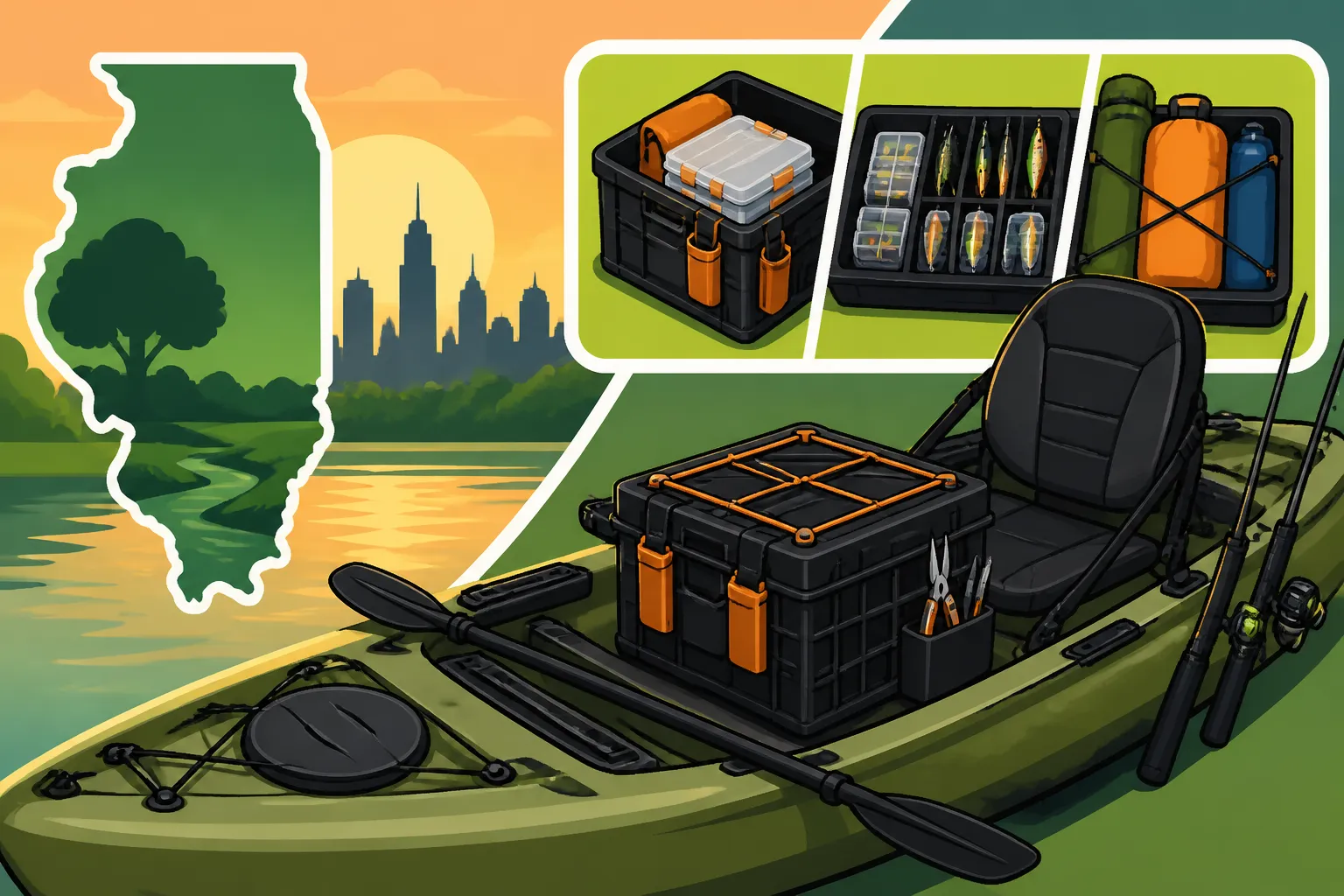
For many kayak anglers, the fishing crate is the undisputed king of on-water storage. It's essentially a modular hub that centralizes your most important gear right behind your seat, making it highly accessible and customizable.
Standard Milk Crate vs. Purpose-Built Fishing Crates
When it comes to kayak fishing crates, you essentially have two main routes: the classic, budget-friendly milk crate or a more specialized, purpose-built fishing crate.
-
The Humble Milk Crate: This is the entry point for many kayak anglers, and for good reason. A standard square milk crate is incredibly affordable, readily available, and surprisingly versatile. Its open grid design allows for easy attachment of accessories, and its size fits perfectly into the tankwell (the open storage area behind the seat) of most sit-on-top kayaks. You can find them almost anywhere, and they're easy to modify. However, milk crates aren't designed for fishing. They lack integrated rod holders, secure lids, or waterproof compartments. Everything inside is exposed to the elements, and small items can easily fall through the holes. Still, for a beginner or an angler on a tight budget, it's a fantastic starting point for Kayak Fishing Gear for Illinois Anglers.
-
Purpose-Built Fishing Crates: Stepping up, purpose-built fishing crates are designed with the angler in mind. Brands like Hobie, Wilderness Systems, and even general outdoor retailers like Bass Pro Shops offer these specialized crates. They often feature integrated rod holders (usually 2-4), secure latching lids, and sometimes even waterproof compartments for electronics or valuables. The materials are typically more durable and UV-resistant than a standard milk crate. While they come at a higher price point, the convenience and added features often justify the investment for serious anglers. They are engineered to fit snugly in a kayak's tankwell and have dedicated tie-down points for secure attachment.
Here's a quick comparison of the two main types of crates:
| Feature | Standard Milk Crate | Purpose-Built Fishing Crate |
|---|---|---|
| Cost | Very Low | Moderate to High |
| Availability | High (grocery stores, hardware stores) | Moderate (specialty tackle shops, online retailers) |
| Rod Holders | None (requires DIY addition) | Integrated (typically 2-4) |
| Lid/Security | Open top (requires DIY cover or bag) | Often comes with a secure, sometimes waterproof, lid |
| Water Protection | Minimal (requires dry bags for contents) | Some models offer waterproof compartments |
| Durability | Good, but can become brittle over time in sun | Excellent, UV-resistant, marine-grade plastics |
| Customization Ease | High (easy to drill/add attachments) | Moderate (some pre-set attachment points, less raw DIY) |
| Overall Integration | Basic, functional | Designed to fit and secure well in a kayak |
Key Features to Look for in a Fishing Crate
Once you've decided on the type of crate, consider these features to ensure it meets your specific needs on Illinois's diverse waterways:
- Integrated Rod Holders: This is probably the most sought-after feature. Having sturdy, securely molded rod holders on the back of your crate allows you to carry multiple rigged rods safely. Look for holders that are angled slightly outward to prevent reels from bumping into each other and to provide easier access. Some crates even have vertical slots on the sides for additional rod storage or to hold a net.
- Tackle Tray Slots: Many purpose-built crates include internal or external slots specifically designed to hold standard tackle trays (like those from Plano or Flambeau). This keeps your baits and lures organized and prevents them from sliding around. Being able to quickly pull out a specific tray for bass fishing in the Illinois River or panfish on a small pond makes a huge difference.
- Tie-Down Points: This is non-negotiable. Your crate must be securely fastened to your kayak. Look for robust tie-down points or loops on the crate that align with your kayak's bungee cords or deck rigging. This prevents your entire command center from becoming an unexpected floatation device if you flip your kayak or encounter rough water on Lake Michigan.
- Waterproof Compartments: While not every crate has them, a small, integrated waterproof compartment can be invaluable for protecting your phone, keys, wallet, or other sensitive items from splashes and rain. If the crate doesn't have one, plan to use a separate dry bag inside the crate for these valuables.
- Drainage: Even if it has a lid, a good crate will have drainage holes in the bottom to prevent water from pooling inside, which can lead to rusty hooks and soggy gear.
- Modular Design: Some advanced crates offer a modular system where you can add or remove accessories like extra rod holders, camera mounts, or even small bait tanks. This allows for ultimate customization based on your fishing trip.
DIY Kayak Crate Customization: Making It Your Own
Whether you start with a simple milk crate or a more advanced fishing crate, personalizing your storage setup is half the fun and can significantly improve its functionality.
Essential Modifications for Functionality
Even the best commercial crates can benefit from a few personal touches. For a standard milk crate, these modifications are practically mandatory to make it truly fishable.
- Adding PVC Rod Holders: This is the quintessential milk crate mod. You'll need some PVC pipe (1.5-2 inches in diameter works well), PVC cement, and a few bolts or zip ties. Cut the PVC to your desired length (usually 8-12 inches), glue on an end cap if you want to prevent your rod tips from going too deep or getting snagged, and then attach them to the outside of the crate using heavy-duty zip ties or drilling holes and bolting them on. Aim for at least two, but four gives you great flexibility for different rigs when Spring Bass Fishing Patterns hit hard.
- Bungee Cords and Netting: Bungee cords are your best friend for securing items on the outside of your crate. Run a bungee cord across the top of the crate, through some holes, to create a quick-access spot for a rain jacket or a small tackle binder. Adding some stretch netting to the sides creates pockets for water bottles, a small first-aid kit, or extra soft plastics. You can find bungee cord and netting kits at almost any sporting goods store or on Amazon.
- Tool Leashes and Retractors: Losing your pliers, line cutters, or fish gripper overboard is a real bummer. Attach coil leashes or retractors to these essential tools and secure them to the crate. This keeps them handy but prevents them from sinking to the bottom of the lake if they slip from your grasp.
- Internal Dividers: Even within a crate, things can get messy. Use small plastic containers, old Tupperware, or even cut-to-size pieces of foam board to create internal compartments for specific items like jig heads, soft plastic packs, or terminal tackle. This compartmentalization is key to quickly finding what you need.
Smart Storage Add-ons and Organization
Beyond the basics, these add-ons can turn your crate into a truly integrated fishing system.
- Waterproof Bags and Boxes: Even with a lidded crate, it's wise to use smaller waterproof bags or boxes for anything you absolutely cannot get wet—your cell phone, camera, car keys, or fishing license. These can sit snugly inside your crate. For paperwork like your Illinois Fishing License Guide for 2026, a durable, clear, waterproof pouch is a must.
- Magnetic Tool Strips: A small magnetic strip adhered to the inside or outside of your crate (away from electronics!) can be fantastic for holding small metal items like extra hooks, swivels, or even a small pair of forceps. It keeps them from rattling around and makes them instantly accessible.
- Cutting Board Surface: Some anglers attach a small, thin plastic cutting board to the top or side of their crate. This provides a clean, stable surface for rigging baits, tying knots, or performing minor repairs without having to balance things precariously on your lap.
- Navigation and Lighting: If you fish early mornings or late evenings, consider attaching a small, waterproof LED light to your crate. And for navigation, a simple, clip-on compass or even a mount for a small fish finder can be integrated into your crate setup, making your fishing experience more informed and safer.
Beyond the Crate: Other Kayak Storage Solutions
While the crate is a central piece, it's just one component of a comprehensive kayak storage strategy. Utilizing other areas of your kayak can greatly expand your carrying capacity and keep your deck clean.
Bow and Stern Hatches: Utilizing Internal Space
Most sit-on-top kayaks, and certainly all sit-inside models, come with internal storage hatches, typically in the bow (front) and stern (back). These are fantastic for larger, less frequently accessed items that need to stay dry and secure.
- What to Store There: Think about spare clothes, a first-aid kit, emergency snacks, extra water, a small anchor, or any other items you want protected from splashes or potential capsizing. For longer trips or when facing unpredictable Illinois weather, a dry bag containing a change of clothes is a smart move.
- Waterproof Bags are Key: While hatches usually have covers, they are rarely completely watertight. Always store items that must stay dry in dedicated dry bags inside the hatches. This provides a crucial second layer of protection. Consider different sizes of dry bags to maximize space efficiency within the often irregularly shaped hatch compartments.
- Accessibility: Remember, accessing hatch storage often means twisting around or even beaching your kayak. So, save these spots for items you won't need in a hurry. You might want to pre-pack essential gear for different conditions, like extra layers for a cold snap, or more sunscreen and bug spray for a hot summer day.
Deck Bags and Tackle Organizers
Sometimes you need extra accessible storage that isn't a full-blown crate. That's where deck bags and specialized tackle organizers come in.
- Deck Bags: These soft-sided, often waterproof bags are designed to attach to your kayak's deck rigging (bungees or pad eyes) in front of or behind your seat. They offer quick access to items you might need more often than those in a hatch, but less frequently than what's in your crate. They're great for storing extra lures, a map, snacks, or even a small camera. You can find a wide variety of deck bags, many with waterproof zippers and clear top pockets, by searching online retailers like Amazon. Some even have dedicated spaces for specific tackle boxes, offering even more organization.
- Tackle Organizers: Beyond the main tackle box, smaller, specialized organizers can be incredibly useful. Think about waterproof bait binders for soft plastics, small utility boxes for terminal tackle, or individual lure wraps. These can fit easily into a crate, a deck bag, or even a large pocket on your PFD. The goal is to keep specific types of gear separated and protected. This makes changing tactics on the fly much quicker, whether you're chasing walleye on the Mississippi River or trying to entice a stubborn bass.
- Cooler Integration: For longer trips or to keep your catch fresh, a small cooler can be integrated into your storage system. Many anglers use soft-sided coolers that fit snugly in the tankwell alongside their crate or can be bungee-corded to the bow or stern. Some fishing kayaks even have dedicated cooler spaces or hatches that can accommodate a small hard-sided cooler.
Paddle and Rod Management on the Water
Keeping your paddle and extra rods secure and out of the way is critical for preventing tangles and ensuring safety.
- Paddle Leashes: A paddle leash is a non-negotiable safety item. It's a simple coiled cord that connects your paddle to your kayak, preventing it from drifting away if you let go or flip. This allows you to fish hands-free without worrying about losing your propulsion.
- Paddle Clips/Stagers: Many kayaks come with built-in paddle clips or stagers along the side. Use them! These keep your paddle out of your lap and off the deck, reducing clutter and the risk of tripping. If your kayak doesn't have them, you can easily add aftermarket clips.
- Rod Leashes: Just like with paddles, leashing your rods, especially expensive ones, is a smart move. A simple coil leash attached to your rod and then to your kayak's deck rigging or your crate's tie-down point can save you a heartbreaking loss. This is especially true when you're actively fishing or if you're battling a big fish and need to temporarily put your rod down.
- Horizontal Rod Storage: For rigged rods you're not actively using but want close by, horizontal rod storage clips along the gunwales (sides) of your kayak are fantastic. These keep the rods secure and parallel to the kayak, out of the way of your paddling motion and less likely to snag on overhead branches or other obstacles. This is particularly useful for tournament anglers who need multiple rods rigged and ready for Illinois Tournament Angler License Rules.
Setting Up Your Kayak for Illinois Waters: Practical Considerations
No matter how many fancy gadgets you have, the real magic happens when you set up your kayak's storage system with practical, real-world fishing in mind. Illinois's waterways offer a diverse range of fishing experiences, from calm backwaters to the expansive and sometimes challenging waters of Lake Michigan, so adaptability is key.
Securing Your Gear for Rough Water and Long Paddles
Imagine you're out on a breezy day on Carlyle Lake, and the chop starts picking up. Or you're making a long paddle to a remote fishing spot on the Kankakee River. Your gear needs to stay put.
- Tie-Downs and Carabiners: Every major piece of gear that isn't permanently attached (your crate, cooler, deck bag) should be securely fastened to your kayak's deck rigging using bungee cords, cam straps, or heavy-duty carabiners. Don't rely on friction alone. Take the time to ensure everything is cinched down tightly.
- Redundancy is Your Friend: For truly essential items, consider a backup. A small emergency repair kit, an extra set of car keys (secured in a dry bag inside a hatch, not in your wallet!), or a spare headlamp can save a trip from disaster. Similarly, if your main fishing rod is a prized possession, leash it. If one tie-down fails, a second one might save it.
- Weatherproofing: Illinois weather can be unpredictable. Even on a sunny morning, a pop-up thunderstorm can quickly drench your gear. Ensure all your valuable electronics, maps, and permits are in truly waterproof containers or dry bags. Don't just assume a sealed lid is enough.
Balancing Your Load for Stability and Performance
A kayak's stability is directly affected by how you distribute weight. An unbalanced kayak isn't just uncomfortable; it can be unsafe and difficult to paddle efficiently.
- Center of Gravity: The goal is to keep your weight, and that of your gear, as low as possible and as close to the center of the kayak as possible. This maintains stability. Avoid stacking heavy items high up on your crate or placing all your heavy gear on one side.
- Even Distribution: Distribute heavier items evenly from bow to stern and side to side. If you have a cooler full of ice and drinks, try to place it directly behind or in front of your seat, or split its contents. The tankwell is a prime spot for your crate and a cooler because it's typically designed for heavier loads.
- Test Run: If you're making significant changes to your storage setup, do a quick test run in calm water. Load up your kayak as you normally would and paddle around a bit. How does it feel? Is it stable? Does it track straight? Make adjustments before you head out for a full day of fishing. This small step can prevent major frustrations later. You want to ensure your setup allows for comfortable paddling, whether you're moving upstream on the Fox River or crossing a wide expanse of Clinton Lake.
Pre-Trip Packing and Post-Trip Cleanup
Efficiency isn't just about what happens on the water; it's also about preparing for your trip and maintaining your gear afterward.
- The Pre-Trip Checklist: Before every outing, especially if you're heading to a new spot or trying a new species, run through a mental or physical checklist. What lures do you need for Illinois Walleye Size and Catch Limits? Do you have enough bait for Illinois Channel Catfish Daily Limit of 20 Fish? Is your crate packed with your go-to tackle? This prevents that sinking feeling of realizing you left your favorite topwater lure at home.
- Easy Access for Cleaning: When setting up your storage, think about how easily you can remove everything for cleaning. Fishing gear gets dirty, and salt spray (if you're on Lake Michigan) or muddy river water can take a toll. A system that allows you to quickly unload, rinse, and air-dry your crate, tackle boxes, and dry bags will extend their lifespan and keep them ready for your next adventure.
- Maintenance: Regularly inspect your bungee cords, straps, and leashes for wear and tear. Plastics can degrade from UV exposure, and hooks can rust if left in damp compartments. A little preventative maintenance goes a long way in ensuring your storage system remains reliable.
By investing time in thoughtful organization and customization of your kayak fishing crates and other storage, you'll not only enhance your efficiency on the water but also significantly increase your enjoyment of Illinois's fantastic fishing opportunities. Tight lines!
Disclaimer
This article is for general informational purposes only and does not constitute professional advice. Laws, prices and regulations vary by location and change over time. Consult a qualified professional for guidance on your specific situation.