Best Reels for Trophy Catfish on Rend Lake
If you've ever tangled with a true trophy catfish on Rend Lake, you know it's not a fight for the faint of heart or the ill-equipped. These powerful fish demand serious gear, and your reel is arguably the most critical component. Trying to land a monster blue cat with an underpowered reel is an exercise in frustration and usually ends in a broken line or a bent spool, sending that fish of a lifetime swimming away. This guide will dive deep into what makes a reel truly suitable for the challenging yet incredibly rewarding pursuit of big catfish on Rend Lake, helping you choose equipment that stands up to the task.
Understanding the Challenge: Why Rend Lake Catfish Demand Specific Reels
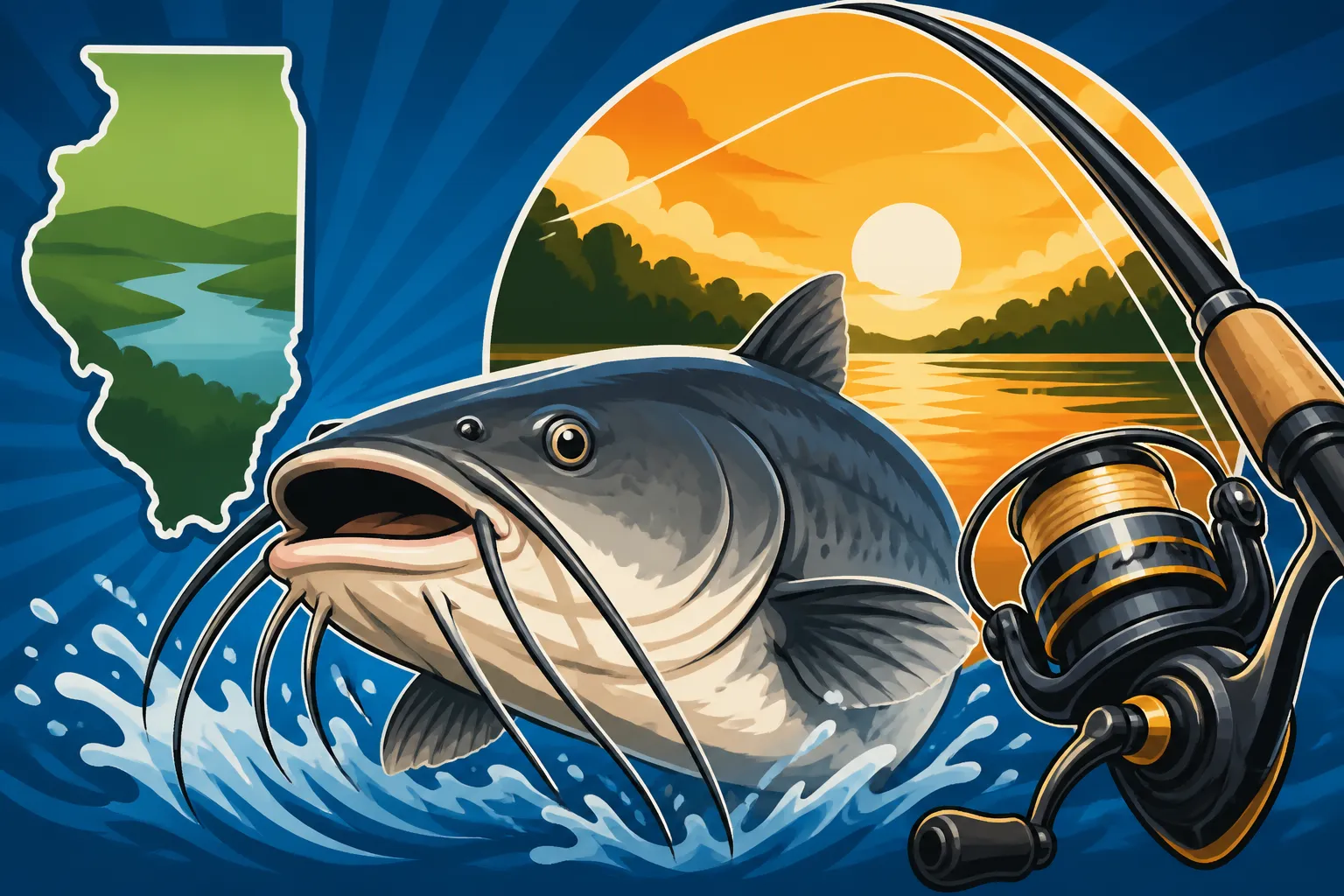
Rend Lake is a legendary spot for catfish in Illinois, renowned not just for the sheer numbers but for the impressive size many of these fish attain. We're talking about channel cats that push double digits, and blue cats that can easily tip the scales into the 30, 40, or even 50-pound range. These aren't your average pond panfish; they are freshwater behemoths that can test the limits of your tackle and your resolve.
The Power of Rend Lake Catfish
Imagine hooking into a blue catfish that feels like a small submarine. That initial run is electrifying, stripping line from your spool with incredible speed and power. These fish use their broad, muscular tails and the lake's strong currents to their advantage, making every inch of retrieved line a hard-won battle. A reel that can't handle this sustained pressure, or one with a flimsy drag system, will quickly buckle under the strain. You need a reel built to absorb punishment and give you the leverage to turn a powerful fish away from snags and submerged timber.
It's not just the initial burst; it's the enduring fight. Rend Lake's big catfish are notorious for their stamina. They'll surge, dive, and pull with surprising tenacity, often making multiple strong runs during the fight. Your reel needs to deliver consistent, smooth performance throughout this marathon, without any stuttering or grinding that could lead to line breakage or internal damage to the reel itself. Many anglers have stories of being humbled by a big cat that simply ran them out of line or exploited a weak point in their gear, and on Rend Lake, those stories are born from real experiences. You don't want to be the next one with a tale of "the one that got away" because your reel wasn't up to par.
Dealing with Heavy Lines and Big Baits
When you're targeting trophy catfish, you're not finesse fishing with light tackle. This is heavy-duty work. You'll be throwing substantial baits – chunks of cut shad, large live perch, or even whole skipjack herring – designed to attract the biggest predators. These baits, combined with heavy sinkers to hold bottom in current or wind, require a reel that can handle the casting weight without straining its components. A reel that's too light-duty will feel sluggish on the cast, reduce your casting distance, and ultimately wear out much faster under this kind of repeated stress.
Beyond the casting weight, you'll be spooling your reel with heavy monofilament or braided line, often in the 30 to 80-pound test range. This thick line needs a reel with ample line capacity to allow for those long, powerful runs a big cat can make. If your spool is too small, a strong fish might strip all your line before you can even think about turning its head. Furthermore, the reel's retrieve system must be robust enough to handle the sheer bulk and resistance of this heavy line, especially when pulling it back in after a long cast or a missed bite. The line roller on spinning reels, for instance, needs to be durable and smooth to prevent grooves or abrasion, which can quickly compromise your line.
Key Features to Look For in a Trophy Catfish Reel
Choosing the right reel for Rend Lake's trophy catfish involves focusing on several critical features that directly impact performance, durability, and your ability to land those giants. Skimping on any of these can lead to disappointment.
Gear Ratio and Cranking Power
The gear ratio tells you how many times the spool or line roller rotates for every single turn of the reel handle. While high gear ratios (e.g., 7.1:1) are great for quickly retrieving lures or taking up slack, for trophy catfish, you often want a lower gear ratio (e.g., 4.1:1 to 5.3:1). Why? Because lower gear ratios translate into more cranking power. It's like the difference between a high gear and a low gear on a bicycle; a lower gear makes it easier to pedal uphill, even if you don't cover as much ground with each stroke.
When a 40-pound blue cat is digging deep and fighting against you, that extra cranking power makes an enormous difference. It allows you to slowly, steadily gain line without feeling like you're going to tear your arm off. Many specialized catfish reels, especially conventional models, are designed with these lower, more powerful gear ratios in mind. They provide the torque needed to turn a big fish's head and pull it away from structure, reducing the chance of it burying itself in a snag or breaking off.
Drag System Strength and Smoothness
The drag system is your safety net, allowing line to pay out when a fish pulls harder than your line can withstand, preventing breakage. For trophy catfish, you need a drag system that is both incredibly strong and incredibly smooth. A strong drag system means it can apply significant pressure to slow down a powerful fish. Look for reels that boast high maximum drag ratings, often measured in pounds. The more stopping power, the better, especially when that Rend Lake monster makes an unexpected surge.
Equally important is smoothness. A jerky, inconsistent drag will create sudden pressure spikes on your line, often leading to a snap. Imagine a big fish pulling, and the drag sticks for a split second before suddenly releasing – that sudden jerk is often all it takes to break even heavy braided line. A truly good catfish reel will have a drag system that releases line fluidly, without any hitches or skips, allowing the fish to take line under steady, consistent pressure. This not only protects your line but also ensures a less stressful fight for both you and the fish, increasing your chances of landing it. Many modern reels feature multi-disc carbon fiber drag systems specifically designed for this kind of consistent performance under extreme load.
Line Capacity and Spool Material
As we discussed, big catfish make big runs. This means you need a reel that can hold a substantial amount of heavy line. For Rend Lake, spooling up with 60-80 pound braided line or 30-40 pound monofilament is common, and you'll want a reel that can hold at least 200-250 yards of that line. Running out of line when you're battling a trophy is a disheartening experience that can easily be avoided by choosing a reel with adequate capacity. Always check the reel's specifications for line capacity based on the pound test you plan to use.
The material of the spool itself is also crucial. Aluminum is common and offers a good balance of strength and weight. For extreme durability and resistance to corrosion, some high-end reels might feature treated aluminum or even stainless steel components. A robust spool design ensures it won't warp or bend under the intense pressure of a tightly wound, heavy line or the strain of a powerful fish pulling against a locked-down drag. This attention to detail in construction is what separates a reliable trophy catfish reel from a lesser model.
Durability and Construction
Trophy catfishing isn't gentle. Your gear will be subjected to harsh conditions, whether it's sitting in a rod holder on the bank, getting splashed in a boat, or taking a beating from a thrashing fish. The construction of the reel needs to be robust from top to bottom. This means a strong, rigid frame that won't flex under heavy load, high-quality gears that can withstand immense torque, and corrosion-resistant components that can handle exposure to water, mud, and bait slime.
Look for reels with a solid, one-piece frame, often made from aluminum or a sturdy graphite composite. Internal components like gears and bearings should be made from durable materials like brass, stainless steel, or high-grade alloys. Sealed bearings are a huge plus, as they prevent dirt, sand, and water from entering and compromising the reel's smooth operation. Many anglers seeking serious gear will gravitate towards trusted brands that specialize in heavy-duty fishing equipment, knowing that these reels are built to last through countless battles with big fish. You want a reel that feels substantial and well-built in your hands, not one that feels flimsy or like it might fall apart after a few tough fights.
Top Reel Types and Their Advantages for Rend Lake
When it comes to reels for trophy catfish, you generally have a couple of main contenders: conventional reels (often called baitcasters) and heavy-duty spinning reels. Each has its strengths and weaknesses, making the choice often a matter of personal preference and fishing style.
Conventional (Baitcasting) Reels
For many serious catfish anglers, the conventional reel is the undisputed champion, particularly the larger, round-profile models. These reels are designed for pure power and durability, making them ideal for the demands of Rend Lake's big cats. Their direct drive system often provides superior cranking power and a more robust feel when battling a strong fish. The line comes directly off the spool, which is in line with the rod, allowing for incredibly strong drags and less line twist than spinning reels.
Round baitcasting reels, like those offered by Penn or Abu Garcia, are especially favored for their legendary toughness and high line capacity. They can handle extremely heavy lines, and their gears are built to take a beating. They are fantastic for bottom fishing with heavy weights and large baits, and once you get the hang of casting them, they can cast quite far. The learning curve for conventional reels, especially preventing backlashes, can be steeper than with spinning reels, but the control and power they offer for big fish are unmatched. Many anglers use conventional reels for setting out multiple lines from a boat, anchoring their baits right in the catfish hotspots. When you're talking about Illinois Blue Catfish: Where the Biggest Fish Are Caught, these reels are often the tool of choice.
Spinning Reels Heavy-Duty
While conventional reels might dominate the conversation for "trophy" specific pursuits, heavy-duty spinning reels still have a strong place in a Rend Lake catfisherman's arsenal, especially for those who prefer their ease of use or certain techniques. Modern heavy-duty spinning reels are far more robust than their lighter counterparts, boasting incredibly powerful drag systems, large line capacities, and robust construction capable of handling substantial fish. Brands like Shimano and Daiwa produce spinning reels that can go toe-to-toe with many conventional models in terms of raw power and durability.
The primary advantage of a spinning reel is its casting ease. There's virtually no learning curve when it comes to casting, making them a great choice for beginners or those who prefer to cast frequently from the bank or shore. They are also excellent for pitching lighter baits into tight spots or when you need quick, precise casts. While they might not offer the same ultimate cranking power as a round baitcaster, a high-quality heavy-duty spinning reel can still effectively land very large catfish, especially if paired with a stout rod. Just make sure the model you choose has a large enough spool to hold sufficient heavy line and a drag system that is rated for the kind of battles you expect. For bank fishing around Rend Lake, a heavy spinning setup might be just the ticket, allowing for long casts with ease.
Round vs. Low-Profile Baitcasters
Within the baitcasting realm, you have two main styles: round reels and low-profile reels.
Round baitcasters, as mentioned, are the traditional choice for heavy-duty applications. They are built like tanks, offering maximum line capacity, larger gears for more power, and unparalleled durability. If your sole focus is on landing the biggest, baddest catfish Rend Lake has to offer, and you're not concerned with a sleek, compact design, a round reel is often the way to go. These reels are designed for brutal battles and are less prone to internal stress from extreme pulling. You'll often find these reels at Bass Pro Shops, built specifically for big game.
Low-profile baitcasters are generally more compact, ergonomic, and often easier to palm for extended periods. They've gained immense popularity in bass fishing, but some heavy-duty low-profile models are now being made for catfish. These reels are typically more cast-friendly and comfortable to use, offering a quicker retrieve in some cases. However, they usually sacrifice some line capacity and raw gear strength compared to their round counterparts. While a robust low-profile baitcaster can handle decent-sized catfish, when targeting true "trophy" fish in the 30-pound plus range on Rend Lake, most seasoned anglers still prefer the sheer brute strength and reliability of a well-built round baitcaster. If you're looking for a balance of comfort and decent power for a variety of catfishing, a heavy-duty low-profile model might be a good fit, but for the absolute giants, the round reel often wins. You can find both types with great reviews on Amazon, but always check the specifications for line capacity and max drag.
| Reel Type | Key Advantages | Ideal Use Case on Rend Lake | Primary Considerations |
|---|---|---|---|
| Round Baitcaster | Maximum power, huge line capacity, extreme durability | Bottom fishing for trophy blue/flathead catfish, boat angling | Learning curve for casting, bulkier, heavier |
| Heavy-Duty Spinning | Easy casting, versatile, less backlash | Bank fishing, lighter catfish rigs, beginner-friendly | Less raw power than round baitcasters, potential for line twist |
| Low-Profile Baitcaster | Ergonomic, comfortable, good for specific casting | Versatile catfishing, smaller trophy cats, comfort focused | Lower line capacity and power than round reels, some backlash risk |
Maintenance and Care for Your Trophy Catfish Reel
Investing in a quality reel for Rend Lake's trophy catfish is just the first step. To ensure it performs flawlessly for years to come and stands up to the demands of big fish, proper maintenance is absolutely crucial. Neglecting your reel will lead to premature wear, reduced performance, and eventually, failure.
Post-Trip Cleaning Rituals
Every time you take your reel out on Rend Lake, it's exposed to dirt, sand, bait residue, and lake water, all of which can be detrimental to its internal mechanisms. Make it a habit to give your reel a quick but thorough cleaning after every trip. Start by wiping down the exterior with a damp cloth to remove any visible grime. Pay special attention to the line roller on spinning reels and the line guide on baitcasters, as these areas collect a lot of debris.
If your reel gets particularly dirty or wet, you might want to rinse it gently with fresh water. Crucially, do not blast it with a high-pressure hose, as this can force water and contaminants into the bearings and gear box. A gentle stream from a garden hose or even just a damp sponge is sufficient. After rinsing, always dry the reel thoroughly with a soft towel, and let it air dry completely before storing. This simple step prevents corrosion and keeps surface dirt from working its way inside. You can pick up good reel cleaning kits at any sporting goods store or easily online through Amazon.
Regular Lubrication and Inspection
Beyond the quick clean, your reel needs periodic deep cleaning and lubrication to maintain its peak performance. How often depends on how frequently you fish and the conditions you fish in, but a good rule of thumb is at least once or twice a season for heavily used reels. This involves carefully disassembling key parts of the reel (if you're comfortable doing so, otherwise a professional service is recommended), cleaning out old grease and grime, and applying fresh reel oil and grease. Specialized reel oils are used for bearings and other fast-moving parts, while reel grease is applied to gears and slower-moving components. Proper lubrication ensures smooth operation, reduces friction, and extends the life of your reel.
During this process, it's also a perfect time for a thorough inspection. Check all screws for tightness, look for any signs of corrosion, inspect the line roller for nicks or wear, and test the drag system for any roughness or sticking. If you notice any issues, address them promptly. Replacing worn parts early can prevent more significant damage down the line. Many fishing enthusiasts find great satisfaction in performing their own reel maintenance, and there are countless guides available online or even specialized tools at Bass Pro Shops to help. This attention to detail will ensure your reel is always ready for the next battle with a Illinois Channel Catfish Daily Limit Explained.
Disclaimer
This article is for general informational purposes only and does not constitute professional advice. Laws, prices and regulations vary by location and change over time. Consult a qualified professional for guidance on your specific situation.