How to Identify a Green Sunfish
Ever felt that familiar tug on your line, reeled in a feisty little panfish, and then stared at it, scratching your head, wondering if it's a bluegill, a sunfish, or something else entirely? It's a common dilemma for Illinois anglers, and telling the difference between the various sunfish species can be surprisingly tricky, especially when you're dealing with the often-misunderstood green sunfish. This guide is here to clear up the confusion, helping you confidently identify that emerald-hued fighter the next time you land one.
The Green Sunfish: An Illinois Panfish Staple
The green sunfish ( Lepomis cyanellus) might not get the same star treatment as a largemouth bass or a monster catfish, but it's a wonderfully common and incredibly fun fish to catch across Illinois. You'll find them almost everywhere, from sprawling state park lakes to tiny farm ponds and lazy river backwaters. They're often overlooked or simply lumped into the "sunfish" category, which is a shame because they have some unique characteristics that set them apart. Getting to know them isn't just about showing off your fish ID skills; it genuinely enhances your fishing experience.
Why Identification Matters for Anglers
Let's be honest, for many, a panfish is a panfish when it comes to the cooler. But knowing your species goes beyond bragging rights. First, different species can have different daily catch limits or even length regulations in specific bodies of water. Imagine thinking you've got a bluegill limit, only to realize half your catch is a different species with a much lower allowance! Ignorance isn't usually an excuse when a conservation police officer checks your stringer. For a general overview of panfish, you might want to read our guide on Illinois' Best Panfish Species: A Complete Guide.
Beyond regulations, there's a real satisfaction in accurately identifying your catch. It helps you understand their behavior, where to find them, and what baits they prefer. Are you consistently catching green sunfish in a certain murky creek? That tells you something about that specific spot's ecosystem. Are you aiming for those big bluegill but keep pulling in greens? Perhaps you need to adjust your approach or location. It's all part of becoming a more knowledgeable and successful angler.
Where Green Sunfish Call Home in Illinois
Green sunfish are truly ubiquitous across the Land of Lincoln. They are incredibly adaptable and can thrive in a wide range of aquatic environments that might stress out other fish species. You'll typically find them in slower-moving waters, making them perfect residents for the calmer sections of rivers, small creeks, farm ponds, and the backwater sloughs that feed into larger river systems like the Illinois River or the Mississippi.
They prefer areas with some sort of cover – think submerged logs, weed beds, brush piles, or even rip-rap along a shoreline. They’re not as picky about water clarity as some fish, often doing quite well in slightly turbid or muddy conditions that bluegill might shy away from. So, if you're fishing a small, somewhat neglected pond or a slow-moving ditch-like creek, there's a very good chance you'll encounter a green sunfish. They're often the first fish kids catch, and for good reason – they're aggressive little eaters and are usually plentiful.
Key Physical Characteristics to Spot a Green Sunfish
Alright, let's get down to the nitty-gritty. When you've got that fish in hand, what exactly should you be looking for? Green sunfish have a distinct set of features that, once you know them, make them relatively easy to pick out of a mixed bag of panfish.
Body Shape and Coloration
When you hold a green sunfish, you'll immediately notice that its body shape isn't as perfectly round or "disc-like" as a bluegill. Instead, they tend to be a bit more robust and somewhat elongated, almost football-shaped in a miniature sense. They have a thicker, chunkier feel to them, especially around the midsection.
Their base coloration is usually a beautiful greenish-blue, often with distinct brassy or yellowish reflections on their sides. This color can vary depending on the water they live in – fish from clearer water might be brighter, while those from murky ponds might appear darker. A key visual cue is the presence of irregular, broken chain-like bars or rows of spots that run horizontally along their sides. These aren't always super prominent, but if you catch it in the right light, you'll see them. Contrast this with a bluegill, which usually has distinct, dark vertical bars.
The Mouth and Head: A Dead Giveaway
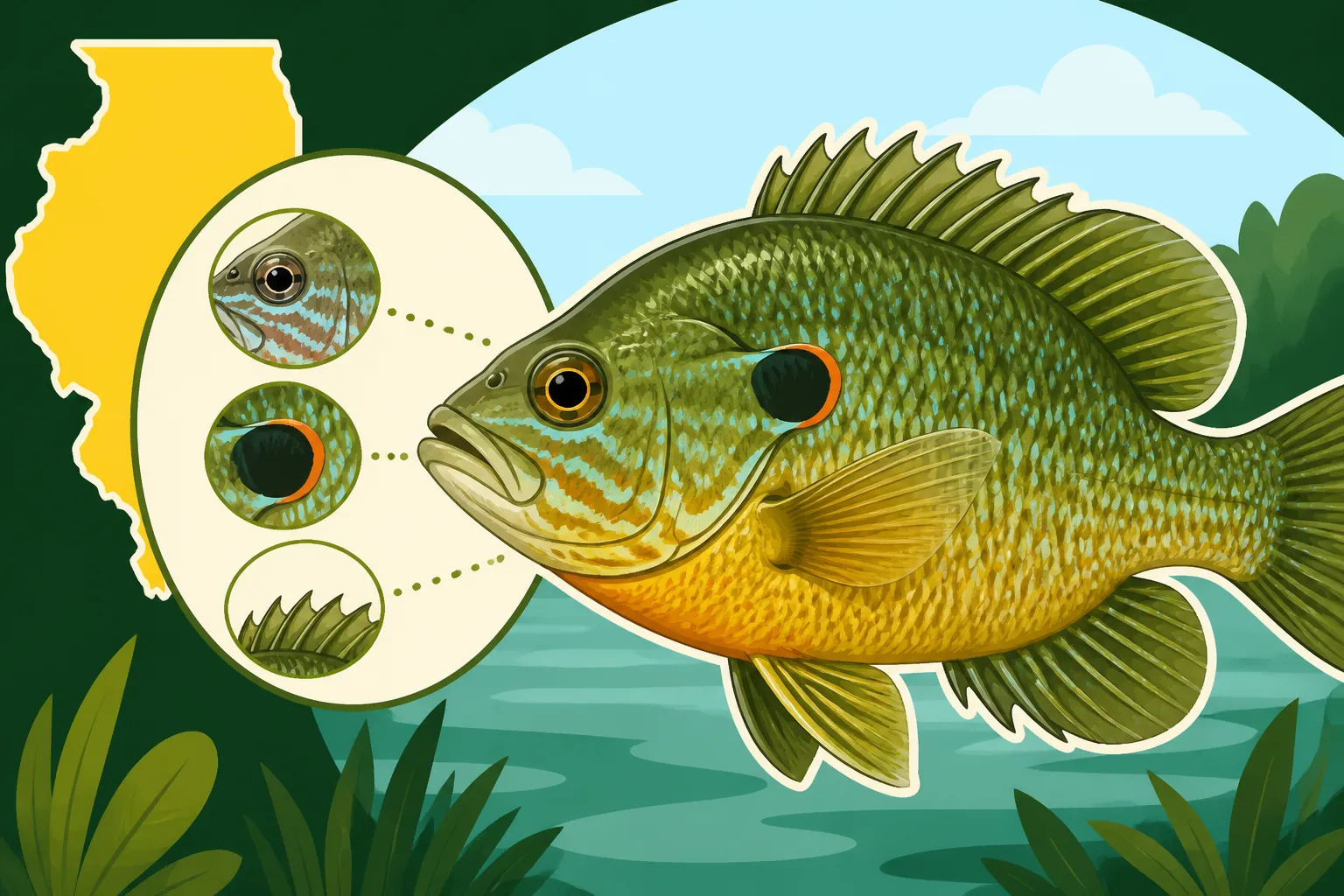
If there's one single feature that will help you identify a green sunfish almost every time, it's their mouth. Green sunfish have a surprisingly large mouth for a panfish. When you look at it, the corner of their jaw will extend back to, or even slightly beyond, the front edge of their eye. This is a crucial differentiator! A bluegill, on the other hand, has a much smaller, more terminal mouth that typically doesn't extend past the front of the eye.
Their head also appears a bit more pointed and aggressive, almost like a miniature bass, due to this larger mouth. This aggressive mouth isn't just for show; it allows them to eat larger prey than other sunfish, including small minnows and crawfish, which contributes to their robust build. This feature is so distinct that once you've seen it a few times, you'll pick out a green sunfish instantly.
Fins and Opercular Flap (Ear Flap) Details
Now let's talk about the fins and that little "ear flap" behind the eye, officially known as the opercular flap. Like most sunfish, the green sunfish has a dorsal fin that is comprised of two parts – a spiny, rigid front section and a softer, rayed back section, which are typically connected.
The opercular flap on a green sunfish is also very distinctive. It's usually quite prominent and dark, often solid black or a very dark blue. What truly sets it apart from a bluegill's all-black flap is the margin – the outer edge of the opercular flap on a green sunfish will almost always have a noticeable light orange or reddish-orange trim. It's like a thin, colorful halo around the dark spot. This reddish-orange margin is one of the most reliable identification markers for a green sunfish and rarely found on pure bluegill.
Lateral Line and Scale Patterns
While perhaps not as striking as the mouth or opercular flap, observing the lateral line and scale patterns can also confirm your identification. Green sunfish, like most fish, possess a complete lateral line, which is a sensory organ running horizontally along their sides, typically from the gill plate to the tail. It's usually quite visible.
Their scales are relatively large compared to some other fish species, and they cover the entire body. While there isn't a unique pattern to the scales themselves that screams "green sunfish," their size and presence are consistent. Looking at the scales on the opercular flap can also be helpful, especially when distinguishing from a warmouth – green sunfish typically have very few, if any, scales on their opercular flap, whereas warmouths have many.
Common Look-Alikes and How to Tell Them Apart
The real challenge in identifying a green sunfish often comes down to distinguishing it from its close relatives. Illinois waters are teeming with various panfish, and they can sometimes be hard to tell apart at a glance. Let's break down the most common confusions.
Green Sunfish vs. Bluegill: The Most Common Confusion
This is perhaps the most frequent mix-up. Both are common, both are panfish, and both are often found in similar habitats. However, there are clear differences if you know what to look for.
Here’s a quick comparison:
| Feature | Green Sunfish | Bluegill |
|---|---|---|
| Body Shape | More elongated, robust, football-shaped | Deeper, flatter, more disc-like |
| Mouth Size | Large; jaw extends to or beyond front of eye | Small; jaw does not extend past front of eye |
| Opercular Flap | Dark with a distinct light orange/reddish margin | All dark/black, no colored margin (sometimes a faint white) |
| Coloration | Greenish-blue with brassy, irregular bars/spots | Olive to dark blue, prominent vertical bars |
| Pectoral Fin | Shorter, rounded | Longer, pointed |
As highlighted earlier, the mouth size is your number one indicator. If that fish has a big maw, it's probably a green sunfish. Next, check that opercular flap – the orange trim is a dead giveaway for a green sunfish. Bluegill rarely, if ever, have this orange margin; their "ear" is usually solid black. Also, think about the overall body shape: bluegill are rounder, like a plate, while green sunfish are a bit more "chunky." For more on bluegill, check out Illinois Bluegill Fishing: Best Bait and Where to Go.
Green Sunfish vs. Warmouth: A More Subtle Distinction
This one can be a little trickier because warmouths also have a relatively large mouth and a robust body. They also tend to inhabit similar murky, weedy waters. However, there are a few key things to look for.
First, warmouths ( Lepomis gulosus) often have a distinct reddish eye, which is a great clue. While green sunfish can sometimes have a yellowish-orange eye, it's not typically a striking red. Second, look at the opercular flap closely. Warmouths will usually have several horizontal streaks or lines radiating from their eye across the cheek and opercular flap. More importantly, warmouths have distinct scales on their opercular flap. Green sunfish, on the other hand, usually have few to no scales on their opercular flap. Finally, warmouths tend to have a more mottled, dark brown and olive pattern with less of the brassy green iridescence you see on a green sunfish. You can learn more about these often-overlooked panfish in Illinois Rock Bass and Warmouth: Overlooked Panfish Worth Catching.
Hybrid Sunfish: When Things Get Tricky
Sometimes, Mother Nature throws us a curveball in the form of a hybrid. Hybrid sunfish are exactly what they sound like: a cross between two different sunfish species. The most common hybrid in Illinois waters is a cross between a green sunfish and a bluegill. These fish can be notoriously difficult to identify because they often exhibit a mix of characteristics from both parent species.
For example, a green sunfish x bluegill hybrid might have a mouth size that's intermediate – larger than a pure bluegill but not quite as massive as a pure green sunfish. Its opercular flap might have a faint orange rim, or it might be mostly black with just a hint of color. The body shape could also be somewhere in between.
If you catch a fish that seems to have a blend of features, you've likely got a hybrid. Don't beat yourself up trying to perfectly identify it to a species level. For practical purposes, many anglers simply categorize them as "sunfish" or "hybrid sunfish." Hatcheries often stock hybrid sunfish because they grow quickly and are aggressive feeders, making for great fishing. Some Hybrid Sunfish Stocked Ponds Worth Trying are out there, offering a different angling experience.
Practical Tips for Anglers
Becoming a good fish identifier, just like becoming a good angler, takes practice. The more fish you catch and observe, the better you'll get.
Close Observation is Key
The best way to learn is to simply slow down and look. When you catch a panfish, don't just unhook it and toss it back or into the cooler. Take a moment. Gently hold the fish, perhaps in a net in the water, and really examine it. Look at the mouth, the opercular flap, the body shape, and the overall color.
If you're out with a fishing buddy, compare notes. "Does this one have an orange ear?" "Is this mouth bigger than the last one?" A quick photo with your phone can also be incredibly helpful. You can refer to it later, even compare it to pictures in a field guide when you're back home. Just remember to handle fish with wet hands to protect their slime coat, and release them quickly if you're not keeping them.
Gear for Better Identification (and Fun Fishing!)
While you don't need specialized gear just for identification, having the right tackle can make the whole panfishing experience, including observation, much more enjoyable. For green sunfish and other panfish, a lightweight rod and reel setup is perfect. Think ultra-light spinning gear, light monofilament line, and small hooks. This kind of tackle makes even a small sunfish feel like a trophy. You can find excellent, affordable options for this type of gear on platforms like Amazon, from simple combos to individual rods and reels that are perfect for panfish.
Consider tiny jigs, small worms, crickets, or even pieces of hot dog as bait. A pair of needle-nose pliers or a hook remover can also be a godsend for quickly and safely unhooking these feisty little guys, especially when they swallow the hook deep. For beginners, a Best Beginner Bluegill Fishing Setup would work perfectly for green sunfish too, as they often target the same baits. If you're looking for the simplest approach to fishing, learning what makes for the Easiest Fish to Catch for Beginners will almost certainly lead you to panfish. A small magnifying glass in your tackle box can even help you see those subtle details on the opercular flap or scales if you're really determined!
Consulting Resources
Never underestimate the power of a good resource. The Illinois Department of Natural Resources (IDNR) publishes an annual fishing information guide that often includes illustrations or descriptions of common fish species found in Illinois. This guide is indispensable for understanding local regulations and identifying fish. You can usually find a copy at bait shops, sporting goods stores, or on the IDNR website. The current guide is often valid for a whole year, so look for titles like Illinois Fishing Information Guide Covers April 2026 Through March 2027.
Local bait shop owners and experienced anglers are also fantastic resources. They've seen thousands of fish pulled from local waters and can often identify a species at a glance. Don't be shy about asking them questions or even showing them a picture of your catch. Online forums and fish identification apps can also be helpful, though always cross-reference information to ensure accuracy. The more you learn, the more you'll appreciate the incredible diversity of fish species right here in Illinois! When you're heading out, consider what you need for bank access, and check out some tips on Best Gear for Bank Fishing to make sure you're prepared.
Disclaimer
This article is for general informational purposes only and does not constitute professional advice. Laws, prices and regulations vary by location and change over time. Consult a qualified professional for guidance on your specific situation.