Where to Find Northern Pike on the Mississippi River in Illinois
Alright, let's talk about Northern Pike. When most folks think about chasing these toothy critters, their minds usually drift to big, clear, northern lakes with lots of weeds. And while that's certainly a prime environment for them, many anglers in Illinois overlook a fantastic, albeit challenging, opportunity right in our own backyard: the mighty Mississippi River. It can be a real head-scratcher trying to pinpoint where these aggressive predators hide in such a vast and dynamic waterway, but don't you worry, we're going to break down exactly where and how to find Northern Pike on the Illinois side of the Mississippi.
Understanding Northern Pike Habitat on the Mississippi River
The Mississippi River is a beast of a waterway, constantly changing, with varying depths, currents, and structures. It's not a homogenous body of water, and that's precisely why understanding pike habitat here is crucial. Northern Pike are ambush predators, meaning they love to lurk in places where they can hide and then burst out to snatch unsuspecting prey. On a big river like the Mississippi, these "hiding spots" can be a bit different from your typical lake setting, but the core principles remain.
Backwaters, Sloughs, and Oxbows: Pike's Preferred Lairs
When you're looking for pike on the Mississippi, your first thought shouldn't be the main channel with its strong, consistent current. Instead, you want to focus on the quieter, slower-moving sections. This means exploring the myriad of backwaters, sloughs, and oxbow lakes that branch off from the main river. These areas offer the reduced current and often the slightly clearer, calmer water that pike prefer. They’re like hidden neighborhoods where the fish can take a break from the highway traffic of the main channel.
Think about areas where the current breaks or slows significantly. Submerged logs, brush piles, fallen trees, and especially aquatic vegetation are huge draws. Pike will position themselves in these spots, perfectly camouflaged, waiting for baitfish, smaller panfish, or even frogs to swim by. If you’re fishing from a boat, approach these areas quietly and systematically. For those exploring from shore or a kayak, look for these calmer pockets, especially near the mouths of smaller creeks or ditches that feed into the backwaters. These feeder creeks can bring in cooler water and extra nutrients, attracting baitfish and, in turn, hungry pike.
Submerged Vegetation and Structure
Just like in lakes, pike on the Mississippi absolutely adore cover. We're talking about anything that can break up the current and provide a hiding spot. Lily pads, cattails, emergent grass lines, and even submerged timber are prime real estate. The northern stretches of the Mississippi, particularly the pools with more expansive floodplains and less industrialized banks, tend to offer more of this natural vegetation. These areas provide the perfect ambush points, allowing pike to blend in seamlessly before exploding on their prey.
On the Mississippi, look for extensive weed beds, especially coontail or milfoil, in depths ranging from a few feet down to maybe ten or twelve feet, depending on water clarity and sunlight penetration. Pike will often be found right on the edge of these weed lines, or sometimes even deep within them if the cover is dense enough. Rock piles, rip-rap along causeways, and old bridge pilings also offer excellent current breaks and cover, making them worth investigating. Don't be afraid to cast right up against or into these structures; that's often where the biggest pike are patiently waiting. Illinois River Fishing Guide has some similar concepts for finding fish in moving water, so it's worth a look for general river strategies.
Best Sections of the Mississippi for Illinois Pike
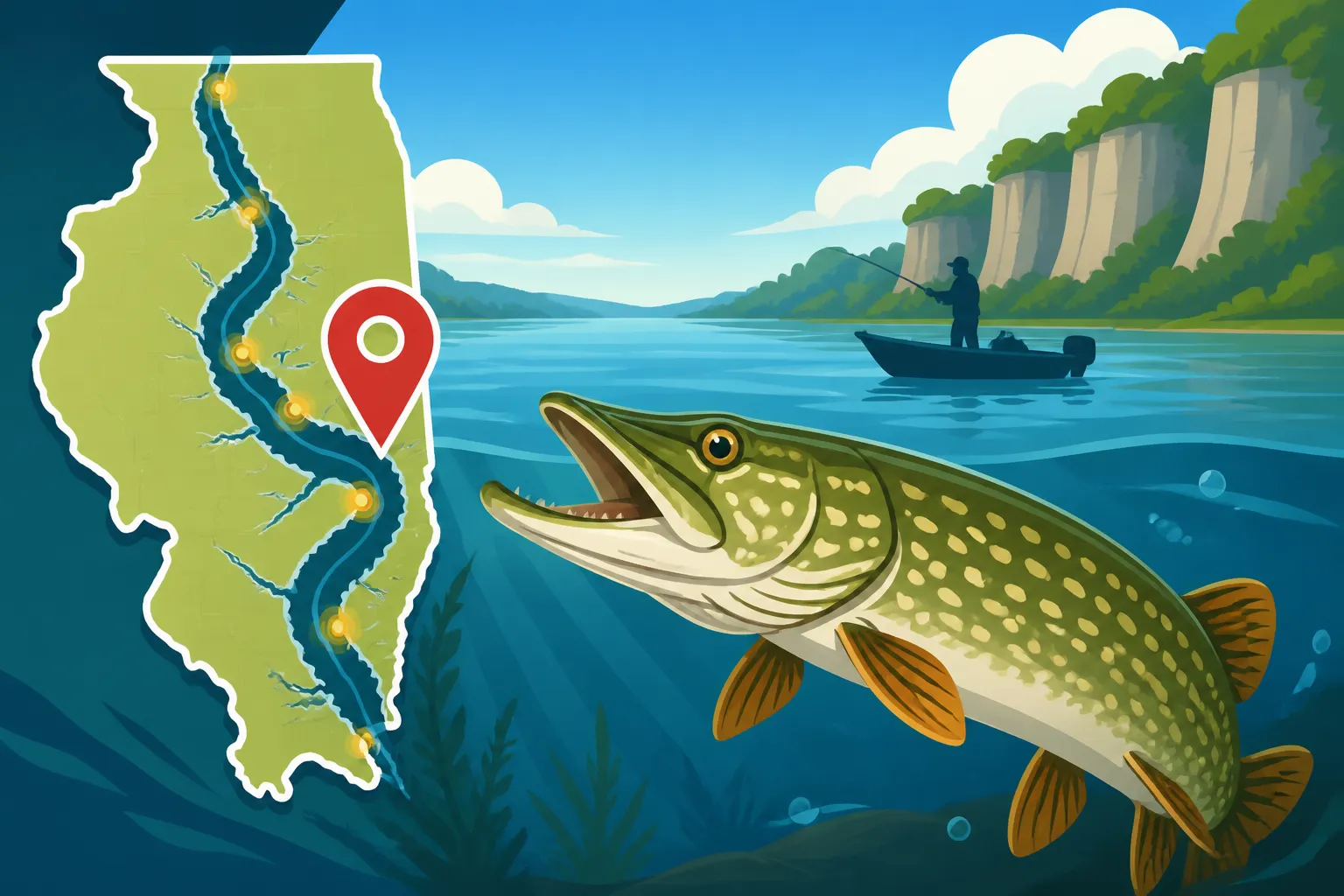
The Mississippi River stretches a long, long way along Illinois' western border, and not all sections are created equal when it comes to Northern Pike. Generally speaking, the further north you go, the better your chances are. The cooler waters and more varied natural structure of the northern pools tend to favor pike populations more than the warmer, often muddier, and more channelized southern stretches.
Northern Illinois: Prime Pike Territory
The Pools of the Upper Mississippi River, roughly from the Quad Cities area northward, are widely considered the sweet spot for Northern Pike fishing in Illinois. These pools (like Pool 13, Pool 14, Pool 16, and Pool 18) are characterized by extensive backwater complexes, floodplains, and islands that create the perfect habitat for pike. Here, you'll find more consistent weed growth, clearer water conditions, and cooler temperatures during the warmer months, all of which contribute to a healthier pike population.
Areas around cities like Rock Island, Savanna, and Galena often have excellent access to these backwaters. Look for boat launches that lead directly into sloughs or oxbows, or find bank access points that put you near dense cover. When exploring these northern sections, pay close attention to the lock and dam systems. While the main current near the dams can be too strong, the calmer waters just below the dams, or the backwater areas associated with them, can hold significant numbers of pike that move in and out with feeding opportunities. Checking out Mississippi River Walleye and Pike Fishing in Northern Illinois will give you even more specific insights into these productive northern waters.
Central and Southern Illinois: Pike are Scarce but Possible
As you move south, past cities like Peoria and eventually toward Alton and Cairo, the Mississippi River transforms. It becomes wider, deeper, and often muddier, with fewer expansive backwater complexes and less natural vegetation. The water temperatures tend to be warmer, which isn't ideal for pike, a fish that thrives in cooler environments. While pike aren't impossible to find in these central and southern stretches, they are definitely less common and generally harder to target.
Any pike you do encounter further south will likely be found in very specific, isolated pockets that mimic their preferred northern habitats: deep, slow-moving oxbows that retain some clarity and cover, or the mouths of cooler feeder creeks that provide a temporary refuge. It's often more of a "bonus" catch in these areas rather than a targeted fishery. If you're serious about targeting pike on the Mississippi from Illinois, investing your time in the northern pools will almost certainly yield better results.
Effective Techniques and Gear for Mississippi River Pike
Once you've identified potential pike strongholds on the Mississippi, the next step is to equip yourself with the right gear and employ the correct techniques. Pike are aggressive, powerful fish, and you need tackle that can stand up to their fight and their razor-sharp teeth.
Rods, Reels, and Line: Built for Battle
For Northern Pike, you'll want a medium-heavy to heavy-action spinning or baitcasting rod, typically in the 6'6" to 7'6" range. This provides the backbone needed to cast larger lures and to muscle a feisty pike out of heavy cover. Pair this with a sturdy reel spooled with at least 20-30 pound braided line. Braided line is excellent because it has no stretch, offering better sensitivity and hook-setting power, and its abrasion resistance is crucial when fishing around snags and pike's toothy grins.
However, the most critical piece of line protection is a leader. Pike have incredibly sharp teeth that will make short work of monofilament or fluorocarbon. A steel or heavy fluorocarbon leader (50-80 lb test) is absolutely non-negotiable. You can find pre-made leaders at most tackle shops or on Amazon, or you can make your own. Without a leader, you're just donating lures to the river and leaving pike with a mouthful of hooks. Best Rods and Reels for Illinois Anglers can offer more general advice on selecting suitable fishing equipment.
| Gear Category | Recommended Specifications | Why It's Important for Mississippi Pike |
|---|---|---|
| Rod | Medium-Heavy to Heavy Action, 6'6" – 7'6" | Power for casting big lures & fighting strong fish |
| Reel | Sturdy Spinning or Baitcasting, 3000-5000 size (spinning), 200 size (baitcasting) | Smooth drag for controlling runs, good line capacity |
| Main Line | 20-30 lb Braided Line | No stretch for hooksets, abrasion resistance |
| Leader | 50-80 lb Steel or Heavy Fluorocarbon | Essential tooth protection for your line |
| Net | Large, Rubber-Coated Landing Net | Protects fish, prevents hooks from tangling |
| Pliers/Gloves | Long-nose pliers, Jaw spreaders, Fish handling gloves | Safety for you and the fish when unhooking |
Lures and Baits: Triggering Aggression
Pike are opportunistic eaters, and they love a big, flashy meal. Spinnerbaits are absolute pike magnets, especially those with large blades that displace a lot of water and create vibration. Colors like white, chartreuse, or combinations with black and red are often effective. Cast them near weed lines or submerged timber and retrieve steadily, varying your speed to see what triggers a strike.
Spoon lures, particularly those with a wobbling action, are another excellent choice. Silver, gold, or flashy patterns are great for imitating baitfish. Large soft plastic swimbaits, rigged on weighted hooks or jig heads, can also be deadly, especially when fished slower along drop-offs or through sparse cover. When selecting soft plastics or jigs, consider darker colors for murky water and more natural baitfish patterns for clearer conditions. You might also have luck with large crankbaits that dive to the depths of the weed lines you're targeting.
And let's not forget about live bait! Large shiners, suckers, or chubs, fished under a bobber near cover or on a slip-sinker rig, can be incredibly effective, especially for larger, less aggressive pike. Just make sure to check Illinois Fishing Regulations Overview for any specific bait restrictions in the area you're fishing. For more detailed lure advice, Best Bait for Northern Pike Fishing is a great resource.
Presentation and Retrieval: Mimicking Prey
When fishing lures for pike, it’s all about triggering their predatory instincts. They love a sudden movement, a flash, or a wobble that mimics a vulnerable baitfish. For spinnerbaits and spoons, a steady retrieve with occasional jerks or pauses often works wonders. With soft plastics, a jigging retrieve—lifting and dropping the lure—can imitate a wounded fish.
Don’t be afraid to cast into tight cover. That’s where the pike often are! If you get snagged frequently, consider using weedless presentations or opting for lures that are less prone to snagging. The key is to cover water thoroughly, fan-casting to ensure you hit all potential ambush points. Remember, pike are often solitary hunters, so if you catch one, it doesn't necessarily mean there's a school of them nearby. Keep moving and exploring new spots.
Seasonal Strategies for Chasing Pike on the Mississippi
Like most fish, Northern Pike behavior and location on the Mississippi are heavily influenced by the seasons and water temperature. Adjusting your approach throughout the year can significantly increase your success rate.
Spring: Post-Spawn Feasting
Spring is often one of the best times to target Northern Pike on the Mississippi. After the ice breaks and water temperatures begin to rise, pike will move into shallow, warmer backwaters and sloughs to spawn. Once spawning is complete, they enter a period of aggressive feeding to regain energy. This is when they are most accessible and actively biting. Look for them in shallow bays, flooded timber, and emergent weed beds where they can ambush baitfish that are also moving into these warmer areas.
Early spring, even before the trees fully leaf out, can be particularly good. The water might still be a bit cool, but pike will be active and hungry. Focus on the sunny sides of backwater areas where the water warms up faster. As spring progresses and temperatures rise, they might start moving towards slightly deeper edges of these same areas, but still staying close to cover.
Summer: Deeper Retreats and Low Light
Summer on the Mississippi can be challenging for pike. The main river channel and shallower backwaters can become quite warm, pushing pike into deeper, cooler water. They'll still seek out cover, but it might be in deeper weed lines, submerged timber in deeper sloughs, or along channels within backwater areas that offer more stable temperatures.
During the summer, your best bet is often to fish during low-light conditions—early mornings, late evenings, or even after dark. Pike will be more active and willing to move into shallower feeding grounds when the sun isn't beating down. Focus your efforts on the transition zones between deeper and shallower water, especially where there's good cover. Keep an eye on water clarity; if the main river is blown out and muddy, the backwaters might offer clearer, more fishable conditions. Night Fishing Techniques might prove useful if you're exploring the late hours for active fish.
Fall: Aggressive Feeding Before Winter
Fall is another fantastic time for pike on the Mississippi. As water temperatures drop, pike become incredibly active and aggressive, feeding heavily in preparation for winter. They'll often move back into shallower backwaters and larger sloughs, gorging on baitfish. This is a time when they are often willing to chase larger baits and lures.
Look for them in similar areas as spring, but perhaps a bit deeper within those backwater complexes. Weed lines, points, and structural elements will still be key. The cooler water also means they are more likely to be active throughout the day, not just during low-light periods. Pay attention to changes in water levels; falling river levels can concentrate fish in remaining deeper pockets, while rising levels might spread them out into newly flooded areas. Fall Fishing Calendar for Illinois Anglers can provide general guidance on what fish species are active during the autumn months in Illinois.
Safety and Conservation on the Mississippi River
Fishing on the Mississippi River, especially for a powerful fish like Northern Pike, requires some important safety and conservation considerations. The river is vast, and conditions can change rapidly.
Boating Safety and River Awareness
If you're using a boat, always be aware of the Mississippi's unique challenges. Strong currents, commercial barge traffic, and hidden submerged obstacles are constant factors. Always wear your life jacket, especially if you're in a smaller craft like a kayak. Illinois Life Jacket and PFD Rules outlines the requirements. Make sure your boat is properly registered and equipped with all required safety gear. Illinois Boating Safety Gear Checklist is a great resource to ensure you have everything you need.
Learn to read the river. Understand how current flows around islands and structures, and be mindful of wing dams and other navigational hazards. Cell service can be spotty in some remote backwater areas, so let someone know your float plan. The Mississippi can be a truly rewarding fishing destination, but it demands respect and preparedness.
Handling Pike: Protecting Yourself and the Fish
Northern Pike are notorious for their sharp teeth. When handling a pike, extreme caution is necessary. Use long-nose pliers or a jaw spreader to remove hooks. Fish handling gloves can protect your hands. If you plan to release the fish, minimize its time out of water. Support its body horizontally, especially larger fish, to avoid internal damage.
Pike also have sensitive gills and typically do not do well with extensive handling. A rubber-coated landing net is a fantastic tool for quickly and safely bringing a pike into the boat, protecting both the fish's slime coat and preventing your hooks from getting hopelessly tangled. Being prepared with the right tools, easily found on platforms like Amazon, means you can enjoy the thrill of the catch and ensure the fish swims away healthy. Remember, these powerful predators are a valuable part of the Mississippi River ecosystem.
Disclaimer
This article is for general informational purposes only and does not constitute professional advice. Laws, prices and regulations vary by location and change over time. Consult a qualified professional for guidance on your specific situation.