Best Time of Year to Catch Crappie in Illinois
If you've ever spent a beautiful day on an Illinois lake, rods rigged and ready, only to come home with an empty livewell, you know the frustration. Crappie, those delicious panfish with their feisty bites, can be incredibly elusive if you're not in the right place at the right time. This guide is here to unravel the mystery, showing you precisely when these speckled beauties are most active across the Prairie State, helping you plan your trips for maximum success.
Understanding the Crappie Calendar in Illinois
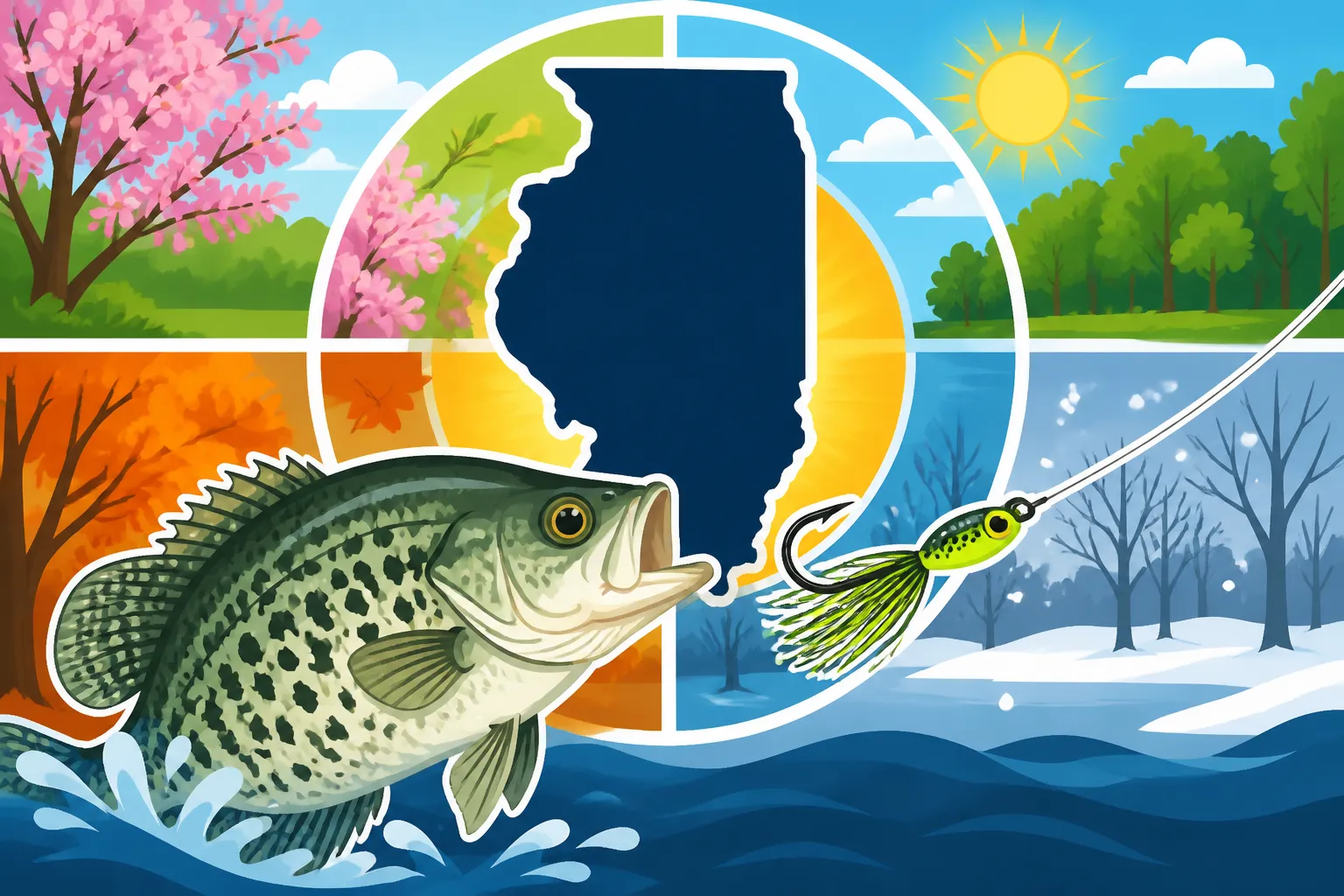
Crappie behavior is heavily influenced by the changing seasons, especially water temperature. Knowing their annual patterns is like having a secret roadmap to the best fishing opportunities. Forget just randomly casting a line; let's talk about timing your efforts for those prime crappie bites.
Early Spring: The Pre-Spawn Buzz
As the long, cold Illinois winter finally gives way to warming temperatures, crappie start to stir from their deep-water haunts. This "pre-spawn" period, typically from late March through April, is one of the most exciting times to target them. The water temperature is usually climbing from the high 40s into the low 50s Fahrenheit, which signals to crappie that it's time to fuel up for the upcoming spawn.
During this stage, crappie will begin to migrate from deeper creek channels and main lake basins towards shallower areas, particularly those protected coves, bays, and feeder creeks that warm up faster. They're looking for submerged brush piles, fallen trees, old dock pilings, and any other cover that offers both warmth and ambush points for baitfish. Think about those northern coves that catch the most sunlight; that's where crappie will first congregate. They're not on their beds yet, but they're staging nearby, often in 6 to 12 feet of water. This is a great time to cover water, using your electronics to pinpoint these staging areas. You'll often find them schooled up, so once you find one, you're likely to find many! Knowing the Illinois Crappie Spawn Timing by Region can give you an edge, as it varies slightly from north to south.
The Crappie Spawn: Peak Action
Ah, the spawn! This is what many crappie anglers live for, and for good reason. When water temperatures consistently hit the mid-50s to low 60s Fahrenheit, usually from late April through May, crappie move onto their beds to reproduce. This is when they become most aggressive and easiest to locate for many anglers.
Crappie will typically spawn in shallow water, often just 1 to 4 feet deep, seeking out hard bottoms like gravel, sand, or even roots. They prefer areas with some form of overhead cover, like lily pads, cattails, brush, or under boat docks, providing protection for their eggs and fry. During this time, the fish are territorial and highly focused on reproduction, making them more likely to strike at anything that invades their space. The bite can be furious! You'll often see male crappie, darker in color, guarding the nests. Fishing during the spawn often involves slow presentations right in these shallow areas. Look for dark spots on the bottom or subtle movements near cover that indicate a bed. Understanding the intricacies of the Illinois Crappie Spawn Season Guide is essential for maximizing your success during this peak period.
Post-Spawn and Summer Patterns
Once the spawn is over, usually by late May or early June, crappie enter their post-spawn phase. This can be a tricky time for anglers because the fish are often exhausted and dispersed. They'll typically move off their shallow beds and back into slightly deeper water, seeking recovery and a consistent food source.
As summer heats up, crappie retreat to cooler, more stable environments. They'll often hold in deeper water, typically 10-25 feet, relating to main lake points, channel edges, submerged humps, deep brush piles, and bridge pilings. Shade and oxygen are key during these warmer months. Fishing for them usually involves vertical jigging directly over structure or slow-trolling with minnows or small jigs. Night fishing can also be incredibly productive in summer, as crappie move shallower under the cover of darkness to feed. Lighted boat docks and bridge lights can be magnets for them, as they attract baitfish. If you're wondering about the optimal hours, our guide on the Best Time of Day to Catch Crappie offers excellent insights into summer night fishing.
Fall and Early Winter: The Second Feed
Just when you thought crappie fishing might be slowing down, fall arrives, bringing with it another fantastic opportunity. As air temperatures cool and water temperatures begin to drop into the 60s and 50s (usually September through November), crappie sense the approaching winter. This triggers a "second feed" where they actively school up and gorge themselves to build fat reserves for the lean months ahead.
During the fall, crappie often follow baitfish into creek arms and main lake areas, frequently suspending over deeper water or congregating around significant changes in depth like main lake points, channel bends, and deeper brush piles. Trolling with multiple rods and different depths can be incredibly effective to locate these schools. Vertical jigging or casting small crankbaits around known structures are also productive. As winter sets in and water temperatures dip below 45 degrees, crappie will retreat to the deepest, most stable parts of the lake, often suspending in deep water or hugging tight to main channel structure. They become much less active, requiring very subtle presentations. For a broader view of what's biting, check out the Fall Fishing Calendar for Illinois Anglers.
Key Factors Influencing Crappie Activity Beyond the Calendar
While the general seasonal patterns are crucial, several other factors can drastically alter crappie behavior on any given day. Ignoring these can lead to a frustrating outing, even during what should be prime season.
Water Temperature: The Ultimate Crappie Trigger
I know we've already touched on it, but water temperature deserves its own spotlight because it is, without a doubt, the single most important factor dictating crappie activity. It's not just about the general seasonal range; even a few degrees can make a world of difference. For instance, in early spring, a sunny, warm spell can push shallow coves into the low 50s quickly, sending crappie surging in. A sudden cold snap, however, can reverse that movement, forcing them to retreat to deeper, more stable temperatures.
Crappie are cold-blooded, so their metabolism and activity levels are directly tied to the water temperature.
- Below 45°F: Very sluggish, holding deep, feeding minimally. You need a slow, subtle presentation, often tiny jigs or minnows fished vertically.
- 45-50°F (Late Winter/Early Spring): Starting to become active, moving into staging areas. Good for minnows on jigs or slow trolling.
- 55-65°F (The Spawn Window): Highly active, aggressively feeding and spawning. This is prime time for a variety of techniques in shallow to mid-depths.
- 65-75°F (Summer Peak): Crappie move deeper to find cooler, oxygenated water. Often nocturnal feeders. Vertical jigging, deep trolling, or night fishing are key.
- 75°F+ (Late Summer/Dog Days): Can be tough. Crappie are deep and less active during the day. Focus on low-light conditions, deep structure, and very slow presentations.
Always carry a good quality water thermometer, which you can easily find on Amazon. It will be your best friend in understanding exactly what the fish are experiencing and will help you fine-tune your approach. Our guide on Water Temperature and Fish Activity Guide delves even deeper into this critical aspect.
Weather Conditions: Fronts, Rain, and Sunlight
Beyond temperature, the weather itself plays a huge role. Crappie are quite sensitive to changes in atmospheric pressure and light levels.
- Cold Fronts: These are notorious crappie killers. After a strong cold front passes, the sky clears, the wind shifts, and the barometric pressure rises. This often makes crappie incredibly lethargic and shuts down the bite for a day or two. They'll often move deeper and hold tight to cover, requiring even more patience and subtle techniques. Don't be discouraged if fishing is tough immediately after a front; it's common. However, fishing before a cold front can be fantastic, as fish often feed aggressively in anticipation of the change. Learn more about navigating these tough conditions in How to Fish After a Cold Front.
- Stable Weather: Overcast skies with a light breeze are often ideal. The reduced sunlight can make crappie feel more comfortable in shallower water throughout the day, and the ripples on the surface can break up their silhouettes, making them less wary.
- Heavy Rain/Muddy Water: While heavy rain can muddy up shallow areas and make fishing tough, a moderate rain can actually improve fishing by increasing water flow and washing nutrients into the lake, attracting baitfish and crappie. However, if the water turns too muddy, crappie rely more on scent and vibration, so louder baits or those with strong scents might be more effective.
- Bright Sunlight: On bright, sunny days, crappie often seek deeper water or dense cover to escape the intense light. They'll hug tighter to brush piles or suspend under docks. Adjust your fishing depth and focus on shady areas.
Structure and Cover: Crappie's Preferred Homes
No matter the season, crappie are almost always found relating to some form of structure or cover. These provide ambush points, protection from predators, and often, a ready food source.
- Submerged Brush Piles & Fallen Trees: These are classic crappie magnets. They offer shade, protection, and a habitat for insects and baitfish. Learning to locate these with your fish finder is key.
- Docks & Piers: Especially those with lights, docks provide shade and attract baitfish at night, making them excellent spots.
- Bridge Pilings: These vertical structures offer both deep and shallow holding areas, often with current breaks that crappie love.
- Creek Channels & Drop-offs: Crappie will use these deeper thoroughfares to move between feeding and holding areas. They often suspend along the edges of channels or on submerged humps.
- Weed Beds & Lily Pads: In warmer months, these provide vital shade and oxygen.
- Rock Piles & Riprap: These areas can attract baitfish and offer excellent cover.
Using your electronics to pinpoint these underwater features is crucial. A good fish finder can show you not just the structure, but often the schools of crappie holding around it. When you're heading out, having a selection of specialized crappie jigs and soft plastics (you can browse a huge selection on Amazon) can make a real difference in tempting those bites, especially around dense cover. For finding those hidden honey holes, understanding How to Find Crappie Beds in Spring is invaluable.
Essential Techniques and Gear for Each Season
Just as crappie move and behave differently throughout the year, so too should your fishing techniques and tackle adapt to match their current patterns. What works in spring won't necessarily be effective in the dead of winter.
Spring Tactics for Spawning Crappie
Spring is arguably the easiest time to catch crappie due to their shallow migration and aggressive nature during the spawn.
- Jigging: This is the bread and butter of spring crappie fishing. Use small jigs (1/32 to 1/16 ounce) tipped with a small plastic grub, tube, or a live minnow. Cast these near visible cover or known spawning areas and retrieve them slowly with subtle twitches. The goal is a horizontal presentation that stays in the strike zone.
- Slip Bobbers: When crappie are holding at a specific depth, a slip bobber rig is incredibly effective. This allows you to present a minnow or a jig at a precise depth without spooking the fish. The beauty of a slip bobber is you can adjust the depth stopper to fish as shallow or as deep as needed.
- Spider Rigging: For boat anglers, spider rigging (fishing multiple long poles out from the bow) allows you to cover a wide area, presenting baits at different depths and speeds. This is fantastic for locating scattered crappie in staging areas before the spawn.
- Tackle: Light action spinning rods (5-7 feet) paired with small reels spooled with 4-6 pound test monofilament or fluorocarbon are perfect. Sensitivity is key to detecting those subtle crappie bites.
- Bait: Live minnows are king, but don't underestimate the effectiveness of small plastic grubs, tubes, and soft plastics in chartreuse, white, or black-and-chartreuse colors. Our detailed guide on Crappie Jigging Techniques provides a comprehensive breakdown of the best approaches.
Summer and Fall Strategies
As the seasons progress, crappie often move deeper, requiring different tactics to reach them.
- Vertical Jigging: When crappie are suspended over deep water or holding tight to deep structure, vertical jigging is highly effective. Use your fish finder to locate schools, then drop a jig or minnow directly down to their depth. A good quality electronics unit will make all the difference here.
- Trolling: Especially in fall, when crappie are chasing baitfish and schooling up, slow-trolling with multiple rods at various depths can be incredibly productive. Use small crankbaits or jigs with plastic trailers. This allows you to cover a lot of water quickly and find active schools.
- Casting Crankbaits: For larger crappie in the summer and fall, small crankbaits that dive to different depths can trigger aggressive strikes, especially around deeper points and ledges.
- Night Fishing (Summer): As mentioned, summer nights can be fantastic. Use submersible lights to attract plankton, which then attract baitfish, and finally, crappie. Fish vertically with small jigs or minnows under the lights.
- Tackle: You might opt for slightly heavier jigs (1/8 to 1/4 ounce) to get down to deeper fish quickly. Line choices might include braided line for sensitivity in deep water, or a stronger monofilament if fishing around abrasive structure. Consider lures from trusted brands like Strike King, Bobby Garland, or Johnson, many of which are readily available on Amazon. For specific deep-water tactics, be sure to read our guide on Crappie Tightlining Techniques.
Winter Crappie and Ice Fishing
While challenging, winter can offer some rewarding crappie fishing, especially through the ice in northern Illinois.
- Ice Fishing: When the ice is safe, crappie can be found suspended over deep water or hugging tight to structure in the deepest parts of lakes. Use tiny jigs (1/64 to 1/100 ounce) tipped with a single maggot or a small plastic tail. A sensitive rod and a flasher or portable fish finder are essential to detect light bites and pinpoint fish.
- Open Water (Southern Illinois): In unfrozen lakes in central and southern Illinois, crappie will be very deep and lethargic. Focus on main lake basin structures, deep brush piles, and channel bends. Vertical jigging with very slow movements and minimal action is key.
- Tackle: Ultra-light gear is a must for detecting those barely-there winter bites. Patience is your most important tool during this time. For a deeper dive into cold-weather fishing, our article on the Best Ice Fishing Spots in Illinois has you covered.
Seasonal Crappie Fishing Overview
To help you quickly reference the best times and methods, here's a table summarizing the crappie calendar in Illinois:
| Season | Approximate Months | Water Temperature Range | Crappie Location | Recommended Techniques | Key Tackle/Bait |
|---|---|---|---|---|---|
| Early Spring | Late March – April | 45-55°F | Staging in protected coves, creek channels (6-12 ft) | Slow trolling, casting jigs, slip bobbers | Minnows, 1/32-1/16 oz jigs (chartreuse, white) |
| Spawn | Late April – May | 55-65°F | Shallow cover (1-4 ft) & beds | Jigging, slip bobbers, pitching | Minnows, small plastic tubes/grubs, tiny spoons |
| Summer | June – August | 65-75°F+ | Deeper structure, main lake points (10-25 ft), night in shallows | Vertical jigging, deep trolling, night fishing | Larger minnows, 1/8-1/4 oz jigs, small crankbaits |
| Fall | September – November | 60-50°F | Schooling up, following baitfish in creek arms, main lake areas (8-20 ft) | Trolling, vertical jigging, casting crankbaits | Minnows, small crankbaits, jigs with plastic trailers |
| Early Winter | December – February (ice) | Below 50°F | Deepest, most stable parts of the lake, suspended over channels (20-40 ft) | Ice fishing (jigging), very slow vertical jigging (open water) | Tiny ice jigs, maggots, minnow heads, micro plastics |
Disclaimer
Fishing conditions and regulations in Illinois can change frequently. Always consult the most current Illinois Department of Natural Resources (IDNR) fishing regulations before heading out. This guide provides general information and best practices, but local conditions can vary significantly.