How to Fish for Bass at Dawn
There's nothing quite like the feeling of the crisp morning air, the sound of crickets fading as the first hint of light paints the eastern sky, and the anticipation of that explosive strike on your line. Many anglers struggle to find consistent bass action during the bright midday sun, feeling like the fish have just vanished. But what if I told you that the secret to unlocking incredible bass fishing in Illinois often lies in getting out there before the sun has even truly woken up? This comprehensive guide is all about helping you master the art of fishing for bass at dawn, transforming those early hours into your most productive time on the water.
Why Dawn is the "Magic Hour" for Illinois Bass Anglers
The early morning, particularly that window from just before sunrise until an hour or two after, isn't just a pretty time to be on the water; it's a strategic advantage for bass fishing. Bass, much like us, respond to environmental changes, and dawn offers a perfect storm of conditions that often trigger their most aggressive feeding behaviors. Understanding these factors is the first step to consistently hooking up when the world is still shaking off its slumber.
Light Conditions and Bass Behavior
As the sun begins its ascent, light levels in the water are at their absolute lowest, creating a fantastic opportunity for bass. Think about it: bass are ambush predators, and low light provides them with a natural camouflage advantage. It makes it harder for their prey – baitfish, crawfish, frogs – to spot them, and it also makes the bass themselves feel more secure in shallower, more exposed waters where they might hesitate during brighter conditions. This means they'll often push up into areas like weed lines, around docks, and onto shallow flats where they can hunt aggressively.
The transition from darkness to light is key. Bass's eyes are well-adapted for low light, giving them an edge over many of their prey species. As the sky lightens, they can see silhouettes against the surface more easily, making topwater presentations incredibly effective. This is why you often hear tales of incredible topwater blow-ups right at daybreak. The bass aren't just hungry; they're opportunistically exploiting the changing light to their advantage.
Water Temperature Fluctuations
While summer days in Illinois can feel relentlessly hot, the nights, even warm ones, allow the water to cool down significantly, especially in the shallower sections of lakes and rivers. As dawn breaks, the water temperature is typically at its lowest point of the 24-hour cycle. This cooler water invigorates bass that might have become lethargic in the stagnant heat of the afternoon. It gets their metabolism going, making them more active and eager to chase down a meal.
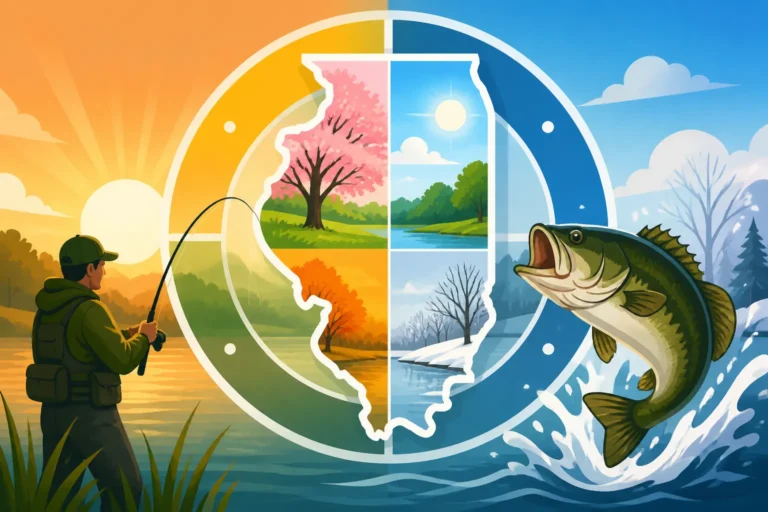
In spring and fall, these temperature shifts are even more pronounced. A cool dawn following a crisp night can concentrate bass in areas where the water warms up fastest, like shallow, dark-bottomed coves. Conversely, in the dog days of summer, that brief window of cooler water at dawn might be the only time bass are truly comfortable feeding in the shallows before retreating to deeper, cooler sanctuaries as the sun climbs higher. Knowing your Illinois Fishing Seasons Guide is crucial for understanding how these temperatures impact fish activity throughout the year.
The Forage Factor
It's not just the bass that are active at dawn; their prey often is too. Baitfish, such as shad and minnows, frequently move into shallower waters during low light to feed on plankton or insects. Frogs and other amphibians are also more active near shorelines during these hours. These movements create a smorgasbord for hungry bass. When baitfish are schooling near the surface, a well-placed topwater lure mimicking a struggling minnow can be irresistible. When crawfish are scurrying along the bottom, a slow-crawled jig or soft plastic can draw a strike.
The early morning activity of prey creates a sense of urgency for bass. They know that as the sun rises, many of these easy targets will retreat to cover or deeper water, making them harder to catch. This limited-time feeding window often results in more aggressive, less hesitant bites. It's a race against the sun, and the bass are trying to get their fill before the breakfast buffet closes.
Essential Gear for Dawn Bass Fishing in Illinois
To truly maximize your success when fishing for bass at dawn, having the right gear is just as important as understanding the fish's behavior. You're dealing with low light, potentially cooler temperatures, and bass that can be incredibly aggressive. Your setup needs to be up to the task, from your rod and reel to the specific lures you tie on.
Rods, Reels, and Line for Early Morning Action
For dawn bass fishing, versatility is key. You'll likely be throwing a mix of lures, from light topwaters to heavier spinnerbaits or jigs. A good all-around setup would be a medium-heavy power, fast-action spinning rod or baitcasting rod, typically in the 6'6" to 7'2" range. This provides enough backbone to fight a strong bass but still offers the sensitivity needed to detect subtle bites. For those targeting larger fish or heavy cover, a heavier power rod might be preferable, especially if you're planning on focusing on Spring Bass Fishing Patterns that often involve bigger baits.
- Rods: Look for rods with a sensitive tip but a strong backbone. Graphite rods are excellent for this, offering good sensitivity to feel those subtle morning strikes. Brands like St. Croix, Ugly Stik, and Abu Garcia offer reliable options that you can often find on Amazon for a good price.
- Reels: A fast retrieve ratio is beneficial for working topwater lures effectively and quickly taking up slack after a strike. A baitcasting reel with a 7.1:1 or 8.1:1 ratio is ideal for many techniques, while a quality spinning reel in the 2500-3000 size range will handle lighter presentations beautifully.
- Line:
- Monofilament (Mono): Excellent for topwater due to its buoyancy and stretch, which helps with hook sets on explosive surface strikes. A 10-15lb test is usually sufficient.
- Fluorocarbon (Fluoro): Less stretch than mono and nearly invisible underwater, making it great for jigs and soft plastics, especially in clearer water. Use 10-17lb test.
- Braided Line: Offers incredible strength, sensitivity, and no stretch. Ideal for fishing heavy cover or when you need maximum hook-setting power. Pair it with a fluorocarbon leader for stealth. 30-50lb test braid is common.
Lure Selection for Low Light Conditions
This is where dawn truly shines. The low light dictates that certain lures become far more effective. You want lures that create a strong profile, displacement, or vibration, making them easy for bass to detect even when visibility is poor.
- Topwater Lures: These are arguably the most exciting choice for dawn. Poppers create splashes, walk-the-dog baits have an erratic side-to-side action, and buzzbaits create a commotion on the surface. Dark colors (black, dark blue) can create a better silhouette against the pre-dawn sky, while chrome or white can flash as the light increases. For specific tips, check out our guide on How to Fish a Topwater Lure for Bass.
- Spinnerbaits and Chatterbaits: These lures displace a lot of water and create strong vibrations, which bass can feel with their lateral lines. Their flash can also be very effective as the sun just starts to peek over the horizon. Choose tandem-bladed spinnerbaits for maximum flash and vibration. Dark-colored skirts (black, blue, purple) with silver or gold blades are often deadly in low light.
- Swim Jigs and Bladed Jigs: A swim jig with a paddle tail trailer or a bladed jig (like a Chatterbait-style lure) can be incredibly effective when retrieved just below the surface or through sparse cover. Again, darker colors tend to excel.
- Soft Plastics: When bass are a bit more finicky, or after the initial topwater bite dies, slow-rolling a dark-colored worm, creature bait, or stick bait (like a Senko) on a Texas rig or Ned rig can entice strikes. Black, Junebug, and bluegill patterns are classic low-light choices. You can find a huge variety of these lures and tackle storage solutions on Amazon to keep your options organized.
Practical Accessories for Dawn Anglers
Don't overlook the little things that make your early morning trip safer and more comfortable.
- Headlamp: Absolutely essential for rigging tackle, tying knots, and navigating in the dark. A good headlamp with a red light option (which preserves night vision) is invaluable. You can find many reliable headlamps on Amazon.
- Polarized Sunglasses: While it's dark at first, once the sun comes up, polarized lenses will cut the glare, allowing you to see into the water and spot submerged structure or cruising bass.
- Bug Spray: Especially in Illinois, mosquitoes and other biting insects are often most active during dawn and dusk. Don't let them ruin your peaceful morning!
- Warm Layers: Even on warm summer days, mornings can be surprisingly cool. Dress in layers that you can shed as the sun rises.
- Coffee/Thermos: A hot cup of coffee or tea is a welcome companion during those chilly, quiet moments before the action heats up.
Top Techniques for Dawn Bass Anglers in Illinois
Now that you're geared up, let's talk tactics. Dawn fishing isn't just about showing up; it's about making deliberate choices about where and how you present your lures to capitalize on the bass's heightened activity and reduced visibility.
Targeting Topwater Action
The initial moments of dawn are prime time for topwater lures. The low light and calm water often lead to explosive, unforgettable strikes.
- Poppers: These lures create a "chug" and splash. Cast them near cover—lily pads, fallen trees, dock pilings—and let them sit for a few seconds. Then, give a subtle twitch, letting the ripples dissipate. Repeat. The pause is often when the bass strikes.
- Walk-the-Dog Baits: Lures like a Heddon Super Spook or a Zara Spook require a rhythmic retrieve to create their signature side-to-side "walk." This action mimics a distressed baitfish, and bass can't resist it. It takes practice, but once you get it down, it's incredibly effective.
- Buzzbaits: For aggressive bass, a buzzbait creates a loud, gurgling commotion on the surface. These are excellent for covering water quickly and drawing reaction strikes. Cast them past your target and start retrieving as soon as they hit the water to ensure they run on the surface.
- Frogs: If you're fishing heavy matted vegetation, lily pads, or thick emergent weeds, a hollow-bodied frog is your go-to. Bass will often blow up through the cover to inhale these baits. Work them with short hops and pauses right over the thick stuff.
The key to topwater success at dawn is often patience and allowing the fish to tell you what they want. Sometimes they'll want an aggressive retrieve, other times a slow, deliberate one with long pauses. Don't be afraid to experiment.
Subsurface Presentations for Early Morning
While topwater is exciting, sometimes bass are holding just below the surface or are less inclined to break the water. That's when subsurface presentations shine.
- Spinnerbaits: These are fantastic for covering water, especially when bass might be scattered. Cast them along weed lines, over submerged structure, or around points. A slow, steady retrieve that allows the blades to helicopter down can trigger strikes, as can a faster retrieve that makes them "bulge" just below the surface. Our guide on How to Fish a Spinnerbait for Bass has more detailed strategies.
- Swim Jigs and Bladed Jigs: These offer a jig-like profile with added flash or vibration. Fish them through cover, along drop-offs, or parallel to shorelines. The key is to match the trailer to the forage—a paddle tail for baitfish, a craw trailer for crawfish. Experiment with retrieve speeds; sometimes a steady reel is best, other times a stop-and-go.
- Soft Plastic Presentations: As the sun gets a bit higher and bass move slightly deeper or become more cautious, slow-rolled soft plastics can be deadly. A Texas-rigged worm or creature bait pitched into cover, or a Ned rig crawled along the bottom, can entice bites from less active fish. Darker colors are still a good bet, but don't hesitate to try natural baitfish patterns like green pumpkin or watermelon.
Reading the Water for Prime Dawn Spots
Knowing where to fish at dawn is paramount. Bass will often move into specific areas to feed under low light conditions.
- Shallow Flats: These areas warm up first and are often where baitfish congregate. Look for flats adjacent to deeper water, allowing bass easy access for feeding and then retreat.
- Weed Lines and Lily Pads: These provide excellent ambush cover. Cast your lures along the edges or, with a frog, right over the top. Bass will hide in the vegetation, waiting for an unsuspecting meal to pass by.
- Fallen Timber and Brush Piles: Any kind of woody cover provides shade and ambush points. Pitch jigs or soft plastics into these areas, or run spinnerbaits along their edges.
- Points and Secondary Points: These topographical features act as highways for bass moving between deeper and shallower water. Fish both the shallow and deeper sides of points at dawn.
- Docks and Piers: In many Illinois lakes and rivers, docks offer both shade and structure. Bass will often position themselves under or near docks, especially those with lights that attract baitfish overnight. A stealthy approach is crucial here. Do you need a license to fish from a pier? Generally, yes, but always check the local Illinois Fishing Regulations Overview for specific rules.
Planning Your Illinois Dawn Bass Trip
A successful dawn bass trip doesn't just happen; it's the result of thoughtful planning and preparation. Being ready before you even leave your driveway will maximize your time on the water and your chances of a great catch.
Pre-Trip Scouting and Information Gathering
Before your alarm even thinks about going off, take some time to scout your chosen fishing spot. This doesn't necessarily mean physically being there (though that helps!), but rather doing your homework.
- Check the Weather Forecast: Wind, rain, and temperature can all impact bass behavior. A calm, overcast morning might keep bass in the shallows longer, while a clear, sunny forecast means you might need to switch to deeper presentations sooner. Knowing the forecast also helps you pack appropriate clothing.
- Consult Local Fishing Reports: While you can't always rely on them 100%, local bait shops or online forums often provide insights into what's been working and where. They can give you a head start on what baits or techniques might be productive.
- Review Maps and Satellite Imagery: Use online mapping tools to identify potential fishing spots: shallow flats, points, weed lines, and areas with fallen timber. Look for access points and parking. This helps you plan your approach in the dark.
- Understand Local Regulations: Always know the current Illinois Fishing Season and Catch Limit Rules for the specific body of water you're fishing. Size and bag limits can vary significantly from one lake to another, even for the same species. It's also wise to ensure you have a valid fishing license. You can learn more about how to obtain one in our guide, How to Get an Illinois Fishing License.
Safety and Comfort Considerations
Fishing in the dark carries unique challenges and demands extra attention to safety. Your comfort also plays a big role in your enjoyment and focus.
- Navigating in the Dark: If you're fishing from a boat, ensure all your navigation lights are working. Take it slow, especially in unfamiliar waters, and be aware of any submerged hazards. If bank fishing, bring your headlamp, wear sturdy shoes, and be mindful of uneven terrain or slick banks.
- Bug Protection: As mentioned earlier, dawn is prime time for insects. Apply repellent liberally before you even get to the water.
- Dressing for Success: Layers are your friend. A light jacket or hoodie can be pulled on or off as the temperature changes. Waterproof outerwear is a good idea if there's any chance of morning dew or light rain.
- Communication: Let someone know where you're going and when you expect to be back, especially if you're fishing alone. A fully charged phone is also a must.
- First Aid Kit: A basic first aid kit is always a good idea, whether you're dealing with a hook jab or a minor scrape.
Making the Most of the Dawn Advantage in Illinois
Fishing for bass at dawn is more than just a time slot; it's a unique experience that offers some of the most rewarding fishing opportunities. The tranquility of the early morning, often broken only by the splash of a rising fish or the call of an early bird, is a huge part of the appeal. But beyond the serenity, it's about consistently putting yourself in a position to catch active, aggressive bass.
By understanding why bass are more active in low light, equipping yourself with the right gear – from essential rods for Illinois Largemouth Bass Fishing: The Complete Guide to specific low-light lures – and employing strategic techniques, you can transform your early morning outings. Don't be afraid to experiment with different lure colors and retrieve speeds, letting the fish dictate what they're hitting on that particular day. Pay attention to small details like water temperature, cloud cover, and baitfish activity, as these can all give you clues as to where the bass are holding and what they're willing to bite.
So set your alarm, brew that coffee, and embrace the quiet magic of dawn. You'll not only enjoy some of the most beautiful hours Illinois has to offer, but you'll also likely find yourself with more successful bass fishing trips than ever before. It's a fantastic way to start the day, creating memories and reeling in some truly impressive fish.
| Lure Type | Best Dawn Conditions | Key Technique | Color/Feature Notes |
|---|---|---|---|
| Popper | Calm, low light, near visible cover (pads, docks) | Cast, let sit, twitch, pause | Dark colors (black, blue) for silhouette, natural |
| Walk-the-Dog | Calm to light chop, open water near cover, flats | Steady rod tip action for side-to-side walk | Chrome, bone, dark patterns (ghost shad) |
| Buzzbait | Covering water quickly, aggressive bass, scattered cover | Fast, steady retrieve immediately after splash | Black, chartreuse, white; noisy blades |
| Hollow-Body Frog | Heavy matted vegetation, lily pads, thick weeds | Hop, pause, twitch over thick cover; strong hooks | Green, brown, black; realistic frog patterns |
| Spinnerbait | Moderate cover, stained water, windy conditions | Steady retrieve, slow roll or bulge | Dark skirt with silver/gold blades; tandem blades |
| Bladed Jig | Grass lines, wood cover, transition areas, open water | Steady retrieve, retrieve & pause, pump & fall | Green pumpkin, black & blue; vibrating blade |
| Soft Plastic (Texas/Ned Rig) | Finicky fish, slightly deeper water, lighter bites | Slow retrieve, drag, hop on bottom or through cover | Black, Junebug, green pumpkin, natural crawfish |
Disclaimer
This article is for general informational purposes only and does not constitute professional advice. Laws, prices and regulations vary by location and change over time. Consult a qualified professional for guidance on your specific situation.