Illinois Crappie Spawn Timing by Region
There's nothing quite like the anticipation of the crappie spawn, is there? That feeling of the water warming up, knowing those papermouths are moving shallow, ready to feed and reproduce. But trying to figure out exactly when and where the crappie spawn hits in Illinois can feel like chasing a ghost sometimes, especially with our state's varied climate. This guide is here to unravel that mystery, giving you a clear, regional breakdown of when to expect the crappie spawn across Illinois, so you can plan your trips with confidence and hopefully fill your livewell.
The Crappie Spawn: Nature's Prime Fishing Window
The crappie spawn is one of the most exciting times for anglers in Illinois, and for good reason. It's when crappie, both black and white, move from their deeper winter haunts into the shallows to lay their eggs. This annual migration brings them into more accessible areas, making them easier to target and often leading to some of the year's best fishing. But what exactly triggers this instinctual move, and why is knowing the timing so crucial?
What Triggers the Annual Crappie Spawn?
The most critical factor in initiating the crappie spawn is water temperature. Generally, crappie begin to stage for spawning when water temperatures consistently reach the mid-50s Fahrenheit, with the actual spawning activity kicking into high gear once temperatures hit that sweet spot of 60-68°F. As the water warms, driven by longer daylight hours, crappie instinctively start their move towards shallower, protected areas. They're looking for submerged brush, fallen trees, old dock pilings, or even dense weed beds in water depths often ranging from 2 to 8 feet, depending on the clarity and available cover. This shift from deep to shallow is a gradual process, but once those key temperature thresholds are met, the action can be explosive. If you're interested in understanding the broader picture, our guide on Water Temperature and Fish Activity Guide delves deeper into how aquatic conditions influence fish behavior.
Another subtle but important factor is photoperiod, or the length of daylight. As spring progresses, the increasing hours of sunlight provide an environmental cue that works in tandem with rising water temperatures to signal that it's time to spawn. This combination ensures that the spawn occurs at an optimal time for fry survival, when food sources are becoming abundant and the weather is generally more stable. Understanding these triggers is the first step in predicting when and where you'll find spawning crappie.
Why Timing the Spawn is Your Biggest Advantage
Missing the crappie spawn can feel like missing out on Christmas morning for an angler. During this period, crappie are highly concentrated and often more aggressive, especially the males who guard the nests. This makes them significantly easier to locate and catch compared to other times of the year when they might be dispersed or holding in less predictable patterns. For many, it's a chance to stock up on fillets for the freezer or simply enjoy some fast-paced action.
Beyond the sheer numbers, the spawn also offers a unique opportunity to catch larger, healthier fish. These fish are full of energy, focused on their biological imperative, and often less wary than usual. It’s a prime window that, once it passes, might not offer the same consistent results until next year. Knowing your local spawn timing means you can plan your vacation days, weekend trips, and even a quick afternoon outing to maximize your chances. For a broader overview, check out our Best Time of Year to Catch Crappie in Illinois for general seasonal tips.
Illinois' Diverse Regions and Their Crappie Spawn Timelines
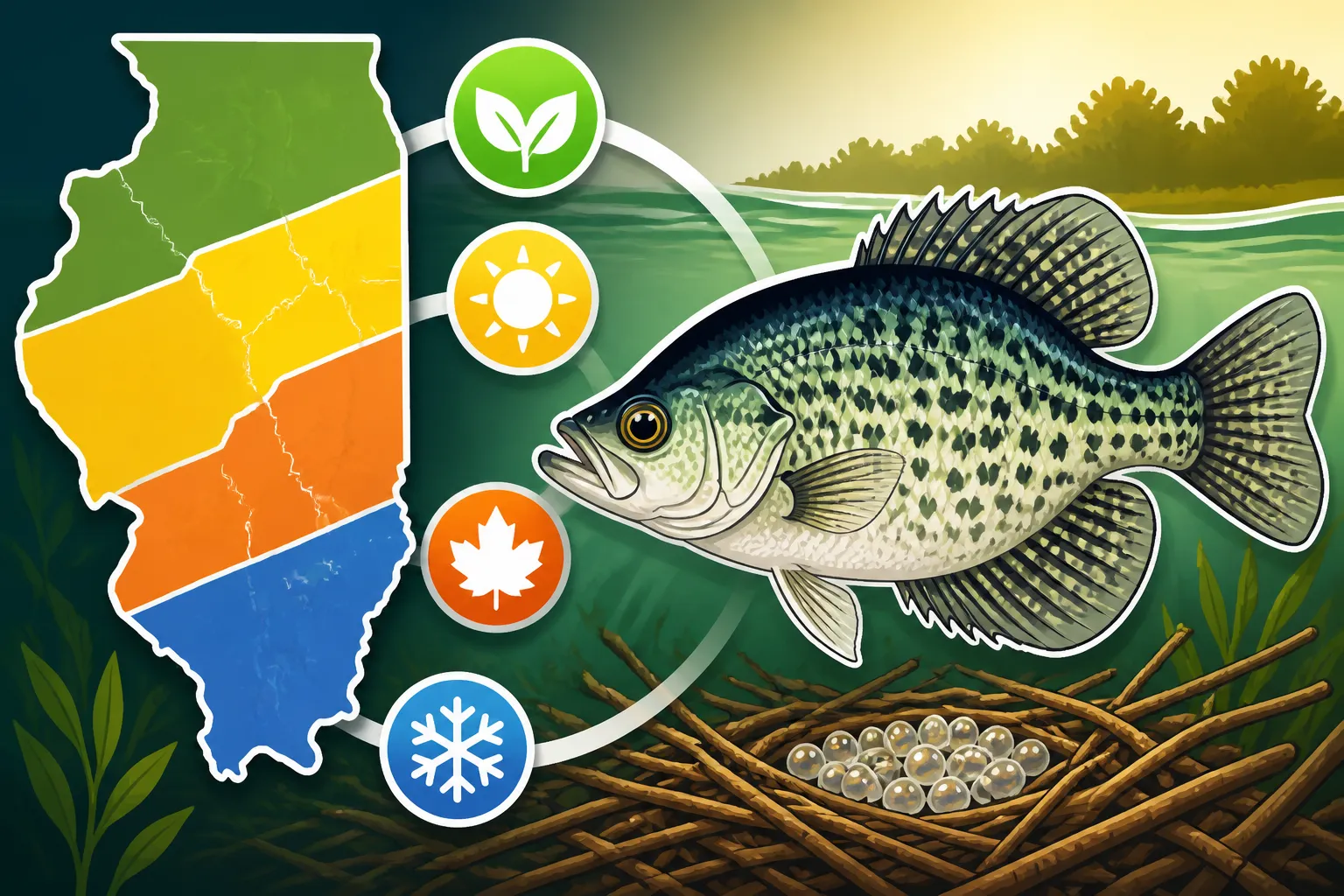
Illinois is a long state, stretching over 385 miles from north to south. This significant geographical span means that spring weather and, consequently, water temperatures, vary considerably. What's happening on the lakes near Cairo in April might not happen in the Chain O'Lakes until late May or even June. Breaking the state down into distinct regions helps us get a clearer picture of when to expect those crappie to start moving shallow.
Southern Illinois: The Early Birds
Southern Illinois typically experiences the earliest crappie spawn in the state, often kicking off in late March and running strongly through April. Lakes in this region, such as the renowned Rend Lake and the sprawling Lake of Egypt, benefit from warmer air temperatures that heat their waters faster. These lakes are known for their strong crappie populations, and the early spawn provides a fantastic opportunity for anglers eager to shake off the winter rust. By the time many northern anglers are still debating ice-out, southern Illinois waters are often humming with crappie activity.
The water temperatures here can reach the lower 60s as early as the first week of April in some years, pushing crappie into their nesting areas. Anglers fishing Rend Lake often find crappie congregating around flooded timber, brush piles, and shallow points. For a deeper dive into one of Illinois's crappie hotspots, you might want to read our Rend Lake Fishing Guide for Illinois Anglers. Similarly, Lake of Egypt, with its power plant-warmed waters, can be an early producer, offering excellent fishing around its many docks and submerged structures.
Central Illinois: The Mid-Spring Crappie Rush
Moving north into Central Illinois, the crappie spawn typically begins a bit later, usually starting in mid-April and extending well into May. Lakes like Lake Shelbyville and Carlyle Lake are prime examples of central Illinois crappie fisheries. These large reservoirs often take a bit longer to warm up compared to their southern counterparts, but once they do, the crappie action can be phenomenal. The pre-spawn staging can start when water temperatures hit the low 50s, with full-blown spawning hitting around mid-May as temperatures approach the mid-60s.
Anglers on Lake Shelbyville will find crappie moving into tributary arms and shallower coves, often relating to standing timber and brush. Carlyle Lake, being the largest man-made lake entirely within Illinois, offers vast areas of shallow cover where crappie will nest, particularly around flooded willows and riprap banks. These central Illinois lakes are popular destinations, and knowing the timing can help you avoid the crowds or at least plan your attack more effectively. Our detailed Lake Shelbyville Fishing Guide can give you even more insights into that specific fishery.
Northern Illinois: The Last to Spawn, But Worth the Wait
For anglers in Northern Illinois, the wait for the crappie spawn is usually the longest, but it’s often well worth it. The spawn typically takes place from mid-May through early June, sometimes even extending into late June in colder, deeper systems or after a prolonged cool spring. Water bodies like the Fox River system, the Kankakee River, and the numerous smaller natural lakes and forest preserve ponds around the Chicago metropolitan area are the focus here. The delayed spawn is due to colder winter temperatures, a longer ice-over period, and a slower spring warm-up.
When the crappie finally do decide it's time, they'll seek out weed lines, shallow bays, and submerged wood. Rivers like the Kankakee, while known for smallmouth, also hold excellent crappie populations that will move into quieter backwaters and eddies for spawning. For a detailed look at some regional opportunities, explore our Kankakee River Fishing Guide in Illinois or check out the Best Crappie Holes on the Fox River. The crappie in these waters are just as eager to spawn as their southern relatives, they just need a little more time for Mother Nature to cooperate.
Here’s a quick overview of the typical crappie spawn timing across Illinois:
| Region | Typical Spawn Period | Optimal Water Temperature Range | Example Water Bodies |
|---|---|---|---|
| Southern IL | Late March – April | 60-68°F (starts mid-50s) | Rend Lake, Lake of Egypt |
| Central IL | Mid-April – Mid-May | 60-68°F (starts mid-50s) | Lake Shelbyville, Carlyle Lake |
| Northern IL | Mid-May – Early June | 60-68°F (starts mid-50s) | Fox River, Kankakee River, Chain O'Lakes |
Recognizing the Signs: How to Pinpoint the Crappie Spawn
Knowing the general regional timelines is a great start, but pinpointing the exact moment the crappie spawn is happening at your chosen fishing spot requires a bit more detective work. There are several indicators you can look for, both on the water and through local resources, to ensure you're there at the peak of the action.
Water Temperature is Your Best Friend
As we've discussed, water temperature is the undeniable king when it comes to predicting the spawn. Investing in a good quality water thermometer is one of the best tools an angler can have. Many fish finders now include temperature sensors, but a simple hand-held thermometer can also do the trick, especially if you're fishing from the bank or a smaller boat. Start checking temperatures in shallow, protected areas of the lake or river you plan to fish. You'll want to pay close attention as the water hits that 55-60°F range, as this is when crappie will begin moving in and preparing their nests.
Remember that water temperature can vary even within a single body of water. Shallow, north-facing coves that get plenty of sun will warm up faster than deeper, shaded areas. Post-cold front conditions or heavy rains can also cause sudden drops in temperature, temporarily slowing down the spawn. Continuously monitoring and adapting to these changes is key to consistent success. For those who want to be extra prepared, a range of reliable water thermometers can be found on Amazon.
Visual Cues and Fish Behavior
Sometimes, the crappie will tell you they're spawning through their actions. Keep an eye out for visual cues in shallow water. You might see actual crappie darting around, particularly males, who often take on a darker, almost black coloration during the spawn as they aggressively guard their nests. They'll be found in very shallow water, sometimes just a foot or two deep, actively fanning their fins to clear debris from their spawning beds.
Another sign is a sudden increase in angler activity in specific shallow areas, especially if you see boats spread out, all targeting the same type of cover. This often indicates that word has gotten out, or anglers have successfully located bedding fish. You might also notice a change in how the crappie bite. During the peak spawn, they can be incredibly aggressive, hitting baits hard to protect their territory, even if they aren't necessarily feeding. Conversely, right after a cold front, they might become more lethargic and require a more subtle presentation.
Leveraging Local Knowledge and Resources
Don't underestimate the power of local knowledge! Chatting with staff at local bait and tackle shops can provide invaluable, up-to-the-minute information on crappie movements. These folks live and breathe fishing, and they hear reports from anglers daily. They can often tell you not just if the crappie are spawning, but where they're spawning, and even what baits are working best.
The Illinois Department of Natural Resources (IDNR) also publishes fishing reports that can offer general insights into fish activity across various lakes. Online fishing forums and local social media groups dedicated to Illinois fishing are another excellent resource, where anglers often share their experiences and observations. While you might need an Illinois Resident Annual Fishing License Cost to participate, the insights gained are well worth it. Combining these reports with your own observations will give you the most accurate picture of the crappie spawn timing.
Strategies for Success During the Crappie Spawn
Once you've zeroed in on the crappie spawn, it's time to put your plan into action. While crappie can be aggressive during this period, having the right strategies in your arsenal can significantly increase your catch rates and make your time on the water even more rewarding.
Targeting Shallow Water Cover with Precision
During the spawn, crappie are not usually out in the open. They’re seeking protection and stability for their nests. This means you need to focus your efforts on shallow water cover. Think about areas with submerged brush piles, fallen trees, old dock pilings, lily pad fields, or dense aquatic vegetation. Crappie will often position themselves right in or around this cover, often on the sunny side, to guard their eggs. Don't be afraid to fish in surprisingly shallow water; sometimes they're in less than two feet!
A good fish finder can help you locate these hidden structures, but often, visual scouting is just as effective. Look for distinct changes in the shoreline, areas where timber has fallen into the water, or even old boat ramps. Approach these spots quietly to avoid spooking the fish. If you're fishing from a boat, a shallow water anchor system can be invaluable for holding your position and making repeated, accurate casts.
Selecting Effective Baits and Lures
Simplicity often reigns supreme when it comes to crappie baits during the spawn. Live minnows are a perennial favorite, and for good reason—they're a natural food source that crappie simply can't resist. Fishing them under a small bobber or tight-lining them (without a bobber, just enough weight to get them down) can be incredibly effective.
When it comes to artificial lures, small jigs are king. Think 1/32 to 1/16 ounce jigs tipped with small plastic bodies like tube jigs, curly tail grubs, or tiny paddle tail swimbaits. Colors can vary, but chartreuse, white, black/chartreuse, and blue/pearl are consistent producers. The key is to keep your bait size small and your presentation subtle. You can find an extensive selection of these essential crappie baits and lures for spring fishing on Amazon, ensuring you're well-equipped. For more specific guidance, consider checking out our Crappie Jigging Techniques or Best Bait for Crappie Fishing.
Mastering Presentation and Persistence
During the spawn, crappie can be a bit finicky about presentation. A slow, subtle retrieve is often more effective than a fast, erratic one. If you're using a bobber, let your minnow or jig suspend just above the cover, twitching it gently now and then. For tight-lining, a slow vertical jigging motion right in the cover can trigger bites. Sometimes, simply letting the bait sit still is all it takes.
Don't get discouraged if you don't get a bite immediately. Crappie can be concentrated in very specific areas, and you might need to move around a bit. Fan cast around a piece of cover, trying different angles and depths until you find the sweet spot. If a spot isn't producing after 15-20 minutes, move to the next piece of cover. Persistence and willingness to experiment with depth and retrieve are crucial. Remember that the crappie spawn doesn't last forever, so make the most of those precious weeks when the fish are shallow and active!
Disclaimer
Please note: Fishing regulations, including license requirements, catch limits, and specific rules for certain water bodies, can change. Always consult the latest Illinois Department of Natural Resources (IDNR) fishing guide before heading out on the water. This article is intended for informational purposes only and does not constitute legal or official advice.