Catfish Fishing Techniques and Bait Guide
There’s nothing quite like the thrill of a catfish tugging hard on your line, especially here in Illinois where we have some incredible catfishing opportunities. If you've ever spent hours by the water, only to come home empty-handed, you know the frustration. It often feels like catfish have a secret language or hidden spots only the pros know. This comprehensive guide is here to unravel those mysteries, arming you with the best techniques and bait strategies to consistently land more catfish across our diverse Illinois waterways.
Understanding Illinois Catfish Species and Habits
Before you can truly master the art of catfishing, it helps immensely to understand the players involved. Illinois is home to three primary catfish species that anglers target, each with its own unique habits and preferred environments. Knowing these distinctions is your first step to unlocking consistent success.
Channel Catfish Characteristics and Preferred Habitats
The channel catfish is probably the most commonly caught and widely distributed catfish in Illinois. They’re recognizable by their deeply forked tails, scattered dark spots (though these can fade in older, larger fish), and smooth, scaleless skin. These adaptable fish thrive in a huge variety of habitats, from large rivers and reservoirs to smaller lakes and even farm ponds. They’re opportunistic feeders, meaning they’ll munch on just about anything, which is part of what makes them such a popular target. You'll often find them in areas with moderate current, around submerged logs, rock piles, or deeper holes in rivers. In lakes, they'll gravitate towards structure, drop-offs, and areas where creeks or rivers feed into the main body of water, bringing in fresh food.
Channel catfish are often associated with warmer water, becoming particularly active in late spring, throughout summer, and into early fall. During these periods, they're constantly on the hunt for food. They use their sensitive barbels (whiskers) to detect food by smell and touch, even in murky water. Think about fishing after a good rain when the water is a bit stained and flowing – that’s prime time for channels as new food sources are washed into their feeding zones. Their widespread presence means you're likely to encounter them whether you're fishing the Illinois River, a local county lake, or even a smaller pond. They're a fantastic species for both beginner and seasoned anglers due to their abundance and aggressive feeding habits.
Blue Catfish Characteristics and Preferred Habitats
If you're looking for a true heavyweight fight, the blue catfish is your quarry in Illinois. These majestic fish are the largest cat species in North America, with some individuals in our state growing to truly epic proportions. Identifying a blue cat means looking for a straight-edged or slightly forked tail (less defined than a channel cat's), a humped back, and a generally uniform blue-gray coloration without spots. Unlike their channel cat cousins, blue catfish prefer large, deep, fast-moving rivers with strong currents, like the Mississippi River and its major tributaries. They're built for power, using the current to their advantage to ambush prey.
In Illinois, the southern stretches of the Mississippi River, particularly near Alton, are renowned for their incredible blue cat fishery. You'll typically find them in deep main channel holes, scour holes below dams, or along deep river bends where the current creates natural eddies and washouts. They are primarily piscivores, meaning they prefer to eat other fish, and they’re not shy about tackling large prey. This preference influences the best baits and techniques for targeting them. When you hook into a big blue, be prepared for a fight that will test your gear and your stamina. Learning to distinguish them from channel catfish is important, especially since their daily limits can sometimes differ in specific locations. For serious trophy hunters, understanding Illinois Blue Catfish: Where to Find the Biggest Ones is a great resource.
Flathead Catfish Characteristics and Preferred Habitats
The flathead catfish is another prized game fish in Illinois, revered for its unique appearance and incredibly powerful fight. Their name comes from their distinctively flat, broad head. They have a more rounded, paddle-like tail, and their bodies are often mottled brown or yellow-brown, helping them blend into their surroundings. Unlike the other two species, flatheads are almost exclusively piscivores, preferring live fish or fresh cut bait, and they are notoriously territorial. They are ambush predators, often hiding in heavy cover and waiting for an unsuspecting meal to swim by.
You'll find flatheads in similar riverine environments as blues, favoring larger rivers like the Mississippi, Illinois, and Kankakee Rivers. However, their specific habitat within those rivers differs. Flatheads are structure fanatics. They love submerged timber, logjams, brush piles, rock crevices, and undercut banks – basically, any place they can hide and dart out to snatch prey. They are less tolerant of murky water than channel cats and prefer cleaner, but still often stained, river sections. Targeting flatheads often requires getting your bait right into their lairs, which can be challenging but incredibly rewarding. Understanding Flathead Catfish Fishing Tips for Illinois Anglers can significantly boost your success rate when pursuing these formidable fish.
Essential Gear for Illinois Catfishing
Having the right equipment is non-negotiable when you’re chasing catfish. These aren't dainty panfish; they pull hard and demand robust gear. Investing in quality tackle will not only improve your chances of landing a trophy but also make the entire experience more enjoyable and less prone to frustrating break-offs.
Rods, Reels, and Line for Different Catfish Species
When it comes to catfish rods, you're generally looking for something with a medium-heavy to heavy action and a good backbone. For channel catfish in smaller lakes and rivers, a 7-foot medium-heavy spinning or baitcasting rod will usually do the trick. You want enough sensitivity to feel those subtle bites but enough power to set the hook and steer a decent fish away from snags. For the larger blue and flathead catfish in big rivers like the Mississippi, you'll need to step it up significantly. Think 7.5 to 10-foot heavy or extra-heavy action rods, often with a sturdy conventional (baitcasting) reel that can handle heavier line and provide immense cranking power. Many anglers swear by specialized catfish rods from brands like Ugly Stik or Catfish Pro, designed specifically for the abuses of trophy catfishing.
Matching your reel to your rod and target species is crucial. Spinning reels are excellent for lighter channel cat setups, offering ease of casting and good drag systems. Look for reels with strong, smooth drags and a decent line capacity. For blue and flathead fishing, conventional reels are often preferred. These reels, often called "round baitcasters" or "level winds," are built like tanks, offering superior cranking power and huge line capacities for the long runs and deep water battles these fish are famous for. Brands like Abu Garcia and Penn make excellent, durable conventional reels for this purpose. As for line, monofilament is a popular choice for its stretch, which acts as a shock absorber during violent headshakes. However, many experienced anglers, especially those targeting big blues and flatheads, opt for braided line due to its zero stretch, incredible strength-to-diameter ratio, and sensitivity. You might run 20-30 lb test mono for channels, but 50-80 lb braided line isn't uncommon for trophy flatheads on the Mississippi. Always consider a strong, abrasion-resistant leader, especially when fishing around timber or rocks.
Terminal Tackle: Hooks, Weights, and Swivels
This is where the rubber meets the road, or rather, the hook meets the fish. Your terminal tackle needs to be robust and appropriate for your target and bait. For channel catfish, a sharp, strong circle hook in sizes 2/0 to 6/0 is usually perfect. Circle hooks are fantastic because they almost always hook the fish in the corner of the mouth, making for easier, safer releases and reducing gut-hooking. Brands like Gamakatsu and Owner make excellent quality circle hooks. When fishing for bigger blue and flathead catfish, you'll need even larger, heavier gauge circle hooks, ranging from 7/0 all the way up to 12/0 or even bigger, depending on your bait size.
Weights are essential for getting your bait to the bottom and holding it there against current. Pyramid sinkers are a staple for river fishing because their shape helps them dig into the bottom and resist being swept away. Egg sinkers or flat "no-roll" sinkers are great for calmer waters. The weight you choose depends entirely on the current and depth; you might use anything from a 1/2 oz egg sinker in a calm pond to a 6 oz pyramid sinker in a swift river current. Swivels are also incredibly important. Barrel swivels or, even better, high-quality ball-bearing swivels prevent line twist, especially when using cut bait that might spin in the current. They also serve as a connection point between your main line and leader, allowing you to quickly change rigs. A good three-way swivel is also key for creating certain bottom fishing rigs. You can find a wide array of these essential terminal tackle components on Amazon.
Essential Accessories for a Successful Catfish Trip
Beyond the core rod, reel, and terminal tackle, a few key accessories can significantly enhance your catfishing experience. First and foremost, a sturdy landing net is crucial, especially for bigger fish. Trying to hand-land a thrashing 20-pound catfish is a recipe for disaster (and possibly injury!). Look for a net with a rubberized or knotless mesh to protect the fish and prevent hooks from getting tangled. A pair of long-nosed pliers or a de-hooking tool is also a lifesaver for safely removing hooks, particularly with those deeply embedded circle hooks.
Other helpful items include a good headlamp or lantern for night fishing, a cooler for keeping bait fresh (and your catch if you plan to keep them), a comfortable chair, and a rod holder. Rod holders, whether bank spikes or boat-mounted, are invaluable for keeping your rods secure while you wait for a bite, especially if you're running multiple lines. A cutting board and a sharp knife are essential for preparing cut bait on the fly. And don't forget bug spray, sunscreen, and plenty of water, especially during those long Illinois summer days or nights. A good pair of fishing gloves can also protect your hands from sharp fins and gill plates when handling larger catfish.
Top Baits for Illinois Catfish
Catfish are renowned for their varied diets, making bait selection both exciting and sometimes overwhelming. The trick is to match your bait to the species you're targeting and the conditions you're fishing in. What works for a channel cat in a pond might not even get a sniff from a trophy flathead in the Mississippi.
Natural Baits: Live, Cut, and Prepared Baits
Natural baits are often the most effective for all three catfish species. For channel catfish, almost anything smelly will work! Live worms (nightcrawlers, redworms), crickets, grasshoppers, and even raw shrimp from the grocery store are excellent choices. Small minnows or shad can also be highly effective. Cut bait, however, is a game-changer for all catfish, especially the larger ones. Fresh shad, carp, or even small panfish (check regulations for legal baitfish) cut into chunks release strong scent trails that catfish find irresistible. For flatheads, live bait is almost always preferred. Small sunfish, bluegill, or bullheads (again, check local regulations for baitfish legality and size limits) are prime choices. The livelier the bait, the better, as its struggles send out vibrations that flatheads detect.
Then there are the "prepared" natural baits, like chicken liver. Chicken liver is a legendary channel catfish bait, though it can be messy and hard to keep on the hook. Many anglers use small pieces wrapped with thread or held on with special bait holders. Other popular prepared baits include hot dogs, cheese, and even various meats marinated in garlic or other strong scents. The key with all these natural baits is freshness. Catfish rely heavily on their sense of smell, so the stronger and fresher the scent, the more appealing it will be. Keep your live bait lively and your cut bait on ice until you're ready to use it. When dealing with messy baits like chicken liver, having a small container on Amazon to store them can be a lifesaver.
Prepared and Artificial Baits: Stink Baits, Dips, and Soft Plastics
While natural baits often reign supreme, prepared and artificial baits have a strong following, especially for channel catfish. "Stink baits" are perhaps the most famous artificial catfish baits. These come in various forms – dough balls, pastes, or chunks – and are formulated with powerful, often pungent, attractants. Brands like Sonny's Super Sticky Baits or Berkley PowerBait Catfish Dough are popular choices. These baits are designed to leach scent into the water, drawing catfish from a distance. Dip baits are similar but typically have a thicker, more paste-like consistency, often requiring a special "worm" or sponge to hold them on the hook. They are incredibly potent and fantastic for channel cats that are actively feeding.
Beyond the classic stink and dip baits, soft plastic lures are gaining traction, especially for aggressive channel cats. Scented soft plastics, like Berkley Gulp! or various grubs and worms infused with fish attractants, can be jigged or slowly retrieved along the bottom. While less common for the biggest blues and flatheads, these can be very effective for smaller, more active channel catfish. The advantage of artificial baits is their convenience and often their durability. They don't require refrigeration and can withstand more casts than a fragile piece of chicken liver. However, they generally lack the natural appeal and scent power of fresh cut bait or a live minnow, especially for the discerning palates of large flatheads.
Matching Your Bait to the Catfish Species and Conditions
The art of bait selection lies in understanding the preferences of the specific catfish species you're targeting and adapting to the fishing conditions.
For Channel Catfish:
- Preferred baits: Chicken liver, nightcrawlers, shrimp, cut shad, stink baits, dip baits, hot dogs.
- Conditions: Adaptable to various conditions. Stink baits and chicken liver are great in murky water where smell is paramount. Worms and small cut bait work well in clearer water.
- Strategy: Cast near structure, drop-offs, or current seams. Be prepared for consistent action. For more specific advice, check out Best Bait for Illinois Channel Catfish.
For Blue Catfish:
- Preferred baits: Fresh cut bait (shad, skipjack herring, carp), large chunks of various fish.
- Conditions: Deep, flowing rivers. Large, scent-rich baits are essential to attract them in strong currents.
- Strategy: Anchor upstream and cast into deep holes, current seams, or near structure. A strong scent trail is key.
For Flathead Catfish:
- Preferred baits: Live bait (bluegill, bullheads, shad, suckers). Must be lively.
- Conditions: Prefer cleaner, structured river sections. Best in and around heavy cover like logjams and rock piles.
- Strategy: Present live bait directly into or very near flathead lairs. Patience is critical as bites can be subtle before they engulf the bait. Learn more about optimal choices in Best Bait for Flathead Catfish.
Here's a quick reference table for bait selection:
| Catfish Species | Preferred Bait Type | Specific Bait Examples | Best Conditions/Strategy |
|---|---|---|---|
| Channel Catfish | Omnivorous, scent-driven | Chicken Liver, Nightcrawlers, Raw Shrimp, Cut Shad, Stink Baits, Hot Dogs | Murky/stained water, various structures. Good for active feeders. |
| Blue Catfish | Piscivorous, strong current | Fresh Cut Shad, Cut Carp, Skipjack Herring | Deep, strong current in large rivers. Large, scent-rich chunks. |
| Flathead Catfish | Piscivorous, live prey | Live Bluegill, Live Bullheads, Live Shad | Heavy cover (logjams, timber) in rivers. Present lively bait directly. |
Effective Catfishing Techniques for Illinois Waters
Now that you've got your gear sorted and your bait chosen, it's time to talk tactics. Catfishing isn't just about dropping a line in the water; it involves understanding fish behavior and adapting your presentation to get the bite. Illinois offers a variety of water bodies, each requiring slightly different approaches.
Bottom Fishing Techniques for Rivers and Lakes
Bottom fishing is, without a doubt, the most common and often most effective method for targeting catfish. Since catfish are scavengers and ambush predators that spend a lot of time near the bottom, presenting your bait there just makes sense. The most basic setup involves a sinker, a swivel, and a leader with a hook, known as a Carolina Rig or a variation of it. The weight slides freely on your main line, terminating at a swivel, which then connects to a leader (usually 1-3 feet long) and your hook. This allows the fish to pick up the bait without immediately feeling the resistance of the sinker, giving them time to commit.
When bottom fishing in rivers, casting into current seams, behind obstacles, or into deep holes is crucial. The current will naturally carry the scent of your bait downstream, drawing fish in. Use enough weight to hold your bait in place without it rolling excessively. In lakes, target natural channels, submerged humps, weed lines, or areas near inflow pipes where food might collect. You can also fish ledges and drop-offs where catfish patrol. Many anglers will set out multiple rods, spaced apart, to cover more water and test different depths or bait combinations. This method is incredibly versatile and forms the backbone of successful catfishing. To deepen your expertise, exploring dedicated guides like Catfish Bottom Fishing Techniques can provide invaluable insights.
Drift Fishing and Trolling Strategies
While bottom fishing often means staying put, drift fishing and trolling offer dynamic ways to cover more water and actively search for fish. Drift fishing is particularly effective in rivers. It involves allowing your boat (or even your bait from the bank) to drift naturally with the current, presenting your bait to various spots along the riverbed. You can use a three-way swivel rig, where one line goes to a heavy sinker that drags the bottom, another to a short leader with your bait, and the third is your main line. This keeps your bait near the bottom but allows it to move with the current, covering more potential holding spots. Another popular method is "controlled drifting," where you use a trolling motor or a drift sock to slow your drift, allowing your bait to present more naturally.
Trolling, while more commonly associated with walleye or salmon, can also be adapted for catfish, especially on larger lakes and reservoirs like Carlyle Lake or Rend Lake. This involves using your boat’s motor to slowly pull baits behind the boat. For catfish, you'll typically use heavy weights or planer boards to get your bait down to the desired depth, often near the bottom or along contour lines. This technique is excellent for finding active fish spread out over large areas. Both drift fishing and trolling allow you to systematically explore vast stretches of water, rather than waiting for fish to come to you. This can be especially productive when fish are scattered or during times when they are actively foraging rather than holding tight to specific structures.
Specialized Techniques: Jug Lining and Trotlines
For those looking to catch a substantial amount of catfish, or just enjoy a different style of fishing, jug lining and trotlines are popular (and legal, with proper licensing and adherence to specific rules) methods in Illinois. However, these are not casual techniques and require careful planning and understanding of the regulations. You’ll definitely want to consult the Illinois Fishing Regulations Overview before deploying these.
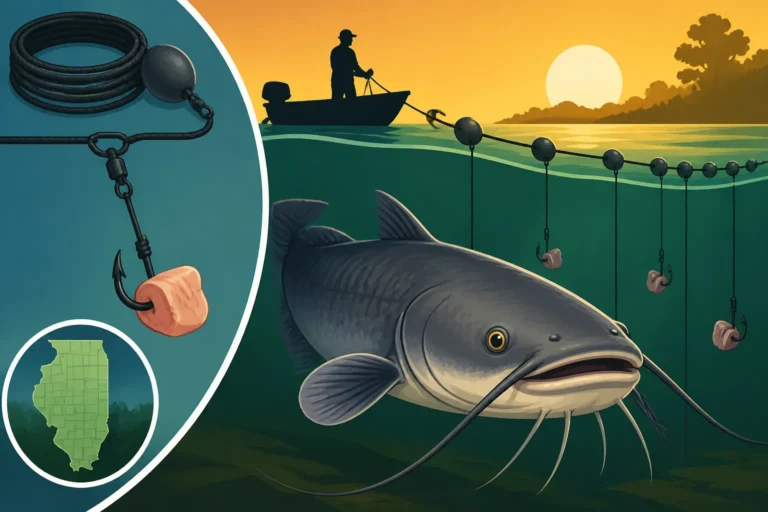
Jug Lining: This involves attaching a baited hook to a line, which is then tied to a floating jug (often a repurposed plastic bottle or foam noodle). You set out multiple jugs, allowing them to drift freely, covering vast areas. When a fish bites, the jug starts to move erratically, signaling a catch. Each jug acts as an independent fishing line, and you monitor them from your boat. It’s an active way to fish, as you’re constantly retrieving and resetting jugs, and it’s especially exciting when several jugs go down at once!
Trotlines: A trotline is a long main line stretched across a body of water or anchored to shore, with multiple baited hooks attached at intervals on dropper lines. These are typically set and left overnight, then checked in the morning. Trotlines can be incredibly effective for catching multiple fish, particularly larger catfish, but they require significant setup and knowledge of safe deployment. You need sturdy anchors, a strong main line, and appropriate hooks. Remember, specific rules regarding the number of jugs or hooks per trotline, tagging requirements, and water bodies where they are allowed vary. Always consult the Illinois Department of Natural Resources (IDNR) regulations handbook. For a deeper dive, check out the Catfish Jug Fishing Techniques and Catfish Trotline Setup Guide articles.
Finding Catfish Hotspots in Illinois
Knowing how to fish is only half the battle; knowing where to fish is equally important. Illinois is crisscrossed with rivers and dotted with lakes, each presenting unique opportunities for catfish anglers. Understanding where catfish prefer to congregate in different water bodies will significantly improve your catch rates.
River Fishing Strategies: Channels, Eddies, and Structure
Illinois rivers are a haven for catfish, especially the mighty Mississippi River, the Illinois River, and the Kankakee River. When fishing rivers, current is your friend, but you need to know how to use it. Catfish, particularly blues and flatheads, will often position themselves out of the main current, in ambush points where food is swept to them. Look for current seams, where fast-moving water meets slower water. These are natural conveyor belts for food and prime feeding lanes. Eddies, the swirling pockets of water behind large rocks, bridge pilings, or logjams, are also excellent spots. The current pushes food into these calmer areas, creating a buffet for waiting catfish.
Structure is paramount in rivers. Submerged timber, logjams, rock piles, and undercut banks are classic flathead hangouts. Deep holes and channels, especially those created by river bends or scour near dams, are magnets for blue catfish. When you're on the river, spend some time reading the water. Look for changes in current, visible structure, and areas where tributaries enter, bringing in fresh water and nutrients. Using a fish finder to identify deeper pockets and submerged structure can be invaluable. Remember to always approach these areas cautiously, especially if navigating by boat, as currents can be strong and snags are common. The Mississippi River Catfish: Why Southern Illinois Waters Produce So Many provides excellent insights for those tackling our largest river.
Lake and Reservoir Fishing Strategies: Depths, Inflows, and Timber
While rivers are synonymous with big catfish, Illinois's numerous lakes and reservoirs, such as Rend Lake, Lake Shelbyville, and Carlyle Lake, offer fantastic catfishing opportunities, especially for channel catfish. In these calmer waters, you'll need to think differently about where the fish are hiding. Depths play a huge role, especially during different seasons. In spring and fall, catfish might be shallower, but during the heat of summer, they'll often retreat to deeper, cooler water. Look for main lake points that drop off into deeper water, submerged humps, or old creek channels that wind through the lake bed.
Inflow areas are consistently productive. Where creeks or small rivers feed into a lake, they bring in fresh water, oxygen, and most importantly, food. These areas are especially good after heavy rains. Timber and brush piles, whether natural or man-made fish attractors, are always worth checking. Catfish love to hide in these structures, especially flatheads if they are present. Docks, rip-rap along causeways, and bridge pilings also provide excellent habitat and ambush points. Using a depth finder can help you locate these features. Pay attention to wind direction; a sustained wind pushing across a flat can create a "current" that concentrates baitfish and, consequently, catfish on the downwind side. You can often find fantastic shore fishing access points around these key structures on our major reservoirs.
Night Fishing for Catfish: Why and How
If you're not fishing for catfish at night, you're truly missing out on some of the most productive and exciting action. Catfish, especially the larger ones, are primarily nocturnal feeders. As the sun sets and the water cools, they become more active, venturing out of their daytime hiding spots to hunt. The cover of darkness provides them with a sense of security, and many of their prey species are also more active at night.
Why night fishing is effective:
- Increased Activity: Catfish are naturally more active after dark.
- Less Pressure: Fewer anglers on the water means less disturbance for the fish.
- Cooler Temperatures: More comfortable for both fish and angler during hot Illinois summers.
How to approach it:
- Gear Up for Dark: A good headlamp with a red-light setting (to preserve night vision) is essential. Lanterns can attract bugs, but also illuminate your fishing area.
- Choose Familiar Spots: It’s best to fish locations you know well during the day to avoid hazards in the dark.
- Scent is Key: Rely heavily on smelly baits like cut bait, chicken liver, or potent stink baits, as visual cues are diminished.
- Listen and Feel: With reduced visibility, pay extra attention to the sound of your reel and the feel of your line. Use glow sticks on your rod tips for visual bite detection.
- Safety First: Always let someone know where you're going and when you expect to return. Be extra cautious on and near the water.
Night fishing often yields not only more bites but also larger fish. It's a completely different atmosphere on the water, filled with sounds and sensations you don't experience during the day. It’s definitely worth braving the dark for. For a deeper dive into nocturnal tactics, refer to How to Catch Catfish at Night.
Advanced Tips for Illinois Catfish Anglers
Once you've mastered the basics, there are always ways to refine your approach and increase your consistency. Catfish angling is a blend of science and art, and these advanced tips can help you elevate your game, particularly when chasing those elusive trophy fish.
Reading Water and Weather Conditions
The most successful anglers are those who can "read" the water and understand how weather patterns influence fish behavior. Catfish are no exception.
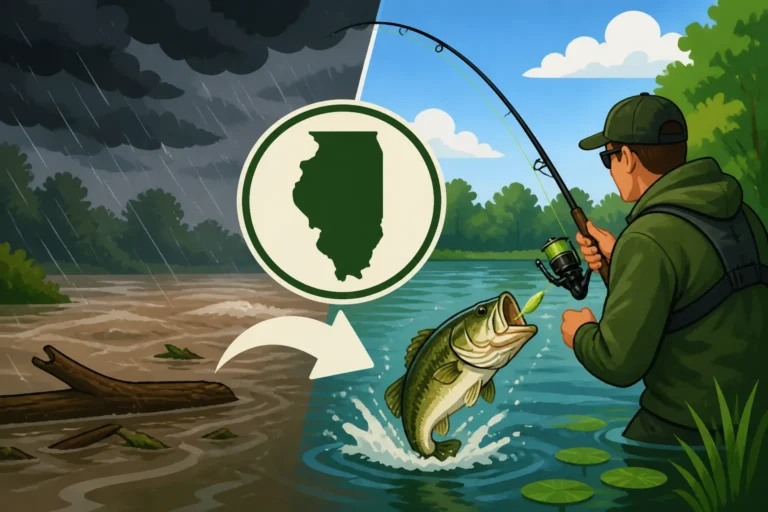
- Water Clarity: In general, channel catfish and blue catfish tolerate, and often prefer, slightly murky or stained water. The reduced visibility makes them feel safer and enhances the effectiveness of their superior sense of smell. Flatheads, however, often prefer clearer water where they can ambush prey more effectively. If the water is chocolate milk after a heavy rain, channel cats might be on fire, but flatheads might be tucked away waiting for it to clear.
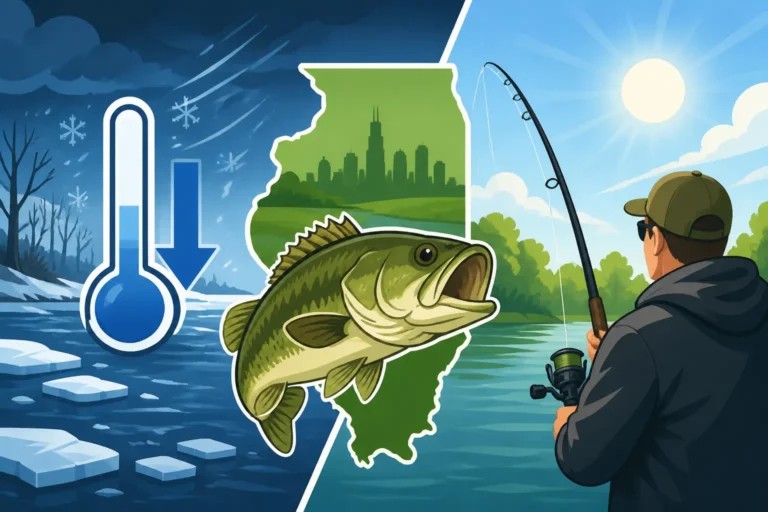
- Water Temperature: As cold-blooded creatures, water temperature dictates catfish activity levels. They are most active in warmer waters, typically above 60°F, and their metabolism slows down in colder temperatures. During the heat of summer, they might move to deeper, cooler sections of a lake or river during the day and only come shallower to feed at night. In winter, they'll often school in deep holes.
- Current Flow (Rivers): Understanding current is critical for river catfishing. Strong currents after heavy rains can push fish into slack water areas, making those spots productive. Conversely, a steady, moderate current is ideal for blue catfish, which use it to their advantage. Too little current, and fish might be scattered and less active.
- Barometric Pressure: While often debated, many experienced anglers believe that stable or slowly falling barometric pressure (often associated with approaching frontal systems) can stimulate feeding activity, while rapidly falling or very high, stable pressure can make fish lethargic. Pay attention to these subtle changes; they can mean the difference between a good day and a tough one.
Learning to observe these factors and adjust your location and presentation accordingly is a hallmark of an advanced angler. It's not just about where the fish are, but why they are there based on environmental cues.
Handling and Releasing Catfish Safely
Catching a big catfish is exhilarating, but knowing how to handle it safely – both for yourself and the fish – is crucial, especially if you plan on releasing it.
- Safe Handling: Catfish have sharp pectoral and dorsal fins that can inflict painful punctures. Always be mindful of these spines. For smaller fish, you can often grip them firmly behind the head, being careful to avoid the fins. For larger fish, a lip gripper can be invaluable for controlling the head. If you don't have a gripper, carefully hold the fish by its lower jaw, ensuring you don't dislocate it, and use your other hand to support its belly.
- De-hooking: Circle hooks usually make de-hooking easy as they're typically in the corner of the mouth. Use long-nosed pliers or a de-hooking tool to gently back the hook out. If the hook is deeply embedded, it's sometimes better to cut the line as close to the hook as possible, as studies show the hook will often rust out or be encapsulated by the fish's tissue.
- Minimizing Stress: Keep the fish in the water as much as possible, especially large ones. If you need to bring it aboard for a quick photo, do so quickly and carefully. Support the fish horizontally, never vertically by the jaw alone, as this can damage internal organs.
- Reviving the Fish: If a fish seems sluggish before release, hold it gently in the water, facing into a mild current or moving it back and forth to force water over its gills. Only release it when it can swim away under its own power.
- Legal Limits: Always be aware of the daily limits for each species. For example, understanding the Illinois Channel Catfish Daily Limit of 20 Fish or Illinois Flathead Catfish Limit of 10 Fish Per Day is essential for legal and sustainable fishing.
Practicing good catch-and-release techniques ensures that these magnificent fish will continue to thrive in Illinois waters for future generations of anglers to enjoy.
Seasonal Considerations for Catfishing in Illinois
Catfish behavior changes significantly throughout the year, and understanding these seasonal patterns can dramatically improve your success.
- Spring (March-May): As water temperatures rise (especially above 50°F), catfish begin to emerge from their winter lethargy. This is a fantastic time for active channel cats, often found in shallower areas warming up. Blue and flathead catfish will also start to become more active, moving out of their deep wintering holes. The spawn typically happens in late spring/early summer when water temperatures hit the mid-70s, and fishing can be tougher during this period as fish are focused on reproduction. The Illinois Fishing License Guide for 2026 is also important to consider as the new license year starts March 1st.
- Summer (June-August): This is prime catfishing season! Warmer water means high metabolism and aggressive feeding. Channel cats are everywhere, feeding actively day and night. Larger blues and flatheads will be in their deeper river haunts. Night fishing becomes incredibly productive during hot summer days. Look for them along ledges, deep holes, and anywhere there's good oxygenation.
- Fall (September-November): As water temperatures cool, catfish go on a feeding binge, fattening up for winter. This can be an excellent time for catching big, active fish, particularly in rivers where current can concentrate them. They might be found shallower than in summer, but still relating to deeper structure.
- Winter (December-February): Catfishing slows down significantly, but it's not impossible. Catfish, especially blues and flatheads, will school tightly in deep holes or channels where water temperatures are most stable. This is a very specialized type of fishing, often requiring precise bait placement in a small strike zone, but it can yield incredible numbers of large fish if you find the schools.
No matter the season, always remember that catfish are available year-round in Illinois. Adjusting your techniques, baits, and fishing locations to match the season is key to consistent success. For a detailed calendar, reference the Illinois Catfish Season Guide.
Disclaimer
Fishing conditions, regulations, and fish populations can change. Always consult the most current Illinois Department of Natural Resources (IDNR) fishing regulations before heading out. This guide is for informational purposes only and does not supersede official state regulations. Be safe, ethical, and enjoy your time on the water!