How to Rig a Trotline for Big Catfish
Let's be honest, few things in fishing get the adrenaline pumping quite like targeting those truly massive catfish that lurk in the depths of Illinois's rivers and lakes. If you've ever felt that frustration of consistently catching smaller fish when you know there are giants out there, you're not alone. This guide is dedicated to helping you master the art of rigging a trotline, a tried-and-true method for dramatically increasing your chances of landing those trophy-sized flatheads, blues, and channels.
Understanding the Power and Purpose of Trotlines for Big Catfish
There’s a reason why trotlines have been a staple for serious catfish anglers for generations. They offer a unique advantage over traditional rod and reel fishing, allowing you to cover more water and present multiple baits simultaneously, dramatically increasing your odds of connecting with those elusive monster catfish. But it's not just about tossing a line out; there's a real science and strategy to doing it effectively and legally in Illinois.
Why Trotlines Are a Game-Changer for Trophy Catfish Anglers
Imagine setting out a dozen or more baits, each strategically placed in a prime feeding lane, and then coming back later to check your haul. That's the power of a trotline. Instead of waiting patiently for a single bite on one line, you're essentially creating a gauntlet of temptation for any hungry catfish passing through. This method is especially effective for the larger, more territorial catfish, like big flatheads, who might be hesitant to approach a boat but will readily snap up a well-placed bait in their established feeding grounds. It’s a completely different approach to fishing, one that requires planning and a bit of elbow grease, but the rewards can be truly spectacular.
Trotlines allow you to target specific areas, such as submerged timber, deep holes, or current breaks, where big catfish prefer to ambush their prey. You can leave them deployed for hours, or even overnight, giving the fish ample time to find your offerings. This passive yet highly effective technique makes it possible to consistently put significant numbers of large fish in your cooler, something that can be incredibly challenging with conventional rod and reel setups alone.
The Legal Lowdown: Navigating Illinois Trotline Regulations
Before you even think about buying a spool of line, it is absolutely critical to understand the specific regulations governing trotlines in Illinois. Ignoring these rules can lead to hefty fines and confiscation of your gear, which is a headache nobody needs. Illinois has clear guidelines on the number of hooks, length of the line, and tagging requirements. For instance, in Illinois, a trotline cannot exceed 100 hooks, and each line must be tagged with the angler's name and address or IDOC customer number. These rules are in place to manage the fishery responsibly and ensure fair access for all anglers.
Furthermore, there are specific waters where trotlines might be prohibited or have different rules. It's always a good idea to consult the most current Illinois Fishing Regulations Overview before heading out. Rivers like the Mississippi and Illinois often have more permissive regulations compared to smaller lakes or state park ponds, but this isn't a guarantee. Always double-check the local rules for your chosen fishing spot. Understanding these legalities is the first and most important step to becoming a successful and responsible trotline angler.
Responsible Trotlining: Practicing Sustainable Harvest
With great power comes great responsibility, right? Trotlines are incredibly efficient, which means you have an even greater obligation to practice responsible angling. This isn't just about following the law; it's about ensuring future generations can enjoy the same incredible fishing opportunities we do. Always adhere to the Illinois Catfish Daily Limits Explained for the species you're targeting. For example, knowing the Illinois Flathead Catfish Limit of 10 Fish Per Day versus the Illinois Channel Catfish Daily Limit of 20 Fish can make a big difference in how you manage your catch.
Beyond catch limits, consider the size of the fish you're keeping. While trotlines are great for big fish, sometimes you'll catch smaller ones. Releasing smaller fish, especially those below a certain size, helps sustain the population. Also, be mindful of where you set your lines to avoid conflicts with other anglers or boat traffic. Leaving abandoned or untended lines is a major problem and can lead to ghost fishing, harming aquatic life. Always retrieve your lines promptly and ensure no gear is left behind. A little thoughtfulness goes a long way in preserving our cherished fishing resources.
Assembling Your Arsenal: Key Components for a Bulletproof Trotline Rig
A successful trotline isn't just thrown together; it's a carefully assembled system designed to withstand the power of big fish and the rigors of the water. Each component plays a vital role in the overall strength, durability, and effectiveness of your rig. Skimping on quality here can mean lost fish, lost gear, and a whole lot of frustration.
The Backbone: Selecting the Right Mainline Material and Strength
The mainline is quite literally the backbone of your trotline. It needs to be incredibly strong, durable, and resistant to abrasion. For targeting big catfish, don't even think about anything less than 200-pound test braided nylon or tarred trotline cord. This material is designed to handle the strain of multiple large fish, resist nicks from submerged logs, and stand up to the elements. You can often find large spools of this specialized line on platforms like Amazon, making it easy to get what you need.
- Braided Nylon: Offers excellent knot strength and resistance to stretching. It's relatively easy to handle and ties well. Look for UV-resistant options for longevity.
- Tarred Trotline Cord: This is a classic choice. The tar coating protects the line from rot, abrasion, and UV degradation, extending its lifespan significantly. It's often stiffer, which can be an advantage when deploying and retrieving, as it's less prone to tangling.
The length of your mainline will depend on the area you plan to fish. Common lengths range from 50 to 200 feet, but always ensure it's manageable for your chosen method of deployment and retrieval. Too long, and it can be a nightmare to handle; too short, and you might miss out on prime fishing grounds.
Hooks, Leaders, and Swivels: Crafting the Business End
This is where the magic happens – where your trotline actually connects with the fish. Using the right hooks, leaders, and swivels is paramount for effective and ethical trotlining.
- Hooks: For big catfish, you'll want sturdy, sharp hooks. Circle hooks are highly recommended. They are designed to hook fish in the corner of the mouth, leading to fewer gut-hooked fish and making release easier if you catch something you don't intend to keep. Sizes from 5/0 to 10/0 are common, depending on the average size of the fish you're targeting. For giant blue catfish, you might even go larger. Look for brands known for strong, sharp points and robust construction.
- Leaders (Dropper Lines): These are the shorter lines that connect your main trotline to your hooks. They should be a slightly lighter test than your mainline (e.g., 100-150 lb test monofilament or braided line) so that if a hook gets snagged, only the leader breaks, not the entire mainline. Leaders should be about 18-36 inches long, allowing the bait to drift naturally in the current without tangling.
- Swivels: Heavy-duty barrel swivels or three-way swivels are essential. Attach a swivel to your mainline at each point where a leader connects. This prevents the leader and hook from twisting and tangling, especially when a strong fish is on the line. Quality swivels can be purchased in bulk from outdoor suppliers or easily found on Amazon.
Securing Your Setup: Weights, Anchors, and Buoys
Without proper anchoring, your trotline will drift away, making it useless and potentially a hazard.
- Anchors: You'll need an anchor at each end of your trotline. For river fishing, heavy weights like concrete blocks (at least 20-30 pounds each) or actual boat anchors (mushroom or river anchors) are ideal. In calmer lake waters, lighter weights might suffice, but always err on the side of too heavy. The goal is for your trotline to stay exactly where you put it, even against current or active fish.
- Weights (for sinking the mainline): Depending on how you want your trotline to fish, you might add additional weights along the mainline itself, especially if you're fishing in strong current or want the mainline to hug the bottom. Old lead weights, rebar scraps, or even heavy rocks tied securely can work.
- Buoys: These mark the location of your trotline. You'll need one at each end. Brightly colored buoys (e.g., orange or yellow) are best for visibility. Ensure they are large enough to be easily seen from a distance, even in choppy water. Each buoy should be clearly marked with your name and address or IDOC customer number, as required by Illinois law. You'll need sturdy rope to connect your buoys to your anchors, again, resistant to fraying and strong enough to handle the current.
Safety and Convenience: Auxiliary Gear for Trotline Success
Don't overlook the little things that can make your trotlining experience safer and more efficient.
- Gloves: Heavy-duty gloves (like thick leather or cut-resistant fishing gloves) are non-negotiable. Handling strong fishing line, sharp hooks, and potentially dangerous fish like catfish with their spines demands protection.
- Light Source: If you're setting or checking lines at dawn, dusk, or night, a powerful headlamp or spotlight is essential. Remember, Night Fishing Techniques often yield bigger catfish, so good lighting is key.
- Pliers/Hook Removers: Long-nose pliers or specialized hook removers are crucial for safely extracting hooks, especially from large, thrashing fish.
- Knife/Line Cutters: A sharp knife or heavy-duty line cutters can be invaluable in case of a snag or tangle, or to dispatch a fish quickly.
- Measuring Device: Always have a tape measure or ruler on hand to ensure your catch meets legal size requirements.
- Cooler with Ice: For preserving your catch, especially if you're keeping some of the delicious catfish you land.
The Art of Assembly: Rigging Your Trotline Step-by-Step
Now that you have all your components, it's time to put it all together. Rigging a trotline properly takes time and attention to detail, but a well-constructed line will pay dividends in the long run. Don't rush this process; treat it like building a custom fishing machine.
Laying Out Your Mainline and Spacing the Droppers
Find a large, clear space – like your driveway, backyard, or a boat ramp – to lay out your entire mainline. This prevents tangles and allows for precise spacing. Start by securing one end of your mainline, perhaps to a tree or a heavy object. Then, stretch the line out to its full length.
Now, determine your hook spacing. Illinois regulations might have minimum spacing requirements, so check those first. Generally, 3 to 6 feet between hooks is a good starting point. Closer spacing means more hooks, but also more potential for tangles, especially with active fish. Wider spacing might reduce tangles but means fewer baits in the water. Use a measuring tape or mark off consistent intervals on your mainline with a permanent marker. This consistency is crucial for deploying and retrieving your line smoothly.
Tying On Snaps, Swivels, and Pre-Rigged Leaders
This is where the leader lines with hooks get attached to the mainline. Instead of tying each hook directly to the mainline, which can be cumbersome and difficult to change, we use a system of snaps and swivels.
- Tie a sturdy loop knot (like a surgeon's loop or a figure-eight loop) at each marked interval on your mainline where a leader will attach.
- Attach a heavy-duty snap swivel to each of these loops. These snap swivels serve two purposes: they allow the leader to rotate freely, reducing tangles, and they make it incredibly easy to attach or detach pre-rigged leaders.
- Prepare your leaders: Tie your chosen hook (e.g., a 7/0 circle hook) to one end of a 1.5-2 foot section of leader material (100-150 lb test mono or braid) using a strong knot like a snell knot or palomar knot. At the other end of the leader, tie a simple loop or a strong knot that can easily connect to your mainline's snap swivel. Having multiple pre-rigged leaders ready means you can quickly change bait types or replace a snagged hook without retying on the water.
Attaching Your Weights and Buoys for Proper Depth
Once your mainline is set up with all its droppers, it’s time to add your terminal anchors and buoys.
- Anchor Ropes: At each end of your mainline, tie a stout rope (e.g., 1/4-inch braided nylon, 50-100 feet long, depending on water depth) to connect to your anchors. Use a strong, secure knot that won't slip, like a bowline.
- Anchor Attachment: At the other end of these ropes, attach your chosen heavy anchors. If you're using concrete blocks, ensure the rope is threaded through a sturdy eye bolt or rebar loop cast into the block, not just tied around the block, which can chafe and break.
- Buoy Attachment: A shorter section of rope (3-5 feet) should be tied from each anchor rope to your marked buoys. The buoy should float freely above the anchor, clearly marking its location. Make sure your IDOC information is permanently marked on each buoy.
Customizing Your Rig: Adjustments for Different Waters and Species
The beauty of a trotline is its adaptability. You can customize your rig for specific conditions or fish species.
- Water Depth: If you're fishing a deep river channel, you might want longer anchor ropes and leaders to allow your bait to hang closer to the bottom or drift just above it. For shallow backwaters, shorter ropes and leaders are appropriate.
- Current: In strong currents, you may need heavier anchors and potentially some intermediate weights along the mainline to keep it from bowing too much. Longer leaders also help baits move more naturally in the current.
- Target Species: While this guide focuses on big catfish, you can adjust hook sizes and bait types to target specific species. For instance, for monster flatheads, you'll want large, sturdy hooks and live bait. For Illinois Blue Catfish Rules and Daily Limits, you'll want stout gear to handle their incredible power.
Strategic Deployment: Setting Your Trotline for Optimal Catfish Action
Rigging the trotline is only half the battle; knowing where and how to deploy it is equally critical. This involves understanding catfish behavior, choosing the right bait, and executing a safe and effective set.
Scouting the Perfect Spot: Where Big Catfish Hide
Big catfish, especially flatheads and blue cats, are often ambush predators or current-loving bottom feeders. They look for structure, depth changes, and current breaks.
- Rivers: On the Mississippi River Catfish Fishing in Southern Illinois or the Illinois River Fishing Guide, look for deep holes, outside bends where the current carves out depressions, submerged timber (log jams, fallen trees), rock piles, and points that break the current. Big flatheads love to hide in cover, while blues often patrol deeper channels.
- Lakes: In large reservoirs like Rend Lake, Lake Shelbyville, or Carlyle Lake, target old creek channels, humps, submerged roadbeds, main lake points, and areas near dam structures. These spots concentrate baitfish and provide hiding spots for large catfish. Pay close attention to bottom contours using a fish finder if you have one. Often, the best spots for Best Catfish Fishing Spots in Illinois are those with a combination of cover and access to deeper water.
Think about access. Can you safely set and retrieve your trotline in this location? Avoid high-traffic boating lanes where your buoys could become a hazard or your line could be run over.
The Art of Baiting Your Trotline
The bait you use is often the make-or-break factor for trotline success. Big catfish are opportunistic, but they often have preferences. This is where knowing your target species comes into play.
- Flathead Catfish: These fish overwhelmingly prefer live bait. Small sunfish, bluegill, or even small carp are excellent choices. Hook them through the back or lips so they stay alive and active, sending out vibrations that attract flatheads. Ensure your baitfish are legal to use in Illinois and adhere to any size restrictions for bait.
- Blue Catfish: Blues are less picky than flatheads and will take live bait, cut bait, or even prepared baits. Cut shad, carp, skipjack herring, or even large chunks of oily fish are fantastic. The stronger the scent, the better.
- Channel Catfish: While channels will also hit live and cut bait, they are famous for their love of prepared stink baits, chicken livers, shrimp, and nightcrawlers. If you're targeting a mixed bag, a variety of baits can be effective.
Consider having a range of baits ready, perhaps even using different baits on different hooks along your line to see what the fish are hitting. For more ideas, check out our guides on Best Bait for Channel Catfish, Best Bait for Blue Catfish, and Best Bait for Flathead Catfish. Freshness is key – don't use stale or rotting bait unless you're specifically targeting scavenging channel cats with stink bait.
The Launch: Safely Deploying Your Rig in the Water
Deploying a trotline safely and efficiently usually requires two people and a boat, though it can be done from shore in some very specific scenarios.
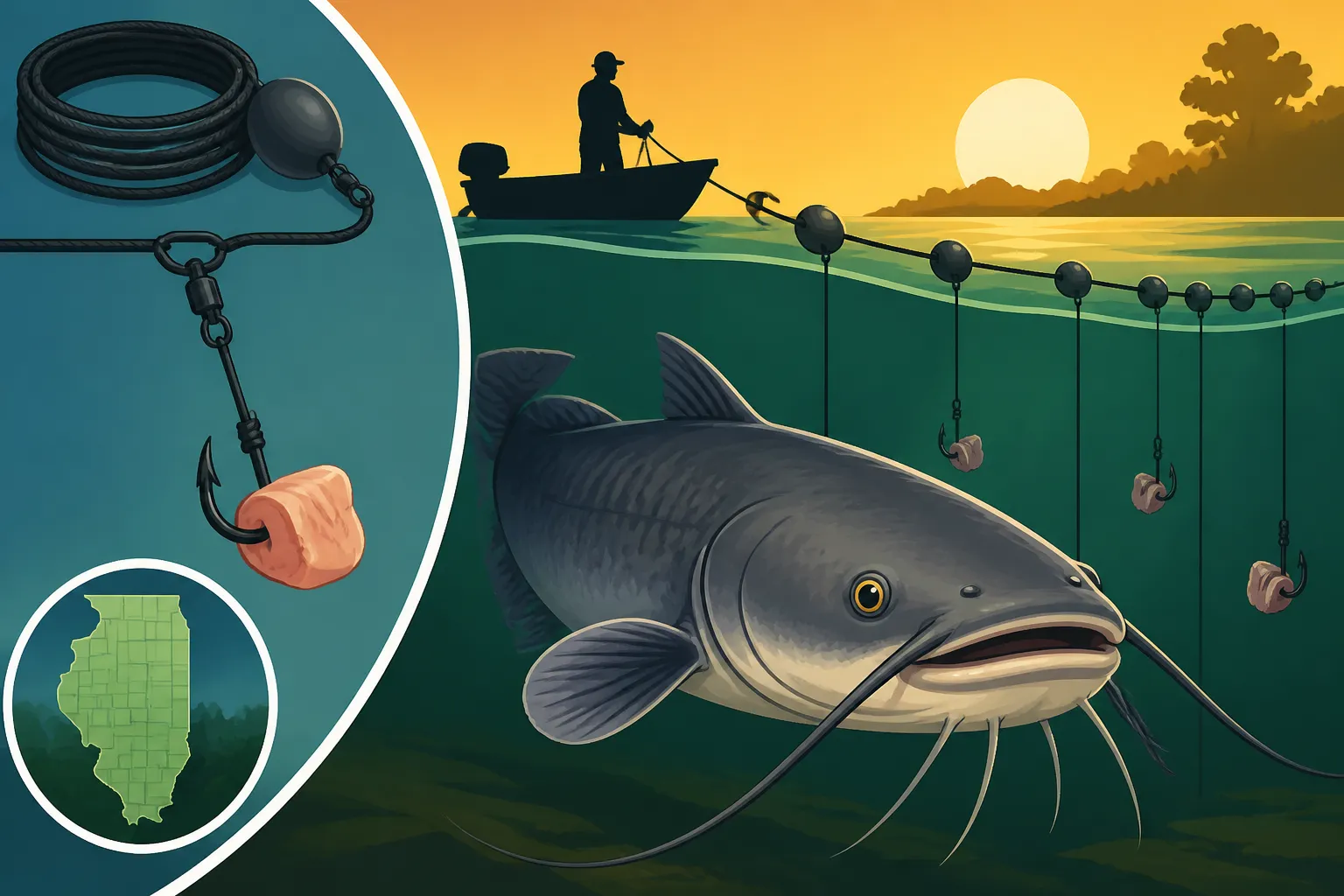
- Anchor First: Start by dropping one anchor and its attached buoy in your desired starting location. As you motor slowly and steadily in the direction you want your line to run, let out the mainline, carefully paying out the hooks and leaders.
- Strategic Line Placement: Ensure the line lays out straight and doesn't snag on anything during deployment. One person should be handling the boat, while the other carefully pays out the line, ensuring hooks don't catch on the boat or the person. This is where those heavy-duty gloves really come in handy!
- Bait as You Go (or Pre-Bait): You can either bait each hook as you deploy the line, or you can pre-bait your entire line on shore before heading out. Pre-baiting can be faster on the water, but it makes handling the line more hazardous due to all the exposed hooks. If baiting as you go, have your bait bucket easily accessible.
- Drop Second Anchor: Once the entire mainline is deployed, drop your second anchor and its attached buoy. Confirm both buoys are visible and that your line is securely in place.
- Mark Your Spot: Use a GPS or note prominent landmarks to remember the exact location of your trotline for easy retrieval. There's nothing worse than forgetting where you set your line!
The Payoff: Checking, Harvesting, and Maintaining Your Trotline
The anticipation of checking your trotline is one of the most exciting parts of this type of fishing. But just like setting it, there's a right way to check, harvest, and maintain your gear for safety and longevity.
The Thrill of the Check: What to Expect and How to Approach
How often you check your trotline depends on various factors: regulations, water temperature, and your target species. In warmer water, fish will spoil faster, so more frequent checks (every 6-12 hours) are advisable. In cooler water, you might be able to leave it longer, but never more than 24 hours without checking. Always be prepared for anything when you approach your line!
- Approach Safely: Always approach your trotline from the side, not directly over it, to avoid entangling your propeller or disturbing the line. Wear your PFD, especially if you're alone.
- Retrieve Methodically: Slowly motor along one side of your line, pulling it up hook by hook. Again, heavy gloves are crucial. Have a plan for where fish will go – either directly into a livewell or a large cooler with ice.
- Handle Fish with Care: Large catfish have sharp spines on their dorsal and pectoral fins that can inflict painful wounds. Use a catfish gripper, heavy gloves, or a net to control them. If releasing, do so quickly and carefully. If keeping, dispatch the fish humanely.
- Re-bait and Reset: After checking each hook, re-bait it with fresh bait as needed and gently lower the line back into the water. Ensure the line settles back into its original position.
Handling Your Catch: From Water to Cooler
When you pull up a monster catfish, the excitement is palpable, but safe handling is paramount.
- For the Cooler: If you plan to keep your catch for dinner, move it quickly to a large cooler filled with ice. Icing down the fish immediately preserves its quality and makes cleaning much easier later. Ensure the cooler is sturdy enough to handle a thrashing big cat.
- For Release: If you're practicing catch-and-release, especially with smaller catfish or those outside legal limits, handle them as little as possible. Circle hooks make release much easier, as they typically hook in the lip. Use long-nose pliers to quickly remove the hook, and support the fish horizontally when returning it to the water until it swims away strongly. This ensures the best chance of survival.
- Legal Compliance: Always verify your catch against the Illinois Fishing Season and Catch Limit Rules. This applies to size limits and daily bag limits for species like blue catfish and flathead catfish.
Post-Trip Care: Cleaning and Storing Your Trotline for Longevity
After a successful trotline trip, proper cleaning and storage will extend the life of your gear and prevent frustrating tangles.
- Clean Thoroughly: Remove all hooks and leaders from the mainline (this is where those snaps come in handy!). Rinse the mainline, leaders, hooks, weights, and buoys with fresh water. This removes mud, slime, bait residue, and anything that can degrade the line or corrode metal components.
- Inspect for Damage: Carefully inspect the mainline for any frays, nicks, or weak spots. Check leaders for abrasion and hooks for sharpness and rust. Replace any damaged components. It’s much better to replace a cheap leader or hook now than to lose a trophy fish later.
- Dry Completely: Hang your mainline and leaders to dry completely in the shade. Direct sunlight can degrade nylon over time. Ensure everything is bone dry before storage to prevent mold and mildew.
- Store Neatly: Wind your mainline neatly onto a spool or a sturdy piece of wood. Store leaders and hooks separately in a tackle box or plastic container to prevent tangles and keep sharp points covered. Keep all your trotline gear together in one place, ready for your next big catfish adventure! Consider a heavy-duty storage tub you can easily find on Amazon to keep everything organized.
Following these steps for rigging, deploying, and maintaining your trotline will set you up for success and allow you to enjoy the thrill of battling big catfish in Illinois waters for years to come.
Essential Bait Choices for Illinois Catfish Species
Choosing the right bait can make or break your trotline success. Here’s a quick overview of what works best for the main catfish species you'll find in Illinois.
| Catfish Species | Preferred Bait Types | Key Characteristics | Best Use Cases |
|---|---|---|---|
| Flathead Catfish | Live bait (bluegill, sunfish, shad, small carp) | Ambush predator, highly carnivorous, prefers live prey. | Targeting trophy flatheads in heavy cover. |
| Blue Catfish | Cut bait (shad, skipjack, carp), large live bait | Strong current preference, omnivorous but loves fresh cut bait. | Deep river channels, large reservoirs. |
| Channel Catfish | Stink bait, chicken livers, shrimp, nightcrawlers, cut bait | Opportunistic feeder, excellent sense of smell, scavenger. | Versatile for rivers and lakes, high catch rates. |
Disclaimer
This article is for general informational purposes only and does not constitute professional advice. Laws, prices and regulations vary by location and change over time. Consult a qualified professional for guidance on your specific situation.