How to Catch Catfish at Night
The sun dips below the horizon, and most anglers pack up their gear, ready to call it a day. But for a select group, the real adventure is just beginning. Many find daytime fishing frustrating, battling not just finicky fish but also scorching heat and crowded spots. This guide will illuminate the exhilarating world of night catfishing in Illinois, equipping you with the knowledge, gear, and strategies to turn those dark hours into your most productive fishing sessions yet.
Why Embrace the Darkness for Catfish?
If you've ever wondered why some anglers seem to have all the luck with catfish, often it's because they understand that when the sun goes down, the playing field changes dramatically. Night fishing isn't just a different time; it's a different game entirely, one that heavily favors the angler prepared to embrace the shadows.
Cooler Temperatures and Less Pressure
Let's be honest, trying to fish in the brutal heat of an Illinois summer day can be absolutely draining. The sun beats down, the humidity clings, and frankly, the fish often feel the same way. Catfish, especially the larger ones, tend to become much more active as water temperatures cool in the evening. They're seeking comfortable feeding conditions, and that means the post-sunset hours are prime time. Beyond comfort for you and the fish, night fishing also means fewer people. Those popular daytime spots on lakes like Rend Lake Fishing Guide for Illinois Anglers or the Mississippi River become peaceful, open canvases for you to explore without bumping elbows or fighting for a prime bank spot. It's a serene experience that allows for focused angling.
Catfish Are Naturally Nocturnal Feeders
It's not just about comfort; it's about biology. Many species of catfish, particularly channel, blue, and flathead, are inherently nocturnal predators and scavengers. Their sensory systems are perfectly adapted for low-light conditions. They possess incredibly keen senses of smell and touch, which they use to navigate and locate food in the dark. Their barbels, often called "whiskers," are packed with taste buds, allowing them to detect even the faintest scent of prey or bait in murky water. This means that while bass might be bedding down, catfish are just waking up, moving from deeper, cooler daytime haunts into shallower feeding grounds, actively searching for their next meal.
The Thrill of the Night Bite
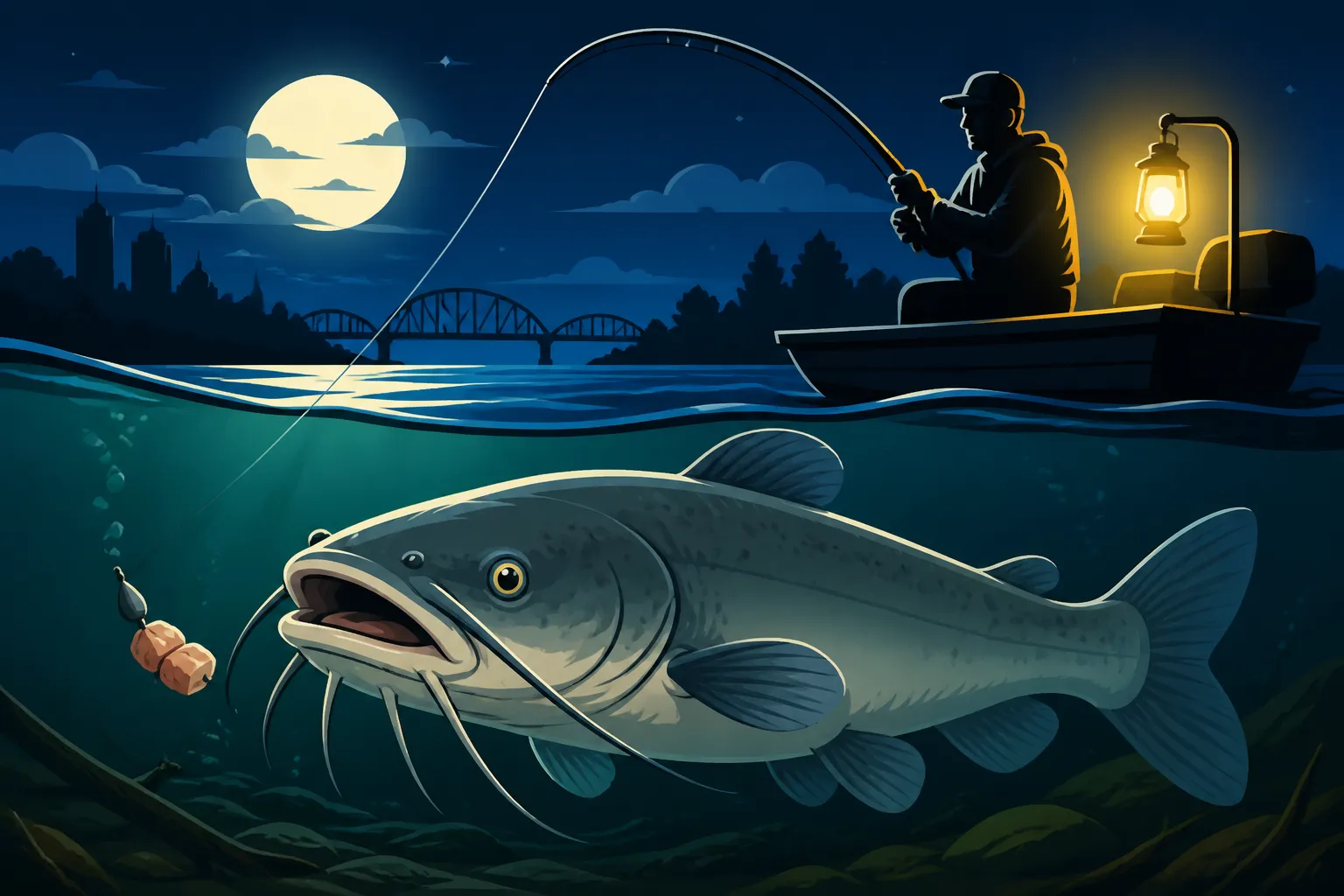
There's an undeniable excitement that comes with fishing in the dark. Every splash, every bump on your line, feels amplified. When a big catfish decides to hit your bait, the take can be surprisingly aggressive, often with a powerful, unmistakable tug that can make your heart race. You're relying more on sound and feel than sight, which creates a deeper connection to the water and the fish. It's a sensory experience unlike any other, and landing a trophy blue catfish under the glow of a headlamp or a full moon is a memory that truly sticks with you. Plus, many of the largest specimens of channel, blue, and flathead catfish are caught after sundown, making the potential reward even greater.
Essential Gear for Your Night Catfishing Expedition
Preparing for a night trip requires a little more thought than a casual daytime outing. Beyond your standard tackle, there are some crucial items that will enhance your safety, comfort, and success when fishing after dark. Don't just grab your rod and go; a well-prepared angler is a successful and safe angler.
Rods, Reels, and Line: Built for the Battle
When targeting catfish, especially at night, you're often dealing with powerful fish that can put a serious bend in your rod. A medium-heavy to heavy-action rod, typically 7 to 9 feet long, is ideal. This length helps with casting heavier baits and offers better leverage when fighting a strong fish from the bank or boat. Paired with a robust spinning or baitcasting reel spooled with 15-30 pound monofilament or braided line, you'll have the backbone needed to handle whatever pulls back. Braided line offers superior sensitivity, which can be a huge advantage when feeling subtle bites in the dark. Many anglers find great deals on durable rod and reel combos specifically designed for catfishing on platforms like Amazon.
As for your terminal tackle, sturdy hooks are non-negotiable. Circle hooks are particularly popular for catfishing as they tend to hook the fish in the corner of the mouth, reducing gut-hooking and making for easier release if you're practicing catch-and-release, or healthier fish for the frying pan. Sizes 5/0 to 8/0 are common, depending on the size of the catfish you're targeting and the bait you're using. You'll also need a variety of sinkers, from egg sinkers for slip rigs to heavier pyramid or no-roll sinkers for holding bottom in current. Having a good assortment of Best Catfish Rigs for Carlyle Lake ready to go can save you precious time in the dark.
Lighting and Navigation: See and Be Seen
This is perhaps the most critical difference from daytime fishing. You'll need reliable light sources for tying knots, baiting hooks, and handling fish. A good headlamp is indispensable, leaving your hands free for tasks. Consider one with a red-light option, as red light is less disruptive to your night vision and less likely to spook fish. Beyond your personal light, consider area lighting like a lantern for your fishing spot, especially if you're bank fishing. If you're on a boat, navigation lights are not just recommended but legally required. Always check local regulations on Illinois Boating Safety Equipment Checklist for New Owners for proper lighting. A GPS device or a reliable compass (and the knowledge to use it) can also be invaluable, particularly if you're exploring unfamiliar waters on a boat or covering significant ground on the bank.
Comfort and Safety Essentials
Night fishing can be damp and chilly, even on a warm summer evening, especially near the water. Dress in layers to adapt to temperature changes. Bug spray is an absolute must – mosquitoes and other biting insects can quickly ruin an otherwise perfect night. A comfortable chair, a cooler stocked with drinks and snacks, and a portable battery pack for charging your phone or other electronics are also highly recommended. For safety, a first-aid kit, a sharp knife, a pair of pliers for hook removal, and a sturdy landing net or a set of lip grippers are essential. Always tell someone where you're going and when you expect to return, and consider bringing a fishing buddy. It's much safer and more fun to share the experience. You can find quality versions of these items, from headlamps to bug sprays, on Amazon.
The Allure of Nighttime Catfish Baits
When the sun goes down, catfish rely heavily on their sense of smell and vibration to locate food. This means that visually appealing lures often take a backseat to baits that emit a strong scent or have a natural, enticing action. The right bait can make all the difference between an empty cooler and a successful night out.
Stink Baits and Prepared Baits
For channel catfish, in particular, highly odorous "stink baits" are often king. These can range from commercially prepared dips and pastes to homemade concoctions. The potent, often pungent, smell travels far in the water, attracting catfish from a distance. Dip baits are usually fished on specially designed worms or sponges that hold the thick bait, while punch baits are pushed onto a treble hook. Many anglers have their personal favorites, and it's worth experimenting with a few different brands to see what works best in your local waters.
Beyond the classic stink baits, other prepared options like dough balls, cheese, or even hot dogs soaked in garlic can be effective. These baits are designed to slowly dissolve or release scent, creating a "chum trail" that draws catfish in. When using these, ensure your hook is well-covered but still exposed enough for a good hookset. Remember, you're appealing to a catfish's nose first and foremost, so the more scent, the better.
Live and Cut Baits
While stink baits excel for channel cats, larger blue and flathead catfish often prefer a more natural offering. Live bait can be incredibly effective for these larger predators. Common choices include bluegill, shad, perch, or even large shiners. When fishing with live bait, use a simple Carolina rig or a three-way swivel rig to keep the bait near the bottom but allowing it to move naturally, attracting attention with its subtle vibrations.
Cut bait, which is essentially pieces of fresh fish (again, bluegill, shad, or even carp work well), is another fantastic option, especially for blue and flathead catfish. The blood and oils released from the cut flesh create a strong scent trail. For flathead catfish, in particular, fresh, lively bait is often preferred, though a well-placed piece of cut bait can still be irresistible. Ensure your cut bait pieces are large enough to appeal to a substantial fish, but not so large that they obscure your hook. For more specifics on what works best for different species, check out our guides on Best Bait for Channel Catfish, Best Bait for Blue Catfish, and Best Bait for Flathead Catfish.
Understanding Bait Presentation
No matter the bait, presentation is key, especially in the dark. A simple bottom rig, like a slip sinker rig (also known as a Carolina rig), is extremely effective. This allows the line to run freely through the sinker, so a biting catfish feels minimal resistance. A fixed-sinker rig (like a Santee Cooper rig, which uses a float above the hook to keep the bait off the bottom slightly) can also be productive, especially in areas with a lot of debris.
Here's a quick comparison of common catfish baits for night fishing:
| Bait Type | Primary Target | Scent Strength | Preferred Rig | Pros | Cons |
|---|---|---|---|---|---|
| Stink Baits | Channel Catfish | Very High | Dip/Punch Bait | Strong attractant, easy to use | Can be messy, not as effective for big blues/flats |
| Cut Bait | Blue, Flathead, Channel | High | Carolina, Three-Way | Natural scent, effective for all sizes | Can be harder to obtain, needs to be fresh |
| Live Bait | Flathead, Blue | Medium | Carolina, Float | Highly attractive, targets larger fish | Requires keeping bait alive, more complex rigs |
| Hot Dogs/Cheese | Channel, smaller Catfish | Medium | Bottom Rig | Readily available, affordable | Less effective for trophy fish |
Unlocking Prime Catfish Locations After Dark
Catfish are creatures of habit, but their habits shift once the sun goes down. Understanding where they move to feed and seek comfort in the dark is crucial for successful night fishing. Forget your daytime spots; the nighttime hotspots are often completely different.
River Channels and Current Breaks
On rivers like the Illinois River or the mighty Mississippi, catfish will often move out of the main, fast-flowing channel and into areas with slightly less current as they actively feed. Look for current breaks created by wing dams, fallen trees, deep holes just off the main channel, or the mouths of feeder creeks. These spots offer a buffet of unsuspecting baitfish and invertebrates getting washed into the calmer waters. Blue catfish, in particular, are strong swimmers and will patrol these areas, using their excellent sense of smell to track down food. The Mississippi River is especially famous for its catfish, with Mississippi River Catfish Fishing in Southern Illinois being a hot topic among anglers. Drop your bait just on the edge of the current seam, where the slower water meets the faster flow, and let the scent plume do its work.
Lake Structure and Deeper Holes
In lakes and reservoirs such as Carlyle Lake or Lake Shelbyville, catfish will follow similar patterns. During the day, they might be holding in deep, cool water, but at night, they'll venture shallower, often following old creek channels, humps, ledges, and submerged timber. Focus on points that extend into the lake, submerged islands, or steep drop-offs. These structures provide easy access to both deep sanctuary and shallow feeding flats. Even shallow coves or flats adjacent to deeper water can become prime feeding grounds as catfish move in to forage. On Carlyle Lake's Best Catfish Spots Along the Dam, you might find fish moving up from the depths to feed near the riprap.
Shoreline Access and Piers
You don't always need a boat to find nighttime catfish. Many public piers, jetties, and accessible shorelines can be fantastic spots. Catfish will cruise these areas looking for easy meals, especially where baitfish congregate around lights or structure. Look for areas with riprap, downed trees, or any kind of cover that provides ambush points. Bridges and causeways are also excellent, as the pylons create current breaks and attract baitfish, which in turn attract catfish. Just be mindful of local regulations and other anglers, and always leave your spot cleaner than you found it. Public access points on the Chicago lakefront, for instance, can sometimes surprise you with a good catfish bite after dark.
Mastering Night Catfishing Techniques
Catching catfish at night isn't just about having the right gear and bait; it's also about employing specific techniques that capitalize on their nocturnal behavior. Patience, careful presentation, and an understanding of how to manage your lines in the dark are all critical components.
Bottom Fishing and Stationary Rigs
The most common and effective technique for night catfishing is bottom fishing with stationary rigs. This typically involves casting out your bait and letting it settle on the bottom, allowing the scent to disperse and attract fish. The Carolina rig (slip sinker, bead, swivel, leader, hook) is a perennial favorite because it lets a catfish pick up the bait and move off without feeling the weight of the sinker immediately, leading to a more confident bite. The Santee Cooper rig, which adds a small float just above the hook, is great for keeping your bait slightly elevated off the bottom, preventing it from getting buried in muck or weeds, and can be especially effective for actively cruising blues and channel cats.
When setting up multiple rods for bottom fishing, space them out to cover a wider area. Pay close attention to your rod tips or use bite alarms (small bells clipped to the rod tip or electronic alarms) to detect strikes. In the dark, visual cues are limited, so feeling the bite and hearing an alarm become paramount. Remember that How to Bottom Fish for Catfish is a foundational skill that pays dividends.
Jug Fishing and Trotlines
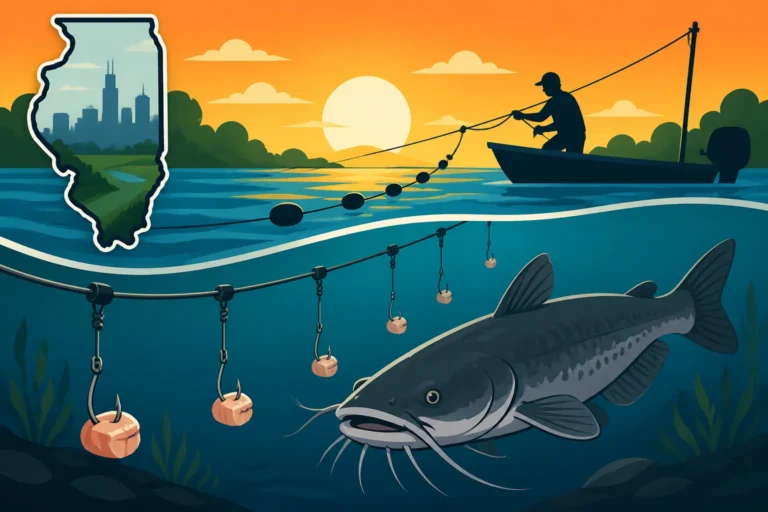
For those looking for a more passive, yet highly productive, method, jug fishing and trotlines can be excellent choices for catching a lot of catfish, particularly larger ones. Jug fishing involves setting multiple baited lines attached to floating jugs or bottles, which drift with the current. When a fish bites, the jug starts to bob and move, signaling a strike. This method allows you to cover a vast amount of water and is exhilarating when you see a jug suddenly take off across the lake or river.
Trotlines are essentially a long main line anchored at both ends, with numerous shorter lines (snoods) and hooks spaced along its length. These are typically set and retrieved hours later, often yielding multiple fish. Both jug fishing and trotlines require adherence to specific regulations, including marking requirements and permissible water bodies. Always consult the latest Illinois Fishing Regulations Overview to ensure you are fishing legally. While incredibly effective, these methods demand careful planning and execution, especially in the dark. Our guide on How to Jug Fish for Catfish offers more details.
Patience is Your Best Ally
Catfishing at night often requires a good dose of patience. Unlike some species that might hit a moving lure, catfish are often drawn in by scent over time. It's not uncommon to wait 30 minutes to an hour or even longer between bites, especially for larger fish. Resist the urge to constantly check your bait or reel in, as this disturbs the scent trail you're trying to establish. Cast your bait, set your rod, and let the fish come to you.
However, patience doesn't mean being passive. Pay attention to your surroundings. Are there baitfish flickering on the surface? Is there a noticeable current? Adjust your bait depth or location slightly if you're not getting any action after a reasonable time. Sometimes, just a slight repositioning of your bait into a more active feeding lane can make all the difference. Remember, the Illinois Channel Catfish Daily Limit of 20 Fish or the Illinois Flathead Catfish Limit of 10 Fish Per Day means you can have a very productive night with patience.
Prioritizing Safety Under the Stars
While the allure of night catfishing is strong, safety should always be your top priority. The dark presents unique challenges, and being prepared for them can mean the difference between an enjoyable outing and a dangerous situation. Never compromise on safety for the sake of a fish.
Navigational Awareness and Buddy System
If you're fishing from a boat, navigating in the dark demands extreme caution. Go slowly, use your navigation lights, and be constantly aware of your surroundings, especially if you're on unfamiliar waters. GPS and depth finders are invaluable tools for avoiding hazards and staying on course. Even when bank fishing, it's easy to get disoriented in the dark. Know your surroundings before night falls, mark any obstacles, and stay on established paths.
Perhaps the single most important safety tip for night fishing is to never go alone. A "buddy system" ensures that if something goes wrong – you slip, get a hook embedded, or encounter an unexpected situation – there's someone there to help. Sharing the experience also adds to the enjoyment and creates lasting memories. Discuss your plans and emergency procedures with your fishing partner before you head out.
Protecting Yourself from the Elements
As mentioned earlier, night air can be surprisingly cool, even after a hot day. Dressing in layers is crucial to regulate your body temperature. Waterproof outer layers can protect against dew, unexpected rain, or splashes from excited fish. Good quality, waterproof footwear with excellent grip is also essential to prevent slips and falls on damp banks or boat decks.
Insect repellent is your best friend. Mosquitoes, gnats, and other biting insects are often most active at night, and their incessant attacks can quickly turn a peaceful outing into an itchy nightmare. Apply repellent generously and reapply as needed. For extra protection, consider wearing long sleeves and pants made from lightweight, breathable fabric, even in warm weather. You can stock up on effective repellents and other protective gear through Amazon.
Respecting the Environment
Fishing at night carries an extra responsibility to be considerate of the environment and other people. Pack out everything you pack in – and then some. Leave no trash, discarded line, or bait containers behind. Be mindful of noise, especially if you're fishing near residential areas or other campers. Keep your lights directed downward when possible to avoid disturbing wildlife or blinding other anglers.
Always follow all fishing regulations, including catch limits and size restrictions. Knowing your Illinois Fishing Season and Catch Limit Rules is non-negotiable. If you're practicing catch-and-release, handle fish carefully and release them quickly, minimizing their time out of water. A healthy fishing environment ensures that future generations can also enjoy the thrill of catching catfish under the stars.
Disclaimer
This article is for general informational purposes only and does not constitute professional advice. Laws, prices and regulations vary by location and change over time. Consult a qualified professional for guidance on your specific situation.