How to Set Up a Trotline for Catfish
If you've ever spent hours patiently waiting for a bite on your rod and reel, only to see others hauling in cooler after cooler of catfish, you might be wondering if there's a more efficient way to fish. For many seasoned anglers, the answer lies in the trotline – a method that can consistently put delicious catfish on your dinner table with a bit of setup and know-how. This comprehensive guide will walk you through exactly how to set up a trotline for catfish in Illinois, ensuring you're fishing effectively, safely, and legally.
Understanding the Trotline: A Time-Tested Catfishing Method
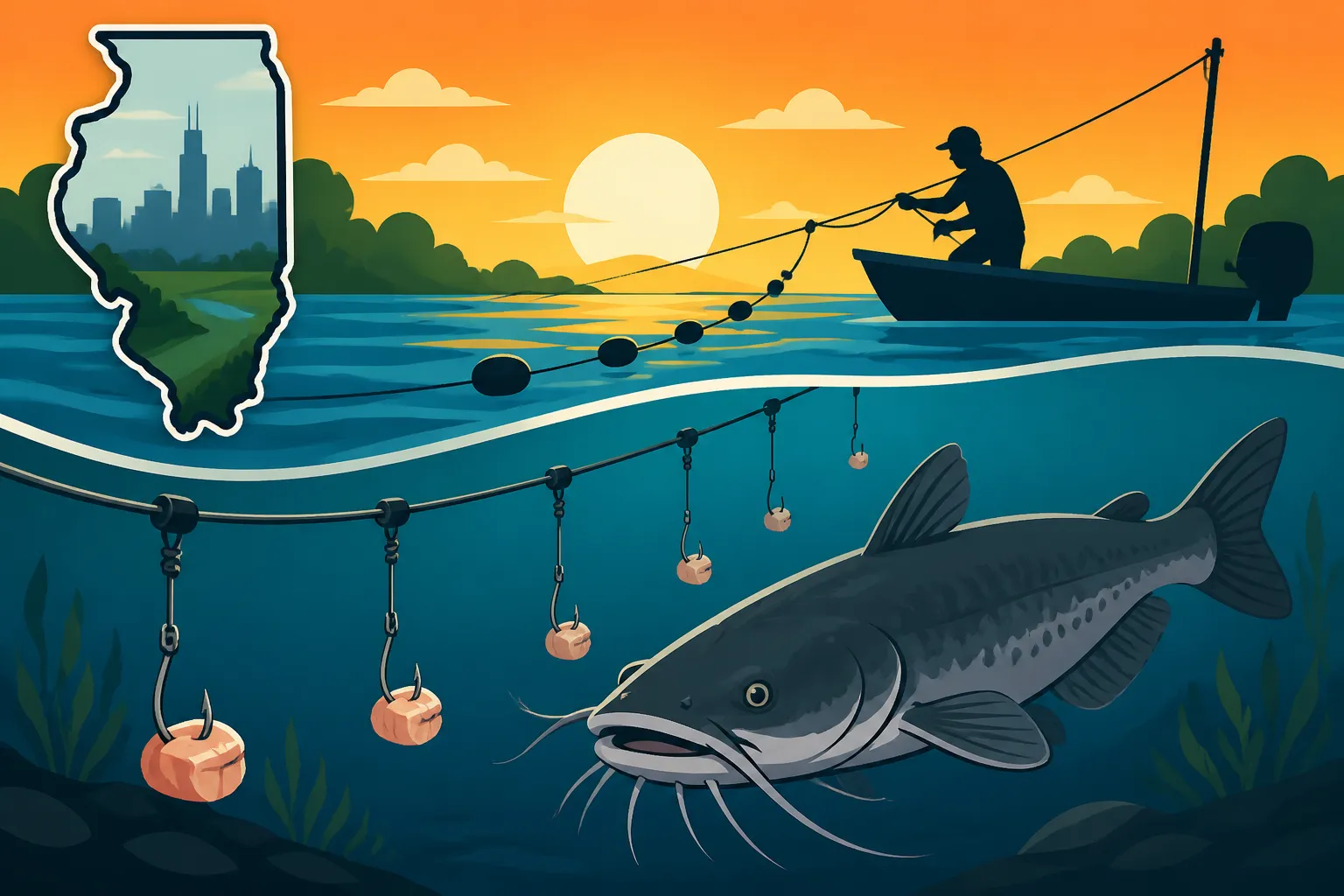
Before we dive into the nitty-gritty of setting one up, let's talk about what a trotline actually is and why it's such a popular choice for catfish anglers. Simply put, a trotline is a long length of sturdy mainline, typically stretched across a body of water or anchored between two points on the bank, from which multiple baited hooks are suspended at intervals. Instead of fishing with one or two lines, you could be fishing with dozens of hooks simultaneously, dramatically increasing your chances of success.
Why Anglers Choose Trotlines
The appeal of trotlines is pretty clear for many Illinois fishing enthusiasts. For starters, it’s about efficiency. You can cover a larger area and present more bait to more fish without needing to hold a rod and reel for every single one. This is especially advantageous for species like channel catfish, blue catfish, and flathead catfish, which often roam and feed at various depths and locations within a lake or river.
Another major benefit is consistency. Once a trotline is properly set, baited, and deployed, it's essentially doing the work for you overnight or throughout the day, depending on your checking schedule. This allows you to fish while you're tending to other tasks, or even sleeping! It’s also incredibly effective for targeting those larger, more wary catfish that might be hesitant to strike a single line. The sustained presence of multiple baits can eventually draw them in. It's truly a game-changer for those looking to maximize their catch.
Components of a Basic Trotline
A trotline, despite its perceived complexity, is built from a few core components:
- Mainline: This is the backbone of your trotline. It needs to be strong, durable, and resistant to abrasion. Monofilament, braided line, or specialized trotline cord are common choices.
- Staging/Gangions/Leaders: These are shorter lines that attach to the mainline and have the hooks at their ends. They provide flexibility and help prevent fish from tangling the main line.
- Hooks: The business end! The size and type of hook will depend on the catfish species you're targeting.
- Swivels: Often used where the staging lines attach to the mainline, swivels prevent line twist, which can be a real headache.
- Weights: Depending on your setup (floating vs. bottom), you'll need weights to keep your line submerged or properly positioned.
- Anchors: Essential for securing your trotline in place, whether to the bank or to the bottom of the waterbody.
- Buoys/Floats: If you're setting a submerged trotline, you'll need floats to mark its location and help retrieve it.
Understanding these pieces will make the assembly much clearer as we move forward.
Navigating Illinois Trotline Regulations: Staying Legal and Safe
Before you even think about buying gear, it's absolutely crucial to understand the rules and regulations surrounding trotlines in Illinois. Unlike rod and reel fishing, which has more universal rules, trotline regulations can be quite specific and vary from state to state, and even within different bodies of water within Illinois. Ignoring these rules can lead to hefty fines and confiscation of your gear, which is a frustration no angler wants to experience. Always consult the most current "Illinois Fishing Regulations Overview" published by the Illinois Department of Natural Resources (IDNR).
Illinois Specific Rules for Trotlines
Illinois has clear guidelines for the use of trotlines to ensure responsible fishing and prevent overharvesting or conflicts with other water users. Here are some key points to be aware of:
- License Requirement: You absolutely need a valid Illinois fishing license to use a trotline. There are no exceptions for this method.
- Waters Where Allowed: Trotlines are generally permitted in the "Illinois River and its lateral ditches, tributaries and the interconnecting backwaters" as well as the "Mississippi River and its lateral ditches, tributaries and the interconnecting backwaters." For other waters, especially smaller lakes and ponds, they are often prohibited. Always check site-specific regulations for the body of water you intend to fish. Why Fishing Rules Vary by Lake and River is a good read to understand this concept better.
- Number of Hooks: There are limits on the total number of hooks you can use on a trotline. In the Illinois and Mississippi Rivers, a trotline can have up to 50 hooks. This is a significant number, offering plenty of opportunities to catch fish.
- Tagging Requirements: Your trotline must be tagged with your name and address, or your IDNR customer identification number. This is critical for enforcement and identification.
- Attending the Line: Trotlines must be "personally attended" at least once every 24 hours. This means you can't just set it and forget it for days on end. Regular checks are essential for the welfare of the fish and to retrieve your catch.
- Placement and Obstruction: Trotlines cannot be set in a way that obstructs navigation or other legal fishing methods. Be mindful of boat lanes, swimming areas, and popular bank fishing spots.
Ignoring these regulations can lead to serious consequences, including penalties for fishing without a license in Illinois, even if you technically have one but aren't following the trotline-specific rules. It's always better to be safe than sorry and double-check the local rules.
Safety Considerations for Trotline Users
Beyond legality, safety is paramount. Trotlines, especially those with many hooks, can be hazardous if not handled correctly.
- Hook Hazards: Those hooks are sharp! Always wear sturdy gloves when setting, baiting, and checking your trotline to protect your hands. Keep a pair of pliers or a hook remover handy for safely unhooking fish.
- Navigation Risks: Mark your trotline clearly with visible floats, especially if you're in an area with boat traffic. Even in slow-moving water, a submerged line can snag props or injure swimmers if not properly marked.
- Wildlife: Be aware that trotlines can attract more than just catfish. Other wildlife, including turtles or even birds, can become entangled. Regular checks help mitigate this, allowing you to release unintended catches.
- Water Conditions: Never set a trotline in dangerous water conditions. Strong currents, heavy boat traffic, or storms can make deployment and retrieval risky.
By understanding and adhering to these regulations and safety guidelines, you can ensure a successful and enjoyable trotlining experience without any unwanted surprises.
Gathering Your Gear: Essential Equipment for a Successful Trotline
Alright, with the legal stuff out of the way, let's talk about the fun part: assembling your gear! You don't need a massive budget to get started, but investing in quality components will save you headaches in the long run. Many of these items can be found at local tackle shops or conveniently ordered online from retailers like Amazon.
Mainline and Staging Materials
This is where the strength of your trotline truly lies.
- Mainline: For a solid trotline, you'll want something incredibly strong and abrasion-resistant. Heavy-duty nylon twine, braided polypropylene rope, or specialized trotline cord with a breaking strength of at least 200-300 pounds is ideal. Monofilament can work, but it's more prone to stretching and abrasion. The length will depend on how wide of an area you want to cover, up to the legal limit. You might find a good bulk spool of braided line on Amazon.
- Staging/Leaders: These are the shorter lines that connect your hooks to the mainline. Tough monofilament (50-80 lb test) or braided line (100+ lb test) works well. The length of your staging lines will determine how far your bait hangs from the mainline. Shorter leaders (6-12 inches) help prevent tangles, while longer ones (18-24 inches) can give bait more natural movement.
- Swivels: Heavy-duty barrel swivels or three-way swivels are essential. Attaching a swivel where each staging line meets the mainline prevents line twist, which is a constant problem when fish are fighting. The swivels should be rated for a higher breaking strength than your staging lines.
Hooks, Weights, and Anchors
These components are critical for presenting your bait effectively and keeping your line in place.
- Hooks: For catfish, you'll generally want sturdy, sharp hooks that can handle powerful fish. Circle hooks are a fantastic choice for trotlines because they are designed to hook fish in the corner of the mouth, reducing gut-hooking and making for easier, safer releases of undersized or unwanted fish. Sizes can range from 5/0 to 10/0, depending on the average size of catfish in your target water. For larger blue catfish, you might even go bigger.
- Weights: Depending on whether you want your trotline to float on the surface (less common for catfish) or sink to the bottom (more common), you'll need appropriate weights. For bottom-set lines, heavy lead weights (1-5 pounds, or even heavier for strong currents) are needed for the ends. You can also use lighter weights along the mainline if you want to keep it just above the bottom.
- Anchors: To hold your trotline firmly in place, you'll need robust anchors. For bank-to-bank setups, sturdy stakes driven deep into the ground work. For open water, heavy objects like concrete blocks, old engine parts, or specialized anchor weights (5-10 pounds each, depending on current) are necessary. Make sure your anchors are heavy enough that a strong fish, or even multiple fish, won't drag them away.
Buoys, Floats, and Additional Tools
Don't forget the accessories that make deployment and retrieval much easier.
- Buoys/Floats: Brightly colored, durable floats are crucial for marking your trotline's location. These can be simple foam floats, plastic jugs, or commercial trotline floats. Ensure they are highly visible and securely attached, especially if fishing where there's boat traffic.
- Knot-tying Tools: While not strictly gear you put on the line, good knot-tying skills are vital. Practice your snells, uni-knots, and palomar knots. You can also find knot-tying tools on Amazon if you struggle with dexterity.
- Gloves: Heavy-duty leather or fishing gloves are non-negotiable for protecting your hands from sharp hooks and rough line.
- Pliers/Hook Removers: For safely extracting hooks from catfish, a good pair of long-nosed pliers or a specialized hook remover is invaluable.
- Cooler: You'll need a large cooler with ice to store your catch once you retrieve it.
- Knife/Line Cutters: For cutting line, bait, or dealing with snags.
Here's a quick reference table for your trotline components:
| Component | Description | Key Considerations |
|---|---|---|
| Mainline | Long, strong cord or rope for the primary line. | Minimum 200-300 lb test, abrasion-resistant, appropriate length for target water. |
| Staging Lines | Shorter lines connecting hooks to mainline. | Tough monofilament (50-80 lb) or braided (100+ lb), 6-24 inches long. |
| Hooks | Business end for catching fish. | 5/0 – 10/0 circle hooks recommended for safety and effectiveness. |
| Swivels | Prevent line twist at mainline/staging connection. | Heavy-duty barrel or three-way, rated higher than staging line. |
| End Weights | Keep mainline submerged or secured to bottom. | 1-5+ lbs each, depending on current and mainline setup. |
| Anchors | Secure entire trotline in place. | Heavy objects (concrete, stakes), 5-10+ lbs for open water, sufficient for currents. |
| Buoys/Floats | Mark trotline location. | Brightly colored, durable, highly visible, securely attached. |
| Gloves | Protect hands. | Sturdy leather or fishing-specific, non-negotiable. |
| Pliers/Remover | Safely remove hooks. | Long-nosed pliers or dedicated hook remover. |
Step-by-Step Trotline Setup: From Prep to Placement
Now that you have all your gear, let's walk through the actual process of setting up your trotline. This isn't something you want to rush, especially on the water. Proper setup ensures efficiency and safety.
Preparing Your Trotline at Home
Before you even leave for the water, you can do a lot of the assembly at home, which makes deployment much smoother.
- Cut Your Mainline: Measure out the desired length for your mainline, keeping in mind the width of the waterbody and any legal length restrictions. Leave a bit of extra slack for attaching anchors and tying off.
- Attach Swivels and Staging Lines: Decide on the spacing for your hooks. Illinois regulations might specify minimum distances between hooks, so check those first. A common spacing is 3-5 feet between hooks.
- For three-way swivels, simply tie the mainline to one eye, the staging line to another, and leave the third eye for a potential future sinker if you want to weight the mainline at that point.
- For barrel swivels, you can use a dropper loop knot on the mainline to create a loop, then attach a barrel swivel to that loop, and finally tie your staging line to the other end of the swivel. Another method is to use heavy-duty crimps on the mainline with a swivel integrated.
- Ensure your knots are strong and secure. This is not the place for weak knots!
- Tie on Hooks: Attach your chosen circle hooks to the end of each staging line using a strong knot like a snell knot or a palomar knot. Double-check every knot.
- Organize Your Line: Once assembled, coil or wrap your trotline neatly. Many anglers use a large plastic bucket or a specialized trotline reel to keep everything tangle-free. This pre-organization is vital, especially when you're out on the water in less-than-ideal conditions. A good organized line saves immense frustration.
Choosing Your Trotline Location
Selecting the right spot is just as important as the setup itself. Catfish are creatures of habit and prefer certain types of habitat.
- Structure: Look for underwater structure like old creek channels, log jams, rock piles, or sudden depth changes. These areas provide cover and ambush points for catfish.
- Current: Catfish often feed in or near current, especially flatheads and blue catfish. Look for eddies, current breaks, or areas where tributaries flow into the main river. However, strong currents can make setting and retrieving a trotline difficult, so choose wisely.
- Depth: Catfish can be found at various depths depending on the season and time of day. In warmer months, they might be shallower, moving deeper during the heat of the day. In cooler months, deeper holes are often productive.
- Access: Consider how you will access your trotline. If fishing from the bank, ensure you have stable ground to work from. If by boat, make sure you can safely maneuver and anchor. Remember that your trotline cannot obstruct navigation, so avoid busy boat channels.
Deploying Your Trotline
This is where your careful home preparation pays off. Deployment is usually easiest with two people, especially if using a boat.
- Anchor One End: Securely attach one end of your mainline to your chosen anchor point. This could be a sturdy tree or stake on the bank, or a heavy anchor weight dropped to the bottom from a boat. If using a boat, make sure this first anchor is firmly set before moving.
- Lay Out the Line:
- From the bank: If setting bank-to-bank, have one person secure the first end while the other walks the line across, carefully laying out the mainline, making sure hooks don't snag on anything.
- From a boat: This is often the easiest method for larger waters. Starting from your first anchor point, slowly motor away, letting the mainline unspool behind you. As you go, bait your hooks one by one and carefully toss them overboard. This requires coordination to keep the boat moving slowly and consistently while baiting hooks. Ensure the line stays free of prop tangles.
- Anchor the Second End: Once the entire line is deployed and baited, secure the second end with another sturdy anchor to the opposite bank or to the bottom from your boat. Make sure the line is taut but not overly stretched; a little slack can help with setting hooks and absorbing the shock of fighting fish.
- Mark with Buoys: If your trotline is submerged, attach brightly colored buoys to each end (and potentially in the middle for very long lines) with a sturdy rope. This allows you to easily locate and retrieve your trotline. Ensure the rope connecting the buoy to the mainline is long enough that the buoy won't be pulled underwater by current or a fighting fish, but not so long it becomes a navigation hazard.
Baiting Strategies and Checking Your Lines
Setting the line is only half the battle. What you put on those hooks and how often you check them makes all the difference for success. The right bait and timely checks are crucial for a productive trotline.
Best Baits for Illinois Catfish
Catfish are opportunistic feeders, but different species and even different times of year can influence what bait works best. This is where a little strategy comes in. For more in-depth information, check out "Best Bait for Channel Catfish," "Best Bait for Blue Catfish," and "Best Bait for Flathead Catfish."
- Channel Catfish: These guys aren't too picky.
- Cut Bait: Shad, carp, bluegill, or other oily fish cut into chunks are excellent. The scent trail really draws them in.
- Prepared Baits: Stink baits, punch baits, and dip baits are very popular and effective for channels. Many brands offer potent scents designed specifically for channel cats.
- Live Baits: Worms, crickets, or small minnows can also work, especially for smaller channels.
- Blue Catfish: Often found in larger rivers like the Mississippi, blues prefer fresh cut bait.
- Fresh Cut Bait: Gizzard shad, skipjack herring, carp, or even larger bluegill cut into generous chunks are prime choices. The fresher, the better.
- Whole Small Fish: Smaller live or freshly dead baitfish can also entice bigger blues.
- Flathead Catfish: These are truly predatory fish and overwhelmingly prefer live bait.
- Live Baitfish: Bluegill, sunfish, shad, or other tough, lively baitfish are essential. Make sure they are legal to use as bait and are within any size restrictions. Hook them through the back or lips to keep them active.
- Prepared Baits: Forget the stink baits for flatheads; they rarely work. They want something alive and struggling.
Don't be afraid to experiment! You can even put different baits on different hooks along your trotline to see what's working on a particular day or in a specific area.
Efficient Baiting Techniques
When baiting your trotline, efficiency and safety are key.
- Gloves are Essential: We can't stress this enough. Sharp hooks and slimy bait mean gloves are your best friend.
- Secure Bait: Ensure your bait is securely attached to the hook. You don't want it washing off in the current or picked clean by smaller fish before a catfish finds it. For cut bait, threading the hook through multiple times or using a bait holder hook can help. For live bait, hook it carefully to keep it alive as long as possible.
- Speed and Consistency: If baiting from a moving boat, develop a rhythm. Bait a hook, gently toss it over, and then move to the next.
Checking and Re-baiting Your Trotline
Illinois regulations require you to attend your trotline at least once every 24 hours. However, for maximum success and fish welfare, checking more frequently is highly recommended, especially in warmer weather.
- Frequency: Many experienced anglers check their lines every 8-12 hours, or even more often if they're specifically targeting flatheads with live bait. Overnight checks are common, especially for how to catch catfish at night.
- Approach Carefully: Whether by boat or from the bank, approach your trotline slowly and quietly to avoid spooking any fish that might be on the line.
- Retrieve Systematically: Start at one end of the line. Pull the mainline carefully, hand over hand, wearing your gloves. As you encounter a hook:
- Fish On: If there's a fish, net it quickly or carefully bring it aboard. Use your pliers or hook remover to safely unhook it. Decide if it's a keeper (checking against "Illinois Catfish Daily Limits Explained," "Illinois Channel Catfish Daily Limit of 20 Fish," "Illinois Flathead Catfish Limit of 10 Fish Per Day," and "Illinois Blue Catfish Rules and Daily Limits") or if it needs to be released. Place keepers immediately into a cooler of ice.
- No Fish: Check the bait. If it's gone or mangled, re-bait the hook with fresh bait. If the bait is still intact but hasn't had any bites, consider switching to a different type of bait.
- Re-deploy: As you move along the line, gently lower the re-baited hooks back into the water.
- Repeat: Continue this process until you've checked every hook on your trotline.
Regular checks minimize stress on hooked fish, ensure your bait is always fresh and appealing, and allow you to quickly harvest your catch, keeping it in prime condition.
Responsible Trotlining: Ethical Practices and Safety Tips
Trotlining, like any fishing method, comes with a responsibility to practice good stewardship of our natural resources and ensure the safety of yourself and others. Ethical and safe practices not only protect the environment but also ensure that this effective fishing method remains available for future generations.
Minimizing Impact and Maximizing Conservation
When you're out setting and checking your trotline, remember that you're part of a larger ecosystem.
- Respect Catch Limits and Regulations: We've covered this already, but it bears repeating. Adhering to "Illinois Fishing Regulations Overview" is not just about avoiding fines; it's about sustaining fish populations. Only keep what is legal and what you will eat.
- Handle Fish with Care: If you plan to release a fish, do so quickly and gently. Use wet hands to avoid removing their protective slime layer. Circle hooks are a huge advantage here, as they typically result in mouth hooks, which are less damaging than gut hooks.
- Mind Your Environment: Avoid disturbing wildlife, damaging aquatic vegetation, or leaving trash behind. Pack out everything you pack in, and perhaps even pick up a little extra litter if you see it. The riverbanks and lake shores are shared spaces.
- Prevent Entanglement: While trotlines are effective, they can pose a risk to non-target species like turtles or waterfowl. Regular checks of your trotline (every 12-24 hours as per regulations, or more often if possible) significantly reduce the chances of prolonged entanglement and harm to these animals.
- Proper Disposal of Bait: Don't throw unused live bait or bait parts into the water unless it's native to that specific body of water. Non-native species can introduce diseases or disrupt the local ecosystem.
Safety First on the Water
Your safety, and the safety of others on the water, must always be your top priority.
- Wear a Life Jacket: If you're using a boat to set or check your trotline, especially on larger rivers or lakes with currents, a properly fitting life jacket is absolutely essential. Accidents happen quickly on the water.
- Mark Your Line Clearly: Make sure your buoys are brightly colored and easily visible, even from a distance. This is crucial for boaters to avoid your line and for you to easily find it again. Consider adding reflective tape to buoys if you anticipate checking your line at dawn or dusk.
- Inform Others: Let someone know where you are going, what your plans are, and when you expect to return. This is a basic safety measure for any outdoor activity, especially solo trips.
- Weather Awareness: Always check the weather forecast before heading out. High winds, heavy rain, or thunderstorms can make trotline deployment and retrieval extremely dangerous, especially in a boat.
- First Aid Kit: Always carry a basic first aid kit, especially one equipped for cuts and punctures from hooks.
- Hydration and Sun Protection: Spend enough time on the water, and you'll quickly realize the importance of staying hydrated and protected from the sun.
By approaching trotlining with respect for the fish, the environment, and safety, you can enjoy a highly rewarding and sustainable method of catfishing here in Illinois. It's a fantastic way to fill your cooler and connect with the natural bounty of our waters.
Disclaimer
This article is for general informational purposes only and does not constitute professional advice. Laws, prices and regulations vary by location and change over time. Consult a qualified professional for guidance on your specific situation.