How to Bottom Fish for Catfish
There's nothing quite like the thrill of a heavy tug on your line, especially when you know it's a big, bottom-dwelling brute like a catfish. Many anglers, new and seasoned, often feel frustrated trying to consistently find and hook these elusive giants, wondering if they're using the right gear or fishing in the right spot. This comprehensive guide will walk you through the proven methods of bottom fishing for catfish in Illinois, covering everything from understanding their habits to selecting the perfect rig and bait, helping you turn those frustrating days into successful, fish-filled adventures.
Understanding Catfish and Their Habitat for Bottom Fishing
Catfish are fascinating creatures, perfectly adapted to their environment. To effectively bottom fish for them, it's crucial to understand why they prefer the depths and what makes a particular spot a catfish hotspot. They're not just randomly lurking; their behavior is driven by instincts for food, shelter, and comfort.
Why Catfish Love the Bottom
Catfish are primarily bottom feeders and opportunistic predators, making the riverbed or lakebed their natural hunting ground. They possess an incredible sense of smell and touch, aided by their distinctive barbels (whiskers), which they use to forage for food along the bottom, even in murky water or low light conditions. Think about it: worms, crayfish, mussels, smaller fish, and even decaying organic matter all tend to settle on the bottom, creating a natural buffet for hungry catfish.
Beyond food, the bottom offers crucial shelter and structure. Submerged logs, rock piles, ledges, and deep channels provide excellent ambush points where catfish can hide from predators, escape strong currents, and find cooler water during hot summer days or warmer water in cooler seasons. This combination of readily available food sources and protective cover makes the bottom an irresistible magnet for various catfish species, whether you're targeting the smaller yet feisty channel cats or battling a monster flathead. Knowing their preference for these zones is your first step to a successful day out. For more details on what you can legally keep, check out our guide on Illinois Channel Catfish Daily Limit Explained.
Identifying Prime Bottom Fishing Spots
Finding the "right" spot is often the difference between a slow day and a banner day. Catfish aren't just everywhere; they concentrate in specific areas that offer them an advantage. When you're looking to bottom fish, you need to think like a catfish. Consider areas with structure, changes in depth, or current breaks. On large rivers like the Mississippi or the Illinois River, focus on the outside bends of channels where the current scours deep holes, or look for eddies behind wing dams and bridge pilings where baitfish might congregate. These areas provide current breaks for the catfish to rest while still allowing food to drift by.
In lakes and reservoirs, prime bottom fishing spots include creek channels that wind through the lakebed, old roadbeds, submerged timber, and deep points that drop off into deeper water. These underwater features act as highways and homes for catfish. Even subtle changes in bottom composition, like a transition from soft mud to gravel, can hold fish. Before you even cast a line, spend some time studying a bathymetric map of the lake or river, or use your fish finder to pinpoint these promising bottom structures. Identifying these areas is key to making your effort worthwhile, especially when you're seeking Illinois River Catfish Spots Worth the Trip.
Essential Gear for Successful Catfish Bottom Fishing
You wouldn't bring a butter knife to a steak fight, right? The same goes for catfish fishing. These fish are powerful, and the environment they live in can be harsh on your tackle. Having the right rod, reel, line, and terminal tackle isn't just about convenience; it's about increasing your chances of landing that trophy cat.
Rod, Reel, and Line Selection
When it comes to bottom fishing for catfish, you need gear that can handle a beating and dish one out. A medium-heavy to heavy action rod, typically 6.5 to 8 feet long, is a fantastic choice. The robust backbone of such a rod provides the power needed to cast heavy rigs and sinkers, which are often necessary to hold your bait on the bottom in current, and more importantly, it gives you the leverage to muscle big catfish away from snags and toward your net. You want a rod with a sensitive tip, too, as even the slightest nibble can indicate a wary catfish investigating your bait. Brands like Ugly Stik are popular for their legendary durability, a must-have when you're regularly fishing rugged bottom environments. You can find a great selection of these on sites like Amazon.
Pairing your rod with a durable reel is equally important. Many anglers prefer a good quality spinning reel for versatility and ease of use, especially for casting lighter baits or when fishing from the bank. However, baitcasting reels, particularly those with a strong drag system and high line capacity, are often favored by serious catfishermen, especially for handling larger fish and heavier lines. For line, braided line is a popular choice for its incredible strength-to-diameter ratio and lack of stretch, which means better bite detection. A 30-50 pound test braided line is a good starting point for most scenarios. If you prefer the shock absorption and abrasion resistance of monofilament, a 17-30 pound test line will serve you well. Remember, catfish don't discriminate based on line type as much as some other species, but heavy cover and strong fish demand a strong setup. To equip yourself properly, consider our recommendations for Best Catfish Rods for Illinois's Big Three Lakes or if you're tackling bigger rivers, Heavy Tackle for Mississippi River Catfish in Illinois.
Rigs, Hooks, and Sinkers
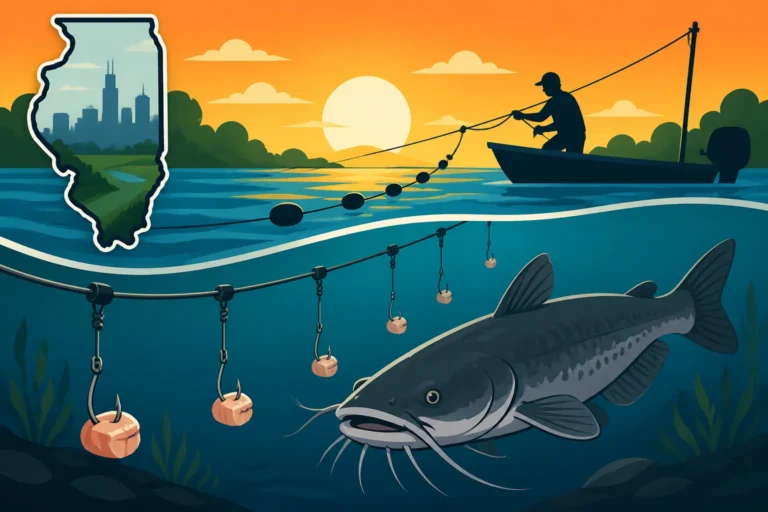
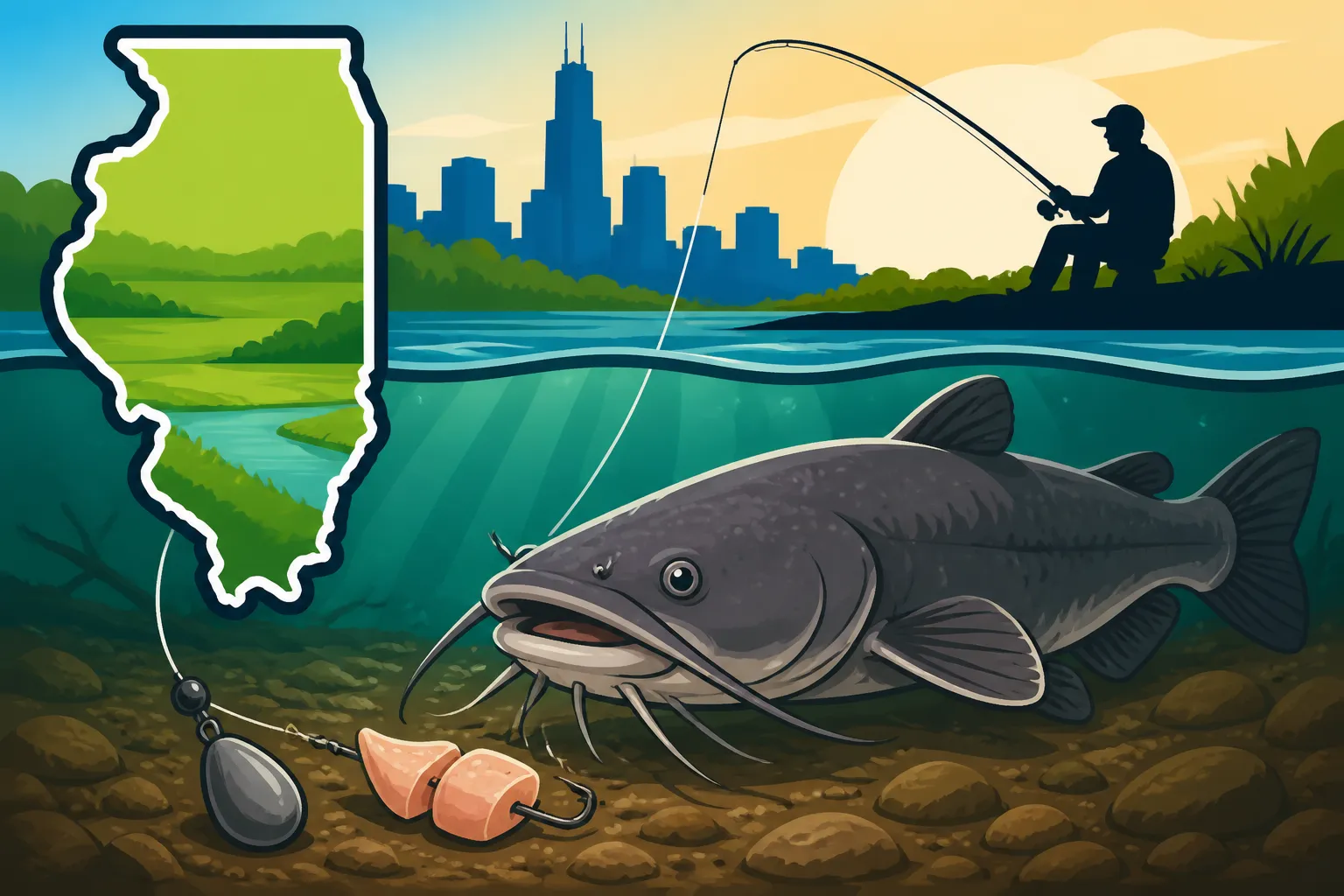
Your terminal tackle—the bits at the business end of your line—is where the magic truly happens. The right rig presents your bait effectively, while the proper hook and sinker ensure it stays in the strike zone. One of the most common and versatile setups for bottom fishing is the Carolina rig, also known as a sliding sinker rig. This rig features a weight (usually an egg sinker or a no-roll sinker) sliding freely on your main line, followed by a swivel, a leader (8-18 inches of monofilament or fluorocarbon), and then your hook. The sliding sinker allows the catfish to pick up the bait and move off with it without feeling the full weight of the sinker, leading to more confident bites.
Another excellent choice, especially in moderate current or when using larger baits, is the Santee Cooper rig. It's essentially a Carolina rig with the addition of a peg float placed on the leader, just above the hook. This float lifts your bait slightly off the bottom, making it more visible and keeping it out of debris or mud that might obscure it. For really heavy current or when you want to suspend multiple baits at different depths, a three-way swivel rig (also called a dropper rig) can be effective. This rig uses a three-way swivel, with one eye tied to your main line, another to a short leader with a sinker, and the third to a longer leader with your hook. When selecting hooks, many experienced anglers swear by circle hooks, particularly for catfish. Their design is self-setting, meaning that as the fish swims away, the hook rotates into the corner of its mouth, significantly reducing gut-hooking and making catch-and-release much safer for the fish. Sizes typically range from 5/0 to 9/0, depending on the bait size and target species. J-hooks are also widely used, especially when you need to really drive the hook home yourself. You can find a vast array of circle and J-hooks on Amazon to suit your needs. As for sinkers, pyramid sinkers are excellent for holding bottom in current, while bell sinkers or flat 'no-roll' sinkers work well in still or slow-moving water. The weight of your sinker will depend on the current and depth, but keep a variety from 1/2 ounce to 4 ounces on hand. Delving deeper into your options, our piece on Circle Hooks vs J-Hooks for Illinois Catfishing offers valuable insights, and if you're curious about specific setups for different waters, check out Best Catfish Bait Rigs for Carlyle Lake.
Mastering Baits and Bottom Fishing Techniques
Even with the best gear, your success ultimately hinges on what you put on the hook and how you present it. Catfish are not generally finicky eaters, but certain baits and deployment strategies will outperform others depending on the species and conditions.
Top Catfish Baits for Illinois Waters
Catfish are legendary for their diverse palate, and in Illinois waters, you have a plethora of effective bait options at your disposal. For many anglers, the classic cut bait reigns supreme, especially when targeting blue catfish and flatheads. Fresh shad, skipjack herring, or even commercially available cut bait from a bait shop are excellent choices. The oils and scent emanating from cut bait travel far downstream, drawing in distant catfish. You can use whole small fish or chunks of larger ones, making sure your hook point is exposed.
Chicken livers are another perennial favorite, particularly for channel catfish. They're incredibly potent in scent and highly effective, though they can be messy and tend to come off the hook easily. To combat this, some anglers use small pieces of pantyhose or netting to wrap the liver around the hook. Nightcrawlers, especially a tangled wad of them, are simple yet effective, attracting all three major species. Beyond these natural offerings, commercially prepared stink baits, dips, and dough balls are incredibly popular, especially for channel catfish. These often come in highly scented formulas designed to be dabbed onto sponges, tubes, or dedicated bait holders. Brands like Catfish Charlie or Sonny's Super Sticky are well-known for their strong attractants. You can even find a wide array of these specialized baits and their accessories readily available on Amazon, often in bulk for serious anglers. The key is to match your bait to the catfish species you're after. While channel cats will hit almost anything, flatheads have a strong preference for live bait like small bluegill or goldfish, and blue catfish often favor fresh cut bait. To ensure you're using the best attractants, consider reading our detailed guides like Best Bait for Channel Catfish From the Bank or for those elusive giants, Best Live Bait for Flathead Catfish.
Deploying Your Rig and Detecting Bites
Once you've got your bait perfectly rigged, getting it to the fish is the next crucial step. When casting heavy bottom rigs, a smooth, deliberate cast is more effective than a forceful heave. Aim for your target area, allowing the sinker to pull your bait down to the bottom. Once your rig settles, gently reel in any slack line until you feel the weight of your sinker, but avoid pulling it too far, which can move your bait out of the strike zone. Many anglers prefer to use multiple rods, set in sturdy rod holders, spreading their baits across different depths or structures to cover more water.
Detecting bites is where patience and observation come into play. Catfish bites can range from a subtle tap, tap, tap to a violent jerk that nearly pulls your rod out of the holder. With a sliding sinker rig, watch for your rod tip to bend slowly and steadily as the fish takes the bait and moves off. If you're using circle hooks, resist the urge to set the hook with a mighty yank. Instead, simply pick up the rod, reel in the slack until you feel the weight of the fish, and apply steady pressure. The circle hook will do the work, rotating and setting itself securely in the fish's mouth. If you’re using J-hooks, a firm, upward sweep of the rod tip is usually needed to drive the hook home. Patience is truly a virtue here; sometimes, it takes a few minutes for a cautious catfish to fully commit to the bait. Whether you're casting from the shore or a boat, these fundamental techniques will improve your hook-up ratio dramatically. For more strategies on how to fish effectively from land, check out How to Catch Catfish From the Bank, and if you prefer fishing after sundown, our article How to Catch Catfish at Night offers specialized tips.
Common Challenges and Troubleshooting
Bottom fishing, while incredibly effective for catfish, isn't without its challenges. Snags, current, and changing environmental conditions can all impact your success. Knowing how to anticipate and react to these common issues will keep your spirits high and your lines in the water.
Dealing with Snags and Current
One of the most frustrating aspects of bottom fishing is inevitably getting snagged. The same submerged timber, rock piles, and debris that attract catfish also love to grab your hook and sinker. To minimize snags, consider your rig choice. A Santee Cooper rig, by elevating your bait, can often ride just above bottom debris. Using a shorter leader on your Carolina rig can also help. When casting, try to be as accurate as possible, avoiding areas you know are notorious for snags. If you do get snagged, resist the urge to pull straight back with brute force, which often just wedges your tackle deeper. Instead, try slackening your line, then tightening it quickly with a snap, or even moving to a different angle to try and free it. Sometimes, waiting a few minutes for the current to shift might even work.
Current is another major factor, especially in rivers. Too much current can make it impossible for your bait to hold bottom, sending it tumbling away from the prime fishing zone. The solution here is to adjust your sinker weight. Start with a weight that you think will hold, and if your line drifts, increase the weight until it stays put. Pyramid sinkers are excellent for strong currents because their shape digs into the bottom. Sometimes, if the current is exceptionally strong, you might need to seek out areas with less flow, such as eddies, slack water behind islands, or deep, slow-moving holes. Adapting to these conditions is crucial, as the local nuances of each waterway can vary significantly, which is Why Fishing Rules Vary by Lake and River is an important read.
Reading the Conditions and Adapting
Catfish, like all fish, are influenced by their environment. Successful bottom fishing means being observant and willing to adapt your strategy based on the conditions. Water temperature is a prime example: catfish are cold-blooded, so their metabolism and activity levels fluctuate with temperature. In cooler water (early spring, late fall), catfish may be sluggish and prefer deeper, more stable temperatures. During the heat of summer, they might retreat to cooler, deeper channels during the day and move into shallower feeding areas at night. This seasonal shift highlights why understanding Illinois Catfish Season Guide is so beneficial.
Water clarity also plays a role. In turbid, muddy water (common after heavy rains), catfish rely heavily on their sense of smell, making strong-scented baits like cut bait or stink bait particularly effective. After heavy rains, catfish often move into flooded areas to feed on worms and other organisms washed into the water. Conversely, in clearer water, they might be a bit warier, and a more natural presentation might be more effective. The time of day can also matter; while catfish are often active at night, they can be caught throughout the day, especially in deeper, shaded areas or during overcast conditions. Don't be afraid to experiment with different baits, locations, or even retrieve speeds if your usual method isn't producing. A small change can sometimes unlock the bite. For a deeper dive into how environmental factors affect fish behavior, check out How Water Temperature Affects Fish Activity.
Here's a quick comparison of some popular bottom fishing rigs:
| Rig Type | Best Use Case | Pros | Cons |
|---|---|---|---|
| Carolina Rig | Versatile, most conditions | Allows fish to take bait without feeling sinker weight | Can get snagged easily in heavy cover |
| Santee Cooper Rig | Moderate current, slightly snaggy bottoms | Lifts bait off bottom debris, good visibility | Float can make casting slightly less streamlined |
| Three-Way Swivel Rig | Strong currents, multiple baits, vertical fishing | Excellent for holding bottom, precise depth control | More components, can twist lines if not set up correctly |
| Fish Finder Rig | Still water, light current, sensitive bites | Similar to Carolina, but often uses a shorter leader | Not ideal for heavy current or deep snags |
Disclaimer
This article is for general informational purposes only and does not constitute professional advice. Laws, prices and regulations vary by location and change over time. Consult a qualified professional for guidance on your specific situation.