Crappie Tightlining Techniques
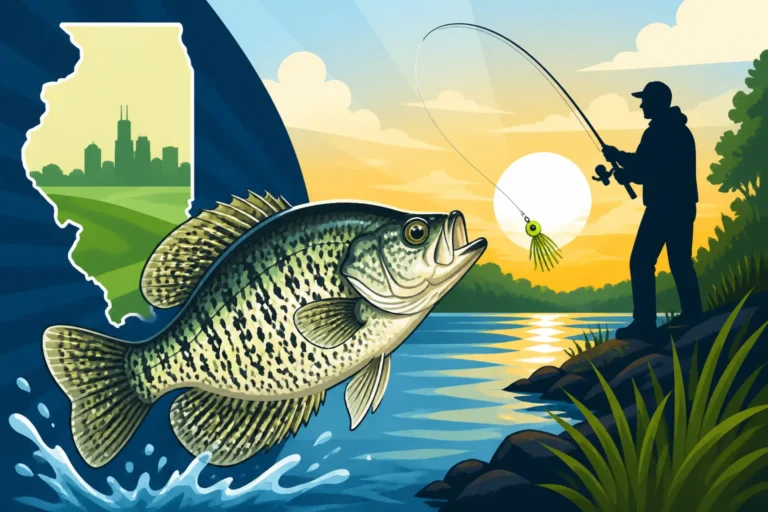
It can be incredibly frustrating to see those crappie marks on your fish finder, knowing they're down there, but just not getting them to bite a traditional bobber rig. Or maybe you're tired of drifting aimlessly, hoping your bait eventually crosses paths with a hungry school. Tightlining is a game-changer for many Illinois anglers, allowing for a more direct, precise, and often more effective approach to getting those papermouths in the boat. This guide will walk you through everything you need to know to master crappie tightlining techniques, helping you fill your livewell with these delicious panfish.
What Exactly is Crappie Tightlining?
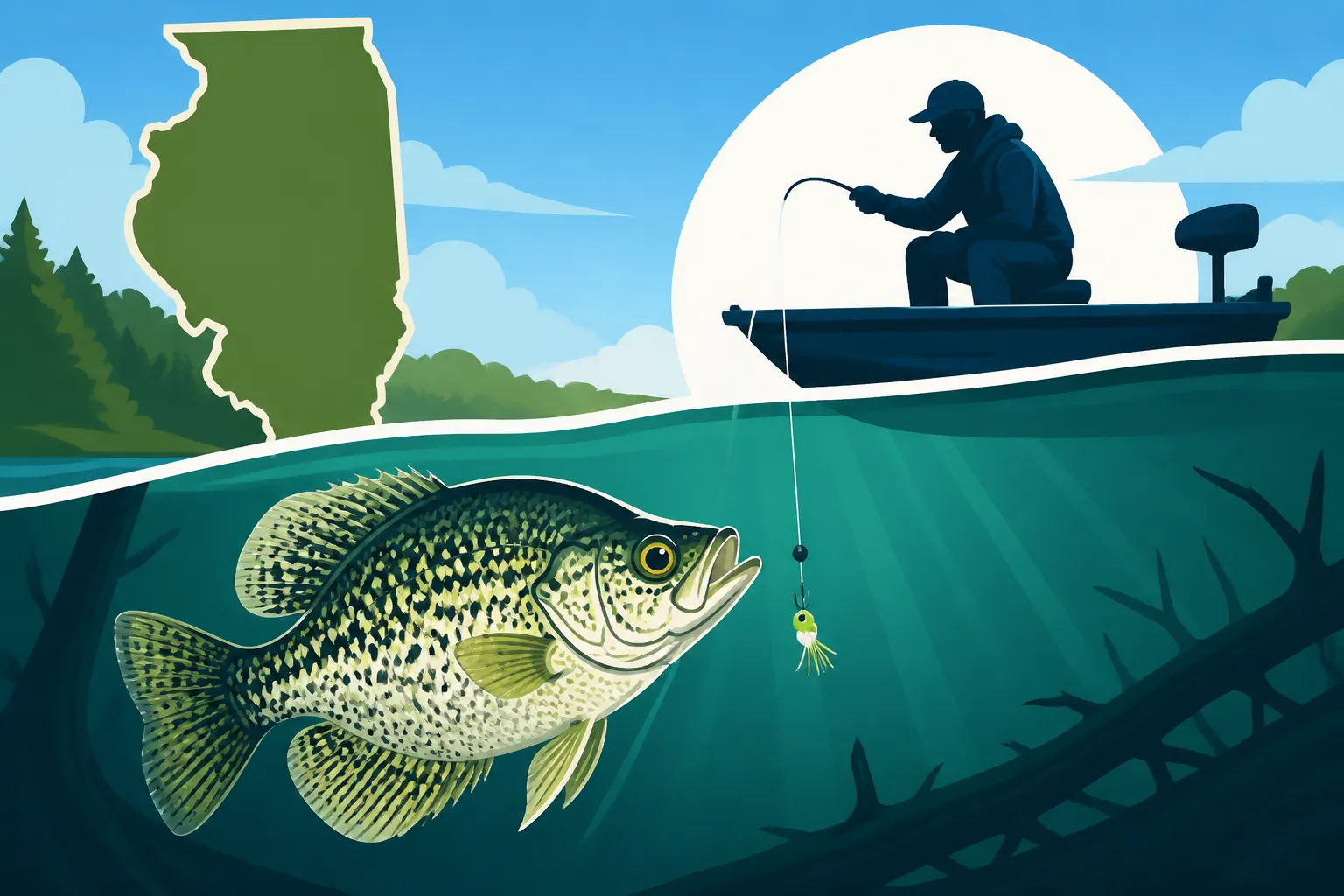
Tightlining for crappie is a method focused on direct contact with your bait and the fish, minimizing slack in your line to maximize sensitivity and control. Unlike casting and retrieving or passive bobber fishing, tightlining often involves presenting your bait vertically or near-vertically directly over fish you've located. It’s all about feeling the subtle takes and keeping your offering right in the strike zone.
Beyond the Bobber: Why Tightlining Excels
For many of us, our first crappie memories involve a simple bobber and a minnow. And while that's a classic and often effective method, it has its limitations. Bobber fishing introduces slack, which can make detecting those notoriously light crappie bites challenging, especially in wind or current. It also gives you less precise control over the depth and presentation of your bait. Tightlining, by contrast, removes that slack, allowing the angler to feel even the most minuscule tap or the subtle weight of a fish inhaling a jig.
This direct connection is crucial when crappie are finicky or holding tight to structure. You can literally "feel" your jig ticking branches or the bottom, allowing you to position it just inches from where those slabs are hiding. It’s also incredibly effective for probing specific depth ranges, a common tactic when crappie suspend in open water or are schooling over flats. This precision can often lead to more consistent catches, turning those tough days into productive ones.
Distinguishing Tightlining from Jigging
While both tightlining and jigging involve using artificial lures, usually jigs, and share the goal of direct bait presentation, there are some key differences in how they're typically executed. Jigging often implies an active, repetitive vertical motion—a lift-and-drop or a series of small hops to impart action to the lure. It's about triggering a reaction strike with movement. When anglers talk about Crappie Jigging Techniques, they are often referring to this active style.
Tightlining, particularly in its more passive forms like slow-trolling or drift-fishing, often emphasizes a more controlled, steady presentation. The "tight line" itself is the primary focus; the angler is trying to maintain that direct connection, feeling for bites as the boat's movement or a subtle rod tip quiver gives the lure a natural, enticing action. While you can certainly jig on a tight line, the essence of tightlining is about the lack of slack and the resulting feel, allowing for extremely light bites to be detected that a traditional jigging setup might miss. Think of it as a spectrum: jigging is about action, tightlining is about contact and feel, though they often overlap.
Essential Gear for Tightlining Success
Having the right equipment is non-negotiable for effective tightlining. It's not about expensive gear necessarily, but specialized tools that enhance your ability to feel those soft crappie bites and keep your bait in the zone. Don't worry, you don't need to break the bank, but a few thoughtful purchases will make a world of difference.
Rods, Reels, and Line: The Right Setup
For tightlining, sensitivity is paramount. You want a rod that's long, light, and has a fast action. Lengths from 9 to 14 feet are common, especially for spider rigging (which we'll cover later), but even a single 7-foot to 8-foot medium-light rod with a sensitive tip can be incredibly effective. Look for graphite rods as they transmit vibrations better than fiberglass. Many excellent crappie-specific rods are available, often with bright colored tips that help you visualize subtle bites before you even feel them. You can find a great selection of these specialized rods on Amazon, often at very reasonable prices.
Pair these rods with small, lightweight spinning reels, typically in the 500 to 1000 series size. The retrieve ratio isn't as critical as smoothness and a reliable drag. For line, fluorocarbon or monofilament in the 4-6 pound test range is ideal. Fluorocarbon offers excellent sensitivity and low visibility underwater, while monofilament has a bit more stretch which can be forgiving with fragile crappie mouths. Braid is an option for ultimate sensitivity but lacks stretch, which means crappie can tear off easily if you set the hook too hard, and it's highly visible underwater. Many experienced tightliners prefer a low-stretch fluorocarbon for its combination of feel and invisibility.
Terminal Tackle: Jigs, Weights, and Hooks
The business end of your tightline rig is where the magic happens. Small jigs are the bread and butter of crappie tightlining. Sizes from 1/32 to 1/16 ounce are most common, with some anglers going as light as 1/64 ounce in shallow or extremely calm conditions, or up to 1/8 ounce in deeper water or heavier current. Pair these jigs with small plastic bodies – tubes, grubs, tiny minnow imitations, or soft plastic "stingers." Color choice can be critical, varying with water clarity and light conditions. Chartreuse, white, black, and various greens or blues are popular starting points. You might even consider experimenting with scented plastics.
In many tightlining scenarios, especially when fishing live bait like minnows, you’ll use a simple hook and weight setup. Aberdeen hooks in sizes #4 to #8 are excellent for minnows, as they're thin-wired and designed to bend out of snags rather than break. For weights, split shots or small bullet weights are common. The amount of weight depends on depth and current; you want just enough to get your bait down efficiently and keep it vertical without feeling like an anchor. Some anglers prefer to use a "drop shot" style rig where the weight is below the hook, allowing the bait to hover tantalizingly above the bottom, especially when you're targeting fish holding near the lakebed. Remember to keep your tackle box organized and well-stocked with a variety of options; many anglers grab their favorite crappie jigs in bulk on Amazon.
Electronics: Seeing the Invisible
While not strictly "gear" for your rod, modern fishing electronics are an absolute game-changer for crappie tightlining, especially when trying to How to Catch Crappie From a Boat. A good fish finder is your eyes underwater, allowing you to pinpoint crappie schools, identify structure, and even see your jig descending towards the fish. Look for units with clear 2D sonar and, if your budget allows, side imaging or down imaging. These technologies help you locate brush piles, timber, and ledges where crappie often hold, even if they're not directly beneath your boat.
The ability to see individual fish, or even dense schools, on your sonar screen dramatically increases your efficiency. You can literally drop your jig directly onto their heads, adjusting depth as needed. Some advanced units even allow you to see your jig on the screen as it falls, giving you instant feedback on its position relative to the fish. Without electronics, tightlining becomes more of a guessing game, relying on general knowledge of Best Crappie Fishing Lakes in Illinois and blind drops. With them, it becomes a precise, surgical strike. A reliable trolling motor with GPS capabilities like spot-lock is also invaluable for holding your position over a school or along a productive contour, allowing you to focus on your presentation rather than constantly steering.
Mastering the Tightline Presentation
Once you have your gear sorted, the real art of tightlining comes down to presentation. It's about putting your bait right where the fish want it and being ready when they decide to take it. This means boat control, depth management, and understanding those subtle cues from the crappie.
Controlling Your Boat for Precision
Boat control is arguably the most critical component of successful tightlining, especially if you're not anchored. The goal is to move slowly and steadily, ideally no faster than 0.5-1.0 mph, to keep your lines as vertical as possible and cover ground efficiently. A good trolling motor is essential here. Whether you're using a bow-mount or transom-mount, learn to use it effectively to maintain a consistent speed and direction. Wind and current will always be factors, and your trolling motor is your best friend for combating them.
For anglers using multiple rods (spider rigging), boat control becomes even more important. You want to move just fast enough to impart a subtle action to your jigs or minnows without them swinging out too far. Practice making slow, controlled passes over known crappie habitat like deep submerged timber or brush piles. Many crappie will hug tight to this structure, so precise boat positioning can be the difference between a productive day and a frustrating one. Remember, the boat’s movement is often what gives your stationary bait its most natural action.
Finding and Staying in the Strike Zone
Crappie are notorious for holding to specific depths. If your bait is even a few feet above or below them, they might ignore it entirely. This is where your fish finder and a systematic approach come into play. Once you mark fish, note their depth. Then, adjust your line or add/subtract weight to get your jig or minnow right to that level. Often, crappie will suspend at the depth of the thermocline in warmer months, or be found near the bottom during colder periods.
Don't be afraid to experiment with different depths until you find the sweet spot. If you're not getting bites at one depth, adjust a foot or two up or down. Pay attention to structure too – crappie love to orient themselves around brush piles, stumps, or creek channels. Your goal is to keep your bait in that "strike zone" for as long as possible. Using multiple rods at slightly different depths can help you quickly pinpoint where the active fish are holding. This becomes especially important during the Illinois Crappie Spawn Season Guide when they might be shallower than usual.
Decoding the Subtle Bite
Crappie bites, especially when they're not aggressive, can be incredibly subtle. Forget the dramatic yank you might associate with bass. A crappie might just inhale the jig and hold it, making your line feel slightly heavier, or you might see a barely perceptible "tick" or slight bend in your rod tip. Sometimes, the line will just go slack for a second as the fish swims upwards with the bait. These are the moments when a sensitive rod and a tight line truly shine.
It takes practice and focus to distinguish a crappie bite from your line bumping submerged structure or the movement of your boat. Pay close attention to any deviation from the normal feel of your rig. When you detect something, a gentle but firm sweep of the rod tip is usually all it takes to set the hook. Avoid a hard, aggressive hookset, as crappie have soft mouths, and you can easily pull the hook free or tear their lips. The more you tightline, the more your hands and eyes will become attuned to these faint signals, leading to more successful hookups.
Where and When to Tightline for Crappie in Illinois
Illinois offers fantastic crappie fishing opportunities, and knowing where and when to apply tightlining techniques will significantly boost your success. From large reservoirs to smaller community ponds, crappie are abundant, but their behavior changes with the seasons and time of day.
Prime Illinois Crappie Habitats
Illinois is blessed with numerous lakes and rivers teeming with crappie. Large reservoirs like Rend Lake, Lake Shelbyville, and Carlyle Lake are particularly famous for their crappie populations and are excellent tightlining destinations. These lakes feature extensive submerged timber, brush piles, old roadbeds, and creek channels that are crappie magnets. Focusing on these types of structures, especially those near deeper water, is key. Many anglers find the Best Crappie Fishing Lakes in Illinois through careful research of these features.
River systems, such as the Illinois River and the Mississippi River backwaters, also hold vast numbers of crappie. In these environments, look for slack water areas, oxbow lakes, sloughs, and areas with submerged laydowns or rock piles. Crappie in rivers often seek refuge from strong currents, so targeting current breaks or quieter pockets is crucial. Don't overlook smaller state park lakes or even larger farm ponds; many of these lesser-known spots are regularly stocked and can provide excellent tightlining action, especially if they have some decent submerged cover.
Seasonal Sweet Spots for Tightlining
Crappie behavior, and thus the most effective tightlining spots, shifts dramatically throughout the year.
- Spring: This is prime time. As water temperatures rise, crappie move shallower for the spawn. Look for them in bays, coves, and flats with woody cover or emergent vegetation in 3-10 feet of water. Tightlining jigs or minnows around these shallow cover areas can be incredibly productive. This is when the Illinois White Crappie: Where to Find Them in Spring often move up.
- Summer: Crappie move to deeper, cooler water, often suspending over creek channels, humps, or deep timber. They'll also relate to brush piles or standing timber in 15-30 feet of water. Tightlining jigs and minnows directly over these deeper structures, sometimes even spider rigging, becomes very effective. Focus on early mornings, late evenings, or even night fishing when they may move shallower to feed.
- Fall: As water temperatures drop, crappie become active again, often schooling up in bait-rich areas. They can be found moving back into shallower bays or along deeper creek channel edges. They might be in 10-20 feet of water, often near submerged timber or main lake points. This is an excellent time for tightlining as they feed aggressively before winter.
- Winter: Crappie typically move to the deepest parts of the lake, often congregating in large schools over deep holes, river channels, or dense timber. They become lethargic, so a very slow, subtle tightline presentation is key. Ice fishing for crappie is essentially a form of tightlining through a hole, with tiny jigs or spoons being the most popular baits. During the Illinois Black Crappie Fishing in Backwater Sloughs, you might find them in these deeper, calmer areas.
Daily Timing: When Crappie Are Most Active
Just like seasons, the time of day can significantly impact crappie activity. While crappie can be caught throughout the day, certain periods are generally more productive for tightlining.
- Dawn and Dusk: These low-light periods are often the absolute best. Crappie are visual feeders, and the reduced light allows them to ambush prey more effectively, moving shallower to feed. This makes them more accessible and aggressive. If you're wondering Best Time of Day to Catch Crappie, these are typically your prime windows.
- Overcast Days: Cloud cover acts similarly to low-light conditions, encouraging crappie to be more active and less skittish in shallower water throughout the day.
- Night Fishing: Crappie are well-known nocturnal feeders. Tightlining under lights can be incredibly effective, especially in summer. The lights attract baitfish, which in turn attract crappie, creating a feeding frenzy directly beneath your boat.
- Midday: During bright, sunny periods, crappie often retreat to deeper, darker cover. You can still catch them, but your tightlining will need to be very precise, dropping baits right into the heart of brush piles or deep timber where they're seeking refuge. This usually requires a slower, more patient approach.
Advanced Tightlining Strategies and Tips
Once you've got the basics down, there are always ways to refine your tightlining game. From expanding your rod setup to adapting to nuanced environmental factors, these advanced strategies can turn good days into truly exceptional ones.
Spider Rigging: The Multi-Rod Advantage
For many serious crappie tightliners, especially on larger lakes like Rend Lake or Lake Shelbyville, spider rigging is the ultimate technique. This involves setting up multiple long rods (often 8 to 16 feet) around the front of your boat, fanning them out like spokes on a wheel. Each rod will have a different bait or jig, set at a slightly different depth, often paired with a small weight to keep the line vertical. This technique allows you to cover a wide range of depths and presentations simultaneously as you slowly troll or drift.
The advantage here is efficiency. You can quickly determine what color, bait type, and depth crappie are preferring on a given day. Plus, with multiple baits in the water, your chances of crossing paths with an active crappie are dramatically increased. When a fish bites, the long, sensitive rod tip will dip or wiggle, making the strike unmistakable. Spider rigging can be a bit of an investment in rod holders and specialized longer rods, but for dedicated crappie anglers, it pays dividends. It allows you to effectively present multiple Best Bait for Crappie Fishing options at once.
Adjusting for Water Conditions
Crappie fishing isn't a one-size-fits-all endeavor; water conditions constantly change, and a successful tightliner adapts.
- Water Clarity: In clear water, use more natural bait colors (greens, browns, clear plastics) and lighter lines to avoid spooking fish. Fluorocarbon line is especially good here. In murky or stained water, brighter colors like chartreuse, orange, or white tend to stand out better, and you might get away with slightly heavier line.
- Temperature: Water Temperature and Fish Activity Guide are intrinsically linked. Colder water generally means slower crappie, requiring smaller baits and a slower, more subtle presentation. Warmer water often means more active fish, allowing for slightly larger baits and a bit more speed in your troll or drift.
- Wind and Current: These are your biggest challenges for maintaining a tight line. In windy conditions, you might need to increase your weight slightly to keep your bait vertical, or use your trolling motor more aggressively to maintain boat position. Current in rivers or windy reservoirs will also require more weight and constant adjustment to keep your line as vertical as possible, perhaps even using a heavier jig. Conversely, on a calm day, you might need to impart more action to your jig yourself, or troll at the absolute minimum speed to give your bait just enough enticing movement.
Reading the Lake for Hot Spots
Beyond just marking fish on your electronics, truly effective tightlining comes from learning to "read" the lake. This involves understanding how crappie relate to different types of cover and contours. Look for transitions: where a shallow flat drops into a deep channel, where a dense brush pile meets open water, or where a hard bottom gives way to softer mud. These "edge" areas are often ambush points for crappie.
Pay attention to how certain areas produce repeatedly. Is it always the north side of the brush pile? Or a specific depth along a creek channel? Keep a mental log (or a literal one) of successful spots and conditions. Also, observe other successful anglers. Where are they fishing? What boat speed are they maintaining? While you don't want to crowd anyone, subtle observations can provide valuable clues. This holistic understanding, combined with your tightlining skills, will allow you to confidently target Illinois Black Crappie Fishing in Backwater Sloughs or other prime areas without relying solely on a direct fish mark every time.
Troubleshooting Common Tightlining Challenges
Even the most experienced tightliners encounter frustrating moments. A snagged line, a day with no bites, or the dreaded light bite that leads to nothing—these are all part of the fishing experience. But with some understanding and strategy, you can overcome these common hurdles.
Battling Snags and Hang-ups
Snags are an inevitable part of crappie fishing, especially when you're tightlining near the cover they love. However, there are ways to minimize them and recover when they happen. First, use tackle that's designed to reduce snags. Aberdeen hooks, with their thin wire, are perfect because they often bend out of snages without breaking your line. Jig heads with weed guards can also be very effective in brushy areas.
If you do get snagged, don't just yank hard. Try to release tension and slowly pull from a different angle, sometimes moving your boat in a circle around the snag can free your line. If that doesn't work, point your rod directly at the snag, pull the line tight with your hand (not the rod, to avoid breaking it), and then give it a quick, sharp pluck. The sudden shock can often free a jig. If all else fails, a lure retriever can be a lifesaver, allowing you to save expensive jigs and weights. Remember that knowing how your Tackle Box Setup for Illinois Species is organized can help you quickly switch to a different bait or rig after a frustrating snag.
When Crappie Just Aren't Biting
The most frustrating scenario for any angler is when the fish are simply not cooperating. If you're tightlining and not getting bites, despite seeing fish on your electronics, it's time to troubleshoot.
- Change Depth: Even if fish are marked at 15 feet, try going a foot or two above or below them. Sometimes they're looking up, sometimes down.
- Change Speed: Are you trolling too fast or too slow? Experiment with subtle speed adjustments.
- Change Lure Size/Color: If chartreuse isn't working, switch to white, black, or a more natural color. Go smaller, perhaps from a 1/16 oz to a 1/32 oz jig, or even lighter.
- Switch Bait Type: If jigs aren't working, try a live minnow. Sometimes the natural action and scent of live bait are irresistible. Conversely, if live bait is slow, a jig might trigger a reaction strike.
- Location Adjustment: If the fish you're seeing aren't biting, move on! There might be more active fish in another brush pile, point, or creek channel. Sometimes, a subtle change in wind direction or light can turn the bite on in a spot that was dead minutes earlier. Keep an eye on the Illinois Fishing Season and Catch Limit Rules as well, to ensure you're fishing legally and sustainably.
Dealing with Light Bites and Finicky Fish
Crappie can be incredibly finicky, especially during cold fronts or when fishing pressure is high. Their bites can be so light that they're barely detectable, leading to many missed opportunities.
The key here is heightened sensitivity. Ensure your rod has a fast, sensitive tip. Watch your line and rod tip constantly, not just feeling for bites. Sometimes the line will simply twitch, or your rod tip will subtly load up as if it snagged a piece of moss. These are often crappie. Using bright colored line or a marker on your line can help you detect these visual cues.
Slow down your presentation even further. If you're trolling, try to barely move the boat. If you're holding over a spot, try holding the jig as still as possible, or impart only the most minuscule jiggle. Sometimes less action is more. Consider adding a small crappie nibbler or a dab of scent to your jig to entice those finicky fish to hold on longer. Remember, patience and acute observation are your best allies when dealing with light bites; often, the fish are there, but you just need to crack the code of what they want.
| Tightlining Scenario | Recommended Rod Length | Line Type & Test | Jig/Weight Size | Key Strategy |
|---|---|---|---|---|
| Shallow Spawn | 7-9 feet | Mono/Fluoro 4 lb | 1/32 – 1/16 oz | Focus on visible cover, light presentation |
| Deep Suspended | 9-12 feet | Fluoro 4-6 lb | 1/16 – 1/8 oz | Use electronics to pinpoint depth, slow troll |
| Heavy Cover | 7-8 feet (stiffer) | Mono/Fluoro 6 lb | 1/16 – 1/8 oz | Use weedless jigs/Aberdeen hooks, precise drops |
| River Current | 8-10 feet | Fluoro 6 lb | 1/8 – 1/4 oz | Add extra weight, target current breaks |
| Finicky Bites | 7-9 feet (extra sens) | Fluoro 4 lb | 1/32 – 1/64 oz | Super slow presentation, visual bite detection |
| Spider Rigging | 10-16 feet | Mono/Fluoro 6 lb | 1/8 – 1/4 oz | Multiple lines, varying depths, slow troll |
Disclaimer
Fishing conditions and regulations in Illinois can change frequently. Always consult the latest Illinois Department of Natural Resources (IDNR) fishing guide for the most current rules, limits, and license requirements before heading out on the water. This information is intended for general guidance and educational purposes only.