How to Catch Crappie From a Boat
It can be incredibly frustrating when you're out on your boat, cruising over promising waters, but those elusive crappie just aren't biting. You know they're there, especially in Illinois's abundant lakes and rivers, but figuring out how to consistently put them in the livewell from a moving vessel can feel like a puzzle. This guide is dedicated to breaking down the exact strategies, gear, and insights you need to confidently find, target, and catch crappie from your boat, turning those frustrating days into successful fishing adventures.
Understanding Crappie Behavior from a Boat Perspective
Before you even launch your boat, having a solid understanding of crappie behavior is paramount. Knowing where they should be at different times of the year and under varying conditions will save you hours of aimless searching. From a boat, you have the advantage of covering vast amounts of water and accessing structures that bank anglers can only dream of reaching.
Seasonal Movements and Habitat Preferences
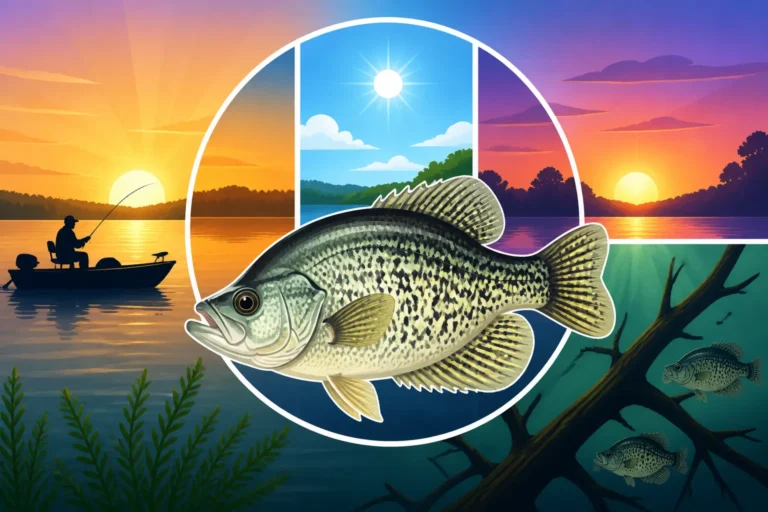
Crappie are creatures of habit, but their habits change dramatically with the seasons. In spring, as water temperatures begin to rise, these fish move from deeper wintering holes into shallower areas to stage for the spawn. They'll gravitate towards brush piles, submerged timber, rock beds, and weed lines in 3-8 feet of water. This is when they're often most accessible, making it a prime time for boat anglers to target them. Understanding the nuances of the Illinois Crappie Spawn Season Guide can give you a significant edge during this crucial period.
As summer progresses and waters warm up considerably, crappie often retreat to deeper, cooler water. They'll seek refuge in the thermocline (a layer of water where the temperature changes rapidly) or gravitate towards deep timber, bridge pilings, channel ledges, and creek beds. You might find them suspended over these structures or directly in them, making your boat's electronics indispensable. Come fall, as temperatures cool again, crappie transition back towards shallower feeding areas, often mirroring their spring patterns but with a greater emphasis on fattening up before winter. Then, in winter, they school up tightly in deep channels, under ice, or near standing timber in deeper sections of lakes, often requiring very precise vertical presentations from a boat if conditions allow.
The Impact of Water Temperature and Clarity
Water temperature is arguably the single most important factor influencing crappie location and feeding activity. Crappie are cold-blooded, so their metabolism and activity levels are directly tied to the water temperature around them. During the spring, finding that sweet spot in the 55-65°F range is often key, as this is when they're most active and preparing to spawn. Once temperatures soar into the 70s and 80s in summer, crappie will seek cooler depths, typically where there's still ample oxygen. Conversely, in the dead of winter, they become lethargic in icy waters, requiring slower, more subtle presentations. Keeping an eye on the Best Water Temperature for Crappie Fishing will greatly improve your chances.
Water clarity also plays a crucial role. In clear water, crappie can be more skittish and prone to hiding in dense cover. They'll often feed more cautiously, making subtle bait presentations important. In murkier or stained water, crappie tend to be less wary and might move closer to the surface or around less dense cover. Brighter colored jigs or those with a lot of vibration can be more effective in these conditions because they stand out. Your ability to adapt your boat positioning and lure selection based on these factors will directly correlate to your success.
Essential Gear for Boat Crappie Fishing in Illinois
Having the right tools for the job makes all the difference, especially when you're trying to outsmart crappie from a boat. From your rod and reel setup to the electronics that help you find them, each piece of gear plays a vital role in putting fish in the cooler.
Rods, Reels, and Line Selection
When it comes to crappie fishing from a boat, having a versatile set of rods is incredibly helpful. For a technique like "spider rigging," where you present multiple baits simultaneously, long rods (10 to 16 feet) are fantastic. They allow you to spread out your lines, cover a wider area, and keep your baits away from the boat, especially when drifting or slow trolling. For more active jigging or casting towards structure, shorter, sensitive ultralight or light action rods (5 to 7 feet) paired with small spinning reels are ideal. These setups provide excellent feel for light bites and make casting small jigs a breeze.
For reels, small, lightweight spinning reels (500 to 1000 series) are perfect. They handle light line well and offer smooth drag for fighting crappie, which can have surprisingly soft mouths. When it comes to line, a good quality monofilament or fluorocarbon in 4-6 pound test is usually sufficient. Monofilament offers good knot strength and stretch, which can be forgiving. Fluorocarbon is nearly invisible in water and has less stretch, providing more sensitivity. Some anglers prefer braided line (6-10 lb test) for its incredible sensitivity and strength, often adding a fluorocarbon leader for stealth. You can find excellent options for all these setups on Amazon, often with detailed reviews to help you choose.
Crappie Jigs, Minnows, and Best Baits
The world of crappie baits is vast, but from a boat, jigs and live minnows are usually your bread and butter. Small jigs, typically 1/32 to 1/8 ounce, are fantastically versatile. They can be fished vertically, cast, or trolled. Jig heads come in various shapes and colors, often paired with soft plastic bodies like tubes, grubs, or small paddle-tails. Experiment with colors – chartreuse, white, black, and various two-tone combinations are popular and often depend on water clarity and sunlight. Having a good assortment of jig colors and styles on hand is key.
Live minnows, especially fathead minnows, are a perennial favorite for crappie. They can be fished under a bobber, tight-lined, or paired with a jig head for added attraction. When spider rigging, a lively minnow on a hook is often irresistible. Don't forget crappie nibblers or scented soft plastics, which can be tipped onto jigs for extra appeal. Learning the Best Bait for Crappie Fishing will undoubtedly fill your livewell.
Crucial Boat Equipment and Electronics
Your boat itself is a platform, and equipping it properly transforms it into a crappie-catching machine. A good quality fish finder with both 2D sonar and down/side imaging is practically non-negotiable for boat crappie fishing. These units allow you to mark submerged brush piles, standing timber, channel swings, and even individual crappie schools. Brands like Garmin, Humminbird, and Lowrance offer excellent options, many of which can be found on Amazon. Being able to "see" the fish and the structure they're holding on is a game-changer.
A reliable trolling motor, especially one with GPS spot-lock capabilities, is another essential piece of equipment. Spot-lock allows you to hold your boat precisely over a productive crappie school or brush pile without having to constantly steer or drop an anchor. This is invaluable when you find a hot spot. For those without spot-lock, a quality anchor system is still crucial for holding your position in wind or current. Beyond these, consider a well-stocked tackle box, a spacious livewell, and other safety essentials as detailed in the Illinois Boating Safety Equipment Checklist.
Proven Techniques for Boat Crappie Fishing
Now that you've got your gear dialed in, it's time to talk tactics. Fishing for crappie from a boat opens up a whole array of effective techniques that are difficult or impossible to perform from shore. Mastering these will give you the confidence to tackle any crappie scenario.
Spider Rigging and Trolling Strategies
Spider rigging is a multi-rod approach often employed by serious crappie anglers, particularly on large reservoirs. It involves setting out anywhere from 4 to 8 (or more, depending on local regulations) long rods from the front of your boat, creating a "spider web" of lines. Each rod presents a different bait (jigs, minnows, or a combination) at varying depths, allowing you to quickly determine what the crappie prefer. You then slowly troll or drift, covering a wide swath of water, especially over flats, along channel edges, or around large areas of submerged timber. The key is maintaining a very slow speed, typically between 0.3 to 0.8 mph, to keep baits presented naturally. This technique is incredibly effective for finding scattered fish or covering large areas efficiently. You can set up your rods on a specialized spider rigging rack, often available from fishing supply retailers or online marketplaces like Amazon.
Slow trolling with one or two rods can also be effective, particularly when you're looking for suspended crappie over deeper water. Using crankbaits designed for crappie or heavier jigs, you can target specific depths. Understanding the nuances of Crappie Jigging Techniques and Crappie Tightlining Techniques will also enhance your trolling and rigging success, as these are often incorporated into these broader strategies.
Vertical Jigging and Dock Shooting from a Boat
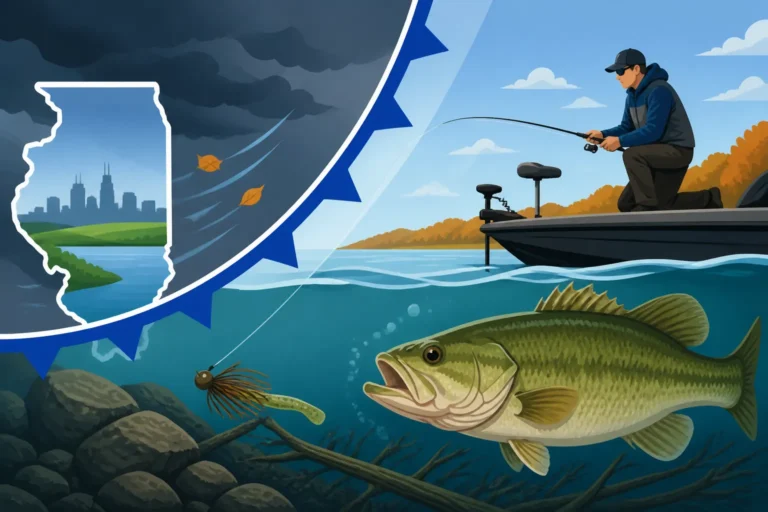
Vertical jigging is a precise and highly effective method when you've pinpointed crappie directly under your boat, often with the aid of your fish finder. Once you've marked fish on structure like brush piles, standing timber, or a school suspended in a creek channel, you simply drop your jig or minnow straight down to their depth. The beauty of vertical jigging is its efficiency and accuracy. You can work a small area thoroughly, giving lethargic crappie a tempting target right in their face. Subtle rod tip movements are key here – a slight lift and fall, or simply holding the bait perfectly still, can often trigger a bite.
While often associated with bank fishing, dock shooting can sometimes be adapted for boat anglers, particularly if you're targeting crappie under private docks or boat houses that offer shade and cover. From your boat, you can position yourself at an angle to "shoot" a jig deep under these structures. This technique involves bending the rod, holding the jig, and then releasing both simultaneously to propel the lure under overhangs. It requires practice but can unlock untouched crappie in high-pressure areas. Just be mindful of private property and local regulations when fishing near docks.
Effective Drifting and Anchoring Tactics
Sometimes, the simplest approach is the best. Drifting with the wind or current can be an incredibly productive way to present baits naturally to crappie. This technique allows your boat and baits to cover a lot of water while mimicking the natural movement of forage. It's particularly effective on large, open lakes like Rend Lake or Carlyle Lake where crappie might be spread out over a flat or suspended along a subtle depth contour. By using a drift sock, you can control your speed, slowing down to keep your baits in the strike zone longer. This is a fantastic way to locate active schools without constantly running your trolling motor.
When you find a concentration of fish, or you're working a very specific piece of structure (like a single brush pile or a bridge piling), anchoring becomes essential. If you have a trolling motor with spot-lock, that's your best friend here, as it automatically holds your position. Otherwise, deploying a traditional anchor to hold your boat steady allows you to precisely pick apart a small area. This is ideal for targeting those deeper wintering holes or dense submerged timber where crappie are tightly schooled. For deeper insights into prime crappie locations, check out guides on the Best Crappie Fishing Lakes in Illinois or specific spots like the Best Crappie Holes on the Fox River.
Maximizing Your Crappie Catch on Illinois Waters
Catching crappie from a boat isn't just about dropping a line in the water; it's about a methodical approach, utilizing technology, and being flexible with your tactics. The best anglers are constantly reading the water and adapting.
Locating Crappie Hotspots with Boat Electronics
This is where your fish finder truly shines. Don't just motor around hoping to stumble upon fish. Learn to interpret your sonar screen. Look for distinct marks that indicate structure: jagged lines for rock piles, fuzzy blobs for brush piles, or vertical lines for standing timber. Crappie will often appear as arches or distinct schools, sometimes suspended just above or within these structures. A good side imaging unit can help you scan large areas to the left and right of your boat, revealing hidden brush piles or creek channels that 2D sonar might miss directly under the boat. Once you find a promising spot, mark it as a waypoint on your GPS.
Pay close attention to changes in depth contours, especially along old creek channels, humps, and points. These are natural travel routes and ambush points for crappie. Your GPS plotter on your fish finder can show you these contours, helping you follow them precisely. Many modern units, including those from Humminbird, Lowrance, and Garmin, come with detailed mapping or allow you to create your own, which is incredibly useful for navigating and pinpointing structure. For instance, knowing the layout of Rend Lake's Best Spots for Early Spring Crappie can be significantly enhanced with good electronics.
Adapting to Conditions and Water Bodies
No two fishing days are exactly alike, and crappie fishing from a boat often means adjusting on the fly. Strong winds, for example, can make boat control difficult, but they can also push baitfish and crappie into specific areas. On windy days, consider fishing the calmer, leeward side of points or islands, or use a drift sock to slow your drift. After a cold front, crappie often become less active and may move deeper, requiring slower presentations or a shift to different baits. Conversely, a warming trend can move them shallower and make them more aggressive.
Different Illinois water bodies also demand different approaches. On large, open reservoirs like Lake Shelbyville or Carlyle Lake, spider rigging and slow trolling over vast areas can be highly effective. In narrower rivers like the Illinois River or Kankakee River, crappie might relate more to current breaks, fallen trees, or scour holes, making vertical jigging or precise casting more important. Always consult the Illinois Fishing Information Guide for specific regulations and site-specific rules, as these can vary significantly from one lake to another. Being adaptable and having a variety of techniques in your arsenal will ensure you're ready for whatever conditions or water types Illinois throws your way. You might even find success on the free fishing days in Illinois by applying these boat tactics!
Disclaimer
Fishing conditions and regulations in Illinois can change. Always consult the latest Illinois Department of Natural Resources (IDNR) fishing guide and local regulations before heading out. This guide is for informational purposes only and does not constitute legal advice or an endorsement of any specific product or brand.