Best Walleye Lures for Cold Water
When the crisp air of early spring or late fall settles over Illinois, and especially when the ice takes hold, walleye fishing can become a real head-scratcher. It's frustrating to know these elusive fish are out there, but getting them to bite in cold water feels like a monumental challenge! They behave differently when the temperatures drop, becoming less aggressive and more particular about what they'll strike. But don't despair! This guide is here to unravel the mystery of cold-water walleye and arm you with the best lures and techniques to make those chilly days surprisingly productive, turning potential frustration into the satisfaction of a solid hookset.
Understanding Walleye Behavior in Cold Water
Before we even talk about lures, it’s absolutely essential to understand what makes walleye tick (or, more accurately, not tick) when the water gets cold. Their entire physiology slows down, and that changes everything about where they live and how they feed. Ignoring these fundamental shifts is a surefire way to come home empty-handed.
Where Walleye Hold in Cold Temperatures: Deep Structure and Subtle Changes
As water temperatures plummet, walleye, like many cold-blooded fish, seek out comfort zones. They're often looking for the warmest available water, which might only be a degree or two warmer than the surrounding areas, or they'll gravitate towards stable environments where they don't have to expend much energy. This usually means deeper water, but not always the deepest water. They often relate to distinct changes in depth or structure that offer a quick escape or ambush point.
Think about those deep main lake points that extend far out, or sharp drop-offs near channel edges. These are classic cold-water walleye haunts. Humps and saddles, especially those with some rock or gravel, also act as magnetic spots. In rivers, current seams where slower water meets faster currents can be productive, offering a resting place while still providing access to passing bait. Don't overlook subtle features either, like a small rock pile on a flat or a slight bend in a creek channel. These seemingly minor changes can aggregate baitfish, and where the bait is, walleye will follow, albeit slowly. Remember that these fish aren't actively chasing as much as they are waiting for an easy meal to drift by. For a broader overview of how water temperature impacts fish, check out our guide on How Water Temperature Affects Fish Activity.
Why Walleye Become Less Active: Metabolism and Feeding Habits
The primary reason walleye slow down in cold water is their metabolism. Being cold-blooded, their body temperature matches the water around them. As the water cools, their metabolic rate drops significantly. This means they digest food much slower, requiring less frequent meals. They also conserve energy, which translates to less active swimming and less aggressive feeding. This isn't to say they don't eat; they absolutely do, but their strike zone shrinks dramatically, and they're far less likely to chase a fast-moving lure.
Their prey, the baitfish, also become more sluggish, making it easier for walleye to ambush them without expending much energy. This low-energy approach means your lure presentation needs to mimic either an easy, dying meal or something that practically bumps them on the nose. Understanding this lethargy is critical for choosing the right lure and, more importantly, presenting it correctly. Forget aggressive retrieves and high-speed trolling; in cold water, patience and finesse are your best friends.
Top Walleye Lures for Early Spring and Late Fall
When the open water is chilly but not yet frozen, certain lures consistently outperform others for walleye. These aren't necessarily the flashiest or biggest baits, but rather those that offer a tempting, easy meal to a lethargic fish.
Blade Baits: Vibration and Flash for Lethargic Fish
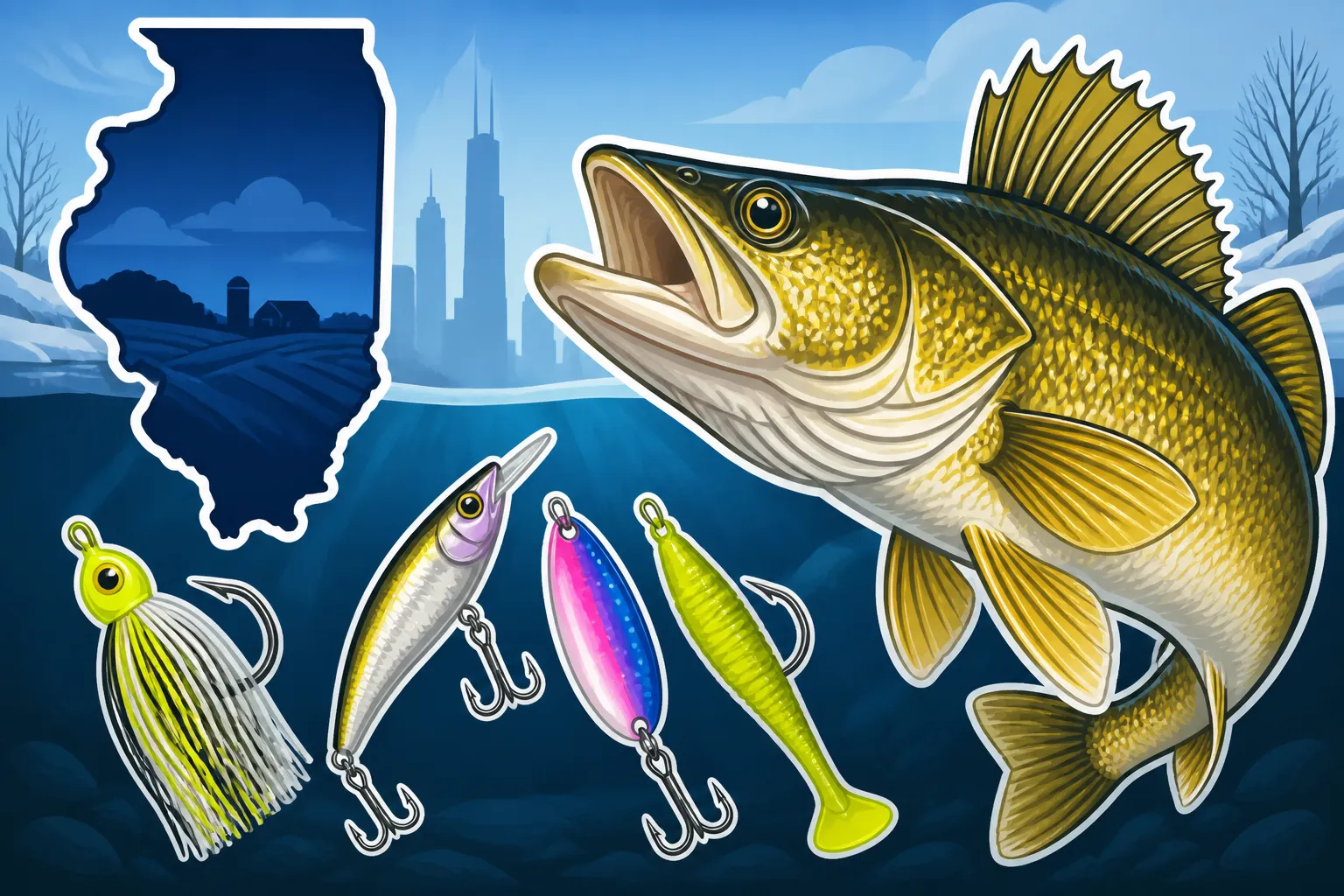
Blade baits are absolute cold-water walleye magnets, especially in early spring and late fall. These thin, lead-bodied lures coated with metal or plastic shimmer and vibrate intensely on the retrieve, mimicking a frantic or dying baitfish. The vibration is key; it calls to walleye even when their visibility is limited or they're not in an aggressive mood. They come in various sizes, but for cold water, starting with a 1/4 to 1/2 ounce size is often a good bet.
The beauty of blade baits lies in their versatility. You can cast them out and slowly retrieve, or more commonly, fish them vertically. Drop them to the bottom, let them sit for a second, then snap your rod tip up about a foot or two, letting the bait flutter back down on a semi-slack line. The bite often comes on the fall, so watch your line intently for any unnatural movement. Colors like chrome, gold, or a natural perch pattern are always solid choices. You can find a good selection of quality blade baits on platforms like Amazon, making it easy to stock up before your next outing.
Jigging Raps and Snap Raps: Aggressive Action, Slow Fall
Another powerhouse in the cold-water walleye arsenal is the Rapala Jigging Rap and its similar counterparts, like the Snap Rap. These lures are designed for vertical jigging and have a unique darting, swimming action that makes them stand out. When you lift your rod, they dart in a wide circle; when you let them fall, they glide back down in a controlled, almost seductive manner. This mimics a wounded baitfish perfectly, drawing strikes from walleye that might ignore other offerings.
The key to fishing these in cold water is to work them deliberately. Drop the lure to the depth where you've marked fish or believe they're holding (often near the bottom or suspended over structure), then give it a sharp, upward snap of about 6-12 inches. Let it fall back on a semi-slack line, allowing it to glide. Then, pause. And I mean really pause. Sometimes, a 5 to 10-second pause is what it takes for a cold-water walleye to commit. Just like blade baits, many strikes happen as the lure falls or during that critical pause. When walleye are suspending in the water column, perhaps over a deep drop-off or suspended bait balls, a Jigging Rap can be incredibly effective at targeting them directly. Consider how Walleye Jigging Techniques can be adapted to these conditions.
Small Crankbaits and Jerkbaits: Suspending and Slow Retrieve
While many associate crankbaits with aggressive, warm-water bites, specific types of crankbaits and jerkbaits are excellent for cold-water walleye. The trick is to focus on smaller profiles, suspending models, and an extremely slow retrieve. Suspending jerkbaits, in particular, are phenomenal. These lures, when paused, will stay at their diving depth, hovering enticingly in the strike zone for extended periods.
Cast your suspending jerkbait out, reel it down to its maximum diving depth, then begin a cadence of "jerk, jerk, pause." The pause is the most important part here. In cold water, those pauses might need to be anywhere from 5 to 20 seconds long. Imagine an injured minnow just hanging there, vulnerable and easy prey. Walleye will often swim up and just inhale the bait during that dead stop. For crankbaits, choose models with a tight wobble rather than a wide, aggressive one, and retrieve them just fast enough to get the bait working, often with frequent pauses or erratic twitches. Natural baitfish colors like silver/black, perch, or shad are usually the most productive, but sometimes a splash of chartreuse can trigger a reaction in stained water.
Ice Fishing Walleye Lure Essentials
When the lakes and rivers of Illinois freeze over, walleye fishing shifts to a new dimension. Ice fishing requires different tactics and a specialized set of lures, focusing even more on vertical presentations and subtle temptations.
Tungsten Jigs and Plastics: Finesse for Finicky Biters
For those days when walleye are incredibly finicky under the ice, small tungsten jigs tipped with soft plastics or live bait are often the answer. Tungsten is much denser than lead, meaning a smaller jig can still be heavy enough to get down to depth quickly and maintain better contact with your line, providing increased sensitivity. This is vital when bites are barely perceptible ticks.
Pair these jigs with small, soft plastic tails – grub tails, paddle tails, or even just a small straight tail. Colors like natural baitfish (silver, white, clear with flake) or a subtle glow-in-the-dark are excellent choices. Many anglers prefer tipping these jigs with a single wax worm, a piece of a minnow, or a couple of maggots for added scent and appeal. The presentation is all about finesse: tiny lifts, barely perceptible jiggles, and long pauses. You’re trying to tempt a walleye that might be right below your hole but refusing to move much. This is often the go-to setup in clear, high-pressure ice fishing situations. To really understand the art of tempting these fish, consider diving deeper into Walleye Jigging Techniques.
Spoons: Flash and Flutter Under the Ice
Jigging spoons are a classic for a reason in ice fishing. They provide both flash and vibration, mimicking a struggling baitfish, and their fall rate can be precisely controlled to match the mood of the fish. Spoons come in various shapes and weights, from slender flutter spoons to thicker, more erratic jigging spoons.
When ice fishing with spoons, the technique involves dropping the spoon to the desired depth, then lifting your rod sharply to make the spoon dart and flash, before letting it flutter back down on a controlled slack line. Just like with open-water jigging, the bite often occurs on the fall or during the pause immediately after. Tipping your spoon with a minnow head or a whole minnow (depending on size) can significantly increase its effectiveness, adding scent and a natural profile. Gold, silver, fire tiger, and glow colors are all staples. Experiment with different sizes and weights; sometimes a heavier spoon is needed to punch through deeper water or current, while a lighter one offers a more tantalizing, slower fall. For targeting other species with similar lure types, check out Best Lures for Cold Water Walleye.
Tip-Ups and Deadsticking: Passive Presentations
Sometimes, the most effective "lure" for cold-water walleye isn't something you actively work, but something you leave alone. Tip-ups and deadsticking are passive presentations that allow a natural bait to sit patiently in the walleye's strike zone, waiting for a commitment.
A tip-up uses a spool of line submerged in the water, with a flag that "tips up" when a fish takes the bait. This allows you to cover a wider area, setting multiple lines (check your local regulations for maximum lines allowed, as these can vary by state or body of water, and Illinois has specific guidelines in its Illinois Fishing Regulations Overview). The best bait for tip-ups is usually a lively minnow, such as a shiner, fathead, or golden shiner, hooked lightly through the back or lip. Adjust the depth to target suspended walleye or just off the bottom. Deadsticking is similar but involves a rod left unattended (but still watched!) in a rod holder, often with a very sensitive tip, again rigged with live bait. These methods capitalize on the walleye's slow metabolism by presenting an irresistible, easy meal that requires minimal effort from the fish to consume.
Tips for Presenting Cold Water Walleye Lures
Having the right lure is only half the battle. How you present it in cold water is arguably even more critical. A perfect lure fished incorrectly will yield no results, whereas a simple lure fished with precision can be a game-changer.
Slow and Subtle is Key: Retrieve Speeds and Pauses
This cannot be stressed enough: in cold water, slow down. Walleye are not going to chase a lure across the lake. Their metabolism dictates a more energy-efficient approach to feeding. This means your retrieves need to be deliberate, unhurried, and full of pauses. When using blade baits, the lift should be crisp, but the fall and subsequent pause should be unhurried. For jigging Raps, give that long glide and an even longer pause. If you're working a jerkbait, those long, agonizing pauses are when most of your strikes will occur.
Experiment with the length of your pauses. Start with a 3-second pause, then try 5, 10, or even 20 seconds. Sometimes, the fish needs that extra time to swim up to the lure and decide to strike. It feels counterintuitive to not be constantly working the bait, but remember, you're trying to mimic a weak, dying, or incredibly easy meal. Subtle twitches during those pauses can sometimes seal the deal too, giving the impression of a final struggle. This deliberate approach is a cornerstone of effective Walleye Jigging Techniques in cold conditions.
Color Selection: Matching Conditions and Forage
While sometimes a bold, bright color can trigger a reaction strike, generally speaking, cold-water walleye prefer more natural, subtle color patterns. In clear water, think about shades that mimic the natural forage in the lake: perch patterns, smelt, shad, or silver and black. These colors blend in and don't spook wary fish.
However, there are times when brighter colors are advantageous. In stained or murky water, or during low-light conditions (dawn, dusk, or heavily overcast days), a bit of chartreuse, orange, or even a glow-in-the-dark finish can make your lure more visible and noticeable to walleye. It's always a good idea to have a range of colors in your tackle box. Start with natural patterns, and if you're not getting bites, switch to something brighter. You can often find a wide array of color options for your preferred lures when browsing online, such as on Amazon. The key is to match the conditions you're fishing in and not be afraid to experiment until you find what the fish are reacting to on that particular day.
Electronics and Location: Finding the Fish First
In cold water, walleye tend to school up more tightly and hold very close to specific structures or depth contours. This means that blindly casting or drilling holes without knowing where the fish are can be a monumental waste of time. This is where your electronics become your most valuable tool. Whether you're in a boat with a fish finder or on the ice with a flasher or portable sonar, these devices will show you where the fish are holding, at what depth, and often even their activity level.
Spend time idling over main lake points, breaks, and humps to pinpoint schools of walleye or baitfish. On the ice, drill a series of holes along a contour or structure and use your flasher to quickly check for fish presence before committing to a spot. This is especially important when targeting walleye on a large lake like those discussed in our Best Walleye Fishing Spots in Illinois guide. Once you locate the fish, you can then present your chosen cold-water walleye lures directly to them, dramatically increasing your chances of success. Without knowing where they are, even the best lure will be ineffective.
Conclusion: Patience and Precision Pay Off
Fishing for walleye in cold water certainly presents its own unique set of challenges. It's easy to get discouraged when the bite is slow and the fish seem to have lockjaw. But remember, walleye are still eating; they're just doing it on their own terms. By understanding their behavior in colder temperatures, focusing on lures that offer subtle appeal and an easy meal, and meticulously controlling your presentation with slow movements and deliberate pauses, you can unlock some truly fantastic fishing.
Whether you're snapping a blade bait in early spring, working a Jigging Rap over a deep fall break, or gently twitching a tungsten jig under the ice, the core principles remain the same: patience and precision. Don't be afraid to experiment with retrieve speeds, pause durations, and lure colors. Pay close attention to your electronics, and trust your instincts. With these cold-water walleye lure strategies in your arsenal, you'll be well on your way to enjoying some of the most rewarding walleye fishing Illinois has to offer. Just remember to always check the latest Illinois Fishing Season and Catch Limit Rules before you head out, as regulations can change.
Disclaimer
This article is for general informational purposes only and does not constitute professional advice. Laws, prices and regulations vary by location and change over time. Consult a qualified professional for guidance on your specific situation.