How to Catch Walleye in Stocked Lakes
It's a common misconception that fishing for walleye in stocked lakes is somehow easier than tackling their wild counterparts. While it's true the fish are there, these fish can still be incredibly elusive, leading to frustrating days on the water for even seasoned anglers. This comprehensive guide is here to unravel the mysteries of catching walleye in Illinois's stocked lakes, providing you with actionable strategies to fill your cooler.
Understanding Stocked Walleye Behavior
You might think "stocked fish" means they're just waiting to be caught, practically jumping into your boat. If only! While they've been introduced by the Illinois Department of Natural Resources (IDNR) to bolster populations and create fishing opportunities, they're not dumb. Their behavior can differ significantly from wild-born walleye, but they still retain their instincts to feed and survive. Learning these nuances is key to consistent success.
Initial Acclimation and Stress Factors
When walleye are first introduced into a new lake, especially a stocked one, they undergo a period of acclimation. This can be a stressful time for them. They're in unfamiliar surroundings, often competing for new food sources, and dodging predators they might not be used to. During this phase, they can be less aggressive feeders. Think of it like moving to a new city; you're not immediately going out to paint the town red. They'll hug structure, seek cover, and try to conserve energy. This means that immediately after a stocking event, the fishing might actually be tougher for a short period until they settle in. They often scatter, making them harder to pinpoint in large bodies of water.
Adapting to a New Food Source
Wild walleye often have a stable diet of local baitfish, crayfish, and insects. Stocked walleye, however, might come from hatcheries where they're fed pellets, or they might be transferred from a different body of water with a unique forage base. When they're released into a new lake, they have to adapt to whatever baitfish are available. This adaptation period can influence what lures or baits they'll strike. If a lake is rich in gizzard shad, for example, stocked walleye will eventually learn to target them. However, they might still show a preference for something that reminds them of their previous diet. This is where versatility in your bait selection becomes crucial, and why having a variety of options on hand, perhaps a diverse selection from a retailer like Amazon, can make all the difference.
Essential Gear for Stocked Lake Walleye
Having the right tools for the job is non-negotiable when you're targeting walleye. They have delicate mouths, can be finicky eaters, and often reside in specific zones that demand particular gear. Don't show up with just any old combo and expect stellar results.
Rods, Reels, and Line Selection
For walleye, a medium-light to medium-power spinning rod, typically 6'6" to 7'6" in length, is a fantastic all-around choice. This length provides good casting distance and enough backbone to handle a decent fish, while still being sensitive enough to detect those subtle walleye bites. Pair it with a 2000-3000 series spinning reel. You'll want a smooth drag system, as walleye can make strong runs, especially larger specimens.
When it comes to line, many anglers favor braided line for its sensitivity and lack of stretch, which helps detect those light bites. An 8-10 lb test braid is usually sufficient. However, because braid is highly visible, you'll almost always want to tie on a fluorocarbon leader, typically 6-8 lb test. Fluorocarbon is nearly invisible underwater and provides abrasion resistance against sharp rocks or zebra mussels often found in stocked lakes. Some anglers prefer monofilament for its stretch, which can act as a shock absorber, especially when trolling with crankbaits. For deep-water jigging, the sensitivity of braid is generally preferred. You can find excellent quality braided lines and fluorocarbon leaders on Amazon, ensuring you have reliable gear.
Top Walleye Lures and Baits
The "perfect" walleye lure changes with the season, water temperature, and even the mood of the fish. However, some staples consistently produce in Illinois's stocked lakes.
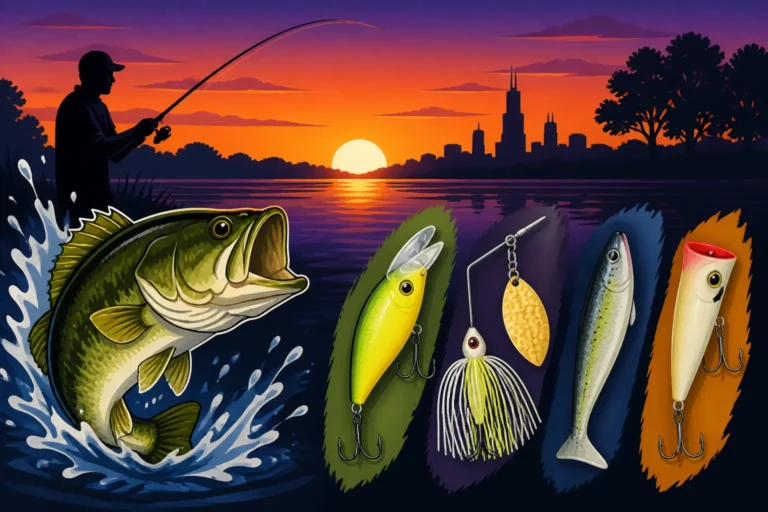
- Jigs: From small 1/16 oz to heavier 1/2 oz options, jigs are incredibly versatile. Tipped with a minnow, a piece of nightcrawler, or a soft plastic grub, they mimic injured baitfish or crawfish. Jigging techniques are a cornerstone of walleye fishing, and knowing your Illinois Walleye Jigging Techniques can drastically improve your success.
- Crankbaits: These lures are fantastic for covering water, especially when trolling. Shad-style crankbaits and minnow imitations are very effective. The key is to match the crankbait's diving depth to where the walleye are holding. When the water gets cooler, understanding the Best Walleye Lures for Cold Water can give you a significant advantage.
- Live Bait: This is often the undisputed king for walleye. Fathead minnows, shiners, and nightcrawlers fished on a slip-bobber rig or a bottom-bouncing setup are deadly. Leeches are also excellent, particularly in warmer water. Sometimes, nothing beats the natural appeal of live bait. For more general guidelines, our article on Best Walleye Bait for Rivers offers insights that can be adapted for lake fishing.
- Spinner Rigs: Often used in conjunction with live bait, spinner rigs present a flashy, noisy profile that can attract walleye from a distance. Blades come in various colors and sizes, allowing you to experiment until you find what triggers a bite.
Top Techniques for Catching Stocked Walleye
Fishing stocked lakes for walleye requires a blend of traditional techniques and an understanding of how these particular fish might react. Persistence and adaptability are your best friends.
Trolling for Success
Trolling is arguably one of the most effective ways to locate and catch walleye in larger stocked lakes. It allows you to cover vast amounts of water, presenting your bait or lure to potentially hundreds of fish.
To effectively troll, you need to pay close attention to your speed, lure depth, and the structure you're passing over. Vary your speed until you find what the fish prefer – sometimes a subtle change can make all the difference. Using a fish finder to monitor depth contours and schools of baitfish is crucial. Crankbaits are a popular choice for trolling, but you can also troll spinner rigs with live bait. For more detailed instructions on specific approaches, consult our guide on Illinois Walleye Trolling Techniques. Remember to check site-specific regulations, as some lakes have restrictions on motor size or even trolling itself.
Jigging and Drifting Strategies
When walleye are concentrated in smaller areas, or you're fishing near sharp breaks, humps, or submerged timber, jigging becomes incredibly effective. Vertical jigging directly beneath the boat is a go-to method. Use a sensitive rod to feel those subtle "thunks" or extra weight that signals a bite. Often, walleye will just mouth the jig, making the bite almost imperceptible. Drifting with the wind or current (even subtle current from an inlet or outlet) while jigging or fishing live bait under a slip-bobber can also be deadly. This technique covers water more slowly than trolling but allows for a more precise presentation over specific pieces of structure. Knowing Illinois Walleye Jigging Techniques is fundamental for success, especially in structured areas where walleye love to ambush prey.
Slip-Bobber Fishing
For those looking for a more relaxed but equally effective approach, especially when fishing from shore or anchored in a boat, slip-bobber fishing is a winner. This technique allows you to present live bait (usually a minnow or nightcrawler) at a precise depth, suspended just above structure or a school of fish. The beauty of a slip-bobber is that the line slides through the bobber, allowing you to cast much further than with a fixed bobber, and easily adjust your depth. This is a particularly good tactic if you're trying to figure out the exact depth the walleye are holding. When you're fishing from the bank, perfecting your How to Catch Walleye From the Bank methods, including slip-bobber rigs, can make a huge difference.
Timing Your Attack and Locating Fish
Walleye are creatures of habit, and understanding their preferences for certain times and locations will dramatically increase your catch rates in stocked lakes.
Best Times of Day and Year
Walleye are notoriously light-sensitive, which means they often feed most actively during low-light conditions. Dawn and dusk are prime times, as the reduced light gives them an advantage over their prey, which are typically more active during daylight hours. Night fishing can also be incredibly productive, especially during the warmer months when walleye move into shallower water to feed under the cover of darkness. Don't overlook overcast days either; heavy cloud cover can extend the prime feeding window well into the day. For an in-depth look, our article on Best Time of Day to Catch Walleye provides more details.
Seasonally, spring and fall are generally the best times for walleye in Illinois. In spring, after the ice melts, walleye move to shallower areas to spawn. Post-spawn, they'll feed aggressively to recover. In fall, as water temperatures drop, they go on a feeding frenzy to fatten up for winter, making them very eager to bite. Winter ice fishing for walleye can also be excellent, especially during early and late ice periods.
Identifying Key Structures and Depths
Walleye in stocked lakes will relate to structure just like their wild cousins. Look for:
- Drop-offs and Ledges: These are classic walleye holding areas, offering quick access to both shallow feeding grounds and deep-water safety.
- Humps and Points: Submerged humps and points that extend into deeper water are ambush points where walleye will wait for baitfish.
- Weed Lines: The edges of healthy weed beds provide cover for walleye and are magnets for baitfish.
- Rocky Bottoms and Riprap: Walleye often prefer hard bottoms, and rocky areas or riprap along causeways can hold crayfish and other forage, attracting them.
- Inlets and Outlets: Areas where water flows into or out of a lake can concentrate baitfish and provide current, which walleye appreciate. While not exactly river current, the principles from "How to Find Walleye in Current" can still be subtly applied here, looking for those seams and eddies.
Knowing the contours of the lake bottom, either through a good topographical map or a reliable fish finder, is paramount. Walleye will often be found near the bottom or suspended just above baitfish schools. Your ability to locate them will greatly impact your success, whether you're learning How to Catch Walleye From a Boat or finding good shore access.
Regulations and Conservation for Stocked Walleye
Just because fish are stocked doesn't mean regulations go out the window. Responsible angling is crucial to ensure these fisheries remain healthy and productive for everyone. Always be aware of the specific rules for the lake you are fishing.
Understanding Catch and Size Limits
Every lake in Illinois, especially those that are regularly stocked, will have specific regulations for walleye. These rules are put in place by the IDNR to manage the fish population and ensure sustainable fishing opportunities. It's incredibly important to know these limits before you even cast your first line. For example, many lakes will have a minimum size limit, such as the Illinois Walleye Minimum Size Limit of 14 Inches, which means any walleye shorter than that must be immediately and carefully released. There will also be a daily catch limit, dictating how many walleye you can legally keep. These limits can vary significantly from one body of water to another, so always check the current Illinois Fishing Regulations Overview for the specific lake or area you plan to fish. Misinterpreting or ignoring these rules can lead to hefty fines and a spoiled fishing trip.
Practicing Responsible Angling
Conservation isn't just about following the rules; it's about making conscious choices to protect the fishery. If you're planning to release fish, handle them with care. Use de-barbed hooks, minimize their time out of the water, and support them horizontally when taking pictures. If a fish is bleeding heavily or appears severely injured, it's often more humane to keep it if it's within your legal limits, rather than releasing it only for it to die. For the overall health of the fishery, consider practicing catch-and-release, especially for larger breeding-size fish, even if you are within your legal limit. This helps ensure that stocked walleye have the best chance to grow and contribute to future populations, keeping these lakes vibrant for generations of anglers.
Walleye Fishing Techniques and Conditions Overview
To help you visualize some of the key factors that go into a successful walleye outing on stocked lakes, I've put together this quick overview. Remember, conditions are always changing, so use this as a starting point and adapt!
| Technique | Best Conditions | Preferred Lure/Bait | Notes |
|---|---|---|---|
| Trolling | Larger lakes, covering water, moderate wind | Crankbaits (diving/shad), spinner rigs with bait | Vary speed, match depth to structure, watch fish finder |
| Jigging | Concentrated fish, deep structure, calm to light wind | Jigs (tipped with minnow/grub), blade baits | Vertical presentation, subtle bites, precise depth control |
| Drifting | Moderate wind, covering open water or subtle breaks | Live bait (minnows, leeches) under slip-bobber, jigs | Allows natural presentation, covers more ground than anchoring |
| Slip-Bobbering | Anchored near structure, calm conditions, shore fishing | Live bait (minnow, nightcrawler, leech) | Great for precise depth, patient approach, good for beginners |
This table serves as a quick reference, but remember that the specifics of your Illinois Walleye Size and Catch Limits and the unique characteristics of each stocked lake will always play a role. Being prepared with a variety of lures and understanding different techniques will give you the upper hand.
Disclaimer
This article is for general informational purposes only and does not constitute professional advice. Laws, prices and regulations vary by location and change over time. Consult a qualified professional for guidance on your specific situation.