Crappie Fishing Techniques for Spring
For many of us who live for the tug on the line, spring crappie fishing isn't just a pastime—it's an annual pilgrimage. But let's be honest, those papermouths can be fickle. One day they're biting everything you throw at them, the next they've vanished. Knowing exactly when and how to target these popular panfish as the waters warm up in Illinois can make all the difference between a sparse cooler and a feast. This comprehensive guide will break down everything you need to know to master spring crappie techniques, from understanding their movements to picking the perfect bait and finding those elusive hot spots.
Understanding Spring Crappie Behavior and Movements
The key to consistently catching crappie in spring lies in understanding their life cycle and how they react to changing water temperatures. It's not just about throwing a minnow out; it's about predicting where they'll be and what they'll be doing.
Pre-Spawn Migration Patterns
As the ice finally melts and water temperatures begin their slow climb, crappie start to stir from their deeper winter haunts. This is the pre-spawn period, often characterized by water temperatures ranging from the mid-40s to low 50s Fahrenheit. During this time, crappie will begin to migrate from deeper, open water areas towards shallower feeding grounds. They're still somewhat lethargic, but they're getting active, seeking out areas that offer both food and eventual spawning potential.
Think of them like us after a long winter: ready to get out and stretch, but still a bit sluggish. They'll often stage in transition zones—areas where deep water meets a shallower flat, especially if there's standing timber, brush piles, or old creek channels nearby. These spots provide cover and a quick escape route back to deeper water if a cold front pushes through. This is a crucial time for feeding, as they need to build up energy for the intense spawning season ahead.
The Crappie Spawn Window
This is what most anglers eagerly anticipate: the crappie spawn! Typically, this intense period occurs when water temperatures consistently hold between 58 and 68 degrees Fahrenheit. In Illinois, depending on how quickly spring arrives and how consistently the sun shines, this can happen anywhere from late April through May, sometimes even into early June in northern parts of the state. During the spawn, crappie, particularly the males, move into very shallow water—often just 1-5 feet deep—to fan out nests.
They'll seek out specific types of cover for these nests. Submerged brush, lily pads, cattails, old stumps, riprap, and even boat docks are prime real estate. The males guard these nests aggressively, while females will move in to lay eggs and then often retreat to slightly deeper water to recover, only to return to spawn again. Understanding the nuances between Black Crappie vs White Crappie: How to Tell Them Apart can also give you an edge, as their preferred spawning habitats can differ slightly. White crappie often prefer more turbid water and stick to brushier cover, while black crappie might favor clearer water and submerged vegetation.
Post-Spawn Recovery and Feeding
Once the spawn is over, usually when water temperatures push into the high 60s and 70s, crappie enter a post-spawn phase. Both males and females are exhausted from the spawning process. Initially, they might be sluggish and less inclined to bite. However, this period is relatively short-lived. As they recover, they become incredibly hungry, needing to replenish their energy stores. They'll often move from the super-shallow spawning flats to slightly deeper, but still relatively shallow, feeding areas.
Look for them around the edges of weed beds, submerged timber, or deeper brush piles adjacent to spawning areas. They'll be feeding heavily on schools of baitfish, insects, and crustaceans. This recovery period is sometimes overlooked by anglers, but it can offer some fantastic fishing if you know where to find these hungry fish. They might be a bit more scattered than during the concentrated spawn, but their aggressive feeding behavior makes them a rewarding target.
Essential Gear for Spring Crappie
Having the right tools for the job is paramount when it comes to crappie fishing. You don't need a boatload of expensive equipment, but the right rod, reel, line, and tackle can significantly improve your success rate.
Rods, Reels, and Line for Sensitivity
Crappie, especially in spring, can have incredibly subtle bites. Sometimes it feels like nothing more than extra weight on the line, or a slight twitch. This is where sensitivity in your rod and reel setup truly shines. For spring crappie, I highly recommend a light to ultralight spinning rod, typically between 6 to 7.5 feet in length. A fast or extra-fast action rod tip will allow you to detect those light bites instantly and still have enough backbone to set the hook. Brands like St. Croix or Fenwick offer excellent sensitivity without breaking the bank. For reels, a small spinning reel in the 500-1000 size range, spooled with 4-6 pound test monofilament or fluorocarbon line, is ideal. Some anglers even prefer braided line with a fluorocarbon leader for maximum sensitivity and strength, especially when fishing around heavy cover.
The lighter line, coupled with a sensitive rod, acts as an extension of your hand, transmitting even the slightest nibble. You'll often be fishing small jigs or tiny minnow rigs, and anything heavier might overpower the bait and deter the fish. Remember, crappie have a relatively soft mouth, so a delicate touch is often more effective than brute force. You can find a wide array of reliable ultralight spinning combos on Amazon that are perfect for this type of fishing.
Jigs, Minnows, and Preferred Baits
When it comes to baits, spring crappie are rarely picky, but some options consistently outperform others. Live minnows are, without a doubt, a classic crappie killer. Hooked through the lips or dorsal fin on a small hook (size 4 or 6), under a bobber or on a jig head, they're irresistible to hungry crappie. However, don't underestimate the power of artificial baits, especially when fish are aggressive. Small soft plastic jigs, typically 1/32 to 1/16 ounce, in colors like chartreuse, white, pink, or black and chartreuse, are incredibly effective. Tubes, grubs, and tiny swimbaits in these same color patterns can also produce fantastic results.
For certain conditions, especially murky water or overcast days, bright colors like chartreuse or orange really pop. In clearer water or on sunny days, more natural colors like smoke, clear with silver flake, or dull greens might be more effective. Don't forget to consider a Best Bait for Crappie Fishing as your primary offering, particularly if you're targeting those bigger slabs. Small jigging spoons or tiny crankbaits can also be surprisingly effective, especially when crappie are suspended or feeding aggressively.
Electronics and Boat Setup
While you can certainly catch crappie from the bank, having a boat equipped with modern electronics can drastically improve your spring crappie game. A good fish finder with down imaging and side imaging capabilities is invaluable for locating submerged timber, brush piles, old creek beds, and, most importantly, schools of crappie. Brands like Humminbird and Lowrance offer excellent options that can pinpoint crappie holding tight to structure or suspended in open water. Being able to see crappie beds on your sonar, as discussed in How to Find Crappie Beds in Spring, will be a game changer.
Additionally, a reliable trolling motor (like a Minn Kota or MotorGuide) allows for silent, precise boat positioning, which is critical when sneaking up on shallow-water crappie without spooking them. Many anglers also use multiple rod holders for spider rigging setups, allowing them to present several baits at once. Even small jon boats or kayaks can be rigged with portable fish finders and rod holders, making them incredibly effective for navigating tighter crappie-rich areas. For those who prefer to fish from shore, even a simple handheld sonar device can help identify drop-offs and structure nearby.
Top Spring Crappie Fishing Techniques
Once you've got your gear dialed in, it's time to talk tactics. Spring crappie can be found in a variety of depths and covers, and having a diverse arsenal of techniques will ensure you're ready for any situation.
Vertical Jigging in Structure
Vertical jigging is perhaps the most effective technique for targeting crappie that are holding tight to vertical cover, such as standing timber, bridge pilings, or deep brush piles. The idea is to present your jig or minnow directly over or alongside the structure where the fish are hiding. Use your fish finder to locate these structures and the crappie holding around them. Once you're positioned, drop your bait straight down.
The key is to maintain vertical control, keeping your line as straight as possible, even with a slight boat drift. Gently lift and drop your rod tip, imparting a subtle jigging motion to your bait. Pay extremely close attention to your line, as many bites will feel like a slight "tick" or a sudden slackening of the line rather than a hard tug. This technique is deadly during the pre-spawn when crappie are staging in deeper timber, and also during the post-spawn when they retreat to submerged brush to recover. When you find a productive piece of structure, you can often pull multiple fish off it using this precise presentation. Mastering Crappie Jigging Techniques will definitely put more fish in your boat.
Casting and Retrieving Jigs
When crappie move into shallower areas, especially during the spawn or when actively feeding in flats, casting and retrieving jigs becomes incredibly effective. This allows you to cover more water and search for active schools. Use a small jig (1/16 to 1/8 ounce, depending on depth and wind) paired with a soft plastic grub, tube, or minnow imitation. Cast towards visible cover like lily pad edges, submerged brush, or even boat docks.
Vary your retrieve speed and depth until you find what the fish are responding to. A slow, steady retrieve can be effective, but often a retrieve with subtle pauses and twitches works best. Let the jig sink for a few seconds, then reel in a foot or two, let it pause and fall again. This erratic action can mimic a wounded baitfish, triggering a strike. If you're fishing areas with sparse cover, fan-casting and working parallel to the shoreline can help you locate those active fish. This is also a fantastic technique for How to Catch Crappie From the Bank when you can't reach deep structure.
Spider Rigging and Trolling
For covering large areas and presenting multiple baits at once, especially in open water or over large flats, spider rigging or slow trolling is a phenomenal technique. This involves setting up multiple long rods (often 10-16 feet) off the front and sides of your boat, creating a "spider web" of lines. Each rod will have a different bait or jig, often suspended at varying depths, allowing you to quickly determine the crappie's preferred depth and lure.
You'll move your boat very slowly, typically 0.5 to 1.5 miles per hour, often following contour lines or old creek channels. This method is incredibly effective for finding scattered schools of crappie in the pre-spawn or post-spawn when they might be spread out over larger areas. It's also great for covering large flats during the spawn where crappie beds might be widely dispersed. Keep an eye on your fish finder, and when you mark fish, adjust your baits and depths to match. Many experienced anglers swear by spider rigging on large reservoirs like Rend Lake or Carlyle Lake to consistently put crappie in the livewell. You can find specialized spider rigging rod holders and setups on Amazon to get started.
Finding Spring Crappie Hotspots
Knowing how to fish is only half the battle; knowing where to fish is equally, if not more, important. Spring crappie gravitate towards specific types of habitat as they prepare for and execute the spawn.
Shallow Water Cover and Structure
As water temperatures climb into the mid-50s and beyond, crappie will push into very shallow water. They seek out cover that provides protection from predators and allows for nest building. This includes anything from flooded bushes and timber along the shoreline, dense lily pad fields, cattails, old stumps, and even riprap banks. Boat docks, especially those with submerged brush or tires, are absolute crappie magnets. The warmth of the sun heats these shallow areas first, attracting baitfish and, consequently, crappie.
Focus on the sunny side of the lake or reservoir, as these areas will warm faster. Look for areas with a mix of hard and soft structure. A fallen tree that extends from the bank out into deeper water is a perfect example, offering multiple depth ranges and cover types. Don't be afraid to fish in water as shallow as one foot, particularly during the peak of the spawn. These areas can be absolute goldmines, especially on Illinois lakes known for panfish like Rend Lake's Best Spots for Trophy Bluegill Over a Pound.
Creek Channels and Transition Areas
Before and after the peak spawn, crappie will often utilize creek channels as highways to and from their spawning grounds. These channels provide slightly deeper water and often hold baitfish. Look for areas where these channels intersect with shallower flats or where they make a sharp bend. Crappie will stage on the edges of these channels, particularly where there's submerged timber or brush piles offering cover.
Transition areas, where different depths or habitat types meet, are also critical. Think of a shallow flat that abruptly drops off into deeper water, or where a weed bed meets open water. Crappie will use these edges to ambush prey and as comfortable holding spots. Pay close attention to these contours and depth changes using your electronics. Even a slight change in bottom composition, from mud to gravel, can hold fish. These are the kinds of spots where anglers can find crappie staging up, waiting for the optimal time to move into their spawning territories.
Identifying Crappie Beds
During the spawning phase, male crappie fan out circular depressions on the bottom, known as crappie beds, to attract females. These beds are typically found in shallow, protected areas, often near submerged logs, stumps, or dense aquatic vegetation. They're usually in water that's slightly warmer than the surrounding area, and often have a firmer bottom. The males will aggressively defend these nests, making them easier targets.
While you can't always see these beds from the surface, especially in murky water, you can often locate them by sight fishing in clear, shallow areas, or by repeatedly catching fish in a concentrated spot. If you pull a male crappie from a specific patch of cover, mark that spot – there are likely more beds nearby. Remember, fishing for spawning fish requires a bit of ethical consideration; always adhere to Illinois Fishing Season and Catch Limit Rules to ensure sustainable populations for future generations.
Seasonal Considerations and Water Temperature
Spring weather in Illinois can be a rollercoaster, and water temperature is the single most critical factor influencing crappie behavior. Being attuned to these changes can help you predict fish movements and adjust your tactics accordingly.
Impact of Cold Fronts and Rain
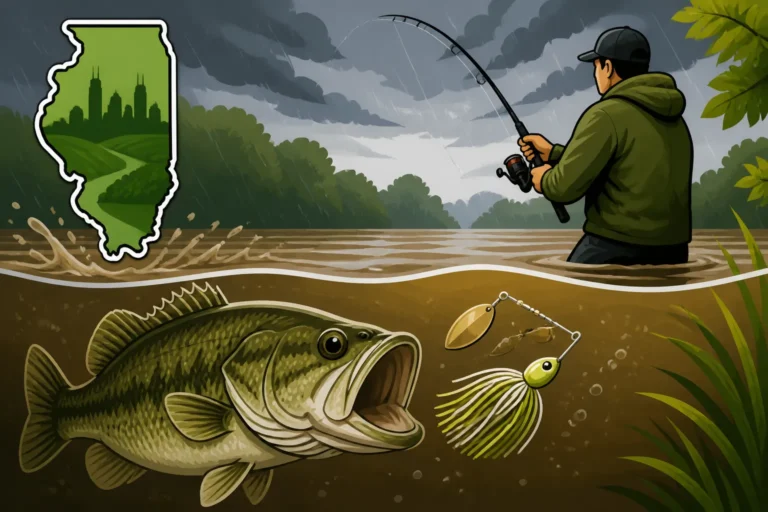
Ah, the dreaded spring cold front. Just when you think the crappie bite is on fire, a cold front rolls through, dropping air temperatures and often bringing strong winds and rain. This can dramatically impact crappie fishing. A sudden drop in water temperature, even just a few degrees, can send crappie retreating from shallow spawning areas back to deeper, more stable water. They become less active and their bite gets much more subtle.
After a cold front, focus your efforts on those deeper transition zones and heavier cover. The fish will often hug the bottom or bury themselves deeper into brush piles. Light lines, smaller baits, and slower presentations become even more important. Conversely, a warm rain can sometimes actually improve fishing. If the water levels rise and the rain brings warmer runoff, it can push crappie even further into flooded vegetation, making them more accessible. However, heavy, cold rain can have a similar effect to a cold front, pushing fish deeper. Always check the weather forecast before heading out.
Ideal Water Temperatures for Spring Crappie
As mentioned, water temperature is the ultimate guide to spring crappie activity. Here's a quick breakdown of what to expect at different temperature ranges:
- Below 50°F: Pre-spawn staging. Crappie are still in deeper water but beginning to move towards creek channels and main lake points. Slow presentations in deeper timber.
- 50-58°F: Active pre-spawn. Crappie are moving shallower, gathering in large schools around brush piles and drop-offs near spawning flats. Good for vertical jigging and spider rigging.
- 58-68°F: The Spawn! Peak crappie activity in shallow water. They'll be on beds in 1-5 feet of water, around wood, rock, and vegetation. Excellent for casting jigs and minnows under a bobber. You'll definitely want to check out the Illinois Crappie Spawn Season Guide for more detailed timing.
- 68°F and above: Post-spawn. Crappie are recovering, then actively feeding. They move to slightly deeper cover near spawning areas, often suspended in brush or along weed lines. Good for casting and slow trolling.
Monitoring water temperature with a thermometer or your fish finder is absolutely crucial. These ranges are general guidelines, and fish behavior can vary slightly from lake to lake, but they offer a solid starting point for your spring fishing strategy.
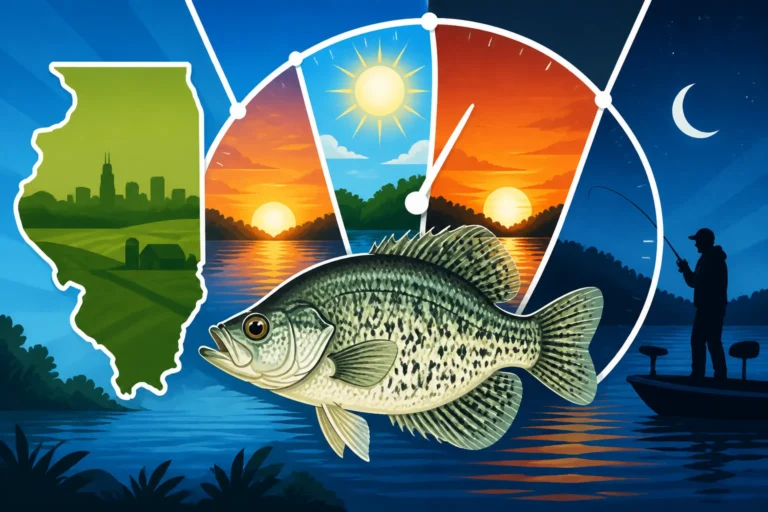
Best Times of Day for Spring Crappie
While crappie can be caught throughout the day in spring, certain times often prove more productive. Early morning and late evening, often referred to as "prime time" or "golden hour," are generally excellent. During these periods, light levels are lower, and crappie are often more active and willing to move into shallower feeding areas. The lower light also makes them feel safer from aerial predators.
However, during the spawn, especially if it's overcast, crappie can bite well all day long in shallow water. On bright, sunny days, crappie might retreat slightly deeper or tighter into cover during the midday sun, becoming more active again as the sun begins to set. Post-front conditions can also influence this, pushing activity towards the warmest part of the day if shallow areas warm up. It's often a good idea to experiment. Start early, fish into the afternoon, and pay attention to when you get your bites. This will tell you what the fish are doing on that particular day. You can also dive deeper into this topic with our guide on the Best Time of Day to Catch Crappie.
Advanced Tips for Challenging Conditions
Not every spring day is perfect. Sometimes the water is off-color, the wind howls, or the fish just seem to have lockjaw. Knowing how to adapt to these challenging conditions is what separates a good crappie angler from a truly great one.
Adapting to Murky or Clear Water
Water clarity plays a huge role in crappie fishing. In murky or stained water, crappie rely more on their lateral line to detect vibrations and less on sight. This means you'll want to use baits that create more disturbance or have a stronger visual presence. Brighter colors like chartreuse, electric chicken, bright pink, or even black jigs can be highly effective. Jigs with tails that flutter or paddle can also help crappie locate them in low visibility. Adding scent to your baits can provide an extra edge, helping fish track down your presentation. Don't be afraid to use a slightly larger profile jig in murky water, as it can be easier for fish to see.
Conversely, in clear water, crappie become much more skittish and visually oriented. You'll need to scale down your presentation. Use smaller jigs (1/32 or 1/64 ounce) in natural colors like smoke, clear with glitter, or light greens. Fluorocarbon line becomes a real advantage here due to its low visibility underwater. Longer leaders can also help keep your main line out of sight. Make longer casts to avoid spooking fish, and retrieve your baits more subtly. The goal is to present a natural, non-threatening meal that mimics local baitfish. Sometimes, even a slight change in jig color or size, as discussed in Best Crappie Jig Colors for Stained Water, can make a world of difference.
Dealing with Wind and Current
Wind can be both a blessing and a curse. A light chop on the water can actually help break up the surface, making crappie feel more secure and less likely to spook. However, heavy wind can make boat control a nightmare and detecting subtle bites nearly impossible. When faced with heavy wind, try to fish on the leeward side of the lake (the side sheltered from the wind) or find protected coves and creeks. These areas will be calmer and often warmer. If you have to fish in the wind, use your trolling motor to maintain boat position, often by "spot-locking" or creeping into the wind to slow your drift.
Current, found primarily in river systems like the Illinois River or Mississippi River backwaters, also requires adjustment. Crappie will often position themselves out of the main current, behind structure like wing dams, fallen trees, or eddies, waiting to ambush baitfish that are swept past. Cast upstream and let your jig drift naturally with the current into these slack water areas. Adjust jig weight to ensure it reaches the desired depth without being swept away too quickly. A slightly heavier jig might be necessary to maintain control in stronger currents.
Subtle Bites and Strike Detection
As mentioned repeatedly, crappie bites can be incredibly subtle, especially in cold water or after a cold front. Often, it's not a violent tug, but more like a slight "mushy" feeling, extra weight on the line, or a sideways twitch of your line where it enters the water. Sometimes, your bobber might not even go down; it just lays on its side or twitches slightly. This is where a sensitive rod and braided or fluorocarbon line are your best friends.
Keep a watchful eye on your line at all times, especially as your jig falls. Any interruption in its natural descent could be a bite. Practice feeling for those subtle changes. If you suspect a bite, even if you're not entirely sure, set the hook! It's better to set the hook on a snag or an imagined bite than to miss a trophy crappie. Learning to distinguish between a bump on the bottom and a crappie's gentle take comes with experience, but focusing on line watching and feeling for anomalies is the first step.
Illinois-Specific Spring Crappie Insights
Illinois offers some truly phenomenal crappie fishing, with a variety of lakes and rivers that hold healthy populations. Knowing where and when to focus your efforts locally can drastically improve your spring catch.
Key Illinois Lakes for Spring Crappie
When it comes to spring crappie in Illinois, a few major reservoirs stand out as consistent producers.
- Rend Lake: Located in Southern Illinois, Rend Lake is arguably the state's premier crappie destination. Its vast shallow flats, countless acres of standing timber, and extensive brush piles make it a crappie paradise. During the spring spawn, crappie move into the flooded timber and brush on the northern and eastern arms of the lake. Areas like Nason Point, the Casey Fork, and the Big Muddy arms are perennial hotspots. You'll find both black and white crappie here, with many reaching impressive sizes. Our Rend Lake Fishing Guide for Illinois Anglers offers even more specific details on this fantastic lake.
- Lake Shelbyville: This central Illinois gem is another top crappie lake, known for its deep creek channels, abundant standing timber, and a healthy population of both crappie species. In spring, crappie will stage in the deeper creek channels and then move into the shallower timbered coves and embayments for the spawn. Key areas include the heads of the major arms like Lithia Springs and Findlay Marina, as well as the numerous flooded timber pockets. Check out our Lake Shelbyville Fishing Guide for detailed insights.
- Carlyle Lake: As Illinois's largest man-made lake, Carlyle offers vast opportunities. While often famous for its catfish and white bass, Carlyle Lake also boasts a strong crappie population. Its extensive shallow water, riprap banks, and numerous brush piles are ideal for spring crappie. Look for crappie along the riprap of the main dam and causeway, in the timbered bays like Allen Branch and East Fork, and around submerged structure in the main lake. The Carlyle Lake Fishing Guide provides more information on this expansive body of water.
- Kinkaid Lake: A hidden gem in Southern Illinois, Kinkaid is known for its clear water and excellent black crappie fishing. The steep rocky banks and abundant submerged timber offer fantastic structure.
- Clinton Lake: A cooling lake that warms up faster than natural lakes, making it an early spring crappie hotspot. Its deep structure and warm water discharge areas can hold crappie year-round.
Many smaller state park lakes and local reservoirs also offer excellent crappie fishing, often with less pressure. It's always worth checking with local bait shops for the latest reports.
Navigating Illinois Regulations
Before you even cast a line, it's critical to be aware of the specific fishing regulations in Illinois. These rules are in place to ensure sustainable fish populations and vary from statewide limits to site-specific regulations for individual lakes and rivers. For crappie, there's a statewide daily creel limit (how many you can keep per day), but many popular lakes will have additional, more restrictive size and possession limits. For example, a lake might have a 9-inch minimum length limit for crappie, or a reduced daily creel limit to protect the population.
It is your responsibility to know the rules for the specific body of water you're fishing. The Illinois Department of Natural Resources (IDNR) publishes an annual "Illinois Fishing Information Guide" which is an invaluable resource. You can often pick one up at bait shops, sporting goods stores like those found on Amazon, or download it from the IDNR website. Always double-check before you go. And of course, make sure your Illinois Fishing License Guide for 2026 is up to date, as fishing without one can lead to stiff penalties.
Prime Spring Crappie Windows in Illinois
The exact timing of the crappie bite can shift slightly each year based on weather patterns, but generally, late March through early June represents the prime spring crappie window across Illinois.
- Late March – Mid-April: This is typically the pre-spawn staging period in most of Illinois, though Southern Illinois lakes like Rend Lake might see earlier activity. Crappie are deep, around creek channels and main lake points.
- Late April – Mid-May: Peak spawning activity in most of Illinois. This is when crappie are shallow, on beds, and often highly aggressive. This is truly the sweet spot for many anglers.
- Late May – Early June: Post-spawn recovery and aggressive feeding. Crappie move slightly deeper, still concentrated around structure adjacent to spawning areas. This can be a fantastic time for numbers of fish.
Remember, these are general guidelines. Always pay attention to local conditions, water temperature, and reports from local anglers or bait shops. For more specific timing, consult our detailed Illinois Fishing Seasons Guide.
Common Mistakes and How to Avoid Them
Even seasoned anglers can make mistakes. Recognizing common pitfalls and actively working to avoid them can significantly boost your spring crappie success.
Overlooking Depth and Structure
One of the most frequent mistakes, especially in spring, is to focus solely on shallow water and visible cover. While shallow areas are undoubtedly productive during the spawn, crappie spend a significant amount of time in deeper water during the pre-spawn and post-spawn periods. Many anglers miss out by not exploring those deeper creek channels, submerged timber lines, and brush piles where crappie stage.
Furthermore, even in shallow water, anglers sometimes overlook subtle structure. A single submerged log, a small rock pile, or a slight depression in the bottom can hold a school of crappie. Don't just cast blindly; use your electronics (if boating) or carefully observe the water for subtle changes in depth or bottom composition. If you're bank fishing, look for irregularities in the shoreline, fallen trees, or areas where the bank drops off quickly. Crappie are structure-oriented fish, and finding that key piece of cover is half the battle.
Using Wrong Baits or Techniques
It's easy to get stuck in a rut, using the same jig or the same retrieve every time you go out. However, crappie can be incredibly finicky, and what worked yesterday might not work today. Using a bait that's too large, the wrong color for the water clarity, or a presentation that's too fast can turn crappie off completely. Similarly, trying to vertical jig a vast, open flat or casting a small jig into deep, thick timber probably won't yield many results.
Always be willing to experiment. If the bite is slow, change your jig color, size, or profile. Switch from a soft plastic to a minnow, or vice versa. If casting isn't working, try vertical jigging or slow trolling. Pay attention to what the fish are telling you. If you're getting short strikes, they might want a smaller bait or a slower retrieve. If they're hitting aggressively, you might be able to speed things up. Having a diverse tackle box, as suggested in our guide to Best Bait for Crappie Fishing, and being flexible with your approach are crucial.
Ignoring Weather Patterns
Many anglers look at the current weather and decide if it's a good day to fish. While that's fine for comfort, truly successful crappie anglers understand that fish behavior is often dictated by recent weather patterns and incoming weather fronts. A beautiful, sunny day after a severe cold front might still mean tough fishing because the water temperature has plummeted, and the fish are still recovering. Conversely, a cloudy, drizzly day that follows several warm, stable days could be fantastic, as crappie feel more secure in lower light.
Always check the forecast for the next 24-48 hours. Is a cold front coming? Are temperatures rising consistently? Is there heavy rain in the forecast? These patterns will tell you more about where crappie are likely to be and how active they might be than the current conditions alone. Understanding how factors like water temperature, barometric pressure, and light levels influence fish behavior is paramount.
Disclaimer
Please note: Fishing regulations, license requirements, and seasonal information can change. Always consult the latest Illinois Department of Natural Resources (IDNR) regulations guide before fishing. This guide is for informational purposes only and does not supersede official state regulations.