Rend Lake’s Best Spots for Trophy Bluegill Over a Pound
Chasing that elusive, plate-sized bluegill can often feel like a pipe dream, especially when most of your catches fit comfortably in the palm of your hand. It's frustrating to hear tales of monster panfish without knowing where to even begin your quest. This guide is dedicated to unlocking the secrets of Rend Lake, one of Illinois's premier destinations, revealing the specific locations and techniques that will put you on the path to landing those truly trophy-sized bluegill, often tipping the scales at over a pound.
Understanding Rend Lake's Bluegill Potential
Rend Lake isn't just another body of water in Illinois; it's a special place renowned for its incredible panfish, particularly its bluegill. Anglers from all over the state, and even beyond, travel to this expansive reservoir in Southern Illinois with high hopes of hooking into some of the biggest bluegill they've ever seen. But what makes Rend Lake such a hotspot for these oversized sunfish? It's a combination of unique ecological factors, vast shallow water habitat, and consistent management practices that truly set it apart.
The Ecosystem Advantage for Giant Panfish
The sheer size of Rend Lake, covering over 18,900 acres, provides an immense and diverse habitat. Its average depth is relatively shallow, but it's dotted with thousands of acres of flooded timber, stump fields, brush piles, and vast beds of submerged aquatic vegetation. This intricate network of cover offers bluegill everything they need: ample protection from predators like bass and crappie, a rich food source of insects, crustaceans, and small minnows, and ideal spawning grounds. The lake's nutrient-rich waters contribute to a robust food chain, allowing bluegill to grow larger and faster than in many other systems. When you consider why these fish regularly top a pound, you begin to appreciate how the lake's abundant resources and cover make it an exceptional environment. For a deeper dive into why Rend Lake is so productive, check out our guide on how to catch oversized bluegill at Rend Lake.
Moreover, the Illinois Department of Natural Resources (IDNR) plays a vital role in maintaining this fishery. Their management efforts, including habitat improvements and careful monitoring of fish populations, help ensure that Rend Lake continues to produce healthy, large bluegill. This commitment to conservation and smart stocking practices ensures a sustainable population for anglers for years to come.
Identifying Trophy Bluegill vs. Run-of-the-Mill Catches
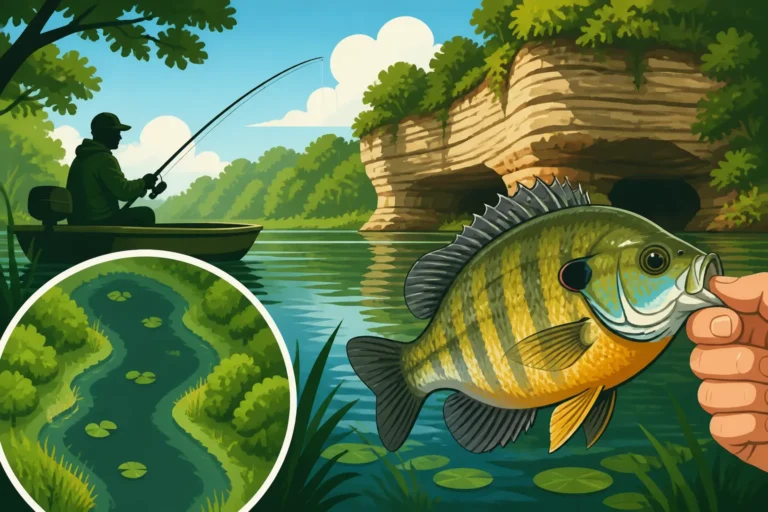
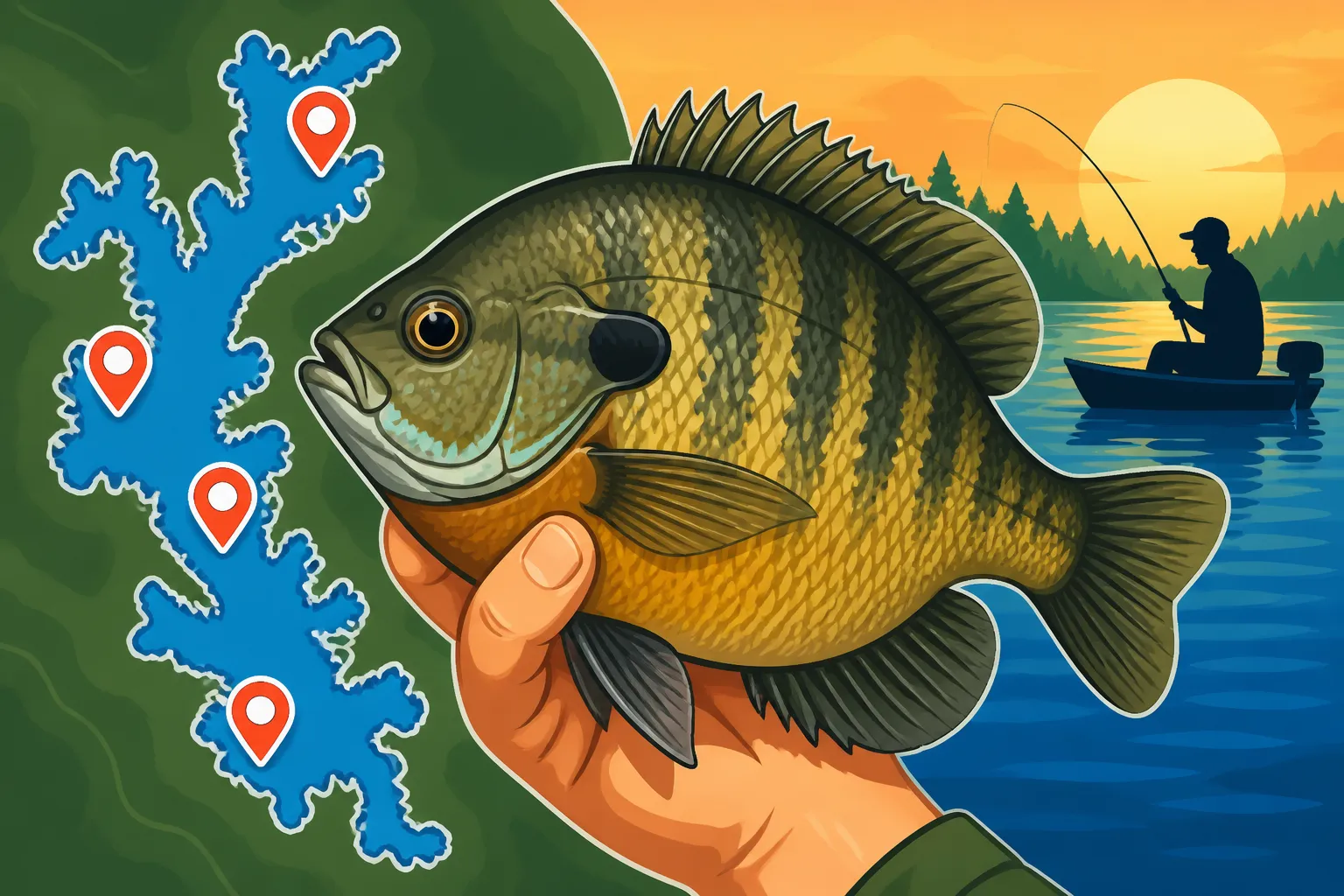
A "trophy" bluegill is subjective, but at Rend Lake, we're talking about fish that genuinely stretch a measuring tape and make you reconsider calling them "panfish." While a 7-inch bluegill is a good catch in many lakes, a true Rend Lake trophy bluegill often measures 9 inches or more and can easily weigh over a pound, some even pushing a pound and a half or two. The distinction is clear when you see one. They'll have a deeper body, a more pronounced hump on their back, and often a darker, more vibrant coloration than their smaller brethren. Their operculum (gill flap) will typically have a distinct, elongated black "ear tab."
When you reel in a bluegill that feels unusually heavy and offers a surprisingly strong fight, that's your first clue. Instead of immediately tossing it into the cooler, take a moment to admire its size and verify its dimensions. The broad shoulders and deep girth are unmistakable characteristics of a Rend Lake heavyweight. Being able to identify these larger fish is key, not just for bragging rights, but also for understanding which areas and patterns are most productive for targeting them. Remember, these big ones didn't get big by being careless, so finding them often requires a bit more finesse and strategy.
Key Locations for Monster Bluegill at Rend Lake
Finding these elusive trophy bluegill means knowing where they prefer to hide and feed throughout the seasons. Rend Lake is vast, but certain areas consistently produce larger fish due to their unique characteristics and the availability of abundant food and cover. While bluegill can be found almost anywhere in the lake, the real giants have their favored haunts.
Shallow Water Sweet Spots in Spring
As the water temperatures begin to rise in spring, bluegill move into the shallowest areas of Rend Lake for their spawning rituals. This is often the best time to target the largest bluegill from shore or with lighter boats. Look for expansive flats in protected coves with plenty of flooded timber, submerged brush, or dense aquatic vegetation. These areas, particularly those with a muddy or sandy bottom, warm up quickly and provide ideal nesting sites.
- Gun Creek and Jackie Branch: These arms of Rend Lake, especially the northern and western sections, are renowned for their extensive shallow flats and flooded timber. As spring progresses, usually from late April through May and into early June, big bluegill will congregate here in large numbers. Focus on depths of 1 to 4 feet, particularly around the bases of trees or brush piles. The water clarity can vary, but these areas consistently hold fish.
- Wayne Fitzgerrell State Park Shoreline: Along the edges of Wayne Fitzgerrell State Park, you'll find numerous coves and protected bays with excellent bank access and plenty of cover. The park's well-maintained facilities make it an easy spot to launch a kayak or even fish directly from shore. Target areas where reeds or emergent vegetation meet deeper water.
- North and South Sandusky Boat Ramps: While busy access points, the adjacent shallow flats around these ramps offer prime bluegill spawning habitat. Focus on the quieter coves just a short distance from the main launch areas. A good strategy is to use the ramp as an access point to explore the surrounding shallows.
When fishing these shallow areas, stealth is crucial. Avoid loud noises or casting shadows over the beds. Use a quiet electric trolling motor if you're in a boat, or approach carefully if bank fishing.
Deeper Haunts for Summer and Fall Giants
Once the spawn is over and summer heat sets in, the biggest bluegill often retreat to deeper, cooler waters, particularly during the middle of the day. They won't always abandon the shallow cover entirely, especially early and late in the day, but their primary hangouts will shift to submerged structure in 6 to 15 feet of water. In the fall, as temperatures cool again, they'll often revert to similar patterns, though potentially even deeper as winter approaches.
- Submerged Humps and Rock Piles: Rend Lake has numerous underwater humps and subtle depth changes. These structures, often topped with rocks or gravel, attract schools of bluegill seeking stable temperatures and forage. Use a good fish finder to locate these subtle contours, especially near creek channels or old roadbeds.
- Deep Edges of Timber Fields: While bluegill spawn in shallow timber, the real lunkers will often slide to the deeper edges of those same flooded forests in summer. Look for where the timber line abruptly drops off into 8-12 feet of water. These "edge" habitats provide both cover and access to open water forage.
- Brush Piles and Artificial Structures: Many anglers, and even the IDNR, have sunk brush piles and other structures throughout Rend Lake. These act as fish attractors, concentrating bluegill and other panfish. Sites are often marked on navigation apps or local fishing maps. FishingBooker might even have guides specializing in these marked spots. These can be prime spots for Illinois Lakes Where Bluegill Regularly Top a Pound.
| Season | Preferred Depth | Habitat Characteristics | Ideal Locations |
|---|---|---|---|
| Spring | 1-4 feet | Shallow flats, flooded timber, emergent vegetation, sandy/muddy bottoms | Gun Creek, Jackie Branch, protected coves near Wayne Fitzgerrell State Park |
| Summer | 6-15 feet | Submerged humps, deep timber edges, brush piles, creek channels | Main lake creek channel drops, marked brush piles, underwater points |
| Fall | 8-20 feet | Deeper timber lines, old roadbeds, pronounced structural changes | Near Casey Fork arm, deeper sections of the Nason Point area |
| Winter | 15-30 feet (ice) | Deepest basins, suspended over structure, main channel | Main lake basin areas, larger timber stands in deeper water (ice fishing dependent) |
Structure Fishing for Hidden Monsters
The key to finding giant bluegill in Rend Lake, regardless of the season, often comes down to finding structure. Bluegill are not open-water roaming fish; they associate closely with cover. The bigger they are, the more they prefer substantial cover that offers protection and ambush points for food.
- Flooded Timber and Stump Fields: This is Rend Lake's most iconic cover. Miles of drowned trees and stumps provide countless hiding spots. Focus on areas where the timber is densest, creating shade and complex underwater labyrinths. These are perfect for big bluegill to lurk.
- Submerged Roadbeds and Foundations: Before Rend Lake was impounded, there were roads, homesteads, and bridges. These remnants now lie submerged, creating fantastic, hard-bottomed structure. These often act as highways and congregating points for fish. A good map or sonar unit is invaluable for locating these.
- Aquatic Vegetation Beds: While some vegetation can be too dense, patchy weed lines, particularly coontail or pondweed, provide excellent cover and harbor abundant insect life. Fish the edges of these beds, or look for small pockets within them where bluegill will hide. In summer, the shade provided by dense lily pads can hold surprisingly large bluegill.
Understanding Rend Lake Fishing Guide for Illinois Anglers will give you a broader perspective on the lake's structure.
Techniques and Tackle for Landing Trophy Bluegill
Catching a truly massive bluegill is not simply about luck; it's about employing the right techniques and having the appropriate tackle. While bluegill are often seen as easy to catch, the big ones can be surprisingly finicky and demand a more refined approach than their smaller counterparts.
Precision Presentations and Bait Choices
Trophy bluegill, having survived longer, tend to be warier. They won't always aggressively chase any bait. A delicate, precise presentation is often necessary, especially in clearer water or when they are pressured.
- Small Jigs and Soft Plastics: Tiny jigs, typically 1/32 to 1/16 ounce, tipped with a small plastic grub, tube, or nymph imitation are incredibly effective. Colors like chartreuse, white, black, or natural insect tones work well. The key is to present them slowly and subtly. A slow retrieve, a gentle twitch, or even dead-sticking them under a small bobber can entice a bite. For tips on How to Rig a Wax Worm Under a Bobber for Bluegill, you can find more detailed instructions.
- Live Bait Rigs: Nothing beats live bait for consistency, especially when targeting larger fish. Wax worms, mealworms, crickets, and small redworms are all irresistible to bluegill. Present them on a tiny Aberdeen hook (size 8 or 10) under a small float (a slip bobber is excellent for variable depths) or on a split-shot rig fished directly on the bottom. When choosing Best Bait for Bluegill Fishing, remember that fresh, lively bait makes a big difference.
- Fly Fishing: For the purists, fly fishing with small poppers, sponge spiders, or wet flies (like a soft-hackle or a small Prince Nymph) can be incredibly rewarding. A light fly rod (3-5 weight) allows for delicate presentations and makes even a 1-pound bluegill feel like a heavyweight.
Specialized Gear for Big Bluegill
While a basic spinning rod will catch bluegill, specialized gear significantly improves your chances of landing those trophy fish. You need a setup that allows for sensitive detection of subtle bites and has enough backbone to handle a surprisingly strong fight.
- Ultralight Rods and Reels: An ultralight spinning rod, 5 to 6 feet in length, with a fast action tip and a lightweight reel spooled with 2 to 4-pound test monofilament or fluorocarbon line, is ideal. The sensitive tip allows you to feel the faintest peck, while the light line and smooth drag are essential for battling a large bluegill without breaking off. For more on this, look into Ultralight Tackle for Panfish Fishing.
- Small Hooks and Sinkers: As mentioned, size 8 or 10 Aberdeen hooks are perfect. They are thin-wired, minimizing damage to smaller fish, but strong enough for larger ones. Use the lightest sinker possible, just enough to get your bait down or to cast accurately. Micro split shot or small lead-free sinkers are best.
- Bobber Selection: Small, sensitive bobbers are crucial. Thill Slip Bobbers or similar pencil-style floats are excellent because they offer minimal resistance when a bluegill takes the bait, preventing them from feeling the weight and dropping it. They also allow you to easily adjust your fishing depth.
Timing Your Attack for Peak Success
Understanding the daily and seasonal movements of trophy bluegill is as important as your bait choice. They have predictable patterns influenced by light, temperature, and feeding activity. To maximize your chances, consider Seasonal Bait Selection Guide and how it intertwines with fish behavior.
- Early Morning and Late Evening: These low-light periods are prime times. Bluegill, especially the larger ones, are often more active and less wary during dawn and dusk. They will move shallower to feed and are more willing to venture out from heavy cover.
- Cloudy Days: Overcast conditions can extend the productive shallow water bite throughout the day, as the reduced light penetration makes bluegill feel safer.
- The Spawn (Late Spring/Early Summer): As discussed, this is arguably the best time to target large bluegill as they are concentrated in shallow, accessible areas. Pay close attention to water temperature – when it consistently hits the mid-60s Fahrenheit, the spawn is typically in full swing. Keep an eye on the Water Temperature and Fish Activity Guide for optimal conditions.
- Post-Spawn and Summer Patterns: After the spawn, bluegill need to recover and feed heavily. They’ll often hold tight to deeper structure near drop-offs or submerged timber. Mornings and evenings will still be best in the shallows, but mid-day may require you to fish deeper structures with a boat.
Beyond the Catch: Conservation and Local Insights
Catching a trophy bluegill from Rend Lake is an unforgettable experience, but responsible angling practices are vital to ensure that future generations can enjoy the same opportunities. Conservation isn't just a buzzword; it's a commitment to the health of the fishery.
Practicing Catch and Release for Future Giants
While it’s tempting to keep every large bluegill you catch, especially one that tops a pound, consider releasing some of the biggest ones. These larger fish are often the most prolific spawners, contributing significantly to the lake's genetics and future trophy potential. They've also proven their ability to survive and grow large, making them valuable assets to the ecosystem.
- Proper Handling: If you plan to release a fish, handle it minimally and gently. Wet your hands before touching the fish to protect its slime coat. Remove the hook quickly and carefully. If the fish is deeply hooked, cut the line as close to the hook as possible rather than trying to rip it out.
- Revival: Hold the fish upright in the water until it swims away under its own power. Don't just toss it back; make sure it's strong enough to recover. This practice ensures that Rend Lake remains one of Illinois Lakes Where Bluegill Regularly Top a Pound for years to come.
- Selective Harvest: There's nothing wrong with keeping some bluegill for a delicious meal, especially the abundant smaller-to-medium sized fish. However, being selective and releasing the truly exceptional individuals helps maintain the population of potential future giants. For a broader understanding of various species, check out Illinois Panfish Species: Bluegill, Crappie and Sunfish Explained.
Tapping into Local Knowledge and Resources
One of the best ways to improve your success rate at Rend Lake is to leverage local knowledge. The anglers who frequent these waters year after year have a wealth of information about seasonal patterns, specific hotspots, and effective techniques.
- Local Bait Shops: These are goldmines of current information. Stop by a shop like the Rend Lake Marina bait store or a similar local outlet near Benton or Sesser. The staff often knows what's biting, where, and on what bait. They can give you real-time tips that no online guide can replicate.
- Fishing Guides and Charters: If you're serious about landing a trophy, consider hiring a local guide. They know Rend Lake like the back of their hand and can put you on fish quickly. Many guides on platforms like FishingBooker specialize in panfish and can provide invaluable insights into Best Illinois Lake for Trophy Bluegill Fishing.
- Online Forums and Social Media Groups: Illinois fishing forums and Facebook groups dedicated to Rend Lake are great places to connect with other anglers, share information, and learn about recent catches and conditions. Just remember to take some reports with a grain of salt and always verify information for yourself.
- IDNR Reports: The Illinois Department of Natural Resources often publishes fishing reports for major lakes like Rend Lake. These reports provide valuable data on fish populations, stocking efforts, and general fishing conditions. Staying informed through these official channels, alongside local chatter, can give you a comprehensive understanding of the lake. If you're looking for gear for bank fishing, you can also check out Best Gear for Shore Fishing Illinois Lakes for tips and recommendations.
Remember, fishing is as much about the experience as it is about the catch. Enjoy the beauty of Rend Lake, respect its resources, and with a bit of patience and persistence, you'll soon be holding that trophy bluegill you've been dreaming of.
Disclaimer
Fishing conditions and regulations in Illinois can change. Always consult the latest Illinois Department of Natural Resources (IDNR) fishing regulations guide before heading out on the water. This article is for informational purposes only and does not constitute legal advice.