Best Backwater Spots Near Starved Rock for Bluegill
It can feel incredibly frustrating to be in a popular, beautiful area like Starved Rock State Park, knowing there’s water teeming with fish, yet struggle to find those quiet, productive spots away from the crowds. Many anglers visit the main channels of the Illinois River or the bustling state park areas, but the real gems for panfish, especially bluegill, often lie hidden in the tranquil backwaters. This guide is dedicated to pulling back the curtain on these lesser-known, yet incredibly rewarding, backwater locations near Starved Rock, giving you the insider knowledge to consistently reel in bluegill and enjoy the peace of nature.
The Allure of Starved Rock Area Backwaters for Bluegill
When we talk about the Starved Rock area, most people immediately picture the stunning canyons, waterfalls, and the wide expanse of the Illinois River. But for bluegill enthusiasts, the true magic happens off the main channel, in the quieter, often overlooked backwater areas. These unique ecosystems are precisely why this region can be a bluegill angler's paradise, offering ideal conditions that help these feisty panfish thrive.
Understanding the Illinois River Backwater Ecosystem
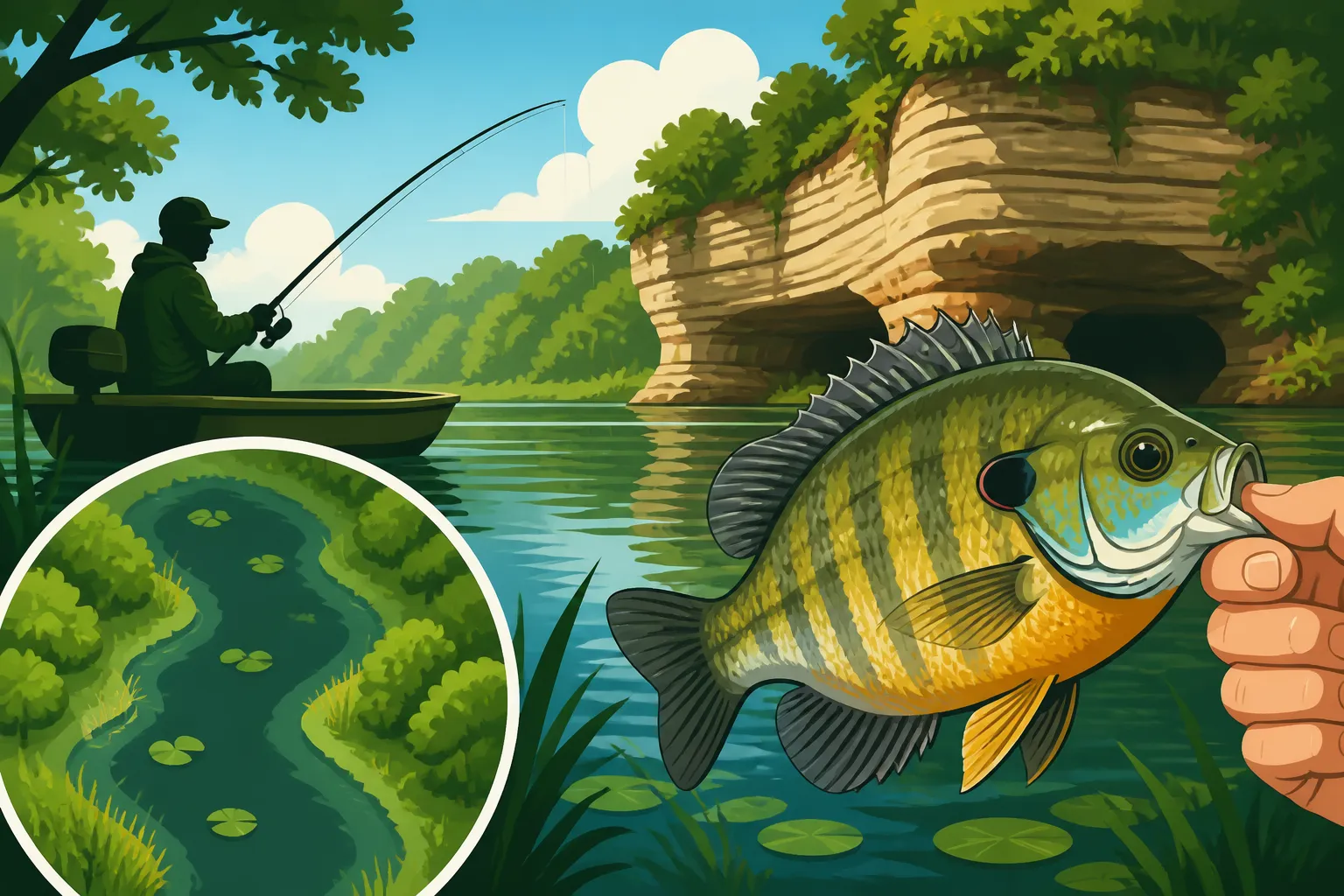
The Illinois River, like many large river systems, isn't just a single flowing channel. It's a complex network of channels, oxbows, sloughs, small lakes, and flooded timber. These interconnected waters form what we call "backwaters." These areas are often shallower, have less current, and are rich in aquatic vegetation – think lily pads, submerged grasses, and fallen trees. This environment is absolutely perfect for bluegill. The reduced current means they don't have to expend as much energy fighting the flow, and the abundant vegetation provides both cover from predators (like bigger bass and northern pike) and a smorgasbord of food. They can graze on insects, larvae, small crustaceans, and even tiny fish hiding among the plants. It's their ideal nursery and feeding ground, making them prime targets for anglers looking to fill a cooler or just enjoy consistent action.
Moreover, these backwaters often benefit from the river's flood cycles. When the Illinois River rises, it deposits nutrient-rich silt into these areas, further fueling the growth of vegetation and the microscopic life that forms the base of the food chain. This constant renewal keeps the ecosystem vibrant and productive, often leading to healthier, larger bluegill than you might find in less dynamic environments. It's a natural cycle that helps sustain the bluegill populations year after year, offering consistent opportunities for those who know where to look.
Ideal Conditions for Bluegill Growth and Spawning
Bluegill are prolific spawners, and the backwaters near Starved Rock provide precisely the kind of habitat they need for successful reproduction and robust growth. They prefer shallow, clear water with a soft bottom where they can fan out their nests. The calmer, sun-warmed waters of the backwaters are perfect for this, typically reaching optimal spawning temperatures faster than the deeper, more turbulent main river channel. You'll often find bluegill nests clustered together in sandy or gravelly patches surrounded by aquatic plants in water ranging from one to five feet deep.
The abundance of food also contributes significantly to their growth. With a steady diet of insects, snails, and small minnows, bluegill can reach impressive sizes in these fertile waters. While a foot-long bluegill is rare anywhere, catching plenty of 7-9 inch "hand-sized" bluegill is definitely within reach in these productive backwaters. The protective cover of the vegetation means more young fish survive to maturity, leading to higher population densities. If you understand these patterns, you can time your trips to coincide with peak feeding or spawning activity, leading to some truly memorable days on the water. For a broader understanding of how these factors affect fishing throughout the year, checking an Illinois Fishing Seasons Guide can be incredibly helpful.
Unlocking Prime Bluegill Haunts Near Starved Rock
While the main tourist areas around Starved Rock State Park can be busy, the diligent angler knows that just a short paddle or hike can lead to some truly incredible bluegill fishing in the surrounding backwaters. It's all about knowing where to look and, crucially, how to get there safely and respectfully.
Accessing Designated Backwater Fishing Areas
One of the best ways to explore the bluegill-rich backwaters is by utilizing areas specifically managed for public access. Near Starved Rock, the expansive Illinois River system offers numerous public boat ramps and access points that can get you close to these quieter channels and sloughs. For instance, the public ramps in cities like Ottawa or Peru provide access to the main Illinois River, from which you can then navigate into the slower-moving tributaries and backwater ponds. Many anglers use smaller boats, kayaks, or even canoes to gain access, as these vessels allow you to slip into shallow areas that larger boats can't reach.
A fantastic example of a productive backwater area is the back channels and sloughs around Buffalo Rock State Park, just a short drive from Starved Rock. Here, the river sprawls out, creating numerous pockets of calmer water that are often choked with vegetation – ideal bluegill habitat. You can often find small pull-offs or designated parking for kayaks and canoes that allow for easy put-in. Similarly, access points along the I&M Canal near towns like Utica or Marseilles can lead to smaller, more isolated ponds and slow-moving stretches that connect to the river system during higher water. Always check local signage, however, as access rules can vary. When planning your trip, consider using a platform like FishingBooker to explore local guides who specialize in these specific backwater areas; they often have unparalleled knowledge of the best access points and honey holes.
Hidden Gems: Lesser-Known Spots and Their Challenges
Beyond the more obvious access points, there are numerous smaller, often unnamed backwater ponds and sloughs that savvy local anglers target. These spots might require a bit more effort to reach, perhaps involving a longer walk-in or navigating through thick brush, but the reward is often less pressured fish and a sense of true wilderness. Many of these are remnants of old river channels, now largely cut off from the main flow except during flood stages, making them incredibly stable and productive environments for panfish.
One such area might be found by simply looking at satellite maps of the Illinois River floodplain. East of Starved Rock, towards Marseilles, there are extensive lowland areas that, when flooded, create temporary or semi-permanent backwaters. These "ephemeral" spots can be incredible right after a flood subsides and the water level stabilizes, trapping fish. The challenge, of course, is that they are harder to predict and may not always be accessible. You might encounter muddy trails, dense vegetation, or even private property issues, which means scouting ahead is essential. Always respect private land postings and ensure you're only fishing in public waters. Identifying these true "hidden gems" often comes down to local knowledge, time spent exploring, and a willingness to embrace the adventure of discovery. Remember to confirm your Illinois Fishing License Guide for 2026 to ensure you're always fishing legally, no matter how remote the spot.
Navigating the Illinois River System Safely
While the backwaters offer tranquility, accessing them often involves navigating parts of the Illinois River itself, which can be a busy and challenging waterway. Safety should always be your top priority. The Illinois River sees significant barge traffic, and these large vessels create powerful wakes that can easily capsize smaller craft, especially kayaks or canoes. Always be aware of your surroundings, look upstream and downstream for approaching traffic, and try to stay close to the shoreline or in very shallow areas when barges are present.
Weather can also change quickly in Illinois. A calm morning can turn into a windy afternoon with choppy waters, especially on the wider sections of the main river. Always check the forecast before you head out, and be prepared to cut your trip short if conditions deteriorate. Carrying appropriate safety gear, including a whistle, a visible flag, and properly fitting life jackets, is non-negotiable. Even in seemingly calm backwaters, having a PFD is crucial – especially if you plan to get out of your boat and wade. Understanding Illinois Life Jacket and PFD Rules is fundamental for any boater. The currents, even in back channels, can be stronger than they appear, and underwater obstacles like submerged logs or old fencing can pose hazards.
Mastering the Art of Backwater Bluegill Fishing
Bluegill are often considered a beginner's fish, and while they can be easy to catch, consistently pulling in those larger, hand-sized fish from backwater environments takes a bit more finesse and understanding of their habits. The right techniques and bait can make all the difference between a few nibbles and a full stringer.
Effective Rigs for Backwater Bluegill
For backwater bluegill, simplicity is often the key to success. The most common and effective rig is a classic slip bobber setup. This allows you to easily adjust your bait depth, which is crucial in backwaters where depths can change rapidly or fish might be suspended at different levels around vegetation. A small, sensitive bobber (like a Thill Shy Bite or a simple round slip bobber) paired with a tiny split shot weight (usually just one or two BB-sized shots) and a small hook (size 8 or 10 Aberdeen or baitholder hook) is perfect. The light weight ensures a natural fall of the bait, which bluegill prefer.
Another highly effective rig, especially when bluegill are tight to cover or on the bottom, is a tightlining or drop-shot setup with a very light jig. Instead of a bobber, you use a small jig head (1/32 to 1/16 ounce) with a small plastic grub or piece of bait. This allows you to feel subtle bites directly and work your bait precisely along submerged logs or weed lines. For those fishing from the bank, a simple cast-and-retrieve with a small spinner or jig can also be productive, but for targeting specific pockets in the weeds, a bobber or tightline rig offers more control. For more in-depth setup ideas, take a look at the Best Beginner Bluegill Fishing Setup.
Seasonal Bait Selection for Consistent Bites
The best bait for backwater bluegill can vary slightly with the seasons, but some classics nearly always produce.
- Spring: As water temperatures rise and bluegill move into shallower areas for spawning, live bait like red worms, wax worms, or mealworms are absolutely deadly. Their natural wiggling action is irresistible to hungry bluegill. Small jigs tipped with these live baits are also incredibly effective. During the early spring, small bits of corn or bread can even work if fish are very active.
- Summer: During the heat of summer, bluegill remain active but might seek slightly deeper, shadier pockets within the backwaters. While live worms still work, switching to small crickets or grasshoppers can sometimes trigger more aggressive bites. Artificial micro-jigs (1/64 to 1/32 ounce) in bright colors like chartreuse, pink, or white, tipped with a small plastic tail, are also excellent for covering water and enticing bites when bluegill are chasing small insects.
- Fall: As water cools, bluegill might move out of the very shallowest areas but will still be concentrated around cover, feeding heavily before winter. Live bait remains king, with minnows (tiny ones, around 1-2 inches) sometimes being preferred, especially by larger bluegill. Small soft plastics on jig heads imitating baitfish or aquatic insects will also work well.
The key is to pay attention to what the fish are telling you and be willing to experiment. Sometimes, a subtle change in color or size can make all the difference. For more detailed insights on what to use when, consider consulting a Seasonal Bait Selection Guide.
| Season | Primary Live Bait Options | Primary Artificial Lure Options | Typical Presentation |
|---|---|---|---|
| Spring | Red worms, wax worms, mealworms | Small jigs (1/32 oz) with plastic grubs | Under a slip bobber or tightline |
| Summer | Crickets, grasshoppers, small worms | Micro-jigs (1/64 oz), tiny spinners | Suspended near cover, slow retrieve |
| Fall | Small minnows, red worms | Small jigs with plastic tails, tiny crankbaits | Slowly worked near deeper cover |
| Winter | Wax worms, spikes | Ice jigs with plastics | Vertical jigging through ice (if accessible) |
Gear Recommendations for Light Tackle Fun
Bluegill fishing is best enjoyed with light tackle, which amplifies the fight and makes even a small panfish feel like a trophy. A light or ultralight spinning rod, typically 5 to 6 feet long, paired with a small spinning reel (size 500 to 1000) spooled with 2 to 4-pound monofilament or fluorocarbon line, is the perfect setup. This light line allows for longer, more accurate casts of tiny baits and lures, and it’s virtually invisible to wary bluegill. The sensitive rod tip will help you detect those incredibly subtle bluegill bites, which often feel like just a slight tap or a momentary cessation of the line's movement.
You'll also want a small tackle box stocked with a variety of hooks (sizes 8-12), split shot weights, bobbers (slip and fixed), and a selection of small jigs and plastic grubs. A pair of small needle-nose pliers or a hook remover is invaluable for safely unhooking fish. Don't forget a small cooler or stringer if you plan to keep your catch, and comfortable, waterproof footwear is a must for navigating potentially muddy backwater banks. Investing in quality, yet affordable, gear for this type of fishing will greatly enhance your enjoyment and success.
Ensuring a Rewarding and Responsible Bluegill Adventure
Fishing in the beautiful backwaters near Starved Rock offers a chance to connect with nature and enjoy fantastic bluegill action. To ensure these experiences continue for everyone, it's vital to approach your trips with knowledge, preparation, and a strong sense of responsibility.
Reading the Water and Weather Patterns
Bluegill activity is heavily influenced by water conditions and weather. In backwaters, the clearer and calmer the water, the more wary bluegill can be, often hiding deep in vegetation. Overcast days or periods just before a rain front often see bluegill becoming more active and venturing out from cover, as the reduced light makes them feel safer. After heavy rains, the backwaters can become muddy and stirred up, making fishing more challenging as bluegill's sight-feeding ability is hampered. It's often best to wait a day or two after a significant downpour for the water to settle and clear.
Water temperature is another critical factor. Bluegill are cool-water fish, and they become most active when water temperatures are between 65-75 degrees Fahrenheit. This typically aligns with late spring and early summer, which are prime times for backwater bluegill. In cooler months, they will seek deeper pockets, and in the peak of summer, they might move into shadier, oxygen-rich areas. Understanding these nuances will help you predict where the fish will be and what they'll be doing, significantly increasing your chances of success. For broader understanding of fish activity, consulting a Water Temperature and Fish Activity Guide is highly recommended.
Respecting Private Property and Conservation
While the Illinois River system has extensive public access, many backwater areas are adjacent to or entirely composed of private property. It is absolutely crucial to be aware of your surroundings and respect all "No Trespassing" signs. Fishing from a boat in navigable waters is generally allowed, but setting foot on private land without permission is not. Always consult local maps and signage. When in doubt, err on the side of caution or seek clarification from local authorities or conservation officers.
Conservation is paramount to preserving these valuable fishing resources. Practice catch-and-release with larger bluegill, especially those breeding-size fish that contribute to future populations. If you choose to keep fish for a meal, adhere strictly to Illinois Fishing Regulations Overview regarding daily limits. Never litter, pack out everything you pack in, and avoid damaging aquatic vegetation unnecessarily. These backwater areas are fragile ecosystems, and it's up to us to protect them. Taking these steps ensures that the backwaters near Starved Rock remain healthy and productive for generations of anglers to come.
Planning Your Trip: Logistics and Local Resources
A well-planned trip is a successful and enjoyable trip. Before you head out, do a little homework. Check the Illinois Department of Natural Resources (IDNR) website for the latest fishing reports and any site-specific regulations for the Starved Rock area or nearby public lands. They often provide valuable information on water levels, recent stockings, and general fish activity. You can also visit local bait and tackle shops in towns like Ottawa or Peru. These shops are often treasure troves of hyper-local knowledge, offering advice on current hot spots, bait preferences, and specific backwater conditions. They can often tell you if there are any specific local restrictions or considerations that might not be widely published.
Consider using online mapping tools, even Google Earth, to scout potential backwater access points and identify areas of dense vegetation or calmer water that look promising. If you're new to the area or prefer guided experiences, consider booking a trip through services like FishingBooker, which lists local guides specializing in Illinois River panfish. They can provide not only the knowledge but also the necessary equipment and a safe, productive experience. Remember that these backwaters can be deceptively remote, so always inform someone of your float plan, including where you're going and when you expect to return. Being prepared is the best way to ensure a safe and memorable bluegill fishing adventure near Starved Rock.
Disclaimer
The information provided in this guide is for general informational purposes only and is subject to change. Always consult the official Illinois Department of Natural Resources (IDNR) regulations and local signage before fishing, as rules and conditions can vary and be updated frequently. Fishing involves inherent risks; always prioritize safety and adhere to all local, state, and federal laws.