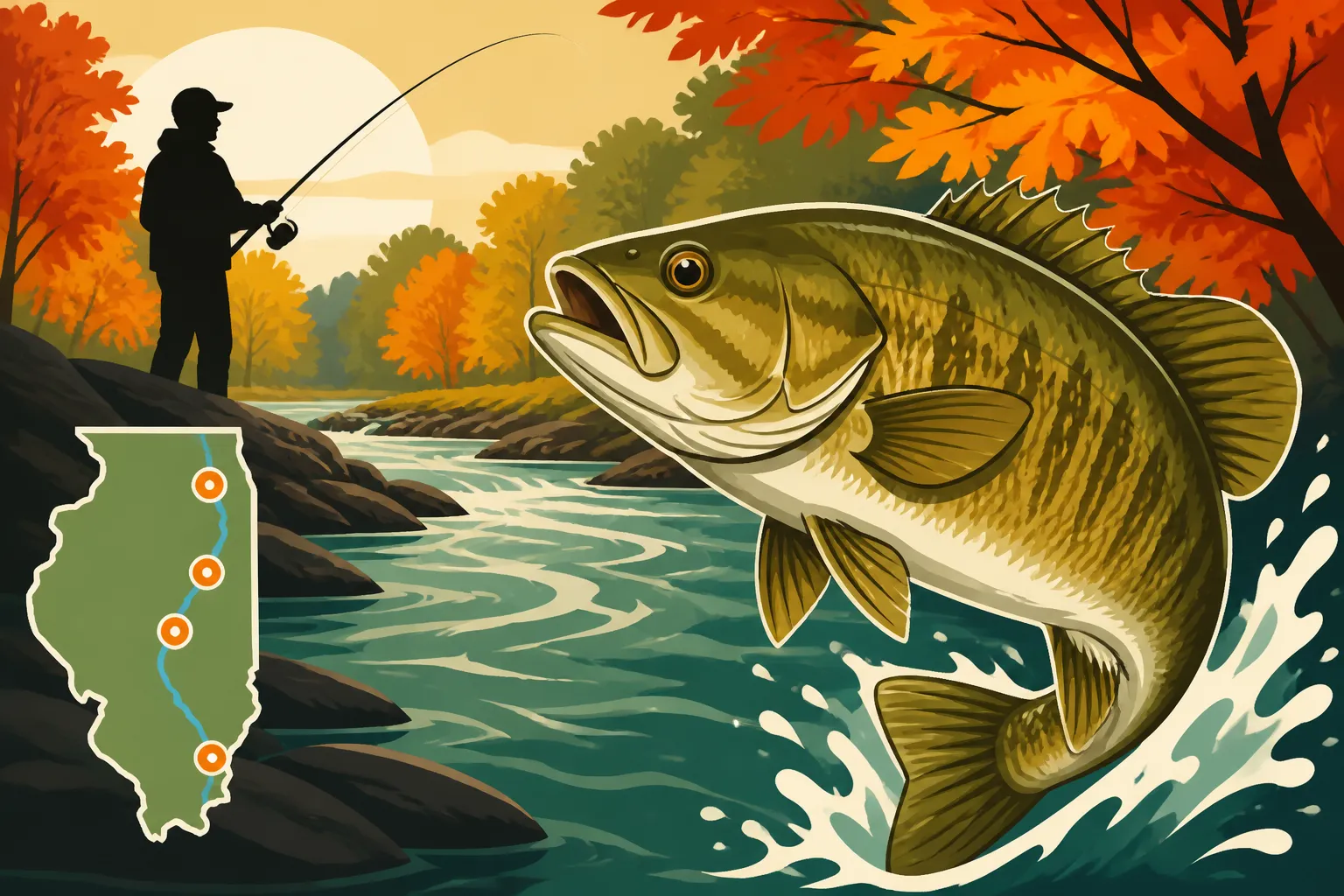
Kankakee River’s Best Spots for Smallmouth in Fall
Navigating the Kankakee River for fall smallmouth bass can feel like cracking a secret code. Just when you think you've got them figured out from the summer months, the cooling water and changing weather patterns send these bronze beauties into new holding patterns and completely different feeding frenzies – or sometimes, frustrating lockjaw. It’s enough to make you scratch your head and wonder where they all went! But don't despair; this comprehensive guide is here to demystify fall smallmouth fishing on the Kankakee, sharing the best spots and proven techniques to ensure your autumn adventures are filled with plenty of memorable catches.
Understanding the Kankakee River's Fall Smallmouth Fishery
The Kankakee River, with its clear waters, rocky bottom, and diverse current, is a prime smallmouth bass fishery, and fall brings a unique set of circumstances that both challenge and reward anglers. Forget the frenetic topwater action of summer; fall demands a more nuanced approach, but the payoff can be truly spectacular, often yielding some of the biggest smallmouth of the year.
Why Fall is Prime Time for Smallmouth
Many anglers overlook fall, thinking the season is winding down, but for smallmouth bass, it's often a period of intense activity known as the "fall turnover" or "fall feed." As water temperatures begin to drop from their summer highs, smallmouth get a crucial signal: winter is coming. This triggers a physiological response where they need to pack on calories to sustain themselves through the leaner, colder months ahead. They become more aggressive, actively hunting down baitfish and crayfish.
The cooling water also has another major benefit: it concentrates the fish. Unlike the scattered patterns of summer, fall smallmouth tend to gather in specific areas, often in deeper pockets, current breaks, or around significant structure where food is plentiful and they can ambush prey with less effort. This makes them more predictable once you locate them. Plus, the decreasing boat traffic on the river means less disturbance and a more peaceful fishing experience for you. It’s a completely different vibe than the busy summer months, and for many, it's the most enjoyable time to be on the water. While Illinois Bass Spawn Timing Guide focuses on spring, fall is equally critical for a different biological imperative – survival.
Reading the River: Current, Structure, and Water Levels
To consistently find smallmouth in the fall, you need to become a skilled river reader. The Kankakee's character is defined by its current, its rocky bottom, and its ever-changing water levels. Each of these elements plays a vital role in where smallmouth choose to reside.
Current: Smallmouth bass are powerhouses that thrive in current. In the fall, they'll often position themselves in current seams, behind large boulders, or in eddies where they can hold with minimal effort while waiting for baitfish to be swept past. The key is to find the "slack water" adjacent to the faster current. Think of it like a buffet line for fish – they want to be close to the food source (the current bringing prey) but not directly in the exhausting flow. Look for visible current breaks, especially around bridge pilings, downed trees, and significant rock formations.
Structure: The Kankakee River is renowned for its rocky bottom, and this is exactly what fall smallmouth love. Rock piles, ledges, submerged boulders, and gravel beds all provide ambush points and foraging grounds. As the water cools, smallmouth often gravitate towards deeper rock formations or areas with varied bottom composition. Don't overlook submerged timber either; a sunken logjam can be a smallmouth magnet. The more complex the structure, the more likely it is to hold fish. If you're familiar with the Illinois River Fishing Guide, you'll notice many similar principles apply here regarding structure and current.
Water Levels: Fall water levels on the Kankakee can fluctuate dramatically due to rainfall or lack thereof. It's crucial to check the USGS gauge data for the Kankakee River before you head out.
- Higher Water: Elevated water levels can push fish into flooded vegetation or shallow, submerged cover along the banks. It might also increase the current, making fish seek out stronger current breaks.
- Lower Water: Conversely, very low water levels can concentrate fish into deeper pools, bends, and the main river channel. Access points for wading might become easier, but fish might be more pressured and finicky.
Understanding how these levels impact fish behavior is critical for planning your approach.
Top Kankakee River Spots for Fall Smallmouth
The Kankakee River offers numerous fantastic spots for smallmouth bass, but in the fall, certain areas shine brighter due to their unique features. Focusing your efforts on these prime locations will significantly increase your chances of success. When planning a trip, remember to check the overall Best Fishing Spots in Illinois for broader insights, but for dedicated smallmouth, the Kankakee stands out.
Kankakee Dam and Below
The area immediately below the Kankakee Dam in the city of Kankakee is an absolute magnet for smallmouth bass, especially in the fall. This man-made structure creates a constant, oxygen-rich current that attracts baitfish, which in turn brings in the predatory smallmouth. The turbulence and deep scour holes carved out by the rushing water provide ideal holding areas.
This stretch is accessible from public parks and walking paths, offering excellent bank fishing opportunities. You'll want to focus your casts near the turbulent water, targeting any visible rock piles, eddies, or current seams. Be aware that the currents here can be exceptionally strong, so exercise extreme caution, especially if you're wading. The fish can be concentrated in specific pockets, so fan casting and systematically working an area can be very productive. If you're looking for an advantage and want to hit the water with a seasoned local who knows every rock and current break, you might consider booking a guided trip. Services like FishingBooker often list experienced Kankakee River guides who specialize in these prime spots and can put you right on the fish, teaching you the local nuances.
Kankakee River State Park Stretches
Kankakee River State Park offers miles of diverse river habitat, making it an incredible destination for fall smallmouth. This sprawling park, stretching from west of Kankakee through areas like Aroma Park and Bourbonnais, provides ample shoreline access and a variety of fishing conditions, often with less pressure than urbanized sections.
Within the park, look for areas around Rock Creek and the numerous islands, such as Langham Island. These areas are characterized by a mix of riffles (shallow, fast-moving water), runs (deeper, smoother current), and deep pools. The river's rocky bottom is very prominent here, creating endless ambush points. Significant rock formations, underwater ledges, and fallen timber are all high-percentage targets.
This section of the river is particularly excellent for wading anglers. Be sure to wear appropriate waders and wading boots with good grip, as the rocks can be slippery. Take your time, move slowly, and observe the water for signs of current breaks or deeper pockets. The smallmouth here are wild and can be quite aggressive. For a deeper dive into this specific location, checking out a comprehensive Kankakee River Fishing Guide in Illinois would be a smart move, as it often details specific access points and seasonal tips for the park.
Wilmington and Braidwood Area
Further downstream, as the Kankakee River approaches Wilmington and the Braidwood area, the river's character shifts slightly. It often widens in places, but still maintains its rocky integrity and excellent smallmouth habitat. This section is generally more amenable to boat fishing, though there are certainly shore access points as well.
Key areas to target include the mouths of any incoming tributaries or creeks, which can bring in cooler, oxygenated water and concentrated baitfish. Old bridge pilings or remnants of structures are also prime smallmouth real estate, as they create current breaks and deep pockets. Look for rocky shorelines that transition into deeper channels. The nearby Des Plaines River also feeds into this system, creating complex current patterns and confluence zones that can hold significant numbers of smallmouth.
For boat anglers, a good depth finder is invaluable here to locate submerged structure and channel edges. Shore anglers can find success at public access points like the Wilmington Island Park, where you can often reach good water with long casts. While targeting smallmouth, don't be surprised if you hook into other species like channel catfish, as these areas can be quite productive for multiple fish species. This broader section of the river offers a different kind of fishing experience, often appealing to anglers who prefer a bit more space.
Essential Techniques and Baits for Fall Smallmouth on the Kankakee
Fall smallmouth can be both voracious and finicky, often depending on the day's weather and water conditions. Adapting your techniques and bait selection to the cooling water is crucial for consistent success on the Kankakee.
Cold Water Lure Selection
As the water temperature drops, smallmouth bass often prefer slower, more subtle presentations, but they're still looking for a substantial meal.
- Jigs: These are autumn smallmouth staples. Small hair jigs (1/8 to 1/4 ounce) in natural colors like brown, olive, or black can be incredibly effective when slowly dragged or hopped along the bottom. Tube jigs in green pumpkin, black, or natural craw patterns, rigged on an internal jig head, are also deadly. The classic Ned rig, with its mushroom-shaped head and short, buoyant worm, is another fantastic option for a subtle presentation.
- Crankbaits: Early in the fall, when water temperatures are still moderately cool, deep-diving crankbaits in crawfish or baitfish patterns can trigger aggressive strikes. Look for baits that dive to the depth where you're seeing fish. The key is to make them deflect off rocks or structure, mimicking a fleeing or injured baitfish.
- Blade Baits: Lures like the Heddon Sonar or similar vibrating blade baits are fantastic for fall smallmouth. Their tight wobble and flash perfectly imitate dying baitfish, and the vibrations can call in fish from a distance. A lift-and-drop retrieve is often most effective.
- Soft Plastics: Beyond tubes and Ned rigs, grubs rigged on jig heads (especially paddle-tail grubs) and drop-shot worms can be very effective for finicky fish. Finesse techniques often shine when the bite gets tough. For more insights on lure selection, consider exploring guides like Best Bass Lures for Clear Water, as the Kankakee often runs clear in fall.
- Live Bait: When all else fails, live bait can be a game-changer. Minnows, shiners, or local crayfish are incredibly enticing to fall smallmouth. Rig them on a simple hook with a split shot or under a bobber and let the current do the work near prime structure. If you’re ever unsure about local conditions or bait, a quick chat with a local bait shop owner or even browsing for Kankakee River fishing reports on FishingBooker can provide invaluable real-time information.
Presentation Strategies for Finicky Biters
The most common mistake anglers make in the fall is retrieving their lures too quickly. Smallmouth metabolism slows down with the colder water, so they often prefer a meal that doesn't require a lot of energy to catch.
- Slow Down, Then Slow Down More: This cannot be stressed enough. Let your jigs and soft plastics sit on the bottom for extended periods. Work crankbaits with long pauses. Sometimes, the fish will hit a lure that's completely stopped.
- Target Cover Precisely: Smallmouth in fall will often be tightly associated with cover. Cast beyond your target structure and retrieve your bait so it comes into contact with or passes directly by the ambush point. Bumping a crankbait off a rock or letting a jig fall into a deep seam can be the trigger.
- Vary Retrieve: While slowing down is key, don't be afraid to experiment. Sometimes a subtle twitch, a longer pause, or an unexpected jerk can provoke a reaction strike from a hesitant smallmouth. Pay close attention to what the fish are telling you.
- Stealth and Light Line: In the Kankakee's clear fall waters, smallmouth can be spooky. Approach your fishing spots quietly, especially if wading or bank fishing. Consider using lighter line and fluorocarbon leaders to make your presentation less visible.
- Understand Cold Water Behavior: Smallmouth bass in cold water are less likely to chase. They want an easy meal. This means presenting your bait directly to them and making it look irresistible. For a deep dive into specific tactics, refer to our guide on How to Catch Bass in Cold Water.
Here’s a quick overview of our top Kankakee River fall smallmouth spots and recommended tactics:
| Kankakee River Fall Smallmouth Spot | Key Features | Best Fall Techniques | Notes |
|---|---|---|---|
| Kankakee Dam Below | Strong, oxygenated current; deep scour holes; rocky bottom | Heavy jigs (1/4-1/2 oz), blade baits, large live minnows | Exercise extreme caution due to powerful currents; focus on current seams and eddies |
| Kankakee River State Park | Diverse habitat: riffles, runs, deep pools, extensive rocky banks | Lighter jigs (1/8-1/4 oz), tube baits, small crankbaits (slow retrieve) | Excellent for wading; explore varied stretches; look for transition zones |
| Wilmington/Braidwood Area | Wider river sections, creek mouths, bridge pilings, deeper channels | Deep-diving crankbaits, soft plastics (Texas/Carolina rigs), heavier jigs | Boat access often beneficial; target submerged structure and tributary confluences |
Fall smallmouth fishing on the Kankakee River is a rewarding experience that demands patience, observation, and a willingness to adapt. By focusing on these key spots and refining your cold-water techniques, you'll be well-equipped to enjoy some incredible fishing and land some truly memorable bronzebacks before winter fully sets in. Remember to always check Illinois Fishing Regulations Overview before you head out, and consider options like the Illinois Resident Annual Fishing License Cost if you haven't already picked up your license for the year. Good luck, and tight lines!
Disclaimer
Fishing conditions and regulations in Illinois can change. Always consult the latest Illinois Department of Natural Resources (IDNR) regulations before fishing. This guide is for informational purposes only and does not guarantee fishing success or safety.