Walleye Fishing Season in Illinois
Trying to figure out the best time to chase walleye in Illinois can feel like solving a riddle. You hear about the spring spawn, then summer trolling, and then suddenly everyone's talking about a fall bite – it's enough to make your head spin and leave you wondering if you're ever truly fishing at the "right" time. But here's the good news: Illinois offers fantastic walleye opportunities almost year-round, if you know where to look and what tactics to employ. This guide is your comprehensive walkthrough to unlocking the secrets of walleye fishing season in Illinois, ensuring you're ready no matter what the calendar says.
Understanding the Walleye Season in Illinois: A Year-Round Pursuit
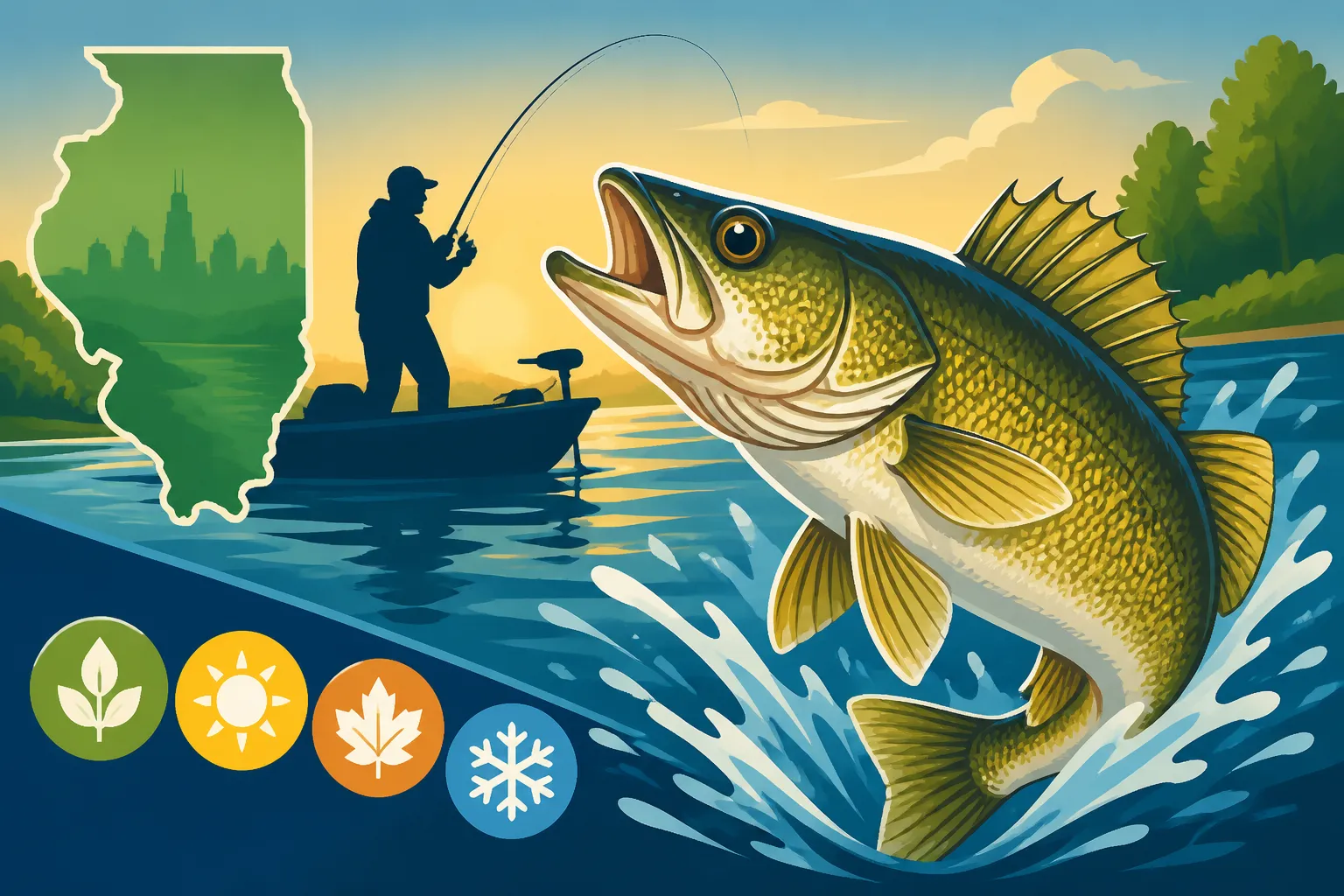
Many anglers mistakenly believe that there's a strict "walleye season" with specific start and end dates, much like hunting seasons. While there are definitely peak times for activity, especially around the spawn, the reality is that you can actively pursue walleye in Illinois waters throughout all four seasons. The fish are always there; it's our approach and understanding of their behavior that needs to adapt.
Why Walleye Are a Year-Round Target
Walleye are resilient and adaptable fish, capable of surviving and thriving in a wide range of water temperatures. Their metabolic rates simply change with the seasons, dictating where they hold, how aggressively they feed, and what baits they prefer. This means that instead of thinking about a "season" in terms of legality (though regulations are crucial, which we'll get to), it's more productive to think about it in terms of optimal activity periods and location shifts. The thrill of catching these toothy predators is a constant, whether you're battling them through a hole in the ice or in the sweltering heat of August.
Furthermore, unlike some species that might disappear completely from certain areas during parts of the year, walleye tend to simply move. They might shift from shallow spawning flats to deep main-lake humps, or from fast-moving river current breaks to slow backwater sloughs. A true walleye angler understands these migrations and adapts their strategy accordingly, making every month a potential "walleye season." The challenge isn't if they're biting, but where and how.
General Statewide Regulations to Keep in Mind
While walleye fishing is generally a year-round affair, Illinois does have important regulations that govern how many fish you can keep and what size they must be. These rules are put in place by the Illinois Department of Natural Resources (IDNR) to protect fish populations and ensure sustainable fishing for future generations. It's not about stopping you from fishing, but about managing the resource responsibly. For detailed information, it's always best to consult the official IDNR fishing guide, as regulations can change.
Generally, Illinois has a statewide daily creel limit for walleye, often set at six fish per person. There's also usually a minimum length limit, frequently around 14 inches, to ensure fish have a chance to spawn at least once before being harvested. However, here's where it gets tricky: many specific lakes and rivers have their own unique site-specific regulations that supersede the statewide rules. For example, some waters might have a 16-inch minimum or even slot limits (e.g., you can keep fish under 14 inches and over 18 inches, but must release those in between). Always double-check the signs at boat ramps or visit the IDNR website for the most current rules for your chosen fishing spot. Understanding these regulations is just as important as knowing where the fish are biting, and a fantastic resource is the article on Illinois Walleye Size and Catch Limits.
Spring Walleye Fishing: The Pre-Spawn and Spawn Frenzy
Ah, spring! The ice is melting, the days are getting longer, and for many walleye anglers, this is the most anticipated time of the year. Spring means increased activity as walleye shake off their winter lethargy and begin their annual spawning migration. It’s a period of intense feeding and then reproduction, offering distinct windows of opportunity for anglers who know how to capitalize on each phase.
Targeting Pre-Spawn Walleye in Cold Water
As winter transitions into spring, typically from late February through March, water temperatures begin their slow climb from the mid-30s into the mid-40s Fahrenheit. During this pre-spawn period, walleye are hungry and looking to bulk up before the energy-intensive spawning ritual. They’ll often congregate in deeper holes, current breaks, and river bends adjacent to their eventual spawning grounds. Think about areas with a good current that sweeps food past them, or deeper sections of lakes where they can hold comfortably before moving shallow.
Techniques for pre-spawn walleye often involve slow, deliberate presentations. Vertical jigging with heavy jigs (1/4 to 1/2 oz) tipped with a live minnow, or soft plastic paddle tails that imitate baitfish, can be deadly when fished directly under the boat. Slow trolling with deep-diving crankbaits that wobble aggressively can also entice strikes from lethargic fish. Baits like Rapala Shad Raps or Berkley Flicker Shads, in natural colors, are often effective. Look for them on your fish finder, often hugging the bottom or suspended just above structure. Patience is key, as bites can be subtle in the cold water. Remember, these fish are trying to conserve energy while still feeding.
The Peak of the Walleye Spawn
The true magic of spring walleye fishing happens when water temperatures climb into the 45-55°F range, usually late March through April, sometimes extending into early May in northern Illinois. This is when the walleye move onto their spawning grounds. In lakes, this means rocky shorelines, gravel beds, rip-rap along dams or causeways, and shallow main-lake points. In rivers, they'll seek out gravel bars, riffles, and current-swept shoals. They prefer hard bottoms where their eggs can settle and be oxygenated.
During the spawn, walleye can become incredibly aggressive, particularly the males, who arrive first and stick around longer. Casting jigs (1/8 to 1/4 oz) tipped with a lively minnow or a brightly colored soft plastic can be incredibly effective. Shallow-running crankbaits cast parallel to shorelines or across spawning flats can also trigger vicious strikes. It's a fast-paced bite when it's on, and anglers often experience multiple hookups. However, it's crucial to remember the purpose of this period: reproduction. Many anglers practice catch and release during the spawn to help sustain populations. If you do keep fish, always be mindful of local regulations.
Post-Spawn Recovery and Feeding Patterns
After the spawn, as water temperatures continue to rise into the 55-65°F range (late April through May), walleye enter a recovery phase. The males will linger on or near the spawning grounds for a bit, but the larger females often retreat to deeper water to recuperate. They're typically a bit lethargic and less aggressive immediately after spawning, having expended a lot of energy.
Finding these post-spawn walleye often means targeting areas adjacent to the spawning grounds, but in slightly deeper water. Look for drop-offs, points, and transition zones where hard bottom meets softer sediment. Slower presentations are often best. Jigging with live bait, like a fat nightcrawler or a lively leech, on a slip bobber or a classic jig-and-minnow presentation, can be very effective. Small crankbaits or spinner rigs with a worm harness can also entice bites when trolled slowly along contour lines. This is a time when walleye are still feeding heavily, but they might not chase a bait as far or as fast as they would in the pre-spawn or late fall. The key is presenting a slow, easy meal right in front of them.
Summer Walleye Strategies: Deeper Water and Night Bites
When the Illinois summer really kicks in, and the mercury soars, walleye move from their spring haunts to seek out cooler, more comfortable conditions. This often means deeper water and a shift in their feeding patterns. For anglers, it’s about understanding these migrations and adapting to the mid-day heat or embracing the tranquility of a night bite.
Locating Walleye in Warm Summer Waters
As water temperatures in Illinois lakes and rivers push past 65°F and into the 70s during June, July, and August, walleye will generally head for deeper, cooler, and often more oxygenated areas. In larger reservoirs like Lake Shelbyville Fishing Guide or Carlyle Lake Fishing Guide, this often means main lake basins, deep humps, offshore points, and along the thermocline (the layer where warm surface water meets cooler deep water). In rivers, they'll find deeper scour holes, current seams with nearby slack water, and the mouths of cooler tributaries. Using a good fish finder to locate these depth transitions and any suspended baitfish is absolutely critical. You can find some excellent sonar units on Amazon that will help you pinpoint these fish.
Trolling becomes a dominant technique in summer. Long-lining crankbaits that dive to specific depths, or using planer boards to spread out your lines and cover a wider area, are very effective. Crawler harnesses (spinner rigs tipped with a nightcrawler) trolled slowly are also a classic summer walleye catcher. For those who prefer to stay stationary, deep jigging with heavy jigs and live bait (especially leeches or large minnows) can be productive when you've pinpointed a school of fish. Slip bobber fishing with a leech or crawler over deeper brush piles or rock humps can also yield results, particularly in low light.
Capitalizing on the Night Bite
One of the most exciting and often productive times to target summer walleye in Illinois is after the sun goes down. As the intense heat of the day subsides, baitfish often move into shallower water, and the walleye follow. The low light conditions give walleye, with their superior low-light vision, a distinct advantage over their prey, making them much more aggressive feeders. This is especially true on clear-water lakes.
Night fishing techniques often involve casting shallow-running crankbaits or stickbaits over shallow flats, points, or weed edges where walleye will cruise to ambush bait. Slower retrieves are often best, letting the lure's action do the work. Slip bobber fishing with live bait (leeches or crawlers) set just above the weed tops or suspended over a deep flat can also be incredibly effective. Remember to bring headlamps or boat lights, bug spray, and all your safety gear when night fishing. A good quality waterproof headlamp found on Amazon can make all the difference for re-tying lines in the dark.
Hot Weather Walleye Challenges and Solutions
Fishing for walleye in the peak of summer heat comes with its own set of challenges, both for the angler and the fish. The scorching sun can make for uncomfortable fishing, and high water temperatures can stress fish, especially if they are handled improperly after being caught. Understanding these challenges can lead to more successful and responsible fishing trips.
To combat the heat, wise anglers often fish during the cooler parts of the day: early mornings just after sunrise, late evenings into dusk, or fully embrace the night bite. During mid-day, walleye will often retreat to the deepest, darkest, and coolest pockets they can find, sometimes even suspending in the thermocline. For anglers, staying hydrated, wearing sun-protective clothing, and using sunscreen are paramount. For the fish, practicing good catch and release is essential. Minimize handling time, use wet hands, and release fish quickly and gently, especially if you're not planning to keep them for dinner. If you are keeping fish, get them into an iced cooler or a well-aerated livewell immediately.
Fall Walleye Fishing: The Pre-Winter Feast
As summer heat gives way to crisp autumn air, Illinois walleye enter another prime feeding period – often considered by many to be the best time of year for trophy fish. Just like in spring, they’re motivated by a biological imperative, but this time it's to gorge themselves and build up fat reserves for the lean winter months ahead. This aggressive feeding behavior offers fantastic opportunities for anglers.
The Autumn Feeding Frenzy
From September through November, as water temperatures steadily decline from the 60s into the low 40s, walleye ramp up their feeding activity dramatically. They become incredibly aggressive, chasing down schools of baitfish that are also fattening up. Walleye will be found in a variety of locations, often following baitfish into shallower bays during low light conditions, but retreating to deeper main lake points, breaks, and humps during the day. Areas where creek channels or old riverbeds intersect main lake points are classic fall hotspots.
This is a fantastic time for aggressive presentations. Trolling with large crankbaits that mimic shad or perch is highly effective, as walleye are looking for substantial meals. Casting large stickbaits or lipless crankbaits into shallow pockets or over main lake points can also trigger violent strikes. Jigging spoons or blade baits dropped directly onto schools of fish or worked along break lines can also be deadly. Don't be afraid to experiment with bigger baits than you might use in spring or summer; these fish are hungry and aren't shy about attacking a larger offering.
River Walleye Migrations in Fall
Fall also marks a significant migration for many walleye populations, particularly those living in large reservoirs or the Mississippi River system. As temperatures drop and river flows stabilize, walleye will begin to stage in river sections or tributary mouths, moving toward their wintering grounds and eventual spring spawning areas. This makes rivers like the Illinois River Fishing Guide and the Mississippi River Walleye and Pike Fishing in Northern Illinois absolute hotspots during the fall.
Anglers targeting river walleye in the fall should focus on current seams, deeper holes, and sharp bends where fish can hold out of the main current but still ambush passing bait. Vertical jigging with heavy jigs (often 1/2 to 3/4 oz, depending on current) tipped with a minnow or soft plastic is a go-to technique. Three-way rigs with a minnow or nightcrawler presented just off the bottom can also be highly effective, allowing you to present bait in strong currents without getting snagged. Look for subtle changes in current speed or depth, as these are often where walleye will stack up.
Late Fall Deep Water Patterns
As fall progresses into late November and early December, and water temperatures dip into the low 40s, walleye will move to their deepest wintering holes. They'll often concentrate in large schools in the deepest sections of lakes or river channels, where water temperatures are more stable. While their metabolism slows, they still need to feed, albeit less frequently.
Fishing for late fall walleye requires patience and precise presentations. Slow vertical jigging with minnow-imitating jigs or spoons directly over the top of marked fish is key. "Dead sticking" a live minnow on a plain hook or small jig, holding it perfectly still or with only the slightest twitch, can often tempt these reluctant biters. This is a time when fewer anglers are out on the water, but those who brave the cold can be rewarded with some of the biggest walleye of the year. The fish are often fat and healthy, making for a memorable catch.
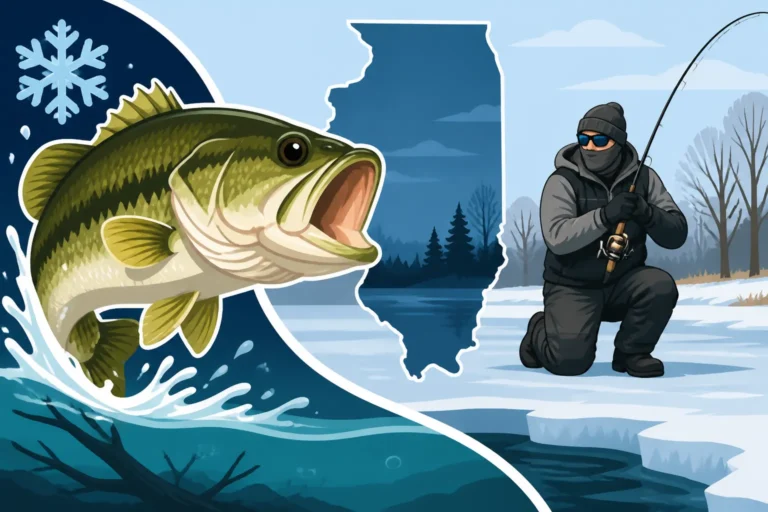
Winter Walleye Fishing: Ice and Open Water Opportunities
When most anglers are packing away their gear for the season, a dedicated few know that winter offers some unique and often very rewarding walleye fishing opportunities in Illinois. Whether it’s through a hole in the ice in the northern parts of the state or in the open waters of the Illinois River, the chance to land a winter walleye is a challenge worth pursuing.
Ice Fishing for Walleye in Illinois
In northern Illinois, once safe ice forms, typically from late December through February, ice fishing for walleye becomes a popular pastime. Lakes like Shabbona Lake, some sections of the Fox Chain O'Lakes, and various smaller bodies of water offer good opportunities. The key, of course, is safe ice—always check conditions and never venture out alone or onto questionable ice.
Walleye under the ice will often relate to main lake points, humps, sharp drop-offs, or the edges of deep weed lines. Early morning and late afternoon into dusk are often the most productive times, mirroring their open-water low-light preferences. Techniques include jigging spoons (like a Northland Buck-Shot Rattle Spoon or a VMC Tungsten Bucktail Jig) or rattle baits that create a lot of vibration to attract fish from a distance. Tip-ups set with a live minnow (shiner or golden shiner) suspended just off the bottom are also incredibly effective. Many anglers run a combination of jigging rods and tip-ups, covering different parts of the water column and different presentations.
Open Water Winter Walleye on Rivers
Even when most lakes are frozen solid, portions of larger Illinois rivers, particularly the Mississippi River and the Illinois River, often remain open due to current. These open-water sections provide excellent winter walleye fishing opportunities for anglers willing to brave the cold. Walleye in these river systems will concentrate in the deepest, slowest-moving holes they can find, often near current breaks, wing dams, or submerged structure.
Techniques for open-water winter river walleye are similar to late fall strategies but often even slower. Vertical jigging directly over deep holes with heavy jigs tipped with minnows or soft plastics is paramount. Slow trolling with deep-diving crankbaits or three-way rigs can also be effective, especially if you can cover areas where walleye are staging in slightly more current. Look for subtle current seams where walleye can rest out of the main flow but dart out to ambush bait. A good depth finder is invaluable for locating these fish and the structure they hold to. Remember to layer up with warm clothing, as cold river winds can be brutal.
Dealing with Cold Weather and Slow Bites
Winter walleye fishing, whether on ice or open water, demands a specific mindset: patience and persistence. The fish's metabolism is at its slowest, meaning they don't need to eat as frequently, and their bites can be incredibly subtle. Gone are the aggressive strikes of summer; winter bites often feel like a gentle tap or just added weight on the line.
To succeed, you must slow down your presentations dramatically. For jigging, this means minimal rod movement, often just a slight lift and fall, or simply holding the bait perfectly still (dead sticking). Experiment with pauses; sometimes, a walleye will only strike when the bait is completely motionless. For those using live bait on tip-ups or slip bobbers, ensuring the bait is lively but not frantically swimming is key. Proper cold-weather gear is non-negotiable – insulated clothing, waterproof boots, and good gloves are essential for comfort and safety. While challenging, landing a chunky winter walleye is a truly rewarding experience, proving your dedication to the sport.
Key Factors Influencing Walleye Success in Illinois
Walleye fishing success isn't just about showing up with a rod and reel; it's about understanding the intricate dance between the fish, their environment, and the seasonal changes. Several critical factors constantly influence where walleye are, what they're doing, and whether they're willing to bite. Paying attention to these elements will dramatically increase your chances of a successful outing.
Water Temperature and Depth
If there's one overarching factor that dictates walleye behavior, it's water temperature. Walleye are cold-blooded, so their metabolism, activity levels, and preferred locations are directly linked to the water temperature. As we've explored, they move shallow for the spawn (45-55°F), retreat to deeper, cooler water in summer (65°F+), and then chase bait aggressively in the cooling waters of fall (60-40°F).
Understanding the thermocline in deeper lakes is particularly crucial in summer. This is often where walleye will suspend, finding an optimal balance of temperature and oxygen. A good fish finder is your best friend here, not just for marking fish, but for identifying temperature breaks and depth contours. Walleye are often found relating to specific depths for extended periods, making depth control of your lure or bait essential. Too shallow, and you're above them; too deep, and you're below their strike zone.
Forage and Baitfish Presence
Walleye are predatory fish, and like all predators, they follow their food. The presence, type, and behavior of baitfish (such as shad, minnows, perch, and juvenile panfish) are huge indicators of where walleye will be concentrated. If you find the bait, you're likely to find the walleye not far behind. This is true in all seasons. In spring, walleye will stage near spawning areas of baitfish. In summer, they'll patrol deep schools of shad. In fall, they'll aggressively feed on the year's abundant baitfish.
Pay attention to what's in the water, even if you're not seeing walleye. Are there schools of baitfish on your sonar? Are there surface boils indicating baitfish activity? Do you see baitfish jumping near shore? Matching your lures and baits to the local forage is a highly effective strategy. If walleye are feeding on small shad, a silver crankbait or a soft plastic swimbait that mimics a shad will likely be more effective than a bright, worm-imitating jig. Many anglers buy a variety of bait types on Amazon to have options for various forage scenarios.
Weather, Current, and Structure
Beyond temperature and forage, several environmental factors play a significant role. Weather fronts, for instance, can drastically alter fish behavior. Cold fronts often shut down the bite, making fish lethargic and less willing to chase. High pressure can make fish hug the bottom, while approaching low pressure (before a storm) can sometimes trigger an aggressive bite. Wind, too, can be your friend or foe, concentrating baitfish and pushing them into specific areas where walleye will follow, but also making boat control difficult.
In rivers, current is king. Walleye will position themselves strategically to conserve energy while still having easy access to passing food. Look for current breaks: behind wing dams, large rocks, bridge pilings, or in the seams where faster water meets slower water. These are prime ambush points. Finally, structure is paramount. Walleye are rarely found roaming aimlessly in open water; they relate to features on the bottom. Humps, points, drop-offs, ledges, submerged roadbeds, rock piles, and even healthy weed lines provide cover, ambush points, and concentration areas for baitfish. Learning to "read" these structures, whether on your sonar or through experience, is a skill that will serve you well in any season.
Essential Gear and Tackle for Illinois Walleye
Having the right tools for the job can make a world of difference when chasing Illinois walleye. While you don't need to break the bank, investing in quality gear tailored to walleye fishing will improve your effectiveness, sensitivity, and overall enjoyment on the water.
Rods, Reels, and Line Choices
For walleye, a versatile setup is often preferred, but specific situations might call for specialized gear. Most anglers find a medium-light to medium-heavy spinning rod between 6'6" and 7'6" to be ideal for jigging, casting, and slip bobber presentations. Look for a fast action tip for sensitivity to detect subtle bites, combined with enough backbone to set the hook and fight a strong fish. For trolling, especially with larger crankbaits or planer boards, a medium-heavy baitcasting setup with a longer, more moderate action rod (7'6" to 9'0") is often preferred for its ability to handle heavier lures and absorb the shock of a strike while trolling. You can find excellent walleye rods and reels from brands like St. Croix, Fenwick, and Shimano, often available through retailers like Amazon.
When it comes to line, many walleye anglers opt for braided line (10-20 lb test) as their main line due to its superior sensitivity and minimal stretch, allowing them to feel even the lightest tap. However, braid can be visible in clear water, so it's almost always paired with a 6-10 lb fluorocarbon leader. Fluorocarbon is nearly invisible underwater and offers excellent abrasion resistance against rocks and walleye teeth. Some anglers prefer a main line of monofilament for trolling due to its stretch, which can act as a shock absorber.
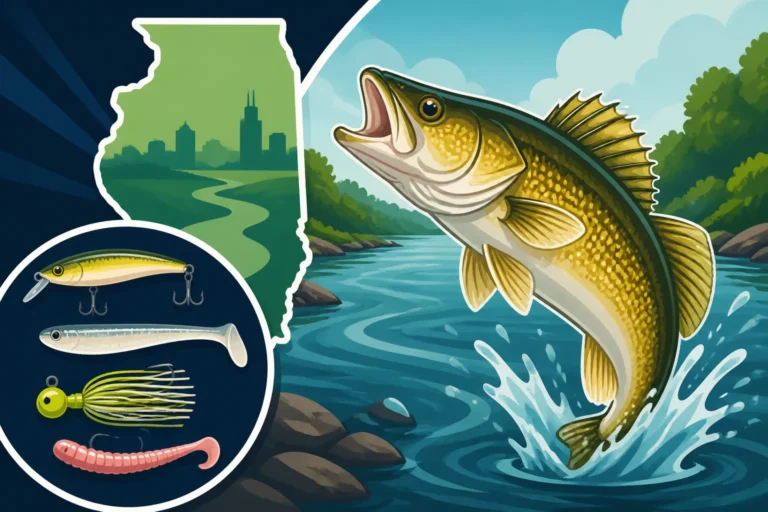
Top Walleye Baits and Lures
Walleye are not overly picky, but they do have preferences that change with the season and water conditions. Having a diverse tackle box is key.
- Live Bait: These are often irresistible.
- Minnows: Shiners, fatheads, or dace are classic walleye baits, especially for jigging or under a slip bobber in cold water.
- Leeches: A summer favorite, particularly effective on slip bobbers or crawler harnesses. They are incredibly tough and active.
- Nightcrawlers: Versatile for jigging, slip bobbers, or on a spinner harness for trolling. Their scent and action are hard to beat.
- Artificial Lures:
- Jigs: From small 1/8 oz lead heads with soft plastics for shallow spring walleye to heavy 3/4 oz jigs for deep river current or ice fishing, jigs are perhaps the most versatile walleye lure. Colors like chartreuse, white, orange, and purple are popular.
- Crankbaits: Deep-diving models (e.g., Rapala Deep Husky Jerks, Berkley Flicker Shad, Bandits) for trolling in summer, and shallow-running or lipless crankbaits for casting in spring and fall. Look for natural baitfish patterns as well as bright, attractor colors.
- Spinner Rigs/Crawler Harnesses: These are perfect for slow trolling or drifting with a nightcrawler in summer, creating flash and vibration.
- Blade Baits & Spoons: Excellent for vertical jigging in rivers, deep lakes, or through the ice. Their erratic fall and vibration are great for triggering reaction strikes.
Essential Accessories for Walleye Anglers
Beyond the basic rod, reel, and tackle, a few accessories can significantly enhance your walleye fishing experience.
- Fish Finder/GPS Combo: An absolute game-changer. It helps you locate structure, baitfish schools, and even individual walleye. The GPS function is invaluable for marking hotspots and navigating unfamiliar waters, especially on larger lakes like Rend Lake.
- Net: A good quality, rubberized landing net is crucial for safely landing walleye, protecting their slime coat, and preventing hook snags.
- Measuring Board: Essential for quickly and accurately measuring fish to ensure they meet legal length limits before releasing or keeping them.
- Pliers/Forceps: For easily and safely removing hooks from a walleye’s toothy mouth.
- Tackle Box/Bag: To keep your wide array of jigs, crankbaits, and other terminal tackle organized. You can find specialized tackle organizers on Amazon designed for specific lure types.
- Livewell/Cooler: If you plan to keep fish, a well-aerated livewell or a quality cooler with ice is vital for maintaining freshness.
- Navigation Lights/Headlamp: For early morning, late evening, or night fishing safety and visibility.
Respecting the Resource: Conservation and Regulations
As anglers, we have a responsibility to not only enjoy the amazing fishing opportunities Illinois offers but also to protect and preserve them for future generations. This means understanding and strictly adhering to regulations, practicing ethical catch-and-release, and contributing to overall conservation efforts. A well-managed fishery ensures that the "walleye season" remains open and productive year after year.
Understanding and Following Illinois Walleye Regulations
The Illinois Department of Natural Resources (IDNR) sets forth fishing regulations to maintain healthy fish populations. These rules cover everything from daily catch limits and minimum size requirements to special restrictions on specific bodies of water. For example, some lakes might have a 14-inch minimum for walleye, but a nearby river could have a 16-inch minimum or even a "slot limit" (e.g., you can keep fish under 14 inches and over 20 inches, but must release anything in between). It is absolutely vital to consult the current Illinois Fishing Regulations Overview every year, as rules can change. This information is typically available online on the IDNR website, at bait shops, or where you purchase your Illinois Fishing License Guide for 2026.
Failing to follow these regulations can lead to serious consequences. Getting caught with an undersized fish, over your daily limit, or fishing without the proper license can result in fines, confiscation of gear, and even loss of fishing privileges. These Penalties for Fishing Without a License in Illinois are not meant to be punitive but rather to underscore the importance of protecting the fishery. Game wardens are out there to enforce these rules and ensure fair play for everyone, so always have your license and be aware of the regulations for the specific water you are fishing.
Ethical Catch and Release Practices
While harvesting walleye for the table is certainly a part of the fishing experience, practicing ethical catch and release is equally important, especially for larger breeding-size fish or when fishing during sensitive times like the spawn. The goal is to minimize stress and injury to the fish, giving it the best chance of survival after release.
Here are some key practices:
- Minimize Fight Time: Bring the fish in as quickly as possible without "horsing" it.
- Use Proper Tools: Have a rubberized landing net ready. Avoid touching the fish with dry hands, as this removes their protective slime coat.
- Handle With Care: If you need to handle the fish, do so gently. Support its body horizontally, especially large fish, and avoid holding it vertically by the jaw only, which can damage internal organs.
- Quick Hook Removal: Use pliers or forceps to remove hooks quickly. If a fish is deeply hooked, especially in the gills, it might be better to cut the line as close to the hook as possible rather than tearing at its internal organs.
- Revive If Necessary: If a fish looks sluggish, hold it upright in the water, gently moving it back and forth to force water over its gills until it swims away under its own power.
- Know When to Keep: Be mindful of slot limits and your personal intentions. If you're going to keep fish, keep only what you will eat and consider releasing larger, older fish that are valuable breeders.
Contributing to Healthy Fisheries
Beyond individual actions, anglers can play a role in broader conservation efforts. One of the most direct ways is by simply purchasing your Illinois Fishing License Costs and Types. A significant portion of license fees directly funds fish stocking programs, habitat restoration projects, research, and enforcement by the IDNR. Without these funds, our fisheries would quickly decline. You can even buy your How to Buy an Illinois Fishing License Online to make it easy.
Furthermore, consider participating in angler surveys when asked, as this data helps biologists better understand fish populations. Report any observed violations (like poaching or illegal dumping) to the IDNR. Finally, always practice "Leave No Trace" principles: pack out everything you pack in, and never leave trash, discarded fishing line, or bait containers on the shore or in the water. These small actions collectively ensure that Illinois' walleye populations remain robust and that future generations can enjoy the thrill of catching these fantastic fish.
Seasonal Walleye Fishing Techniques Overview
| Season | Typical Water Temperature | Primary Locations | Recommended Techniques | Best Baits/Lures |
|---|---|---|---|---|
| Spring (Pre-Spawn) | 35-45°F | Deep holes, river bends, current breaks adjacent to spawning areas. | Slow vertical jigging, slow trolling deep-diving crankbaits. | Live minnows, soft plastic swimbaits, blade baits, Rapala Shad Raps. |
| Spring (Spawn) | 45-55°F | Rocky shorelines, gravel beds, rip-rap, shallow river shoals. | Casting jigs with minnows or plastics, shallow crankbaits. | Live minnows, brightly colored jigs (chartreuse, orange), shallow crankbaits (e.g., Rapala Original Floater). |
| Spring (Post-Spawn) | 55-65°F | Deeper edges of spawning grounds, drop-offs, transition zones. | Slow jigging, slip bobber fishing, slow trolling crawler harnesses or small crankbaits. | Live leeches, nightcrawlers, small minnows, Berkley Flicker Shads. |
| Summer (Day) | 65°F+ | Main lake basins, deep humps, offshore points, thermocline. Deep scour holes in rivers. | Trolling deep-diving crankbaits, crawler harnesses; deep vertical jigging. | Large crankbaits (Bandits, Reef Runners), nightcrawlers (on harnesses), heavy jigs with leeches. |
| Summer (Night) | 65°F+ | Shallow flats, points, weed edges. | Casting shallow crankbaits/stickbaits, slip bobber with live bait. | Shallow-running crankbaits (e.g., Husky Jerks), live leeches, nightcrawlers. |
| Fall (Early) | 60-45°F | Main lake points, breaks, humps, river channels, following baitfish. | Aggressive trolling, casting large crankbaits/stickbaits, jigging spoons/blade baits. | Large crankbaits, lipless crankbaits (e.g., Rat-L-Trap), spoons, blade baits. |
| Fall (Late) | Low 40s | Deepest holes in lakes and rivers, stable water temps. | Slow vertical jigging, dead sticking live bait. | Heavy jigs with minnows, live minnows on plain hooks. |
| Winter (Ice Fishing) | Under Ice | Main lake points, humps, weed lines adjacent to deep water. | Jigging spoons, rattle baits, tip-ups with live minnows. | Jigging spoons (e.g., Northland Buck-Shot), rattle baits (e.g., Rapala Rippin' Rap), live shiners. |
| Winter (Open Water) | Low 30s-40s | Deep, slow-moving holes in rivers, current breaks, wing dams. | Slow vertical jigging, slow trolling three-way rigs. | Heavy jigs with minnows/plastics, live minnows (on three-way rigs). |
Disclaimer
The information provided in this guide is for general informational purposes only and is not intended to be a substitute for professional advice. Fishing regulations in Illinois can change frequently. Always consult the most current Illinois Department of Natural Resources (IDNR) fishing guide or website for the specific rules and regulations pertaining to the waters you intend to fish before heading out. Safety should always be your top priority, especially when boating or ice fishing.