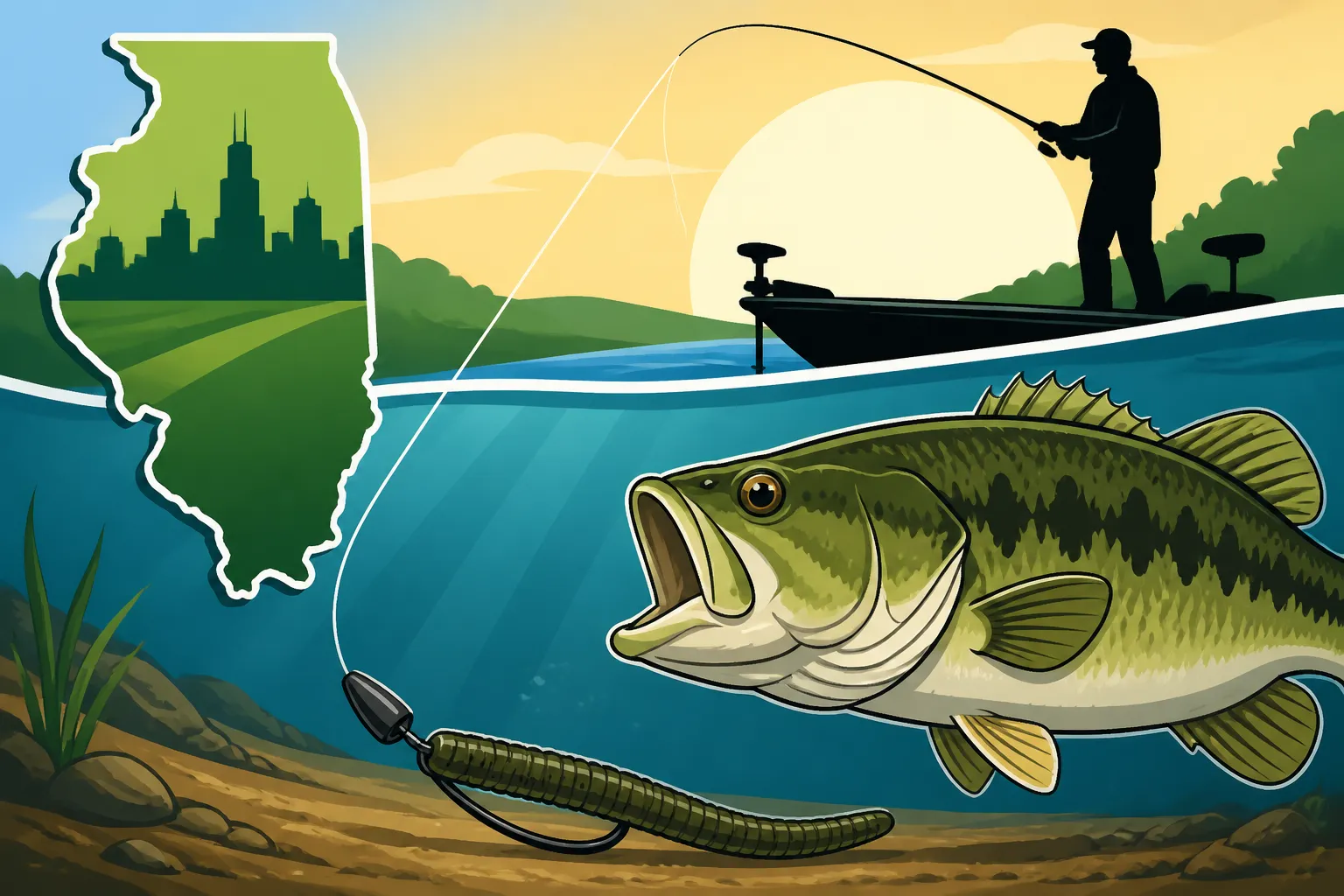
How to Fish a Texas Rig for Bass
Have you ever spent hours on the water, meticulously casting, only to have your lure snagged on every piece of cover imaginable, or worse yet, come back to the boat looking like a salad from all the weeds? It’s incredibly frustrating when bass are hiding deep in the structure, seemingly unreachable. This comprehensive guide will walk you through everything you need to know about fishing the Texas rig for bass, transforming those frustrating snags into solid hooksets and helping you put more fish in the boat, especially in Illinois's diverse waters.
Understanding the Texas Rig: Your Secret Weapon for Illinois Bass
The Texas rig isn't just another way to present a soft plastic bait; it's a foundational technique that every serious bass angler in Illinois should master. It’s designed to be incredibly efficient at getting into places other lures simply can't, and that's precisely where big bass love to hide.
What Makes the Texas Rig So Special?
The genius of the Texas rig lies in its simplicity and ingenious design, which solves some of the most common frustrations anglers face when targeting bass. The primary benefit is its incredible weedless nature. We've all been there: casting a beautiful crankbait or jig into a promising weed line or brush pile, only to immediately get hung up. It rips your heart out, doesn't it? The Texas rig, with its hook point embedded directly into the soft plastic bait, glides through dense vegetation, submerged wood, and rocky bottoms almost effortlessly. This means you spend more time fishing and less time untangling or, heaven forbid, losing expensive lures.
Beyond its weedless prowess, the Texas rig offers an incredibly natural presentation. When rigged correctly, the soft plastic lure moves through the water with an enticing, lifelike action that mimics a crawfish scuttling along the bottom, a worm burrowing into the muck, or a baitfish darting through cover. This subtle, realistic movement is often what it takes to tempt wary bass, especially after they've seen a parade of flashier, less natural presentations. It’s a subtle dance that many bass find irresistible. This versatility allows you to target bass in virtually any type of cover, making it a go-to choice for anglers exploring various Illinois fishing spots.
When and Where to Employ the Texas Rig in Illinois
The beauty of the Texas rig is its adaptability to almost any situation where bass are relating to cover. In Illinois, our waters offer a smorgasbord of bass habitats, from the sprawling, stump-filled lakes like Rend Lake and Lake Shelbyville to the current-swept rivers with their rocky outcroppings and submerged log jams. This rig shines brightest in these challenging environments.
Imagine you're fishing one of the many state park lakes in Illinois, where thick lily pads or dense submerged hydrilla beds line the shore. A traditional jig would foul instantly. But a Texas-rigged creature bait can be pitched right into the heart of that cover, sinking slowly and enticingly to the bass lurking below. Similarly, on the Mississippi River backwaters, where fallen trees and intricate root systems provide ambush points for hungry bass, the Texas rig is your best friend. It can be worked slowly over and through these snags, probing every nook and cranny without constant hangups.
Seasonally, the Texas rig is a year-round workhorse, but it truly excels during the warmer months, particularly during the Summer Bass Fishing Patterns when bass often move deeper or closer to dense cover to escape the heat and bright sunlight. During the Illinois Bass Spawn Timing Guide, when bass are guarding beds in shallow cover, a subtle Texas-rigged worm can be a fantastic way to coax a bite without disturbing the fish too much. Even in the cooler Spring Bass Fishing Patterns, as bass transition from deeper winter haunts to shallower feeding grounds, the Texas rig can effectively target fish holding tight to emerging vegetation or channel edges.
Essential Gear for Texas Rig Success
Having the right tools for the job can make all the difference between a frustrating day of fishing and a successful one. While the Texas rig itself is simple, pairing it with the appropriate rod, reel, line, and terminal tackle is crucial for optimal performance, especially when you’re wrestling feisty Illinois bass out of heavy cover.
Rods, Reels, and Line: Building Your Bass Arsenal
For Texas rigging, you need a setup that offers a balance of sensitivity to detect subtle bites and backbone to drive a hook through tough plastic and into a bass’s jaw. Most seasoned anglers will reach for a medium-heavy to heavy action baitcasting rod, typically between 6’6” and 7’6” in length. A rod with a fast tip will give you the sensitivity to feel those light taps, while the strong backbone allows for powerful hooksets and effective fish extraction from dense cover. Brands like St. Croix or Shimano offer excellent rods that fit these criteria, providing the sensitivity and power needed for this technique. You can often find a great selection of these specialized rods and reels on Amazon.
Pair that rod with a quality baitcasting reel. A reel with a gear ratio in the 6.1:1 to 7.5:1 range is ideal, offering enough speed for quick line retrieval after a cast and plenty of power to battle stubborn bass. Good drag is non-negotiable; you need a smooth, reliable drag system to prevent line breaks when a big bass makes a run for cover.
When it comes to fishing line, you have a couple of excellent options, and the choice often depends on the type of cover and water clarity. Fluorocarbon line, in the 12-20 lb test range, is a popular choice for its low visibility, excellent abrasion resistance, and high sensitivity. It's fantastic for conveying those subtle bites from deeper water or shy fish. If you're fishing extremely heavy cover, like thick matted weeds or dense brush piles, braided line (30-65 lb test) might be your best bet. While more visible, its incredible strength and zero stretch allow for powerful hooksets and the ability to cut through vegetation. Many anglers will tie a short fluorocarbon leader to their braid for the best of both worlds.
Selecting the Right Hooks and Weights
The right hook and weight are vital components of a successful Texas rig. For hooks, an Extra Wide Gap (EWG) hook is almost universally preferred. The design of the EWG hook, with its wide bend and offset shank, allows the soft plastic bait to be rigged perfectly weedless while providing a fantastic hook gap for solid hooksets once a fish bites. Sizes typically range from 3/0 to 5/0, depending on the size of your soft plastic bait. For smaller worms, a 3/0 might be perfect, while larger creature baits or worms might demand a 4/0 or 5/0 hook. You can find a huge variety of these hooks and more on Amazon.
Bullet weights are the standard for Texas rigging. These cone-shaped weights glide smoothly through cover, leading your bait without snagging. They come in various sizes, from 1/8 ounce for shallow, sparse cover to 1 ounce or more for deep water or extremely heavy cover. The most common sizes you'll use are 1/4 ounce, 3/8 ounce, and 1/2 ounce.
A critical decision with your bullet weight is whether to "peg" it or leave it unpegged. Pegging means using a small rubber peg or toothpick to secure the weight tightly against the eye of the hook. This prevents the weight from sliding up the line, which can be beneficial in super dense cover, ensuring your bait and weight move as one unit. However, leaving it unpegged allows the weight to slide freely, giving your soft plastic a more natural, delayed fall that some bass find irresistible. Experimentation is key to figuring out what the bass prefer on a given day.
Soft Plastics: The Heart of Your Texas Rig
The soft plastic bait you choose is where you can truly customize your Texas rig to match the conditions and the mood of the bass. The market is flooded with options, but a few categories stand out as perennial favorites for the Texas rig.
- Plastic Worms: From straight-tail worms to ribbon-tail worms, these are classic for a reason. They offer a subtle, undulating action that mimics natural forage. Longer worms (6-10 inches) are excellent for enticing larger bass.
- Creature Baits: These baits often combine elements of crawfish, lizards, and other critters, with appendages that flap and vibrate, creating a lot of commotion. They're fantastic for provoking aggressive strikes, especially around heavier cover.
- Crawfish Imitations: Bass love to eat crawfish, and a Texas-rigged craw is a deadly presentation, particularly when hopped along the bottom.
When selecting colors, consider the water clarity and available forage. Natural colors like green pumpkin, junebug, and black-and-blue are staples that work almost everywhere. In clear waters, more natural hues tend to be effective, while in murky or stained water, brighter colors like chartreuse or darker colors like black and blue can provide a better silhouette. For instance, if you're fishing a clear lake that holds a lot of bluegill, a green pumpkin or watermelon seed colored worm might be a great choice. Brands like Zoom, Strike King, and Gary Yamamoto offer a vast array of high-quality soft plastics, and you can easily stock up on all your favorite colors and shapes through Amazon. Don't be afraid to experiment! What works one day might not the next, and having a diverse selection, similar to choosing Best Bait for Largemouth Bass Fishing in Spring, ensures you're ready for anything.
Tying and Fishing Your Texas Rig Like a Pro
Now that we've covered the components, let's get down to the nitty-gritty: how to tie this versatile rig and, more importantly, how to fish it effectively to get those bass to commit.
Step-by-Step Rigging Guide
Tying a Texas rig properly is crucial for its weedless presentation and effective hook sets. It's a simple process, but precision matters.
- Thread the Weight: Start by sliding your bullet weight (pointed end first) onto your fishing line.
- Tie the Hook: Tie your chosen EWG hook to the end of the line using a strong knot like a Palomar knot or an improved clinch knot.
- Insert the Hook Point: Take your soft plastic bait and insert the hook point into the very center of the nose of the bait, pushing it in about 1/4 to 1/2 inch.
- Rotate and Thread: Bring the hook point out of the bait's side, then slide the bait up the shank of the hook until the "shoulder" (the bend where the hook eye is) of the hook is snugly seated in the nose of the bait. Ensure the bait is straight on the hook, not twisted.
- Skin-Hook the Point: Measure where the hook bend naturally aligns with the body of the bait. Insert the hook point back into the body of the plastic, just enough so the point is covered or "skin-hooked" to make it completely weedless. The hook should lay flat against the bait.
Here's a quick reference table for rigging:
| Step | Action | Key Detail |
|---|---|---|
| 1. Weight Application | Slide bullet weight onto main line. | Pointed end first. Optional: use a bobber stop to peg the weight. |
| 2. Hook Attachment | Tie an EWG hook to the line. | Use a strong knot (Palomar, Improved Clinch). |
| 3. Initial Insertion | Insert hook point into the center of the bait's nose. | Go in about 1/4 to 1/2 inch. |
| 4. Threading the Bait | Push hook through the bait's side, slide bait up to hook eye. | Ensure bait body is straight, not twisted. |
| 5. Weedless Point | Lay hook point against the bait's body, skin-hook the point into the plastic. | Point should be covered but easily exposed during hook set. |
For further techniques, you might also find it useful to learn How to Fish a Carolina Rig for Bass or How to Rig a Jig for Bass Fishing as complementary methods.
Mastering the Retrieve: Bringing Your Bait to Life
Once your Texas rig is tied, the real art begins with the retrieve. Unlike crankbaits or spinnerbaits that have built-in action, the Texas rig's action is entirely dictated by you. This is where feeling for those subtle bites becomes critical, and it can be a source of frustration for many beginners who aren't used to relying purely on feel.
The most common and effective retrieve for a Texas rig is a slow, deliberate "lift and drop" or "drag and pause" motion.
- Bottom Hopping: Cast your rig to a promising piece of cover. Let it sink to the bottom on a semi-slack line (watching your line for any twitches or jumps that indicate a bite on the fall). Once it hits bottom, raise your rod tip slowly from about 9 o’clock to 11 o’clock, lifting the bait off the bottom a few inches. Then, slowly drop your rod tip, allowing the bait to fall back to the bottom on a controlled slack line. Reel in the slack and repeat.
- Dragging: For less aggressive fish or when covering open, subtle bottom contours, a slow drag can be deadly. Cast out, let it sink, then slowly drag the bait along the bottom with your rod tip, pausing occasionally. This mimics a crawfish or worm crawling along.
The key to both retrieves is to maintain contact with your bait without stifling its natural movement. Many bites on a Texas rig are incredibly subtle – a slight tick, a feeling of "mushiness," or simply the line moving sideways. Don't be fooled by the big, aggressive strikes you see on TV! If anything feels even slightly off, set the hook!
Speaking of hooksets, a proper hookset with a Texas rig is a powerful, sweeping motion. When you feel a bite, drop your rod tip a touch to create a little slack (this allows the fish to fully take the bait) then reel down quickly to take up any slack, and then sweep the rod hard and fast, usually sideways or upwards, with your body turning into the hookset. This ensures the hook penetrates the plastic and the fish’s mouth effectively. Many anglers lose fish because of weak, tentative hooksets.
Common Mistakes to Avoid
Even experienced anglers can fall into these traps. Being aware of them can save you a lot of headaches and missed fish.
- Using the Wrong Weight: Too light a weight in deep water or current means your bait never reaches the bottom or drifts too far off target. Too heavy a weight in shallow water or sparse cover makes your presentation unnatural and can spook fish. Always match your weight to the depth, cover density, and wind conditions.
- Improper Hook Set: As mentioned, a weak, upward jigging motion won't cut it. You need a powerful, sweeping hookset to get that EWG hook through the plastic and into the bass. Practice this motion at home to build muscle memory.
- Rushing the Retrieve: The Texas rig is generally a slow, methodical presentation. Rushing it often means you're not allowing the bait to work its magic, and you're missing those crucial bottom contact sensations that signal a bite. Slow down, feel the bottom, and pay attention to every little bump and tic.
- Twisted Line: Continuously reeling in slack without rotating your reel handle can cause line twist. This is especially true with spinning gear, but can happen with baitcasters if not careful. Twisted line leads to tangles and knots. Periodically allow your line to trail behind the boat or unspool some line in open water to let it untwist.
- Ignoring Line Watch: Many bites happen on the initial fall, before your bait even hits the bottom. Instead of just looking at your rod tip, pay close attention to your fishing line where it enters the water. Any twitch, jump, or sudden slack in the line can indicate a bite.
Advanced Tips for Tricky Bass Situations
Once you've got the basics down, you can start finessing your Texas rig technique to handle even the most stubborn bass or challenging fishing conditions Illinois throws at you.
Adapting Your Rig to Different Conditions
Being able to adapt your Texas rig is a hallmark of a truly skilled angler. The conditions on Illinois lakes and rivers can change rapidly, and your ability to tweak your setup accordingly will pay dividends.
- Weight Changes for Depth and Wind: If you're struggling to maintain bottom contact in deep water or strong winds, bump up your weight. Conversely, if you're fishing extremely shallow, clear water, or when bass are finicky, downsizing your weight to 1/8 oz or even 1/16 oz (often called a "mochi rig" or "shaky head" without the exposed head) can provide a slower, more natural fall that mimics a dying baitfish, sometimes causing bass to strike.
- Line Changes for Clarity and Cover: As discussed earlier, fluorocarbon is great for clear water and good sensitivity. But if you’re pulling big fish out of matted vegetation at a spot like Kinkaid Lake, don’t hesitate to spool up with heavy braided line for brute strength. Conversely, in ultra-clear ponds or during a tough bite, a lighter fluorocarbon leader can make a significant difference. Remember, fish in highly pressured areas like the Chicago lakefront might be more line-shy.
- Color Changes for Mood and Forage: Beyond water clarity, fish mood and specific forage can influence color choice. If the bass are eating bluegill, try green pumpkin with a blue flake. If they're on shad, a white or pearl-colored soft plastic might be the ticket. Sometimes, a subtle change from black-and-blue to just black can trigger a strike. Keep an eye on what local anglers are reporting and what other Best Bass Lures for Clear Water are effective in similar situations.
Texas Rig vs. Other Bottom Baits
While the Texas rig is incredibly versatile, it's not the only tool in your bottom-fishing arsenal. Understanding its strengths relative to other popular techniques will help you choose the right presentation for the moment.
- Texas Rig vs. Carolina Rig: The How to Fish a Carolina Rig for Bass uses a sliding weight and a swivel, with a leader connecting the swivel to the hook and bait. This separates the weight from the bait, allowing the bait to float or drift freely behind the weight. The Carolina rig excels at covering vast areas, especially subtle structure on flat bottoms, as the weight kicks up sediment, attracting curious bass to the freely moving bait. The Texas rig, with its weight right on the hook, offers a more compact presentation, making it superior for punching into tight spots in heavy cover. If you're targeting bass holding tight to individual stumps or logs in Rend Lake, a Texas rig is likely better. If you're dragging open points on Carlyle Lake, a Carolina rig might be more efficient.
- Texas Rig vs. Jig: Jigs, whether a football jig, casting jig, or swim jig, often feature a lead head molded directly onto the hook, with a skirt and often a soft plastic trailer. Jigs are incredibly effective, offering a different profile and action. The How to Rig a Jig for Bass Fishing article will give you more depth here. Jigs can be more efficient for making quick casts to specific targets or when you need a faster fall. However, the exposed hook of most jigs makes them far more prone to snagging in dense cover compared to the weedless Texas rig. The Texas rig is the clear winner when you absolutely have to get into the nastiest, thickest cover without constant hangups.
In Illinois, knowing the specific Illinois Largemouth Bass Length Limit and Daily Catch Rules is also crucial, regardless of the rigging technique you choose. Always stay informed and prepared for the conditions and regulations.
Disclaimer
The information provided in this guide is for general informational purposes only and should not be considered as legal or professional advice. Fishing regulations, licensing requirements, and safety guidelines can change. Always consult the latest official publications from the Illinois Department of Natural Resources (IDNR) or other relevant authorities before engaging in any fishing activities. Adherence to all local, state, and federal laws is the responsibility of the angler.