Best Boats for Rend Lake Fishing
Choosing the right boat for fishing can feel like trying to solve a puzzle, especially when you're looking at a vast, unique body of water like Rend Lake here in Illinois. Many anglers jump into a purchase only to find their shiny new vessel isn't quite suited for the lake's quirks, leading to frustration and missed fishing opportunities. This guide is here to walk you through the best boat options and features specifically tailored for navigating and succeeding on Rend Lake.
Understanding Rend Lake's Unique Character for Boating
Rend Lake isn't just another pretty lake; it's a massive, shallow, and often challenging body of water that demands respect and the right equipment. Before you even think about what kind of boat to buy, it's crucial to understand the very nature of this impressive reservoir. Knowing its personality will directly influence your decision and ensure you pick a boat that works with the lake, not against it.
The Vastness and Shallowness of Rend Lake
One of the first things you'll notice about Rend Lake, especially if you're exploring the southern Illinois fishing scene, is its sheer size coupled with its surprising lack of depth in many areas. We're talking about a lake that spans over 18,900 acres, which is truly expansive. But much of that acreage is incredibly shallow, particularly away from the main channel and dam. What might look like open water on a map could easily be only a few feet deep, or even just inches, depending on the water levels. This means a deep-V hull boat, while fantastic for choppy big water, might constantly be bumping bottom or getting stuck in areas where fish like crappie and bluegill congregate.
The vastness also means that you'll cover a lot of water. You might want to get from one promising fishing spot to another quickly, but shallow water dictates a cautious approach. Running aground can be more than just an inconvenience; it can damage your prop, lower unit, or even the hull of your boat. For those truly wanting to experience all Rend Lake has to offer, from its northern reaches near Benton to the southern end, understanding these depth limitations is paramount. It’s not just about getting there, it’s about getting there safely and efficiently.
Navigating Stump Fields and Timber
If Rend Lake were a personality, it would be charming but also a little mischievous, especially with its notorious stump fields. This lake was created by damming the Big Muddy River and its tributaries, and much of the original timber was left standing or cut and left underwater. Over the decades, many of these trees have broken off, leaving countless stumps just below or even at the water's surface. These underwater minefields are prime habitat for bass and crappie, but they are also a significant hazard for boaters.
A boat with a shallow draft and a robust hull is a huge advantage here. You'll want to be able to slowly motor or even use a powerful trolling motor through these areas without constant worry of propeller damage. Many anglers who fish Rend Lake regularly eventually invest in a spare prop or even a prop made for shallower, more forgiving conditions. The ability to trim your outboard motor up high, or rely heavily on an electric trolling motor, becomes not just a convenience, but a necessity when targeting fish holding tight to this submerged structure. If you spend any time reading fishing reports for Rend Lake, you'll see "watch for stumps" as a common refrain.
Wind and Wave Challenges
Don't let the shallowness fool you; Rend Lake can get incredibly choppy, very quickly. Its vast, open expanses mean that even a moderate wind can whip up substantial waves. Imagine a large, shallow dinner plate; if you tilt it, the water sloshes around with surprising force. The same principle applies to Rend Lake. A 15-20 mph wind out of the west can turn the main lake into a washing machine, making boating uncomfortable, unsafe, and certainly not conducive to fishing.
This characteristic makes stability a crucial factor in your boat choice. While a flat-bottomed jon boat might be perfect for dodging stumps in calm backwaters, it can be downright dangerous in high winds on the main lake. A boat that offers a good balance of shallow draft for the coves and sufficient hull design to cut through waves on bigger stretches is highly desirable. You'll often see anglers hugging the shorelines or retreating to protected bays when the wind picks up, because getting caught in the middle of the main lake in a small, unstable boat is an experience no one wants to repeat. Safety here isn't just a suggestion, it’s a non-negotiable, and the right boat goes a long way in ensuring it. Remember to always check the wind forecast before heading out on any large body of water, especially one like Rend Lake.
Types of Boats Best Suited for Rend Lake Fishing
Given Rend Lake's unique blend of vast open water, shallow coves, and submerged timber, not all fishing boats are created equal when it comes to navigating and fishing its waters. You need a vessel that can handle the challenges while still getting you to where the fish are biting. Let's break down the most popular and effective boat types you'll encounter and consider for your Rend Lake adventures.
Aluminum Jon Boats: The Workhorses of Shallow Water
When you talk about a workhorse for tough, shallow-water conditions, the aluminum jon boat often comes to mind first, and for good reason. Their flat or nearly flat bottom design is specifically engineered for minimal draft, allowing them to glide over very shallow water where other boats would grind to a halt. This makes them absolute champions for navigating Rend Lake's extensive stump fields and skinny backwaters, areas where trophy bluegill and crappie love to hide. You can literally poke your way into cover that's inaccessible to larger, deeper-drafting vessels.
Beyond their shallow water prowess, jon boats are incredibly durable. Made from robust aluminum, they can take a beating from stumps and submerged debris that would inflict serious damage on fiberglass. They're also relatively lightweight, making them easy to trailer, launch, and retrieve, even at less-than-perfect ramps. While they might not offer the plush seating or high-speed thrills of a bass boat, their utilitarian design and affordability make them an excellent choice for serious Rend Lake anglers who prioritize access to prime, hard-to-reach fishing spots and don't want to worry about every bump and scrape. For smaller budgets or those just getting into boating on a lake like Rend, they are truly hard to beat.
Fiberglass Bass Boats: Speed and Style with Caveats
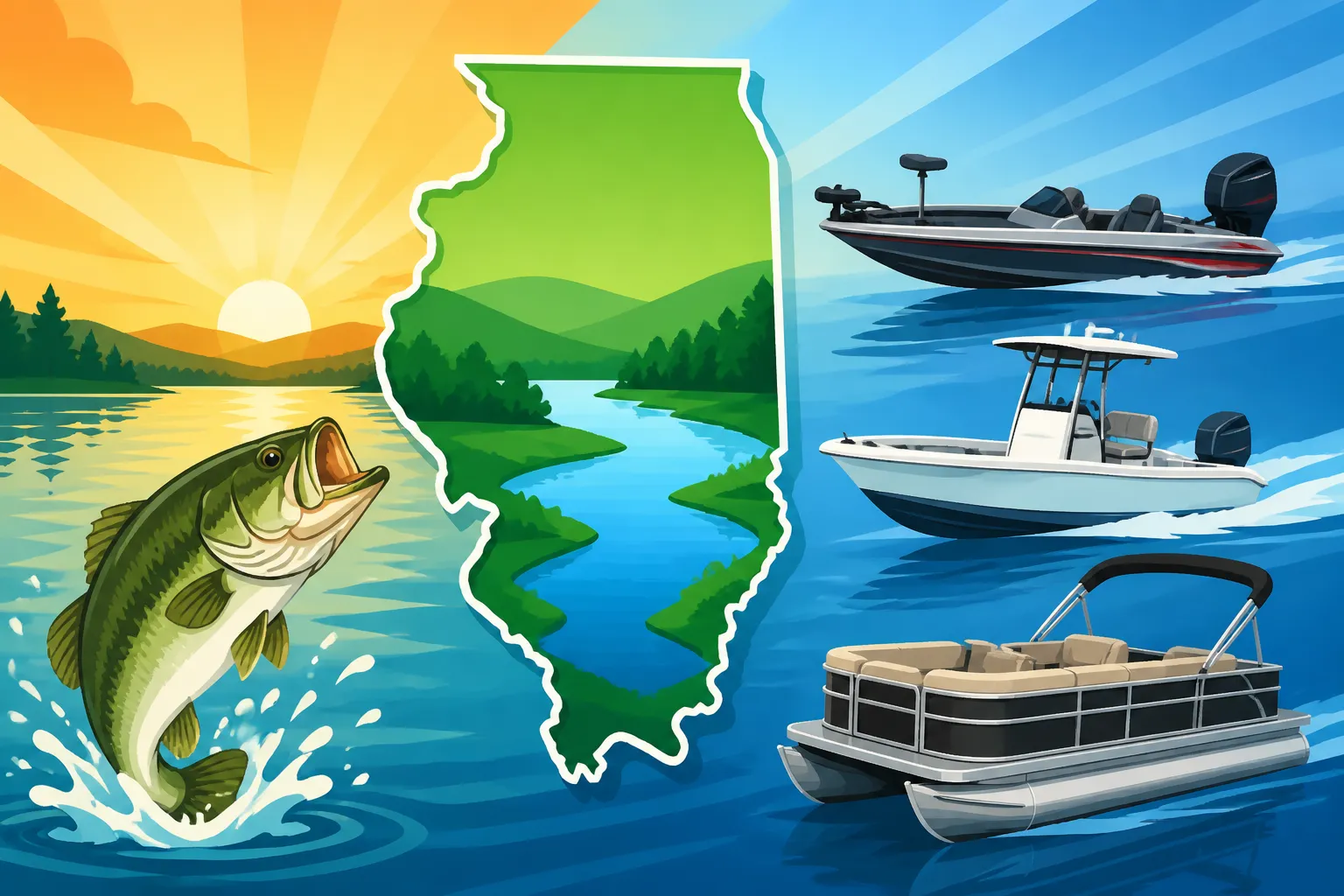
Ah, the classic fiberglass bass boat – sleek, fast, and designed for competitive angling. These boats excel at getting you from point A to point B on a large lake in a hurry, which can be tempting on Rend Lake's vast open stretches. Their powerful outboards and comfortable casting decks are fantastic for pitching jigs to submerged structure or working topwater lures along the shorelines. If your primary goal is to cover ground quickly and fish for bass in the more open, deeper sections of Rend Lake, particularly those near the main channels or dam area, a bass boat offers an exhilarating experience.
However, the very features that make them excellent on some lakes can become caveats on Rend Lake. Their deep-V hulls, while great for cutting through chop, also mean a deeper draft. This can severely limit access to those crucial shallow backwaters and stump fields where many of Rend's fish reside. Attempting to force a fiberglass bass boat into these areas can lead to prop damage, lower unit issues, or even structural damage to the hull, which can be costly to repair. So, while a fiberglass bass boat might be your dream for speed and comfort, consider if it truly aligns with the specific fishing techniques and areas you plan to frequent on Rend Lake. They can be awesome, but you need to understand their limitations on this specific lake.
Multi-Species Boats: Versatility for All Fish
If you're an angler who enjoys chasing different species throughout the year – maybe crappie in the spring, bass in the summer, and even a bit of catfish when the mood strikes – then a multi-species boat might be your sweet spot for Rend Lake. These boats, often a hybrid design, aim to combine the best features of bass boats and deep-V walleye boats, offering a versatile platform. They typically have a modified V-hull, providing a shallower draft than a pure deep-V, but still more V-shape than a jon boat, offering a better ride in choppy conditions than a flat-bottomed boat. This balance allows them to navigate slightly shallower waters while still providing a stable and comfortable ride on the main lake when the wind picks up.
Multi-species boats usually feature ample storage, multiple livewells, and comfortable seating, making them great for longer days on the water or bringing along family and friends. While they might not be as fast as a dedicated bass boat or as nimble in the skinniest water as a jon boat, their strength lies in their adaptability. For the angler who wants to explore all facets of Rend Lake fishing, from pitching plastics in the timber to drifting for catfish in deeper channels, a multi-species boat provides a fantastic compromise. Brands like Lund or Tracker offer excellent multi-species options that strike a good balance for lakes like Rend.
Pontoon Boats: Family Fun and Stability
Now, a pontoon boat might not be the first thing that springs to mind when you think "serious fishing machine," but hear me out: for certain types of Rend Lake adventures, they can be surprisingly effective and incredibly enjoyable. Their flat, wide deck design offers unparalleled stability, which is a huge advantage when fishing with kids or a larger group. You don't have to worry about rocking and rolling when someone walks from one side to the other, making it ideal for a relaxed day on the water. Plus, the sheer amount of deck space is fantastic for coolers, gear, and simply stretching out.
While a pontoon boat won't win any races or navigate the tightest stump fields, many modern fishing-oriented pontoons come equipped with livewells, rod holders, and even elevated fishing seats. Their relatively shallow draft (especially compared to deep-V boats) allows them to get into many of Rend Lake's productive coves and bays, as long as you're mindful of extreme shallows. They are perfect for leisurely crappie drifts, anchoring up in a quiet cove for bluegill, or even some casual catfish angling. For family-friendly outings where fishing is a key component but not the sole focus, a pontoon boat provides comfort, space, and surprising fishability on Rend Lake. Just be sure to always carry enough Illinois Life Jacket and PFD Rules for everyone aboard.
Kayak and Canoe Options: Stealth and Simplicity
For the ultimate in stealth, simplicity, and access to the truly untouched corners of Rend Lake, kayaks and canoes are becoming increasingly popular. These human-powered vessels have virtually no draft, meaning you can paddle into areas that even the smallest jon boat can't reach. Think flooded timber so dense that you're just quietly slipping through the trunks, or tiny pockets of water completely undisturbed by larger boats. For crappie and bass hidden deep in cover, this access can be a game-changer.
Modern fishing kayaks are incredibly stable, often designed for standing and casting, and can be rigged with an array of accessories like fish finders, rod holders, and even small electric trolling motors for extended range. They offer a unique, immersive fishing experience, connecting you more directly with the water. Of course, they are slower and offer less storage and protection from the elements than larger boats. But if you're an adventurous angler looking for a minimalist approach, or want to explore the truly wild side of Rend Lake, a fishing kayak or canoe provides unparalleled access and a quiet, personal connection to the lake. Many smaller accessories, from extra PFDs to quality rod holders, can be easily found and compared on platforms like Amazon to outfit your paddle craft.
Key Features to Look for in a Rend Lake Fishing Boat
Once you've narrowed down the type of boat that best fits your Rend Lake fishing style, it's time to dive into the specific features that will make or break your experience on this challenging body of water. Thinking through these details before you buy will save you headaches and ensure your investment truly enhances your time on the water.
Shallow Draft for Skinny Water Access
This cannot be stressed enough: a shallow draft is arguably the most critical feature for a Rend Lake fishing boat. As we discussed, a significant portion of the lake is extremely shallow, riddled with submerged stumps and timber. A boat that draws too much water will severely limit your fishing grounds, forcing you to stay in deeper, often more pressured areas. When fish move into shallower cover during spring or fall, or seek refuge in the backwaters, a deep-drafting boat simply can't follow.
Look for boats with a flatter hull design, like jon boats, modified-V multi-species boats, or even some specific shallow-water bass boat designs. Pay attention to the manufacturer's stated draft, and remember that adding gear, fuel, and passengers will increase that number. Consider boats that allow for maximum trim on the outboard, enabling you to lift the prop out of harm's way when slowly navigating treacherous areas. Having a powerful, reliable trolling motor, perhaps with a shallow water anchor system, becomes even more important here, allowing you to quietly maneuver without the main engine in inches of water. The ability to access those tucked-away coves and hidden pockets of fish habitat will absolutely elevate your Rend Lake fishing success.
Storage and Deck Space for Gear
Fishing on Rend Lake, especially if you're planning a full day or bringing along companions, means you'll have a good amount of gear. Rods, tackle boxes, coolers, rain gear, safety equipment – it all adds up! Adequate, well-designed storage and ample deck space are crucial for a comfortable and organized fishing trip. Nothing is more frustrating than a cramped boat with gear cluttering every available surface, tripping hazards everywhere.
Consider boats with dedicated rod lockers that can accommodate various lengths of rods, particularly if you're like me and carry a crappie rod, a bass rod, and a catfish rod all in one trip. Look for dry storage compartments for electronics, extra clothing, and your lunch. A spacious casting deck, whether on a bass boat or a multi-species design, provides room to move around, cast effectively, and even battle a larger fish without feeling confined. Even on a pontoon, the under-seat storage can be a game-changer. A well-organized boat contributes to a safer, more enjoyable, and ultimately more productive fishing experience, allowing you to focus on the fish, not on where you put your pliers. For those serious about organization, you can find excellent tackle management systems and boat organizers at retailers like Bass Pro Shops.
Stability and Seaworthiness
While Rend Lake has plenty of shallow, calm areas, its large open expanses can get very rough, very quickly. Therefore, your boat's stability and seaworthiness are non-negotiable for safety and comfort. A boat that feels like a toy in choppy conditions is not only unpleasant but also dangerous. You need a vessel that inspires confidence when the wind whips up and waves start to form whitecaps.
Look for boats with a wider beam (width) for increased stability. Hulls with a moderate V-shape (like those found on many multi-species boats) will cut through waves better than a flat-bottomed jon boat, providing a smoother, drier ride. Even if you plan to spend most of your time in sheltered coves, the need to cross open water to get to those spots, or the sudden onset of a storm, means your boat must be able to handle adverse conditions. Test-riding a boat on a slightly windy day, if possible, can give you a real feel for its stability. Remember, a stable platform is essential not just for a comfortable ride, but also for safe casting, landing fish, and moving around the boat, especially when fishing with multiple people.
Motor Selection: Outboard and Trolling Motors
The right combination of primary outboard and secondary trolling motor is paramount for fishing Rend Lake effectively. Your main outboard will get you across those vast distances, and given the potential for sudden wind changes, having enough horsepower to quickly get back to safety is important. However, consider efficiency and the lake's specific challenges. A powerful 2-stroke might be fast, but a quieter, more fuel-efficient 4-stroke often makes for a more pleasant day on the water. And again, the ability to trim the motor high for shallow runs is a must.
For finesse fishing in stump fields or working shorelines, a reliable electric trolling motor is indispensable. Rend Lake's layout almost demands one. Look for a powerful motor (at least 24V or 36V) with enough thrust to move your boat effectively, even against the wind. Features like GPS-enabled spot-lock are game-changers for holding your position over a brush pile or along a windy bank, allowing you to focus on fishing instead of constantly steering. Many anglers also consider a shallow-water anchor system (like a Power-Pole or Talon) for quick, silent deployment in the shallow backwaters, providing precise boat control for targeting those specific areas where fish hold tight to cover. It's a system of propulsion and control that makes a world of difference.
Budgeting and Practical Considerations for Your Rend Lake Boat
Beyond the boat's features, the practicalities of ownership — from the initial purchase to ongoing maintenance and storage — play a huge role in your overall satisfaction. Understanding these financial and logistical aspects upfront will help you make a smart decision and avoid unexpected headaches down the line.
New vs. Used Boats: Weighing the Costs
The eternal question for any major purchase: new or used? For a fishing boat destined for a lake like Rend, there are strong arguments for both. A new boat offers the peace of mind of a warranty, the latest technology, and that undeniable fresh-off-the-lot scent. You'll likely get a boat that's fully outfitted with modern electronics and a reliable, efficient engine. However, new boats come with a significant price tag, and like a new car, they depreciate quickly. If you're looking for the absolute cutting edge and don't mind the investment, a new multi-species or bass boat might be your preference.
On the other hand, the used boat market is full of fantastic deals, especially if you know what to look for. For Rend Lake, a well-maintained, slightly older aluminum jon boat or even a used multi-species boat could be a perfect fit without breaking the bank. You might find a great selection of durable jon boats or even a gently used fiberglass bass boat at a place like Bass Pro Shops, which often has a good selection of pre-owned vessels. The key with used boats is thorough inspection: check the hull for damage, the motor for proper function (a compression test is a must!), and the trailer for rust or issues. While you might sacrifice some of the latest tech, the significant savings can allow you to invest in upgraded electronics, a better trolling motor, or more tackle, all of which directly improve your fishing experience on Rend Lake.
Maintenance and Long-Term Ownership
Buying the boat is only the first step; keeping it running smoothly is an ongoing commitment. Rend Lake can be tough on equipment, especially with its stumps and shallow water. Regular maintenance is crucial to extend the life of your boat and prevent costly breakdowns. This includes routine engine servicing (oil changes, spark plugs, fuel filters), checking and maintaining your trailer (tires, bearings, lights), and inspecting your hull for any damage from those unavoidable Rend Lake encounters. Aluminum boats, while durable, can still develop leaks or stress cracks over time, while fiberglass can incur gel coat damage.
Factor in the cost of these routine services, as well as potential repairs. Do you have a local, trusted marine mechanic? Are you comfortable performing some basic maintenance yourself? Consider the accessibility of parts for older models. Remember, a boat is an investment of time and money, and smart long-term ownership means budgeting for more than just gas and bait. It's about ensuring your vessel is always ready to hit the water safely and reliably, year after year, no matter what Rend Lake throws at it. How Long a Fishing License Stays Valid Before Renewal is a good reminder that your boat's registration also needs regular attention!
Storage and Transportation
Finally, don't overlook the practicalities of where you'll keep your boat when it's not on the water and how you'll get it to Rend Lake. A boat is a sizable asset, and proper storage protects your investment from the elements and potential theft. Do you have space in your garage or driveway for it? Is outdoor storage a viable option with a good cover? Or will you need to factor in the cost of a storage unit or marina slip, especially if you plan to fish Rend Lake frequently and want to avoid trailering every time?
Trailering your boat to Rend Lake means you need a capable vehicle that can safely tow its weight. Ensure your tow vehicle has the proper towing capacity and a good hitch setup. Consider the distance you'll be traveling and the condition of the roads. Investing in a quality trailer is just as important as the boat itself, as it's what gets your pride and joy to the water. From durable tires to working lights and brakes, a reliable trailer ensures safe transit. Thinking through these logistical elements of storage and transportation before you buy will prevent unwelcome surprises and ensure that your Rend Lake fishing adventures are as smooth on land as they are on water. When you do head out, remember to brush up on Illinois Boat Registration Requirements Explained to ensure you're legal.
Boating Safety and Regulations on Rend Lake
Boating on Rend Lake, like any large body of water, comes with inherent risks. Beyond having the right vessel, understanding and adhering to Illinois's boating safety regulations is absolutely crucial. These rules aren't just bureaucratic hurdles; they are designed to keep you, your passengers, and everyone else on the water safe.
Required Safety Gear Onboard
No matter what type of boat you choose for Rend Lake, certain safety equipment is legally required to be on board at all times. This includes, but isn't limited to, U.S. Coast Guard-approved personal flotation devices (PFDs) for every person on the boat. For children under 13, wearing a PFD while the boat is underway is generally mandatory. Having at least one Type IV throwable PFD (like a life ring or cushion) is also often required for boats over a certain length. You'll also need a sound-producing device (whistle or horn), visual distress signals (like flares) if you're out between sunset and sunrise, and a fire extinguisher, depending on the boat's size and construction.
These items are not just checks on a list; they are lifelines in an emergency. Imagine getting caught in a sudden storm on Rend Lake, hitting a submerged stump, or having an engine breakdown. Having readily accessible, functional safety gear can make all the difference. Regularly inspect your PFDs for damage, ensure your flares aren't expired, and check your fire extinguisher's pressure gauge. It’s better to be over-prepared than caught unprepared when you’re out on the water. Make sure to review the complete Illinois Boating Safety Equipment Checklist before your first trip of the season.
Illinois Boater Education Requirements
Illinois has specific requirements for boater education, and it's essential to know if they apply to you or anyone who will be operating your boat on Rend Lake. Generally, anyone born on or after January 1, 1998, needs to complete a boater safety course and carry their Boater Education Card when operating a motorized boat with 10 horsepower or more. Even if you don't fall into this age bracket, taking a boater safety course is a fantastic idea for any operator. It covers everything from navigation rules and hazard recognition to proper boat handling and emergency procedures.
The knowledge gained from a boater education course is invaluable, especially on a lake like Rend with its unique challenges. Understanding buoy markers, right-of-way rules, and how to respond to various situations can prevent accidents and ensure a more confident and enjoyable experience. Several options exist for taking these courses, including online and in-person classes. It’s a small investment of time that pays dividends in safety and skill on the water. Don't be that angler who accidentally breaks the rules because they didn't know; be proactive and get educated. Read more about the requirements in Illinois Boater Education Card Requirements.
Boat Registration and Licensing
Operating a boat on Rend Lake means your vessel needs to be properly registered with the State of Illinois. All motorized boats, and even sailboats over a certain length, must be registered and display the proper registration decals and numbers on the hull. This registration process involves submitting an application, proof of ownership, and paying the associated fees, which vary depending on the boat's length and type. Once registered, you'll receive a Certificate of Number, which must be carried aboard the boat whenever it's in operation.
The registration is typically valid for a set period, after which it needs to be renewed. Failing to register your boat or operating with an expired registration can lead to fines and other penalties, which no one wants to deal with when they're trying to enjoy a day of fishing. Keep track of your renewal dates and ensure all your paperwork is in order. This also extends to your fishing license; remember, you'll need an Illinois Fishing License Guide for 2026 in addition to your boat registration to legally fish the waters of Rend Lake. Being prepared with all your documents is just part of responsible boating.
| Boat Type | Primary Rend Lake Use Case | Draft (General) | Stability (Main Lake) | Speed Potential | Cost (New, General) |
|---|---|---|---|---|---|
| Aluminum Jon Boat | Shallow backwaters, stump fields, crappie, bluegill | Very Shallow | Low-Moderate | Low-Moderate | Lower |
| Fiberglass Bass Boat | Fast travel, open water bass fishing | Moderate-Deep | Moderate-High | High | Higher |
| Multi-Species Boat | Versatile for various species, moderate shallows & chop | Moderate | Moderate-High | Moderate-High | Mid-High |
| Pontoon Boat | Family outings, leisurely fishing, stability, comfort | Moderate-Shallow | High | Low-Moderate | Mid |
| Fishing Kayak/Canoe | Ultra-shallow access, stealth, personal exploration | Extremely Shallow | High (for kayaks) | Very Low | Lowest-Mid |
Disclaimer
This article is for general informational purposes only and does not constitute professional advice. Laws, prices and regulations vary by location and change over time. Consult a qualified professional for guidance on your specific situation.