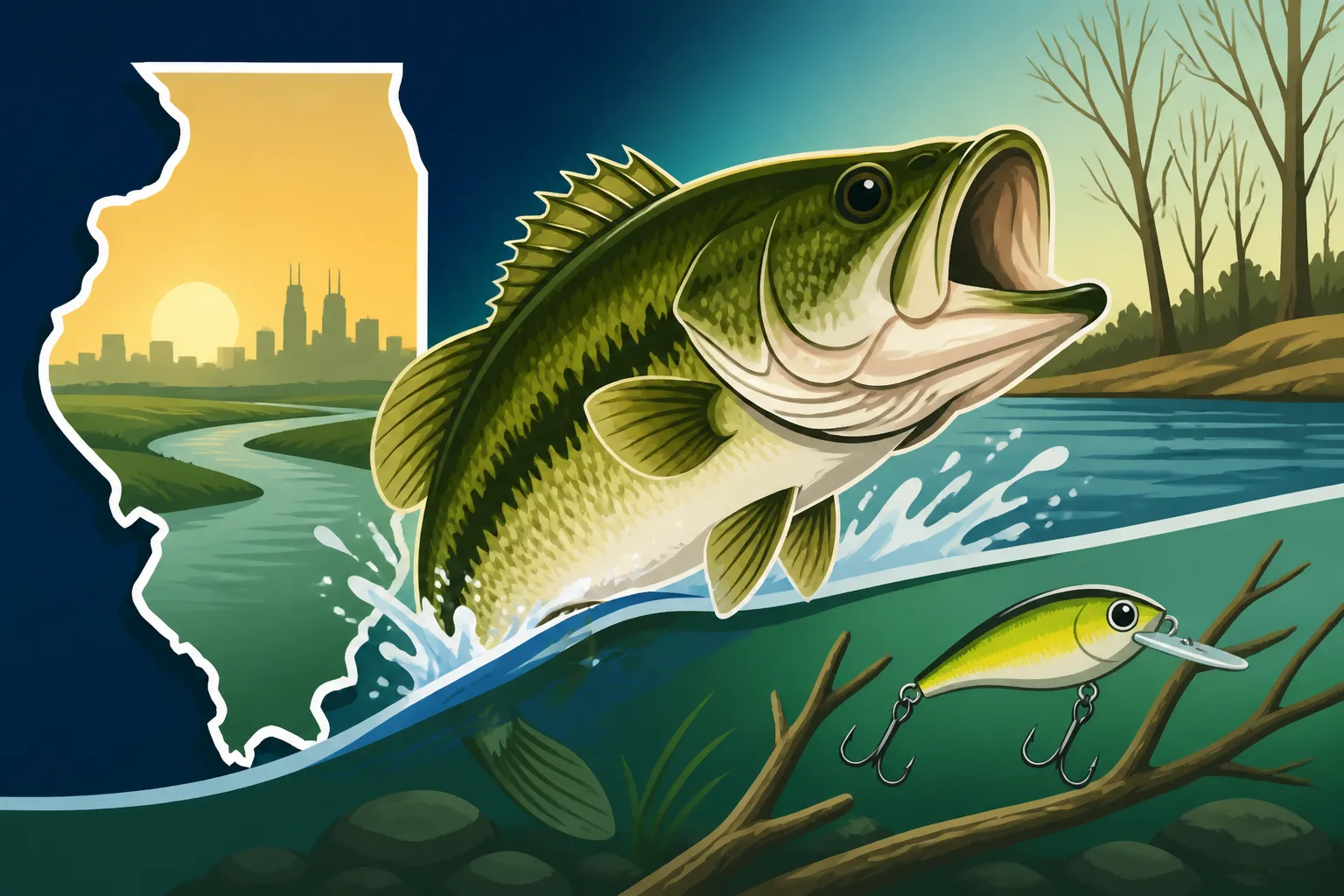
Illinois Bass Pre-Spawn Fishing Patterns
That feeling when winter's chill finally starts to break, and you can practically smell spring in the air? It's exhilarating for any Illinois angler. But let's be real, those early spring days, when the bass are just starting to wake up, can be incredibly frustrating. They're not on their beds yet, they're not fully aggressive, and it often feels like they've vanished into thin water. If you've ever found yourself scratching your head, wondering where those pre-spawn bass are hiding and what on earth they're biting, you're in the right place. This guide is all about unraveling the mysteries of Illinois bass pre-spawn fishing patterns, helping you understand their movements and the best tactics to put more fish in your boat or from the bank during this crucial transition.
Understanding the Illinois Pre-Spawn Period
The pre-spawn phase is arguably one of the most exciting, yet challenging, times to target bass in Illinois. It's that magical window when largemouth and smallmouth bass shake off the sluggishness of winter and start preparing for their annual breeding ritual. But it's not a sudden flip of a switch; it's a gradual, dynamic process influenced by a host of environmental factors. Many anglers get caught off guard because the bass aren't in their typical wintering holes or their summer feeding areas. They are in a state of transition, and understanding this is key.
What Defines Pre-Spawn Conditions
The pre-spawn period in Illinois generally kicks off when water temperatures climb into the low to mid-40s (Fahrenheit) after ice-out, and it continues until the fish actually start building nests and spawning, typically when temps reach the mid-60s. This timeframe can stretch from late February or early March in southern Illinois, like around Kinkaid Lake, all the way into April or even early May in northern parts of the state, especially on larger, deeper lakes that take longer to warm up. During this phase, bass are focused on two primary things: feeding heavily to build energy reserves for the spawn, and migrating from their deeper winter haunts towards shallower spawning grounds. They're basically staging, waiting for the perfect conditions to move in. It’s a period characterized by increasing metabolism and a strong urge to eat, but their activity can be highly dependent on daily weather shifts.
Key Environmental Triggers
Several environmental factors act as vital cues for bass during the pre-spawn period. The most critical, hands down, is water temperature. As the sun gets higher in the sky and air temperatures rise, the surface water begins to warm. Bass, being cold-blooded creatures, are incredibly sensitive to these changes. A steady rise in temperature, even just a few degrees, can dramatically increase their activity levels. For a deeper dive into how different temperatures affect fish, check out our guide on the Water Temperature and Fish Activity Guide. Another significant trigger is photoperiod, or the increasing length of daylight. As the days get longer, it signals to the bass that spring is truly here, reinforcing their biological drive to move and feed. Finally, weather stability plays a huge role. Consecutive days of warm, sunny weather can push bass shallow quickly, while a sudden cold front can send them retreating to deeper water just as fast, leaving you wondering where they went.
Locating Pre-Spawn Bass
Finding pre-spawn bass isn't about blind luck; it's about understanding their transitional movements. They aren't going to be in the same predictable spots they were in winter, nor will they be in their shallow spawning flats just yet. Instead, they're typically found in specific areas that offer a blend of comfort, feeding opportunities, and proximity to where they'll eventually spawn. This requires a bit of detective work and knowing what to look for on your local Illinois waterways.
Transition Areas and Staging Points
Think of pre-spawn bass as commuters heading to work; they don't just magically appear at their destination. They use specific routes and rest stops along the way. These "transition areas" are critical. They include points, creek channels, secondary points, and old riverbeds that provide a highway from deep water to shallow spawning flats. Bass will often stage on the first significant drop-off or breakline adjacent to these deeper channels. These areas offer quick access to deeper, more stable water if a cold front rolls in, while also being close enough to move shallow when conditions are right. For example, a main lake point with a quick depth change leading into a large spawning cove is a classic pre-spawn staging area. They might suspend over timber or hold tight to rock piles, waiting for that water temperature sweet spot to make their final move.
Importance of Water Temperature and Depth
Water temperature dictates everything during the pre-spawn. As a general rule, bass will often be found in the warmest water available that also provides cover and forage. This often means focusing on northern banks or coves that receive more direct sunlight throughout the day. These areas warm up faster than shaded or exposed banks. When water temperatures are in the low 40s, bass might be deeper, perhaps 15-25 feet, near channel swings or points. As the water warms into the upper 40s and 50s, they'll start pushing shallower, perhaps 8-15 feet, setting up on those staging points. Once the water hits the low 60s, they're practically knocking on the door of the spawning flats, often found in 3-8 feet of water. If you’re fishing a large body of water, focusing on the warmest coves can significantly increase your chances. This is especially true on large reservoirs like Rend Lake, where understanding Illinois Bass Pre-Spawn Timing at Rend Lake can really give you an edge.
Top Baits and Techniques for Pre-Spawn Bass
The bass are hungry, no doubt about it, but their metabolism isn't quite at summer levels yet. This means you often need to adapt your bait choices and presentation to match their sometimes-finicky mood. You'll want to have a mix of baits that can trigger a reaction strike, as well as those that can be worked slowly and deliberately to entice less aggressive fish. Don't be afraid to experiment, as what works one day might not work the next, especially with Illinois's unpredictable spring weather.
Reaction Baits for Active Fish
When those sunny, stable days warm the water and bass become more active, reaction baits can be absolutely deadly. These are lures designed to mimic fleeing baitfish or crawfish, triggering an aggressive strike rather than a curious sniff. Lipless crankbaits, like a Rat-L-Trap or a Strike King Red Eye Shad, fished over submerged grass or along subtle depth changes, are phenomenal when bass are cruising. The vibration and flash can draw strikes from a distance. Another excellent choice is a bladed jig, often called a ChatterBait, which provides a unique vibration and weedless profile. A 1/2 oz Z-Man ChatterBait Jack Hammer, retrieved with a stop-and-go motion, can be irresistible. Spinnerbaits, especially those with willow leaf blades for clearer water or Colorado blades for stained conditions, are also great for covering water and eliciting reaction strikes. You can find a good selection of these on Amazon, often with quick shipping to get you on the water faster. For tips on specific conditions, our article on Best Bass Lures for Clear Water or Best Bass Lures for Murky Water offers valuable insights.
Slow-Moving Baits for Finicky Bass
There will be plenty of days during the Illinois pre-spawn when a fast-moving bait just isn't cutting it. This is when patience and a slower presentation truly pay off. Jig-and-trailer combos, mimicking crawfish or baitfish, are a staple. A black and blue jig, or green pumpkin, in 3/8 to 1/2 ounce, slowly dragged or hopped along the bottom, can entice hesitant bass. Pair it with a Zoom Super Chunk or a Strike King Rage Craw trailer for added bulk and action. Suspending jerkbaits are another pre-spawn superstar. These baits dive to a certain depth and then, when paused, suspend in the water column, often hanging right in a bass's face. The Megabass Vision Oneten or a Rapala X-Rap are popular choices. Work them with a series of jerks and long pauses, sometimes up to 10-15 seconds, especially in colder water. Finally, simple plastic worms or creature baits on a Carolina rig or a Texas rig, worked slowly through cover, can pick off those bass that are tucked in tight and less willing to chase. The key here is presenting a meal that requires minimal effort from the bass.
Illinois-Specific Pre-Spawn Hotspots
Illinois is a diverse state when it comes to fishing opportunities, with a wide range of lakes and rivers. While the general principles of pre-spawn fishing apply across the board, understanding how these patterns manifest in different regions can significantly improve your success. Whether you're in the deep, clear waters of southern Illinois or the fertile river systems of the north, there are specific nuances to consider.
Northern, Central, and Southern Illinois Lake Considerations
Northern Illinois: Lakes in the northern part of the state, like those in the Chain O'Lakes system or Shabbona Lake, tend to experience a later pre-spawn period due to colder temperatures and longer ice cover. Here, shallow, dark-bottomed bays and channels that absorb sunlight quickly will be the first to warm. Look for structure like docks, submerged brush, and emergent vegetation in these areas. Since many of these lakes are smaller and shallower, bass might not have to move as far from their wintering holes to their spawning grounds.
Central Illinois: Mid-state reservoirs such as Lake Shelbyville, Clinton Lake, and Lake Springfield offer excellent pre-spawn opportunities. These lakes often have extensive creek channels, standing timber, and long points that are prime staging areas. Lake Shelbyville, in particular, is known for its excellent pre-spawn bass fishing, with fish often holding on secondary points and channel bends before moving into the coves. Our guide to Illinois Bass Pre-Spawn Timing at Lake Shelbyville offers detailed strategies for this popular lake. On these larger reservoirs, focus on the upper ends of creeks where tributaries feed in, bringing warmer water and nutrients.
Southern Illinois: Waters like Rend Lake, Carlyle Lake, and Lake of Egypt see the earliest pre-spawn action. The shallower nature and typically warmer climate mean bass can start moving up as early as late February or early March. Rend Lake's vast amount of standing timber and shallow flats make it a prime location. Bass will stage on the edges of the timber and gradually push into the flooded timber flats. For more localized advice, consider checking out Illinois Bass Pre-Spawn Timing at Carlyle Lake or Illinois Bass Pre-Spawn Timing at Rend Lake. These southern lakes also tend to have more consistent water levels in early spring, which can stabilize fish patterns.
River Systems and Tributaries
Don't overlook Illinois's numerous river systems for pre-spawn bass, especially smallmouth bass. Rivers like the Rock River, Kankakee River, and the Fox River offer fantastic early-season action. In rivers, current breaks are paramount. Look for bass staging in eddies, behind current seams, around bridge pilings, submerged logs, and rock outcroppings. Tributary mouths can be goldmines, as warmer runoff and increased forage get funneled into these areas. Smallmouth in rivers are often incredibly aggressive during pre-spawn, hitting jerkbaits, spinnerbaits, and small jigs.
| Pre-Spawn Water Temperature | Bass Location (General) | Preferred Baits | Retrieval Speed |
|---|---|---|---|
| 40-48°F (Cold) | Deepest staging points, main lake channel swings, vertical structure, brush piles in 15-25 ft. | Jigs, suspending jerkbaits, blade baits, lipless cranks (slow retrieve). | Very Slow to Slow |
| 48-55°F (Cool) | Secondary points, creek channel bends, flatter points near main lake, 8-15 ft. | Jigs, suspending jerkbaits, spinnerbaits, bladed jigs, Texas rigs. | Slow to Medium |
| 55-62°F (Warming) | Points leading into coves, shallow brush, pre-spawn staging flats, 3-8 ft. | Spinnerbaits, bladed jigs, crankbaits, swimbaits, jerkbaits, jigs. | Medium to Fast |
Adapting to Changing Spring Weather
Illinois weather in spring is notoriously fickle. One day it's 60 and sunny, the next it's 35 and raining. These dramatic shifts have a profound impact on bass behavior during the pre-spawn. Being able to read the weather and adjust your tactics accordingly is not just helpful; it's absolutely essential for consistent success. Many anglers pack up and go home when the weather turns sour, but with the right approach, you can still find biting fish.
Cold Front Strategies
Ah, the dreaded spring cold front. You know the drill: fishing was hot yesterday, then a front blew through, and today the fish have lockjaw. When a cold front hits, especially during the pre-spawn, bass often retreat to the nearest deep cover or drop-off. Their activity levels plummet, and they become much less willing to chase a bait. This is not the time for fast-moving reaction baits. Instead, slow down, way down. Fish deep staging points with jigs, dragging them painstakingly along the bottom. Consider using a shaky head worm or a Ned rig, finesse presentations that offer a small, easy meal. Bass will often bury themselves in dense cover like brush piles or submerged timber. Pitching a jig or a Texas-rigged creature bait into these spots and letting it sit for a few seconds can sometimes trigger a reluctant bite. The key is to present a bait directly in front of them, making it an irresistible, effortless meal. For more specific guidance, read up on How to Catch Bass After a Cold Front.
Post-Rain Fishing Adjustments
While a cold front can shut things down, rain, especially a warm rain, can actually be a good thing during the pre-spawn. A steady, warm rain can warm up the surface water and increase current, which often invigorates bass. It also washes new nutrients and sometimes forage into the water, particularly near creek mouths and runoff areas. If the water gets muddy, bass will often move closer to the surface or near banks where the light penetration is better, and they can ambush prey. Bladed jigs and spinnerbaits with large Colorado blades that create a lot of vibration are excellent choices in stained or muddy water. Darker colors like black and blue, or chartreuse, can also be very effective. If the rain is cold, however, it acts more like a soft cold front, and you'll want to slow down your presentation, focusing on areas where bass can escape the direct impact of the cold runoff.
Essential Gear for Pre-Spawn Success
Having the right tools for the job can make a huge difference in your pre-spawn bass fishing success. You don't need to break the bank, but investing in a few key pieces of versatile equipment will prepare you for the varied conditions and techniques required during this transitional period. Matching your rod, reel, and line to your chosen technique is paramount.
Rod, Reel, and Line Selection
For throwing those reaction baits like spinnerbaits and bladed jigs, a medium-heavy power, fast action casting rod, typically 7' to 7'6" in length, paired with a baitcasting reel with a gear ratio around 6.3:1 or 7.1:1, is ideal. This setup provides the backbone to cast heavier lures and control larger fish, while the fast tip allows for good casting accuracy and sensitivity. Spooling up with 15-20 lb fluorocarbon line is often a good choice, as it offers low stretch for solid hooksets and good abrasion resistance, particularly around submerged timber or rock.
When it comes to slower, more finesse presentations like jigs or Texas rigs, you might want to opt for a slightly more sensitive setup. A medium-heavy rod with a moderate-fast action can work well, offering a bit more give. For jigs, many anglers prefer a casting setup, again with fluorocarbon line. However, for shaky heads, Ned rigs, or lighter plastic worms, a medium power, fast action spinning rod (6'9" to 7'2") paired with a 2500 or 3000 series spinning reel is tough to beat. Spool this with 10-15 lb braided line, and then add a 6-10 lb fluorocarbon leader for stealth. This combination provides incredible sensitivity, allowing you to detect those subtle bites. If you're looking for guidance on specific rods for our state's popular species, check out Best Rods for Illinois Largemouth Bass. You can find a vast array of rods and reels suitable for any budget on Amazon.
Terminal Tackle and Accessories
Beyond your rods and reels, a well-stocked tackle box is crucial. For jigs and Texas rigs, make sure you have a variety of hook sizes (3/0 to 5/0 EWG hooks for Texas rigs, and appropriate jig hooks). Having different weight bullet weights (1/8 oz to 3/4 oz) and jig sizes is also important to match depth and current. Don't forget an assortment of soft plastic trailers and creature baits. A good pair of braid scissors, needle-nose pliers, and a hook sharpener are non-negotiable tools. A good quality pair of polarized sunglasses will help you spot subtle changes in water clarity and even fish cruising shallow. Finally, a reliable fish finder with good mapping capabilities can be a huge asset, helping you identify those crucial creek channels, drop-offs, and submerged cover that pre-spawn bass utilize. Many excellent fish finders are available on Amazon with features like side imaging and down imaging, which are indispensable for finding subtle structure.
Illinois Fishing Regulations and Conservation
While chasing those big pre-spawn bass, it's absolutely vital to remember and adhere to Illinois's fishing regulations. These rules are in place to ensure the health and sustainability of our fisheries for generations to come. Ignoring them not only risks hefty fines but also harms the very resource we love. Always carry your valid Illinois fishing license, and be familiar with the statewide and site-specific regulations.
Statewide and Site-Specific Rules
Illinois has a general statewide daily catch limit for largemouth and smallmouth bass, but many lakes and rivers have specific length and creel limits that override the statewide rules. For instance, some lakes might have a 14-inch minimum length limit, while others could have slot limits (e.g., no bass between 14-18 inches can be kept). Always check the current Illinois Fishing Information Guide before heading out, or look up the specific regulations for the body of water you plan to fish. Understanding the Illinois Largemouth Bass Length Limit and Daily Catch Rules for your chosen location is paramount. During the pre-spawn, many anglers practice catch and release, especially for larger females, allowing them to spawn successfully. This is a great practice that contributes to robust future bass populations.
Practicing Responsible Angling
Beyond just following the rules, responsible angling practices are about respecting the fish and the environment. When handling bass, especially those big, egg-laden females during pre-spawn, try to minimize their time out of the water. Support their body horizontally, especially larger fish, to avoid damaging their internal organs. Use rubberized landing nets instead of knotted nylon nets, which can strip slime from fish and damage fins. If you're taking photos, do it quickly and get the fish back in the water promptly. Consider barbless hooks for easier release, especially if you're targeting fish for sport. Proper disposal of fishing line and litter is also crucial; ghost fishing gear can harm wildlife for years. By being mindful and responsible, we all contribute to a healthier and more enjoyable Illinois fishing experience.
Disclaimer
Please remember that fishing conditions, regulations, and fish behavior can change. Always consult the latest Illinois Department of Natural Resources (IDNR) Fishing Information Guide for the most up-to-date rules and regulations before any fishing trip. This guide is for informational purposes only and should not replace official sources.