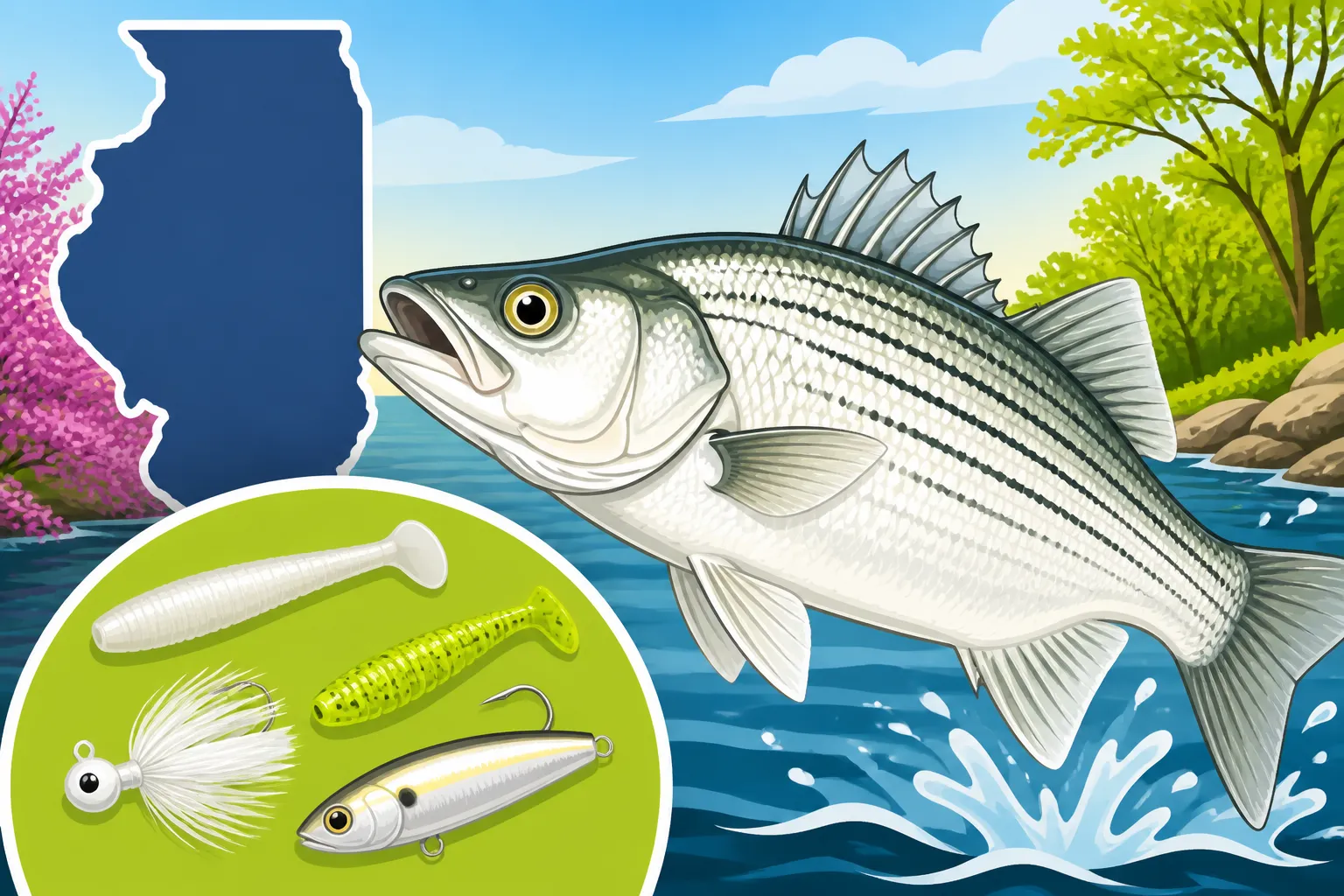
Best Bait for White Bass During the Spring Run
Trying to hit the white bass run in Illinois can be an incredibly rewarding experience, but if you don't have the right bait, it can quickly turn into a frustrating bust. Those aggressive schooling fish move fast and feed hard, and knowing exactly what to tie on can make all the difference between an empty cooler and a limit catch. This guide is all about cutting through the guesswork and showing you the best baits to use for white bass during their exciting spring run, so you can make the most of those precious few weeks.
Understanding the White Bass Spring Run
The white bass spring run is one of the most anticipated events for many Illinois anglers, and for good reason! These feisty fish gather in massive schools, migrating upstream from larger lakes and rivers into smaller tributaries to spawn. It's a period of intense feeding and aggressive behavior, making them relatively easy targets if you're in the right place with the right presentation. Knowing when and where to intercept them is half the battle, but having the proper bait seals the deal.
During this time, white bass are primarily focused on two things: finding suitable spawning grounds and fueling up. They become less particular about what they eat compared to other times of the year, but they're still highly tuned to specific prey types and movements. Water temperature plays a huge role in triggering the run, typically starting when temperatures creep into the upper 40s and really kicking off in the 50-60 degree range. They’ll chase anything that looks like a small baitfish, a shad, or even certain insect larvae, making lure selection crucial for mimicking their natural forage.
Why Spring Fishing is Different for White Bass
Spring is a unique beast for white bass fishing compared to other seasons. In summer, they might scatter more, retreating to deeper, cooler waters, and in fall, they'll school up again but often in different patterns and locations. But spring? It's all about that frantic, instinct-driven push upstream. They’re driven by the urge to spawn, and that means they’re often concentrated in predictable areas like river bends, current breaks, riffles, and dam discharges. This predictable aggregation means you can often find huge numbers of fish in relatively small areas.
Their feeding behavior shifts too. While they’re still primarily chasing baitfish, their aggression levels are through the roof. They’re less subtle and more reactive. This allows for faster retrieves and more erratic movements with your lures, which can be less effective in other seasons when the fish are more lethargic or spooky. You might find that what worked for a single white bass in late summer won't cut it when they're stacked up in the hundreds during the spring run.
Prime Locations for Spring White Bass in Illinois
When we talk about the white bass spring run in Illinois, our minds immediately go to the major river systems and large reservoirs. The Illinois River, particularly its lower stretches and tributaries, is legendary for its white bass. You'll find them pushing into feeder creeks and smaller rivers that flow into it. The Mississippi River, too, especially the sections with dams and locks, sees incredible runs. Anglers often find success near wing dams and current breaks along the river.
Beyond the big rivers, our larger lakes like Rend Lake Fishing Guide for Illinois Anglers, Lake Shelbyville Fishing Guide, and Carlyle Lake Fishing Guide are prime locations. The white bass that spend their lives in these reservoirs will migrate into the upper arms of the lakes and their inflowing rivers or creeks to spawn. Focus on areas where there's a good current, especially after rain events that might increase water flow. These currents often concentrate baitfish, which in turn draws in the hungry white bass. Scouting these specific areas before the run is key, as conditions can change year to year.
Top Baits for White Bass: The Essentials
When it comes to white bass during their spring run, simplicity and effectiveness often go hand-in-hand. You don't need a tackle box overflowing with exotic lures; rather, a few tried-and-true classics, presented correctly, will typically outfish everything else. These fish are aggressive, reacting well to flash, vibration, and quick movements that mimic escaping baitfish. Having a good selection of these foundational baits is crucial for any successful spring white bass outing.
The key here is versatility. While one bait might be hot one day, another could be the ticket the next, depending on water clarity, current speed, and even the mood of the fish. Always start with what's proven, but don't be afraid to experiment with color or retrieve speed if the bite slows down. Sometimes a subtle change can trigger a feeding frenzy, especially when you're dealing with such a highly competitive species during their spawning migration.
Small Jigs and Twister Tails
Ah, the humble jig! This is probably the most consistently effective bait for white bass during the spring run, hands down. We're talking about small jigs, typically 1/8 to 1/4 ounce, paired with either a curly-tail grub (often called a twister tail) or a small shad-imitating soft plastic. The weight of the jig allows you to get down to where the fish are holding in the current, and the soft plastic provides the enticing action.
Colors can vary, but chartreuse, white, and pearl are perennial favorites. Sometimes, a combination like chartreuse/white or even a more natural silver flake can be absolutely deadly. You want to cast these upstream or across the current and let them tumble downstream, just above the bottom, occasionally twitching your rod tip to give the tail some extra movement. The white bass will often strike on the fall or as the jig sweeps through a seam. It’s a great idea to have a variety of jig head weights and soft plastic sizes on hand, and you can stock up on popular brands and colors easily on Amazon before your trip.
Inline Spinners
Inline spinners are another absolute killer for spring white bass. Think about classic brands like Rooster Tails or Mepps — they’ve been catching white bass for generations for a reason. The flash and vibration created by the spinning blade are irresistible to these aggressive fish, especially in stained or murky water where visibility might be lower. They excel in moderate to fast current and can be fished effectively both from shore and a boat.
Sizes in the #1 to #3 range are usually perfect. Again, white, chartreuse, and silver are excellent color choices for the blade and skirt combination. The retrieve is pretty straightforward: cast it out and reel it in at a steady pace, just fast enough to get the blade spinning. You want the lure to stay in the strike zone, which is often near the bottom or mid-column. The consistent throb of the blade mimics a frantic baitfish, often triggering instinctual strikes from hungry white bass.
Small Crankbaits
When the white bass are really fired up and chasing aggressively, small crankbaits can be incredibly effective. These are excellent for covering water quickly and drawing reaction strikes. Look for crankbaits in the 1/4 to 1/2 ounce range that dive to shallow or medium depths, typically 3-8 feet. Shad imitations are fantastic, with colors like chrome, silver, or natural baitfish patterns working best.
Crankbaits are especially good if you're fishing from a boat and can troll slowly through known white bass holding areas, or if you're casting across wider stretches of river or lake. The erratic wobble and diving action of a crankbait perfectly mimic a fleeing baitfish, and the vibrations can be felt from a distance, drawing fish in. Experiment with retrieve speeds – sometimes a slow, steady retrieve works, and other times a fast, erratic stop-and-go presentation can trigger more strikes. Many anglers find it convenient to browse a wide array of crankbait sizes and colors on Amazon.
Blade Baits
Blade baits are a bit of a secret weapon for many seasoned white bass anglers, especially when the fish are holding deeper or in strong currents. Lures like the Heddon Sonar or the Cicada are excellent examples. These compact, heavy lures vibrate intensely on the retrieve and sink quickly, making them perfect for vertical jigging or casting and retrieving through deep holes and swift current.
The key to fishing blade baits is the retrieve: a lift-and-fall motion that allows the bait to flutter down, mimicking a dying baitfish. The vibration on the lift is what really gets their attention, and they often strike as the lure falls. Chrome, silver, and gold are classic colors, but sometimes brighter options like chartreuse can be effective in darker water. Blade baits are very versatile and can be fished from shore or boat, making them a must-have for those tough-to-reach white bass.
Advanced Lures and Techniques
While the essential baits will catch you plenty of white bass during the spring run, sometimes you need to pull out a few extra tricks or refine your approach. Conditions can change rapidly – water clarity, current flow, and even fishing pressure can affect how white bass respond. Having a few advanced lure options and techniques in your arsenal can turn a slow day into a memorable one, especially when the fish are being a bit more finicky or holding in unusual spots.
These techniques often involve subtle adjustments or specialized gear that allows for a more precise presentation. Don't be intimidated; mastering these can significantly increase your catch rate and make you a more versatile angler. Remember, white bass are schooling fish, so once you figure out what they want and where they are, the action can be non-stop!
Jigging Spoons
Jigging spoons might not be the first thing many anglers grab for white bass, but they can be incredibly effective, especially when white bass are schooled up deep. These heavy, flashy spoons, like a Kastmaster or a Little Cleo, sink quickly and have a distinctive wobble on the fall that drives aggressive fish wild. They're particularly useful if you're fishing from a boat over a deep drop-off or a river channel where fish are congregated.
The technique is simple but effective: drop the spoon to the desired depth, then sharply lift your rod tip a foot or two, letting the spoon flutter back down on a semi-slack line. Most strikes will occur as the spoon falls. The flash and vibration are a huge draw, and the heavy weight allows you to maintain contact in strong currents. Sizes from 1/4 to 1/2 ounce are generally suitable, with silver, gold, or flashy perch patterns being good choices. Best Fishing Spots in Illinois often have deep holes where these spoons shine.
Soft Plastic Swimbaits
Small soft plastic swimbaits, rigged on a lightweight jig head, offer a more realistic baitfish profile and swimming action than a traditional twister tail. These can be particularly effective in clearer water conditions or when the white bass are being a bit shy and not reacting as aggressively to flash. Brands like Keitech or Strike King make excellent small swimbaits that can be absolutely deadly.
Rig them on a 1/8 or 1/4 ounce jig head, matching the hook size to the bait. The retrieve is typically a steady retrieve, allowing the paddle tail to do its work, creating a subtle thumping vibration and enticing swimming motion. You can also incorporate a stop-and-go retrieve or a gentle lift-and-fall to mimic an injured baitfish. Natural baitfish colors like silver, shad, or pearl are often best, but don't shy away from a bright chartreuse if the water is stained.
Trolling Small Jigs or Crankbaits
While many anglers focus on casting for white bass during the spring run, trolling can be a highly efficient method, especially from a boat, to cover large areas and locate schooling fish. This is particularly true on larger lakes or wider river sections. The key is to troll very slowly, often just fast enough for your lure to have its intended action.
You can troll small jigs (especially those rigged with soft plastic twister tails or swimbaits) or small crankbaits. Using multiple rods with different lures and depths can help you dial in what the fish are looking for that day. Pay close attention to your electronics; once you mark fish, you can focus your trolling passes on that specific depth and area. This technique is often overlooked for white bass but can be incredibly productive, allowing you to intercept nomadic schools that might not be accessible from a stationary position. It's a great way to explore Top Illinois Lakes for Fishing.
| Bait Type | Ideal Conditions | Retrieve Style | Key Advantage |
|---|---|---|---|
| Small Jigs/Grubs | Varied, current breaks, river bends | Lift/fall, steady retrieve | Versatile, natural action, subtle |
| Inline Spinners | Moving water, stained to clear | Steady retrieve | Flash & vibration, covers water quickly |
| Small Crankbaits | Aggressive fish, searching, trolling | Steady, erratic, stop-go | Reaction strikes, good for covering water |
| Blade Baits | Deep water, strong current, vertical | Lift/fall jigging | Intense vibration, fast sink rate |
| Jigging Spoons | Deep schools, vertical jigging | Lift/fall jigging | Flash, heavy, gets deep quickly |
| Soft Plastic Swimbait | Clearer water, realistic presentation | Steady, subtle twitches | Natural profile, enticing swim action |
Putting It All Together: Tips for Success
Now that you've got a good handle on the best baits for white bass during their spring run, let's talk about putting it all into practice. Having the right lure is only part of the equation; understanding how to present it, when to adjust, and what conditions to look for will elevate your success significantly. White bass are often abundant, but they can also be finicky, and paying attention to the details makes all the difference.
Remember, the spring run is a relatively short window of opportunity, so you want to maximize your time on the water. Be prepared, stay mobile if necessary, and don't be afraid to try different things. Every day on the water is a learning experience, and the more you pay attention to fish behavior and environmental cues, the better you'll become at consistently finding and catching these energetic fish.
Reading the Water and Current
One of the most crucial skills for spring white bass fishing is learning to "read" the water, especially in river systems. White bass will often congregate in specific areas where current is broken or where baitfish are concentrated. Look for current seams, eddies behind submerged structure, the calmer water on the inside bends of rivers, or even the scour holes below dams or rapids. These are all prime ambush points.
Understanding how your bait interacts with the current is also vital. When casting jigs or blade baits, you generally want to cast slightly upstream and allow the current to carry your lure downstream into the strike zone. This natural presentation allows your bait to drift as a real baitfish would, making it more appealing. For inline spinners or crankbaits, cast across or slightly downstream, reeling just fast enough to engage the lure's action while battling the current. This helps you maintain control and keep the lure in the productive areas.
The Importance of Presentation and Retrieve Speed
Even with the perfect bait, a poor presentation can mean the difference between a bite and nothing. White bass, especially during the spring run, often react to a specific retrieve speed or action. Sometimes a slow, steady retrieve is best, allowing the lure to wobble enticingly. Other times, a fast, erratic retrieve that mimics a fleeing baitfish will trigger violent strikes. Don't be afraid to experiment.
For jigs and blade baits, a lift-and-fall retrieve is often deadly. Lift your rod tip to make the lure jump, then let it fall on a controlled slack line. Many bites happen on the fall, so watch your line for any twitch or hesitation. With inline spinners and crankbaits, vary your retrieve speed until you find what works. Sometimes, a quick pause or a sudden burst of speed can be the trigger. Remember to keep a keen eye on your line – white bass hits can sometimes be subtle, a mere "tick" before the rod loads up.
Essential Gear Beyond the Bait
While we've focused heavily on bait, having the right supporting gear will make your spring white bass fishing much more enjoyable and successful. A medium-light to medium action spinning rod, around 6 to 7 feet long, paired with a reliable spinning reel spooled with 6-8 pound monofilament or fluorocarbon is a great all-around setup. Some anglers prefer braided line for its sensitivity, especially when fishing jigs in current. You can find a good selection of quality lines on Amazon.
Beyond your rod and reel, make sure you have a landing net – when you hit a school of white bass, the action can be furious, and a net saves time and reduces lost fish. Pliers are essential for removing hooks safely, and a small tackle box or bag with extra jigs, soft plastics, and a few inline spinners and crankbaits will keep you prepared for changing conditions. Don't forget your Illinois Fishing License Guide for 2026! Having the right gear helps you focus on the fishing rather than fumbling with equipment.
Respecting the Resource and Regulations
Finally, a quick but crucial reminder: always be mindful of local regulations. The white bass run is a period of intense fishing pressure, and it's vital that we all do our part to preserve this amazing fishery for future generations. Check the Illinois Fishing Regulations Overview for specific catch limits and any special regulations that might apply to the particular body of water you're fishing. Often, daily limits are generous for white bass, but it's important to know them.
Practice responsible angling: only keep what you'll eat, release fish carefully if you're not keeping them, and clean up any trash you bring to the water. Learning Illinois Fishing Season and Catch Limit Rules is part of being a good steward of the resource. The spring white bass run is a fantastic opportunity for fast action and delicious fish, and by following best practices, we can ensure it remains a highlight of the Illinois fishing calendar for years to come.
Disclaimer
This article is for general informational purposes only and does not constitute professional advice. Laws, prices and regulations vary by location and change over time. Consult a qualified professional for guidance on your specific situation.