How to Catch Catfish on the Mississippi River
Fishing the mighty Mississippi River for catfish can feel like tackling a whole different beast compared to a quiet lake or pond. The sheer power of the current, the vastness of the water, and the unique challenges of navigation can be intimidating, leading many anglers to scratch their heads about where to even begin. But don't you worry, this comprehensive guide is going to break down everything you need to know to successfully target and land those hard-fighting catfish that call the Illinois stretch of the Mississippi home.
Understanding Mississippi River Catfish
When you talk about catfish on the Mississippi River, you're not just talking about one kind of fish. This incredible waterway is home to several distinct species, each with its own personality and preferences. Knowing what you're up against is the first step to a successful outing.
Species You'll Encounter
The Mississippi River in Illinois is a prime habitat for three main species of catfish: Channel Catfish, Blue Catfish, and Flathead Catfish. They're all tough fighters and delicious table fare, but they have some key differences.
- Channel Catfish: These are likely the most common and widespread catfish you'll encounter. Channel cats are recognizable by their forked tails, spotted bodies (especially when younger), and relatively slender build. They're opportunistic feeders, meaning they'll eat just about anything, which makes them a fantastic target for anglers of all skill levels. You'll find them almost everywhere in the river, from slow backwaters to main channel areas with moderate current. If you're wondering which species is best for eating, many argue that the smaller channel catfish, often under five pounds, offer the best flavor. For more on these amazing fish, check out our guide on Illinois Channel Catfish Daily Limit Explained.
- Blue Catfish: If you're after serious size, the blue catfish is your quarry. These beasts are the largest catfish species in North America, with individuals capable of weighing over 100 pounds! Blues have a distinctly forked tail, a noticeable hump on their back, and are, as their name suggests, typically slate blue to gray in color without spots. They prefer strong currents and deeper water, often congregating in main channel holes, scour points, and near wing dams. Catching a trophy blue cat often requires heavy tackle and patience, but the reward is immense. You can learn more about where these giants are caught in Illinois Blue Catfish: Where the Biggest Fish Are Caught.
- Flathead Catfish: The flathead is truly a unique creature among catfish. They have a flattened head, a lower jaw that protrudes past the upper, and a rounded (not forked) tail. Their coloration is mottled brown and yellow, giving them excellent camouflage in their preferred snag-filled environments. Unlike channel and blue cats, flatheads are almost exclusively piscivorous, meaning they eat live fish. This dictates a very different approach to bait selection and presentation. They love to hide in woody cover, submerged timber, and undercut banks, waiting to ambush prey. Targeting these fish often means getting down and dirty in heavy cover.
Habitat and Behavior in a Big River System
The Mississippi River is a dynamic and complex ecosystem, far more intricate than a static lake. Catfish, especially blues and flatheads, are masters of using the river's current and structure to their advantage.
- Current is Key: For blue cats, current is life. They thrive in it, using it to help them breathe and to bring food to them. Look for them in areas where the current is strong but has a "seam" or an eddy where they can sit just out of the main flow, conserving energy while waiting for prey to drift by. This could be behind wing dams, on the downstream side of islands, or in deep holes where the current slows near the bottom. Channel cats also like current but are more tolerant of slower waters.
- Structure and Cover: Both natural and man-made structures are catfish magnets. Submerged trees, log jams, rock piles, wing dams, bridge pilings, and deep channel bends all provide cover, ambush points, and current breaks. Flatheads, in particular, are almost always associated with heavy cover. If you can find a deep hole with plenty of submerged timber, you've likely found a flathead haven. For bank anglers, fishing near bridge abutments or riprap can be very productive. Understanding the different sections of the river can really boost your success, as our article on Mississippi River Fishing in Illinois: Which Species Live Where details.
- Seasonal Movements: Catfish behavior shifts with the seasons and water temperatures. In spring, as water warms, they move into shallower areas to feed and eventually spawn. Summer sees them holding in deeper, cooler water during the day, often moving shallower to feed at night. Fall can bring on aggressive feeding binges as they fatten up for winter, and winter usually means they'll stack up in deep, slow-moving holes, becoming more lethargic. Knowing the Illinois Fishing Seasons Guide can help you predict these movements.
Essential Gear for Mississippi River Catfishing
You wouldn't bring a butter knife to a steak dinner, and you certainly shouldn't bring light tackle to the Mississippi River if you're serious about catfish. This river demands robust gear capable of handling strong currents and powerful fish.
Rods, Reels, and Line Strength
Forget your panfish setups; you'll need heavy-duty equipment for consistent success here.
- Rods: For river catfishing, a medium-heavy to heavy action rod, typically 7 to 10 feet long, is ideal. The extra length helps with casting heavier baits, controlling fish in current, and getting more leverage. A strong backbone is crucial for setting hooks into tough mouths and pulling big fish out of snags. Ugly Stik, for example, offers a range of durable rods often favored by catfishermen, and you can find many suitable options on Amazon.
- Reels: Baitcasting reels are king for Mississippi River catfishing due to their power, line capacity, and durability. Look for reels with a good drag system and a strong retrieve. Larger spinning reels can work for smaller channel cats or if you prefer them, but for big blues and flatheads, a sturdy baitcaster is a must. The ability to cast heavy weights and resist the constant strain of the current is paramount.
- Line Strength: Braided line, with its superior strength-to-diameter ratio and minimal stretch, is highly recommended. For channel cats, 30-50 lb braid is usually sufficient. When targeting large blue cats or flatheads in heavy current and cover, don't shy away from 60-100 lb braided line. This might sound like overkill, but it's essential for pulling snags free and turning a trophy fish away from hazardous structure. If you prefer monofilament, bump up your pound test considerably, perhaps 20-30 lb for channel cats and 40-60 lb for larger species. A leader of fluorocarbon or heavy mono (often 50-80 lb) can be useful for abrasion resistance against rocks and logs.
Terminal Tackle and Rigs
Your terminal tackle needs to be as robust as your rod and reel. Skimping here will lead to lost fish and frustration.
- Hooks: Large, strong hooks are essential. Circle hooks, in sizes 5/0 to 10/0, are very popular because they minimize gut-hooking and are highly effective at catching fish in the corner of the mouth once the fish takes the bait and swims away. J-hooks can also be used, but require more precise hook sets. The size depends on your target species and bait size; smaller hooks for cut bait for channel cats, larger hooks for whole live baits for flatheads or big blues.
- Sinkers: The Mississippi's current demands heavy sinkers to keep your bait in place. Pyramidal, no-roll, or flat sinkers are excellent choices, as they dig into the bottom and resist rolling. Carry a variety of weights, from 2 ounces up to 8 ounces or more, depending on the current strength. Having a selection is crucial, as what works in one spot might not hold in another.
- Swivels and Leaders: High-quality barrel or three-way swivels prevent line twist. Use heavy-duty snap swivels if you plan on changing sinker weights frequently. Leaders of 50-80 lb monofilament or fluorocarbon (12-24 inches long) are common to provide a buffer against abrasive river bottom and sharp fins.
- Common Rigs:
- Carolina Rig: A classic for a reason, this rig involves a sinker sliding on the main line above a swivel, with a leader connecting the swivel to your hook. It allows the fish to pick up the bait without feeling the weight of the sinker immediately. It's a great all-around rig for all catfish species.
- Santee Cooper Rig: A variation of the Carolina rig, this adds a small float (often a peg float) on the leader, just above the hook. This float lifts the bait slightly off the bottom, keeping it visible and out of the silt, which can be particularly effective in muddy or debris-laden water.
- Three-Way Swivel Rig: This rig uses a three-way swivel, with your main line tied to one eye, a leader to your sinker tied to another (often a lighter line so you can break off just the sinker if snagged), and a leader to your hook tied to the third. This is excellent for presenting bait in strong currents and can keep your bait suspended just off the bottom. You can learn more about this and other setups in our Catfish Bottom Fishing Techniques guide.
Bait Selection for River Cats
This is where the nuances of different catfish species truly come into play.
- Channel Catfish: As omnivores, channel cats are not picky. Prepared baits (stink baits, blood baits), chicken livers, nightcrawlers, cut shad, skipjack, or even hot dogs will work. Many popular brands of prepared catfish bait are readily available, and you might even find some good deals on Amazon.
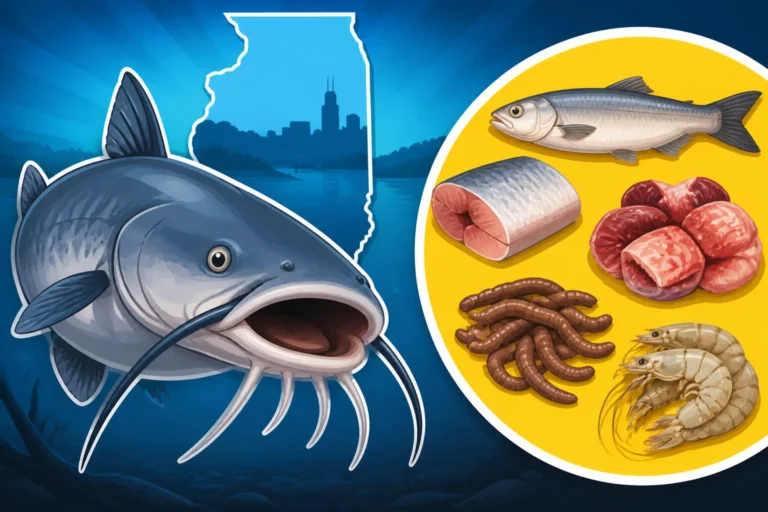
- Blue Catfish: While blues will occasionally take prepared baits, fresh cut bait is by far the most effective. Shad, skipjack herring, carp, or even small pieces of rough fish like drum are excellent choices. Freshness is paramount – if you can catch your bait fish on the day you're fishing, even better. Large chunks or strips of oily fish will release scent into the current, drawing blues in. Learn more about the best options in Best Bait for Blue Catfish.
- Flathead Catfish: Flatheads are the most particular; they prefer live bait. Small to medium-sized sunfish (bluegill, green sunfish), bullheads, or carp are top choices. The bait should be lively and presented on a sturdy hook that allows it to swim naturally. Make sure your live bait adheres to any local regulations regarding size and species. Best Live Bait for Flathead Catfish provides additional insights.
Proven Techniques for Mississippi River Catfish
Whether you're fishing from the bank or a boat, the Mississippi offers distinct challenges and opportunities. Adapting your approach to the environment is key.
Bank Fishing Strategies
Don't have a boat? No problem! The Mississippi River offers fantastic bank fishing, especially for channel catfish and occasionally decent blues and flatheads if you pick your spots wisely.
- Scout Your Location: Look for public access points, parks, and boat ramps along the river. Focus on areas with current breaks, such as the inside bends of the river, downstream sides of wing dams, bridge pilings, or areas with riprap. These spots concentrate baitfish and provide ambush points for catfish. Don't be afraid to walk and explore.
- Casting into Current Seams: Cast your bait upstream of where you expect the fish to be, allowing the current to carry it naturally down into a current seam or eddy. Use enough weight to hold your bait on the bottom without it rolling excessively.
- Targeting Structure: Fish near any visible structure: submerged trees, brush piles, or rock formations. These are natural holding spots. If the current is strong, a three-way swivel rig can be particularly effective for keeping your bait near the bottom without getting swept away.
- Night Fishing: Catfish, particularly channel cats, are often more active at night, especially during warmer months. This is when they move into shallower areas to feed. Equip yourself with a headlamp, insect repellent, and be aware of your surroundings. Our How to Catch Catfish at Night guide offers detailed tips.
Boat Fishing Tactics
Having a boat opens up a whole new world of opportunities on the Mississippi, allowing you to access prime spots that are unreachable from shore.
- Anchoring: This is a classic method. Find a promising spot – a deep hole, a scour mark downstream of a wing dam, a major current seam, or a log jam. Anchor securely upstream of the spot, then cast your baits downstream into the target zone. Use a heavy anchor and plenty of rope, as the Mississippi current can be unforgiving. Consider using two anchors (bow and stern) in very strong currents to keep your boat stable.
- Drifting: Drifting involves letting the current carry your boat and baits along a promising stretch of river. This allows you to cover a lot of water and present your bait to numerous fish. Use a controlled drift with a drift sock or by occasionally bumping your motor into reverse to slow your pace. This technique is especially effective for blue catfish. When drifting, multiple rods can be deployed, each with a different bait or rig, to see what the fish are preferring.
- Trolling: While less common for the biggest flatheads, controlled trolling can be effective for covering vast stretches of the river and targeting channel or blue catfish. Use heavy sinkers or planer boards to get your baits down to the desired depth. This can be a great way to locate active schools of fish.
- Targeting Wing Dams: Wing dams are man-made structures designed to constrict the river's flow and deepen the main channel. They create incredible fishing opportunities. Fish the upstream side where fish stack up in eddies, and especially the downstream side where deep scour holes form. The slack water behind the wing dam also offers a current break.
- Navigating Backwaters: The Mississippi is full of productive backwaters, sloughs, and secondary channels. These areas often have less current and hold good numbers of channel cats, crappie, and bass. Exploring these can offer a change of pace and different fishing conditions.
Seasonal Considerations and Timing
Catfish bite best when water temperatures are favorable. Your approach will change significantly from spring to fall.
- Spring: As ice melts and water temperatures rise into the 50s and 60s (Fahrenheit), catfish become more active and move shallower to feed aggressively after a winter of relative dormancy. Focus on shallower flats, creek mouths, and areas that warm up quickly. The pre-spawn period is a fantastic time for both numbers and size.
- Summer: This is prime time for many catfishermen. During hot summer days, catfish will often retreat to deeper, cooler water, but they become highly active feeders during low light hours, especially at dawn, dusk, and throughout the night. Focus on deep holes, channel edges, and structure during the day, and then move to shallower flats or riprap banks at night. Our Best Month for Catfish Fishing in Illinois details peak times.
- Fall: As water temperatures begin to drop, catfish will go on a major feeding binge to pack on fat for the winter. This can be one of the best times to catch trophy-sized fish. They'll often be found in transitional areas between shallow feeding grounds and deeper wintering holes. Look for them along drop-offs and channel breaks.
- Winter: Catfishing slows considerably in winter, but it's not impossible. Catfish will stack up in deep, slow-moving holes, often in large numbers. Their metabolism slows, so they won't be as aggressive, but a well-presented bait can still entice a strike. Use smaller baits and a slower presentation.
Navigating the Mississippi: Safety and Regulations
The Mississippi River is a powerful natural force, and safety should always be your top priority. Furthermore, you need to be aware of the specific fishing regulations that apply to this unique waterway.
Boating Safety and River Hazards
The Mississippi is not a lake. It demands respect and constant vigilance.
- Know the River: Study navigation charts, be aware of buoy markers, and understand the river's unique features like wing dams, dikes, and submerged structures. River levels can fluctuate dramatically, exposing new hazards or submerging old ones.
- Current Awareness: Always be mindful of the current. It can be incredibly strong and can quickly pull an inexperienced boater into dangerous situations. When anchoring, ensure your anchor is well-set and strong enough to hold your boat. Always anchor from the bow, never the stern, to prevent swamping.
- Barge Traffic: The Mississippi is a major commercial waterway. Barges have the right-of-way, and their wakes can be enormous and dangerous to smaller boats. Give them a wide berth, and be prepared for large waves.
- Weather: Storms can develop quickly on the river. Always check the forecast and be prepared to get off the water if conditions deteriorate. Strong winds combined with current can create very challenging boating conditions.
- Life Jackets: Every person on board must have a Coast Guard-approved life jacket. Children under 13 are required to wear a life jacket at all times when underway. It's simply smart practice for everyone to wear one on the Mississippi, given its power. For more on this, consult the Illinois Life Jacket and PFD Rules.
- Boater Education: If you're a newer boater, especially if you operate a motor greater than 10 horsepower and were born after a certain date, you might need an Illinois Boater Education Card Requirements. Even if not required, taking a boater safety course is highly recommended.
Illinois Fishing Regulations Specific to the Mississippi
Fishing on a border river like the Mississippi often comes with special regulations, sometimes differing from statewide rules.
- Fishing License: You absolutely need an Illinois fishing license. If you're fishing from an Illinois bank or in Illinois waters, you're subject to Illinois law. If you're an out-of-state angler, you'll need an Illinois Nonresident Fishing License Guide.
- Reciprocity: The Mississippi River acts as a border with several states. Illinois often has reciprocal agreements with neighboring states (like Missouri and Iowa) allowing anglers with a valid license from either state to fish certain shared boundary waters. Always confirm the specific reciprocity rules for the exact section of the river you plan to fish, as they can have nuances. Check our guide on Illinois Fishing License Reciprocity With Missouri or Illinois Fishing License Reciprocity With Iowa for details.
- Catch and Size Limits: While statewide limits apply for many species, the Mississippi River often has its own set of specific regulations for catfish. Always consult the current Illinois Fishing Information Guide (available from the Illinois Department of Natural Resources or where licenses are sold) for the precise daily catch limits and size restrictions for Channel, Blue, and Flathead Catfish on the Mississippi River. These can and do change, so checking annually is a must.
- Trotlines and Jug Lines: These passive fishing methods are popular for catfish on the Mississippi, but they are highly regulated. There are strict rules on the number of hooks, length of lines, bait restrictions, and tagging requirements. Never deploy these methods without fully understanding the current Illinois Fishing Regulations Overview. Violations can lead to hefty fines and confiscation of gear. Our guides on Catfish Trotline Setup Guide and Catfish Jug Fishing Techniques cover these in detail, but always cross-reference with the latest official guide.
Here's a quick reference table for common Mississippi River catfish species, their preferences, and tackle suggestions:
| Catfish Species | Preferred Habitat | Primary Diet | Recommended Bait | Recommended Tackle |
|---|---|---|---|---|
| Channel Catfish | Moderate current, backwaters, bends | Omnivore (opportunistic) | Cut bait, prepared bait, worms, chicken liver | Medium-heavy rod, 30-50lb braid, 5/0-7/0 circle hooks |
| Blue Catfish | Strong current, deep holes, wing dams | Piscivorous (fish) | Fresh cut bait (shad, skipjack, carp) | Heavy rod, 60-100lb braid, 7/0-10/0 circle hooks |
| Flathead Catfish | Heavy cover, submerged timber, undercut banks | Piscivorous (live fish) | Live bait (sunfish, bullheads, carp) | Heavy rod, 60-100lb braid, 8/0-10/0 circle hooks (stronger) |
Fishing the Mississippi River for catfish is an incredible adventure that offers big rewards for those willing to learn its ways. By understanding the species, equipping yourself with the right gear, and employing proven techniques while always prioritizing safety and adherence to regulations, you'll be well on your way to creating unforgettable angling memories on this legendary waterway. Tight lines!
Disclaimer
This article is for general informational purposes only and does not constitute professional advice. Laws, prices and regulations vary by location and change over time. Consult a qualified professional for guidance on your specific situation.