Illinois Walleye vs Sauger vs Saugeye: Key Differences
It's incredibly common for anglers, especially those new to the diverse waters of Illinois, to look at a fish they've just pulled from the water and wonder, "Is this a walleye, a sauger, or something else entirely?" The truth is, these three fish can look remarkably similar at first glance, leading to confusion and, sometimes, even unintentional violations of fishing regulations. This comprehensive guide is here to clear up that mystery once and for all, providing you with the knowledge to confidently identify walleye, sauger, and their unique hybrid, the saugeye, so you can enjoy your time on the water with clarity and respect for Illinois' valuable fish populations.
The Walleye: Illinois' Prized Gamefish
The walleye, a member of the perch family, is arguably one of the most sought-after game fish in Illinois. Known for its delicious white, flaky meat and challenging fight, it’s a favorite target for many anglers across the state. But before you can enjoy the reward, you need to be sure you've actually caught a walleye and not one of its lookalikes.
Key Physical Characteristics of Walleye
Walleye have several distinguishing features that, once you know what to look for, make them stand out from sauger and saugeye. Their overall sleek profile and distinct coloration are often the first clues. They tend to be more torpedo-shaped than their cousins, built for speed in open water.
Eye and Dorsal Fin Spot
Perhaps the most famous identifier for a walleye is its "walleyed" eyes, which appear cloudy or opaque, particularly when exposed to light. This is due to a reflective layer called the tapetum lucidum, which helps them see in low light conditions—hence their name. More reliably for identification, look at the lower lobe of the walleye's tail fin. You'll almost always find a distinct, milky white tip on the bottom caudal fin lobe. This white tip is a consistent and very useful marker.
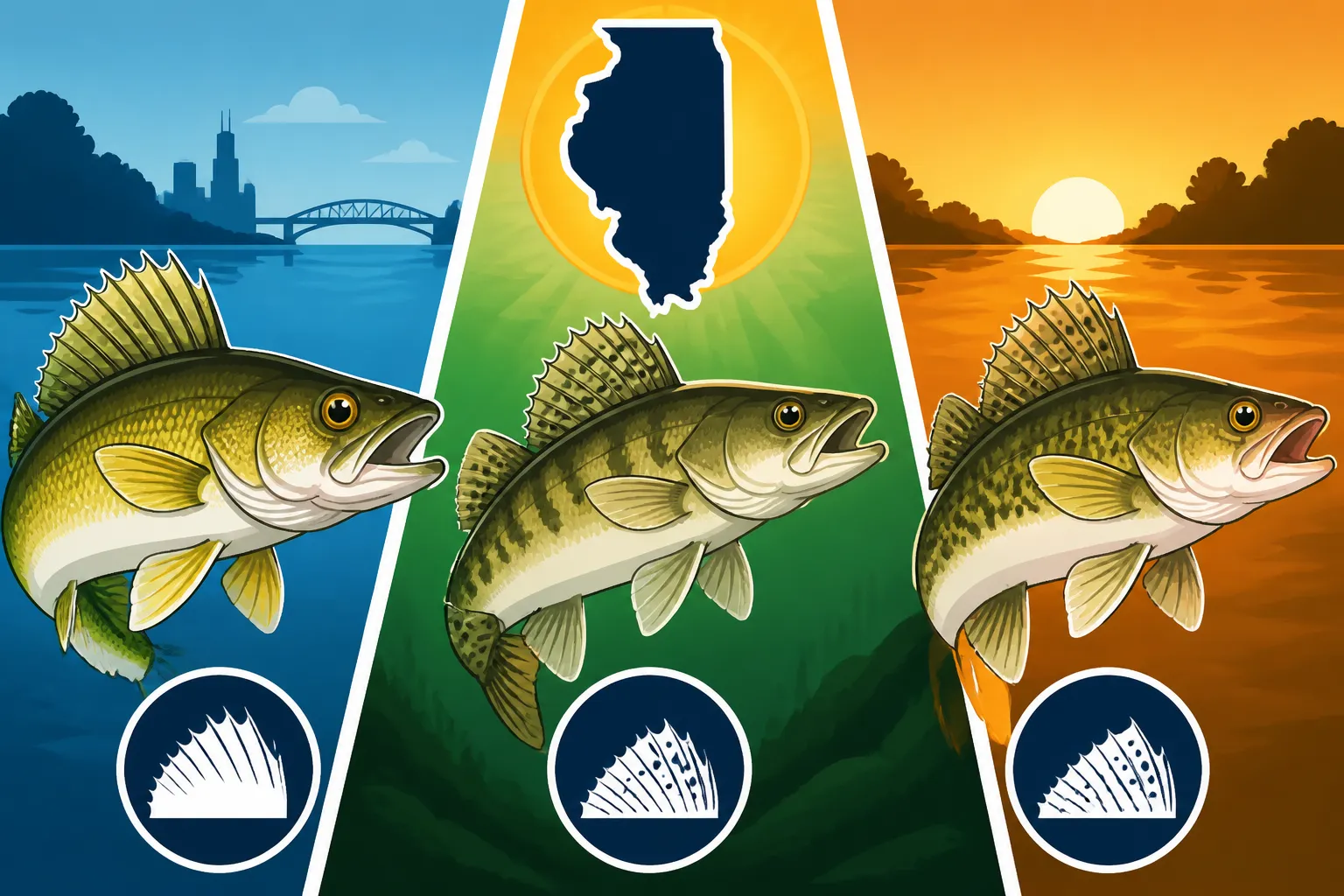
Another critical feature is on their spiny dorsal fin. Unlike the sauger, a pure walleye will not have distinct spots on its spiny dorsal fin. Instead, it will have a large, dark, often black blotch or spot at the very posterior (back) base of the spiny dorsal fin. This is a solid, dark mark, not a series of scattered spots. If you see clear, distinct rows of spots across the entire fin, it’s likely not a pure walleye.
Body Shape and Coloration
Walleye generally have a more uniform body coloration, ranging from olive to golden brown on their backs, fading into a lighter, often yellowish-white belly. They usually display subtle, saddle-like blotches or bars on their sides, but these are typically less pronounced and distinct than those found on a sauger. Their scales are relatively smooth, and their overall appearance is more streamlined.
Their teeth are another characteristic. While all three fish have sharp teeth, the walleye's teeth are typically quite prominent, especially the canine teeth in the front of their jaws. This powerful dentition is perfect for grasping prey like shad, minnows, or smaller panfish. Understanding these subtle differences can make all the difference when you're trying to quickly identify your catch on the water.
Where Walleye Are Typically Found in Illinois
Walleye are quite adaptable, and you can find them in a variety of Illinois waters, though certain types of habitats tend to produce them more consistently. They generally prefer clearer, cooler water than sauger.
Lake Michigan and Large Reservoirs
Illinois is incredibly fortunate to have a stretch of Lake Michigan, which boasts a fantastic walleye fishery. Anglers regularly target walleye here, especially around structures like breakwaters, reefs, and river mouths. These fish can grow quite large in the vast waters of Lake Michigan, offering exciting opportunities for trophy catches. If you're planning a trip, checking out Lake Michigan Salmon and Trout Fishing in Illinois might give you some insights into the wider fishery.
Beyond Lake Michigan, many of Illinois' large impoundments and reservoirs are prime walleye territory. Lakes like Shabbona Lake, Lake Shelbyville, and Carlyle Lake are regularly stocked and managed for healthy walleye populations. These larger bodies of water offer plenty of open space, deep drop-offs, and schooling baitfish, which walleye absolutely love. Anglers often find success trolling crankbaits or jigging spoons near submerged structures in these lakes.
Rivers and Smaller Lakes
While not as prevalent in all rivers as sauger, walleye can still be found in significant numbers in certain river systems, particularly those with good water quality and rocky bottoms. The Rock River and portions of the Illinois River are known for holding walleye populations, especially during their spawning runs. Here, they often congregate in deeper pools, current breaks, and around bridge pilings.
Smaller lakes and state park ponds that are actively managed and stocked by the Illinois Department of Natural Resources (IDNR) also provide excellent walleye fishing opportunities. These smaller, more intimate settings can be great for bank anglers or those in kayaks, offering a chance to catch walleye without needing a big boat. Knowing Illinois Walleye Stocked Lakes: Where IDNR Puts Fish Each Year can be a huge advantage for planning your next outing.
The Sauger: Walleye's Smaller, Spotted Cousin
While often confused with the walleye, the sauger is a distinct species with its own unique characteristics and preferred habitats. Generally smaller than walleye, sauger are nonetheless a feisty and delicious fish, highly valued by anglers, particularly in river systems.
Distinctive Features of the Sauger
Sauger are typically smaller and have a slightly more slender body profile compared to walleye. They share the overall "perch" family look but exhibit different patterns and markings that are key to proper identification.
Spotted Dorsal Fin and Body Markings
The most reliable way to distinguish a sauger from a walleye is to look at its spiny dorsal fin. Unlike the walleye's single dark blotch, the sauger's spiny dorsal fin is adorned with several distinct, dark spots arranged in rows. These spots are usually quite prominent and spread across the entire fin membrane. If you catch a fish with a clearly spotted dorsal fin, you can be fairly certain it's a sauger.
Beyond the dorsal fin, sauger also have a more mottled or blotchy coloration on their sides, often appearing as irregular dark saddle markings over a brassy or yellowish-brown background. These markings tend to be much more pronounced and distinct than the subtle blotches you might see on a walleye. This camouflaged pattern helps them blend in with the turbid, often rocky river bottoms where they thrive. Additionally, sauger do not have the prominent white tip on the lower lobe of their tail fin that walleye typically do.
Overall Size and Mouth Structure
Sauger generally don't reach the same trophy sizes as walleye in Illinois. While a large walleye might push past 10 pounds, a really big sauger might be in the 3 to 5-pound range. Their bodies tend to be a bit more slender, and their heads are sometimes a little flatter than a walleye's, which is an adaptation for bottom feeding in river currents.
Their mouths are equipped with sharp teeth, similar to walleye, but sometimes their overall head shape can appear slightly more elongated or pointed. These subtle differences in mouth and head structure, combined with the dorsal fin and body markings, provide a comprehensive picture for identification. If you're still not sure, a quick comparison using a reputable fish identification guide or even a phone app (though remember, not all apps are perfectly accurate!) can help.
Preferred Habitats for Sauger in Illinois
Sauger have a distinct preference for certain types of environments, favoring conditions that walleye often shy away from. This makes them a more prevalent catch in some of Illinois' major river systems.
Mississippi and Illinois Rivers
The mighty Mississippi River, forming Illinois' western border, is perhaps the undisputed king of sauger fishing in the state. These fish absolutely thrive in the river's often turbid, current-laden waters. Anglers specifically target sauger in the Mississippi's deeper pools, eddies, wing dams, and riprap stretches, particularly from the Quad Cities south. Similarly, the Illinois River, especially its middle and lower reaches, offers excellent sauger opportunities. Here, they utilize similar habitats, often congregating below dams or in areas with current breaks.
The key to finding sauger in these rivers is often locating subtle changes in depth, current seams, and submerged structures. They'll hug the bottom, waiting to ambush baitfish being swept downstream. During colder months, sauger activity can actually pick up, making them a fantastic target for winter fishing. If you're hitting these rivers, understanding Mississippi River Walleye and Sauger: Illinois' Northern Stretch Explained will give you a leg up.
Turbid, Deeper Waters
Unlike walleye, which often prefer clearer water, sauger are much more tolerant of, and often even prefer, turbid (murky) conditions. This is partly due to their excellent low-light vision, which gives them an advantage over prey in cloudy water. They also tend to occupy deeper sections of rivers and larger tributaries, where they can escape strong currents and find stable water temperatures.
You'll often find them lurking near the bottom, especially where there are rocky ledges, sand bars, or woody debris providing cover. They are less common in the clear, expansive waters of Lake Michigan or the heavily vegetated sections of smaller inland lakes. Their niche is definitely the powerful, flowing waters of Illinois' major river systems, making them a true river angler's delight.
The Saugeye: A Hybrid of Both Worlds
Now we come to the saugeye, perhaps the most confusing of the three. This fish is a hybrid, a deliberate cross between a female walleye and a male sauger, and it often exhibits characteristics of both parents. Anglers who catch one might easily mistake it for either a large sauger or a small walleye, highlighting the importance of knowing how to spot its unique blend of features.
Understanding the Hybrid Nature of Saugeye
The saugeye isn't a naturally occurring hybrid in most waters; it's typically a product of hatchery programs designed to combine the best traits of both parent species. The goal is to create a fish that grows faster than a sauger, is more tolerant of turbid waters than a walleye, and can thrive in a wider range of environments.
Parentage and Stocking Programs
Saugeye are almost exclusively produced in hatcheries through controlled breeding. Biologists take eggs from female walleye and fertilize them with milt from male sauger. The resulting offspring are then raised in controlled environments before being stocked into various lakes and rivers across Illinois. This intentional stocking is done in waters where either walleye might struggle due with turbidity or sauger might not grow to a desirable size.
The Illinois DNR actively stocks saugeye in specific lakes and reservoirs where they've determined the hybrid will flourish, providing a robust fishery for anglers. These stockings are usually well-documented, so checking the latest Illinois Fishing Information Guide Covers April 2026 Through March 2027 or the IDNR website can tell you which lakes receive saugeye. This means if you catch one, it's very likely from a stocked population rather than a wild cross.
Combination of Features
Because saugeye are a hybrid, they inherit a mix of traits from both their walleye mother and sauger father. This means they often display a "best of both worlds" appearance, making them tricky to distinguish if you're not paying close attention. They tend to grow larger than pure sauger but often don't reach the maximum size of walleye, though they grow faster than both in some environments.
Their physical characteristics are a blend: they might have some of the walleye's streamlined body but retain some of the sauger's blotchy patterns. The key to identifying them lies in observing a combination of features, particularly their dorsal fin and overall body markings, as they rarely exhibit a clear-cut feature from just one parent. This mixed bag of traits is precisely why anglers find them so challenging to differentiate accurately.
Identifying a Saugeye in Illinois
Identifying a saugeye requires a keen eye and an understanding of the subtle ways in which its features combine aspects of both walleye and sauger. It's often about looking for the "in-between" rather than definitive traits of either parent.
Intermediate Markings and Pigmentation
When examining a saugeye, look for a mosaic of markings. Its body often displays some of the sauger's distinct, irregular blotches or saddle markings, but these might be less defined or vibrant than on a pure sauger. Simultaneously, its overall coloration might lean towards the walleye's more uniform, brassy-gold hue, but with a more mottled appearance than a typical walleye. The key is that it usually doesn't have the perfectly clean, subtle bars of a walleye, nor the intensely contrasting blotches of a sauger. It's a blend.
The eyes of a saugeye, like its parents, will have that reflective quality that gives them excellent low-light vision. However, unlike a walleye, a saugeye typically does not have the distinct white tip on the lower caudal fin lobe. This is a crucial distinction that often helps narrow down the identification if you're stuck between a walleye and a saugeye.
Spotted Dorsal Fin and Dark Spots on Body
The dorsal fin is, again, your best friend here. A saugeye will usually have spots on its spiny dorsal fin, similar to a sauger. However, these spots might be less numerous, less organized, or less pronounced than on a pure sauger. You might see a few rows of spots, but they might not cover the entire fin as densely as they would on a sauger. Sometimes, you'll see a dark blotch and some scattered spots, which is a tell-tale sign of the hybrid.
On the body, in addition to the mottled side patterns, saugeye can sometimes exhibit small, distinct dark spots scattered randomly on their sides, not necessarily forming clear bands or blotches. This unique combination of a spotted dorsal fin (even if faint) and a body that isn't quite as uniformly marked as a walleye nor as boldly blotched as a sauger is the fingerprint of a saugeye. It truly is a fascinating fish to study when you catch one! Many anglers find these hybrids put up a phenomenal fight, making them a worthy catch even if they sometimes baffle identification efforts.
Practical Identification Tips for Anglers
Alright, let's get down to the nitty-gritty. When you're out on the water, you don't have time for a full biology lesson. You need quick, reliable ways to tell these fish apart. The following tips focus on the most noticeable and consistent differences.
Dorsal Fin: The Easiest Tell
If you only remember one thing from this guide, make it this: the dorsal fin is your primary identification tool. A quick glance at this fin can often tell you everything you need to know.
Walleye's Black Spot
When you pull a fish out of the water, immediately look at its spiny dorsal fin (the front one, with the sharp rays). If you see a large, distinct, solid black or very dark blotch at the very back of this fin, right where it meets the body, and no other significant spots on the fin itself, you're almost certainly holding a walleye. This black blotch is a hallmark of the species and is rarely absent or ambiguous on a pure walleye.
This single identifier is so reliable that many experienced anglers don't even need to look at other features once they've confirmed the dorsal fin spot. It's like a secret handshake among walleye. Plus, remember that white tip on the lower caudal fin lobe – a powerful secondary indicator for a walleye. Combine these two, and you've got solid proof.
Sauger's Rows of Spots
Now, if you look at that same spiny dorsal fin and instead of a single black blotch, you see several distinct, dark spots arranged in clear rows, almost like a leopard's pattern, then you've got a sauger on your hands. These spots will typically be spread across the entire fin membrane, not just concentrated at the base. It’s a very obvious and consistent pattern.
The absence of the white tail fin tip, combined with these spotted dorsal fins, makes sauger identification straightforward. They might not be as big as the walleye you're hoping for, but they're still a fantastic fighting fish and excellent table fare. Many river anglers specifically target sauger because of their abundance and willingness to bite in certain conditions.
Saugeye's Intermediate Pattern
The saugeye is where it gets a little trickier, but still manageable. If you see spots on the dorsal fin, but they aren't as dense or as neatly arranged in rows as on a sauger, or if there's also a faint hint of that walleye-like dark blotch at the very back of the fin, then you're likely looking at a saugeye. It's often a mix: some spots, but not perfectly sauger-like, and maybe a smudgy blotch.
Think of it as a diluted version of the sauger's dorsal pattern, sometimes with a touch of the walleye's dark pigment. Additionally, a saugeye generally lacks the prominent white tip on the lower caudal fin that's so distinctive on a walleye. This combination of "some spots, but not many, and no white tail tip" often points directly to a saugeye. It truly is the "tweener" of the group, borrowing features from both parents.
Body Markings and General Appearance
While the dorsal fin is king, body markings and overall appearance offer important secondary cues that can confirm your identification or help if the dorsal fin is ambiguous.
Walleye's Uniformity
Walleye tend to have a more uniform body color, often a clean olive, golden-brown, or brassy hue, with subtle, indistinct saddle-like blotches on their backs and sides. These blotches are usually faded and don't create a strong contrast. Their overall look is sleek and robust, often described as more torpedo-shaped. They might have a few scattered dark scales, but nothing resembling the pronounced mottling of a sauger or saugeye.
Remember the prominent white tip on the lower caudal (tail) fin! This is a consistent and highly reliable indicator for a walleye, regardless of its body color or slight variations in its dorsal fin markings. If you see a stark white tip here, coupled with the black dorsal spot, you've got a walleye.
Sauger's Splotches
Sauger, in contrast, have much more distinct and irregular dark blotches or saddle markings on their sides and back. These patterns are often quite sharp and provide excellent camouflage against rocky river bottoms. Their coloration usually appears more brassy or yellowish-brown, and the blotches create a starker contrast. Their overall body shape can be a bit more slender than a walleye's.
Critically, a sauger will not have the prominent white tip on the lower caudal fin. This absence, coupled with the distinctly spotted dorsal fin and the bold, blotchy body pattern, makes sauger quite unique. When you're comparing a walleye and a sauger side-by-side, the difference in body mottling and tail fin color is usually very apparent.
Saugeye's Subtle Blending
The saugeye, being a hybrid, will exhibit a blend of these body markings. You'll likely see some degree of irregular blotching or mottling, similar to a sauger, but perhaps less intense or defined. The overall body color might still lean towards the walleye's golden hues, but with a muddier, more camouflaged pattern than a pure walleye. They usually lack the bright white tip on the lower tail fin of a walleye.
Sometimes, a saugeye will also have faint, scattered dark spots on its body, which are not typically found on pure walleye or sauger. This combination of mottled sides, the absence of a white tail tip, and an intermediate dorsal fin pattern is the ultimate clue for identifying a saugeye. It's like looking at a painting that combines two different styles – you see elements of both, but it's its own unique piece.
Habitat Clues and Water Conditions
Where you catch the fish can also offer hints, though this is less definitive than physical traits. Fish can sometimes venture out of their preferred zones.
Clear vs. Turbid Water Preferences
Walleye generally prefer clearer, cooler water environments. This is why they thrive in the vast, cleaner depths of Lake Michigan and many of Illinois' large, clearer reservoirs. They are more sight-oriented predators in these conditions. If you're fishing in pristine, clear water, particularly during daylight hours, your chances of hooking a walleye are often higher.
Sauger, on the other hand, are masters of murky, turbid waters. They dominate the often-cloudy flows of the Mississippi and Illinois rivers. Their superior low-light vision gives them an edge in these conditions. If you're fishing a muddy river after a rain, or in a deep, dark pool, the odds might favor a sauger. Saugeye, being a hybrid, tend to fall in the middle, showing good adaptability to both clearer and moderately turbid waters, which is one of the reasons they are stocked.
River vs. Lake Tendencies
This ties directly into their water clarity preferences. Walleye are widely distributed in both lakes and rivers across Illinois, favoring larger, deeper lakes and reservoirs, as well as the clearer stretches of rivers. They're often found around rocky points, humps, and submerged timber in lakes. Illinois Walleye Fishing: The Complete Guide offers more in-depth habitat information.
Sauger are predominantly river fish in Illinois. They are much more common in the Mississippi, Illinois, and Wabash rivers, where they navigate strong currents and feed in deeper channels, eddies, and below dams. They are rarely found in significant numbers in most inland lakes. Saugeye, however, are a lake and reservoir fish for Illinois anglers, primarily stocked in impoundments where they can grow quickly and provide a good sport fishery. Knowing the specific body of water you're fishing and what species are typically found there can significantly aid in identification.
Why Accurate Identification Matters
Beyond satisfying your curiosity, correctly identifying your catch is critical for several important reasons, ranging from legal compliance to the health of the fishery. It's not just about bragging rights; it's about being a responsible angler.
Regulatory Implications and Catch Limits
Illinois has specific fishing regulations designed to manage fish populations sustainably. These regulations often include different size limits, daily creel limits (the number of fish you can keep), and possession limits for various species. Failing to correctly identify your fish can lead to inadvertently violating these rules.
Varying Size and Bag Limits
Imagine you're fishing on the Mississippi River, and you pull in a fish. You think it's a walleye, but it's actually a sauger. The size and bag limits for these two species might be different in that particular stretch of water. For example, walleye might have a minimum size limit of 14 inches and a daily limit of 6, while sauger might have no minimum size but a combined limit with walleye of 6, or entirely different rules. Similarly, if you're targeting saugeye in a stocked lake, there might be specific regulations just for that hybrid, like a different slot limit. Illinois Walleye Size and Catch Limits is an essential resource to review before heading out.
Catching a fish that you think is legal, only to find out it's actually an undersized sauger or a saugeye that you've kept over the limit, can result in penalties. Always consult the most current Illinois Fishing Information Guide (the IDNR publishes one annually, and the Illinois Fishing Information Guide Covers April 2026 Through March 2027 would be your go-to) for the specific body of water you are fishing. It’s always better to be safe than sorry, and if you’re unsure, release the fish unharmed.
Avoiding Penalties
Fishing without adhering to the regulations can lead to serious consequences. Game wardens and conservation officers regularly patrol Illinois waters, and they are experts at fish identification. If you're found with fish that are undersized, over the limit, or of a species that is out of season, you could face fines, confiscation of your catch, or even loss of your fishing privileges. These penalties can be quite stiff, and ignorance of the law is generally not considered a valid excuse.
This isn't just about financial penalties; it's also about ethics. No one wants to accidentally contribute to overfishing a species, especially when the intent is to enjoy the outdoors responsibly. Being able to correctly tell your walleye from your sauger or saugeye is a fundamental part of responsible angling and ensures you're playing by the rules. Make sure your Illinois Fishing License Guide for 2026 is up to date, too, as a crucial first step for legal fishing.
Conservation and Management Efforts
Accurate fish identification also plays a vital role in the broader context of fisheries management and conservation. Every fish you catch, identify, and report (if applicable) contributes to a larger understanding of the ecosystem.
Species-Specific Stocking and Research
The Illinois DNR, like many state agencies, invests considerable resources in managing specific fish populations. This includes targeted stocking programs for walleye, sauger, and saugeye, as well as ongoing research into their growth rates, population sizes, and habitat needs. When anglers misidentify fish, it can skew data collected through creel surveys (where biologists interview anglers about their catches) or citizen science initiatives.
For example, if sauger are mistakenly reported as walleye, it could lead to misallocations of stocking resources or misinterpretations of population trends, potentially harming one species while another is over-managed. Understanding that the Illinois Fishing Regulations Overview is built on sound biological data helps emphasize the importance of your role as an angler in supporting these efforts through accurate reporting and adherence to rules.
Angler Contribution to Data
Every time you correctly identify a fish, whether you release it or keep it within legal limits, you contribute to a better understanding of Illinois' aquatic ecosystems. If you participate in any voluntary angler surveys or simply discuss your catches with local bait shop owners, precise identification makes that information more valuable. This data helps biologists make informed decisions about stocking, habitat restoration, and setting appropriate fishing regulations for the future.
Think of it as being a citizen scientist. Your careful observation helps paint a clearer picture of fish health and distribution. For instance, if you regularly use a fish finder, noting where and what you're catching can provide valuable insight. Products available on platforms like Amazon can help you get the right gear for identification, like fish scales or measuring tapes to confirm your catch is legal. By taking the time to learn these distinctions, you become a more responsible and effective advocate for Illinois fishing.
Fishing for Walleye, Sauger, and Saugeye in Illinois
Now that you're a pro at identifying these fish, let's talk about the fun part: catching them! While there are differences, many techniques and baits can work for all three, especially the saugeye, which is designed to adapt.
Best Lures and Baits for Each Species
While there's overlap, certain baits and lures tend to shine for one species over the others, often due to their preferred foraging habits and habitats.
Walleye Favorites
Walleye are opportunistic predators, but they often respond well to baits that mimic their natural forage, like shad, minnows, and small panfish. Live bait such as shiners, fatheads, or nightcrawlers fished on a slip-bobber or a Lindy Rig are perennial favorites, especially when presented near structure. For artificials, crankbaits that dive to different depths are highly effective, particularly when trolling open water or along contours in lakes like Lake Shelbyville. Brands like Rapala and Berkley offer a wide range of crankbaits that mimic baitfish and come in various colors to match water conditions.
Jigs tipped with soft plastics (like paddletails or grubs) or live minnows are also incredibly popular, especially when vertical jigging over humps, points, or along river channels. Blade baits can also entice a strike from sluggish walleye, particularly in colder water. Remember, presentation is key – walleye can be finicky, so experimenting with retrieve speeds and jigging actions can make all the difference. For more details, refer to Walleye Trolling Techniques and Best Time of Year to Catch Walleye.
Sauger Preferences
Sauger, being more inclined to murky, current-filled waters, often respond well to baits that create vibration and scent. Live minnows, particularly larger ones, fished on a three-way rig or a simple jig-and-minnow combination, are deadly in river currents. Sauger will hug the bottom, so presenting your bait right in their strike zone is crucial. Drifting or slow-trolling with bottom-bouncing rigs is also a highly effective tactic in river systems like the Mississippi.
Artificial lures for sauger often include lead-head jigs dressed with plastic grubs, paddle tails, or hair jigs. Bright colors like chartreuse, orange, and white can be especially effective in turbid water because they stand out more. Crankbaits that run deep and have a tight wobble can also produce, especially when trolled upstream or downstream near structure. To master these river-dwelling fish, check out Best Bait for Sauger in Cold Water for specific seasonal tips.
Saugeye Adaptability
Saugeye, due to their hybrid vigor, are often less finicky than their purebred parents and can be caught using a wide array of techniques and baits. They will readily strike many of the same lures and live baits that work for both walleye and sauger. This makes them a fantastic target for anglers who enjoy experimenting or who are fishing waters where both walleye and sauger techniques might be effective.
Jigs tipped with minnows or soft plastics are a go-to for saugeye, as are crankbaits trolled at various depths. They often exhibit the aggressive feeding behavior of a sauger combined with the growth potential of a walleye, making them a hard-fighting and rewarding catch. If you're fishing a lake known for saugeye, don't be afraid to try both walleye and sauger tactics until you find what they're hitting on that day. Sometimes, even simple worm-and-bobber setups can trick them, especially if they are actively feeding on small baitfish in shallower water.
Seasonal Considerations and Techniques
The time of year significantly influences where these fish are and what they're willing to bite on. Understanding seasonal patterns is crucial for consistent success.
Spring Runs and Spawning
Spring is a prime time for targeting walleye and sauger, particularly during their spawning runs. Walleye typically spawn earlier in spring, often congregating in rivers and shallow, rocky areas of lakes as ice recedes. This is when they become more accessible to anglers, often found near current breaks and river mouths. Jigging with minnows or casting shallow-running crankbaits can be highly effective. Sauger also make spawning runs in rivers, often a bit later than walleye, moving into shallower riffles and rocky stretches. They can be caught similarly, with jigs and minnows dominating the tackle boxes.
The post-spawn period can be a bit tougher as fish recover, but once they start feeding aggressively again, they'll spread out to their summer haunts. Keep an eye on water temperatures, as these are a major trigger for their movements and feeding patterns. Don't forget, if you're hitting the rivers, you might be catching walleye and sauger, so knowing the differences in their limits is critical.
Summer Deep Water Tactics
As water temperatures rise in summer, walleye, sauger, and saugeye often move to deeper, cooler waters. In lakes, walleye and saugeye will seek out thermoclines, deep humps, main lake points, and submerged structures. Trolling deep-diving crankbaits, using bottom bouncers with worms or spinner rigs, and vertical jigging with spoons or heavy jigs are all excellent tactics for these conditions. Dawn and dusk are often the most productive times, as these fish move shallower to feed under low light.
In rivers, sauger will still be found in deeper holes, scour areas, and behind wing dams, often in areas with reduced current. They might be less active during the heat of the day, but night fishing or early morning outings can be very rewarding. Using a good fish finder, perhaps one you scouted on Amazon with detailed mapping, can be invaluable for locating these fish in their deep-water summer hideouts.
Fall Feeding Frenzies
Fall is another fantastic time to target all three species as they embark on heavy feeding to build up reserves for winter. Walleye and saugeye in lakes will often move shallower again, chasing baitfish that are pushed towards the shorelines by cooling water. Trolling crankbaits, casting jigs, and using lipless crankbaits can be very productive. They often become more aggressive and less finicky.
Sauger in rivers will also increase their feeding activity. As water temperatures drop, they'll become even more concentrated in their preferred deep holes and current seams. Jigging with minnows or soft plastics, and slow-trolling can yield impressive catches. This period, often extending well into late fall, offers some of the best fishing of the year before the ice sets in. Paying attention to weather patterns, especially cold fronts, and how they affect fish behavior, will boost your success rate.
| Feature / Species | Walleye | Sauger | Saugeye (Hybrid) |
|---|---|---|---|
| Spiny Dorsal Fin | One distinct black blotch at the rear base, no other spots | Several distinct dark spots in rows across the entire fin | Spots usually present, but less defined/numerous than sauger; may have faint blotch too |
| Caudal (Tail) Fin | Distinct white tip on lower lobe | No white tip on lower lobe | No white tip on lower lobe |
| Body Markings | Uniform olive/golden-brown, subtle saddle markings, often sleek | Distinct dark blotches/saddle markings, mottled, brassy | Intermediate mottling/blotches, less defined than sauger, may have scattered spots |
| Preferred Habitat | Clearer, cooler lakes (Lake Michigan, large reservoirs), some rivers | Turbid, current-laden rivers (Mississippi, Illinois), deeper holes | Stocked lakes/reservoirs, adaptable to moderate turbidity |
| Typical Size | Can grow quite large (5-10+ lbs) | Generally smaller (1-5 lbs) | Grows larger than sauger, often faster than walleye in stocked waters |
Disclaimer
This article is for general informational purposes only and does not constitute professional advice. Laws, prices and regulations vary by location and change over time. Consult a qualified professional for guidance on your specific situation.