Mississippi River Walleye and Sauger: Illinois’ Northern Stretch Explained
The mighty Mississippi River, especially its northern stretch along Illinois, presents a unique challenge and an incredible reward for anglers seeking walleye and sauger. It's a vast, dynamic system, and trying to figure out where these prized fish hide, how to tell them apart, and what tackle to use can feel overwhelming for newcomers and even seasoned veterans. This comprehensive guide is here to demystify fishing for walleye and sauger in Illinois's slice of the northern Mississippi, providing you with the insights you need for a successful and memorable trip.
The Allure of Walleye and Sauger on the Northern Mississippi
There's something truly special about fishing the Mississippi River. It's not just a body of water; it's a living, breathing artery of the nation, and its fish populations reflect that vitality. For many Illinois anglers, targeting walleye and sauger here isn't just about catching fish; it's about connecting with a legendary waterway and testing their skills against truly wild fish. These aren't your typical stocked lake fish; they're strong, smart, and a true prize.
Why the Northern Stretch is a Prime Fishery
The northern stretch of the Mississippi River, particularly along Illinois, offers a fantastic environment for walleye and sauger. This section is characterized by a series of locks and dams, which create diverse habitats ranging from deep scour holes below the dams to vast, sprawling pools above them. These structures are more than just navigation aids; they are ecological hotspots, concentrating baitfish and, consequently, predator species like walleye and sauger. The constant flow and nutrient-rich waters contribute to healthy, robust fish populations.
Furthermore, the varying bottom compositions – from rocky riprap and wing dams to sandy flats and muddy backwaters – provide ample cover and feeding grounds. Anglers in areas like the Quad Cities region, extending both upstream and downstream, find a mosaic of fishing opportunities. The river's current, while a challenge, also helps to define these prime fishing zones, pushing bait and creating ambush points that walleye and sauger readily exploit. It's this complex, ever-changing environment that makes the northern Mississippi such a dynamic and rewarding place to chase these incredible fish.
The Thrill of Catching These River Gems
There's a distinct thrill that comes with hooking into a walleye or sauger on the Mississippi. They're not always the most acrobatic fighters, but their powerful runs in the current, their deep dives, and their stubborn resistance can make for an exhilarating battle. Walleye, in particular, are renowned for their delicious, flaky white meat, making them a highly sought-after species for the dinner table. Sauger, often found in similar habitats, offer a similar culinary delight, though they tend to be smaller.
Beyond the fight and the table fare, there's the satisfaction of deciphering the river's secrets. Finding a school of feeding walleye or sauger in such a vast system feels like a genuine accomplishment. It requires patience, knowledge of riverine dynamics, and an understanding of fish behavior. Many anglers spend years honing their craft on the Mississippi, and each successful outing brings with it a sense of pride and connection to this incredible resource. It's a pursuit that often turns into a lifelong passion, with every trip offering new lessons and new memories.
Understanding Walleye vs. Sauger: Key Differences
When you're out on the Mississippi, it's pretty common to catch both walleye and sauger, sometimes from the same spots! They belong to the same family (Percidae) and share many characteristics, but there are some important differences to help you identify them correctly, which is crucial for following regulations. You'll find a lot of discussion about Illinois Walleye vs Sauger vs Saugeye: Key Differences among serious anglers.
Visual Cues and Identification Tips
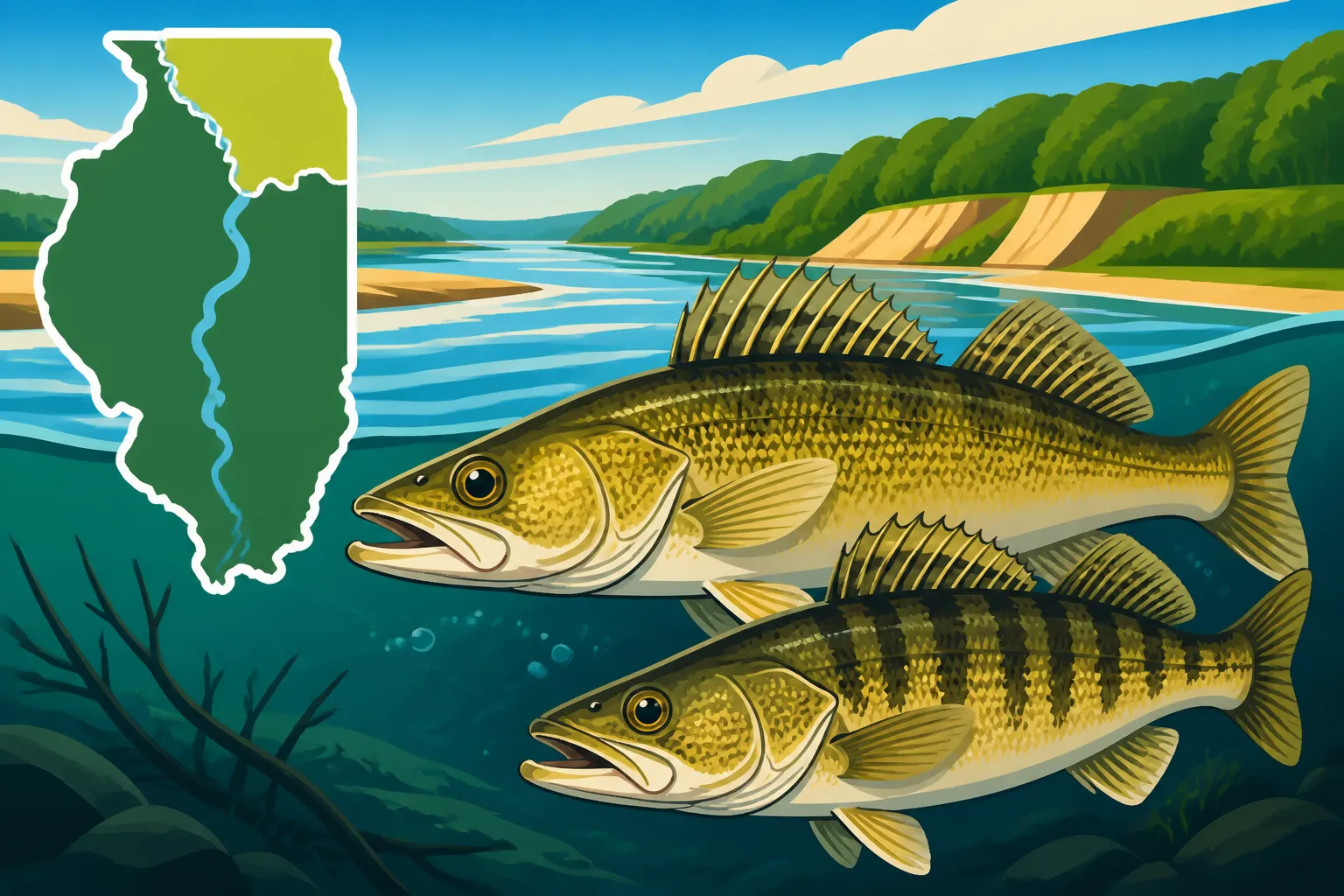
The easiest way to tell a walleye from a sauger is by looking at their dorsal fins. A walleye will have a distinct, opaque black spot on the bottom rear of its spiny dorsal fin. Think of it like a little black thumbprint. Sauger, on the other hand, do not have this prominent black spot. Instead, their spiny dorsal fin is usually covered in rows of small, distinct black spots or bars, giving it a mottled, tiger-striped appearance. This is a pretty reliable indicator.
Another key difference often lies in their coloration and overall body pattern. Walleye typically have a more uniform, olive-green to gold-colored body with less pronounced markings, though they can have faint vertical bars. Sauger, living closer to the bottom and often in murkier water, tend to be browner or darker, with more distinct and irregular blotches or saddles along their sides. They often look more camouflaged against a rocky or silty bottom. Finally, look at the tail fin: walleye usually have a white tip on the lower lobe of their tail fin, a feature that sauger typically lack. Getting a good look at these features will help you quickly tell them apart, which is important for adhering to catch limits and Illinois Walleye Minimum Size Limit of 14 Inches.
Habitat Preferences and Behavior Discrepancies
While you can often catch both species in the same general area, they do have some subtle differences in preferred habitat and behavior. Walleye often prefer slightly clearer water, deeper depths, and areas with more structure like rock piles, humps, and current breaks. They're often found around the main channel, points, and even sometimes suspended over deeper water, especially when they're chasing baitfish. They can be a bit more migratory, moving further up and down the river system.
Sauger, true bottom dwellers, tend to tolerate muddier water better and often hug the river bottom, especially in areas with moderate current. They thrive in scour holes below dams, around wing dams, and in deeper channels where the current is present but not overwhelming. They're less prone to suspending and are usually found much closer to the riverbed. Understanding these subtle preferences can help you refine your approach; if you're targeting sauger, you might want to focus your efforts directly on the bottom, whereas walleye might be found a bit higher in the water column or in areas with slightly better clarity. This nuanced understanding is key to successful Illinois Sauger Fishing: What Anglers Need to Know.
Size and Growth Expectations
Generally speaking, walleye grow larger than sauger. A "big" sauger in Illinois might be in the 15-20 inch range, with anything over 20 inches being an exceptional catch. Walleye, on the other hand, regularly reach 20-25 inches in the Mississippi, and trophy fish pushing well over 30 inches are not unheard of, though certainly less common. This size difference also plays a role in how they fight and how you might choose to rig for them.
While both are formidable predators, the larger size of walleye often means they can handle larger bait presentations, though both will readily hit jigs and minnows. When you're fishing the Mississippi, you'll often hear tales of huge walleye being pulled from below the dams or from deep holes. While sauger provide plenty of action and make excellent table fare, if you're dreaming of a true heavyweight, the walleye is usually the target. Knowing these size expectations helps manage your expectations and informs your strategy. For more details on telling them apart, check out How to Tell a Walleye From a Sauger?.
| Feature | Walleye | Sauger |
|---|---|---|
| Dorsal Fin | Distinct black spot on the rear base | Rows of distinct black spots/bars (mottled) |
| Tail Fin | White tip on lower lobe (usually) | No white tip |
| Body Color | Olive-green to gold, sometimes faint bars | Brown to dark, irregular blotches/saddles |
| Habitat | Deeper, slightly clearer water, more structure | Closer to bottom, tolerant of murkier water |
| Average Size | Larger (20-25+ inches common) | Smaller (15-20 inches common) |
Prime Northern Mississippi River Hotspots for Walleye and Sauger
The Mississippi River is immense, and simply "fishing the Mississippi" isn't enough. You need to understand its structure and how the fish relate to it. The northern Illinois stretch offers numerous prime locations, especially centered around its lock and dam system.
Navigating the River: Locks, Dams, and Structure
The lock and dam system on the Mississippi is a game-changer for fishing. These structures create distinct pools and tailwaters that are magnets for walleye and sauger. Below the dams, the turbulent water, deep scour holes, and strong currents concentrate baitfish and provide oxygen-rich environments. This is often where you'll find some of the most aggressive feeding activity. However, fishing these areas requires extreme caution due to powerful currents and swift undertows. Always respect the danger zones around the dams.
Above the dams, the river widens into large pools, where the current is often less pronounced, but still present. Here, walleye and sauger will relate to submerged structures like wing dams, rock piles, ledges, and channel edges. Wing dams, which extend perpendicular from the bank into the river, are particularly effective. They divert current, creating current breaks and scour pockets where fish can ambush prey. Understanding how the current flows around these structures is crucial for positioning your boat and presenting your bait effectively. Always pay attention to navigation markers and be aware of commercial barge traffic, which has the right-of-way.
Key Locations and Notable Stretches
While the entire northern Illinois stretch of the Mississippi holds potential, certain areas are renowned for their walleye and sauger fishing. The Pool 18, 19, and 20 stretches, for instance, are particularly productive. The area around Rock Island and the Quad Cities is a prime example, with numerous access points and diverse river features. Below Lock and Dam 15 at Rock Island, for instance, is a historically excellent spot, as are areas below Lock and Dam 16 (Muscatine, Iowa/New Boston, Illinois) and Lock and Dam 17 (New Boston, Illinois/Andalusia, Illinois).
Further south, near Quincy, you'll find other productive stretches. Look for areas with prominent wing dams, especially those with visible current breaks or eddies. The deeper bends in the main channel, especially where submerged rock or timber piles up, also hold fish. Don't overlook the mouths of tributaries, as these can provide a flow of nutrients and baitfish into the main river, attracting walleye and sauger. Consulting local bait shops or river guides is always a great way to get up-to-the-minute information on specific hot spots and what's biting.
Seasonal Movements and Best Times to Target
Walleye and sauger fishing on the Mississippi is a year-round affair, but certain seasons shine brighter. Early spring, often from late February through April, is phenomenal for both species as they begin their spawning runs. Fish congregate below dams and in tributary mouths, making them more accessible. This is often considered the Best Time of Year to Catch Walleye on the river. As the water warms in late spring and early summer, fish spread out, often moving to deeper main channel areas, current breaks, and the tips of wing dams. Night fishing can be particularly effective during the warmer months.
Fall is another fantastic time, as fish aggressively feed to build up reserves for winter. They can be found in similar locations to summer, but often in tighter schools. Winter, especially through the ice in calmer backwaters (where safe), or by boat in open water below dams, can yield some of the biggest walleye and sauger catches. The key is understanding that the river is constantly changing, and fish movements are highly dependent on water levels, temperature, and current. Staying adaptable and checking river conditions are vital for success throughout the Illinois Walleye Fishing Season on the Mississippi River.
Essential Gear and Techniques for Mississippi River Walleye and Sauger
Having the right tackle and knowing how to use it makes all the difference when battling strong river fish in powerful currents. You don't need the fanciest gear, but durable, reliable equipment is a must.
Rods, Reels, and Line: Building Your Setup
For river walleye and sauger, you'll want a medium-light to medium-heavy power spinning or baitcasting rod, typically in the 6'6" to 7'6" range. A fast or extra-fast action is preferred, as it allows for better feel of subtle bites and quick hook sets, which are critical in current. Many anglers favor graphite rods for their sensitivity. A good quality spinning reel in a 2500-3000 size or a baitcasting reel suitable for 10-15 lb test line will balance well with these rods. Look for reels with smooth drags, as these fish can make powerful runs.
When it comes to line, a good low-stretch braided line in the 10-20 lb test range is a popular choice for its sensitivity and strength. You can then tie on a 2-4 foot fluorocarbon leader (8-12 lb test) for abrasion resistance and invisibility in the water. Monofilament can also work, especially for trolling, but braid's sensitivity often gives an edge when jigging in current. You can find excellent options for rods, reels, and line on platforms like Amazon, offering a wide range to suit any budget and preference.
Baits and Lures That Get Results
When it comes to enticing Mississippi River walleye and sauger, a few key baits and lures consistently produce. Jigs are arguably the most versatile and effective. Lead head jigs, ranging from 1/4 ounce to 1 ounce (or even heavier in strong currents), tipped with live bait like minnows (shiners, fatheads, chubs) or plastics (grubs, paddle tails, minnow imitations) are deadly. The general rule of thumb is to use the lightest jig possible that still allows you to maintain contact with the bottom in the prevailing current. For the Best Walleye Bait for Rivers, live minnows are hard to beat.
Other productive lures include crankbaits, especially those designed to dive to specific depths and withstand current. Trolling shallow-running crankbaits can be effective in broader pools, while deeper divers can probe channel edges. Stickbaits, both suspending and floating, are also good, especially for casting towards wing dams or current breaks. For anglers seeking a different approach, a three-way rig with a bell sinker on one dropper and a live minnow or jig on another can be highly effective for fishing directly on the bottom in current. Blade baits are also fantastic for vertical jigging, mimicking distressed baitfish.
Effective Fishing Techniques: Jigging, Trolling, and Drifting
On the Mississippi, a few techniques consistently deliver walleye and sauger.
-
Vertical Jigging: This is perhaps the most popular and effective method, particularly in the tailwaters below dams or when fishing specific structures like wing dams. Position your boat directly over or slightly upstream from your target area and drop your jig straight down, allowing it to just tick the bottom. Use a subtle lift-and-drop retrieve. The goal is to keep your bait in the strike zone, and in strong current, this often means directly beneath your boat. This technique is often discussed when anglers talk about How to Jig for Walleye.
-
Trolling: When fish are spread out in the larger pools or along long channel edges, trolling can be highly effective. Use crankbaits that dive to the desired depth, often near the bottom. Many anglers use planer boards to spread their lines out, covering a wider swath of water. Trolling can be done both upstream and downstream, but pay close attention to boat speed relative to the current; sometimes, a slower presentation against the current is best. For detailed approaches, look into Walleye Trolling Techniques.
-
Drifting: Similar to vertical jigging but covering more ground, drifting involves allowing your boat to be carried by the current while you present your baits. This is particularly effective in areas with moderate current and consistent bottom features. You can drift jigs, three-way rigs, or even live bait rigs under a slip bobber. The key is to control your drift speed, sometimes using a drift sock or a bow-mounted trolling motor to slow down and stay over productive areas.
-
Casting to Structure: Casting jigs or crankbaits to visible structures like riprap banks, current seams, or the upstream side of wing dams can also be very productive. Cast upstream and allow your bait to drift naturally into the strike zone, working it back with the current. This method often targets actively feeding fish positioned to ambush prey.
Navigating River Challenges and Safety for Success
The Mississippi River is majestic, but it demands respect. Its sheer power, unpredictable currents, and heavy commercial traffic mean that safety and awareness are paramount for any angler. Understanding its dynamics is key to both safety and fishing success.
Understanding Current and River Conditions
The current on the Mississippi is a constant force that dictates fish behavior and fishing tactics. Strong currents can push baitfish into eddies and slack water, creating prime ambush points for walleye and sauger. Conversely, too much current can make fishing challenging, requiring heavier weights and more precise boat control. River levels fluctuate dramatically based on rainfall and dam operations, affecting access to certain areas and changing how fish relate to cover. High water can push fish into shallower, calmer backwaters, while low water concentrates them in main channel depressions and deeper holes.
Before every trip, check river stages and current conditions. Local river gauges and news sources often provide this vital information. Learn to "read" the water: look for current seams, eddies, boils, and slack water pockets that indicate changes in flow. These are often where fish will be holding, expending minimal energy while waiting for food to pass by. Remember that Why Fishing Rules Vary by Lake and River is especially true on large, dynamic systems like the Mississippi, where localized conditions can significantly alter fish behavior.
Boating Safety and Navigation Tips
Safety on the Mississippi cannot be overstated. Always wear a life jacket, or at least have it easily accessible, especially when fishing near dams or in strong currents. The river is a working highway for barges, and they always have the right-of-way. Give them a wide berth, as they create massive wakes and take a long time to stop or maneuver. Stay alert for debris in the water, particularly after heavy rains.
A reliable boat with a strong motor is essential for navigating the Mississippi's powerful currents. Carry all required safety equipment, including navigation lights (if fishing at dawn, dusk, or night), a horn, a fire extinguisher, and a first-aid kit. A quality GPS/fishfinder combo is invaluable for marking productive spots and safely navigating channels, especially when returning in low light or fog. Always inform someone of your float plan – where you're going and when you expect to return. The river can be unforgiving, so preparation and vigilance are your best allies.
Respecting Regulations and the River Environment
As with any major fishery, adherence to regulations is not just a legal requirement but a commitment to preserving the resource. Always possess a valid Illinois fishing license, and be aware of species-specific length and creel limits for both walleye and sauger. These can change, and sometimes vary by specific pool or stretch of the river. For example, knowing the Illinois Walleye Six-Fish Daily Limit on Select Waters is crucial to stay compliant. Keep a copy of the current Illinois fishing regulations guide handy, either digitally on your phone or a physical copy.
Practice responsible angling: don't litter, dispose of fishing line properly, and minimize disturbance to spawning areas. Consider catch-and-release, especially for larger breeding-size fish, to help maintain healthy populations. If you plan to keep fish, dispatch them humanely and keep them on ice to preserve their quality. The Mississippi is a shared resource, and it's up to all of us to ensure its health and productivity for generations to come.
Tips for a Successful Walleye and Sauger Trip
Beyond the gear and the spots, there are a few extra tips that can turn an ordinary trip into an extraordinary one on the Mississippi River.
Preparing for Your Day on the Water
Preparation is paramount for a successful fishing trip on the Mississippi. Before you even leave home, check the weather forecast, including wind direction and speed, as well as river conditions like water level and temperature. High winds can make boat control extremely difficult and unsafe, especially in open pools. Organize your tackle the night before, making sure your jigs are tied, your leaders are fresh, and your live bait is healthy. Think about the conditions you expect and select your lures accordingly. For instance, if the water is muddy, brighter colors might be more effective.
Pack plenty of water and snacks, as a day on the river can be physically demanding. Dress in layers, as temperatures can change rapidly, particularly in spring and fall. Don't forget sunscreen, a hat, and polarized sunglasses – they help you spot subtle changes in the water and protect your eyes. A good pair of gloves can also be invaluable for handling fish or navigating in cold weather. Having everything ready before you hit the boat ramp saves time and reduces stress, allowing you to focus on the fishing. And remember, sometimes the smallest details, like fresh batteries for your trolling motor or a fully charged phone for emergencies, can make all the difference.
Post-Catch Care and Handling
Once you've landed a beautiful walleye or sauger, proper care ensures the best possible outcome, whether you're releasing it or bringing it home for dinner. If you're planning to release the fish, handle it as little as possible. Keep it in the water if you can, use a de-hooking tool to quickly remove the hook, and ensure it swims away strongly. Avoid touching the gills or eyes. For those you intend to keep, dispatch them quickly and humanely. A swift blow to the head is often recommended.
Immediately place your kept fish on ice in a cooler. This rapidly cools the fish, preserving its flesh quality and ensuring it stays fresh. Don't just toss them in a livewell if you intend to eat them; chilling them quickly is key. Fillet your catch as soon as possible after your trip, and rinse the fillets with cold water before storing them in airtight bags in the refrigerator or freezer. Proper post-catch care is not only ethical but also enhances the enjoyment of your hard-earned meal.
Learning from Every Outing
The Mississippi River is a phenomenal teacher, and every trip offers a chance to learn something new. Keep a fishing log: record the date, time, weather conditions, water temperature, river level, location, bait used, and most importantly, what worked and what didn't. Over time, you'll start to see patterns and develop a deeper understanding of how walleye and sauger behave in different conditions. This type of detailed observation will help you pinpoint How to Find Walleye in Current more effectively.
Talk to other anglers at the boat ramp or local bait shops. Most river anglers are a friendly bunch and happy to share tips, especially if you're respectful and eager to learn. Experiment with different lures, colors, and retrieve speeds. What works one day might not work the next, and being adaptable is a hallmark of a successful river angler. The more time you spend on the water, observing and adapting, the more proficient you'll become at mastering the challenges and reaping the rewards of fishing for walleye and sauger on Illinois's magnificent northern Mississippi River.
Disclaimer
This article is for general informational purposes only and does not constitute professional advice. Laws, prices and regulations vary by location and change over time. Consult a qualified professional for guidance on your specific situation.