Illinois Bass Tournament Rules for Nonresident Anglers
Planning to hit the Illinois bass tournament scene as a nonresident? It can feel like navigating a maze, trying to figure out if your home state license cuts it, what extra permits you might need, and how tournament-specific rules layer on top of everything else. It’s enough to make you second-guess joining the fun! This comprehensive guide will untangle those complexities, giving you a clear roadmap to confidently compete in Illinois bass tournaments as an angler from out of state.
The Foundation: Understanding Nonresident Fishing Licenses in Illinois
One of the biggest head-scratchers for out-of-state anglers is figuring out the licensing requirements. You've got your home state license, and you might even fish border waters with reciprocity, but when it comes to formal bass tournaments deep within Illinois, things usually get a bit more specific. It's a common misconception that if you're just visiting for a weekend, you can slide by without a proper Illinois permit. Trust me, that's a gamble you don't want to take, especially when a conservation police officer is checking tournament participants.
Why a Separate License is Crucial
You might think, "I'm just passing through for a competition; do I really need another license?" The simple answer is yes, absolutely. Illinois waters are managed by the Illinois Department of Natural Resources (IDNR), and their regulations apply to everyone casting a line, regardless of where they call home. Your nonresident status means you'll need to secure an Illinois Nonresident Fishing License Guide to legally participate. This isn't just about revenue for the state; it's about managing fish populations and ensuring everyone contributes to conservation efforts. Imagine flying all the way to a tournament, having your entry fee paid, and then being disqualified or, worse, ticketed, simply because you didn't have the correct piece of paper. It's a frustrating situation that's easily avoidable with a little planning.
Types of Nonresident Licenses Available
Illinois offers a few options for nonresident anglers, depending on how long you plan to stay and fish. You’re not stuck buying a full annual license if you're only in for a single weekend event, which is a relief for many.
- Annual Nonresident Fishing License: This is your all-inclusive pass for the entire Illinois license year (March 1st through February 28th/29th). If you're a serious tournament angler who travels to Illinois multiple times a year, or even just for extended trips, this is usually the most economical choice in the long run. It covers you for any fishing activity, including tournaments, for the full season. You can often purchase these online directly from the IDNR website, or sometimes even find them listed on platforms like Amazon if you're looking for gear bundles with a link to license purchasing.
- 3-Day Nonresident Fishing License: Perfect for that classic weekend tournament. This license is valid for three consecutive days, offering flexibility for Friday practice, Saturday competition, and perhaps a casual Sunday fishing session before heading home. This is often the go-to for many out-of-state competitors.
- 24-Hour Nonresident Fishing License: If you're really just coming in for a single day event, maybe a one-day charity tournament, this is your most budget-friendly option. It's valid for 24 hours from the time of purchase.
It's important to remember that these licenses typically only cover general fishing. If your bass tournament happens to be held on a body of water that also hosts trout or salmon, and you plan on targeting those species (though unlikely in a bass tournament setting), you might need additional stamps like the Illinois Trout and Salmon Stamp Requirements. Always double-check the specifics of the water you'll be on. For a full breakdown, check out the Illinois Fishing License Costs for Out-of-State Anglers.
Where to Purchase Your Illinois Fishing License
Getting your nonresident license is straightforward. The easiest and often quickest way is online through the Illinois Department of Natural Resources (IDNR) website. You can print a temporary copy immediately, and a physical copy will be mailed to you. This is incredibly convenient for anglers on the go.
Alternatively, you can purchase a license in person at various authorized vendors across the state, including bait and tackle shops, sporting goods stores like Cabela's or Bass Pro Shops, and even some Wal-Mart locations. Just make sure you have valid identification and be prepared to provide some basic information. Many anglers pick up their license, along with a few extra tournament-specific baits they might need, at a local tackle shop near their weigh-in location. You can often find a good selection of Illinois-specific baits and local insights at these smaller shops, and if you’re ordering tackle online, sites like Amazon offer a huge range, but you'll still need that official license.
Navigating Tournament-Specific Rules for Out-of-State Anglers
While your nonresident license gets you legal access to Illinois waters, bass tournaments often come with their own set of rules, which can sometimes either echo or slightly modify the general Illinois Fishing Regulations Overview. For nonresident anglers, it’s crucial to understand how these layers of regulations interact to ensure a smooth, penalty-free competition.
Standard Statewide Regulations Still Apply
Even within the framework of a tournament, you are still bound by the fundamental Illinois Fishing Season and Catch Limit Rules. This means:
- Statewide Bass Fishing Limits: Illinois has specific daily catch and possession limits for bass, and these generally apply to tournament anglers too, unless explicitly stated otherwise by the tournament director (which is rare for daily limits, but can happen for possession limits depending on the format). For example, the Illinois Statewide Bass Fishing Limits outline minimum lengths and daily creel limits that are often strictly enforced. Tournaments might add more restrictive rules (like a 15-inch minimum for weighing a bass), but they almost never override state-mandated minimum sizes or daily limits to be less restrictive.
- Site-Specific Regulations: Many Illinois lakes and rivers have their own unique sets of rules that might differ from statewide norms. For instance, a particular lake might have a slot limit for largemouth bass, meaning fish within a certain size range must be immediately released. As a nonresident, it's vital to research the specific body of water where your tournament is held. The reason Why Fishing Rules Vary by Lake and River often comes down to local management efforts to promote healthy fisheries. Ignorance of these local rules is no excuse, and tournament directors often reiterate them during pre-tournament meetings.
- Livewell Inspections: Most bass tournaments require a functioning livewell to keep your catch alive until weigh-in. Nonresident anglers should ensure their livewell system meets tournament standards and state regulations for water circulation, aeration, and capacity. Keeping bass alive is paramount, not just for the fish's welfare, but because dead fish often result in penalties, impacting your tournament standing.
Site-Specific Rules and Tournament Waivers
Tournament organizers often have their own rulebooks that participants must adhere to. These might include:
- Minimum Lengths: It's very common for tournaments to set a higher minimum length for bass to be weighed than the state's legal minimum. For example, the state might allow you to keep a 14-inch bass, but the tournament might require a 15-inch minimum for scoring.
- Bag Limits: While the state has a daily limit, a tournament might specify a "five-fish limit" for weigh-in. This is standard for most bass tournaments.
- Culling Procedures: Rules regarding how and when you can cull (replace a smaller fish with a larger one) are usually detailed in the tournament rules. Make sure you understand the exact method allowed, including the use of culling clips.
- Designated Fishing Areas: Some tournaments restrict fishing to specific areas of a lake or river, especially if they are using launch sites that aren't centrally located.
- Off-Limits Periods: Tournaments often have "off-limits" periods leading up to the event, during which participants are not allowed to fish the tournament waters. This is to ensure fair play and prevent anglers from gaining an unfair advantage through excessive pre-fishing.
While tournament waivers might seem to offer exemptions, they primarily relate to liability for the organizers, not a pass on state or local fishing laws. Any "waiver" of fishing regulations would have to come directly from the IDNR, which is exceedingly rare for competitive events. Always read the tournament rulebook thoroughly, and if you have any doubts, ask the tournament director before you launch your boat.
Livewell Requirements and Fish Care During Tournaments
For serious bass anglers, a properly functioning livewell is practically a member of the team. As a nonresident competing in Illinois, you need to be acutely aware of livewell requirements, not only for the tournament's specific rules but for fish welfare and state regulations. Modern bass boats come equipped with sophisticated livewell systems, but if you're bringing a different type of vessel, ensure your setup provides adequate oxygen and temperature control for the fish you plan to weigh. Many tournaments have mandatory livewell checks before blast-off.
Poor fish care can lead to dead fish at weigh-in, and this is almost universally penalized with weight deductions (e.g., a half-pound penalty per dead fish). Some tournaments might even disqualify you for multiple dead fish. This isn't just about losing points; it's about sportsmanship and the conservation of the resource. Ensure your livewell is clean, running efficiently, and that you understand how to use additives like G-Juice or Please Release Me, which can help reduce stress on the fish. Keeping your fish healthy from hook-set to release is a critical part of being a responsible tournament angler. You can often find these livewell additives and other fish care products on Amazon, making it easy to stock up before your trip.
Reciprocity and Boundary Waters: What Nonresidents Need to Know
Illinois shares borders with several states, and the rivers that define these boundaries can sometimes operate under special "reciprocity" agreements. This is a common area of confusion for nonresident tournament anglers, as these rules can change how or where you need a license. Understanding these nuances is key to avoiding issues, especially when a tournament takes you across state lines, even if it's just a cast away.
Understanding Illinois's Reciprocity Agreements
Illinois has agreements with neighboring states like Iowa, Missouri, Kentucky, Indiana, and Wisconsin regarding fishing rights on shared boundary waters. What this means is that on certain stretches of these rivers, if you have a valid fishing license from either Illinois or the adjacent state, you're generally considered legal to fish.
- Mississippi River: This is perhaps the most significant reciprocity agreement for anglers. For example, if you're fishing the Mississippi River along the Illinois-Iowa border, an Illinois Fishing License Reciprocity With Iowa license or an Iowa license would typically cover you. The same applies to the Missouri border; Illinois and Missouri Shared Water Fishing License Rules mean a valid license from either state usually suffices.
- Wabash River: Similar agreements are in place for the Wabash River, which forms part of the Illinois-Indiana border. If you have an Indiana fishing license, you might be able to fish the Illinois side of the Wabash without an Illinois license, and vice versa.
- Ohio River: Along the Illinois-Kentucky border, the Ohio River also falls under specific rules. If you’re visiting from Kentucky, understanding Illinois Fishing License Reciprocity With Kentucky is crucial.
- Other Boundary Waters: There are also agreements in place for specific waters bordering Wisconsin, covered by Illinois Fishing License Reciprocity With Wisconsin.
However, here's the crucial caveat: these reciprocity agreements almost always apply only to the boundary waters themselves. They do not typically extend into the main body of Illinois if you leave those border rivers. If your tournament starts on the Mississippi River but then takes you up a major tributary that is entirely within Illinois, your Iowa or Missouri license will no longer be valid. You'll need that Illinois nonresident license.
How Reciprocity Impacts Tournament Participation
For tournament anglers, reciprocity adds another layer of complexity. If a bass tournament is explicitly confined to a reciprocal boundary water (like a stretch of the Mississippi River), then your home state license (if that state has a reciprocity agreement with Illinois) might be sufficient. This is when it's absolutely vital to confirm with the tournament director beforehand. They should be able to clarify if the specific tournament boundaries fall entirely within reciprocal waters, or if any part of the competition takes place solely within Illinois jurisdiction.
Let's imagine a scenario: a tournament on the Mississippi River near Rock Island. If the competition rules strictly state that fishing is allowed only on the main channel and immediately adjacent backwaters that are part of the reciprocal agreement, then an Iowa license might be acceptable for an Iowa resident. However, if the tournament rules allow fishing in a slough or creek that is clearly inland from the main river channel and unambiguously within Illinois, then your Iowa license likely wouldn't cover you for that specific area, and an Illinois nonresident license would be required. Always err on the side of caution and ask for clarification, or simply get the Illinois license to be safe.
When a Second State License Might Be Necessary
While reciprocity is great, there are definitely situations where carrying both your home state license and an Illinois nonresident license is the safest and only legal option:
- Tournament Boundaries Extend Beyond Reciprocal Waters: As discussed, if the tournament allows or requires you to fish waters completely within Illinois, your other state's license is useless.
- No Reciprocity Agreement: If you're coming from a state that doesn't share a border with Illinois, or one that has no reciprocity agreement for fishing, you will unequivocally need an Illinois nonresident license. There's no workaround here.
- Confusion or Ambiguity: If you're unsure about the exact boundaries, or if the tournament director's explanation leaves you feeling fuzzy, getting an Illinois nonresident license is the smart move. The cost of a 3-day license is a small price to pay compared to potential fines, disqualification, or the stress of worrying about legality during a competition.
Remember, conservation police officers are trained to know these nuances. They understand where reciprocal agreements apply and where they don't. Don't try to stretch the rules; it's simply not worth the hassle or the Penalties for Fishing Without a License in Illinois.
Avoiding Common Pitfalls and Penalties for Nonresident Anglers
Competing in a bass tournament is exciting, but for nonresident anglers, the stakes can feel a little higher. Beyond the pressure of catching fish, there's the added stress of ensuring you're compliant with all the rules. A simple oversight can turn a fun weekend into a frustrating, costly experience. It's truly a nightmare scenario to travel hours for a tournament, only to face a penalty for something you didn't even realize you were doing wrong.
Consequences of Fishing Without Proper Documentation
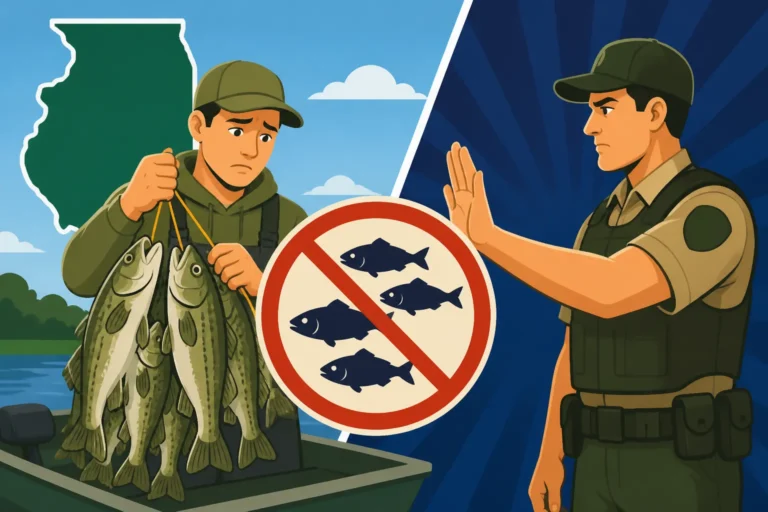
This is perhaps the most significant pitfall. As a nonresident, the thought process might be, "My home state license is usually enough," or "I'm only here for a couple of days." However, in Illinois, fishing without the correct nonresident license or any necessary stamps can lead to serious consequences.
- Fines: The most immediate consequence is a fine, which can easily range from hundreds of dollars. This is a lot more expensive than the cost of the actual license.
- Equipment Confiscation: In some cases, especially for repeat offenses or severe violations, your fishing equipment (rods, reels, even your boat in extreme situations) could be confiscated.
- Arrest: While rare for a first-time license violation, it is legally possible, particularly if there are other contributing factors like belligerence or multiple infractions.
- Tournament Disqualification: Most, if not all, tournaments require you to have a valid state fishing license. If discovered during the event, you will almost certainly be disqualified, losing your entry fee and any potential winnings. Imagine catching the biggest bass of your life only to have it mean nothing because of paperwork.
It's just not worth the risk. Purchase your Illinois Nonresident Annual Fishing License Cost or 3-day option ahead of time. Print a copy, keep a digital version on your phone, and always have your physical ID ready. Many anglers even carry a small, waterproof pouch from brands you can find on Amazon, specifically for their fishing license and ID, keeping it easily accessible and protected.
Adhering to Daily and Possession Limits Strictly
Tournament anglers are often pushing limits, both their own and sometimes, inadvertently, the legal ones. While a tournament might set its own "bag limit" (e.g., five fish for weigh-in), you are still bound by the state's Illinois Fishing Season and Catch Limit Rules. This means:
- Daily Limit: The number of fish you can catch and keep in a 24-hour period. Even if you're culling and releasing fish throughout the day, you must adhere to this. If the state limit for bass is six, you can't have eight in your livewell at any point, even if you plan to cull down to five for weigh-in. Always know the legal daily limit for the species you're targeting.
- Possession Limit: This refers to the maximum number of fish you can have in your possession at any time, including those at your lodging, in your cooler, or in your boat's livewell. For many species, the possession limit is twice the daily limit, but this can vary. For a tournament, while your weigh-in might only be five fish, if you've been practicing for days and keeping fish at your hotel, you need to be mindful of your total possession limit.
Failing to adhere to these limits can result in fines and, again, disqualification from your tournament. It's easy to get caught up in the heat of competition, but keeping track of your catch is a crucial responsibility.
Importance of Checking the Illinois Fishing Information Guide
Consider the Illinois Fishing Information Guide your bible for fishing in the state. This annually updated guide, available online through the IDNR website and in print at many license vendors, details all statewide and site-specific regulations. Before you even pack your bags for an Illinois bass tournament, download or pick up a copy of this guide.
- Species-Specific Regulations: It outlines minimum length limits, daily catch limits, and possession limits for all game fish, including bass.
- Water Body Specifics: Crucially, it lists special regulations for individual lakes, rivers, and streams. As mentioned before, a lake hosting your tournament might have a unique slot limit or no-wake zones that are vital to know.
- Gear Restrictions: While less common for bass fishing, some waters might have bait restrictions or other gear-related rules.
- Boating Regulations: Beyond fishing, the guide also covers basic boating regulations, which are essential for any tournament angler on the water.
Familiarize yourself with the sections most relevant to your target species and the specific body of water you'll be fishing. Don't rely solely on what you hear from other anglers or online forums; go straight to the official source. Having this knowledge empowers you to make informed decisions on the water and ensures you're playing by all the rules, allowing you to focus on the competition, not on potential legal trouble. You’ll be in a much better position to tackle the challenge if you understand all the Illinois Tournament Angler License Rules.
Table: Common Nonresident License Options & Considerations
Here's a quick overview of the nonresident fishing license options in Illinois and some key considerations:
| License Type | Validity Period | Cost (Approx. 2024)* | Best For | Considerations |
|---|---|---|---|---|
| Annual Nonresident | March 1 – Feb 28/29 | $45.50 | Frequent visitors, multiple tournaments | Most cost-effective for more than a few trips a year. Covers general fishing for the entire license year. |
| 3-Day Nonresident | 3 Consecutive Days | $19.50 | Weekend tournaments, short trips | Ideal for single events or short visits. Less upfront cost than an annual license. Specify start date upon purchase. |
| 24-Hour Nonresident | 24 Hours from Purchase | $11.50 | Single-day tournaments, quick fishing trips | Lowest cost for a very brief visit. Good for last-minute decisions. Extremely specific validity, so ensure it covers your entire fishing period. |
| Additional Stamps (if needed) | Inland Trout / Salmon | $6.50 | Fishing for Trout/Salmon | Required in addition to a general fishing license if targeting stocked trout in inland waters or salmon/trout in Lake Michigan. Unlikely for pure bass tournaments, but good to know. |
*Costs are approximate and subject to change by the Illinois Department of Natural Resources (IDNR). Always check the official IDNR website for the most current pricing.
Disclaimer
Please note that fishing regulations and license requirements are subject to change by the Illinois Department of Natural Resources (IDNR). While this guide strives to provide accurate and up-to-date information, it is essential for all anglers to consult the official IDNR website or the current Illinois Fishing Information Guide before heading out. This content is for informational purposes only and should not be considered legal advice.