Illinois and Missouri Shared Water Fishing License Rules
It's incredibly frustrating, isn't it? You just want to enjoy a peaceful day on the water, but when you're fishing a boundary river like the mighty Mississippi between Illinois and Missouri, the question of which fishing license you need can quickly turn that peaceful thought into a headache. This guide is here to clear up that confusion, explaining exactly how reciprocity agreements work between Illinois and Missouri, so you can cast your line with confidence and stay on the right side of the law.
Understanding Boundary Waters and Reciprocity Agreements
When you're staring across the Mississippi River, knowing that one bank is Illinois and the other is Missouri, it’s natural to wonder if you need two different fishing licenses. This isn't just a trivial question; it's a genuine concern for many anglers, and the rules can feel like a tangled fishing line if you don't know where to start. Luckily, both states have agreements in place to simplify things for those who fish these shared waters.
The Illinois-Missouri Border: More Than Just a Line on a Map
The Mississippi River isn't just a geographical divider; it's a vibrant ecosystem that many of us Illinois anglers love to explore. From the northern reaches near Quincy all the way down to the southern tip where it meets the Ohio River, this shared waterway is a prime spot for everything from catfish to walleye. The problem arises because, technically, one side is one state's jurisdiction and the other is another's. Imagine being out on a boat, drifting with the current, and suddenly realizing you might be in Missouri waters without the right permit. It's enough to make anyone anxious. The beauty of a reciprocity agreement is that it acknowledges this fluid reality, allowing you to focus on the fish, not the invisible state line beneath your keel. For a broader look at how different fishing rules can vary, you might want to check out our guide on Why Fishing Rules Vary by Lake and River.
How Reciprocity Works for Illinois and Missouri Anglers
Thankfully, Illinois and Missouri have a long-standing agreement that makes fishing the main stem of the Mississippi River much simpler. If you possess a valid fishing license from either Illinois or Missouri, you are generally allowed to fish the navigable waters of the Mississippi River that form the border between the two states. This means if you're an Illinois resident with your Illinois Fishing License Guide for 2026 in hand, you can fish the entire width of that specific stretch of the Mississippi without needing a Missouri license. The same goes for Missouri residents with their state's permit. This agreement is a huge relief, especially for those who travel or live near the border and might often find themselves launching from one state but drifting into the general vicinity of the other. It saves you the hassle and expense of buying two separate licenses, which can quickly add up, especially if you're getting an Illinois Nonresident Fishing License Guide for other trips. You'll find more details on this specific topic in our comprehensive post, Illinois Fishing License Reciprocity With Missouri.
Navigating the Mississippi River's Unique Regulations
While the reciprocity agreement is a lifesaver for fishing the main channel, the Mississippi River is far from a simple, uniform body of water. It's a complex system of main channels, backwater sloughs, tributaries, and floodplain lakes, and this is where many anglers, even seasoned ones, can get tripped up. The general rule of "either license is fine" only applies to certain defined areas, and venturing just a little too far can put you outside those protections.
Licensing Requirements on the Main Channel and Confluence Areas
As mentioned, for the main navigable channel of the Mississippi River that borders Illinois and Missouri, either state's valid fishing license is accepted. This includes the major confluence areas like where the Illinois River meets the Mississippi near Grafton, or even further south where the Ohio River joins. So, if you're anchored up, fishing for catfish right in the middle of the river near Alton, or trolling for walleye in the strong currents, your Illinois license is perfectly valid. However, it's crucial to understand what "main channel" truly means. It typically refers to the primary shipping channel and contiguous open waters, where the river's flow and depth are most consistent. Always remember that while reciprocity handles the licensing, you still need to adhere to the fishing regulations of the state that issued your license regarding catch limits and sizes. This means if you have an Illinois license, you follow Illinois's rules for the species you're targeting, even if you’re technically on what feels like the Missouri side. For an overall picture of what rules apply, it’s always smart to consult the Illinois Fishing Regulations Overview.
Tributaries, Backwaters, and Floodplain Lakes: Where Rules Change
Here's where things get tricky, and where a lot of anglers get into hot water (sometimes literally!). The reciprocity agreement typically does not extend into tributaries, backwater lakes, sloughs, or other impoundments that are entirely within the boundaries of one state or the other, even if they're directly connected to the Mississippi River.
Let's imagine a scenario: You're fishing the Mississippi main channel with your Illinois license. You see a promising-looking backwater lake, perhaps a calm slough teeming with crappie, just off the main current. If that backwater is clearly on the Illinois side, then your Illinois license is good to go. But what if it's on the Missouri side? In that case, you must possess a valid Missouri fishing license to legally fish there.
- Tributaries: Any river or creek flowing into the Mississippi, once you are upstream from its mouth and clearly within one state's territory, requires that state's license. So, if you motor into a small creek flowing into the Mississippi from the Missouri side, you need a Missouri license.
- Backwater Lakes and Sloughs: These often get confusing because they might be seasonally connected to the main river. If the body of water is physically and geographically within the state of Illinois, you need an Illinois license. If it's within Missouri, you need a Missouri license. Many of these areas are clearly marked on detailed fishing maps, and checking these before you go is paramount. For example, if you're looking for Mississippi River Catfish Fishing in Southern Illinois in certain backwaters, you need to be sure you have the correct state's permit. Similarly, for Mississippi River Walleye and Sauger: Illinois' Northern Stretch Explained, any non-main channel areas will likely require careful license consideration.
This distinction is crucial. It’s an easy mistake to make, especially when the water levels are high, and everything seems connected. Always err on the side of caution or, better yet, consult an up-to-date fishing map or the official regulations from both the Illinois Department of Natural Resources (IDNR) and the Missouri Department of Conservation (MDC) before exploring these nuanced spots.
Ensuring Compliance and Avoiding Penalties
Nobody wants their fishing trip to end with a citation or a confiscated catch. The stress of being unsure about your license validity can ruin an otherwise perfect day on the water. Understanding what game wardens look for and how to stay on top of ever-changing regulations is key to a worry-free experience.
What You Need to Carry and Present to Wardens
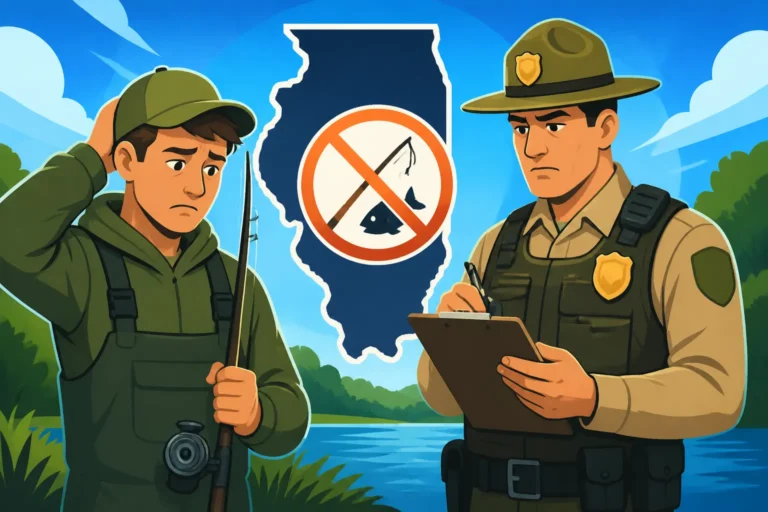
When you're out on the water, whether on the main channel or a quiet backwater, a conservation police officer or game warden can approach you at any time and ask to see your fishing license and identification. This is part of their job, and being prepared makes the interaction smooth and quick.
- Physical or Digital License: Always carry proof of your current fishing license. Many states, including Illinois and Missouri, now allow you to carry a digital copy on your smartphone. Just make sure your phone is charged! However, it's always a good idea to have a physical copy too, especially in areas with spotty cell service. A quick trip to a local sporting goods store or even a bait shop can often get you a printed copy.
- Photo Identification: You will also need to present a valid photo ID, such as a driver's license, to verify your identity and residency. This helps confirm that your license is indeed yours and that you are fishing under the correct resident or non-resident status.
- Staying Current: Remember that fishing licenses have expiration dates. The Illinois License Year Starts on March 1, 2026, so always make sure you're buying a license that's valid for the current season.
Imagine the scenario: You're reeling in a nice flathead catfish from the Mississippi, and suddenly a boat pulls up alongside. It’s a game warden. They'll ask for your license and ID. If you're on the main channel with your valid Illinois license, and you can present it easily, you're usually good to go. But if you’ve drifted into a Missouri backwater and only have your Illinois license, that’s when issues arise. Being prepared is half the battle, as they say. Our guide on Can Game Wardens Check Your Fishing License on the Water? provides more context on this common experience.
The Consequences of Fishing Without the Correct License
Fishing without the proper license, or with an expired one, can lead to various penalties that can quickly sour your day, your wallet, and your future fishing plans. Game wardens are diligent, and they are out there to enforce the rules designed to protect our natural resources.
- Fines: The most common penalty is a monetary fine. These fines can vary depending on the severity of the offense and whether it's a first-time violation, but they are almost always significantly more expensive than the cost of a fishing license itself.
- Confiscation: In some cases, your fishing gear, and even your catch, can be confiscated. Losing a valuable rod and reel or a cooler full of fresh fish is a painful experience that no angler wants.
- License Suspension: Repeated violations or serious offenses can even lead to the suspension of your fishing privileges for a period, meaning you won't be able to fish at all for months or even years.
- Legal Action: While rare for a simple license infraction, very serious cases could potentially involve further legal action.
The fear of getting caught unaware is legitimate, especially when navigating boundary waters. The rules can be intricate, and an honest mistake can still carry consequences. It's truly disheartening to see someone get a citation when they simply didn't understand the nuances of shared water regulations. Our article on Penalties for Fishing Without a License in Illinois delves deeper into these consequences.
Staying Informed with the Latest Regulations
Fishing regulations are not static; they can change annually based on fish populations, environmental factors, and conservation efforts. What was true last year might have a slight modification this year. This is particularly important for species-specific limits and sizes, which can vary between Illinois and Missouri even on shared waters.
- Official State Resources: The absolute best sources for current regulations are the official guides published by the Illinois Department of Natural Resources (IDNR) and the Missouri Department of Conservation (MDC). These are often available online as PDFs or in physical booklet form at bait shops, sporting goods stores, or IDNR/MDC offices. The Illinois Fishing Information Guide Covers April 2026 Through March 2027, for example, is your go-to for Illinois-specific rules.
- Local Bait Shops and Marinas: Don't underestimate the wisdom of local experts. The folks who run bait shops and marinas along the Mississippi River are often intimately familiar with the local regulations, including any specific quirks or recent changes. They can be an invaluable resource.
- Online Communities and Forums: While not official sources, many online fishing communities and forums dedicated to Illinois and Missouri fishing can offer practical advice and discussions on complex regulatory issues. Just be sure to cross-reference any information with official sources.
- Contextual Brand Support: When it comes to finding specialized gear or educational materials to help you prepare, checking retailers like Amazon can be quite useful. You can often find fishing regulation guides, detailed maps, and specialized tackle suitable for the specific conditions of the Mississippi River.
Taking the time to review the current regulations before each season, especially if you plan to fish boundary waters, is a small investment that pays huge dividends in peace of mind. For more specific guidance on finding local rules, check out How to Find the Rules for a Specific Illinois Fishing Spot.
Here's a quick comparison to summarize the general licensing situation on Illinois-Missouri boundary waters of the Mississippi River:
| Feature | Illinois Resident with IL License | Missouri Resident with MO License | Angler from Another State (e.g., Iowa) |
|---|---|---|---|
| Main Channel Mississippi | Valid | Valid | Needs either IL or MO nonresident license |
| Illinois Backwaters | Valid | NOT Valid (Needs IL non-resident license) | Needs IL non-resident license |
| Missouri Backwaters | NOT Valid (Needs MO non-resident license) | Valid | Needs MO non-resident license |
| Tributaries (IL side) | Valid | NOT Valid (Needs IL non-resident license) | Needs IL non-resident license |
| Tributaries (MO side) | NOT Valid (Needs MO non-resident license) | Valid | Needs MO non-resident license |
| Catch Limits/Sizes | Follows Illinois Regulations | Follows Missouri Regulations | Follows regulations of license held |
Please note this table provides general guidance. Always consult the most current official regulations from both the Illinois Department of Natural Resources (IDNR) and the Missouri Department of Conservation (MDC) before fishing.
Disclaimer
The information provided in this guide is for general informational purposes only and does not constitute legal advice. Fishing regulations are subject to change, and it is the angler's responsibility to consult the most current official regulations from the Illinois Department of Natural Resources (IDNR) and the Missouri Department of Conservation (MDC) before engaging in any fishing activities. Compliance with all state and local laws is solely the responsibility of the individual angler.