Crossing Between Illinois and Kentucky to Fish the Same Water
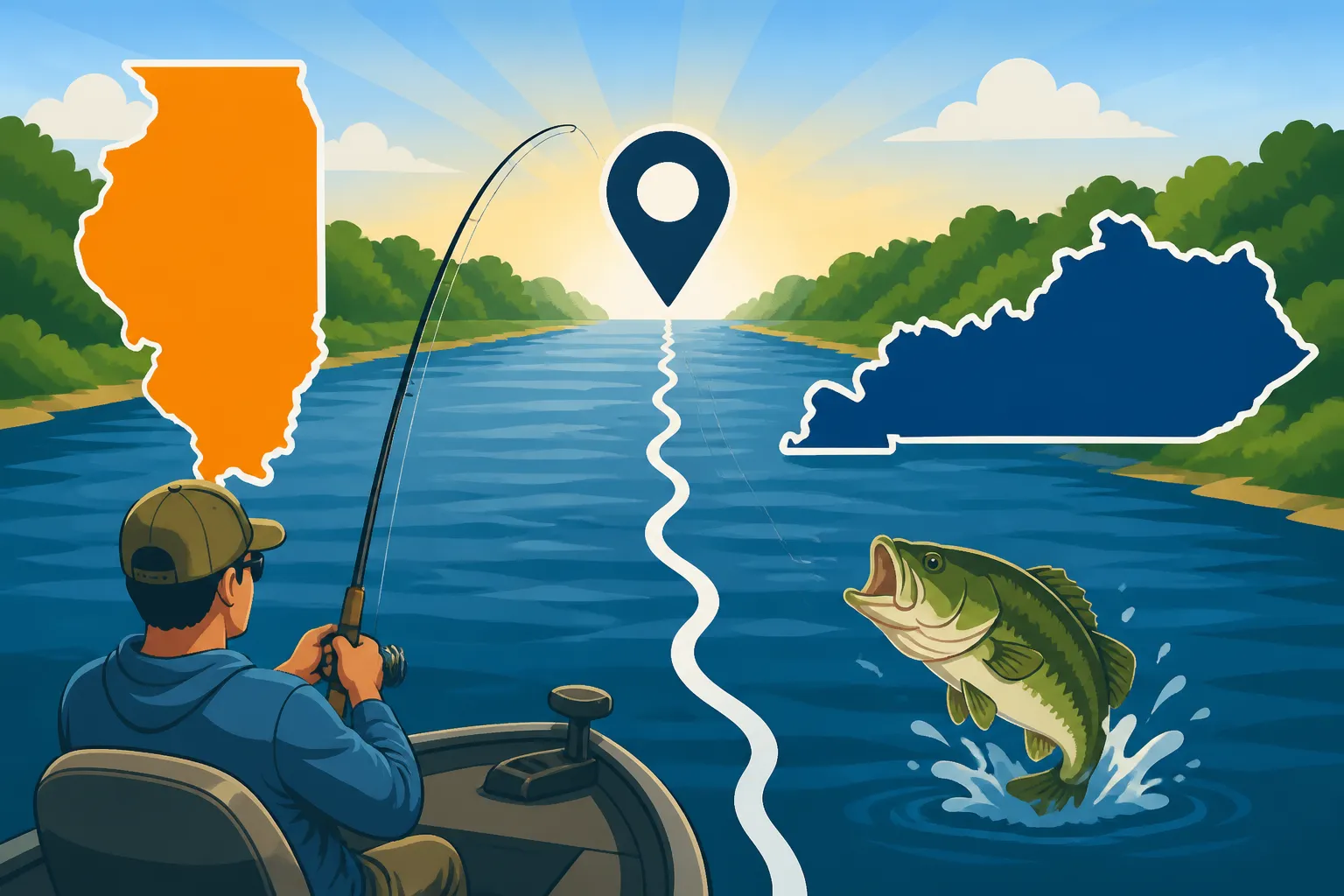
Planning a fishing trip that crosses state lines can be a real headache, especially when you're casting your line in shared waters like the mighty Ohio River between Illinois and Kentucky. It's frustrating to be unsure if your Illinois fishing license covers you if you drift too close to the Kentucky bank, or vice-versa. This guide is here to untangle all that confusion, giving you a clear, straightforward understanding of the reciprocity agreements and regulations you need to know to confidently fish the border waters of Illinois and Kentucky.
Navigating Fishing Licenses on Shared Illinois and Kentucky Waters
When you're dealing with a river that forms a state boundary, like the Ohio River between Illinois and Kentucky, the question of which fishing license you need can feel like a complex legal puzzle. Thankfully, state agencies often work together to create what are known as reciprocity agreements, making life a lot easier for us anglers.
The Concept of Reciprocity in Border States
Reciprocity in the context of fishing licenses simply means that two or more states agree to recognize each other's valid fishing licenses on their shared boundary waters. Imagine trying to fish the Ohio River and needing to carry both an Illinois license and a Kentucky license, just in case your boat drifts a few feet! It would be incredibly impractical and costly for anglers. This system of recognition is designed to prevent that kind of double-licensing burden, allowing you to focus more on catching fish and less on boundary lines. It's a mutual understanding that if you've paid your dues in one state, that payment is honored on the commonly shared resource. This doesn't apply to every body of water, mind you, which is why the specific agreements for Illinois and Kentucky are so important.
The Illinois and Kentucky Reciprocity Agreement on the Ohio River
This is the good news many anglers are looking for: for the main stem of the Ohio River, both Illinois and Kentucky have a strong reciprocity agreement in place. What does this mean for you? It means if you possess a valid fishing license from either Illinois or Kentucky, you are legally covered to fish the main channel of the Ohio River. This agreement is a fantastic benefit for both residents and non-residents who hold a license from either of these states. So, whether you bought your license in Metropolis, Illinois, or Paducah, Kentucky, you're good to go on that stretch of the river. You can check out the specifics on an Illinois Fishing License Reciprocity With Kentucky page for more details.
However, and this is a crucial detail, this reciprocity generally applies to the main stem of the river. This includes the river's primary flow, as well as many of the backwaters and embayments that are clearly and directly connected to the river itself. The moment you venture into a tributary or a distinct body of water that is entirely within the jurisdictional boundaries of one state, you typically need that state's specific license. For instance, if you decide to explore a creek that flows into the Ohio but is entirely on the Illinois side, you'd need your Illinois license. Similarly, if you head up a significant Kentucky tributary away from the main river, a Kentucky license would be required. This distinction often trips up even seasoned anglers, so it's vital to be aware of where you are.
Key Waters and Their Specific Licensing Rules
While the Ohio River is the most significant shared fishery between Illinois and Kentucky, understanding its specific rules, and those of its surrounding waters, is paramount.
The Ohio River: The Primary Shared Fishery
The Ohio River represents the vast majority of shared fishing opportunities between Illinois and Kentucky. From where it joins the Mississippi River near Cairo, Illinois, and extending eastward along the southern border of Illinois, the reciprocity agreement stands firm. A valid fishing license from either Illinois or Kentucky grants you the legal right to cast your lines across this expansive and productive waterway. This simplifies trips immensely, whether you're chasing the impressive catfish that call the Ohio home, targeting sauger and walleye, or simply enjoying a day catching panfish.
It's a diverse fishery, offering everything from deep channels perfect for bottom-fishing for monster flatheads to shallower areas ideal for throwing lures for white bass during their runs. Knowing you only need one state's permit, whether it's your Illinois Fishing License Guide for 2026 or Kentucky equivalent, allows you to really focus on the fish and the experience. For those visiting from out-of-state, securing an Illinois Nonresident Fishing License Guide will explain how easy it is to obtain your permit before you hit these rich waters.
Tributaries and Adjacent Waters: Where Rules Diverge
This is where many anglers can mistakenly assume their reciprocal license covers them everywhere. While the main stem of the Ohio River enjoys that wonderful reciprocity, its numerous tributaries and other adjacent bodies of water that are fully contained within one state's borders do not always fall under the same agreement.
Consider this scenario: You're fishing the Ohio River with your Illinois license, having a grand time. You then decide to explore a large, quiet slough or a small lake that connects to the river but lies entirely within Illinois. In this instance, you would absolutely need your Illinois license, even if you were planning to use a Kentucky license on the main river. The same logic applies if you cross over to the Kentucky side and enter a backwater lake or creek that is fully enclosed by Kentucky's landmass; you would then need a Kentucky fishing license.
It’s crucial to understand that while these waters might feel like part of the Ohio River system, their legal jurisdiction shifts once they are no longer considered part of the main, shared channel. It’s a common reason Why Fishing Rules Vary by Lake and River. Always err on the side of caution. If you're planning to stray from the main river into any side channels, creeks, or lakes, it's a good practice to consult the regulations for the specific state those waters are in. Often, a quick check with local bait shops or the respective state's DNR website can provide the clarity you need.
Beyond the License: Regulations and Best Practices
Having the right fishing license is just one piece of the puzzle. To truly enjoy your time on the Illinois-Kentucky border waters, you need to be aware of the other important regulations and adopt best practices for a smooth, legal, and successful trip.
Species-Specific Regulations and Creel Limits
Even with the convenience of license reciprocity on the main Ohio River, it's a common misconception that all fishing regulations, such as size limits and daily creel (bag) limits, are also automatically harmonized. While Illinois and Kentucky work hard to align many of these rules for the Ohio River to reduce confusion, it's not always a guarantee for every single species or every potential scenario.
For popular species like sauger, walleye, and the various catfish species that thrive in the Ohio River, you'll often find that the daily limits and minimum size requirements are either identical or very similar across both states for the main river. This makes it much easier to keep track. However, for less common species, or if one state has a particular conservation initiative, there might be subtle differences. For example, specific regulations might be detailed on an Illinois Fishing Season and Catch Limit Rules page.
The best practice is always to consult the most current fishing guides published by both the Illinois Department of Natural Resources (IDNR) and the Kentucky Department of Fish and Wildlife Resources (KDFWR) for the Ohio River. These guides typically provide a specific section detailing the harmonized rules for the border waters. You can often find these guides online or purchase physical copies at sporting goods stores. Many detailed guides are also available digitally and through resources you can access via Amazon, which can be quite helpful for on-the-go reference.
Enforcement and Penalties
Don't let the ease of reciprocity lull you into a false sense of security regarding enforcement. On the shared waters of the Ohio River, conservation officers and game wardens from both Illinois and Kentucky have the authority to patrol, check licenses, and enforce all fishing laws. This means you could be approached by an Illinois DNR officer while fishing closer to the Kentucky shore, or vice versa. They are within their rights to ensure you are compliant with the regulations of the shared water.
The penalties for fishing without a valid license, exceeding your daily catch limits, or violating other fishing regulations can be quite significant. These can range from hefty fines, confiscation of your catch and gear, to even the suspension of your fishing privileges. It's not worth the risk. An expired license, or one that doesn't cover your specific location, can quickly turn a fun day into a frustrating and expensive experience. You can read more about what happens if you're caught without a license on the Penalties for Fishing Without a License in Illinois page.
Getting Prepared and Staying Informed
Before you even launch your boat or set up your bank fishing spot along the Illinois-Kentucky border, a little preparation goes a long way.
- Consult Official Sources: Always make your first stop the official websites of the Illinois Department of Natural Resources (IDNR) and the Kentucky Department of Fish and Wildlife Resources (KDFWR). They provide the most up-to-date and accurate information regarding fishing licenses, seasons, and catch limits for all their waters, including the Ohio River. Many state agencies offer their full fishing information guides in PDF format, which you can easily download to your smartphone or tablet.
- Physical Guides: Grab a physical copy of the annual fishing guide from a local bait shop or sporting goods store. Sometimes it's easier to flip through a booklet than navigate a website, especially if cell service is spotty. Many anglers find it useful to have a waterproof copy in their tackle box, and you can often find accessory pouches for such guides on Amazon.
- Mapping Your Trip: Invest in a good quality map of the Ohio River that clearly delineates state lines and shows major tributaries. Knowing exactly where you are and where those jurisdictional lines lie can save you a lot of grief. Some excellent waterproof fishing maps are available for purchase on Amazon, providing invaluable insight into river contours, depths, and potential fishing spots.
- License Validity: Double-check the validity dates of your fishing license. Remember, the How the Illinois License Year Works means licenses typically expire on a specific date, regardless of when you purchased them. Don't let an expired license ruin your day.
- Gear Up Right: Ensure you have all the necessary gear, not just for fishing, but for safety. This includes appropriate life jackets, especially if you're boating, and other boating safety equipment. While checking out gear for Best Catfish Rivers in Illinois, ensure you have all your safety bases covered too.
By taking these proactive steps, you can fully enjoy the fantastic fishing opportunities that the Illinois-Kentucky border waters, particularly the majestic Ohio River, have to offer.
| Feature / Scenario | Ohio River (Main Stem) | Tributaries & Inland Waters (e.g., Cache River in IL, Kentucky River in KY) |
|---|---|---|
| Fishing License Needed | Valid Illinois OR Kentucky License | Valid license from the specific state the water is located within |
| Boating Registration | Valid registration from either state | Valid registration from either state (if connecting to shared water) |
| Enforcement Authority | Both IL & KY Conservation Officers | Officers from the state the tributary is located in |
| Fish Species Regulations | Generally harmonized (always confirm latest official guides) | State-specific regulations apply |
| Common Fish Targeted | Catfish, Sauger, Walleye, Bass, Panfish, White Bass | Largemouth Bass, Crappie, Bluegill, Channel Catfish |
| Purchase Resources | ILDNR.gov, KDFWR.com, Local Retailers, Amazon (for guides/maps) | ILDNR.gov, KDFWR.com, Local Retailers |
Disclaimer
The information provided in this guide is for general informational purposes only and is not intended as legal advice. Fishing regulations can change frequently. Always consult the official websites and publications of the Illinois Department of Natural Resources (IDNR) and the Kentucky Department of Fish and Wildlife Resources (KDFWR) for the most current and accurate regulations before engaging in any fishing activities.