Rare and Unusual Fish Species Found in Illinois Waters
It’s easy to fall into a routine when you’re fishing in Illinois, always targeting the same familiar species like largemouth bass, crappie, or channel catfish. But beneath the surface of our rivers and lakes lies a fascinating world of truly unique and often overlooked aquatic inhabitants, some of which are ancient survivors or just plain odd-looking. This guide aims to pull back the curtain on these rare and unusual fish species found in Illinois waters, giving you a glimpse into their lives and perhaps inspiring your next unique angling adventure.
Unveiling Illinois's Hidden Aquatic Gems
For many of us, fishing is about the thrill of the catch, and usually, that means pursuing the popular game fish. We spend hours perfecting our bass techniques or finding the perfect crappie bed. But what if I told you that Illinois holds a treasure trove of fish species that are far less common, often prehistoric in appearance, and offer a completely different kind of challenge and reward? These are the hidden gems that often go unnoticed, yet contribute immensely to the rich biodiversity of our state's waterways.
Why We Overlook the Unusual Species
Let's be honest, most of our fishing knowledge is centered around what's biting, what tastes good, or what puts up a legendary fight. When you ask most anglers what they're after, you'll hear about Illinois Statewide Bass Fishing Limits or the latest crappie reports. We're conditioned to focus on species that are abundant, accessible, and well-documented in terms of fishing techniques and regulations. This focus, while understandable, means we often overlook the vast majority of fish species that call Illinois home. Did you know Illinois is home to over 220 different fish species? Many of these live in less-frequented habitats, are highly specialized, or simply aren't considered "sport fish" in the traditional sense, making them less likely to cross paths with the average angler. They might prefer murky, slow-moving backwaters, incredibly deep river channels, or highly vegetated swamps, which aren't always prime spots for your typical bass boat.
Moreover, identifying these lesser-known species can be a challenge in itself. Without prior knowledge, a unique catch might simply be released as "some weird fish" without truly appreciating its significance. There's a whole world beyond the common catches, and with a little curiosity, you can start to uncover it.
The Thrill of an Unexpected Catch
There's a special kind of excitement that comes with landing a fish you've never seen before. It's not just about the fight; it's about the wonder, the scramble to identify it, and the story you'll tell later. Imagine reeling in something that looks like it swam straight out of a dinosaur movie! These unexpected encounters add an entirely new layer to the fishing experience. It pushes you to learn more about our aquatic ecosystems, to understand the intricacies of different habitats, and to appreciate the sheer diversity that exists.
For example, a chance encounter with a massive lake sturgeon, a fish that can live for over 100 years, is an unforgettable moment. It reminds us that our waters are teeming with life, much of which remains a mystery to most. Embracing the possibility of an unusual catch fosters a deeper respect for all aquatic creatures, not just the ones we typically target for sport or table fare. It broadens your horizons as an angler and connects you more intimately with the natural world around you.
Fascinating, Yet Seldom-Seen Fish of Illinois
Illinois's waters, especially its large river systems and their backwaters, are surprisingly diverse. While many anglers chase the usual suspects, there's a whole collection of fascinating fish that are rarely seen or targeted. These species often boast unique evolutionary traits, ancient lineages, or specialized behaviors that make them truly stand out.
Ancient Survivors: Spotted Gar and Bowfin
When you talk about prehistoric-looking fish in Illinois, the Spotted Gar and the Bowfin are usually at the top of the list. These incredible creatures have changed little over millions of years, earning them the title of "living fossils."
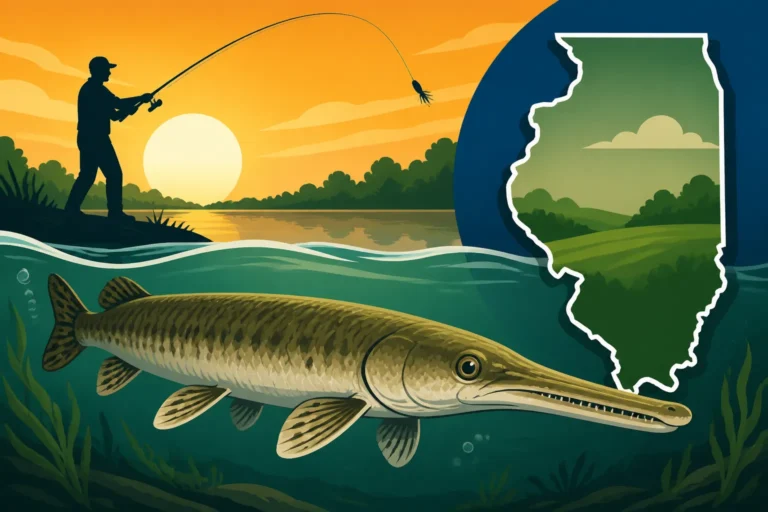
The Spotted Gar is easily identified by its long, cylindrical body covered in diamond-shaped ganoid scales, which give it an armored appearance. Its most distinctive feature is its elongated snout, which is filled with sharp, needle-like teeth, perfectly adapted for snatching smaller fish. As their name suggests, they are covered in dark spots on their body and fins. You'll often find them in slow-moving backwaters, oxbow lakes, and heavily vegetated areas of large river systems, especially the Mississippi and Illinois Rivers. They love to lie in wait, perfectly camouflaged, before ambushing their prey. Catching them can be a challenge because of their bony mouths, but for anglers seeking a truly unique fight and a glimpse into ancient times, they're a rewarding target. Check out Illinois Spotted Gar Fishing in the Mississippi River Backwaters for more on these fascinating fish.
Then there's the Bowfin, often affectionately (or sometimes fearfully) called "dogfish" by locals due to their aggressive nature and dog-like teeth. Bowfin are characterized by their long, continuous dorsal fin that runs almost the entire length of their back. They also possess a unique gular plate, a bony plate under their chin, a remnant of ancient fish. What's truly remarkable about the bowfin is their ability to gulp air directly from the atmosphere, allowing them to survive in oxygen-depleted waters that would kill most other fish. They thrive in shallow, heavily vegetated areas, swamps, and sluggish streams. When hooked, a bowfin puts up a tenacious, thrashing fight, often leaping and rolling. While not typically sought for food, they offer an incredible angling experience. If you're curious about their edibility, take a look at Is Bowfin Good to Eat?. Understanding the differences between these two can be fun for anglers, and Spotted Gar vs Bowfin: How to Tell These Prehistoric Fish Apart offers a great comparison.
The Elusive American Eel and Lake Sturgeon
Moving on to even rarer encounters, the American Eel is truly one of Illinois's most mysterious aquatic residents. With its snake-like body, single dorsal fin, and slimy skin, it's unmistakable. What makes the American eel so incredible is its catadromous life cycle, meaning it spawns in saltwater (the Sargasso Sea) and then migrates into freshwater rivers and streams to grow. Eels found in Illinois have traveled thousands of miles to reach our waters, primarily inhabiting the larger river systems like the Mississippi and Illinois Rivers, often in muddy or rocky bottoms. Catching an eel is a rare event for most anglers, but if you do, you'll be holding a true marvel of nature with an incredible journey behind it.
Even more awe-inspiring, and unfortunately, critically endangered, is the Lake Sturgeon. This magnificent fish is another ancient survivor, easily identified by its five rows of bony scutes (plates) instead of scales, and its distinct bottom-feeding mouth located underneath its shovel-shaped snout. Lake sturgeon are native to Lake Michigan and large river systems, where they can grow to immense sizes, sometimes exceeding six feet in length and living for over a century. Encountering a lake sturgeon is a once-in-a-lifetime experience for most Illinois anglers. Due to their protected status, if you are lucky enough to accidentally catch one, it must be immediately released unharmed. These fish are a testament to the wildness that still exists in our waters, and their conservation is paramount. Always check the Illinois Fishing Regulations Overview for information on protected species.
Other Intriguing Bottom Dwellers and Oddities
Beyond the truly ancient, Illinois also harbors other unique fish that often fly under the radar.
The Paddlefish is another filter-feeding giant of our large rivers. It's named for its remarkably long, paddle-like snout, which is covered in electroreceptors used to detect plankton, their primary food source. These impressive fish can grow quite large and are primarily found in the Mississippi River and its larger tributaries. Due to their filter-feeding nature, they are rarely caught on traditional hook-and-line bait and are typically "snagged" by specialized anglers under strict regulations. Their unique appearance makes them instantly recognizable.
Closely related to the Lake Sturgeon, the Shovelnose Sturgeon is a smaller but equally fascinating bottom-dweller. As its name implies, it has a shovel-shaped snout, but it generally doesn't grow to the massive size of its lake-dwelling cousin. You'll find them in the larger, main channels of the Mississippi and Illinois Rivers, often in areas with moderate current over sandy or gravel bottoms. Like other sturgeon, they have bony plates and barbels near their mouths to feel for food. Because of their similarities, anglers must be careful not to mistake a Shovelnose for a protected Lake Sturgeon, although the Shovelnose is typically more abundant.
Finally, we have the Mooneye and Goldeye, two slender, silvery fish with very large eyes, which are perfectly adapted for low-light feeding. They are often mistaken for shad due to their similar appearance and schooling behavior, but they are distinctly different, belonging to the Hiodontidae family. You can find them in large river systems like the Illinois River and Mississippi River, where they feed on insects and small fish. While not traditional sport fish, they can provide surprising action on light tackle, and they're a beautiful fish to observe.
Here's a quick reference for some of these unique Illinois fish:
| Species Name | Key Identification Feature | Primary Habitat (Illinois) | Rarity Level (General) | Special Considerations |
|---|---|---|---|---|
| Spotted Gar | Long, toothed snout; dark spots | Slow backwaters, oxbows, vegetated areas | Uncommon | Prehistoric look, bony mouth makes hooking difficult |
| Bowfin | Long dorsal fin; gular plate | Shallow, heavily vegetated waters, swamps | Uncommon | Air breather, aggressive fighter, "dogfish" |
| American Eel | Snake-like body; single dorsal fin | Major rivers (Mississippi, Illinois) | Rare | Catadromous, long migrations, elusive |
| Lake Sturgeon | 5 rows of bony scutes; large size | Deep pools of large rivers, Lake Michigan | Very Rare/Protected | Federally protected, immediate release, report sightings |
| Paddlefish | Long, paddle-like snout | Large, turbid rivers, deep pools | Rare | Filter feeder, typically snagged, specific regulations |
| Shovelnose Sturgeon | Shovel-shaped snout; smaller size | Large rivers (Mississippi, Illinois) | Uncommon | Often confused with Lake Sturgeon, similar protections |
| Mooneye / Goldeye | Large eyes; silvery, deep body | Large rivers, clear to moderately turbid water | Uncommon | Schooling fish, can be caught on small lures/flies |
Where to Potentially Encounter These Unique Fish
Finding these rare and unusual fish isn't always about hitting the most popular fishing hole. It often requires a bit of research, a willingness to explore different types of water, and sometimes, a little bit of luck. These species tend to inhabit specific niches, and understanding their preferred environments is the first step to a successful encounter.
Large River Systems and Their Backwaters
Without a doubt, the large river systems of Illinois are your best bet for encountering many of these unique species. The Mississippi River, flowing along Illinois's western border, is a prime example. Its sheer size, diverse habitat, and constant flow create perfect conditions for a wide array of fish. Here, you can find sturgeon, paddlefish, gar, bowfin, and even eels making their way through. Focus your efforts on the extensive backwater sloughs, oxbow lakes, and deep main channel holes. These areas provide the slower currents, abundant vegetation, and ample food sources that many of these species prefer. Mississippi River Fishing in Illinois: Which Species Live Where can give you a more detailed overview of the species and locations within this vast system.
The Illinois River is another fantastic waterway to explore. Historically a major migration route for eels and home to robust populations of gar and bowfin, it still holds significant biodiversity. Look for calmer areas, tributary mouths, and any sections with significant submerged or emergent vegetation. The Wabash River in eastern Illinois also offers similar opportunities, especially in its lower reaches. Fishing a quiet eddy where the current slows, or exploring a stagnant-looking cove off the main channel, might just yield a surprising catch. Don't be afraid to cast into areas that might seem "too quiet" for typical game fish; these are often exactly where the unusual ones reside. For more specific insights into this river, consider exploring the Illinois River Fishing Guide.
Specialized Habitats and Patience
Beyond the major rivers, understanding the specific habitat preferences of each rare species is crucial. For instance, if you're hoping to encounter a bowfin, you should seek out highly vegetated shallow areas, often with muddy bottoms, in lakes and slow-moving streams. Think of dense lily pad fields or areas choked with submerged weeds. They love to lurk in these covers, waiting for prey. Similarly, the American Eel will often be found in areas with plenty of cover, such as rocky crevices or muddy banks, within flowing river systems.
Catching these fish often requires a different approach than what you'd use for bass or crappie. Gar, for example, are frequently targeted with rope lures that tangle in their teeth, or live bait fished under a bobber. Bowfin can be aggressive and will hit a variety of artificial lures, particularly those that mimic baitfish like spinnerbaits or chatterbaits, but often in dense cover that might be frustrating for other species. For the highly protected Lake Sturgeon, accidental catch-and-release is the most likely scenario, and that often happens when targeting other large bottom-dwelling fish like blue catfish in deep river holes. Patience is a virtue, as these fish are not as abundant as common game species. Sometimes, it's about being in the right place at the right time with the right bait, rather than aggressive pursuit. Remember, understanding How to Find the Rules for a Specific Illinois Fishing Spot is always essential, as some unique areas may have very specific guidelines.
Responsible Angling for Rare Species
When you venture out hoping to encounter Illinois's more unusual fish, or simply stumble upon one, responsibility is paramount. These species, by their very nature of being "rare," often have specific conservation needs or require careful handling. Your actions as an angler can make a real difference in their survival and the health of our aquatic ecosystems.
Identification is Key
The absolute first step when you catch an unusual fish is proper identification. This might sound obvious, but in the heat of the moment, with a strange-looking fish on the line, it's easy to jump to conclusions or simply release it without knowing what it was. Many rare or protected species, like the Lake Sturgeon, require immediate release, and knowing what you're holding is crucial. Carry a good field guide, or have a reliable fish identification app on your phone. Learn the key distinguishing features of common species versus the rare ones. For instance, distinguishing between a Lake Sturgeon and a Shovelnose Sturgeon can be tricky but important. Similarly, knowing the subtle differences between a Spotted Gar and a Longnose Gar can help you appreciate your catch more. Are Spotted Gar Safe to Handle? might be a question that comes to mind with their sharp teeth and scales, so knowing your fish will empower you to handle them correctly.
Catch-and-Release Best Practices
For many rare or unusual species, especially those with protected status, catch-and-release is not just encouraged, it's often legally mandated. If you do catch one of these magnificent fish, your goal should be to ensure its best chance of survival.
- Minimize Handling Time: Get the fish unhooked and back in the water as quickly as possible.
- Wet Your Hands: Always wet your hands before touching the fish to protect its delicate slime coat, which is vital for disease resistance.
- Support Its Body: If you need to lift the fish for a quick photo, support its body horizontally to avoid internal damage, especially for larger, heavier fish like sturgeon or paddlefish.
- Use Proper Tools: Have long-nose pliers or a de-hooker ready to quickly remove hooks. These tools can be found easily on Amazon and make a huge difference in reducing stress on the fish, particularly when dealing with toothy species like gar or bowfin.
- Revive if Necessary: For exhausted fish, hold them gently in the water, facing into the current, until they are strong enough to swim away on their own.
By following these practices, you ensure that these unique fish can continue to thrive and potentially be caught by another angler years down the line.
Understanding Regulations
Finally, and perhaps most importantly, always, always understand the specific regulations for any species you might encounter, especially the rare ones. The Illinois Fishing Regulations Overview is your bible in this regard. Some species have strict size limits, daily possession limits, or are entirely protected and must be released immediately upon capture. For example, catching a Lake Sturgeon means an instant, careful release. There might also be specific rules about how certain fish, like Paddlefish, can even be legally harvested (often via snagging during a very limited season). Regulations can vary by water body as well, so it’s not enough to know statewide rules; you need to check the site-specific information for where you're fishing. Being informed prevents accidental violations and demonstrates your commitment to responsible angling.
Disclaimer
This article is for general informational purposes only and does not constitute professional advice. Laws, prices and regulations vary by location and change over time. Consult a qualified professional for guidance on your specific situation.