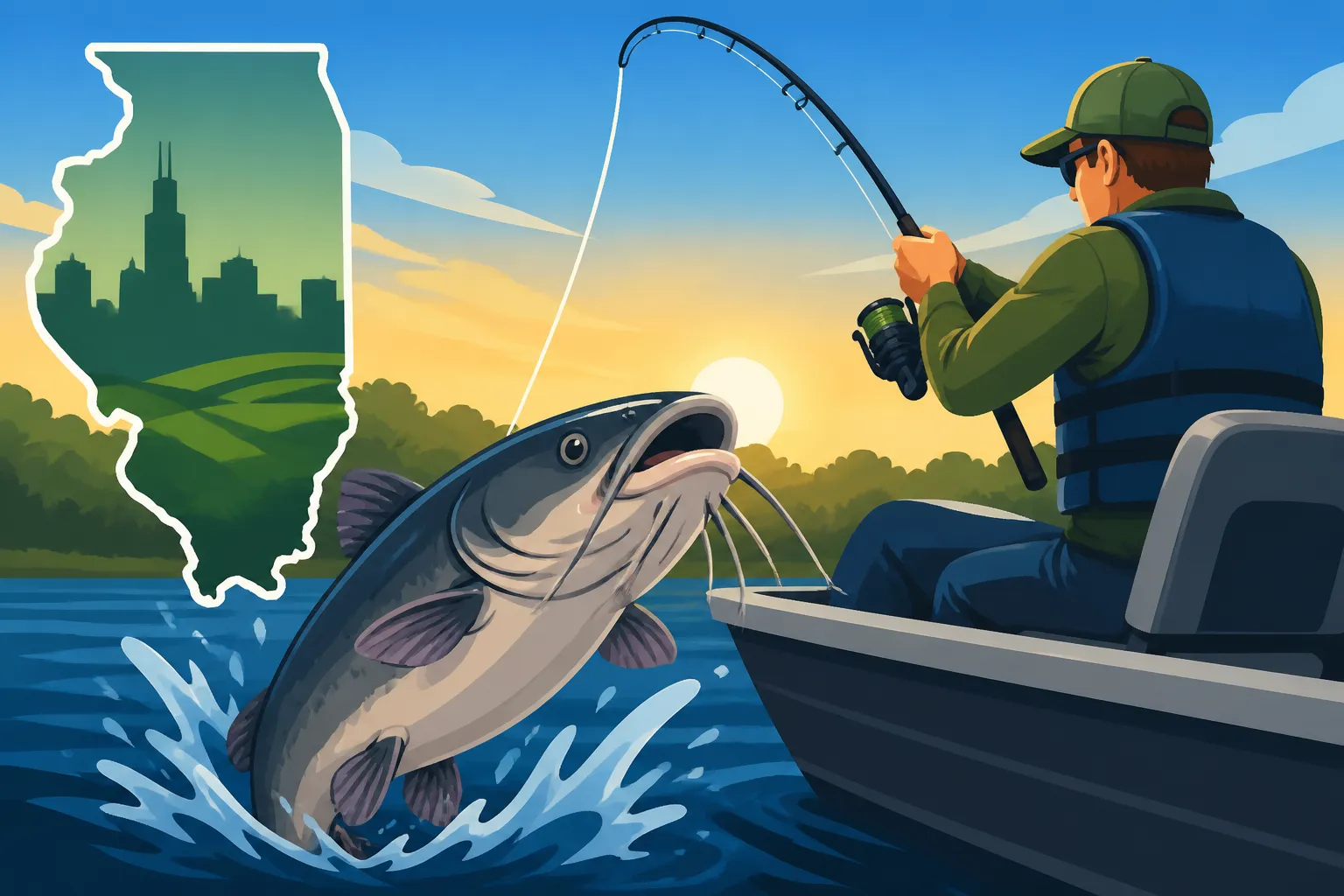
How to Catch Channel Catfish From a Boat
It can be incredibly frustrating to be out on the water in your boat, knowing that channel catfish are lurking, but just not being able to hook into them like you do from the bank. Many anglers struggle with transitioning their catfish game from shore to boat, often missing out on prime opportunities because they haven't quite adapted their approach. This comprehensive guide will walk you through the specific strategies, gear, and boat handling tips you need to confidently and effectively catch channel catfish from your boat in Illinois's diverse lakes and rivers.
Understanding Channel Catfish Behavior from a Boat Perspective
Fishing for channel catfish from a boat really opens up a world of possibilities that you just can't reach from shore. But to make the most of it, you first need to think like a cat and understand where they're most likely to be holding, both in still waters and moving currents. Their behavior shifts based on depth, structure, and season, and knowing these patterns is your first step to success.
Where Channel Cats Hang Out in Lakes and Rivers
When you're out on the water, you're looking for prime real estate, and channel catfish have very specific preferences. In lakes, they're often found hugging the bottom in deeper main lake channels, especially where there are significant drop-offs or points. Submerged timber, old creek beds, and even brush piles can be absolute magnets for them, offering cover and ambush points for passing prey. Don't overlook the edges of weed lines, particularly if they provide a sudden change in depth. These areas are like underwater highways and rest stops for hungry cats.
On rivers, the game changes slightly due to current, but the principle of seeking structure remains. Channel catfish will hold in current breaks, like behind bridge pilings, submerged logs, or large rocks, where they can conserve energy while still being close to the food funneling past. Deep scour holes on the outside bends of a river are classic spots, as are the mouths of smaller creeks or tributaries that dump into the main river, bringing in fresh nutrients and baitfish. Using your boat's electronics to identify these specific features is a huge advantage. How to Find the Rules for a Specific Illinois Fishing Spot is a great resource to learn more about specific water bodies.
Seasonal Movements and How They Affect Boat Fishing
Channel catfish aren't static; their movements are heavily influenced by the seasons and water temperature. Knowing these patterns will dictate where you position your boat and what tactics you employ. In the spring, as water temperatures begin to rise, channel cats will move into shallower areas, especially those with dark bottoms that warm up faster. This pre-spawn period is a fantastic time for boat anglers to target them in bays, coves, and flats adjacent to deeper water. They're often feeding aggressively to build up energy for spawning.
Summer sees them moving deeper during the day to find cooler, more oxygenated water, often retreating to the main lake basins or deep river channels. However, they'll move shallower to feed during low-light conditions, making dawn, dusk, and night fishing from a boat incredibly productive. During the fall, as water temperatures drop, catfish will start feeding heavily again, bulking up for winter. They'll often be found transitioning to deeper holes, river bends, and channels where they'll eventually overwinter. In winter, they become more lethargic, congregating in the deepest, most stable holes in lakes and rivers, and a boat can get you directly over these spots for vertical presentations.
Essential Gear and Boat Setup for Channel Catfish
You can't just jump in any boat with any rod and expect consistent catfish success. Having the right gear and a boat properly set up for catfishing will make all the difference, enhancing your comfort, efficiency, and ultimately, your catch rate.
Rods, Reels, and Line for Boat Anglers
When you're battling a hard-fighting channel catfish from a boat, you need tackle that can stand up to the challenge. For most channel cats in Illinois, a medium-heavy to heavy action rod, typically 6'6" to 7'6" long, is ideal. This length gives you enough leverage for casting and fighting fish, without being too cumbersome in the boat. Graphite or composite rods offer a good balance of sensitivity and backbone. When it comes to reels, you've got options. Many serious catfishermen prefer baitcasting reels for their power and ability to handle heavier lines and bigger fish, but a robust spinning reel with a smooth, reliable drag system can also get the job done, especially for lighter applications.
Pair your reel with a strong line. Monofilament lines in the 15-25 pound test range are a common choice due to their stretch, which can act as a shock absorber against powerful runs, and their abrasion resistance. However, some anglers swear by braided lines, typically 30-65 pound test, for their incredible strength, sensitivity, and smaller diameter. The lack of stretch in braid means you'll feel every subtle bite, but you'll need to compensate with a more forgiving rod or a longer leader. You can find a fantastic selection of both monofilament and braided lines on Amazon, ensuring you're ready for any situation. How to Catch Channel Catfish From a Boat is a great next read.
Must-Have Boat Accessories and Safety Gear
A boat specifically geared for catfishing requires more than just a motor. An effective anchoring system is paramount. Depending on the water you're fishing, this could mean a traditional anchor with plenty of rope for still-fishing in lakes or slower river sections, or even a sturdy stake-out pole system for shallow water and precise positioning. For river fishing with current, multiple anchors might be necessary to keep your boat from swinging. Good quality rod holders are absolutely critical; they keep your rods secure, allow you to run multiple lines, and ensure you're ready for a strike even if you're distracted. Flush-mount, rail-mount, or clamp-on holders are all viable options, just make sure they're sturdy enough for a catfish tug.
A reliable fish finder or depth finder is another game-changer. It helps you locate those hidden channels, drop-offs, submerged timber, and schools of baitfish that channel cats feed on. Modern units with side-imaging or down-imaging can paint an incredible picture of the underwater world, allowing you to pinpoint prime locations with precision. Finally, never forget your safety gear. Always have properly fitting life jackets for everyone on board (easily found on Amazon), a fire extinguisher, signaling devices, and a first-aid kit. A livewell or a large cooler with ice is also essential for keeping your bait lively and your catch fresh.
Terminal Tackle and Bait Essentials
The right terminal tackle is what puts your bait in front of the fish effectively. For channel catfish, circle hooks are king. They dramatically increase your chances of a lip-hooked fish, which is much healthier for the fish if you plan to release it, and reduces gut-hooking. Sizes typically range from 2/0 to 8/0, depending on your bait size and target fish. The key with circle hooks is to not set the hook like you would with a J-hook; instead, just let the fish take the bait and then slowly reel down until the line tightens and the hook sets itself.
Sinkers are crucial for getting your bait down and keeping it in place, especially in current. No-roll sinkers, pyramid sinkers, or egg sinkers are all excellent choices. Vary the weight based on current, depth, and wind conditions; you want enough weight to hold bottom but not so much that it's just a dead weight. Use appropriate swivels to prevent line twist and stout leaders (fluorocarbon or monofilament) to protect your main line from abrasion against structure or the catfish's rough mouth. As for bait, channel catfish are opportunistic scavengers. Cut bait (like shad, carp, or bluegill) is incredibly effective, as is chicken liver (though it can be messy to handle), nightcrawlers, and various prepared stink baits. Make sure you have a good selection, and don't be afraid to experiment to see what the fish are biting on that day. Best Bait for Illinois Channel Catfish has more details on this.
Proven Boat Fishing Techniques for Channel Catfish
Now that you've got your boat and gear ready, it's time to dive into the techniques that will get those channel catfish in the boat. Being mobile on the water allows for a much more dynamic approach than bank fishing, letting you cover more ground and present your baits in various ways.
Anchoring and Still-Fishing Strategies
Still-fishing from an anchored boat is arguably the most common and effective way to target channel catfish. The key here is precise boat positioning. Use your fish finder to locate specific structure – a submerged hump, a drop-off, a log jam, or a deep channel break – and anchor your boat upstream or upwind of it, allowing your baits to drift naturally into the strike zone. Don't be afraid to adjust your anchor if the current or wind shifts, or if your baits aren't landing exactly where you want them. Often, a slight adjustment can make a huge difference.
Once anchored, deploy multiple rods, fanning them out to cover a wider area and present baits at different depths. One rod might have a heavier sinker to hold right on the bottom in the deepest part of the channel, while another might have a lighter weight, allowing it to drift slightly into a shallower flat. Experiment with different baits on each rod to quickly figure out what the catfish are preferring on that particular day. Patience is a virtue in still-fishing; sometimes it takes a while for the scent to travel and for the cats to find your offering, but when they do, you can often find a whole school.
Drifting and Trolling for Active Cats
While still-fishing is great for sedentary fish, drifting or slow trolling can be incredibly effective for actively feeding channel catfish or for covering large areas to find scattered fish. Drifting is particularly productive in rivers, where the current can carry your baits naturally through prime catfish holding areas. Use a controlled drift by deploying a drift sock or two off the bow or stern to slow your boat down, allowing your baits to stay in the strike zone longer. This also helps keep your lines from tangling. You can vary your drift path by using your trolling motor to steer, guiding your boat over underwater structures or along channel edges.
In lakes, drifting can be done with the wind, again using drift socks to control your speed. This is excellent for covering large flats or finding channel cats that are cruising along contour lines. While less common for channel catfish than for species like walleye, slow trolling with cut bait or large prepared baits can also be effective in some situations, especially when trying to cover ground quickly to locate schools in large reservoirs. The key with both drifting and trolling is to match your speed to the fish's activity level and the current conditions. Illinois Catfish Season at Rend Lake is a great read for identifying seasonal patterns.
Reading Your Electronics and the Water
Your boat's electronics are one of your biggest allies when targeting channel catfish. A good fish finder is not just for finding fish; it's for finding habitat. Use it to identify distinct bottom changes, such as hard-to-soft transitions, rock piles, submerged timber, and significant depth changes. Channel catfish often relate heavily to these structural elements. Look for baitfish schools, as catfish won't be far behind. Sometimes you'll even mark large arcs that indicate catfish themselves, especially when they're congregated in deeper holes.
Beyond the screen, learn to read the water itself. In rivers, look for current breaks, eddies, and seams where fast water meets slow water. These are natural feeding lanes and resting spots. In lakes, pay attention to points, humps, and the mouths of creeks, especially after a rain when fresh nutrients are washing in. Observing surface activity, like schooling baitfish or even jumping catfish, can also give you clues as to where the action is. Combine your electronics with your visual observations and your knowledge of catfish behavior, and you'll be putting your baits in the right place every time.
Common Challenges and How to Overcome Them on the Water
Even with the best gear and knowledge, fishing from a boat for channel catfish isn't without its challenges. From snags to unpredictable weather, there are always elements that can test your patience. Knowing how to anticipate and overcome these common issues will keep your frustration low and your spirits high.
Dealing with Snags and Bottom Structure
One of the biggest headaches when catfishing near structure from a boat is getting snagged. Channel catfish love to hang out in messy places – submerged timber, rock piles, old bridge debris – which are notorious for gobbling up terminal tackle. To minimize snags, try using a Carolina rig or a Santee rig. Both of these rigs use a leader that lifts your hook and bait slightly off the bottom, reducing the chances of the hook getting caught. A slip sinker on your main line, ahead of a swivel, allows the line to run freely, often pulling the sinker free from a minor snag while the hook remains clear.
When you do get snagged, resist the urge to just yank. Instead, try moving your boat to a different angle, directly over the snag if possible, and then gently pull. Often, a change in angle can free your line. If you're using braided line, sometimes a heavy snap can break the hook or leader rather than the main line. Consider using a weaker leader than your main line (e.g., 20 lb mono leader with 50 lb braid main line) so that if you do break off, you only lose your hook and sinker, not your entire rig. Keeping a tackle retriever tool on board can also save you a lot of expensive terminal tackle. Best Catfish Rigs for Carlyle Lake provides more specific rigging tips.
Weather and Water Conditions
Mother Nature rarely cooperates perfectly, and weather and water conditions can significantly impact your catfishing success. Wind is a common challenge for boat anglers. It can make accurate anchoring difficult and cause your boat to swing, pulling your baits out of the strike zone. If you're still-fishing, use multiple anchors, or anchor strategically to let the wind hold your boat in place over your desired spot. For drifting, wind can either be your friend or foe; use drift socks to control your speed in windy conditions. Always check the forecast and prioritize safety when dealing with strong winds or approaching storms.
Heavy rain can also change the game. While some anglers pack it in, a post-rain increase in current and turbidity can actually kickstart a catfish bite, especially in rivers or where feeder creeks dump into lakes. The influx of new water carries food and nutrients, and the reduced visibility can make catfish bolder. Adjust your bait choices to stronger scents and brighter colors in muddy water. Conversely, extremely hot weather might push channel cats to deeper, cooler water during the day, making early morning, late evening, or night fishing more productive.
Maximizing Your Catch and Handling Fish
Once you get a bite, knowing how to maximize your chances of landing the fish is key. If you're using circle hooks, remember the golden rule: do not set the hook. Instead, let the fish take the bait, and as your rod loads up, slowly reel down, letting the circle hook do its job and rotate into the corner of the fish's mouth. This often results in a solid, clean hookup. If you're not getting solid hookups, try letting the fish run a bit longer before engaging the reel.
Once landed, proper fish handling is crucial. If you plan to release the fish, minimize its time out of water. Use wet hands or a wet towel to hold it firmly, avoiding excessive squeezing. A good pair of fish grippers can also help protect both you and the fish from sharp fins and teeth. If you're keeping your catch, place it immediately in a cooler with ice or a well-aerated livewell to ensure the meat stays fresh. This also helps to dispatch the fish humanely. Always consult the Illinois Fishing Regulations Overview for catch limits and size restrictions before heading out.
| Technique | Best Conditions | Advantages | Disadvantages |
|---|---|---|---|
| Still-Fishing | Calm water, light current, targeting specific structure | Precise bait placement, good for concentrated fish, multiple lines possible | Limited coverage, requires good anchoring, can be slow |
| Drifting | Moderate wind/current, searching for scattered fish | Covers large areas, natural bait presentation, can find active fish quickly | Less precise, can be challenging to control in strong wind/current, line tangles |
Disclaimer
This article is for general informational purposes only and does not constitute professional advice. Laws, prices and regulations vary by location and change over time. Consult a qualified professional for guidance on your specific situation.