Illinois Blue Catfish: Where to Find the Biggest Ones
For any angler who has felt the pull of a true freshwater leviathan, the quest for a trophy blue catfish in Illinois is a deeply personal and often challenging journey. It's not just about catching a fish; it's about the thrill of the hunt, the patience required, and the sheer power these incredible creatures possess. If you've been dreaming of landing one of Illinois's biggest blue cats and are wondering where to even begin, this guide is crafted to steer you toward those prime waters and give you the know-how to make that dream a reality.
The Allure of Illinois Blue Catfish
There’s something undeniably special about blue catfish. They represent a different class of freshwater fishing—a pursuit where brute strength, persistence, and specialized knowledge truly pay off. Unlike some of their smaller cousins, blue cats offer an incredible fight and the potential for truly massive catches, making them a top target for many serious anglers in the Prairie State.
Why Blue Cats Are a Prize for Anglers
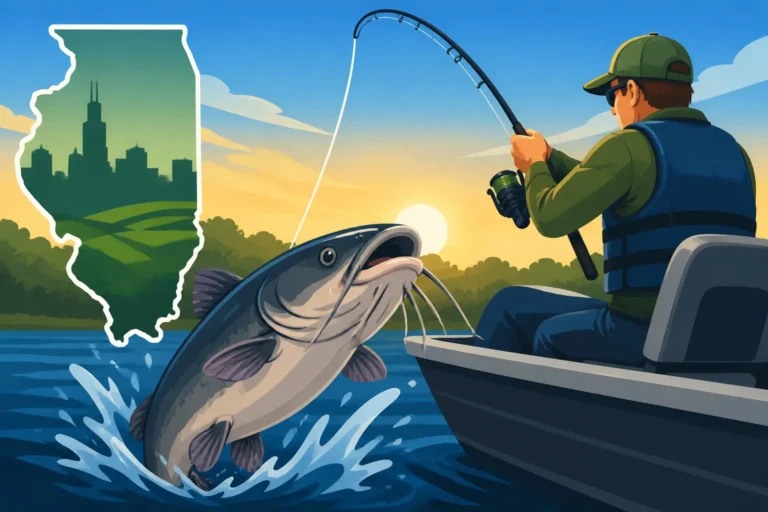
Blue catfish are the largest species of catfish in North America, and their sheer size potential is what makes them such a coveted prize. While channel catfish are abundant and fun, and flatheads offer a unique predatory challenge, blue cats are in a league of their own when it comes to weight and length. Imagine reeling in a fish that could rival a small child in size – that's the kind of excitement a trophy blue cat brings. It's not just the fight, though; it's the intelligence and the challenge of locating and enticing these giants that draws so many dedicated anglers.
The quest for a truly massive blue cat can feel like a lifelong pursuit for many. They are powerful, cunning, and often inhabit deep, formidable waters, demanding respect and a specialized approach. Successfully landing a large blue catfish isn't just a testament to your fishing skill; it’s a story you’ll tell for years, a memory etched deeply into your angling journey. Plus, for those who enjoy a good fish fry, many find the meat of smaller blue catfish to be quite delicious, though the giants are usually released to fight another day.
Identifying the Big Ones: Blue Catfish vs. Their Cousins
Before you can target the biggest blue cats, it’s crucial to know exactly what you’re looking for. Illinois is home to three primary species of catfish: channel, flathead, and blue. While they share some similarities, identifying a blue catfish, especially a large one, is key. Blue catfish have a deeply forked tail, a humped back, and a straight anal fin that has 30-35 rays. Their bodies are typically silvery-blue to slate gray on their backs, fading to white on their bellies, and they rarely have spots, unlike many channel catfish.
Distinguishing blue cats from their relatives is important, especially when you're looking for that trophy fish. Channel catfish, while numerous, rarely exceed 20-30 pounds, and they almost always have dark spots on their sides (though some very large ones can lose them). Flathead catfish have a more flattened head, a squared-off tail (not forked), and mottled brown and yellow coloring, often resembling camouflage. They're ambush predators, living in log jams and brush. Blue cats, on the other hand, are often found in open water, schools, and can grow significantly larger than either, with some Illinois specimens reaching truly staggering sizes. For a deeper dive into distinguishing these fish, check out our guide on Channel Catfish vs Blue Catfish vs Flathead Catfish in Illinois.
Prime Hunting Grounds: Illinois's Top Blue Catfish Waters
When it comes to finding the biggest blue catfish, you can't just drop a line anywhere. These behemoths have specific preferences for habitat and forage, and certain waters in Illinois consistently produce larger specimens. It's about focusing your efforts where the giants actually live and thrive.
The Mighty Mississippi River: A Blue Catfish Empire
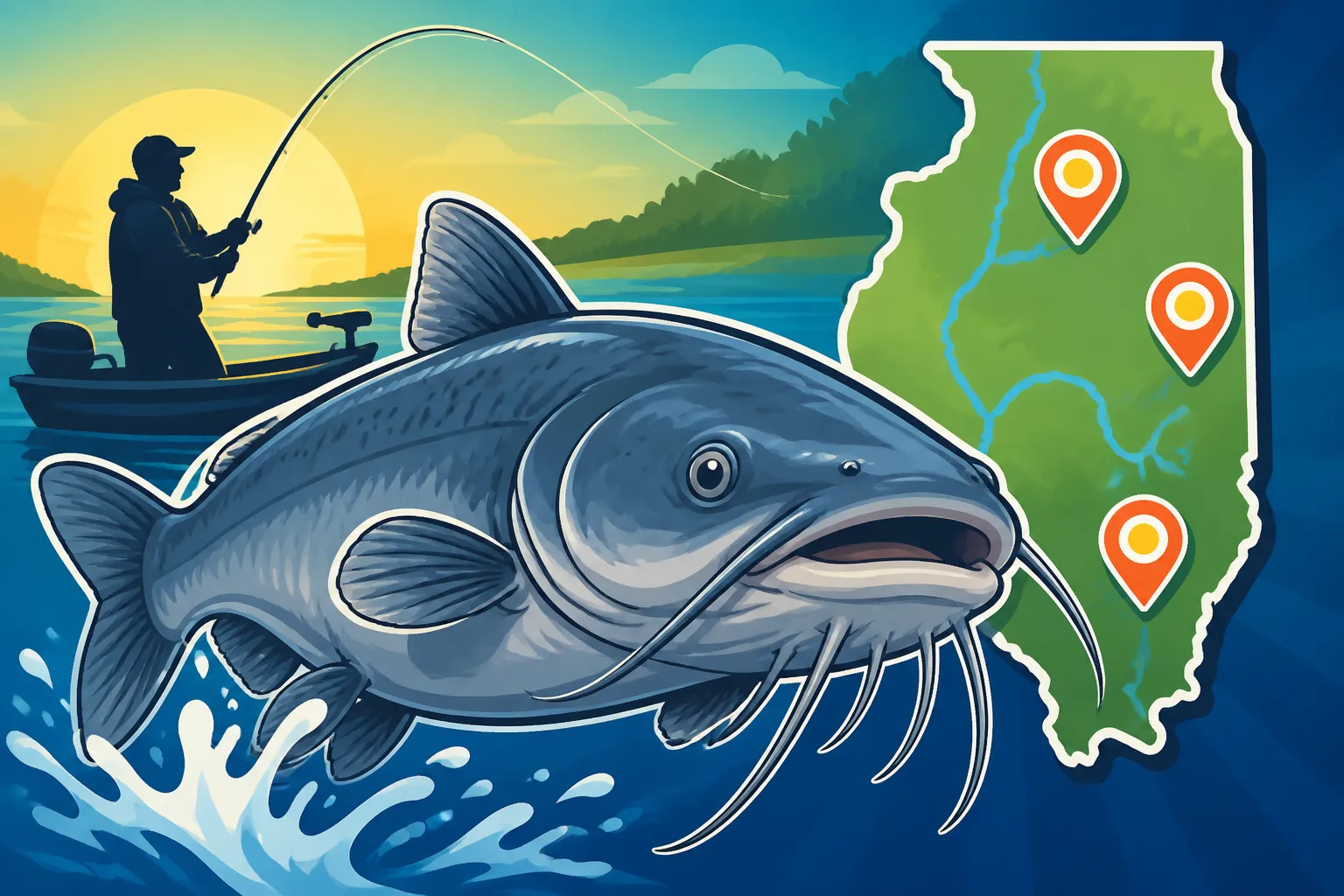
Without a doubt, the Mississippi River is the undisputed champion for trophy blue catfish in Illinois. This vast, dynamic waterway provides everything a blue cat needs to grow to immense proportions: abundant baitfish, deep main channel holes, strong current, and plenty of structure. The sheer size and constant flow of the Mississippi create an ideal environment for these large, nomadic predators. Anglers frequently report catching blues in the 40-70 pound range, with even larger specimens being brought in regularly.
The southern stretches of the Mississippi, particularly near areas like Alton, Grafton, and Cairo, are renowned for their monster blue cat populations. The confluence of the Mississippi and Missouri Rivers, just south of Alton, creates an incredible feeding ground where massive amounts of forage are pushed together. Further south, the Mississippi's joining with the Ohio River near Cairo offers similar rich, deep waters. Fishing the main river channel, especially around submerged structures, deep scour holes, and current seams, is key to finding these giants. Don't underestimate the sheer volume of water here; knowing how to read the river is crucial. You can learn more about fishing this incredible waterway in our Mississippi River Catfish: Why Southern Illinois Waters Produce So Many article.
Southern Illinois Lakes: Hidden Giants
While the Mississippi gets most of the glory, a few southern Illinois lakes are also building reputations for producing substantial blue catfish. These lakes often have established populations that benefit from generous stocking programs and excellent forage bases. These aren't necessarily the lakes you'd think of first for blue cats, but they're worth exploring for dedicated trophy hunters.
Carlyle Lake, in particular, is a dark horse in the Illinois blue cat scene. As the largest man-made lake entirely within Illinois, its vast open waters and deep basins provide plenty of room for blue cats to grow. While perhaps more famous for its crappie and channel catfish, savvy anglers targeting the deeper channels and main lake points can certainly connect with respectable blues. Another lake where blue cats are being increasingly sought is Lake of Egypt. While a smaller, deeper lake, its warm water and strong shad populations contribute to rapid growth rates for catfish, including blues. Remember, these lake-dwelling blues often follow similar patterns to river fish, holding in deeper water during the day and moving shallower to feed at night. Don't be afraid to study the contours and depth charts, as big blues love those deep, underwater highways. Check out our detailed guides like Carlyle Lake Fishing Guide or Lake of Egypt Fishing Guide for more insights on these waters.
Other Notable Waters for Big Blues
Beyond the titans of the Mississippi and the promising southern reservoirs, other Illinois waterways hold the potential for impressive blue catfish catches. These often require a bit more exploration and local knowledge, but the reward can be finding less-pressured fish. The Ohio River, forming Illinois’s southeastern border, also boasts a healthy population of large blue cats, similar to the Mississippi, benefiting from strong currents and deep holes.
Additionally, certain stretches of the Illinois River, particularly its lower reaches before it joins the Mississippi, can yield some surprising catches. While channel catfish dominate much of the Illinois River, the influence of the Mississippi current pushes blues further upstream, especially during periods of high water or specific seasons. Anglers exploring these areas should focus on the deeper bends, main channel ledges, and areas with significant current breaks. The key here, as with any large river system, is to pay close attention to depth changes, current speed, and the presence of baitfish. Our Illinois River Fishing Guide can give you a general overview of this extensive system.
Tactics for Targeting Trophy Blue Catfish
Catching big blue catfish isn't a game for light tackle or casual approaches. These fish are powerful, and if you're serious about landing a true trophy, you need to be prepared with the right gear, the most enticing bait, and proven techniques. Skimping on any of these elements is a recipe for heartbreak when that monster finally bites.
Essential Gear for Battling Big Blues
When you're chasing blue cats that can weigh 50 pounds or more, your gear needs to be up to the task. This means heavy-duty rods, stout reels, and strong lines are non-negotiable. Look for medium-heavy to heavy action casting rods, typically 7 to 9 feet in length, that have plenty of backbone to absorb powerful runs and lift heavy fish. Pairing these rods with conventional baitcasting reels designed for saltwater or heavy freshwater use is ideal. These reels offer superior cranking power and line capacity, which you'll absolutely need when a big blue decides to make a run. Many anglers find excellent options for these setups on Amazon, where you can compare different brands and reviews.
For line, don't go anything less than 30-50 pound test monofilament or fluorocarbon, or even heavier braided line, especially on the Mississippi River where snags and heavy current are common. Braided line, in the 65-100 pound test range, is a popular choice due to its incredible strength and lack of stretch, which helps with hooksets at a distance. Your terminal tackle is equally important: use heavy-duty swivels, 60-100 pound test leaders (fluorocarbon works well for abrasion resistance), and stout circle hooks ranging from 7/0 to 10/0. Circle hooks are paramount for blue catfishing as they typically hook the fish in the corner of the mouth, minimizing harm and making release much easier. For more specialized setups for big river fish, take a look at our guide on Heavy Tackle for Mississippi River Catfish in Illinois.
The Best Baits to Lure Them In
Blue catfish are primarily piscivorous, meaning they eat fish, and they have a keen sense of smell. To catch the biggest ones, you need to offer them something they can't resist, which almost always means fresh cut bait. Shad, skipjack herring, common carp, drum, and even larger bluegill are all excellent choices. The fresher the bait, the better. Many trophy anglers will dedicate time to catching their own baitfish before ever targeting blues.
Cut bait should be presented in chunks that are appropriate for the size of fish you're targeting—don't be afraid to use a half or even a whole small baitfish if you're after a true monster. The scent trail that fresh cut bait emits is what really draws these fish in from a distance, especially in the murky, current-laden waters of the Mississippi. While stink baits and punch baits catch plenty of smaller channel catfish, they rarely entice the true trophy blues. For a comprehensive look at what these fish prefer, consult our guide on the Best Bait for Blue Catfish. Having a dedicated bait knife and a cooler to keep your bait fresh is crucial for success, and you can stock up on these essentials and even specialized bait scents through retailers like Amazon.
Mastering Blue Catfish Techniques
The most effective technique for targeting large blue catfish is almost universally bottom fishing, often from an anchored boat in strategic locations. In rivers, this means finding deep holes, current seams, log jams, and ledges where blue cats congregate to feed. Anchor upstream from your target spot and let your bait drift naturally into the zone. The key is to keep your bait on the bottom, where these fish primarily feed. Heavy sinkers, often 3-8 ounces or more depending on the current, are necessary to hold your bait in place.
On larger lakes like Carlyle, fishing deeper humps, main lake channels, and points can be highly productive. While anchoring is common, drifting can also be effective, allowing you to cover more ground and present your bait to a wider area. Many anglers will use multiple rods, spread out at different depths or distances, to find where the fish are holding. Patience is paramount; sometimes it takes hours for a big blue to find your bait. Once you get a bite, let the fish take the bait firmly before setting the hook. With circle hooks, a steady reel-in is often all that's needed to properly set it. Mastering these fundamentals is covered more deeply in our article on Catfish Bottom Fishing Techniques.
Understanding Blue Catfish Behavior and Habitat
To consistently catch the biggest blue catfish, you need to think like a blue catfish. Understanding their seasonal movements and preferred habitats can give you a significant advantage, allowing you to predict where they'll be and how they'll be feeding at any given time of year.
Seasonal Movements of Large Blue Cats
Blue catfish, particularly the larger ones, exhibit distinct seasonal patterns. In the spring, as water temperatures rise, they become more active and move into shallower areas to spawn. This pre-spawn period can be a fantastic time to target them as they feed aggressively to prepare for breeding. Look for them in depths of 10-25 feet, often near transition zones or submerged cover. After spawning, they might be less active for a short period, but soon resume feeding.
Summer finds big blue cats often retreating to deeper, cooler water, especially during the heat of the day. On rivers, this means deep main channel holes, scour holes, and areas where cool tributaries enter. On lakes, they'll be in the deepest parts of the main lake basin or along submerged creek channels. As fall approaches and water temperatures begin to drop, blue cats will once again move into shallower feeding grounds, often gorging themselves in preparation for winter. Winter fishing for blue cats can be productive, but they'll typically be lethargic and concentrated in the deepest, most stable water they can find, such as deep river holes.
Reading the Water: Where Big Blues Live
Big blue catfish are creatures of current and structure, especially in river systems. When you're on the water, pay close attention to clues that indicate prime blue cat habitat. Look for significant depth changes—ledges, drop-offs, and deep holes—as these are natural holding areas. Current seams, where faster water meets slower water, are like conveyor belts for food, attracting baitfish and, consequently, blue cats. Submerged timber, rock piles, and old bridge pilings also provide excellent cover and ambush points.
In lakes, focus on similar features: old river channels that run through the lake, deep humps, main lake points that drop into deep water, and areas around dam structures. Blue cats will often relate to baitfish schools, so if you can locate large concentrations of shad or other forage with your electronics, you're likely in the vicinity of hungry blue cats. Using a good fish finder is invaluable for identifying these underwater features and bait concentrations, helping you pinpoint exactly where to deploy your trophy bait.
Regulations and Conservation for Sustainable Trophy Fishing
Catching giant blue catfish is a thrill, but it's crucial to remember our responsibility as anglers to protect these magnificent fish and ensure their populations remain healthy for future generations. Understanding and adhering to Illinois's fishing regulations is non-negotiable.
Knowing the Limits and Protecting the Resource
Illinois has specific regulations for catfish, including blue catfish, which can vary by water body. It's imperative to always consult the most current Illinois Fishing Information Guide before you head out. These guides outline daily catch limits, size restrictions, and any special regulations that apply to particular lakes or river sections. For instance, some waters might have different slot limits or reduced daily creel limits to protect larger, breeding fish.
Generally, blue catfish in Illinois are subject to a statewide daily limit, but specific waters, especially those known for trophy potential like certain parts of the Mississippi River, might have more restrictive rules. These regulations are put in place by the Illinois Department of Natural Resources (IDNR) to manage fish populations and ensure sustainable fishing. Ignorance of the law is never an excuse, and violating these rules can result in citations and penalties. Familiarize yourself with the statewide guidelines and any site-specific rules, such as those detailed in our article Illinois Blue Catfish Daily Limit: What You Need to Know.
Practicing Responsible Catch and Release
For many trophy anglers, the pursuit of giant blue catfish is not about filling a cooler; it's about the challenge and the experience of landing a truly exceptional fish. For this reason, practicing responsible catch and release, especially for the largest blue cats, is highly encouraged. These huge fish are often older breeding individuals, and their continued survival is vital for the health of the population.
When you do land a monster blue cat, minimize its time out of the water. Handle it gently, supporting its body horizontally, especially if it's a very large fish. Avoid dragging it on rough surfaces. Have a sturdy measuring tape and a scale ready to quickly get your stats, and snap a few quick photos. Release the fish back into the water slowly, holding it upright until it regains its strength and can swim away on its own. Using large, strong landing nets or a cradle can help you safely manage and release these big fish without causing undue stress or injury.
Beyond the Basics: Advanced Tips for Dedicated Anglers
Once you've mastered the fundamentals, there are always ways to refine your approach and increase your chances of landing that truly once-in-a-lifetime blue catfish. These advanced tips cater to the dedicated angler willing to put in the extra effort.
Night Fishing for Monster Blue Cats
While blue catfish can be caught during the day, many of the largest specimens are consistently landed after dark. Blue cats are often more active feeders at night, especially during the warmer months, moving into shallower areas to hunt for forage when the water is cooler and boat traffic is minimal. This nocturnal activity makes night fishing a prime time for trophy hunters. You'll need to equip your boat or bank setup with proper lighting, glow sticks for your rod tips, and ensure you have all your gear organized so you can find it in the dark.
Safety is paramount when night fishing. Make sure you know your chosen waters well and have all necessary navigation lights if you're in a boat. A headlamp is indispensable for tying knots, baiting hooks, and handling fish. The peace and quiet of night fishing, combined with the increased activity of big blues, can create an unforgettable experience, often resulting in your biggest catches. Just remember to tell someone where you're going and when you expect to return.
The Role of Electronics in Finding Giants
In today's angling world, sophisticated electronics are not just for bass boats. For blue catfish anglers, a quality fish finder with GPS and side imaging capabilities can be a game-changer, especially on vast waters like the Mississippi River or Carlyle Lake. These tools allow you to do more than just see fish; they help you interpret the underwater world. You can identify those crucial deep channels, scour holes, rock piles, and submerged timber that blue cats call home.
GPS allows you to mark productive spots, return to them with precision, and navigate safely in the dark or in unfamiliar territory. Side imaging can reveal structure and fish holding off to the sides of your boat, expanding your search area dramatically. While these tools can be a significant investment, the ability to quickly locate prime habitat and concentrations of baitfish can dramatically cut down on unproductive fishing time and dramatically increase your chances of finding and catching the biggest blue catfish Illinois has to offer. You can find a wide range of reliable marine electronics and accessories from reputable brands on Amazon, from basic fish finders to advanced side-imaging units.
| Prime Blue Catfish Waters in Illinois | Key Features for Trophy Potential | Typical Size Range (Trophy) | Best Approach for Big Ones |
|---|---|---|---|
| Mississippi River | Deep channels, strong current, abundant forage, confluence points | 40-70 lbs (80+ potential) | Anchored bottom fishing in main channel, current breaks, scour holes |
| Carlyle Lake | Large basin, deep channels, substantial shad population, diverse structure | 20-50 lbs (60+ potential) | Drifting or anchored on main lake channels, humps, points |
| Ohio River | Deep holes, strong current, similar to Mississippi River conditions | 30-60 lbs (70+ potential) | Anchored bottom fishing in deep bends, current seams |
| Lake of Egypt | Deep, clear water; good forage base; strong growth rates | 15-40 lbs (50+ potential) | Fishing deep creek channels, submerged structure, night fishing |
| Illinois River (Lower Reaches) | Influenced by Mississippi, deep bends, historical river channel | 10-30 lbs (40+ potential) | Anchored in deep bends, near major tributary confluences |
Disclaimer
This article is for general informational purposes only and does not constitute professional advice. Laws, prices and regulations vary by location and change over time. Consult a qualified professional for guidance on your specific situation.