Illinois Bass Post-Spawn Fishing Patterns
That moment when the bass you were just catching on nests suddenly vanish, leaving you scratching your head and wondering if they packed up and moved to another state – it's a frustration every Illinois angler knows all too well. The post-spawn period can be one of the trickiest times to consistently find and catch largemouth and smallmouth bass. This guide is here to demystify those elusive weeks, helping you understand where bass go, what they're doing, and the most effective strategies to get them to bite as they recover and transition into their summer patterns across Illinois.
Understanding the Post-Spawn Period for Illinois Bass
Once the flurry of the spawn is over, many anglers feel like they've hit a wall. The easy limits disappear, and the shallow-water action slows down significantly. This isn't because the bass have disappeared; it's because they're undergoing a critical recovery phase and shifting their behavior. Understanding this transition is the first step to unlocking consistent post-spawn success in Illinois waters.
The Biology of Bass Recovery: What's Happening After the Spawn?
Imagine running a marathon, then immediately trying to sprint again. That's essentially what a bass experiences after the spawn. Both male and female bass are physically exhausted. The females have expended massive amounts of energy producing and laying eggs, while the males have tirelessly guarded the nests, often for weeks, fanning eggs and defending against predators. This intense period of reproduction leaves them drained, with little energy to chase down prey aggressively. Their focus immediately shifts to recovery.
During this recovery phase, their metabolism slows down, and they're not as active. They'll seek out comfortable, often slightly deeper water where they can recuperate without expending too much energy. This means finding areas with stable water temperatures, good cover for protection, and easy access to forage. They might still be close to the spawning flats, but they're typically moving just off them, into slightly deeper channels, points, or the edges of weed lines. Their appetites start to increase as they regain strength, but they might still be tentative in their strikes. It's a delicate balance of recovery and the slow reawakening of their predatory instincts.
Timing and Duration: When Does Post-Spawn Really Start and End in Illinois?
The timing of the post-spawn period in Illinois is highly variable, depending on a multitude of factors, but water temperature is the primary driver. Generally, the spawn concludes when water temperatures rise consistently into the high 60s and low 70s Fahrenheit. In Southern Illinois, like on Rend Lake or Carlyle Lake, the spawn can wrap up in late April or early May, pushing the post-spawn period into May and early June. As you move north to regions around Peoria or the Chain O'Lakes, the spawn might not fully conclude until late May or even early June, making the post-spawn window extend into late June or early July. This is why it’s crucial to understand the Illinois Bass Spawn Timing Guide for the specific body of water you're fishing.
The post-spawn period itself usually lasts anywhere from two to four weeks for an individual fish. However, because bass spawn in waves, with some fish spawning earlier and others later, the overall post-spawn window for a given lake can feel much longer. You might encounter some bass still guarding fry, others in full recovery mode, and a few early birds already starting their aggressive summer feeding. This staggered nature means anglers need to be versatile, ready to adapt to different bass behaviors they encounter. The end of post-spawn typically coincides with water temperatures stabilizing in the mid-70s and sustained summer feeding patterns beginning, transitioning into what we call the Summer Bass Fishing Patterns.
The Post-Spawn "Funk": Why Bass Can Be So Elusive
It’s easy to get discouraged during post-spawn. One day, you’re catching bass left and right on beds, and the next, it feels like they’ve all vanished. This "funk" stems from their recovery state. They're not actively chasing prey across vast distances; instead, they're often tucked into dense cover, seeking refuge and an easy meal. Their metabolism might still be a bit sluggish, meaning they won't necessarily blow up on a fast-moving crankbait or chase a topwater bait from afar. They often prefer a slower, more subtle presentation that requires minimal effort to ambush.
Furthermore, bass disperse significantly after the spawn. Instead of being concentrated in visible shallow spawning areas, they spread out into various types of cover and structure. Some might hold tight to newly emerging weed lines, others might be suspended over deeper water near baitfish schools, and still others might be relating to submerged timber or rock piles. This dispersal makes them harder to locate consistently. The key to overcoming the "funk" is patience, adaptability, and understanding their likely hangouts and preferred presentations during this recovery period.
Where Bass Go After the Spawn
Tracking bass movements post-spawn is paramount. They don't just disappear; they relocate to areas that support their recovery and re-energized feeding habits. These transition zones and structures are where Illinois anglers should focus their efforts.
Transition Areas: Moving from Shallow to Deeper Water
After the exhausting work of spawning in the shallows, bass don't usually bolt for the deepest parts of the lake right away. Instead, they make a more gradual move to transition areas – spots that offer easy access to deeper, cooler water for comfort and recovery, but are still close enough to the spawning flats for eventual feeding. These are often the first places to look.
Think about the immediate drop-offs, points, and humps adjacent to known spawning coves and flats. Bass will often stage here, resting in slightly deeper water (say, 5-15 feet), but still positioned to move shallower for a quick meal if opportunity arises. Creek channels, especially those that wind through or near spawning areas, act as highways for bass moving from shallow to deeper water. They offer a defined path and often concentrate both bass and their prey. The key is to find those subtle depth changes and structural elements that allow bass to easily move between comfortable resting depths and potential feeding grounds.
Key Holding Structures: Cover and Forage
Once bass begin to recover, they seek out structures that offer protection, ambush points, and proximity to forage. Understanding these key holding structures is vital for post-spawn success in Illinois.
- Submerged Timber and Brush Piles: These are absolute magnets for post-spawn bass. The dense branches provide excellent shade, cover from predators, and a perfect ambush point for unsuspecting baitfish or bluegill that might be moving through. Bass will often bury themselves deep within these piles. Look for old timber stands, fallen trees, or intentionally placed brush piles on those transition edges. A good fish finder can be invaluable for locating these hidden havens.
- Weed Lines and Grass Beds: As spring transitions to summer, aquatic vegetation begins to flourish in many Illinois lakes. The edges of dense weed lines, particularly coontail or milfoil, provide incredible habitat. Bass will hold in the cooler, shaded water beneath the canopy, ambushing baitfish or other panfish that are themselves foraging in the weeds. The "harder" edges, where the grass meets open water or a channel, are prime targets.
- Rock Piles and Riprap: Rocky areas, especially those with larger boulders or riprap shorelines, absorb and radiate heat, creating stable temperatures. They also provide nooks and crannies for crayfish and other invertebrates, attracting baitfish and, subsequently, bass. Points, ledges, and humps with rocky bottoms are excellent places to find post-spawn bass, particularly smallmouth, which often favor these environments. Many of the Best Bass Fishing Lakes in Illinois feature these types of structures.
Following the Baitfish: The Summer Feeding Frenzy Begins
While the early post-spawn sees bass in recovery, as they regain strength, their predatory instincts kick in with full force. Their main motivation becomes replenishing the energy lost during spawning, and that means one thing: food. Bass will begin to follow the movements of baitfish, such as gizzard shad, threadfin shad, and various sunfish species like bluegill.
Baitfish movements are heavily influenced by water temperature, oxygen levels, and available forage. Often, shad will school up and move to open water or offshore humps, while bluegill might relate more closely to shallow cover, particularly after their own spawn. Bass will position themselves strategically to intercept these schools. This could mean suspending over deeper water beneath a school of shad, or lurking in the shadows of a dock or brush pile waiting for a passing bluegill. Keep an eye on your electronics for bait balls, and pay attention to surface activity. If you see baitfish jumping or dimpling the surface, you can bet there are predators nearby. This shift marks the transition from recovery to aggressive feeding, leading into more consistent Summer Bass Fishing Patterns.
Effective Lures and Baits for Post-Spawn Bass
The post-spawn period calls for a diverse tackle box. Bass can be moody, requiring both subtle and aggressive presentations depending on their individual recovery stage and feeding drive. Having a range of options is key to cracking the code.
Covering Water: Search Baits for Active Fish
While some bass might be lethargic, others quickly rebound and start to roam and feed more aggressively. For these active fish, especially those moving into deeper feeding patterns, search baits are your best friend. They allow you to cover a lot of water quickly and efficiently, locating those willing biters.
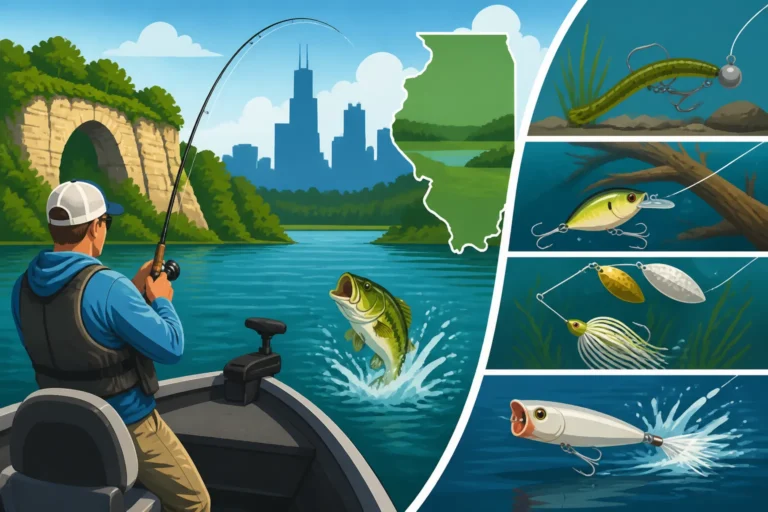
- Crankbaits: Medium-diving and deep-diving crankbaits are excellent for working those transition areas and targeting submerged timber or rock piles. Look for models that dive to the 8-15 foot range, allowing you to bump off structure. Colors that mimic local baitfish like shad (chrome, white, bluegill patterns) or crayfish (brown, red) are often effective. Experiment with different retrieve speeds; sometimes a steady retrieve works, other times, a stop-and-go or deflecting it off cover triggers a strike. A good selection of crankbaits is a staple for any angler, and you can find a vast array of options on platforms like Amazon.
- Spinnerbaits: These versatile baits are fantastic for working the edges of weed lines, through sparse cover, or along points. The flash and vibration can draw strikes from bass that might not commit to other lures. Chartreuse and white skirts for dirty water, or more natural colors like white/silver for clearer water, are reliable choices. Again, vary your retrieve: slow roll it, burn it, or yo-yo it off cover.
- Swimbaits: Paddle-tail swimbaits, either weighted or rigged on a jig head, are incredibly effective at imitating baitfish. They can be slow-rolled over submerged grass, cast along drop-offs, or even retrieved through open water where bass are suspending. Their natural swimming action is hard for recovering bass to resist. Soft plastic swimbaits from brands like Keitech or Zoom are popular choices.
Finesse for Finicky Fish: When They're Still Recovering
For those bass still feeling the effects of the spawn, or in response to cold fronts and other adverse conditions, finesse presentations are often necessary. These require a lighter touch and a more patient approach.
- Soft Plastic Worms (Texas Rig/Carolina Rig): These are absolute staples. A How to Fish a Texas Rig for Bass allows you to present a worm through heavy cover with minimal snags. For bass suspended slightly off the bottom or scattered on flats, a Carolina Rig can be deadly, keeping your bait slightly elevated and easily visible. Popular worm colors include green pumpkin, junebug, and watermelon red. The slow, subtle fall and enticing tail action are perfect for coaxing strikes from hesitant bass.
- Jigs (Football, Skirted, Swim Jigs): Jigs are another highly versatile bait. A football jig dragged across rocky bottoms can imitate a crawfish, while a skirted jig pitched into brush piles or under docks is a classic bass catcher. Swim jigs are excellent for working through sparse cover or along weed edges, imitating a bluegill or shad. Pair them with soft plastic trailers that add bulk and action.
- Drop-Shot Rigs: When bass are holding tight to structure or suspended in deeper water and are particularly finicky, a drop-shot rig can be a game-changer. It presents a small worm or creature bait horizontally at a specific depth, right in the strike zone, with minimal movement required from the fish. This subtle presentation is often what it takes to get bites when nothing else works.
Topwater Temptations: Morning and Evening Explosions
As water temperatures warm and bass regain their energy, especially during stable weather conditions, topwater fishing can be phenomenal during the post-spawn. The low light conditions of dawn and dusk are prime times, but overcast days can also produce fantastic daytime topwater action.
- Walking Baits (e.g., Heddon Super Spook): These baits create a "walk-the-dog" action that mimics an injured baitfish struggling on the surface. They cover water effectively and can draw explosive strikes from aggressive bass.
- Poppers/Chuggers (e.g., Rebel Pop-R): These baits create a commotion with their cupped faces, spluttering and spitting water. They are excellent for targeting specific pieces of cover like lily pads, docks, or isolated brush. A long pause after a "chug" is often when the strike occurs.
- Frogs (e.g., Spro Bronzeye Frog): Hollow-bodied frogs are unparalleled for fishing over dense mats of vegetation or through thick lily pads. They are virtually weedless, allowing you to target areas where other lures would snag instantly. The slow, twitching retrieve, pausing over open pockets, often results in thrilling blow-ups. Many anglers swear by Strike King and Zoom plastics for these applications, readily available through retailers.
Techniques for Targeting Post-Spawn Bass Fishing
Finding the fish is only half the battle; knowing how to present your baits effectively during the post-spawn period is crucial. Bass behavior can be nuanced, requiring adjustments to your approach.
Fan Casting and Retrieval Speeds: Adapting to Conditions
The post-spawn period often requires anglers to systematically work an area and constantly adjust their retrieve. When bass are scattered, fan casting—making casts in a wide arc to cover as much water as possible—is an excellent search technique.
- Varying Retrieval Speeds: Early in the post-spawn, when bass are still recovering, a slow, deliberate retrieve is often best. Think about dragging a jig, slow-rolling a spinnerbait just above the bottom, or giving a soft plastic worm plenty of time to sink and settle. As bass become more active, you can speed up your retrieve, incorporating more jerks and pauses to mimic fleeing baitfish. Don't be afraid to experiment; sometimes a super-fast retrieve can trigger a reaction strike, while other times, it's the painfully slow presentation that gets the bite.
- Targeting Specific Cover: Once you locate key cover like submerged brush or a stump field, make multiple casts from different angles. Bass might be positioned on one side of a log over another, or deeper within the cover. Focus your casts to ensure your lure passes through the most likely holding areas. For detailed advice on how to target specific areas, refer to guides like Best Fishing Spots in Illinois.
Vertical Jigging and Drop-Shotting: For Deeper Holding Fish
As bass move deeper post-spawn, especially during brighter, hotter days or after cold fronts, they often suspend or hug the bottom in vertical cover or structure. This is where vertical jigging and drop-shotting shine.
- Vertical Jigging: This technique is fantastic for bass holding on deep humps, along creek channels, or in flooded timber. Using a heavy jig or a blade bait, you position your boat directly over the structure and drop your lure straight down. A slow, lift-and-drop retrieve, often just barely twitching the bait, can be incredibly effective. The idea is to keep the bait in the strike zone for as long as possible. Pay close attention to your electronics to pinpoint fish and bait schools.
- Drop-Shotting: As mentioned before, the drop-shot is a finesse powerhouse for deep, finicky bass. It's particularly effective when fish are suspended or holding tight to vertical cover like standing timber. Using your electronics, identify where the fish are holding, then present your drop-shot bait at that exact depth. Minimal rod movement is often all that's needed to impart action to the bait, making it appear irresistible to sluggish bass. This technique is often used in combination with lighter tackle, allowing for maximum sensitivity.
Bank Fishing Strategies: Reaching Those Transition Zones
Even without a boat, bank anglers can find success during the post-spawn by understanding where bass move and how to access those areas from shore. While boats can reach offshore structures, many excellent post-spawn spots are accessible from the bank.
- Identifying Bank-Accessible Transition Areas: Look for public access points near creek mouths, points that extend into deeper water, or sections of the shoreline with abundant submerged timber, riprap, or weed lines. Marinas and docks can also hold significant numbers of post-spawn bass, as they provide shade, cover, and often concentrate baitfish.
- Targeting Shoreline Cover: Cast parallel to the bank, working spinnerbaits or shallow-diving crankbaits along weed edges or fallen logs. Pitch jigs or Texas-rigged worms into brush piles, under docks, or into any visible cover. For deeper access, try casting a Carolina rig or a heavy jig off points or ledges that drop quickly into deeper water. If you're fishing a pond or smaller lake, understanding Bank Fishing Techniques can greatly increase your chances. Remember that the Illinois Largemouth Bass Length Limit and Daily Catch Rules still apply regardless of how you're fishing.
Factors Influencing Post-Spawn Patterns
Bass are incredibly sensitive to their environment, and the post-spawn period is no exception. Understanding how various factors influence their behavior can help you predict their movements and preferred locations.
Water Temperature and Clarity: How it Dictates Bass Behavior
Water temperature remains a dominant factor even after the spawn. As temperatures steadily climb into the mid-70s and beyond, bass will move to areas with more stable or cooler water. This means deeper water, dense shade under heavy cover, or areas with springs or feeder creeks. The optimal temperature for aggressive feeding is typically in the low to mid-70s, but they will still be caught in warmer or cooler conditions.
Water clarity also plays a significant role. In clear water, bass are often more wary and might hold deeper or tighter to cover. Finesse presentations and more natural bait colors tend to excel in these conditions. In stained or murky water, bass might feel more secure in shallower depths, and aggressive search baits with lots of vibration and flash, along with brighter colors (like chartreuse), can be more effective. Always observe the water you're fishing – is it crystal clear or murky brown? This will dictate many of your lure and presentation choices. For a deeper dive into this, check out our Water Temperature and Fish Activity Guide.
Weather Changes: Cold Fronts, Rain, and Their Impact
Post-spawn bass are particularly susceptible to weather changes, especially cold fronts. A sharp drop in air temperature, accompanied by clear skies and high pressure, can shut down the bite almost completely. Bass become lethargic and might move even deeper or bury themselves in the thickest cover available. When a cold front hits, slow down your retrieve, downsize your baits, and focus on finesse presentations in areas with stable temperatures and dense cover.
Conversely, stable, warm, and even slightly overcast weather after the initial spawn can jumpstart the bite. Light rain can also be beneficial, as it often reduces light penetration, lowers surface temperatures slightly, and can wash additional forage into the water, triggering a feeding spree. Heavy rains, however, can muddy the water significantly and lead to fluctuating water levels, making fishing more challenging until conditions stabilize.
Forage Availability: The Driving Force Behind Bass Movement
The availability and movement of baitfish and other forage species are a primary driver of where post-spawn bass will locate. As female bass recover, and male bass finish guarding fry, both sexes become hyper-focused on feeding to regain weight and energy.
- Shad: If a lake has a healthy shad population, bass will often follow large schools of shad into open water, suspend beneath them, or herd them against points and humps. Look for shad flicking on the surface, or bait balls on your electronics.
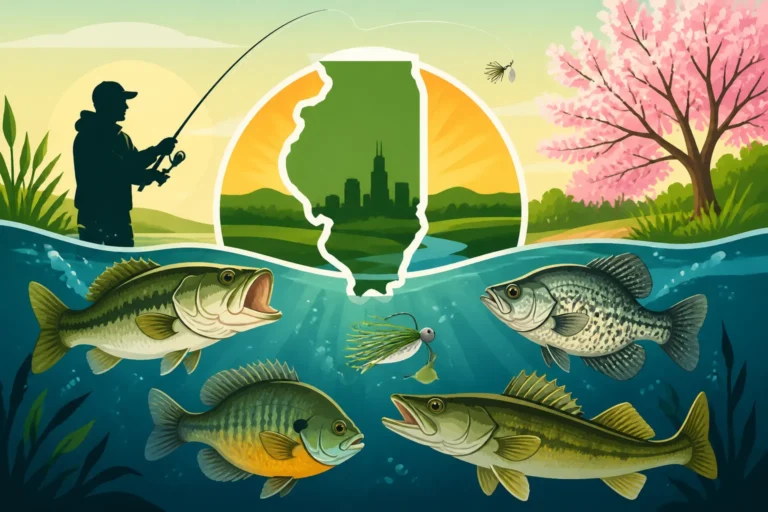
- Bluegill/Panfish: Bluegill and other panfish species are also key forage. Bass will relate to the same cover and structure that panfish use, especially if the panfish are also spawning or feeding in those areas. This is why a bluegill-imitating crankbait or jig can be so effective.
- Crayfish: Crayfish are a protein-rich food source, and bass will actively hunt them, particularly on rocky bottoms. Jigs, creature baits, and even crankbaits in crawfish patterns are excellent choices when bass are feeding on crayfish. Understanding what the bass are eating on a particular day is like holding a secret map to where they'll be and what they'll bite.
Regional Post-Spawn Considerations Across Illinois
Illinois is a long state, stretching from near St. Louis to just south of Chicago, encompassing diverse aquatic environments. The general post-spawn principles apply, but specific regional nuances are worth noting.
Southern Illinois Lakes: Rend, Carlyle, Shelbyville
The "Big Three" lakes in Southern Illinois—Rend Lake, Carlyle Lake, and Lake Shelbyville—often see an earlier bass spawn compared to their northern counterparts. This means their post-spawn period can kick off in late April or early May.
- Rend Lake: Known for its vast acres of shallow stumps, flooded timber, and emergent vegetation, Rend Lake offers abundant cover for post-spawn bass. After spawning, bass will often move to the deeper edges of the stump fields, creek channels, and the newly emerging hydrilla or coontail beds. Look for bass relating to the deeper main lake points and humps that offer quick access to both shallow and deeper water. The larger than average Rend Lake's Giant Bluegill: Why They Grow So Big also makes for a prime bass meal.
- Carlyle Lake: As Illinois's largest man-made lake, Carlyle Lake has vast open water, extensive riprap, and numerous submerged humps and old roadbeds. Post-spawn bass will often gravitate to the deeper riprap along the dam or causeways, main lake points, and the edges of creek channels that crisscross the lake. Its sheer size means bass can be widely dispersed, so covering water with crankbaits and spinnerbaits is essential, especially around the timbered pockets and coves.
- Lake Shelbyville: With its clear water, rock bluffs, standing timber, and abundant submerged brush piles, Shelbyville offers a slightly different challenge. Post-spawn bass here will often suspend near standing timber in creek channels, or relate to the numerous brush piles placed by anglers. Clearer water often means finesse presentations become more critical, especially as fish recover. Look for bass on rocky points and ledges that drop into deeper water, often holding in the 10-20 foot range. For specific techniques, you might check out our guide on Illinois Bass Pre-Spawn Fishing Patterns to see how their location shifts.
Central and Northern Illinois: Fox, Kankakee, Illinois River
Moving north, the spawn occurs later, typically in late May or early June, pushing the post-spawn into June and early July. River systems like the Fox, Kankakee, and Illinois rivers also present unique challenges compared to reservoirs.
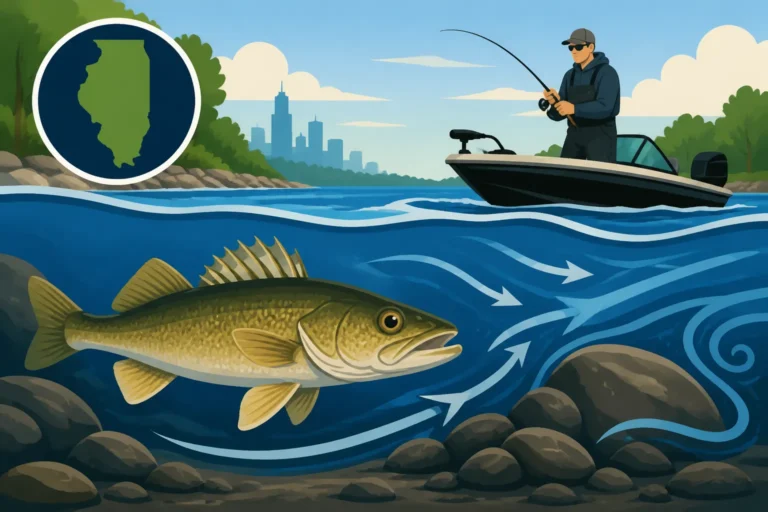
- Fox River: This meandering river system is characterized by varied depths, current, rocky sections, and abundant laydowns and weed beds. Post-spawn bass in the Fox will often move from smaller backwater coves and feeder creeks to the main river channel, relating to current breaks, rock piles, and submerged timber. Target eddies and the downstream side of islands or bridge pilings where current is broken. Smallmouth bass are more prevalent here, and they love current-driven rocky areas.
- Kankakee River: Known as a premier smallmouth bass fishery, the Kankakee River has clear, swift water, numerous rock outcrops, ledges, and gravel bars. Post-spawn smallmouth will rapidly recover and often relate to these current-swept structures. Look for them on the downstream side of boulders, current seams, and transition zones where shallow riffles meet deeper pools. A jig and grub or a small crankbait worked through these areas can be deadly.
- Illinois River: The Illinois River is a larger, slower-moving river with many backwater lakes and extensive barge traffic. Post-spawn bass (both largemouth and smallmouth, depending on the section) will often move out of the backwater spawning areas and into the main river or its larger side channels. Look for them around wing dams, riprap banks, and the numerous barge tie-offs and structures. The edges of lily pad fields and dense vegetation in backwaters that connect to the main river are also key areas. River fishing for bass, especially during this transition, requires understanding current and how fish position themselves to conserve energy and ambush prey.
By understanding the unique characteristics of your chosen Illinois waterway and applying these post-spawn strategies, you'll be well on your way to turning those head-scratching days into rewarding fishing trips.
Disclaimer
Fishing conditions and regulations in Illinois can change. Always consult the latest Illinois Department of Natural Resources (IDNR) fishing guide and local regulations before heading out on the water. This information is for general guidance only and should not replace official sources.