Heavy Tackle for Mississippi River Catfish in Illinois
It's happened to all of us who chase big fish: you feel that monster bite, set the hook with all your might, and then… snap. Or maybe your rod doubles over, your reel grinds to a halt, and suddenly, the line goes slack. There's nothing quite as deflating as losing a true river monster because your gear just wasn't up to the task. If you're heading to the mighty Mississippi River in Illinois with dreams of landing a trophy catfish, this guide is going to walk you through exactly what heavy tackle you need to ensure those dreams don't end in disappointment.
Understanding the Mississippi River Catfish Challenge
The Mississippi River isn't your average pond or small lake. It's a vast, powerful, and dynamic system that holds some truly colossal fish. To stand a chance against these river giants, you need to understand the unique challenges this environment and its inhabitants present.
Why Standard Gear Just Won't Cut It
Imagine hooking into a blue catfish that weighs 50 pounds or more. Now imagine that fish is in a strong current, trying to dive into a sunken log or a rock pile. A flimsy rod or a reel with a weak drag system isn't going to last five seconds. Standard bass or panfish gear is simply too light for this kind of battle. You'll bend hooks, strip gears, break lines, and ultimately, lose the fish. The frustration of feeling a massive pull only to be outmatched by your equipment is something every serious catfisherman has experienced, and it's a feeling we want to help you avoid. The Mississippi River is full of abrasive structures like submerged timber, rocks, and even old industrial debris. Your line needs to withstand being dragged across these hazards, and your rod needs the backbone to pull a determined fish away from them. This isn't just about catching fish; it's about conquering them in their home territory.
The Different Catfish Species and Their Tackle Needs
While we're talking about heavy tackle, it's worth a moment to remember the main stars of the show in the Mississippi: Channel, Blue, and Flathead catfish. Each has its own characteristics, but when they reach larger sizes in the river, they all demand robust gear.
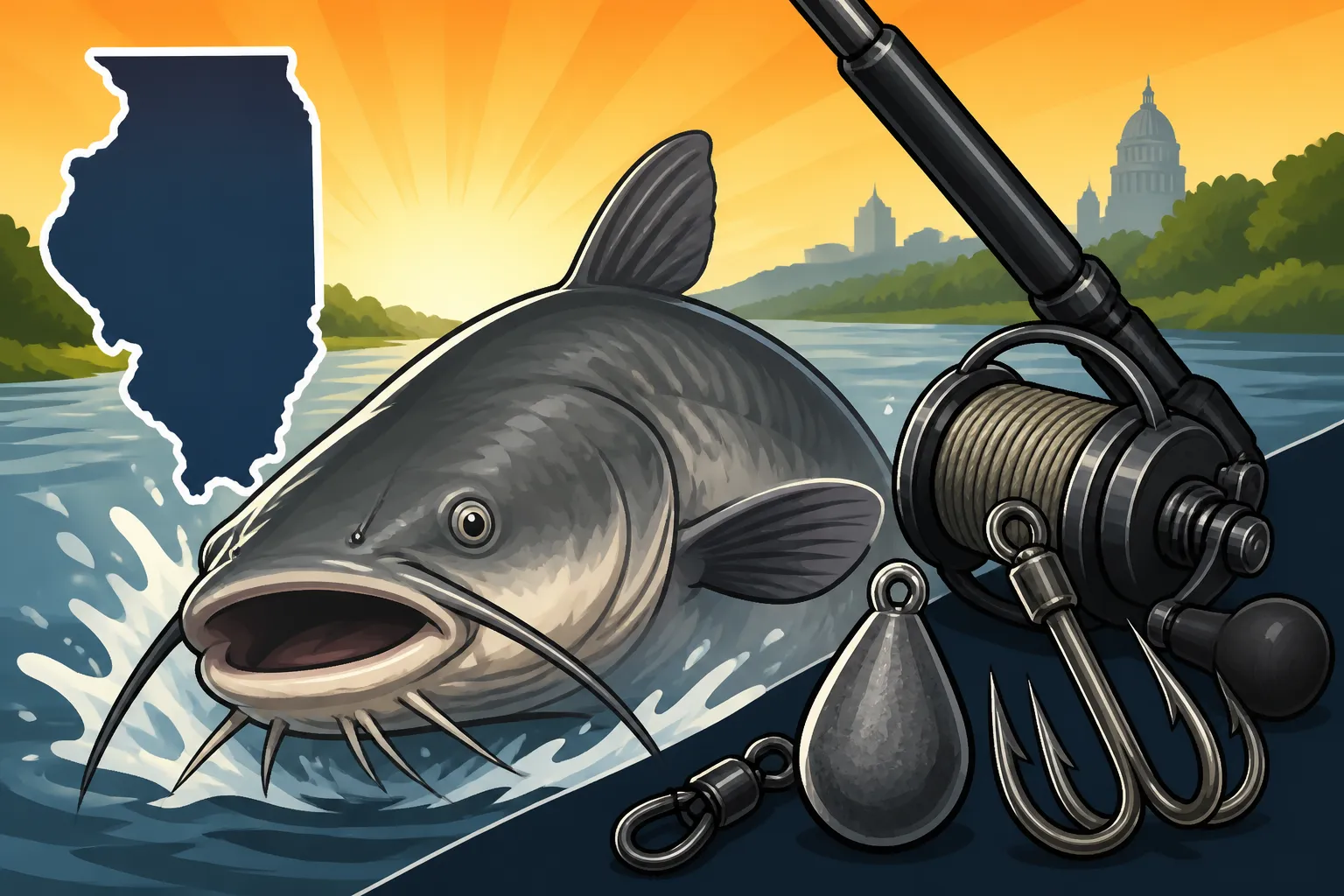
Channel cats are numerous and can grow quite large, especially in the fertile waters of the Mississippi, but the true leviathans are often the Blues and Flatheads. Blue catfish are built like freight trains, known for their incredible power and endurance in current. Flatheads, with their broad, shovel-like heads, are ambush predators that prefer live bait and can put up a brutal, stubborn fight, often trying to dig into cover. While you might use slightly lighter gear for smaller channel cats, if you're targeting those 30-pound-plus blues or flatheads, you need to be seriously geared up. You can learn more about these fascinating fish in our Catfish Species in Illinois: The Complete Guide.
Essential Heavy Tackle Components for River Catfish
When you're facing down a potential state record, every piece of your setup matters. Let's break down the core components of a heavy-duty catfish rig.
Rods Built for Battle
For Mississippi River catfish, you're not looking for finesse. You're looking for power and durability. A rod in the 7 to 10-foot range is ideal. This length provides leverage for casting heavy baits and sinkers, helps keep your line out of snags in the current, and offers better control over a big fish. Look for rods with a "heavy" or "extra-heavy" action and a moderate-fast taper. The heavy action means it can handle powerful fish and heavy weights, while the moderate-fast taper offers a good balance of sensitivity in the tip for detecting bites and backbone in the lower section for fighting.
Materials often include fiberglass or composite blends, which offer incredible durability and strength compared to lighter graphite rods. Many reputable brands offer specific "catfish" rods designed for these conditions. Brands like Ugly Stik, for example, are renowned for their nearly indestructible fiberglass rods, with specific models like the "Catfish Special" being a popular choice among serious anglers. You can often find a great selection of these robust rods at a local Bass Pro Shops or online at Amazon.
Reels That Can Handle the Strain
Your reel is arguably the most critical component when it comes to fighting big river cats. It needs a robust drag system, high line capacity, and durable gears to withstand immense pressure. For heavy catfish, many anglers prefer heavy-duty baitcasting reels (often called "conventional" reels) due to their power, precise drag adjustments, and ability to handle extremely heavy lines. Larger spinning reels can also work, particularly for those who prefer their ease of casting, but ensure it's a large, saltwater-grade model with a strong, smooth drag.
Key features to prioritize include a high line capacity (enough to hold at least 200-300 yards of heavy braided line), a robust gear ratio for winching in big fish, and a smooth, consistent drag system that won't seize up under pressure. Think reels from brands like Penn, Shimano, or Abu Garcia. These reels are designed for brutal battles and will give you the confidence to turn a charging blue cat away from a snag without fear of equipment failure. They represent an investment, but it's an investment that pays off when that monster fish finally lands in your net.
Line Strength and Type
When talking about heavy tackle, your fishing line is where the rubber meets the road—or rather, where the line meets the fish. For the Mississippi River, you're generally looking at mainline strengths ranging from 50 to 100-pound test for braided line, or 30 to 50-pound test for monofilament.
Braided line is a popular choice for big catfishing due to its incredible strength-to-diameter ratio, zero stretch (which means amazing sensitivity for feeling bites), and superior abrasion resistance. These qualities are crucial in a river environment where your line might rub against rocks, logs, or other underwater debris. Make sure to use a good quality braid, and be diligent about checking for fraying after each outing.
Monofilament line offers some stretch, which can be beneficial for shock absorption, especially when a big fish makes a sudden run. However, it's generally thicker than braid for the same strength and can be less abrasion-resistant. Some anglers use a heavy mono mainline with a braided leader, or vice-versa, to combine the best properties of both. For leaders, a heavy monofilament or fluorocarbon (60-100 lb test) is essential to protect your main line from sharp fins, teeth, and abrasive structure near your bait. And never, ever underestimate the importance of a properly tied knot with these heavy lines – a weak knot is the easiest way to lose a trophy fish.
Rigging Up for Mississippi River Success
Having the right rod, reel, and line is only half the battle. How you put it all together, from your terminal tackle to your choice of rig, can make all the difference when targeting catfish in the powerful Mississippi currents.
Heavy-Duty Terminal Tackle
Your terminal tackle—the hooks, swivels, and sinkers—are the direct connection to the fish, and they need to be as tough as the rest of your setup.
For hooks, we're talking big and strong. Circle hooks in sizes 8/0 to 12/0 are incredibly popular, especially for Flatheads and Blue cats. Circle hooks are designed to hook fish in the corner of the mouth, reducing gut hooking and making release easier, which is great for the fish and often results in a solid hookup. If you're using cut bait for channel cats and prefer a traditional J-hook, make sure it's a stout, strong model that won't straighten under pressure.
Swivels are often overlooked but are absolutely crucial. With heavy lines and potentially large fish twisting and rolling, line twist can be a nightmare. Use strong barrel swivels or ball-bearing swivels rated for at least 100 pounds. These prevent line twist and provide a reliable connection point between your main line and your leader or rig.
For sinkers, the Mississippi River's strong currents demand heavy weights to hold your bait on the bottom. You'll often need 3 to 8 ounces, and sometimes even more depending on the current speed and depth. No-roll sinkers or pyramid sinkers are good choices for staying put. In snaggy areas, some anglers will use a "breakaway" rig where the sinker is attached with a lighter line, so if it gets snagged, only the sinker is lost, not the entire rig and fish.
Popular Catfish Rigs for River Fishing
There are a few go-to rigs that anglers swear by for targeting big catfish in river currents. Understanding when and how to deploy them will greatly increase your success rate. For more general advice, check out our guide on Catfish Bottom Fishing Techniques.
The Santee Cooper Rig is a fantastic choice for keeping your bait slightly elevated off the bottom, making it more visible and preventing it from being buried in silt or snags. It consists of a leader with a float (a small, cigar-shaped float) inserted above the hook, then tied to a swivel. Your main line goes through a slip sinker, which is then tied to the other end of the swivel. The float lifts your bait a few inches or more off the bottom, ideal for presenting cut bait or live baits like bluegill.
The Slip Sinker Rig, sometimes called a Carolina Rig for catfish, is straightforward and highly effective for presenting bait directly on the bottom. Your main line goes through a barrel sinker (often a flat, no-roll style), followed by a bead to protect the knot, and then tied to a swivel. A leader (12-24 inches) is tied from the other end of the swivel to your hook. This rig allows the fish to pick up the bait and run without feeling the weight of the sinker immediately. It's excellent for flatheads that hug the bottom.
The Three-Way Swivel Rig is another versatile option, particularly for presenting multiple baits or fishing in slightly deeper water. You tie your main line to one eye of the three-way swivel. A dropper line with a sinker is tied to a second eye, and a leader with your hook and bait is tied to the third eye. This allows you to fish your bait at a specific depth off the bottom, or even closer to it, and the heavy sinker keeps everything stable in current.
Here’s a quick comparison of these popular rigs:
| Rig Name | Primary Use | Key Advantage | Best For |
|---|---|---|---|
| Santee Cooper | Lifting bait slightly off bottom | Keeps bait visible above debris/silt, less snags | Cut bait, larger live baits |
| Slip Sinker | Presenting bait directly on bottom (classic) | Allows fish to take bait freely without sinker weight | Live bait, cut bait, targeting Flatheads |
| Three-Way Swivel | Presenting bait at specific depths | Versatile for varying depths and conditions | Live bait, multiple bait presentations |
Live Bait, Safety, and the Mississippi River Environment
Beyond your gear, understanding the right bait and ensuring your safety are paramount when tackling the Mississippi.
Choosing the Right Heavy Bait
When you're rigged for heavy tackle, you need bait that matches the size of the fish you're after. Forget the little worms or dough balls; we're talking about substantial offerings here. For trophy blue and flathead catfish, live bait or large cut bait is usually the ticket.
Popular choices include whole or cut shad, skipjack herring, bluegill, or even small carp. These baits emit strong scent trails and are big enough to entice the largest catfish in the river. For Flathead Catfish Fishing Tips for Illinois Anglers, remember they almost exclusively prefer live bait. For Illinois Blue Catfish: Where to Find the Biggest Ones, large cut bait often reigns supreme. Always ensure your bait is fresh and lively if using live bait; healthy bait attracts healthy fish. When you're dealing with big fish that live in a powerful river, a small piece of bait just doesn't grab their attention like a substantial meal does. You can find excellent bait options at your local tackle shop, sometimes even live ones.
Safety Considerations and Preparation
Fishing the Mississippi River, especially with heavy tackle, can be an exhilarating experience, but it also demands respect and preparation. The currents can be swift, and the river itself is vast. Always wear a life jacket, especially if you're on a boat, and ensure everyone on board does too. The river is unpredictable, and accidents can happen quickly, particularly when battling a large, powerful fish. Refer to Illinois Life Jacket and PFD Rules for specifics.
Beyond personal safety, make sure your boat is in good working order and you have all the necessary safety equipment. Tell someone where you're going and when you expect to return. When you finally hook into that monster, a sturdy net or a good fish gripper will be invaluable for safely landing and handling the fish. If you're on a boat, knowing where to launch and what kind of vessel is best for the river can be found in our guide to Best Fishing Boats for Illinois Rivers. And don't forget to review the Illinois Fishing Regulations Overview before heading out, and always carry your Illinois Fishing License Guide for 2026. A little preparation goes a long way in making your big river catfishing trip safe and successful.
Disclaimer
This article is for general informational purposes only and does not constitute professional advice. Laws, prices and regulations vary by location and change over time. Consult a qualified professional for guidance on your specific situation.