What Safety Gear Is Required on an Illinois Boat?
Trying to figure out exactly what safety gear you must have on your boat when you're out enjoying the beautiful waters of Illinois can be a real headache. It’s not just about avoiding a ticket; it’s about making sure you and your loved ones come home safe, every single time. This guide will walk you through all the essential safety gear required by Illinois law, breaking down the often-confusing regulations into clear, actionable advice so you can boat with confidence and peace of mind.
The Basics of Illinois Boating Safety Requirements
When you're out on the water, whether you're chasing bass on Lake Shelbyville or cruising the Illinois River, knowing what safety equipment is legally required on your boat is paramount. It’s not just a suggestion; it’s the law, enforced by the Illinois Department of Natural Resources (IDNR) conservation police. These regulations are designed to protect everyone on the water, preventing accidents and ensuring that if something does go wrong, you have the necessary tools to handle it. Ignoring these rules isn't just risky; it can lead to hefty fines and, more importantly, put lives in danger.
Understanding the Illinois Department of Natural Resources IDNR Rules
The Illinois Department of Natural Resources (IDNR) is the primary authority for boating safety and regulations in our state. They publish comprehensive guides that outline everything from boat registration to specific safety equipment requirements. It can feel like reading a textbook, but these rules are critical. They cover various types of vessels, from small canoes and kayaks to larger motorboats, and the requirements can vary based on the size and type of your boat, as well as the number of people on board. Familiarizing yourself with the IDNR's official guidelines, often available on their website or at local sporting goods stores like Bass Pro Shops, is your first step toward responsible boating. Don't just skim it; really dig into the details to understand what applies to your specific vessel. You might be surprised by some of the nuanced requirements that apply to your situation, especially if you're new to boating or have recently acquired a different type of craft.
Why Safety Gear Matters on Every Trip
Beyond the legal obligations, having the right safety gear is simply smart boating. Imagine being miles from shore, a sudden storm rolling in, and realizing you don't have enough life jackets for everyone, or your fire extinguisher is out of date. These aren't just hypothetical scenarios; they happen to real boaters every season. Proper safety equipment isn't an inconvenience; it's an investment in your safety and the safety of your passengers. It can mean the difference between a minor scare and a full-blown emergency. Think of it as your insurance policy for the unexpected. Even on a perfectly calm, sunny day, equipment failure or an unforeseen medical event can quickly turn idyllic outing into a serious situation. Having the right tools at hand, from a first-aid kit to signaling devices, empowers you to react effectively when seconds count.
Essential Life Jacket PFD Regulations
When it comes to boating safety, Personal Flotation Devices (PFDs), more commonly known as life jackets, are at the top of the list. These aren't just for emergencies; they're your primary line of defense against drowning. Illinois, like all states, has very specific rules about how many life jackets you need, what type they should be, and who needs to wear them. It’s not enough to simply have them on board; they need to be readily accessible and in good, serviceable condition.
Life Jacket Rules for Children Under 13 on Illinois Boats
This is one rule you absolutely cannot skimp on, and it's enforced strictly. In Illinois, any child under 13 years of age must wear a U.S. Coast Guard approved life jacket at all times while on any vessel, unless they are below deck in an enclosed cabin or operating in an area where special rules apply. This isn't just for their safety; it's a legal requirement that carries consequences if ignored. Many parents assume if the boat is calm, a child can just sit without one, but that's a dangerous misconception. A sudden jolt, a slip, or an unexpected wave can send a child overboard in an instant, and getting a life jacket on them in the water is incredibly difficult, if not impossible. Make sure the life jackets fit snugly and are appropriate for their weight. A too-large jacket can slip off, and a too-small one won't provide adequate flotation. Finding the right fit is crucial, and you can usually find good options at stores like Bass Pro Shops or even online through retailers like Amazon, just be sure they are U.S. Coast Guard approved.
It's important to remember that this rule applies to all vessels, from kayaks and canoes to powerboats and sailboats. There's no exemption for slow speeds or calm waters. Even if you're just paddling around a small pond, if there's a child under 13 onboard, they need to be wearing their PFD. This simple rule has saved countless lives and prevents tragic accidents. As an angler, ensuring the youngest members of your fishing party are properly outfitted is a top priority, making their experience safer and more enjoyable for everyone. For more details on this, check out our guide on Life Jacket Rules for Kids Under 13 on Illinois Boats.
Type IV Throwable PFD Requirements for Illinois Boats
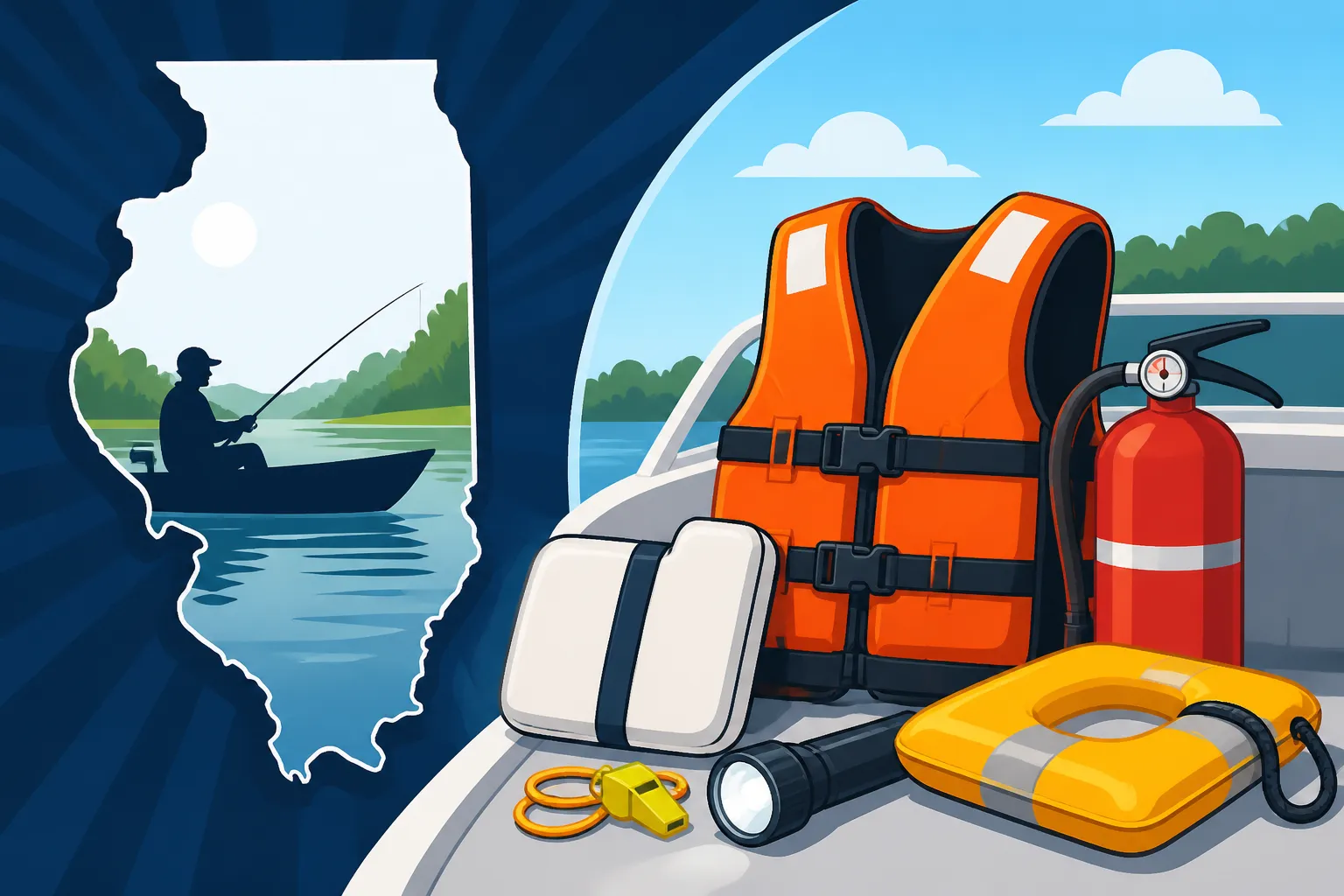
While everyone on board needs to have an approved wearable life jacket (Type I, II, III, or V), vessels 16 feet or longer, with the exception of canoes and kayaks, also need to carry an additional piece of equipment: a Type IV throwable PFD. This isn't something you wear; it's something you throw to someone who has fallen overboard. Think of it as a life ring or a buoyant cushion.
This throwable device must be immediately available and in good condition. It can't be stowed away in a locker under a pile of gear. The idea is that if someone goes over unexpectedly, you can grab it and toss it to them within seconds, providing immediate flotation while you maneuver the boat to pick them up. This is particularly vital in situations where someone might be injured or unconscious after falling into the water. Having a bright orange or yellow Type IV device not only helps them stay afloat but also makes them much easier to spot in the water, especially in choppy conditions or low light. It's a small but mighty piece of gear that can make a huge difference in an emergency, offering critical moments for recovery. For comprehensive details on PFDs, refer to our article on Illinois Life Jacket and PFD Rules.
Proper Life Jacket Storage and Accessibility
Having the correct number and type of life jackets is only half the battle; they must also be easily accessible. This means they shouldn't be buried under fishing tackle, stowed away in a locked compartment, or used as boat cushions (unless specifically designed for that purpose and still in serviceable condition). In an emergency, every second counts, and fumbling around for a life jacket could be the difference between life and death.
Ideally, life jackets should be stored in an open area, perhaps under a seat or in a designated compartment that can be opened quickly. They should be checked regularly for wear and tear, rips, or mildew that could compromise their buoyancy. A damaged life jacket is as good as no life jacket at all. If you find one that's torn or waterlogged, it's time to replace it. A common mistake is to keep old, faded life jackets "just in case," but if they're not U.S. Coast Guard approved and in good shape, they won't pass inspection and, more importantly, won't perform when needed. Keeping them dry and out of direct sunlight when not in use will also prolong their life. Make it a routine to check them before every outing, just like you check your fuel level.
Sound-Producing Devices and Visual Distress Signals
Beyond flotation, the ability to signal for help or warn other boaters is crucial for preventing collisions and getting assistance in an emergency. Illinois boating regulations include requirements for both sound-producing devices and, in certain waters, visual distress signals. These aren't just for serious trouble; they're also for routine communications on the water, like signaling your intentions or alerting another boat to your presence in fog.
Illinois Boat Horn and Whistle Requirements Explained
Every vessel operating in Illinois waters must be equipped with some form of sound-producing device. For boats less than 39.4 feet (12 meters) in length, a whistle, horn, or other sound-producing device that can produce a two-second blast and be heard for at least half a nautical mile is sufficient. This doesn't have to be a fancy, electrically powered horn; a simple mouth-operated whistle will do for smaller crafts like kayaks or canoes. However, for power-driven vessels 39.4 feet or longer, a whistle or horn and a bell are required.
The purpose of these devices is to signal intent, warn other vessels of your presence in limited visibility (like fog), or signal distress. For example, five short blasts on a horn is the international distress signal. Knowing how and when to use these signals is just as important as having the device itself. Make sure your whistle isn't just hanging on a keychain, but actually accessible to you, and test any electric horn periodically to ensure it's functioning properly. A cheap whistle from Bass Pro Shops or Amazon is a small investment for a significant safety boost. To dive deeper into these specifics, read our article Boat Horn and Whistle Requirements Explained.
When Visual Distress Signals Are Needed And When They're Not
Visual distress signals (VDS) are devices that help you signal for help when you're in trouble, especially when you can see land or other boats, but they can't see you. In Illinois, these are primarily required for boats operating on Lake Michigan, and they're generally not mandatory for boats on inland lakes, rivers, and ponds, unless you're operating at night.
For those venturing onto Lake Michigan, approved VDS include flares, orange smoke signals, and electric distress lights. These must be U.S. Coast Guard approved, in good working order, and readily accessible. If you carry pyrotechnic VDS (like flares), they have an expiration date and must be replaced periodically. Non-pyrotechnic VDS, such as an electric distress light, are a good option because they don't expire and can be used multiple times. The key is to have something that can attract attention, whether it's day or night. For example, an orange flag for daytime use can be seen from a distance, while a red flare is unmistakable at night. Always understand the specific requirements for the body of water you're planning to navigate.
Fire Extinguishers and Other Crucial Gear
Fires on boats, while thankfully not an everyday occurrence, can be incredibly dangerous and spread rapidly due to the presence of fuel, oil, and electrical systems. Illinois boating regulations specify requirements for fire extinguishers, especially for motorboats. Beyond fire safety, there are other pieces of gear that, while perhaps not always legally mandated for every vessel, are absolutely essential for a safe and enjoyable trip.
Fire Extinguisher Requirements for Illinois Boats
If your boat has an inboard engine, enclosed compartments where fuel tanks may be stored, double bottoms not sealed to the hull, or enclosed living spaces, you are generally required to carry a U.S. Coast Guard-approved marine fire extinguisher. The type and number of extinguishers depend on the size of your vessel. These extinguishers are typically rated for marine use, capable of putting out fires caused by flammable liquids and electrical components (Class B and C fires).
Like life jackets, fire extinguishers must be accessible and in good working condition, with the pressure gauge showing in the green zone. It’s also crucial to know how to use it. A quick "pull, aim, squeeze, sweep" refresher can be a lifesaver. Never use a fire extinguisher that is designed for a car or home; it must be marine-specific. Having one easily reachable, perhaps near the helm or in the galley, ensures you can react quickly if a fire breaks out, potentially saving your boat and lives. For precise details on what your boat needs, consult Fire Extinguisher Requirements for Illinois Boats.
The Importance of a Well-Stocked First-Aid Kit
While not always a legally required item for every small pleasure craft, a comprehensive first-aid kit is undeniably a crucial piece of safety equipment. On the water, you're often far from immediate medical help, and a simple cut, burn, or bee sting can become a bigger problem if not addressed quickly. A good marine first-aid kit should include basics like bandages, antiseptic wipes, pain relievers, motion sickness medication, and any personal prescription medications.
Think about the specific activities you'll be doing. If you're fishing, add items for hook removal or treating cuts from sharp fins. If you're going to be in sunny conditions, don't forget sunscreen and aloe vera for sunburns. Store your kit in a waterproof container to protect its contents from spray and humidity, and check it periodically to replace expired medications or used supplies. A well-stocked first-aid kit can provide comfort and prevent minor issues from escalating into serious medical emergencies, allowing you to enjoy your time on the water without unnecessary worry. You can find excellent pre-made marine first-aid kits at sporting goods stores or assemble your own through places like Amazon.
Navigation Lights and Nighttime Safety
If you plan to operate your boat between sunset and sunrise, or during periods of restricted visibility like heavy fog or rain, then proper navigation lights are absolutely mandatory. These lights communicate your boat's position and direction to other vessels, preventing collisions in low-light conditions. The specific configuration of lights depends on your boat's size and whether it's powered or sailing.
Generally, power-driven vessels under 65.6 feet (20 meters) must display a masthead light or all-around white light, sidelights (red for port, green for starboard), and a sternlight. Human-powered vessels like canoes and kayaks must at least carry a white light (like a flashlight) to display in time to prevent a collision. It's critical to ensure all your navigation lights are working before you head out, as malfunctioning lights are not only a safety hazard but also a violation that can result in a citation. These lights are your eyes and ears to other boats, ensuring everyone can see and be seen when visibility is poor.
Illinois Boater Education Card and Its Role in Safety
While not a piece of physical gear you carry on your boat, the Illinois Boater Education Card is a crucial element of boating safety for many operators. It ensures that boaters have a fundamental understanding of navigation rules, safety practices, and emergency procedures. Think of it as your mental safety gear – the knowledge that helps prevent incidents in the first place.
Illinois Boater Education Card Age Requirement
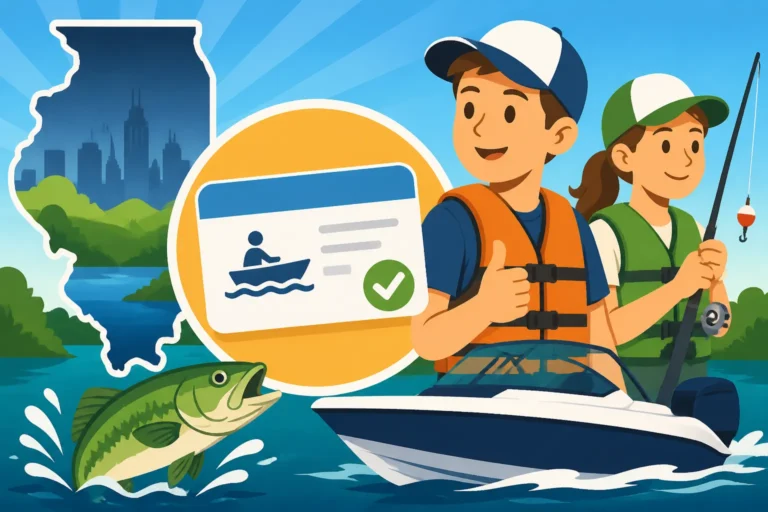
Illinois law mandates that anyone born on or after January 1, 1998, must possess a valid Boater Education Card (or an equivalent certificate from another state) to operate a motor-driven vessel with a horsepower rating of 10 HP or greater. This requirement is in place to ensure that younger generations of boaters are properly educated before taking the helm. Even if you're an experienced boater who doesn't fall under this age requirement, taking a boater safety course is always a good idea. It's a fantastic refresher on rules you might have forgotten and introduces you to updated best practices.
The course covers topics such as navigation rules, safe operating procedures, emergency preparedness, and environmental stewardship. It's not just about passing a test; it's about internalizing the information to make you a more confident and safer operator on the water. Many courses are available online or in person, offering flexibility to fit your schedule. Ensuring you meet this requirement, if applicable, is part of being a responsible boater in Illinois. Our post Illinois Boater Education Card Age Requirement offers more insights into this critical document.
Beyond the Card Practical Boating Skills
Earning your Boater Education Card is a fantastic start, but practical skills are what truly make a safe boater. The card gives you the knowledge, but experience builds the confidence and judgment needed on the water. Things like practicing docking in various conditions, understanding how wind and current affect your boat, performing emergency stops, and knowing how to handle your boat in rough water can only be learned through hands-on experience.
Consider spending time with an experienced boater or taking an on-the-water training course. These practical skills will complement your classroom knowledge, making you a much more capable and safer operator. Even simple things, like tying proper knots, understanding buoy markers, or troubleshooting a minor engine issue, can save a day of fishing from turning into a frustrating or dangerous situation. Safety gear is important, but a knowledgeable, skilled operator is the ultimate safety asset on any boat. Remember, the journey to becoming an expert boater is continuous learning. For a comprehensive list of what to have on your boat, check out our Illinois Boating Safety Gear Checklist.
Summary of Illinois Required Safety Gear
To make it a little easier to digest, here's a quick overview of common safety gear requirements for Illinois boats. Remember, specific rules can vary by vessel type, size, and operating conditions, so always consult the latest IDNR regulations for your exact situation.
| Item | Requirement (General) | Notes |
|---|---|---|
| Wearable Life Jackets (PFDs) | One U.S. Coast Guard-approved PFD for each person on board. | Must be readily accessible and in good condition. |
| Children's Life Jackets | Children under 13 must wear a U.S. Coast Guard-approved PFD at all times (unless in enclosed cabin). | Must fit properly. |
| Throwable PFD (Type IV) | One U.S. Coast Guard-approved Type IV (e.g., ring buoy, buoyant cushion) | Required for vessels 16 feet or longer (excluding canoes/kayaks). Must be immediately accessible. |
| Sound-Producing Device | Whistle, horn, or other device audible for 0.5 nautical miles (2-second blast). | Required for all vessels. Five short blasts = distress signal. |
| Fire Extinguisher | Required for most motorboats with enclosed compartments, fuel tanks, or living spaces. | Type and number vary by boat size. Must be marine-rated, accessible, and charged. |
| Navigation Lights | Required for operation between sunset and sunrise or in restricted visibility. | Specific configurations vary by vessel type and size. |
| Visual Distress Signals (VDS) | Primarily required for Lake Michigan (flares, orange smoke, electric lights). | Must be U.S. Coast Guard approved, in good condition, and accessible. |
| Boater Education Card | Required for operators born on or after Jan 1, 1998, for motorboats 10 HP or more. | Demonstrates fundamental safety knowledge. |
Remember, this table provides a general guideline. Always double-check the current Illinois Department of Natural Resources rules for your specific vessel and planned waters of operation. Investing in safety gear and knowing how to use it isn't just about compliance; it's about protecting yourself, your passengers, and your investment in your boat. When you're heading out to fish at places like Rend Lake, having all your gear in order makes for a much more relaxing trip. It's truly about enjoying the serenity of Illinois fishing without unnecessary risk or worry.
Disclaimer
This article is for general informational purposes only and does not constitute professional advice. Laws, prices and regulations vary by location and change over time. Consult a qualified professional for guidance on your specific situation.