How to Fish for Catfish at Night
There's nothing quite as frustrating as spending a beautiful sunny day on the water, only to have the catfish stubbornly refuse to bite. Many anglers pack up as the sun sets, but they're missing out on some of the most exciting and productive catfishing opportunities in Illinois. This guide will reveal why the cover of darkness is a catfish angler's best friend, sharing essential gear, techniques, and safety tips to help you consistently land more catfish after hours.
Why Nighttime is Prime Time for Catfish in Illinois
It’s easy to assume that fishing is a daytime activity, but for certain species, the rules change entirely once the sun goes down. Catfish are a prime example, and understanding their nocturnal habits is the key to unlocking some truly exceptional angling experiences here in Illinois.
Understanding Catfish Behavior After Dark
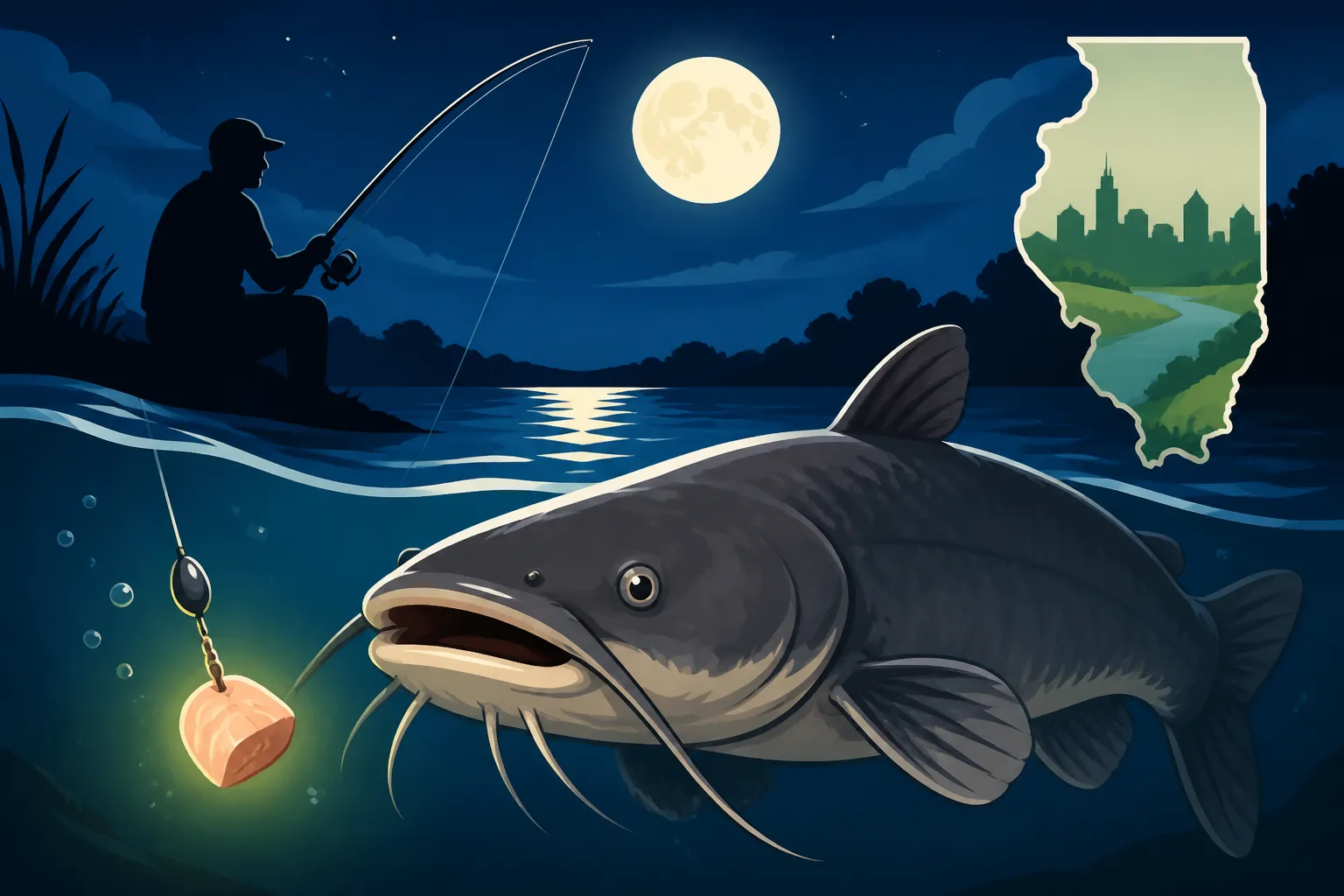
Catfish are primarily nocturnal hunters. Their incredible sense of smell and barbels (whiskers) are perfectly adapted for finding food in low light or murky conditions. While they might nibble during the day, once the sun dips below the horizon, it's like a dinner bell for them. They instinctively move from their deeper, cooler daytime resting spots into shallower feeding grounds, actively foraging for whatever unlucky prey crosses their path.
Think about it: a channel catfish doesn't need to see your bait. It smells it from a distance, following the scent trail with its olfactory senses, which are incredibly keen. Flatheads, while more ambush predators, also use their keen touch and lateral line system to detect vibrations from struggling prey in the dark. Blue catfish, being more schooling, will actively cruise for food in groups, often using their sheer numbers to corral baitfish. This change in behavior is a game-changer for anglers who understand how to capitalize on it.
This shift means they're less wary of boat traffic and human presence, becoming bolder in their search for a meal. They're more likely to venture closer to the banks, making them accessible even for those fishing without a boat. Understanding this fundamental behavioral change is the first step to unlocking incredible night fishing success, especially when considering the abundance of catfish in Illinois.
The Advantage Over Daytime Angling
One of the most immediate benefits of fishing for catfish at night is the sheer peace and quiet. Daytime fishing, especially on popular lakes like Rend Lake or Carlyle Lake, can be a constant battle with pleasure boaters, jet skiers, and other anglers. At night, the water calms down dramatically, creating a serene environment where you can truly focus on your fishing, listening for the telltale splash of a jumping fish or the screaming drag of a hookup.
Beyond the tranquility, the cooler water temperatures are a huge draw for catfish. During hot Illinois summers, catfish often retreat to deeper, cooler water during the day to escape the heat, making them harder to target. As night falls, the surface water cools, and baitfish become more active in shallower areas, drawing the catfish up to feed. This makes finding them much easier, as they're often in predictable locations, following the food chain. This is especially true in the warmer months of the Illinois Catfish Season Guide.
Furthermore, there's often less fishing pressure at night. Most casual anglers go home when it gets dark, leaving the prime spots open for those willing to embrace the darkness. This can lead to less competition for the best fishing holes and, consequently, better catches. You're simply fishing when the fish are most active and least disturbed, giving you a significant edge over the daytime crowd. You might even find yourself with an entire stretch of river or a quiet cove to yourself.
Essential Gear and Setup for Night Catfishing
Night fishing for catfish isn't just about showing up when it's dark; it requires some specific gear and preparation to be safe and successful. Skimping on the right tools can quickly turn a fun night into a frustrating, or even dangerous, ordeal.
Rods, Reels, and Line: Building Your Foundation
When you're targeting catfish in the dark, especially the big ones that roam Illinois waters, you need gear that can handle a serious fight. Forget your ultralight panfish setup; it simply won't cut it. We're talking about stout, heavy-action rods, typically in the 7 to 9-foot range. A medium-heavy to heavy power rod with a fast or moderate-fast action will give you the backbone to wrestle powerful fish out of cover, and the sensitivity to detect subtle bites even when you can't see them. Look for rods designed for catfish, as they're built for durability and strength.
Pair that rod with a robust baitcasting or large spinning reel. Baitcasting reels are often preferred for their power, casting distance with heavy baits, and direct feel, especially when dealing with strong currents or big fish. Look for reels with a smooth, reliable drag system – this is non-negotiable for preventing break-offs when a big blue cat decides to make a run. A 4000-6000 series spinning reel or a medium-heavy baitcaster with a good line capacity will generally suffice. For line, don't skimp. You'll want at least 20-30 lb test monofilament for its abrasion resistance and shock absorption, or 40-65 lb braided line for its incredible strength and sensitivity. Many anglers prefer braid for its zero stretch, allowing you to feel every bump and nibble, even in the dark.
The choice between mono and braid often comes down to personal preference, but having a strong leader, usually 30-50 lb fluorocarbon or heavy mono, is a good idea to protect against abrasion from rocks, mussel beds, and submerged debris. Remember, you're often fishing near submerged structures or in swift currents where line integrity is paramount. Having a few spare spools of line, pre-rigged leaders, and a sturdy pair of pliers are also crucial items you can easily find on Amazon, ensuring you're prepared for any situation.
Lighting and Safety Essentials
Fishing in the dark without adequate light is not just inconvenient, it's dangerous. A good headlamp is your absolute best friend. Look for one with a red light setting, as red light preserves your night vision and is less likely to spook fish than a bright white beam. Keep extra batteries handy! Beyond your personal light, a small lantern or area light can illuminate your immediate fishing space, making baiting hooks, tying knots, and handling fish much safer and easier. Some anglers even use glow sticks on their rod tips to detect bites.
Safety extends beyond just seeing. If you're boat fishing, proper navigation lights are legally required and absolutely essential. Always have a fully charged phone, a well-stocked first-aid kit, and a whistle on board. Dressing in layers is also important, as night temperatures can drop significantly, even after a hot day, and the wind off the water can make it feel much colder. Consider reflective tape on your life jacket or clothing for added visibility if you're near a road or other boats, especially on larger lakes or rivers.
Don't forget the creepy crawlies! Mosquitoes and other biting insects come out in full force at night, especially near Illinois waters. A strong insect repellent, preferably one with DEET or picaridin, is a must-have to make your experience enjoyable rather than a torture test. Also, be aware of your surroundings; snakes, spiders, and other nocturnal critters are more active. A good pair of waterproof boots and long pants can offer some protection, and always be cautious where you step or place your hands.
Bait Choices That Shine in the Dark
Catfish rely heavily on their sense of smell, and at night, pungent baits are king. Classic stink baits, whether prepared dips or dough baits, are incredibly effective, especially for channel catfish. These baits are designed to release a strong, lingering scent trail in the water, drawing catfish in from a distance. Experiment with different formulas or scents, as catfish can sometimes show a preference for one over another depending on the water conditions and local forage.
Cut bait is another top performer, particularly for larger channel, blue, and flathead catfish. Freshly cut shad, skipjack herring, or even bluegill (where legal and properly obtained, always check Illinois Fishing Regulations Overview and Illinois Fishing Season and Catch Limit Rules for baitfish rules) bleed oils and release a strong scent that catfish can't resist. Cut these baits into chunks that fit your hook, ensuring some skin and bone are present for added texture and scent dispersion. For flatheads, a live bluegill or other legal live bait often reigns supreme, as they are primarily piscivores and prefer live, struggling prey.
Don't overlook other readily available options like chicken livers. They're cheap, incredibly stinky, and a proven catfish magnet, particularly for channel catfish. Just be warned: they can be messy, and they tend to come off the hook easily, so consider using bait-holding treble hooks or wrapping them with a Bait Holder Spring to keep them secure. Nightcrawlers, though more common for other species, can also entice smaller catfish and bullheads, especially if threaded onto a hook to maximize their movement and scent. You can often find a wide variety of these baits at local tackle shops or even online through retailers like Amazon. For more detailed information on specific baits, check out our guides on Best Bait for Channel Catfish, Best Bait for Blue Catfish, and Best Bait for Flathead Catfish.
Mastering Night Fishing Techniques for Illinois Catfish
Having the right gear is only half the battle; knowing how to use it effectively in the dark is what truly sets successful night anglers apart. From rigging to locating prime feeding zones, these techniques will help you maximize your chances of a memorable catch.
Rigging for Success After Sunset
Simplicity and strength are key when rigging for catfish at night. The Carolina Rig, also known as a slip sinker rig, is a perennial favorite for a reason. It allows the fish to pick up the bait and run with it for a moment before feeling the weight of the sinker, giving you a better hook set. To set it up, thread an egg sinker (or a no-roll sinker in current) onto your main line, followed by a bead (to protect your knot), then tie on a barrel swivel. To the other end of the swivel, tie a 12-24 inch leader of slightly lighter line, and finally, your hook. This rig is fantastic for fishing the bottom, which is where catfish often feed, as explained further in our How to Bottom Fish for Catfish guide.
For areas with stronger currents, or when fishing from a boat and wanting to present multiple baits, a three-way swivel rig can be highly effective. Tie your main line to one eye of the swivel, a short leader (6-12 inches) with a sinker to another eye, and a longer leader (18-36 inches) with your baited hook to the third eye. This keeps your bait suspended just off the bottom, dancing enticingly in the current, which can be irresistible to cruising catfish. Another solid choice is a Santee Cooper rig, which is essentially a slip sinker rig with a small float between the swivel and the hook, lifting the bait off the bottom and out of muck and debris.
Hook choice is also critical. Circle hooks are widely recommended for catfishing, especially when practicing catch and release, as they almost always result in a jaw-corner hook set, minimizing gut hooking. Sizes typically range from 5/0 to 8/0, depending on your target species and bait size. Ensure your knots are strong and checked regularly; a knot failing in the dark on a trophy fish is a heartbreaker. Always keep a sharp knife or line clippers handy for quick re-tying, and plenty of extra terminal tackle in your Tackle Box Essentials for Catfish Trips.
Strategic Spot Selection in the Dark
Catfish, especially channel and blue catfish, love structure and current breaks. At night, these areas become feeding highways. Look for creek channels, submerged humps, rock piles, and deep holes within lakes and rivers. On larger systems like the Mississippi River Catfish Fishing in Southern Illinois or other Best Catfish Rivers in Illinois, target the edges of main channels, tributary mouths, and any current seams where food might be funneled. Even a subtle break in the bottom contour can hold a bounty of catfish, as they use these features to ambush prey.
If you're bank fishing, focus on areas where the bank drops off quickly into deeper water. Bridges, dams (check regulations for fishing near dams, as they often have restrictions), and points that extend into the main body of water are excellent spots. Submerged timber and log jams are also classic catfish haunts, providing both cover and ambush points. While fishing near these, be prepared for snags, but the reward can be well worth the risk of a trophy fish.
For flatheads, specifically, their preferred habitat often includes heavy cover such as log jams, undercut banks, and rock ledges in rivers and larger creeks. They're ambush predators, so they'll often hold tight to cover, waiting for unsuspecting prey to swim by. Using a fish finder with side imaging can be incredibly helpful during the day to mark these spots, allowing you to return to them confidently after dark. Remember that Why Fishing Rules Vary by Lake and River, so always check specific site regulations for your chosen spot, as some areas may have unique rules for night fishing or access.
Setting Up Your Night Command Center
Whether you're on the bank or in a boat, organization is paramount when fishing at night. You don't want to be fumbling for gear in the dark, potentially losing valuable time or even dropping essential items into the water. If bank fishing, set up your rods in sturdy rod holders that can withstand a powerful strike – a cheap plastic holder might not survive a big blue cat. A five-gallon bucket can serve multiple purposes: a comfortable seat, a convenient gear holder, or even a temporary livewell for baitfish (if kept aerated). Keep your bait, terminal tackle, and de-hooking tools within easy, arm's-length reach.
For boat anglers, designate specific areas for different gear to maintain order and accessibility. Keep your net, pliers, and fish gripper easily accessible, ideally in a spot where they won't get tangled or trip anyone. A cooler is essential not just for drinks and snacks, but also for keeping your bait fresh and your catch chilled. If you plan on keeping fish, immediately placing them on ice is critical for maintaining quality. Ensure all your lights are working and charged before you even leave the dock. A dead battery on your headlamp can ruin a night quickly.
Consider having a dedicated night fishing kit with all your essentials: headlamps, extra batteries, bug spray, a small first-aid kit, a towel, and a few different bait options. This way, you just grab one bag and know you're ready for the night. Having a portable light source, like a lantern or a portable LED work light (many available on Amazon), can make rigging and baiting much easier without constantly using your headlamp, allowing your eyes to adjust better to the overall darkness.
Safety First: Important Considerations for Night Anglers
While night fishing for catfish can be incredibly rewarding, it also comes with unique challenges and safety concerns. Being prepared and aware of your surroundings is crucial for a safe and enjoyable experience under the stars.
Navigating in Low Light
Navigating any body of water in the dark is inherently more challenging than during the day. If you're in a boat, operate at a significantly reduced speed. Submerged hazards like stumps, rocks, and sandbars that are easily visible during the day become invisible obstacles at night. A reliable GPS unit with detailed mapping can be a lifesaver, helping you stay in safe channels and avoid shallow areas. Always carry physical maps as a backup in case electronics fail or lose signal.
If you're fishing a new body of water, it's highly advisable to scout it during daylight hours first. Pay attention to landmarks, hazards, and navigable routes. Knowing the water you're on vastly reduces risks. Furthermore, if you're with a fishing partner, establish a "buddy system." Make sure someone on shore knows your float plan – where you're going, when you expect to return, and who is with you. Cell service can be spotty on some Illinois lakes, so don't rely solely on your phone for communication in an emergency.
For bank anglers, navigating trails and uneven terrain in the dark can also be tricky. Wear sturdy, closed-toe shoes with good grip, as banks can be muddy or slippery. A walking stick or trekking poles can provide extra stability, especially on unfamiliar paths. Be mindful of steep banks, erosion, and potential drop-offs. Always shine your headlamp ahead of you to spot obstacles and avoid stepping on anything unexpected, and avoid areas with dense, thorny brush.
Dealing with Wildlife and Insects
Nighttime is when many creatures of the wild are most active, and you're entering their domain. Mosquitoes are almost a guarantee near water in Illinois during warmer months, so high-quality insect repellent is not just a comfort item, it's a necessity. Consider wearing long sleeves and pants, even if it's warm, to minimize exposed skin and provide a barrier against bites.
Other wildlife, such as raccoons, opossums, and even larger animals like deer or coyotes, might be curious visitors attracted to food scents. Secure your bait and food to prevent unwanted attention, perhaps in sealed containers or coolers. Snakes, particularly water snakes, are also common near water sources and can be active at night. While most are non-venomous, it's best to observe from a distance and avoid startling them. Always scan the ground before stepping and reaching into dark, brushy areas.
Remember, you are a guest in their habitat. Respect wildlife by not feeding them, keeping your distance, and properly disposing of all trash. A clean fishing spot is a safe fishing spot, not just for you but for the animals that live there. Being aware of your surroundings and having a calm demeanor will help ensure a peaceful and enjoyable night fishing experience.
Legalities and Regulations for Night Fishing
Just because it's dark doesn't mean the rules go away! It's absolutely crucial to be aware of all local and statewide fishing regulations when fishing at night in Illinois. These can vary significantly depending on the specific lake, river, or state park you're visiting. For instance, some state parks might have specific closing times or restrictions on night access, or certain areas might be closed to boat traffic after dark. Always consult the most current Illinois Department of Natural Resources (IDNR) fishing information guide before your trip.
Pay close attention to specifics like Illinois Catfish Daily Limits Explained, and any special regulations for particular species or bodies of water. For example, while Illinois Walleye Size and Catch Limits might not directly apply to catfishing, understanding that regulations can differ by species reinforces the need to check. If you're on a boundary water like the Mississippi River, you might also need to be aware of Illinois Fishing License Reciprocity With Missouri or Iowa regulations, as those can differ too and apply to the whole body of water, not just the Illinois side.
Boat lighting requirements are non-negotiable for safety and legality. Ensure your vessel has all required navigation lights functioning correctly, including proper anchor lights if you're stationary. Fishing without a proper license, or exceeding catch limits, carries real consequences, regardless of the time of day. Game wardens are on patrol 24/7, and they won't hesitate to issue citations. A quick check of the IDNR website or a call to a local ranger station can save you a lot of hassle and potential penalties, making sure your night on the water is both productive and compliant.
| Bait Type | Primary Target Species | Scent Level | Recommended Rigging | Notes |
|---|---|---|---|---|
| Prepared Stink Baits | Channel Catfish | Very High | Dip Worms, Sponges | Best with specific bait holders, very effective for aggressive feeders. |
| Cut Bait (Shad, Herring) | Channel, Blue, Flathead | High | Carolina Rig, Three-Way Swivel | Freshness is key. Bleeds oils and scent, attracting larger fish. |
| Live Bait (Bluegill, Perch) | Flathead Catfish | Medium | Single Hook, Slip Sinker | Essential for trophy flatheads; ensure baitfish legality. |
| Chicken Livers | Channel Catfish | High | Treble Hook, Bait Thread | Messy but highly effective; can use elastic thread to secure. |
| Nightcrawlers/Worms | Smaller Catfish, Bullhead | Medium | Basic Bottom Rig | Easy to use, readily available, attracts a variety of fish. |
| Dough Baits | Channel Catfish, Bullhead | Medium/High | Treble Hook | Can be customized with scents; good for calmer waters. |
Disclaimer
This article is for general informational purposes only and does not constitute professional advice. Laws, prices and regulations vary by location and change over time. Consult a qualified professional for guidance on your specific situation.