Best Water Temperature for Bass Fishing
Ever had one of those days on an Illinois lake where you know the bass are there, you're using your favorite lures, but they just won't bite? It’s incredibly frustrating to put in the time and effort only to come up empty-handed. Often, the missing piece of the puzzle isn't your technique or your bait, but a fundamental understanding of water temperature and how it dictates bass behavior. This guide will demystify the crucial link between water temperature and successful bass fishing, equipping you with the knowledge to consistently find and catch more fish across Illinois.
Why Water Temperature is the Ultimate Bass Fishing Secret
If you want to consistently catch bass in Illinois, you simply cannot ignore water temperature. It's not just a casual factor; it's arguably the single most important element influencing where bass are, what they're doing, and how willing they are to bite. Think of it like your own comfort zone – you wouldn't be very active or hungry if you were shivering uncontrollably or sweating profusely, right? Bass are no different. Their entire world revolves around finding water that makes them comfortable, and that comfort level is almost entirely dictated by temperature.
Understanding Bass Metabolism and Comfort Zones
Bass, like all fish, are cold-blooded creatures, meaning their body temperature mirrors their surroundings. This has huge implications for their metabolism, which is essentially how fast their bodies function. In very cold water, their metabolism slows way down. They become sluggish, move less, digest food slowly, and aren't inclined to chase down a meal. Imagine trying to run a marathon in freezing temperatures – your body just wouldn't be up to it.
Conversely, in ideal water temperatures, their metabolism speeds up, and they become active, aggressive, and much more likely to feed. However, there's a limit. If the water gets too warm, their metabolism can actually become too high, causing stress, reducing oxygen levels, and making them lethargic again, seeking cooler, more oxygenated water to recover. Knowing these comfort zones is the first step to unlocking consistent bass catches in Illinois.
The Role of Thermoclines in Summer
During the warmer months, especially in deeper Illinois lakes, you'll often encounter something called a thermocline. This is essentially a distinct layer of water where the temperature changes dramatically over a short depth. Above the thermocline, the water is warmer and typically has less oxygen. Below it, the water is cooler but might also be low on oxygen if it's too deep.
Bass, particularly largemouth, will often suspend right on or just above this thermocline, seeking that perfect balance of comfortable temperature and sufficient oxygen. They're essentially hanging out in their sweet spot. Learning to identify these thermoclines using a good fish finder can be a game-changer for summer bass fishing, as it tells you exactly at what depth to target them, rather than blindly casting into unproductive water. It’s like finding a hidden highway for fish.
Seasonal Temperature Shifts and Bass Behavior
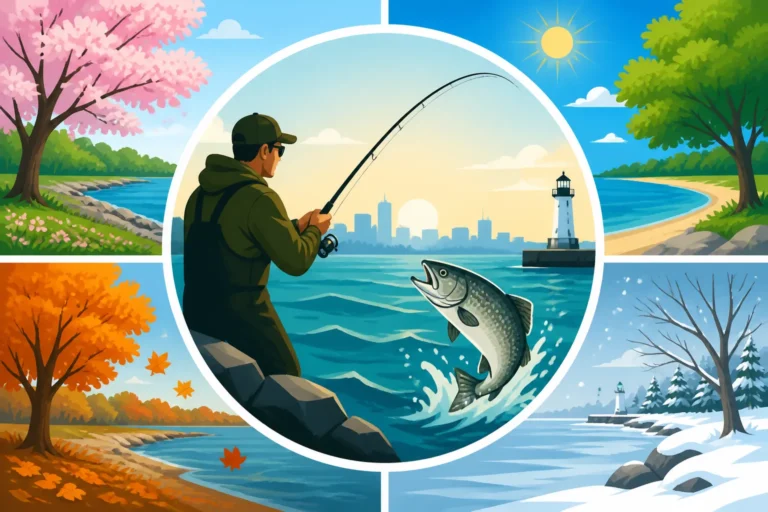
The changing seasons in Illinois are defined by significant water temperature shifts, and these shifts directly trigger major bass behaviors. Spring warming brings bass out of their deep winter haunts and into shallower waters for the Illinois Bass Pre-Spawn Fishing Patterns. Summer heat sends them deep or to shady cover, seeking refuge. Fall cooling brings on a feeding frenzy as they pack on weight for winter, and then winter itself sees them congregating in deep, stable areas.
Understanding this annual cycle and how temperature drives it is absolutely critical. You can’t fish for bass in July the same way you would in April. Each season presents a unique temperature challenge and opportunity, and your approach needs to adapt accordingly. For a deeper dive into these seasonal changes, check out our Illinois Fishing Seasons Guide.
Prime Temperature Ranges for Bass Activity in Illinois
Pinpointing the "perfect" water temperature isn't an exact science because several factors like oxygen levels, water clarity, and forage availability also play a role. However, there are definitely prime temperature ranges that trigger specific and predictable bass behaviors. Knowing these ranges is like having a secret decoder ring for bass activity.
The "Sweet Spot" for Largemouth and Smallmouth
Generally speaking, the most active feeding for both largemouth and smallmouth bass in Illinois occurs when the water temperature is between 65 and 75 degrees Fahrenheit. In this range, their metabolism is humming along nicely, they're feeling aggressive, and they're actively hunting for food. This is often when you'll see them really smash a topwater lure or aggressively chase down a spinnerbait.
For largemouth bass, this "sweet spot" often coincides with lush vegetation and cover in shallower areas, as they use these spots for ambush points. Smallmouth bass, especially in rocky rivers and clear, deep lakes like those found in northern Illinois, will also be very active in this range, often cruising rocky points, humps, and current breaks. While the general range is similar, the specific locations they prefer will differ slightly. You can learn more about their unique preferences in our Largemouth Bass Fishing in Illinois: The Complete Guide and Smallmouth Bass Fishing in Illinois: The Complete Guide.
Pre-Spawn Warming Trends and How Bass React
As winter's grip loosens and spring begins to warm Illinois waters, bass start to emerge from their deeper wintering holes. When water temperatures climb into the 45-55 degree Fahrenheit range, bass are in their early pre-spawn phase. They're still a bit sluggish but starting to move shallower to forage and scout out potential spawning grounds. Think of it as waking up from a long nap – they're hungry but not quite ready for a full sprint.
As temperatures push into the 55-65 degree Fahrenheit range, the pre-spawn really kicks into high gear. This is a crucial time when bass are gorging themselves to build energy reserves for the upcoming spawn. They'll be found in staging areas adjacent to spawning flats, like points, humps, and channel swings. They're actively feeding and can be incredibly aggressive, making this one of the best times of year to catch big bass. For more detailed strategies, check out Spring Bass Fishing Patterns. The peak of the spawn itself, when bass are actually on beds, typically happens when water temperatures consistently hold between 60 and 70 degrees Fahrenheit, which you can read all about in our Illinois Bass Spawn Timing Guide.
Post-Spawn and Summer Heat Strategies
Immediately after the spawn, when water temperatures are still around 65-75 degrees Fahrenheit, bass go through a post-spawn recovery period. Some may be exhausted and lethargic, while others are still guarding fry. They often move to nearby cover or slightly deeper water to rest. As summer heat truly sets in and water temperatures climb above 75 degrees Fahrenheit, bass will seek cooler, more comfortable water.
This means moving deeper to the thermocline (if present), retreating into dense shade under docks or overhanging trees, or burying themselves in thick weed beds where the canopy blocks sunlight and the vegetation produces oxygen. Targeting these cooler refuges is key for Summer Bass Fishing Patterns. Fishing during dawn or dusk, when surface temperatures are at their lowest, can also be highly productive, as bass might venture shallower to feed.
Fall Cooling and Winter Sluggishness
When Illinois's long summer days begin to shorten and fall brings cooler nights, water temperatures gradually drop. As they fall back into the 60-70 degree Fahrenheit range, bass enter a significant feeding period often called the "fall turnover." They sense winter coming and are desperate to pack on calories. This can lead to some of the most aggressive and exciting fishing of the year. They'll actively chase baitfish, sometimes forming large schools themselves.
As water temperatures continue to drop below 50 degrees Fahrenheit and eventually into the 30s and 40s during winter, bass activity slows dramatically. Their metabolism plummets, and they move to their deep, stable wintering holes – often the deepest parts of the lake or river, near structure like old creek channels, humps, or rock piles. Here, they conserve energy, and while they still feed, it's a much more subtle affair. You'll need slow, deliberate presentations to entice them during these Winter Bass Fishing Tips.
Practical Tips for Measuring Water Temperature and Finding Bass
Knowing the ideal temperature ranges is one thing, but actually applying that knowledge on the water is where the magic happens. You need the right tools and a keen eye to truly leverage water temperature for better bass fishing in Illinois.
Essential Gear for Temperature Monitoring
You might be surprised how many anglers don't carry a simple water thermometer. This is your most basic and essential piece of gear for understanding bass behavior. You can find simple, waterproof fishing thermometers that clip onto your line or are built into weighted probes. These are often inexpensive and readily available at sporting goods stores or online retailers like Amazon. Having one allows you to quickly check the surface temperature, or even get readings at different depths.
Many modern fish finders, even budget-friendly models, include excellent temperature sensors that give you real-time surface readings. Some advanced units, especially those with down-imaging or side-imaging capabilities, can even help you identify thermoclines in deeper water, giving you an even more comprehensive understanding of the underwater environment. If you're serious about your fishing, investing in a good fish finder is well worth it. You can explore a variety of options on Amazon, from basic models to more advanced units.
Reading the Water: Where to Find Specific Temperatures
Beyond just measuring, you need to learn to "read" the water and anticipate where certain temperatures might be found. In spring, after a cold snap, look for north-facing banks or shallow, dark-bottomed coves. These areas absorb sunlight more efficiently and warm up faster, acting as magnets for hungry bass. A few degrees difference can make all the difference.
In summer, conversely, you'll be looking for the opposite. Seek out deeper main lake points, channel swings, or the areas where springs might feed cooler water into a lake. Shady pockets created by overhanging trees, bluffs, or even large docks can also offer significant temperature relief. These subtle temperature variations can concentrate bass in very specific, predictable locations. Pay attention to inflows and outflows as well, as these can bring in warmer or cooler water, attracting fish.
Adjusting Your Techniques Based on Temperature
Once you have a handle on the water temperature, you need to adjust your presentation. This is where your technique truly meets the science.
- Cold Water (Below 50°F): Think slow and subtle. Bass are lethargic, so they won't chase much. Jigs, shaky heads, or slow-rolled spinnerbaits worked painstakingly slowly along the bottom or through deep structure are often best. You want to practically hand-feed them. For extremely cold conditions, check out our Winter Bass Fishing Tips.
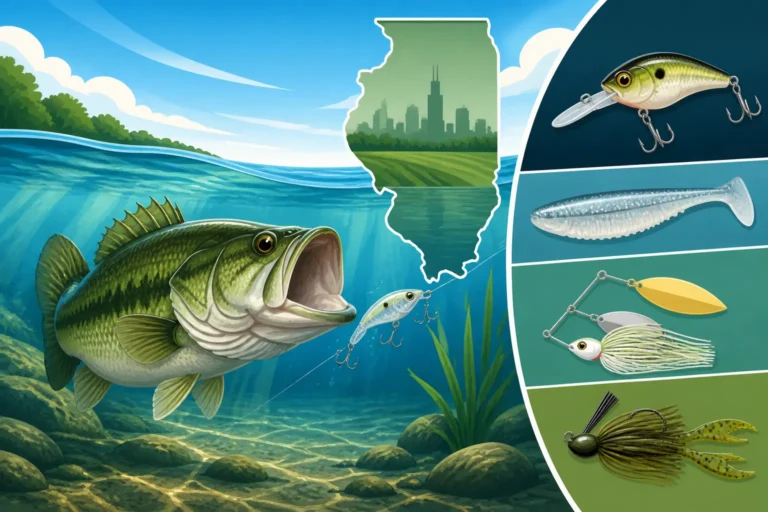
- Cool to Warming Water (50-65°F): This is the pre-spawn staging time. Bass are getting more active but might still be hesitant. Crankbaits that mimic baitfish, jerkbaits, and medium-paced spinnerbaits can be highly effective. They're still willing to chase, but you want to keep it relatively easy for them.
- Warm to Hot Water (65-80°F): This is often prime time for aggressive presentations. Faster retrieve speeds, topwater lures, chatterbaits, and Texas-rigged plastics fished through cover can all trigger violent strikes. Bass are active and on the hunt.
- Very Hot Water (Above 80°F): When the water gets this warm, bass might become sluggish again or retreat deep. You'll need to go back to slower, more deliberate presentations, but focus on deeper, cooler water or dense, shady cover. Big worms, deep-diving crankbaits, or even punching through matted vegetation can be effective.
For specific lure and bait recommendations for different seasons, our Best Time to Fish for Bass in Illinois guide has even more detail.
Common Temperature Mistakes and How to Avoid Them
Even experienced anglers can sometimes fall into common traps when it comes to factoring in water temperature. Avoiding these pitfalls can significantly improve your success rate on Illinois waters.
Fishing Too Fast in Cold Water
This is perhaps the most common mistake I see, especially among anglers eager to get a bite on a chilly spring morning or late fall afternoon. When the water is below 50 degrees Fahrenheit, a bass's metabolism has slowed down to a crawl. They simply don't have the energy or inclination to chase a fast-moving lure.
Imagine presenting a buffet to someone who's just woken up from a deep sleep – they might pick at something, but they won't be running for it. If you're cranking a spinnerbait at a medium retrieve, you're likely blowing right past fish that would otherwise bite. The solution is simple: slow down. And then slow down some more. Use subtle movements, long pauses, and presentations that allow the bass to approach and inspect the bait at their leisure. A jig and pig dragged along the bottom, or a jerkbait suspended motionless for extended periods, can often be the ticket when bass are lethargic.
Ignoring Deep Water in Summer
Another common misstep is stubbornly trying to catch bass in shallow water during the dog days of summer. Yes, there will always be some bass in the shallows, especially early or late in the day, but the majority of the active fish have retreated to cooler, more oxygenated depths. The surface water might be 85 degrees, while 15-20 feet down, it's a much more comfortable 72 degrees.
Many anglers feel less confident fishing deep, so they stick to what they know. But ignoring the cool havens in deeper water means missing out on a significant population of bass. Learn to fish offshore structure, ledges, humps, and the previously mentioned thermocline. A good fish finder is invaluable here, helping you locate these deeper sweet spots. Don't be afraid to experiment with deep-diving crankbaits, Carolina rigs, or football jigs when the sun is high and the surface water is boiling hot.
Not Factoring in Local Variations
It's easy to assume that if the surface temperature is 60 degrees in one part of a large Illinois lake, it's 60 degrees everywhere. This is rarely the case! Different areas of a lake or river can warm or cool at different rates. Shallow, muddy coves warm much faster than deep, clear main lake basins. North-facing banks get more direct sunlight than south-facing ones. Inflow from a cold spring can create a distinct temperature gradient.
For example, on a large reservoir like Rend Lake or Lake Shelbyville, the coves on the north end might be several degrees warmer than the main lake body, especially in early spring. Or, a tributary flowing into a river might bring in cooler water after a heavy rain. Always take multiple temperature readings across the area you're fishing. Pay attention to these subtle differences because bass certainly do. They'll gravitate to the most comfortable water available, and those small variations can be the key to finding them. This is also Why Fishing Rules Vary by Lake and River so much – local conditions are everything!
| Water Temperature Range (Fahrenheit) | Bass Behavior | Recommended Fishing Approach |
|---|---|---|
| Below 45°F | Extremely lethargic, deep water, inactive | Slow jigs, blade baits, vertical presentations, very subtle |
| 45-55°F | Early pre-spawn, sluggish but starting to move | Slow crankbaits, jerkbaits with long pauses, jigs near deep cover |
| 55-60°F | Mid pre-spawn, actively feeding, staging | Medium-retrieve crankbaits, spinnerbaits, jigs, lipless crankbaits |
| 60-70°F | Peak spawn / Post-spawn, aggressive feeding | Variety of lures, topwater, spinnerbaits, soft plastics, jigs |
| 70-75°F | Active post-spawn / Early summer, cruising | Topwater, faster plastics, crankbaits, target weeds/shade |
| 75-80°F | Summer heat, seeking cooler water/shade | Deep diving crankbaits, Carolina rigs, heavy jigs, early/late bites |
| Above 80°F | Very hot, stressed, seeking deep oxygenated water | Very slow, deep presentations, focus on thermocline, limited bites |
Disclaimer
This article is for general informational purposes only and does not constitute professional advice. Laws, prices and regulations vary by location and change over time. Consult a qualified professional for guidance on your specific situation.