Best Months for Lake Michigan Trout Fishing in Illinois
It's incredibly exciting to think about hitting Lake Michigan for some trout fishing, but let's be honest, figuring out the best time to go can feel like solving a complex puzzle. With varying species, changing water temperatures, and weather conditions that can shift on a dime, knowing when to cast your line for trout in Illinois can make all the difference between a memorable day and a frustrating one. This guide is all about cutting through that confusion to pinpoint the prime months for chasing these magnificent fish right here in our backyard.
Understanding Lake Michigan Trout Species in Illinois
When we talk about trout fishing on Lake Michigan, it's not a one-size-fits-all scenario. There are several different species of trout that call these vast waters home, and each has its own preferred habits and seasonal patterns. Knowing what you're targeting can significantly improve your chances and help you understand why certain months shine brighter for specific fish.
Key Trout Species You'll Encounter
The main players in Illinois's Lake Michigan trout scene are brown trout, lake trout, and steelhead, which are essentially rainbow trout that migrate to the lake. Each of these fish brings a different fight and requires slightly different tactics. Brown trout are known for being wary and staying closer to shore, especially when temperatures are mild. Lake trout, on the other hand, are true deep-water dwellers for much of the year, preferring colder, more stable conditions. Steelhead, or 'bows as many call them, are aggressive fighters and often follow baitfish or make their impressive spawning runs into tributary rivers, though we're focusing on their lake behavior here. Understanding these fundamental differences is your first step to unlocking success. You can dive deeper into how to identify these fish with a guide on Rainbow Trout vs Brown Trout vs Brook Trout: Identification Guide.
General Seasonal Patterns for Lake Michigan Trout
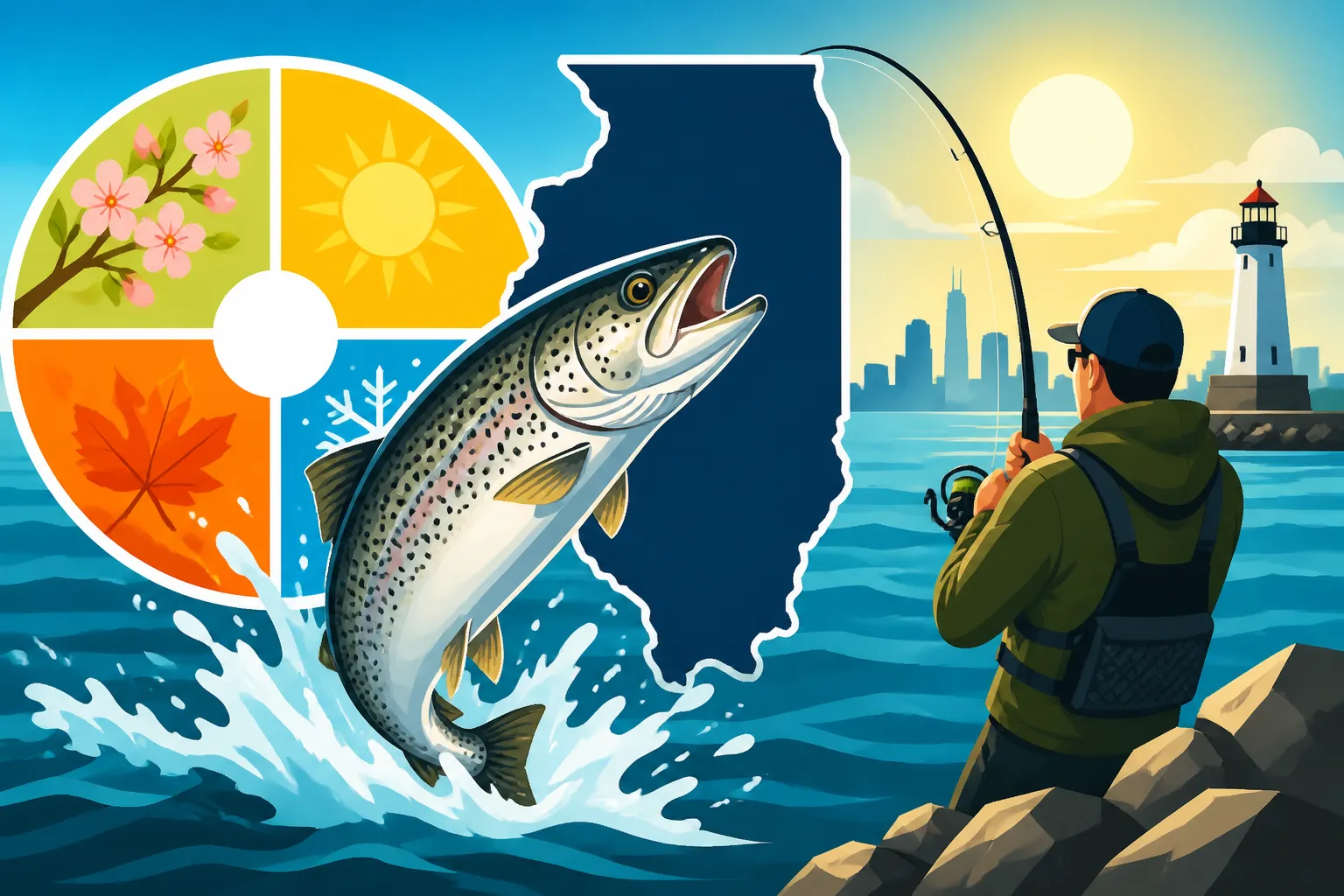
Generally speaking, Lake Michigan's trout activity ramps up significantly in the cooler months and during specific transitional periods. Unlike warm-water species that get sluggish in the cold, trout thrive when the water temperature drops. This means late fall, winter, and early spring are often the most productive times. During the warmer summer months, many trout species retreat to the deeper, cooler parts of the lake, making them harder to reach for shore anglers but still accessible for those with boats and specialized gear. The baitfish they feed on, like alewives and smelt, also influence their movements, concentrating fish in certain areas when those baitfish are abundant.
Best Months for Brown Trout Fishing
Brown trout are a fantastic target for Illinois anglers on Lake Michigan, offering a good fight and often staying within reach of shore anglers. Their seasonal patterns are heavily dictated by water temperature and the presence of their food sources near the coast.
Spring Brown Trout Strategies
Spring, particularly March and April, is absolutely prime time for brown trout along the Illinois Lake Michigan shoreline. As the ice recedes and water temperatures slowly climb from the low 30s into the 40s, brown trout become incredibly active and push into shallower waters. They're hungry after the lean winter months and will readily attack spoons, stickbaits, and even live bait like minnows. This is when you'll find anglers lining piers and breakwalls from Chicago to Waukegan. The key is to target areas where warmer water might be collecting, such as near power plant discharges or in protected harbors. The cooler, turbid water after a spring rain can also draw them in close, offering fantastic opportunities for anglers willing to brave the chill. For more specific tactics, check out Illinois Lake Michigan Brown Trout Fishing Tips.
Fall Brown Trout Opportunities
Just as productive, if not more so, is the fall season, especially from October through December. As lake temperatures begin to drop again, brown trout once more migrate back to shallower waters. They are feeding aggressively to build up fat reserves for the winter and, for some, preparing for their spawning rituals. This period offers fantastic shore fishing, with brown trout cruising close to structure, reefs, and rocky points. Casting spoons like the Little Cleo or a classic Rapala Shad Rap can be incredibly effective. The vibrant colors of fall often reflect in the beautiful hues of a freshly caught brown trout. Many anglers consider this the last hurrah for consistent brown trout action before the deep freeze of winter truly sets in.
Prime Times for Lake Trout and Steelhead (Rainbow Trout)
While brown trout prefer shallower, cooler nearshore waters in spring and fall, lake trout are generally found in the lake's deeper, colder zones, and steelhead offer exciting migratory runs.
Lake Trout in the Cooler Depths
For lake trout, the "best months" often span a wider range but generally point towards late spring (May-June) and late fall (October-November) for boat anglers, and even some success through the summer months. Lake trout are built for cold water, so as surface temperatures warm up in late spring and summer, they retreat to the thermocline – the layer of water where the temperature changes rapidly. This means you'll typically be targeting them in 80 to 150 feet of water, often deeper, using downriggers, Dipsy Divers, or weighted lines.
During May and early June, they might still be found in slightly shallower waters (40-60 feet) as they follow baitfish schools. But for the most part, consistent lake trout success requires specialized gear and a boat. Trolling with large spoons, flasher-fly combinations, or even dodgers with minnow-imitating baits are common and effective techniques. Products found on Amazon like specific trolling lures or specialized fishing line can make a significant difference in your deep-water setups. The cooler temperatures of the deep lake mean they remain active even in the dog days of summer, providing a consistent fishery if you have the means to reach them.
Steelhead's Annual Runs
Steelhead, or rainbow trout, are another exciting species in Lake Michigan, known for their powerful leaps and hard fights. While many discussions focus on their river runs, they are present in Lake Michigan for much of the year. The prime time for catching steelhead in the main lake is typically spring (April-May) and again in late fall (October-December). In spring, they cruise the nearshore waters, often just beneath the surface or in the upper water column, chasing baitfish. This makes them accessible to both boat and shore anglers. Trolling with small spoons or stickbaits, or casting similar lures from piers and breakwalls, can be highly effective.
In the fall, steelhead also move closer to shore, sometimes in preparation for potential spawning runs into Illinois tributaries, though these runs are less pronounced than in other Great Lakes states. They're often found mixed in with brown trout, providing a thrilling multi-species opportunity. They are incredibly strong fish, so having a reliable reel and a rod with a good backbone, perhaps a medium-heavy spinning rod you can find on Amazon, is crucial. If you're interested in other species that frequent Lake Michigan, a deeper look into Illinois Lake Michigan Salmon and Trout Fishing in Illinois can give you a broader picture.
Essential Gear and Tips for Seasonal Success
Having the right equipment and knowing how to adapt to changing conditions are just as important as knowing the best months to fish. Lake Michigan is a massive, dynamic fishery, and preparedness is key.
Gear Adjustments for Different Seasons
Your tackle box needs to be as adaptable as the fish you're chasing. In spring and fall, when trout are closer to shore, lighter spinning gear is often sufficient. A 7-foot medium-action spinning rod paired with a 2500 or 3000 size reel spooled with 8-10 lb monofilament or braided line with a fluorocarbon leader is a versatile setup. For boat anglers targeting deeper lake trout in summer, heavier rods designed for trolling are essential, coupled with baitcasting reels capable of handling heavier line and specialized presentations like downriggers and Dipsy Divers. Always ensure your gear is in good condition, as the big lake can put a serious strain on it. Many anglers stock up on fresh line and essential terminal tackle from retailers like Amazon before the season kicks off. Don't forget to review your Lake Michigan Trolling Gear for Salmon and Trout if you're planning a boat trip.
Here’s a quick overview of peak seasons for each trout species on Lake Michigan in Illinois:
| Species | Peak Spring Months | Peak Fall/Winter Months | Primary Location | Key Technique Considerations |
|---|---|---|---|---|
| Brown Trout | March, April | October, November, December | Nearshore, Piers, Harbors | Spoons, Stickbaits; Shore & Boat |
| Lake Trout | May, June | October, November | Deep Water (80-150+ ft) | Downriggers, Flashers, Spoons; Boat Only |
| Steelhead | April, May | October, November | Nearshore (Spring), Surface (Fall) | Spoons, Stickbaits; Shore & Boat |
Reading the Water and Weather
Lake Michigan's conditions can change rapidly, and being able to "read" the water and weather forecast is a skill that comes with experience but is vital for success. Pay attention to water clarity; often, trout prefer water with a bit of a stain, especially brown trout, as it offers them cover. Look for temperature breaks, current seams, and areas where baitfish are congregating, which can often be identified by birds diving or sonar on a boat. Wind direction and intensity play a huge role too, influencing wave action and water temperatures near shore. A west wind, for instance, often pushes warmer surface water offshore, allowing colder, deeper water to upwell, which can be great for trout. Always prioritize safety on Lake Michigan; check marine forecasts before heading out and ensure your boat has all the necessary safety equipment. Knowing when to go also means knowing when not to go if conditions are too rough.
The Importance of Regulations and Licenses
Before you even think about stepping out onto a pier or launching your boat, it's absolutely crucial to have your Illinois fishing license in order, along with any necessary stamps. For Lake Michigan trout and salmon, you'll need the proper stamps in addition to your general fishing license. These regulations are in place to help conserve our fisheries and ensure that future generations can enjoy the same fantastic fishing opportunities we do.
Understanding Lake Michigan Stamp Requirements
Beyond your standard Illinois fishing license, fishing for trout and salmon on Lake Michigan requires a special stamp. This Lake Michigan Salmon Stamp ensures you're legally equipped to target these specific species. The funds generated from these stamps go directly back into conservation efforts, including stocking programs that keep our Lake Michigan fishery robust. It’s a small investment that makes a big difference. Make sure you understand the details of Lake Michigan Salmon Stamp Requirements for Anglers before your trip. This isn't just a suggestion; it's a legal requirement, and conservation officers are out there making sure everyone is compliant.
Staying Up-to-Date with Catch Limits and Size Restrictions
Regulations for catch limits and size restrictions can change, so it’s important to always consult the current Illinois Fishing Information Guide before each season. These rules are specific to each species and are designed to prevent overfishing and protect juvenile fish. For example, there might be different limits for brown trout versus lake trout, or minimum size requirements for steelhead. Not adhering to these rules can result in fines and loss of fishing privileges, which nobody wants. Always carry a measuring tape and be prepared to release fish that don't meet the legal requirements. Understanding Illinois Fishing Season and Catch Limit Rules is just as important as knowing where and when to cast your line.
Disclaimer
The information provided in this guide is for general informational purposes only and is subject to change. Always consult the most current Illinois Department of Natural Resources (IDNR) fishing regulations and advisories before planning any fishing trip to ensure compliance with all applicable laws and safety guidelines. Fishing conditions can vary significantly, and success is never guaranteed.