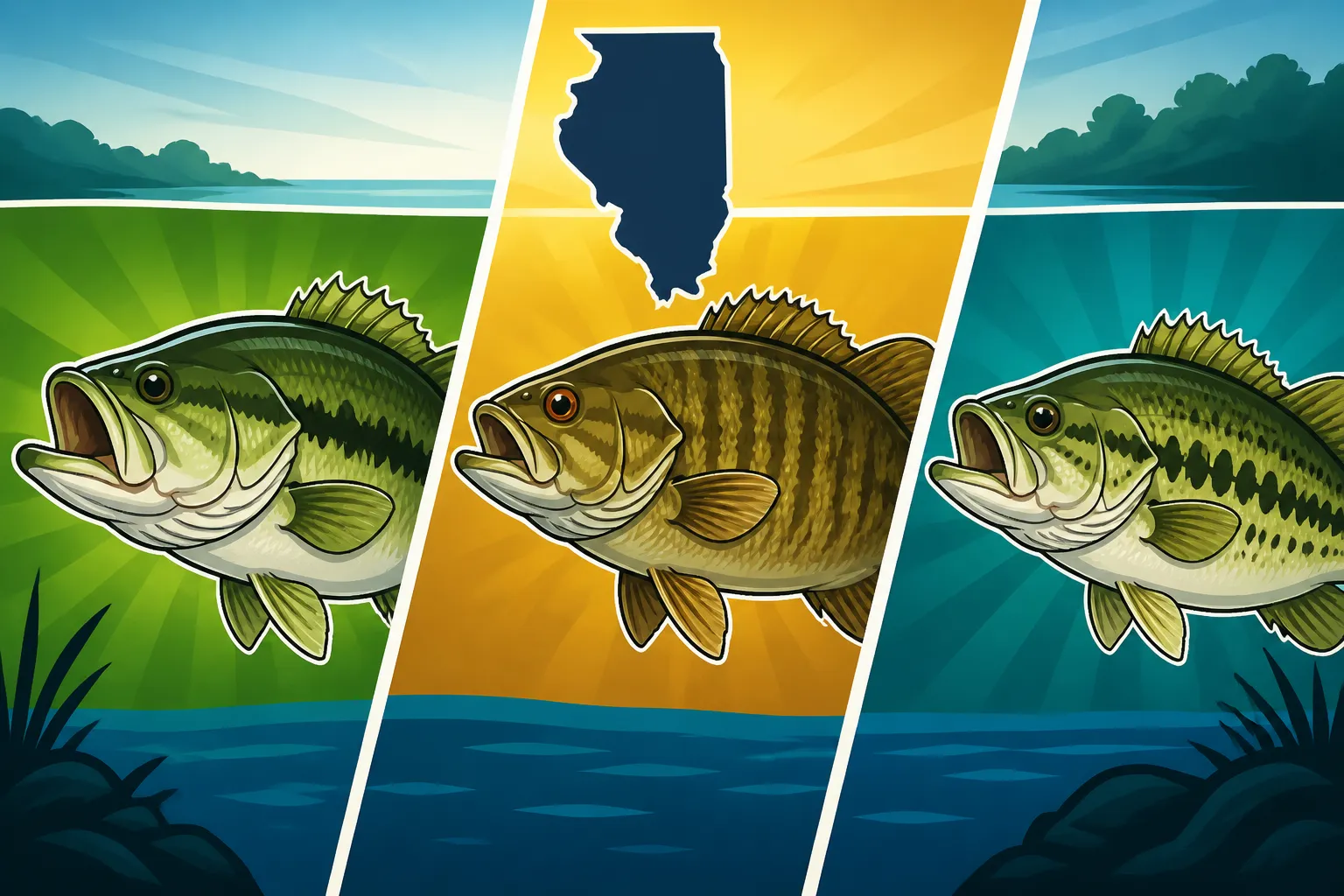
Largemouth Bass vs Smallmouth Bass vs Spotted Bass: How to Tell Them Apart
It can be incredibly frustrating to be out on the water, reeling in a beautiful bass, only to pause and wonder, "Is this a largemouth, a smallmouth, or a spotted bass?" These three popular game fish often get lumped together, but they have distinct characteristics that differentiate them, not to mention different habitats and regulations. This comprehensive guide will arm you with the knowledge to confidently identify each species, making your Illinois fishing trips more informed and enjoyable.
The Largemouth Bass: Illinois's Green Giant
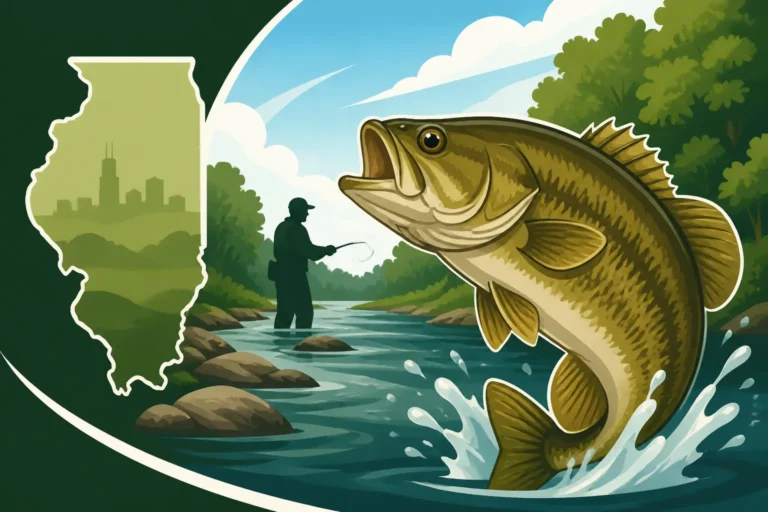
Ah, the largemouth. For many of us, this is the quintessential bass – the one that launched a thousand fishing obsessions. When people talk about "bass fishing" in Illinois, more often than not, they're picturing a big, green bucketmouth exploding on a topwater lure. These fish are incredibly popular, and for good reason: they fight hard, grow big, and are found in almost every suitable waterbody across the state.
Distinctive Physical Traits
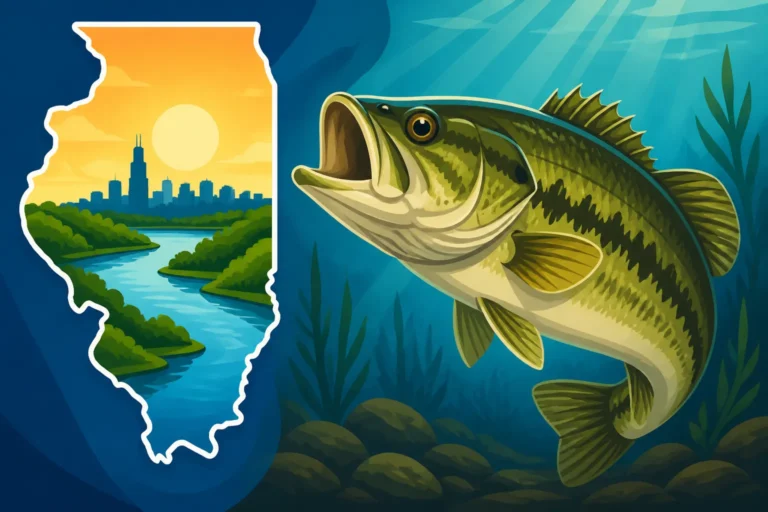
The most obvious distinguishing feature of a largemouth bass is right there in its name: its mouth. If you close the fish's mouth, the hinge of the jaw extends noticeably past the rear edge of its eye. This is usually the quickest and easiest way to tell a largemouth from its cousins. Their bodies are typically a deep olive green to almost black on the back, fading to lighter green or white on the belly. You'll often see a prominent, irregular dark lateral line running horizontally along its sides, sometimes appearing as a series of blotches rather than a continuous stripe.
Beyond the mouth and color, pay attention to the dorsal fin. A largemouth bass has a deep, almost complete separation between its spiny front dorsal fin and its soft-rayed rear dorsal fin. You can typically lay your finger flat between the two sections without touching either. This is a subtle but important clue. Their scales are relatively large, and their overall body shape tends to be more elongated and football-like compared to some other bass species. For a deeper dive into these beauties, check out Largemouth Bass Fishing in Illinois: The Complete Guide.
Common Habitats and Behaviors
Largemouth bass are ambush predators, and their preferred habitats reflect this. They love warm, weedy, and murky waters. Think shallow lakes, slow-moving rivers, farm ponds, and reservoir coves with lots of submerged vegetation, fallen timber, lily pads, and docks. They thrive in places where they can hide and dart out to surprise unsuspecting prey. In Illinois, you'll find them in abundance in lakes like Rend Lake, Lake Shelbyville, and countless smaller impoundments.
Their behavior is largely influenced by water temperature and available cover. During the spring, you'll find them moving into shallower areas for the Illinois Bass Spawn Timing Guide. In summer, they might retreat to deeper, cooler water during the heat of the day but move back to the shallows to feed at dawn and dusk. They're often less tolerant of strong currents than smallmouth bass, preferring the calmer waters where their ambush tactics are most effective. They'll readily hit a wide variety of baits, from plastic worms and spinnerbaits to crankbaits and topwater frogs.
Fishing Tips for Largemouth
If you're targeting largemouth bass, focusing on cover is key. Cast your lures right up against that log, into that thick patch of weeds, or under that overhanging tree. Texas-rigged soft plastics, jig-and-trailer combos, and spinnerbaits are incredibly effective for working through dense cover without snagging. Topwater lures like poppers and frogs are a blast in the early morning or late evening, especially around lily pads.
Don't be afraid to experiment with different presentations. Sometimes a slow, methodical retrieve is what they want; other times, a quick, erratic action triggers a strike. Remember to check the local regulations for specific lakes, as Illinois Largemouth Bass Length Limit and Daily Catch Rules can vary. For your tackle needs, sites like Amazon offer an incredible selection of lures and gear to help you stock up for your next largemouth adventure.
The Smallmouth Bass: River Fighter Extraordinaire
If the largemouth is the green giant of the weedy lake, the smallmouth is the bronze bulldog of rocky rivers and clear, cool lakes. These fish are renowned for their incredible fighting ability, often leaping clear out of the water multiple times when hooked. Many anglers consider them the toughest freshwater fish, pound for pound.
Key Identifiers of the Smallmouth
The most telling feature of a smallmouth bass is, again, its mouth. When its mouth is closed, the hinge of the jaw does not extend past the center of its eye, and usually not past the back edge of the eye. This is a crucial distinction from the largemouth. Their coloration is also different, typically ranging from a light brown or bronze to a darker olive, often with vertical bars or blotches along their sides, giving them a "tiger stripe" appearance rather than a solid lateral line.
Like the largemouth, the smallmouth has a spiny and soft dorsal fin, but unlike the largemouth, these two sections are only slightly separated, or sometimes appear to be continuous. You can't easily lay your finger between them. Their eyes are also often reddish. Smallmouth bass generally have smaller scales than largemouths, and their body shape is often more compact and muscular, designed for navigating currents. Discover more about these feisty fish in Smallmouth Bass Fishing in Illinois: The Complete Guide.
Preferred Environments and Diet
Smallmouth bass are cold-water enthusiasts. They thrive in clear, cool water with rocky bottoms, gravel, and submerged timber. You'll find them in abundance in many of Illinois's rivers, like the Kankakee River and the Fox River, where they hold in current breaks, around boulders, and near drop-offs. They also inhabit deep, clear lakes with rocky structures, though these are less common in central and southern Illinois.
Their diet consists mainly of crayfish, minnows, insects, and small baitfish. Their preference for crayfish is so strong that many smallmouth anglers will tell you to "match the hatch" by using crayfish-imitating lures. They are aggressive feeders and will readily chase down prey, making them a blast to catch on fast-moving lures.
How to Target Smallmouth
When targeting smallmouth, focus on areas with current and structure. River eddies, rock piles, bridge pilings, and riffles are prime locations. In lakes, look for rocky points, humps, and deep drop-offs. Crankbaits that mimic crayfish, tube jigs, spinnerbaits, and topwater walking baits can be incredibly effective. Smallmouth often prefer a faster, more erratic retrieve than largemouth, as they are used to chasing down prey in current.
Using lighter line and gear can often enhance the fight and the number of strikes you get. They can be a bit more finicky than largemouth at times, so having a variety of lure colors and sizes on hand, perhaps purchased from an online retailer like Amazon, is always a good idea. Knowing Best Lures for Smallmouth Bass in Spring can give you a significant edge when the water starts to warm up.
The Spotted Bass: The Often Confused Cousin
The spotted bass is arguably the most misidentified of the three, often mistaken for either a small largemouth or a smallmouth. This is especially true for anglers who aren't familiar with its subtle yet critical identifying features. While not as widespread in Illinois as the largemouth, they do inhabit certain river systems and reservoirs, particularly in the southern parts of the state.
Spotting the "Spotted" Features
The "spotted" in spotted bass refers to the rows of dark spots below its lateral line, which often form distinct rows, especially on its lower flanks. This is a key visual cue that neither largemouth nor smallmouth typically possess. Its overall body color is usually olive green to light brown, similar to a smallmouth, but often with a more defined lateral line than a largemouth, sometimes appearing as a series of diamond-shaped blotches.
Now for the mouth: the jaw hinge of a spotted bass typically extends to the middle of the eye, similar to a smallmouth, or just slightly beyond it, but rarely as far back as a largemouth's. The dorsal fins are another important differentiator. Like the smallmouth, the spiny and soft dorsal fins are only slightly separated or connected, unlike the deep separation found in a largemouth. A really reliable test is to feel for a tooth patch on their tongue – spotted bass have one, while largemouth and smallmouth generally do not. You can explore this unique species further in Spotted Bass Fishing: A Complete Guide for Illinois Anglers.
Where to Find Spotted Bass in Illinois
Spotted bass prefer habitats that are a mix between largemouth and smallmouth preferences. They like clear to moderately turbid water, often with some current, and areas with rock, gravel, and submerged timber. You'll find them in some of Illinois's larger river systems and reservoirs, particularly those with deeper, clearer water than typical largemouth habitats. They are a bit more tolerant of turbid water than smallmouths but prefer cleaner conditions than largemouth.
They can often coexist with both largemouth and smallmouth in the same water body, sometimes occupying slightly different niches. For instance, they might be found in the intermediate depths or current breaks where largemouth fear to tread but smallmouth might not venture. Their diet is similar to the other bass, including crayfish, minnows, and insects.
Fishing for Spotted Bass
Fishing for spotted bass often involves techniques similar to those used for smallmouth, focusing on rocky structures and current breaks. Jig-and-trailer combos, crankbaits, and soft plastics rigged for bottom bouncing are good choices. Because they can be found in deeper water, vertical jigging or drop-shotting can also be very effective.
Anglers often stumble upon spotted bass while targeting other species, precisely because they share characteristics with both. If you're consistently catching "smallmouth" in a lake known for largemouth, or vice-versa, take a closer look – you might be catching spotted bass! Having a versatile tackle box, potentially stocked with a range of options from a sporting goods store or Amazon, will serve you well when you're fishing waters that could hold any of the three.
Key Identification Differences At a Glance
Sometimes, you need a quick reference when you're on the water and trying to figure out what you've just caught. Here's a rundown of the most crucial features to examine on the spot. Remembering these distinctions can save you a lot of head-scratching and ensure you're following the right regulations for your catch.
Jawline and Mouth Shape
This is often the first and most definitive way to tell them apart. It's a simple, visual test that can be done quickly.
- Largemouth Bass: The hinge of the jaw extends noticeably past the rear edge of the eye when the mouth is closed. Think of a "bucketmouth" – it's all about that big jaw.
- Smallmouth Bass: The hinge of the jaw does not extend past the center or rear edge of the eye when the mouth is closed. It's a more proportionate, "smaller" mouth in comparison.
- Spotted Bass: The hinge of the jaw extends to about the middle of the eye or slightly beyond it, but generally not as far back as a largemouth. This is where the confusion often lies, as it's an intermediate position.
When you hold the fish, gently close its mouth and run your finger from the tip of the jaw back along its side. You'll quickly feel where that jawline ends relative to the eye.
Dorsal Fin Separation
Another critical, though sometimes overlooked, feature is the separation of the dorsal fin. This can be tricky at first glance, but once you know what to look for, it becomes quite clear.
- Largemouth Bass: Has a deep, almost complete separation between the spiny front dorsal fin and the soft-rayed rear dorsal fin. You can usually lay your finger flat in this gap.
- Smallmouth Bass: The spiny and soft dorsal fins are only slightly separated, or sometimes appear continuous. You cannot easily lay your finger flat in this shallow groove.
- Spotted Bass: Similar to the smallmouth, the dorsal fins are slightly separated or connected, not deeply divided like the largemouth. This makes it challenging to distinguish from a smallmouth based on fins alone, necessitating other identifiers.
This feature often requires a careful observation, as the fish's fins might be pressed down or spread, altering their appearance. Take a moment to gently feel the separation if you're unsure.
Lateral Line and Body Markings
The markings on the fish's body can offer further clues, though coloration can vary widely based on water clarity, diet, and even mood.
- Largemouth Bass: Typically has a distinct, irregular dark lateral line running horizontally along its sides. This line might be solid, broken, or appear as a series of blotches. The overall color is usually green.
- Smallmouth Bass: Often exhibits vertical bars or blotches along its sides, especially when in clearer water or stressed. These are more like "tiger stripes" than a horizontal line. Its color is typically brown or bronze.
- Spotted Bass: The most distinctive feature here are the rows of dark spots below the lateral line, particularly on its lower flanks. This is the "spotted" characteristic that gives it its name and is generally absent on the other two. It also has a more continuous, diamond-blotched lateral line than a largemouth.
Here's a handy table to summarize these key differences:
| Feature | Largemouth Bass | Smallmouth Bass | Spotted Bass |
|---|---|---|---|
| Jaw Hinge | Extends past rear edge of eye | Does not extend past rear edge of eye | Extends to middle or slightly past eye |
| Dorsal Fin | Deep, distinct separation | Shallow or continuous separation | Shallow or continuous separation |
| Body Markings | Distinct dark lateral line (solid/broken) | Vertical bars/blotches (tiger stripes) | Rows of distinct spots below lateral line |
| Tongue | No tooth patch | No tooth patch | Has a tooth patch |
| Overall Color | Greenish, darker back, lighter belly | Brown/Bronze, sometimes mottled | Olive green to light brown, defined lateral |
Why Accurate Identification Matters to Anglers
Beyond simply knowing what you caught, there are some very practical reasons why being able to tell these bass species apart is important. It impacts everything from your compliance with regulations to how effectively you can target fish.
Following Regulations and Limits
This is perhaps the most critical reason for accurate identification. Illinois fishing regulations are species-specific, and that includes bass. While many lakes might have a general "bass" limit, some waters have very specific rules for largemouth, smallmouth, or even a protected slot limit for certain species. For example, Illinois Statewide Bass Fishing Limits might be one thing, but a particular lake could have different rules. If you're fishing in a river that holds both smallmouth and spotted bass, knowing the difference is crucial to avoid violations.
Imagine catching a limit of what you think are smallmouth, only to find out later they were spotted bass, and the limit for spotted bass on that particular body of water was different. This could lead to penalties, fines, and a ruined fishing day. Checking Why Fishing Rules Vary by Lake and River before you head out is always a smart move. Always review the current Illinois Fishing Information Guide for the specific body of water you're fishing, as rules can change.
Understanding Fish Behavior
Different bass species have different preferences for habitat, diet, and behavior. A largemouth bass will likely be hunkered down in dense cover, waiting to ambush prey. A smallmouth will be cruising rocky areas in current, actively chasing down crayfish. A spotted bass might be found in intermediate zones. If you consistently mistake one for the other, you might be fishing the wrong areas with the wrong techniques.
Knowing which species you're catching helps you learn their patterns, understand where to find them, and what baits they prefer. If you're finding "smallmouth" consistently in thick weeds, you might actually be catching a unique largemouth strain, or vice-versa. Accurate identification helps you build a more precise mental map of the fishery and its inhabitants, ultimately making you a more skilled and successful angler.
Improving Your Catch Rates
When you can accurately identify the bass species, you can fine-tune your approach. If you're consistently catching smallmouth, you know to focus on rocky structure, current, and crayfish imitations. If it's largemouth, you'll target weeds and wood with power fishing techniques. If you're in an area with spotted bass, you might blend strategies from both. This targeted approach dramatically improves your chances of consistent success.
For example, if you're trying to figure out Where to Catch Smallmouth Bass in Rivers and Streams, knowing exactly what a smallmouth looks like will help you confirm you're in the right type of water and using the right presentations. You're not just fishing for "bass" anymore; you're fishing for specific bass. This level of precision, combined with quality gear you can find on Amazon, transforms your angling from a guessing game into a calculated pursuit. It allows you to quickly adapt your tactics, selecting the right lure and presentation for the specific species you're trying to entice.
Disclaimer
This article is for general informational purposes only and does not constitute professional advice. Laws, prices and regulations vary by location and change over time. Consult a qualified professional for guidance on your specific situation.