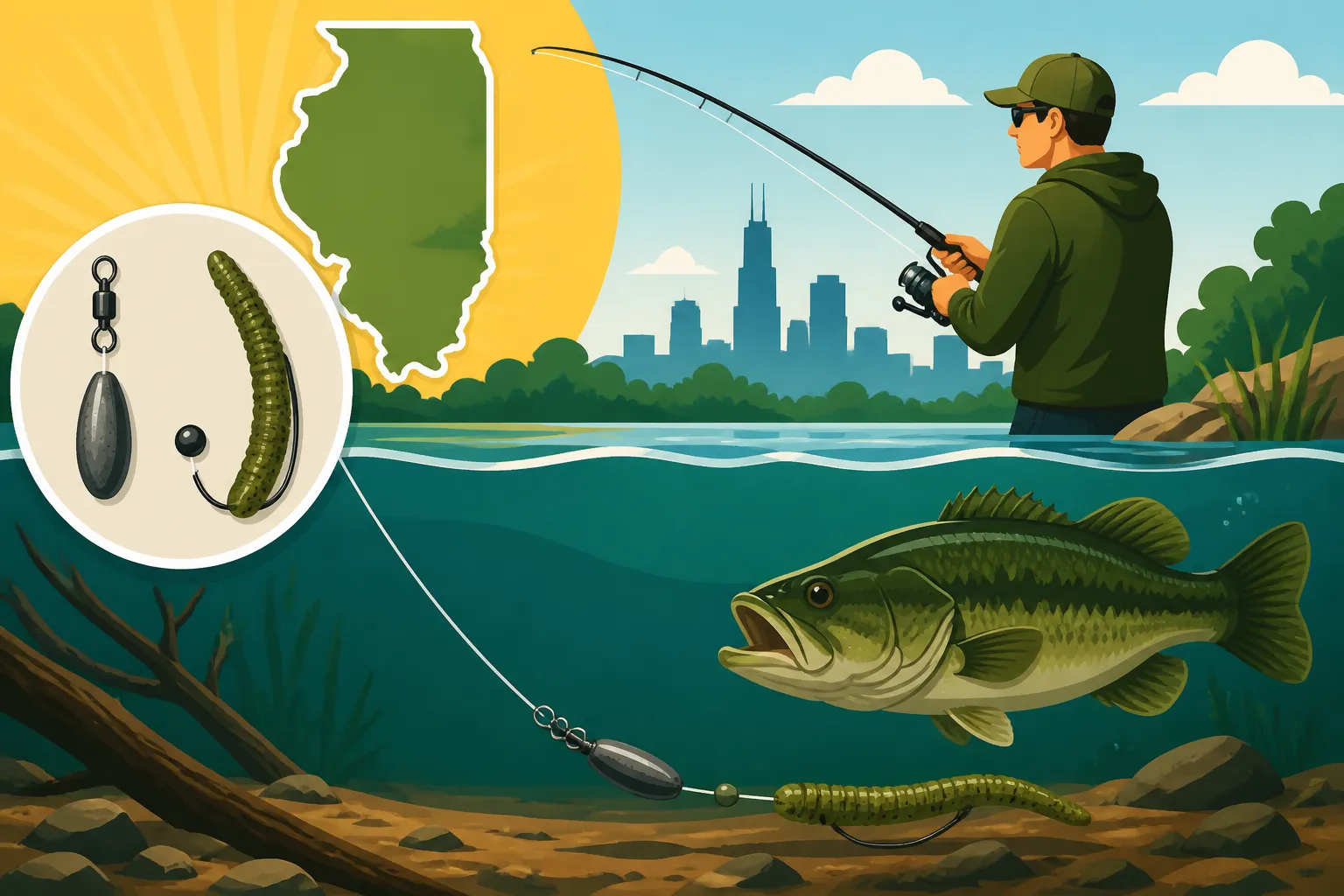
How to Fish a Carolina Rig for Bass
There's nothing quite as frustrating as knowing bass are in the water, but they're just not committing to your presentation. You've tried power fishing, slow rolling, and even finesse jigs, but those elusive Illinois largemouth and smallmouth are playing hard to get. If you've ever felt that subtle tick, set the hook, and come up empty, you know the feeling. This comprehensive guide is here to unravel the mysteries of the Carolina Rig, a versatile and highly effective technique that excels at putting fish in the boat, especially when other methods fall short.
Understanding the Carolina Rig: Why It's a Bass Angler's Secret Weapon
The Carolina Rig might look a bit intimidating with its multiple components, but it's fundamentally a very simple yet ingenious setup. It allows you to present a soft plastic bait naturally along the bottom, above a weight, giving it a unique action that often triggers bites from wary or inactive bass. Unlike a Texas rig or a jig, the Carolina Rig's weight and bait are separated by a leader, creating a "searching" presentation that can cover a lot of water and entice fish from afar.
The Anatomy of a Carolina Rig
To truly understand why the Carolina Rig works, you need to break down its individual parts and grasp the role each plays. It's a system designed for maximum appeal and sensitivity, giving you an edge in various fishing situations across Illinois waters.
First, you have your main line, which comes directly from your reel. This line typically runs through a substantial weight. For many anglers, a ½ oz to 1 oz bullet or egg-shaped weight is standard, but you might go lighter or heavier depending on the depth and current. Tungsten weights are increasingly popular over lead because they're denser and transmit bottom composition and subtle bites much more effectively. After the weight, a small glass or plastic bead is threaded onto the line. This bead serves a couple of crucial purposes: it protects the knot from the weight's constant banging and creates an audible "clack" when the weight and bead collide, which can attract curious bass. Following the bead is a swivel, which is tied to your main line. The swivel is absolutely essential for preventing line twist, especially when dragging the rig along the bottom.
From the other end of the swivel, you tie your leader line. This leader is typically made of fluorocarbon, known for its low visibility underwater and its abrasion resistance, which is a big plus when fishing around rocks or wood. The length of this leader is critical and can vary significantly, from as short as 1 foot to as long as 4 or 5 feet. A shorter leader provides more direct contact with the bait and is good for feeling subtle bites, while a longer leader allows the bait to float and glide more freely, creating a wider, more natural presentation that can be deadly in clear water. Finally, a hook is tied to the end of the leader, and your chosen soft plastic bait is Texas-rigged onto it to minimize snags. This whole setup allows the weight to dredge the bottom, kicking up sediment and creating noise, while the bait swims or glides enticingly just above the debris, often drawing strikes as the fish investigates the commotion.
When and Why to Choose a Carolina Rig
The Carolina Rig isn't a technique you'll use for every bass fishing scenario, but when the conditions are right, it can be absolutely devastating. It truly shines in specific situations where other rigs might fall flat, making it a valuable addition to any serious angler's arsenal, especially when fishing for bass in Illinois.
One of the primary scenarios where the Carolina Rig excels is in deeper water where bass are scattered or holding near subtle structure. Think about those main lake points on a lake like Lake Shelbyville Fishing Guide or the gradual slopes and humps in a larger reservoir. In these areas, bass aren't always grouped up tightly, and you need a presentation that can cover ground and get down to them efficiently. The heavy weight of a Carolina Rig makes long casts easy, allowing you to sweep large areas and keep your bait in the strike zone. It's also fantastic when fishing sparse cover, such as isolated stumps, rock piles, or thin weed lines. The Texas-rigged soft plastic reduces snags, while the separated weight allows the bait to "hop" over obstacles, presenting a tempting target to any bass lurking nearby without getting hung up constantly.
Another ideal situation is when facing windy conditions. The heavy weight helps you maintain bottom contact and feel your bait, even when the boat is drifting or the line is bowing. This is a common challenge on larger bodies of water like Carlyle Lake, and the Carolina Rig helps cut through that noise. Furthermore, after a cold front has pushed through, bass often become lethargic and less willing to chase fast-moving baits. They might settle into deeper water or become suspended off the bottom. The Carolina Rig's slow, dragging retrieve and natural bait presentation can tempt these less active fish into biting when they're not interested in anything else. It presents an easy meal that stays in their strike zone longer. Finally, if you're fishing in clear water and need a subtle, natural presentation, a long fluorocarbon leader on a Carolina Rig can be incredibly effective. It allows the bait to move independently of the weight, giving it a lifelike swim that wary bass find hard to resist. This makes it a great choice for clear-water Best Bass Fishing Lakes in Illinois where fish have seen every other trick in the book.
Setting Up Your Carolina Rig: A Step-by-Step Guide
Getting your Carolina Rig tied correctly is crucial for its effectiveness. A poorly tied rig can lead to frustrating snags, missed bites, and a generally unpleasant fishing experience. But don't worry, it's easier than it looks, and with a little practice, you'll be tying them like a pro in no time.
Gathering Your Gear
Before you start tying knots, you need to make sure you have all the right components. Having everything laid out will make the setup process smooth and efficient, so you can spend less time rigging and more time fishing. You can find all of these essential items readily available on platforms like Amazon or at your local bait and tackle shop.
First up, you'll need a good rod and reel combination. For Carolina Rig fishing, a medium-heavy to heavy power casting rod, typically 7 to 7 ½ feet long, with a fast action tip, is ideal. This length provides excellent casting distance and the backbone needed for long, sweeping hook sets and controlling larger bass. Pair this with a baitcasting reel with a gear ratio of 6.3:1 or higher, allowing you to efficiently take up slack line during the retrieve and when setting the hook. Next, consider your fishing line. For your main line, 15-20 lb fluorocarbon or monofilament is common. Some anglers prefer braided line (30-50 lb) for its sensitivity and strength, adding a fluorocarbon leader directly to the braid. For the leader, 12-17 lb fluorocarbon is the go-to choice due to its invisibility and abrasion resistance. Remember, the leader is key for the bait's action and stealth.
Then come the weights. As mentioned earlier, tungsten bullet or egg weights from ½ oz to 1 oz are standard. The heavier the weight, the easier it is to cast, get to the bottom, and maintain contact, especially in deep water or current. You'll also need glass or plastic beads (usually 8mm or 10mm) and barrel swivels (sizes 3-5 are common) to connect your main line and leader, preventing line twist. Finally, choose your hooks. Extra wide gap (EWG) hooks or offset round bend hooks in sizes 3/0 to 5/0 are popular for Texas-rigging soft plastics, ensuring good hook penetration. For bait, stock up on your favorite soft plastics—lizards, creature baits, worms, and flukes are all excellent choices. Having a variety on hand, perhaps a selection from Amazon's wide range of soft plastics, ensures you're prepared for different conditions and bass preferences.
The Tying Process
With your gear assembled, it's time to put it all together. Follow these steps carefully to create a sturdy and effective Carolina Rig that will stand up to big Illinois bass.
Start by taking your main fishing line directly from your reel. Thread your chosen weight onto this line first. Make sure the pointed end of the bullet weight (if using one) faces towards your rod tip. After the weight, slide on a glass or plastic bead. This bead should rest between the weight and your next knot, providing both protection and sound. Next, tie a barrel swivel to the end of your main line. A Palomar knot or an improved clinch knot are excellent choices for tying the swivel, known for their strength and reliability. Ensure your knots are cinched down tightly and trim any excess tag end close to the knot.
Now, it's time for the leader. Take a separate piece of fluorocarbon line for your leader. The length is crucial here; for general purpose, start with about 2 to 3 feet. If you're fishing in clear water or targeting very finicky bass, you might extend this to 4 or 5 feet for a more subtle presentation. If you're trying to feel every little bump and want a more aggressive retrieve, you might shorten it to 1 to 1.5 feet. Tie one end of this leader to the opposite eye of your barrel swivel using the same strong knot you used for your main line. Finally, tie your hook to the free end of your leader. Again, a Palomar or improved clinch knot works perfectly here. Once your hook is tied, Texas-rig your chosen soft plastic bait onto it. Make sure the hook point is buried back into the plastic to make it weedless. Double-check all your knots for integrity before making your first cast, and you're ready to hit the water!
Mastering the Presentation: Fishing a Carolina Rig Effectively
Tying the rig is one thing, but fishing it effectively is where the real art comes in. The Carolina Rig isn't about fast, erratic retrieves; it's about subtle movements and patiently feeling the bottom. Understanding how to present it and where to cast it will dramatically increase your success rate.
The Drag and Pause Retrieve
The most common and effective retrieve for a Carolina Rig is a slow, deliberate drag and pause motion. This technique allows the weight to dredge the bottom, creating a disturbance, while your bait lags behind, dancing enticingly.
Begin by making a long cast, letting the rig sink all the way to the bottom. You'll know it's there when your line goes slack or you feel the weight hit. Once it's settled, lower your rod tip towards the water, typically to the 9 or 10 o'clock position. Instead of reeling, use a long, slow, sweeping motion of your rod, pulling the weight and bait across the bottom. This sweep might be anywhere from 2 to 5 feet long. As you sweep, you'll feel the weight ticking and bumping along the bottom, providing valuable information about the terrain. Once you complete the sweep, pause. Drop your rod tip back down and reel up the slack line, taking care not to move the bait. This pause is critical; often, a bass will pick up the bait as it settles after the initial movement. Repeat this drag and pause motion all the way back to the boat. The key is to maintain constant, light tension on your line so you can feel those incredibly subtle bites. Many times, a bite won't be a jarring strike; it might just feel like a slight increase in weight, a spongy feeling, or even just your line moving sideways. When you feel anything out of the ordinary, that's your cue for a sweeping hook set.
Where to Target Bass with a Carolina Rig in Illinois
The Carolina Rig excels at fishing specific types of structures and covers that are common in many Illinois lakes and rivers. Knowing where to throw this rig can make all the difference in your Illinois Fishing Seasons Guide success.
Focus your efforts on main lake points, humps, and submerged islands. These are classic bass holding areas, especially when fish move deeper or are scattered. On a lake like Rend Lake Fishing Guide for Illinois Anglers, look for those subtle breaks and contours where the bottom transitions from shallow to deep. The Carolina Rig allows you to thoroughly dissect these areas, dragging your bait over the top and down the sides of these structures. Another prime target is deep weed lines or sparse hydrilla beds. While a Texas Rig works great in the thick stuff, the Carolina Rig shines when bass are relating to the edges of deeper grass. The weight can tick along the outside edge, with your bait hovering just above the vegetation, an irresistible target.
Don't overlook river channels and deeper creek bends in systems like the Mississippi or Illinois Rivers. Bass will often hold along these deeper contours, especially during periods of higher current or when seeking stable water temperatures. The heavy weight helps you maintain bottom contact in current, allowing your bait to be presented in these prime holding zones. For instance, when fishing the Mississippi River for catfish, you'll often find bass in similar areas, and a Carolina Rig can intercept them effectively, as discussed in Mississippi River Catfish Fishing in Southern Illinois. During the Illinois Bass Pre-Spawn Fishing Patterns, particularly in late winter and early spring, bass will stage on these deeper structures before moving to shallower spawning areas. Targeting specific areas like those outlined in Illinois Bass Pre-Spawn Timing at Carlyle Lake with a Carolina Rig can be incredibly productive as bass are often lethargic but looking for a substantial meal.
Choosing the Right Baits and Colors
The beauty of the Carolina Rig is its versatility with soft plastic baits. The natural movement imparted by the leader allows many different shapes and sizes to be effective, so don't be afraid to experiment.
Classic choices include lizards, particularly the Zoom Trick Worm or Speed Worm. Their natural, slithering action behind the weight is incredibly enticing. You can also use straight-tail worms or flukes, which will glide and undulate with very subtle twitches of the rod. For more bulk and a different profile, creature baits like the Zoom Brush Hog or Strike King Rage Craw are fantastic. Their appendages will flap and move with every drag and pause, creating extra vibration and visual appeal. The choice between these baits often comes down to what the bass are feeding on, the amount of cover, and your personal confidence. If you're looking for a good starting point, a 6-inch lizard or a 7-inch straight worm is rarely a bad choice.
When it comes to colors, the general rule of thumb applies: natural colors (green pumpkin, watermelon, black and blue, brown) for clear water, and brighter or darker colors (junebug, black, chartreuse, white) for stained or muddy water. If you're fishing in incredibly clear conditions, consider natural translucent colors that mimic baitfish. However, don't be afraid to try something a little bolder if the bite is slow; sometimes a flash of chartreuse or a bright junebug can trigger a reaction strike from a bass that's seen everything else. For specific insights into matching your colors to the conditions, you might want to review resources like Best Bass Lures for Clear Water to optimize your presentation further. Always observe the local forage and water clarity to make the best decision on color.
Common Mistakes and Troubleshooting for Carolina Rig Fishing
Even the most seasoned anglers can run into issues with a Carolina Rig. It's a technical rig, and knowing how to prevent or troubleshoot common problems can save you a lot of frustration and keep your bait in the water longer.
Snags and Line Twist
Few things are more annoying than constantly getting hung up or dealing with a bird's nest of twisted line. These are two of the most frequent complaints about Carolina Rig fishing, but they are often avoidable with a few adjustments.
Snags are a primary concern, especially when dragging a weight across unfamiliar bottom. The most common cause is simply using too heavy a weight for the cover you're fishing or not choosing the right weight shape. A bullet weight, with its tapered nose, will slide over cover better than a round egg sinker. If you find yourself consistently getting hung up on rocks or wood, try reducing your weight size or switching to a tungsten weight, which is smaller for its given weight and has better feel, helping you detect obstacles before you're fully snagged. Also, ensure your soft plastic bait is Texas-rigged properly, with the hook point buried firmly in the plastic, making it weedless. A leader that's too short can also sometimes lead to more snags as the bait is too close to the dragging weight. Experimenting with a slightly longer leader can give the bait more freedom to float over cover while the weight bumps underneath. When you feel a snag coming on, try a quick, sharp pop of the rod tip to free the weight, rather than a hard pull that might wedge it deeper.
Line twist is another major headache with this rig. The constant dragging motion and the presence of a swivel are meant to prevent this, but sometimes it still happens. The most common culprit is a malfunctioning swivel or one that's too small for the weight of your line and bait. Always use high-quality barrel swivels, and ensure they are appropriately sized (typically size 3-5). If you suspect your swivel isn't rotating freely, replace it. Another cause can be your retrieval technique. If you're reeling in slack line too quickly or allowing your bait to spin excessively during the cast or retrieve, it can introduce twist. Make sure your casts are smooth, and your retrieve is a controlled drag, not a erratic jigging. Periodically, you might want to clip off your rig and let your main line trail behind the boat for a few minutes with no tackle attached; the water resistance will help untwist any accumulated line twist. This simple trick can save your line from unraveling prematurely.
Missed Bites and Hook Sets
That frustrating feeling of detecting a bite, setting the hook, and feeling nothing but empty air is a rite of passage for Carolina Rig anglers. Distinguishing a true bite from bottom contact and executing a proper hook set are critical for success.
One of the biggest challenges is distinguishing a bite from bottom structure. When you're dragging your rig over rocks, shell beds, or even a branch, it can feel very similar to a bass picking up your bait. The key is to pay attention to subtle differences. A true bite will often feel like a soft "thump," a spongy resistance, or a sudden, unexplained heaviness on your line. Sometimes, your line will just start moving off to the side, even if you don't feel a distinct bite. If you feel anything unusual, even if you're not 100% sure it's a fish, it's better to assume it is and execute a sweeping hook set. Don't rear back like you're trying to set a worm hook on a Texas rig; instead, sweep your rod to the side, maintaining tension as you do. This pulls the line horizontally, driving the hook into the side of the fish's mouth.
Maintaining contact with your bait is crucial for bite detection. Use a rod with a sensitive tip that will transmit even the slightest vibrations. Fluorocarbon main line can also enhance sensitivity. Avoid letting too much slack develop in your line during the retrieve, as this makes it impossible to feel a bite. If you're getting short strikes or fish are dropping the bait, consider shortening your leader slightly to give you more direct feel, or experiment with smaller, more compact soft plastics that bass can engulf more easily. Ensuring your hooks are sharp is also paramount. A dull hook will lead to numerous missed fish. Regularly check your hook points and sharpen or replace them as needed. Remember, the Carolina Rig often gets bites from less aggressive bass, so those subtle cues are your only warning. Trust your instincts, and when in doubt, set the hook!
Disclaimer
The information provided in this guide is for general informational purposes only. Fishing regulations, license requirements, and best practices can change. Always consult the latest Illinois Department of Natural Resources (IDNR) fishing regulations and local advisories before heading out on the water. Ensure you have the proper Illinois Fishing License Guide for 2026 and understand all relevant rules, including Illinois Fishing Season and Catch Limit Rules. Safety should always be your top priority when fishing.