How to Rig a Bobber for Bluegill
There's nothing quite like the simple joy of watching a bobber dance and then plunge under the surface—especially when you're fishing for bluegill. Many new anglers, or even seasoned folks introducing fishing to their kids, can get overwhelmed by all the complex tackle out there. This guide is all about getting back to basics, showing you exactly how to rig a bobber for bluegill, making your next outing on an Illinois pond or lake a successful and enjoyable one.
Why a Bobber is Your Best Friend for Bluegill Fishing
When you're chasing bluegill, simplicity often trumps complexity. These feisty panfish are abundant in nearly every pond, lake, and slow-moving backwater stream across Illinois, and they're not typically shy feeders. Using a bobber isn't just a classic technique; it's incredibly effective and offers several distinct advantages, especially if you're fishing with family or introducing someone new to the sport.
The Visual Thrill and Ease of Detection
Let's be honest, the best part about bobber fishing is seeing that bright little float disappear under the water. It’s a pure, unadulterated moment of anticipation and excitement. For kids, or anyone just starting out, this visual cue is far easier to understand than feeling a subtle bite through a rod tip. You don't need to be an expert in "reading the bite" or detecting faint tugs; the bobber does all the work, screaming "fish on!" when it vanishes. This immediate feedback makes learning to fish incredibly rewarding and keeps engagement high, which is key for a fun day out, particularly if you're trying to master how to teach a kid to fish for panfish.
Beyond the thrill, a bobber makes bite detection effortless. Bluegill might peck at the bait a few times before taking it fully, causing the bobber to twitch or bob slightly. These small movements are easy to spot, giving you a clear signal to get ready. Without a bobber, you might miss these tentative bites, leading to fewer fish in the cooler. It's a fantastic tool for casual anglers who just want to relax and enjoy the scenery until the action starts.
Controlling Your Bait's Depth and Presentation
One of the most powerful reasons to use a bobber for bluegill is its ability to precisely control the depth of your bait. Bluegill often suspend at a certain depth in the water column, whether they're near submerged structures, weed lines, or just cruising at a consistent level. Without a bobber, your bait simply sinks to the bottom, which might not be where the fish are holding. By adjusting where you place your bobber on your line, you can present your bait exactly where those bluegill are feeding.
Think about it: if the bluegill are nestled amongst some lily pads in three feet of water, but the bottom is five feet down, a bobber allows your bait to hang right in their strike zone. This focused presentation dramatically increases your chances of getting a bite compared to just letting your bait sink wherever. It allows you to experiment with different depths, helping you locate where the fish are most active on any given day. This precise control also ensures your bait isn't dragging on the bottom, getting snagged in weeds, or burying itself in the mud where bluegill might not see it.
Understanding Your Bobber Options for Bluegill
Not all bobbers are created equal, and choosing the right one can make a noticeable difference in your bluegill fishing success. While they all serve the same basic purpose—to float and indicate a bite—their designs offer various advantages depending on the conditions and your preference.
Traditional Clip-On vs. Slip Bobbers
The two main types of bobbers you'll encounter are traditional clip-on (or spring-loaded) bobbers and slip bobbers. Both have their place in a bluegill angler's tackle box, but they excel in different situations.
Traditional clip-on bobbers are probably what first comes to mind when you think of a bobber. They're typically round or oval, often red and white, and attach to your line by pressing a spring-loaded button and clipping the line into a small wire. They're incredibly simple to use, quick to set up, and perfect for beginners or when fishing in shallower water. If you're using a short rod and casting only a short distance, or fishing in waters that are, say, six feet deep or less, a clip-on bobber is often the easiest fish to catch for beginners solution. The main drawback is that you can only set your bait as deep as your rod length. If you set it deeper than your rod, casting becomes a tangled mess, as the bobber prevents the line from reeling in past it.
Slip bobbers, on the other hand, offer much greater versatility, especially in deeper water. Instead of clipping to a fixed spot, a slip bobber has a hole running through its center, allowing your fishing line to "slip" through it. To control the depth, you tie a small "bobber stop" knot (often made of string or a small piece of rubber) onto your main line. This stop slides up and down the line but gets caught by the bobber when it reaches the surface. This means you can cast out into deep water, and your bait will sink until the bobber stop hits the bobber, setting your desired depth. This allows you to fish much deeper than your rod is long, making it ideal for targeting bluegill that might be suspended over deeper structure or along ledges. If you're fishing a deep lake, or even from a pier or boat where the water below is considerable, a slip bobber truly shines.
| Feature | Clip-On Bobber | Slip Bobber |
|---|---|---|
| Attachment | Clips directly to line (fixed position) | Line runs through, fixed by a separate bobber stop |
| Depth | Limited by rod length for casting | Unlimited; can fish much deeper than rod length |
| Casting | Can be awkward with deep settings | Smooth, long casts possible regardless of depth setting |
| Ease of Use | Very easy, great for beginners | Slightly more complex to rig, but highly versatile |
| Best For | Shallow water, short casts, quick setup, kids | Deep water, long casts, precise depth control, versatile angling |
| Price Point | Often very inexpensive | Slightly more expensive due to additional components (stops, beads) |
Material and Size Considerations
Beyond the attachment method, bobbers come in various materials and sizes, each affecting their performance. Plastic and foam bobbers are the most common and budget-friendly. Plastic models are often hollow, making them buoyant and highly visible, while foam bobbers are durable and resist damage from bumps and dings. Some bobbers are weighted at the bottom to help them stand upright in the water, which can improve bite detection, as they're less affected by wind and small ripples.
The size of your bobber is also critical. For bluegill, you generally want to go with a smaller bobber. Why? Because bluegill have relatively small mouths and don't exert a lot of force when they bite. A large, heavy bobber requires more force to pull under, meaning a bluegill might mouth your bait without ever sinking the bobber. A smaller, more sensitive bobber will dip and dive with even the most subtle nibble. Aim for bobbers that are roughly 1 to 1.5 inches in diameter for most bluegill fishing. They're small enough to be sensitive but still large enough to be easily seen at a reasonable distance. A small, weighted foam bobber is a great all-around choice for Illinois panfish.
Step-by-Step: Rigging Your Bobber for Bluegill
Now let's get down to the nitty-gritty of setting up your bobber rig. Don't worry, it's simpler than it sounds, and once you do it a few times, it'll become second nature. We'll cover both the clip-on and slip bobber methods.
Setting Up a Clip-On Bobber Rig
This is the classic, straightforward setup that many of us learned fishing with as kids. It's fantastic for those days on a calm pond where the bluegill are cruising close to shore in shallower water.
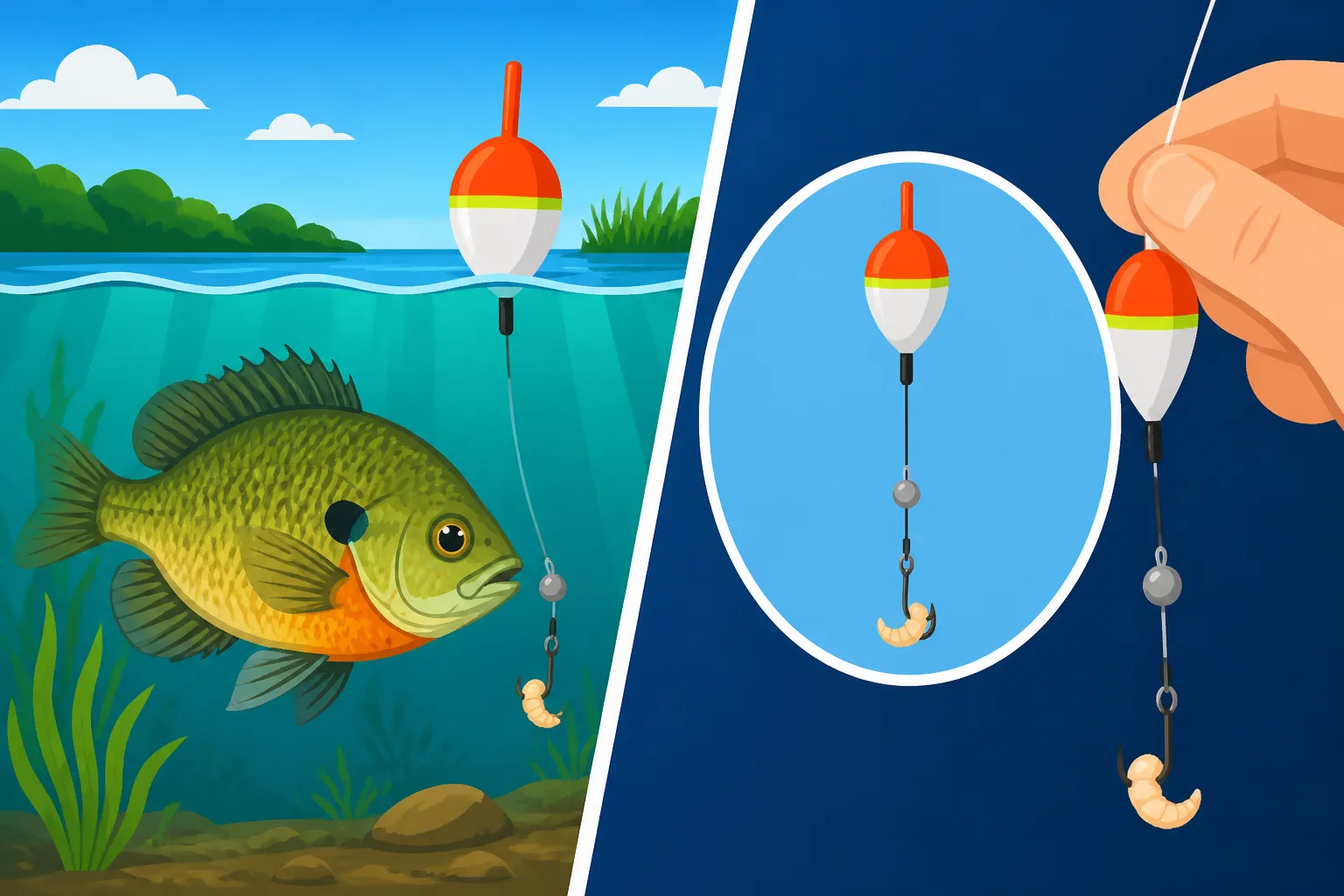
First things first, you'll want to take your fishing line and thread it through the eye of your hook. For bluegill, a small, sharp hook is key—think sizes #8 to #12. Many anglers swear by a gold aberdeen hook for panfish, but a simple J-hook works just fine. Tie a good, strong knot to secure the hook. A Palomar knot is excellent for strength, but a Clinch knot is also perfectly adequate and easier for beginners. Once your hook is tied, measure out about 6 to 12 inches of line above the hook, and this is where your split shot weights come in. These tiny, lead-free weights simply pinch onto your line. You might need one or two of them, just enough to help your bait sink but not so many that the bobber is constantly being pulled down. The goal is to get your bait to fall naturally.
Now for the bobber itself. With a clip-on bobber, you’ll usually find a small spring-loaded button on one end. Press this button, and a wire loop will pop out. Thread your main fishing line through the wire loop, then move the bobber up the line to your desired depth. Once you have the depth set, release the button, and the bobber will clamp onto your line. Then, do the same thing on the other end of the bobber, clipping it to the line. Make sure it's snug! The rule of thumb for bluegill is often to start with your bait hanging about 18 inches to 2 feet below the bobber. From there, you can adjust deeper or shallower depending on where you're getting bites. This basic setup is often called the "best beginner bluegill fishing setup" for a reason—it's incredibly effective and easy to manage.
Assembling a Slip Bobber Rig
While slightly more involved initially, the slip bobber rig offers superior depth control and castability, especially important when you want to target fish that are deeper than your rod is long. It's the ideal setup for fishing from a boat, off a pier, or in deeper sections of lakes like Lake Shelbyville or Rend Lake.
You'll start by taking a bobber stop. These typically come as small pieces of string tied in a loop, often with a plastic bead. Thread your main fishing line through the loop of the bobber stop, then slide the string knot down onto your line, pulling it snug. The bead slides on after the knot. This small knot is what will stop your bobber at the desired depth. Next, slide a small plastic bead onto your line. This bead acts as a buffer, preventing the knot from sliding into the bobber itself. Then, thread your line through the hole in your slip bobber. The bobber should now slide freely up and down your line.
Finally, just like with the clip-on rig, you'll attach your split shot weights (one or two small ones) about 6-12 inches above your hook. Then, tie on your small hook using a strong knot. For bait, live bait like wax worms, red worms, or pieces of nightcrawler are almost always deadly for bluegill. Small jigs tipped with plastic or bait can also be very effective. The beauty of the slip bobber is that when you cast, the bobber slides all the way down to your weights, making for a streamlined, tangle-free cast. Once it hits the water, the bait sinks, and the bobber floats up until it hits that bobber stop, perfectly setting your depth. You can find pre-packaged slip bobber kits on Amazon that include the bobber, stops, and beads, making it super convenient to get started.
Optimizing Your Bobber Rig for Bluegill Success
Having your bobber rigged correctly is a great start, but there are a few extra tips and tricks that can significantly boost your bluegill catch rates and make your fishing experience even more enjoyable.
Choosing the Right Bait and Depth
The saying "match the hatch" isn't just for fly fishing; it applies to bluegill too! Bluegill are opportunistic eaters, and they'll hit a wide variety of baits. However, some are definitely more effective than others. Live bait is almost always king when it comes to bluegill. Small pieces of nightcrawler, red worms, and wax worms are consistently excellent choices. Crickets and grasshoppers can also be irresistible, especially later in the summer. For artificial baits, tiny jigs (1/32 or 1/64 ounce) tipped with a small plastic grub or tube jig in chartreuse, white, or black can be deadly. These can be purchased easily from places like Amazon, often in multi-packs, so you have plenty to experiment with.
Once you have your bait, getting the depth right is crucial. Bluegill are often found in relatively shallow water, especially around structure like weed beds, submerged timber, or docks. A good starting point is to set your bait about 1 to 3 feet deep. If you're not getting bites, gradually adjust your depth. Go shallower if it's a sunny day and fish might be near the surface, or deeper if it's overcast or you suspect they're holding closer to the bottom or a thermocline. Pay attention to your surroundings; if you see fish jumping or dimpling the surface, they're probably shallow. If you're fishing near a drop-off, try setting your bait just above that transition line. The ability to easily adjust your depth is a major advantage of the bobber rig.
Common Mistakes to Avoid and Pro Tips
Even with a perfectly rigged bobber, there are a few pitfalls new anglers often fall into. Avoiding these can save you a lot of frustration. First, don't use too much weight. Only use enough split shot to get your bait down. If your bobber is sinking slightly without a fish, you have too much weight, and you'll miss light bites. Conversely, if your bait isn't sinking at all, add a tiny bit more. Secondly, avoid oversized hooks. Bluegill have small mouths, and a hook that's too big will result in missed bites or the fish simply stealing your bait without getting hooked. Stick to those smaller #8 to #12 hooks.
A pro tip for bluegill fishing is to keep your bait fresh and lively. If you're using worms, change them out regularly, especially if they've been sitting in the water for a while. Also, don't be afraid to experiment with your retrieval. Sometimes a slow, steady retrieve works best, while other times, a slight twitch or pause can entice a hesitant bluegill. If the fish are really finicky, try downsizing your line to 2-4 pound test; the thinner line is less visible and can make a big difference. Remember, bluegill often school together, so if you catch one, there are likely more in the same area. Mark your spot, cast back, and enjoy the action! For even more details on tackle, check out our guide on Best Panfish Setup for Kids or Best Bait for Bluegill Fishing.
Bobber Fishing in Illinois Waters
Illinois is blessed with an abundance of fantastic bluegill fishing opportunities, from small farm ponds to massive reservoirs like Carlyle Lake. Understanding how to apply your bobber rigging skills to these varied environments will make you a more successful angler.
Finding Prime Bluegill Habitat
Bluegill are true masters of adapting to their environment, but they consistently gravitate towards certain types of cover and structure. In many Illinois lakes and ponds, you'll find them congregating around submerged vegetation, often called weed lines. These areas provide both shelter from predators and a plentiful food source of insects and small invertebrates. Casting your bobber rig just outside or along the edges of these weed beds is often a recipe for success. Don't be shy about probing pockets within the weeds if you can find them.
Beyond vegetation, look for fallen trees, brush piles, docks, and bridge pilings. Any structure that offers shade and protection can hold a good number of bluegill. On larger bodies of water, like Clinton Lake, bluegill might also be found suspending over deeper water, especially during hotter months, near submerged humps or old creek channels. If you're bank fishing, walk the shoreline and observe; look for areas with overhanging trees, shady spots, or visible cover. Even small culverts or creek mouths feeding into a larger lake can be hot spots. Our guide on Best Fishing Spots in Illinois has more localized recommendations for prime bluegill habitat.
Seasonal Considerations for Bluegill
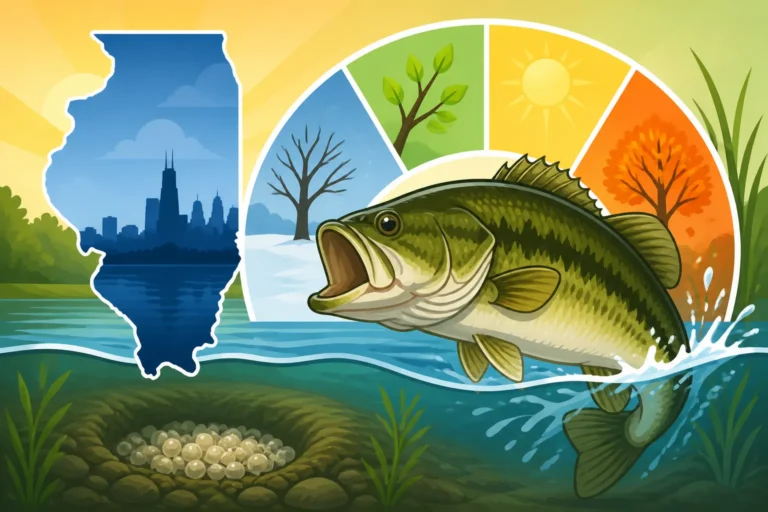
While bluegill can be caught year-round in Illinois, their behavior and where you find them will shift with the seasons. Spring is often considered prime time, particularly during the spawn. When water temperatures start to rise, typically in late May or early June, bluegill move into shallow, protected areas to build their nests. These "beds" are often visible as circular depressions on the bottom, and the male bluegill aggressively guard them. During this time, casting a bobber rig with a small worm or jig right over these beds can lead to non-stop action. This is an incredible time for Illinois Free Fishing Days Kids Fishing Ideas, as the fish are abundant and eager to bite.
As summer progresses and waters warm, bluegill might retreat to deeper, cooler water during the hottest parts of the day. They'll still be associated with cover, but perhaps deeper weed lines or brush piles. Early mornings and late evenings are often the best times to target them in shallower water during the summer. In the fall, as water temperatures drop, bluegill often feed heavily to bulk up for winter, and they can be found in a variety of depths, often moving in and out of coves. Even in winter, ice fishing with a small bobber and tiny jig or wax worm can be incredibly productive for bluegill through the ice. Understanding Illinois Fishing Seasons Guide will further help you plan your trips.
The Joy of Catching Bluegill with a Bobber
There’s something uniquely satisfying about the simplicity and effectiveness of bobber fishing for bluegill. It’s a technique that has stood the test of time, introducing countless anglers to the joys of the sport. Whether you’re a seasoned pro returning to your roots or a parent teaching a child, the bobber rig offers immediate feedback, a visual thrill, and consistent action.
The key to remember is that bluegill aren't typically finicky eaters, but they do appreciate a well-presented bait at the right depth. By mastering the basic clip-on and slip bobber setups, understanding the importance of small hooks and appropriate weights, and selecting the right bait, you'll be well on your way to a cooler full of delicious panfish. Many of these essential items, from bobbers to hooks and split shot, are readily available on Amazon, making it easy to stock up before your next adventure.
So next time you head out to an Illinois lake or pond, grab a few bobbers, some worms, and your rod and reel. Find a nice shady spot, cast your line, and prepare for the exhilarating moment that little float disappears. You might just rediscover why bluegill fishing with a bobber is one of the most beloved and effective techniques in the angler's playbook. Remember, fishing is about connecting with nature, enjoying the moment, and creating memories—and a bobber rig is a perfect tool for just that.
Disclaimer
This article is for general informational purposes only and does not constitute professional advice. Laws, prices and regulations vary by location and change over time. Consult a qualified professional for guidance on your specific situation.